17 years of art experience and a pile of degrees, yet here I am at London Art College, sitting like a total freshman. (Honestly, that’s a ready-made punchline.)
It’s a generational engineering trauma: my family is physically incapable of simply buying a ready-made product. Fellow cheapskate artists will appreciate this 10/10.
Welcome to my mini-series, where I’m transforming a heavy oak hanger into a custom studio storyboard panel. Armed with an engineering degree, an illustrator’s eye, and a few everyday items, I’m building a creative workspace from scratch—one detail, texture, and sketch at a time.
Skipping boring, ready-made store options to flex my own designer storyboard…
So, it’s an old coat rack instead of the big online retail giants, turned into a storyboard that works like a puppet theater where you can slide frames up and down.
Creating StoryBoard Panel
I was not sure how to name this old-fashioned hanger, forgotten part of previous owners of my apartment. Maybe the Brief Hanger? Or the Draft Board? Finally the name was chosen as StoryBoard Panel because I am going to create new stories about my friends, characters and maybe animals…
Welcome – StoryBoard Panel
And to wrap it up: who’s with me on this crazy ride? Who else feels that urgent, genetic need to look at a piece of useless junk laying around the house and think: “Yeah, I can definitely build something out of that”? What about you?
Well, I do have a Vintage coat rack / Wooden base. Then what do I need else?
My plan
Spiral sketchbook: This is where the magic (and the chaos) starts before I tear it apart.
Structural engineering, but make it wine.
3-color sketchbook & black paper: For when regular white paper is just too mainstream and boring.
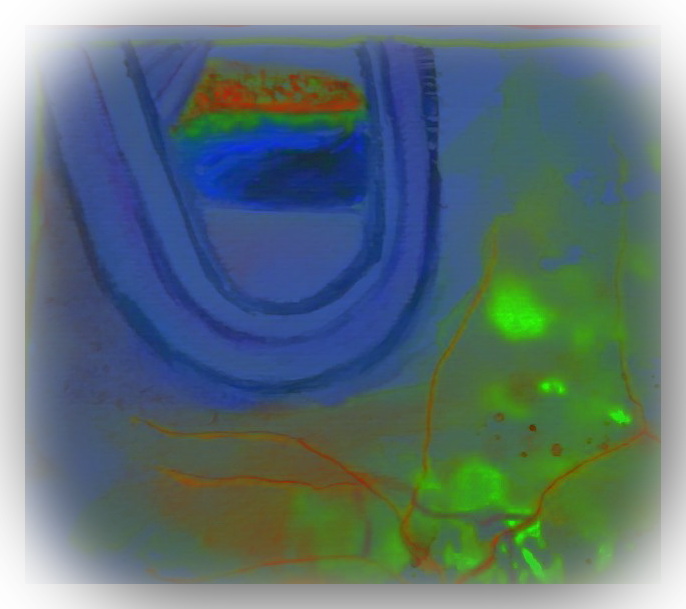
Fluorescent paints: To make my ideas literally glow in the dark and pop off the page.
Wooden pegs: My tiny wooden assistants doing the heavy lifting of holding the story together.
Linen strings: The tightropes my characters walk on while I figure out the plot twist.
Super magnets: For snaps, rapid changes, and maximum satisfying clicks.
Transparent elements:** Now you see it, now you don’t—pure layout wizardry.
The real joke: Designer storyboard
Picture a professional designer with fancy degrees hanging out in a store, aggressively clicking tiny magnets together to test their power. Right after that, I was stress-testing a roll of linen string to see if it would survive being wrapped around an old coat rack, while the staff slowly backed away.
What about you, fellow artists and illustrators? What do you use to keep your storyboards and ideas organized? Share your favorite studio hacks below!
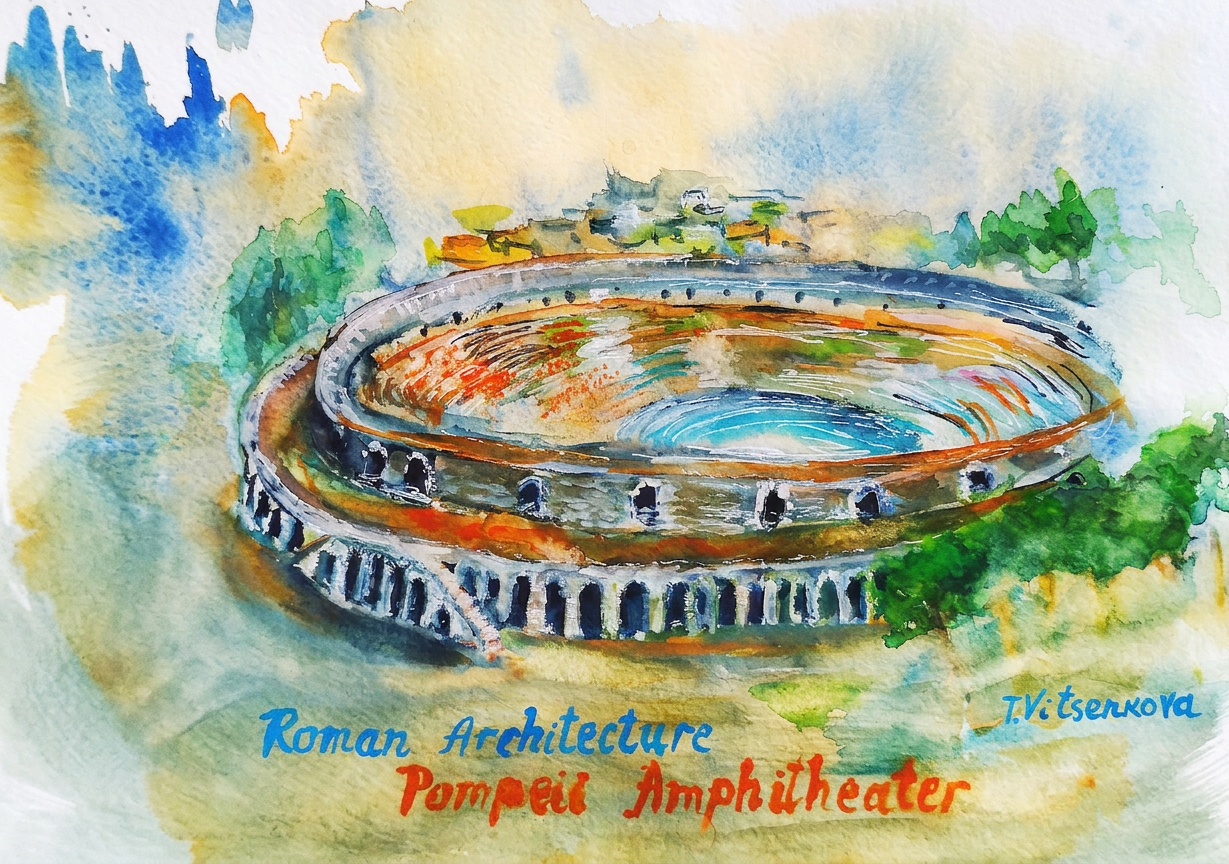
Watercolor journey with the course Roman Architecture by the Yale University.
I continue the art series with the course Roman Architecture + the city of Rome with Yale’s course Roman Architecture https://www.coursera.org/learn/roman-architecture. Rome, Palatine Hill, Romulus Founds Rome, Roman Architecture. 2-1.
Romulus founded the city of Rome and on Palatine Hill and archaeologists still find the remains of that village and houses from which the Roman Empire began to expand. It is difficult to imagine that on this huge passage there was once a small village, which was dug into a wonderful city, my beloved Rome. According to the legend, Romulus founded the City of Rome, on the 21st of April in 753 BC. Romulus village had huts made of wood that had thatched roofs. There are similar huts in a small village in the Maya Riviera near Cancun. Anyone who will visit this place might imagine that they are in a future city of Rome of the 8 century BC.
Rome, Palatine Hill, Romulus Founds Rome, Roman Architecture
The Palatine Hill is the oldest inhabited one in Rome. Actually, the name of the hill comes from the name of the goddess Pales – the patroness of cattle. The hill has long been a place for grazing pets and worshiping this goddess. The first permanent settlements appeared here in about 1000 BC, judging by the archaeological artefacts that appeared on the Palatine. There is the Palatine Hill’s archaeological museum with the Romulus House with the model of huts in the village of the Iron Age.
Several years ago I was in the Capitoline Museums in Rome, near the reproduced images of the Romulus village at the Palatine and Capitoline Hills; I stared in these pictures with fascination to find more information. Who would have known that in a few years I will learn about the Roman architecture and I will have the opportunity to understand why I was so delighted?
Rome, Palatine Hill, Romulus Founds Rome, Roman Architecture
Year of construction- 753 BC
Address: Rome, Palatine Hill, Piazza S. Maria Nova, 53V
Tools used for my painting Watercolour Charvin Ruby red and Emerald, Derwent, Albert Durer and Faber Castell watercolour pencils. Paper Acquarello Fabriano cold pressed watercolour album, 22×30 cm (9 ×12 in.)
Δ
document.getElementById( "ak_js_2" ).setAttribute( "value", ( new Date() ).getTime() );
The magic of the holidays is in the making! Join me on this artistic adventure as I explore the captivating world of #TravelVibes #ArtAdventure
You are welcome to visit my personal website pages. There, you can find out more about the artwork I am offering in oil and watercolor paintings. You can buy canvas prints, framed prints, and more artwork.
All paintings belong to the author. No image is to be copied without permission.
Art and Travel. Pompeii, bakeries and millstones. Introduction. Bathing, Entertainment, and Housing in the Roman City. 1-4.
The Daily Grind
After my Roman architecture course, I turn to my artwork. This session’s lecture explored the concept of “Bread and Circuses,” an allegorical phrase originating with the Roman poet Juvenal. To understand this principle, we studied Pompeii. It is an Italian city frozen in time by the volcanic eruption of Vesuvius in 79 CE. Pompeii offers a vivid window into daily life nearly two millennia ago. Through this study, I envisioned the bustling routines of ancient Romans.
The Inspiration – Juvenal
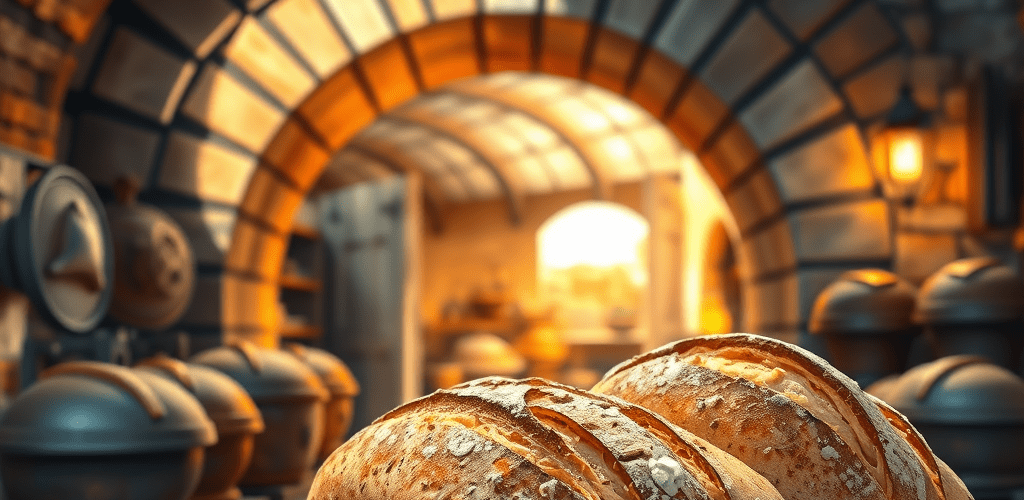
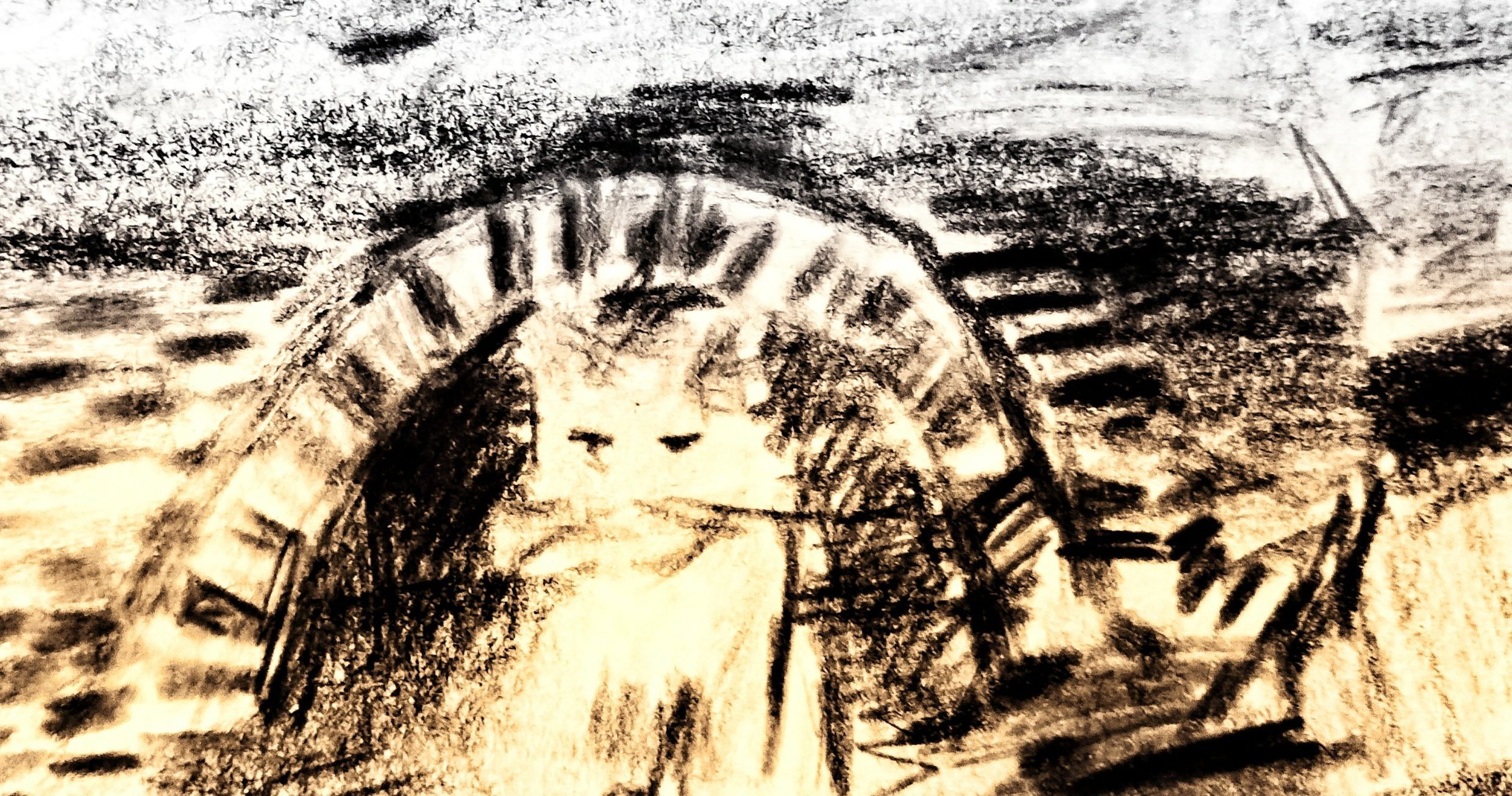
The millstones have square sockets in which wooden beams would have been placed. It features an arched brick oven with a view of the millstones in Pompeii. I chose to the painting for this session about the ancient bakery. In fact, all modern ovens still keep the design of those ancient ovens that became a prototype!
How about you, do you like to paint about food?
The Sensory Experience
After a fascinating dive into Roman architecture and the insightful “Bread and Circuses” lecture (thanks, Juvenal!), I’m channeling my inner baker in this new piece, an ancient bakery. To see the process in a Pompeian Bakery, we would find a mill, a large stone wheel, and many ovens. A bakery with ovens filled with warm bread reminds us of the daily life of ancient Pompeii. The smells of baking grain also evoke this historical scene.
Painting – Pompeii Via Provinciale Ripuaria, 53, 80045 Pompei NA, Italy.Roman Architecture. Year of construction-79 BC.
Can you smell the fresh bread?:)
A watercolor depiction of a Pompeii bakery featuring an arched brick oven and millstones, showcasing ancient Roman daily life.
In Pompeii, bakeries played a crucial role in providing bread for the city’s inhabitants. Bakeries typically consisted of a mill for grinding the grains. They also had an oven for baking the bread. Additionally, there was a shop where bread was sold. Bakeries give us an incredible glimpse into what life was like in Roman Pompeii.
The Scene Setter. Itinerary to Pompeii
When I was in Pompeii, I imagined myself as an inhabitant of Pompeii. How about your experience?
After the lecture Professor of History of Art and Classics Diana E.E. Kleiner Dunham, I have the next artistic (with many sketches) and travel itinerary.
So, my suggestion during your next trip to Pompeii visit a bakery nearby, where you buy bread… Then go to fast-food Thermopolis, an old-aged “McDonalds”. Next, visit a public fountain to take some water. In antique life, kitchens, baths and running water were not available in the houses. Thus, everything was public, including the bath complex. There were also public stores and bakeries with lovely paintings on the walls.
Well, I still prefer modern comfort. But, seeing the beautiful design of public fountains and bakeries is really great. It’s a wonderful way to plunge into the past, at least for a short while.
The echoes of ancient Rome resonate through time, whispering tales of a civilization that shaped the course of Western history. From grand architectural marvels to intricate social structures, the Romans left an indelible mark on the world.
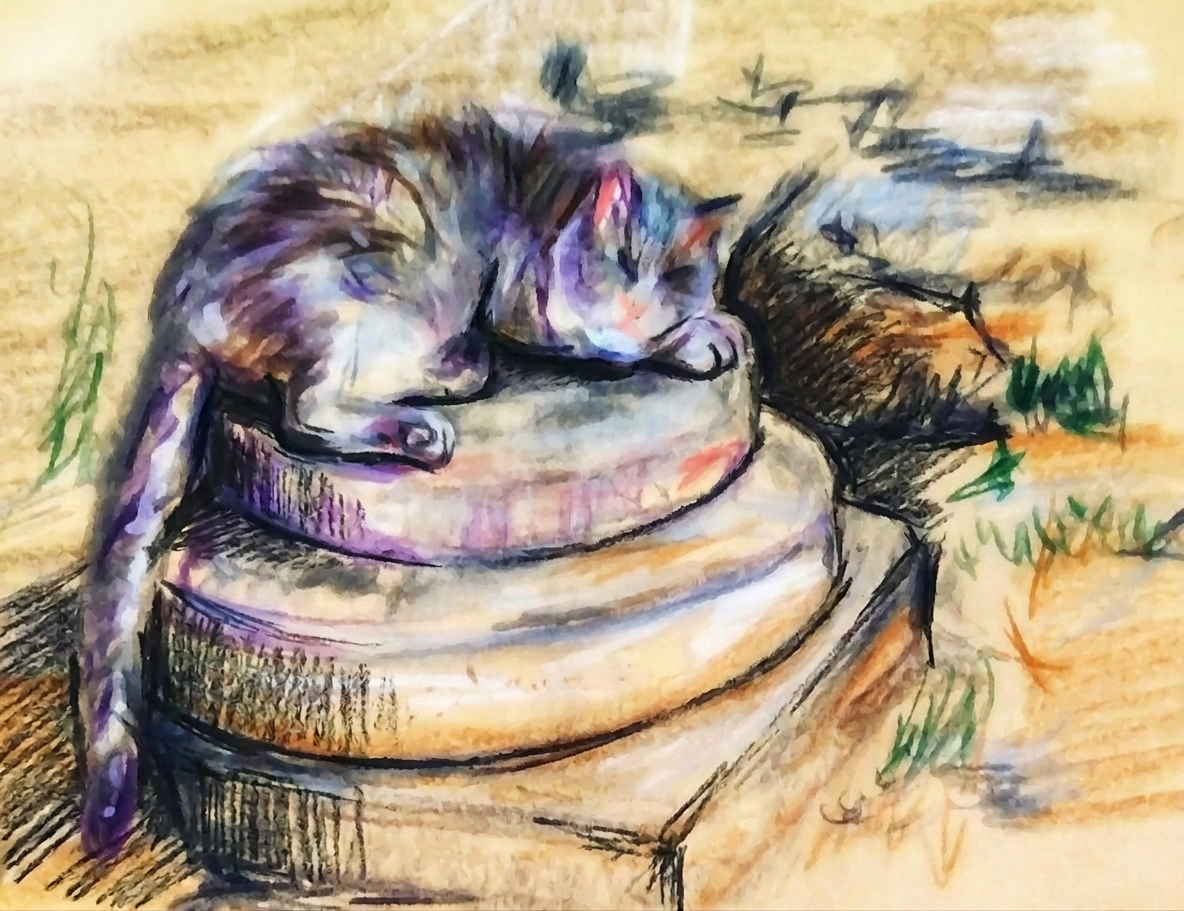
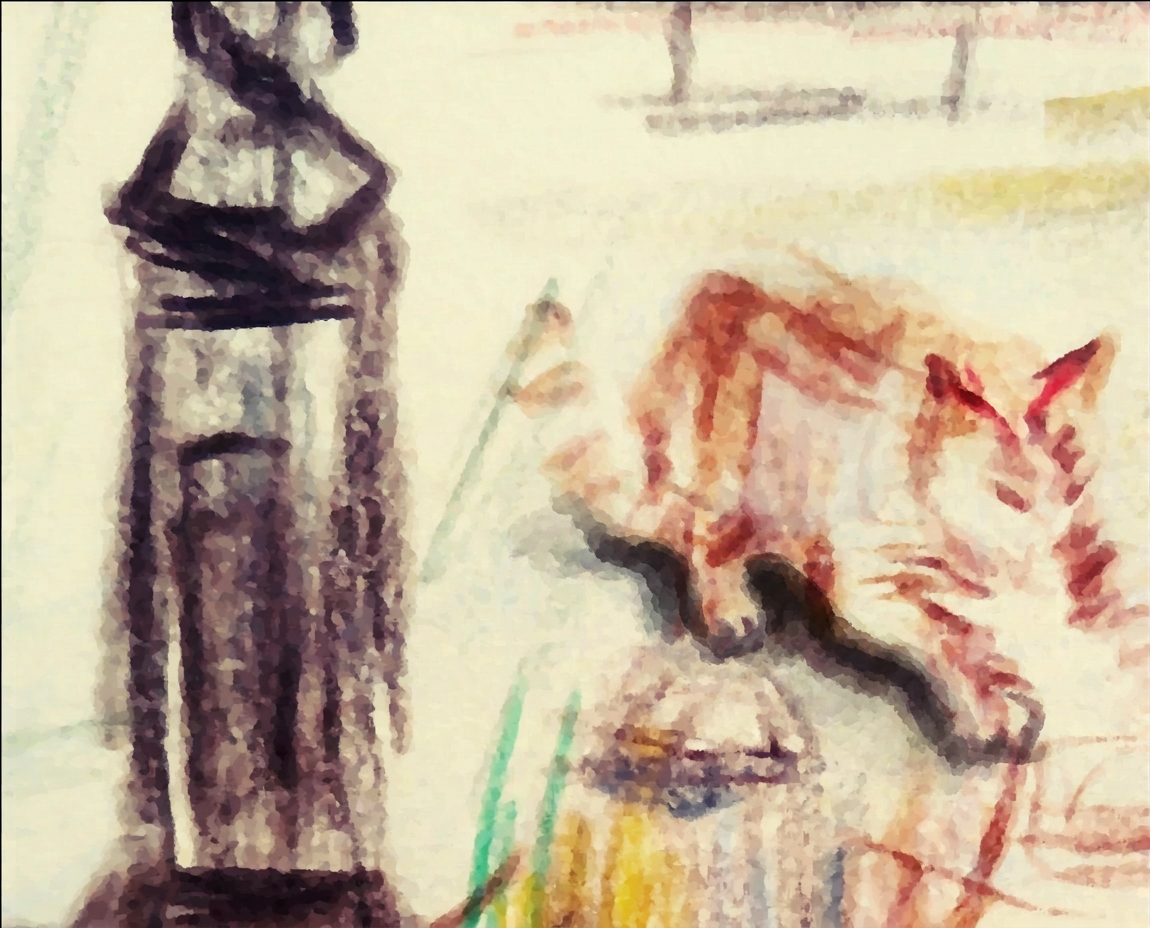
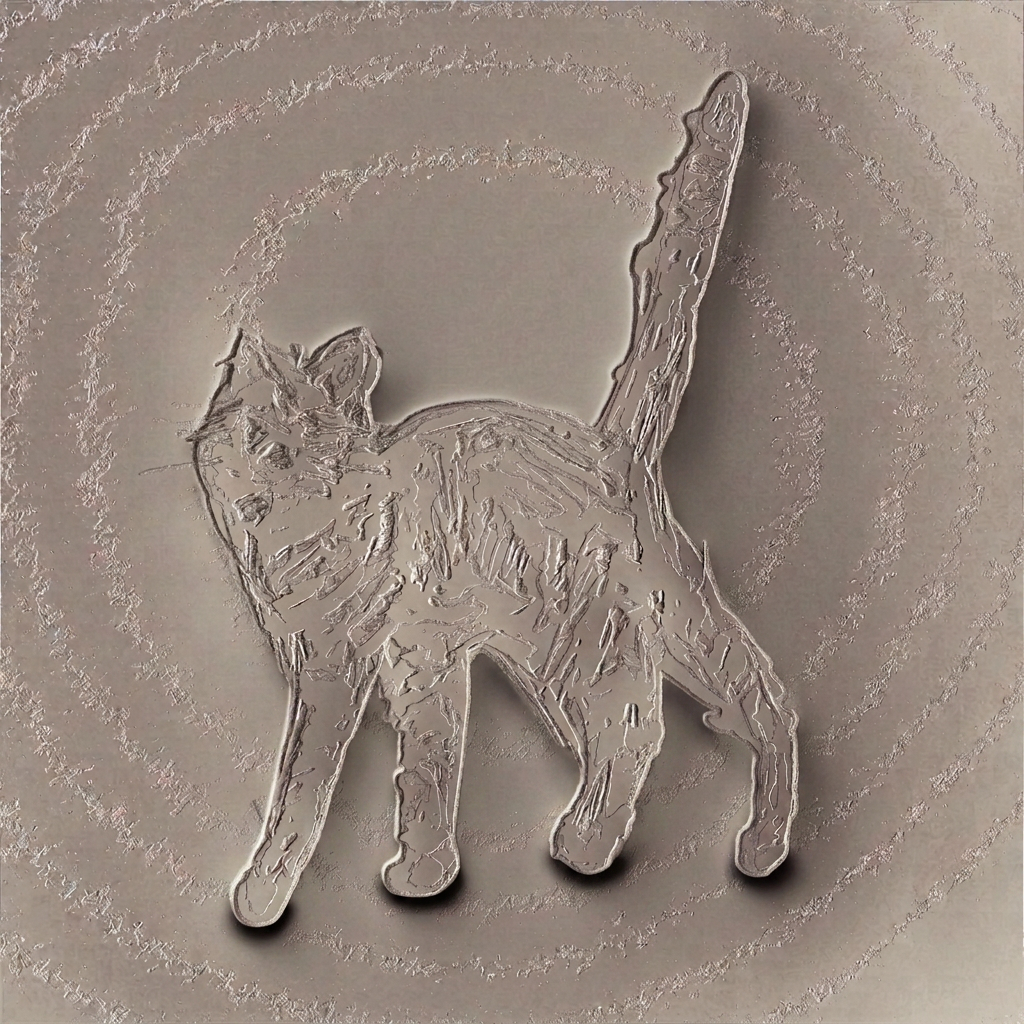
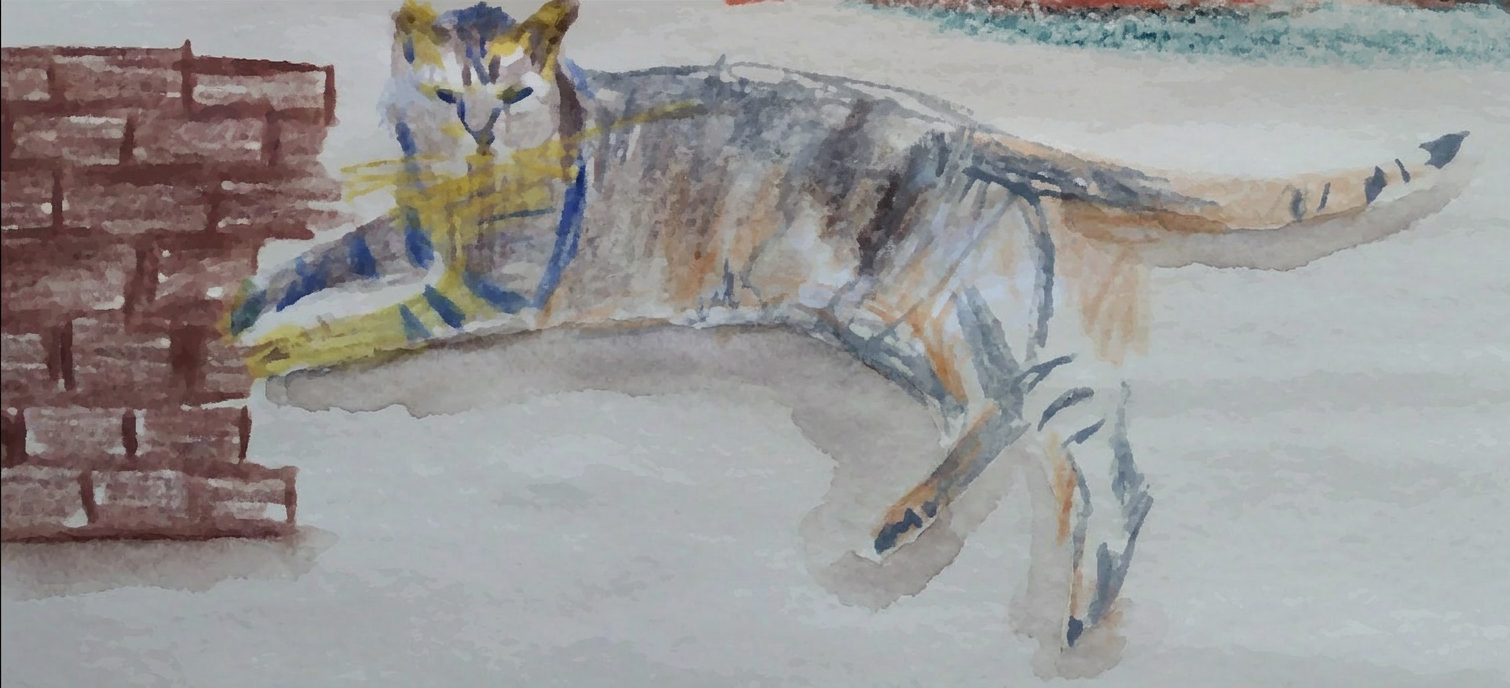
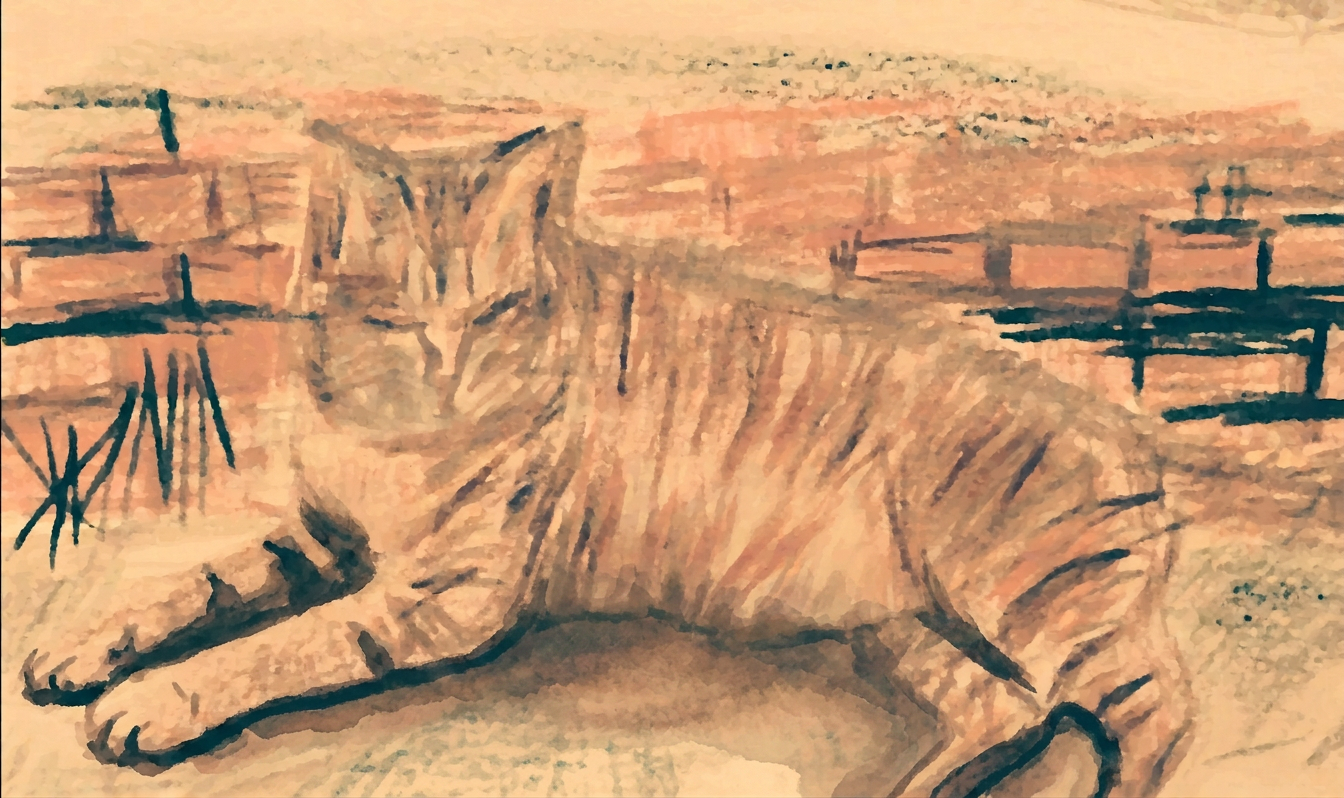
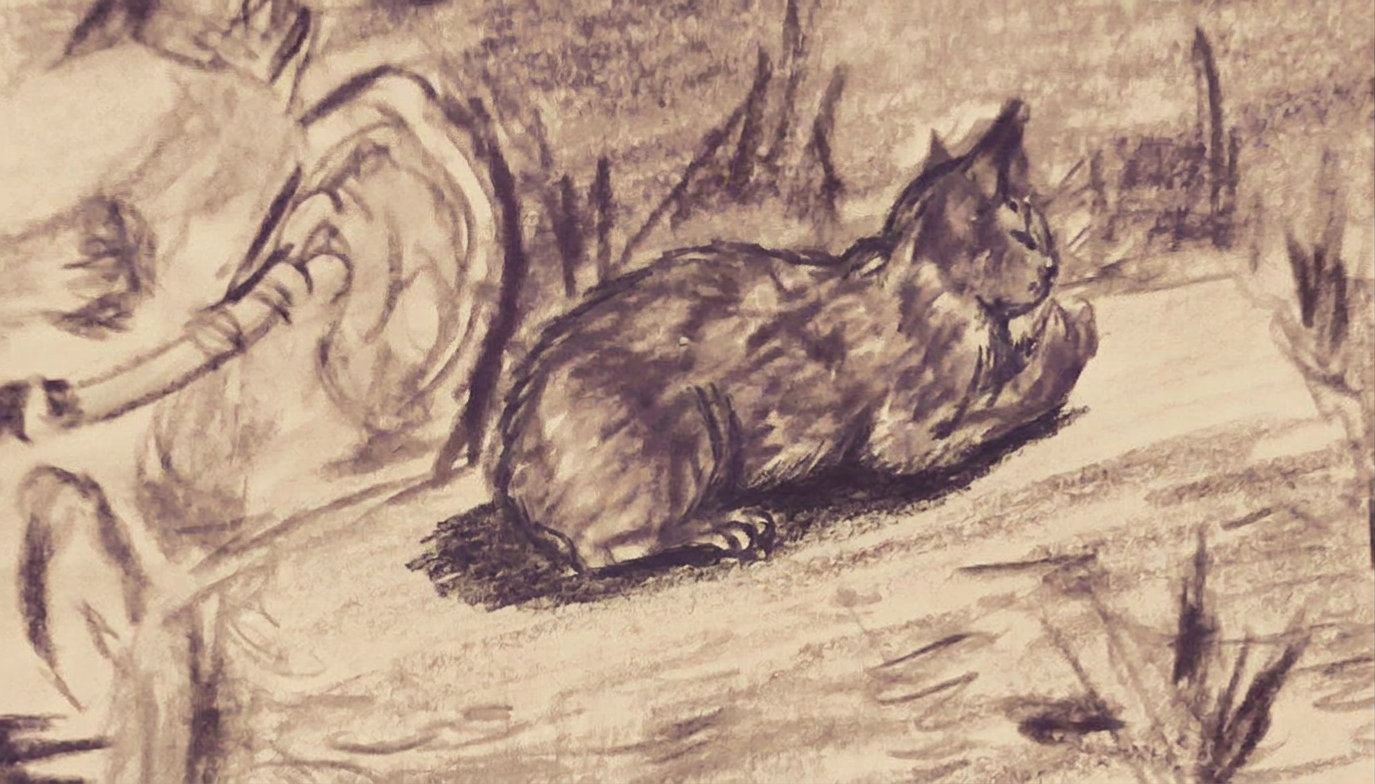
A peaceful scene depicting a resting cat atop stone millstones, reminiscent of ancient Pompeii.
All roads lead to Rome – Alain de Lille
Bon voyage! Until the next travel:)
Hope you enjoy this little slice of history as much as I enjoyed bringing it to life on paper!
What do you think of my artwork? Let me know in the comments.
Tools used for my painting Watercolor Cotman sap green and mauve + Van Gogh siena paint, Derwent, Albert Durer and Faber Castell watercolour pencils. Paper Acquarello watercolor Fabriano grana grossa rouch album, 22×30 cm (9 ×12 in.)
The magic of the holidays is in the making! Join me on this artistic adventure as I explore the captivating world of #TravelVibes #ArtAdventure
All paintings belong to the author. No image is to be copied without permission.
Trajan’s Market. Exploring Yale’s Course on Roman Architecture (1-3). Art Inspired by Ancient Rome.
I continue my favorite Roman Architecture course. I’m diving into a project that combines my newfound knowledge with my artistic practice. So, the next part of the Yale’s course Roman Architecture is..
Roman Tombs, Aqueducts, and the lasting impact of Roman Architecture
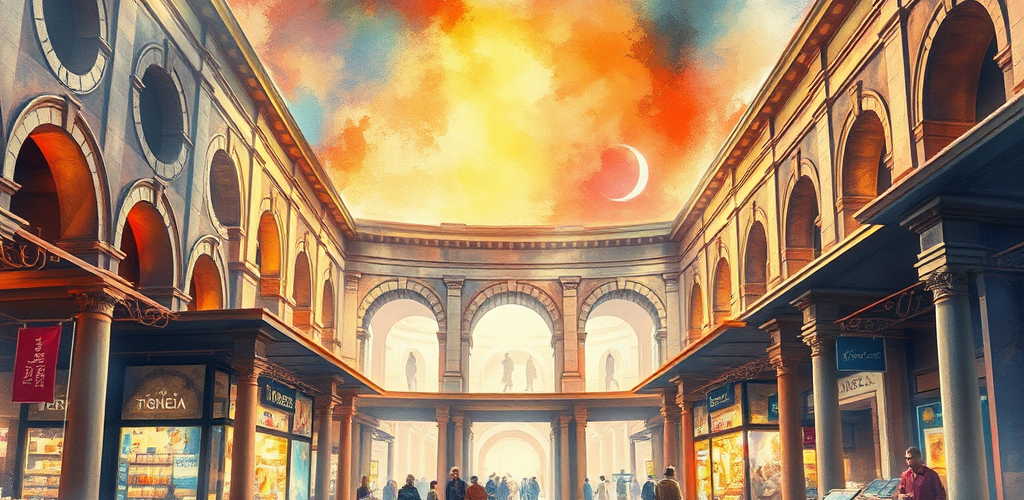
This week’s lecture blew me away… we dove deep into the magnificent Forum of Trajan! Seriously, picture this: ancient Rome, but make it “shopping paradise”! Trajan’s Market (Mercati di Traiano) was basically the world’s FIRST supermarket! A massive complex of shops, a true dream for any fashionista or shopping enthusiast (past or present!). The forum itself? Pure magic. Ancient Roman street design perfected, a symphony of stone that’s truly “frozen music.”
I can only imagine the buzz and energy that filled that space. The ancient Supermarket Trajan’s Market was a large complex of bazaar with series of shops. The Trajan Forum was the dream place for any fashion and shopping lovers. This was the first supermarket, all subsequent supermarkets in Rome and around the world built in the same way. The Forum of Trajan has characteristics of ancient Roman street design, beautiful and magic architecture, frozen music in stone.
Trajan’s Forum and Market: A Shopping Paradise in Ancient Rome
Imagine stepping back in time. Don’t just step back to a period of history but into the very heart of a bustling, vibrant city. Forget dusty tomes and silent ruins. Picture yourself immersed in the sensory overload of ancient Rome. Focus specifically on the Forum and Market of Trajan.
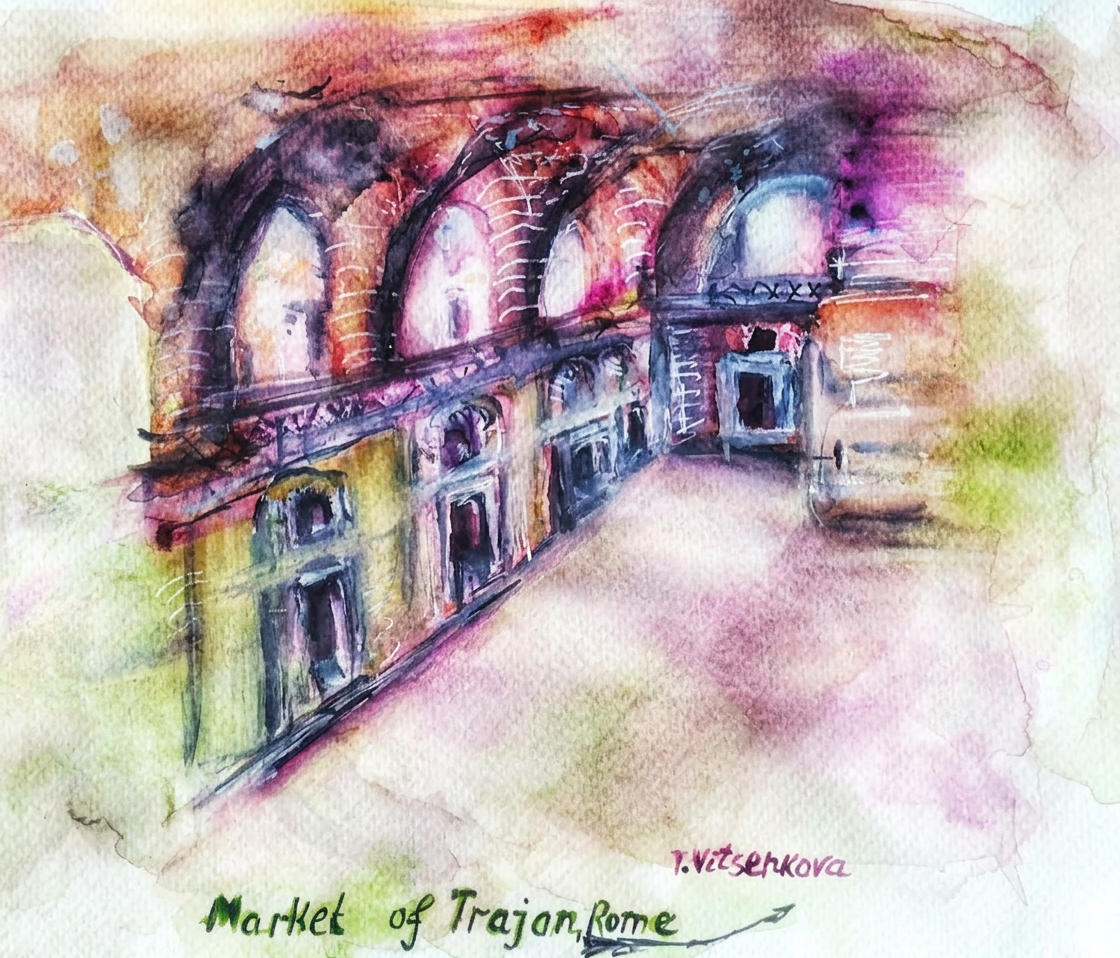
Painting- Rome, Markets of Trajan, Roman Architecture
Year of construction- 113 AD
A watercolor depiction of the historic Trajan’s Market in Rome, showcasing its ancient architectural beauty.
Address: Via Quattro Novembre, 94, 00187 Roma RM, Italy
To truly appreciate Trajan’s Forum and Market, it’s essential to understand the man behind the vision: Emperor Trajan. Reigning from 98 to 117 AD, Trajan was a beloved and highly successful emperor. He oversaw a period of unprecedented expansion of the Roman Empire, marked by military victories and significant public works projects. Trajan was known for his dedication to the people of Rome. He understood the value of investing in infrastructure. Public spaces were important to him. The Forum and Market were a direct result of his efforts to improve the city.
The Construction: A feat of Roman Engineering
Building the Forum of Trajan was a monumental task, literally and figuratively. It required extensive excavation to level the terrain, cutting back a ridge that connected the Capitoline and Quirinal hills. This massive undertaking showcased the Romans’ engineering skills and their ability to move vast quantities of earth and materials. The project also involved innovative use of concrete and other construction techniques that were groundbreaking for their time
The Architecture: A Symphony in Stone. Grand Canyon and Roman Architecture
Just a funny thought. Our family visited the Grand Canyon several years ago. My impression of this natural, earth-made architecture with its rocks and relief mountains is profound. It reminds me of Roman architecture with its ancient buildings’ rounded windows, beams, doors, ribbed ceilings, and columns.
Roman architects definitely took their ideas from nature. This is reflected in Trajan’s design. The architectural genius arose from earlier revolutionary innovations in architecture.
Roman Architecture soundtrack
The sheer scale and ambition of this Roman masterpiece is truly breathtaking. Thinking about the materials, the intricate carvings, and the historical significance… it’s mind-blowing!
Now, to fully immerse myself in the feeling of being there (virtually, of course! )
I’m trying to find a playlist to set the mood for learning the course about antique Rome. I am choosing music that helps me to capture the beauty of Trajan’s Forum – Suite Bergamasque, L. 75: III. Clair de Lune” – Claude Debussy.
Live in Rome (past and present)
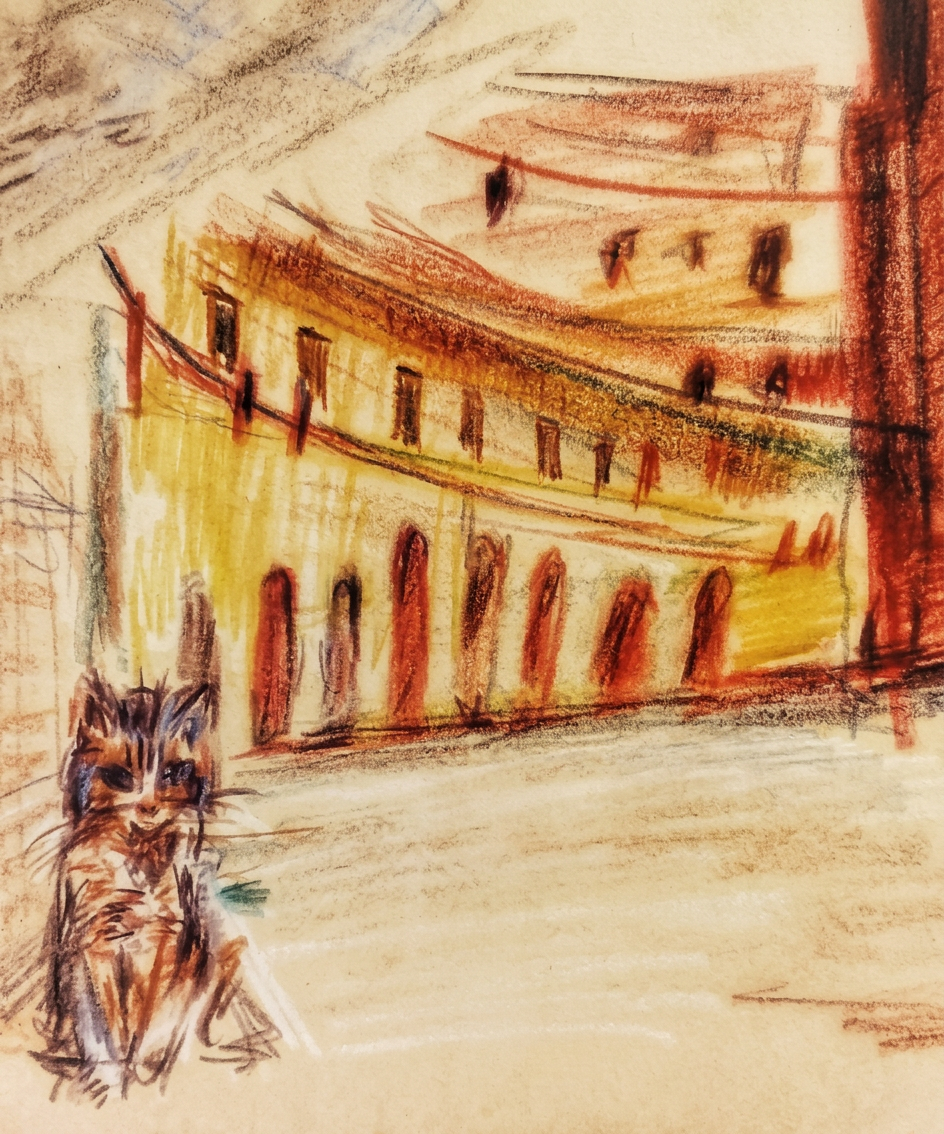
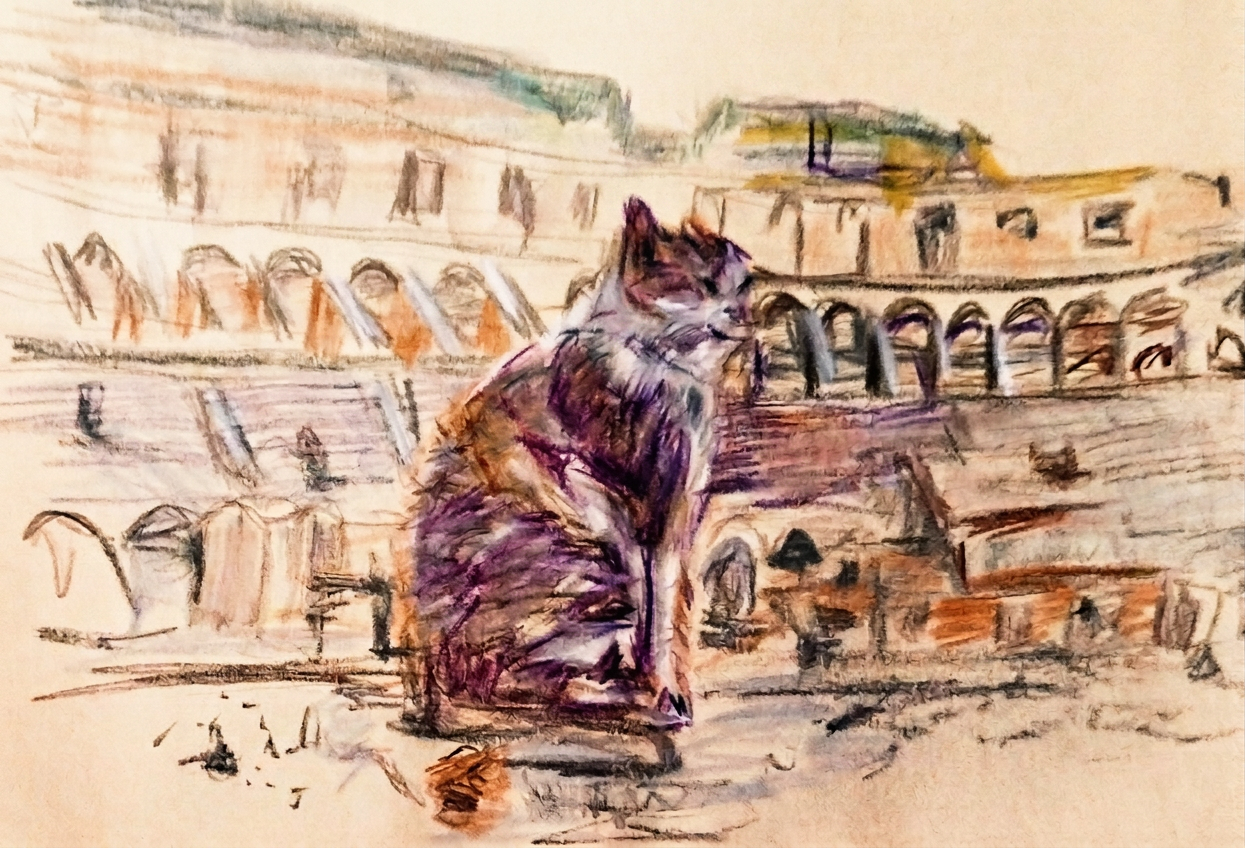
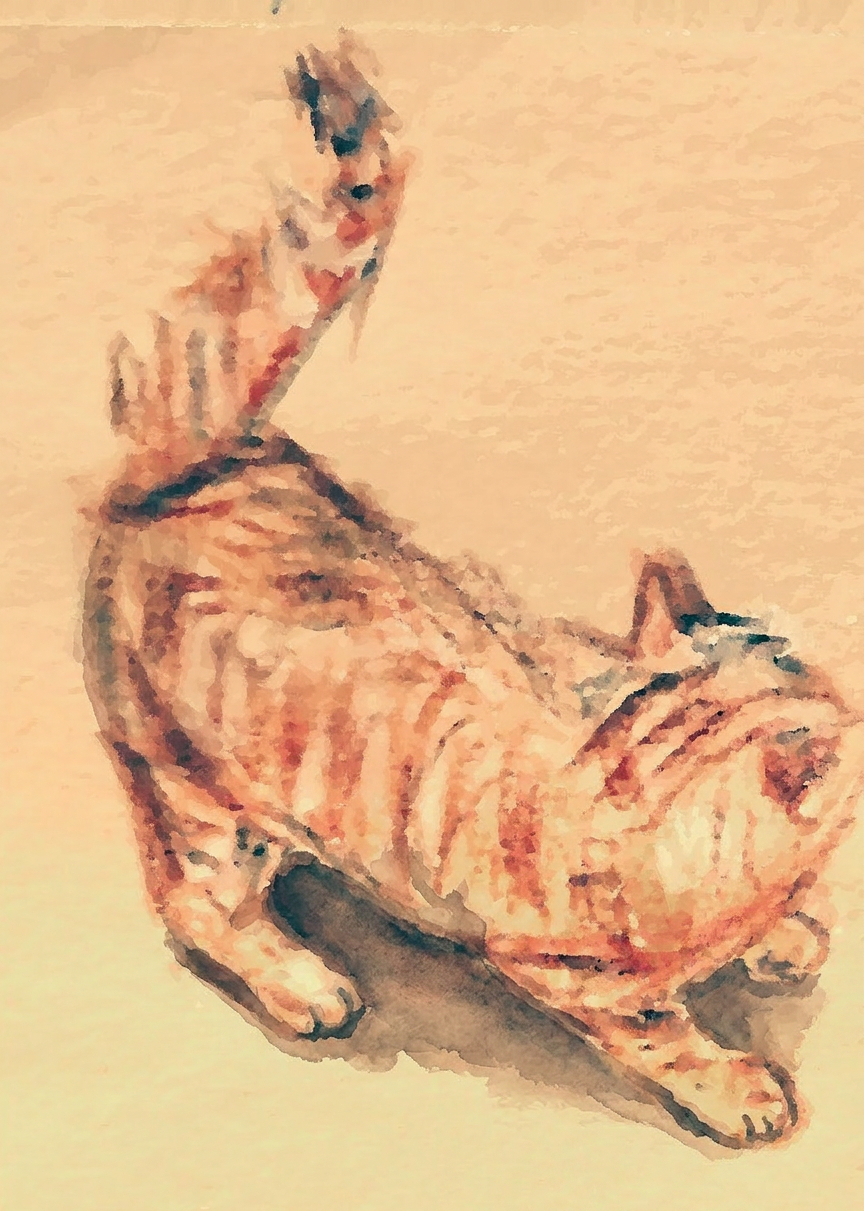
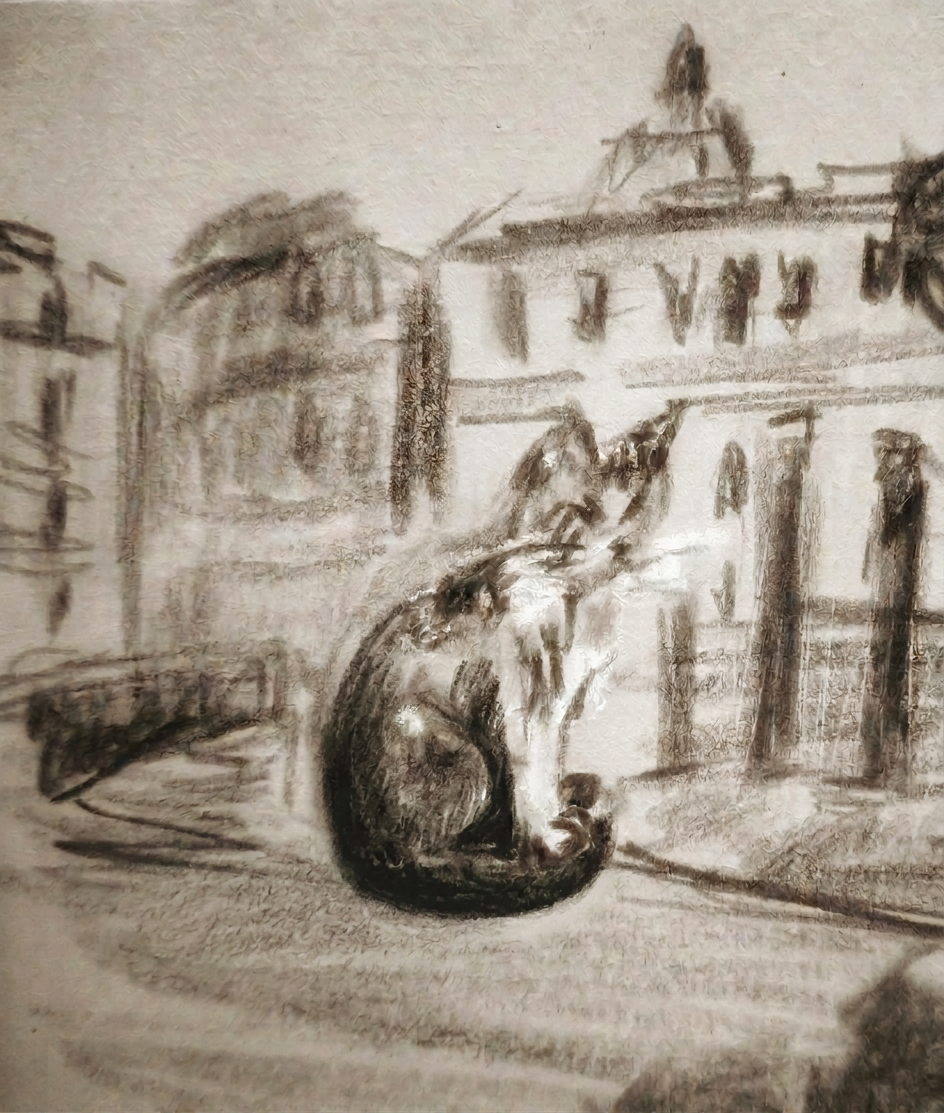
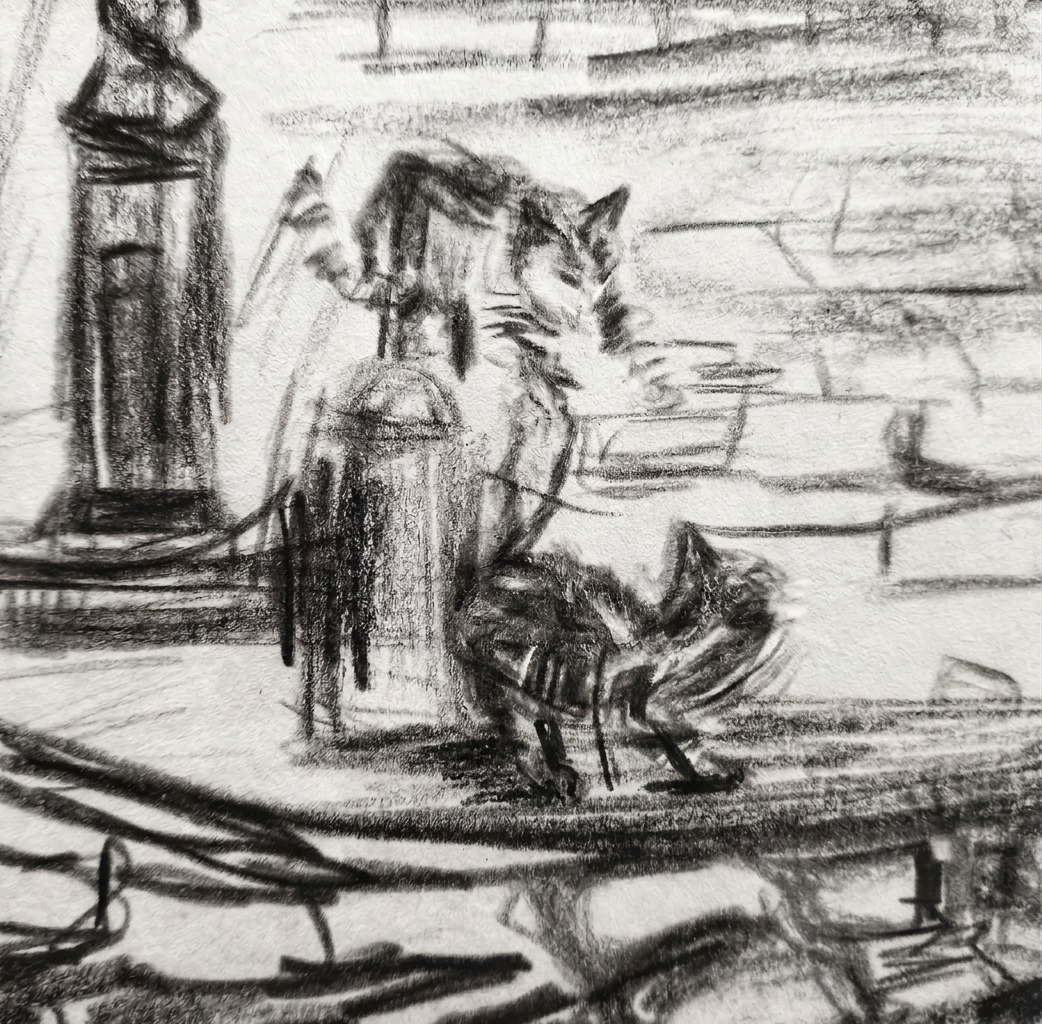
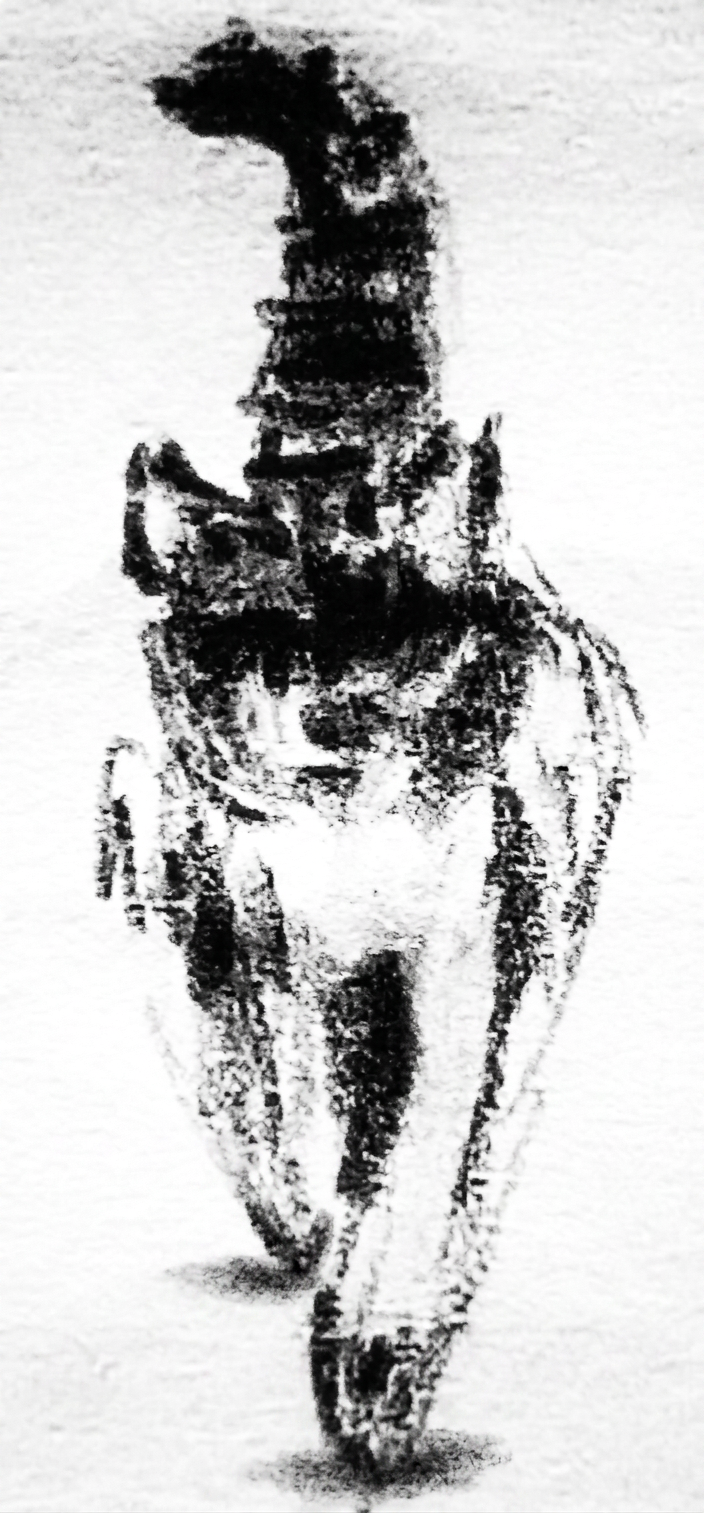
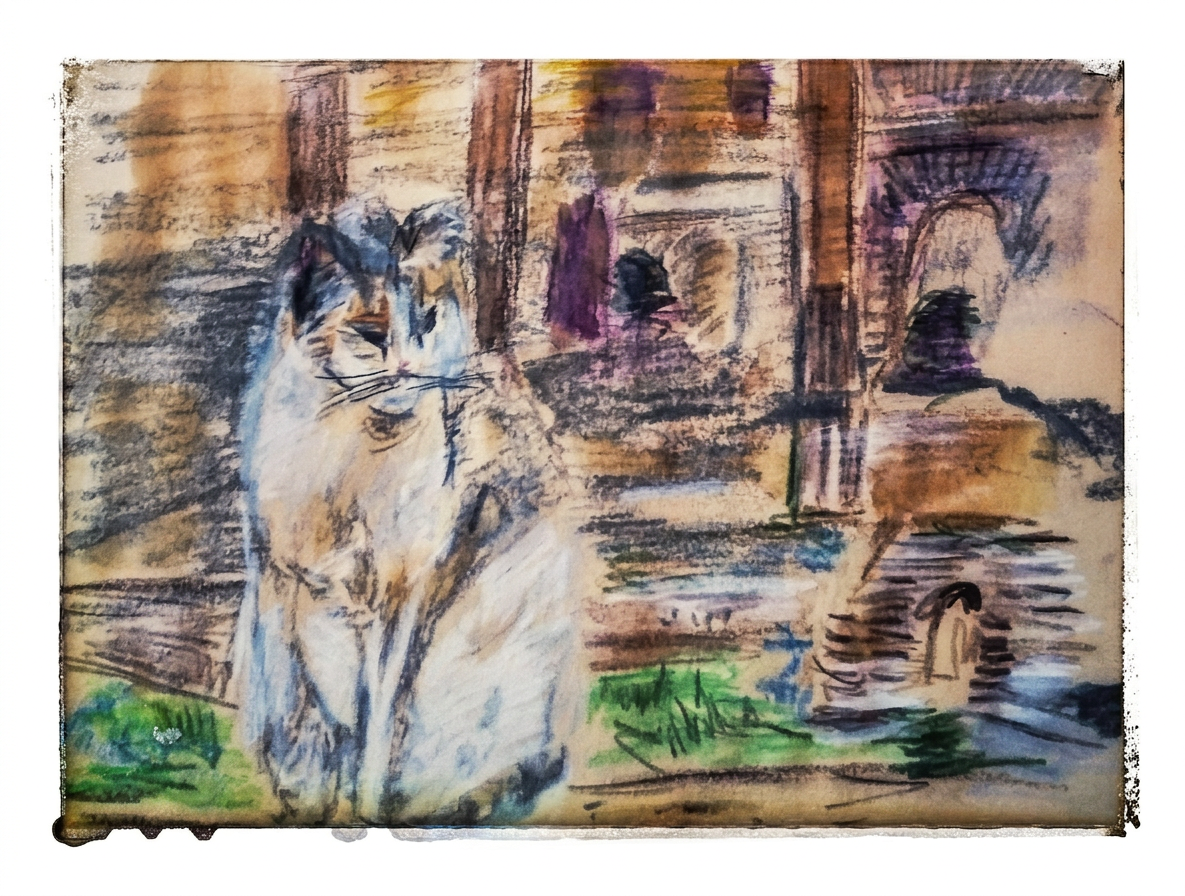
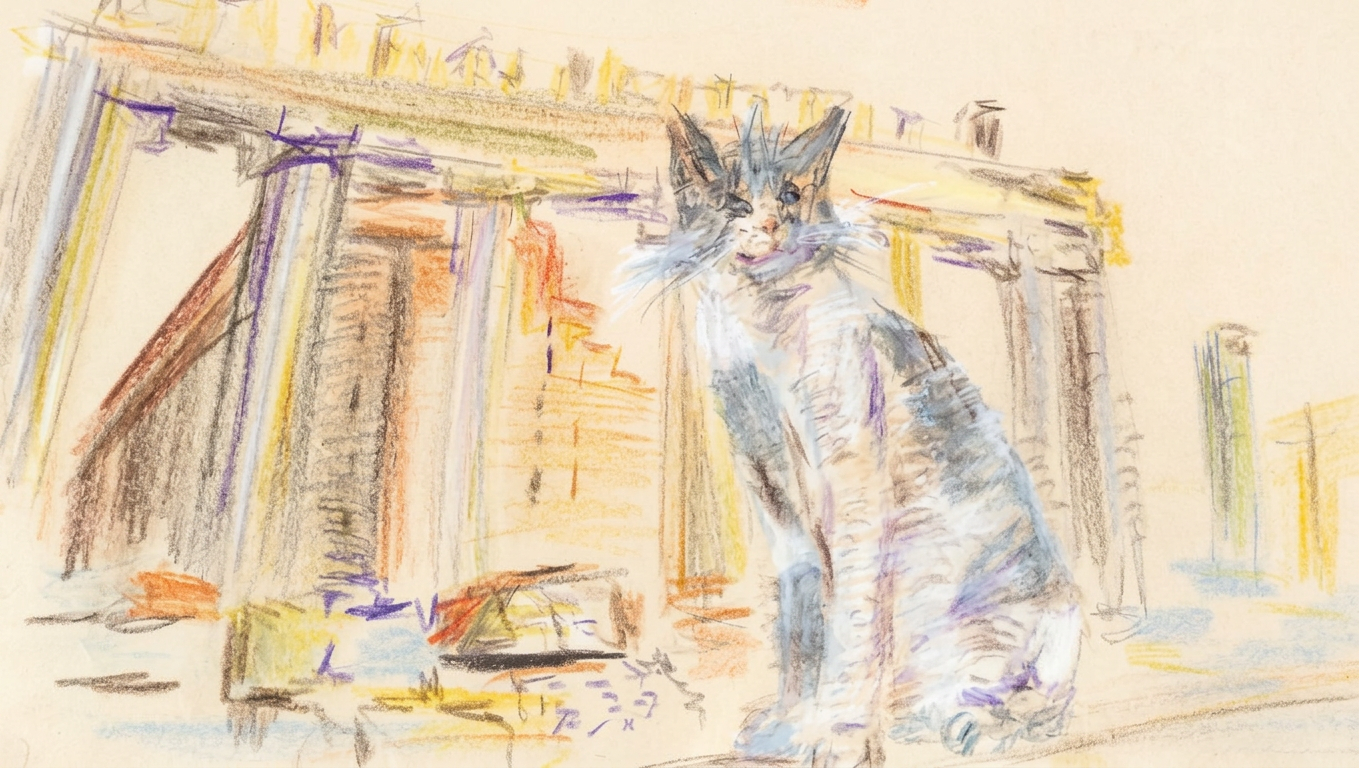
I usually adding a live to my sketching. Imagine: a cat contemplating the grandeur of Roman engineering:)
He was witnessing the majestic arches, columns, and domes of ancient Rome come to life.
This wasn’t just a place. It was a testament to Roman ingenuity, a hub of commerce, and a dazzling display of architectural prowess.
A vibrant watercolor illustration of Trajan’s Market, showcasing its ancient architectural beauty, with a playful cat in the foreground.
A little cat is exploring the ruins with me. Every trip in Rome, I see some cats. They are diving into the grandeur of Roman architecture with a purr-fectly delightful twist!
The magic of the holidays is in the making! Join me on this artistic adventure as I explore the captivating world of #TravelVibes #ArtAdventure
You are welcome to visit my personal website pages. There, you can find out more about the artwork I am offering in oil and watercolor paintings. You can buy canvas prints, framed prints, and more artwork.
All paintings belong to the author. No image is to be copied without permission.
Tools used for my painting Watercolor Cotman sap green and mauve +Van Gogh siena paint), Derwent, Albert Durer and Faber Castell watercolour pencils. Paper Acquarello watercolor Fabriano grana grossa rouch album, 22×30 cm (9 ×12 in.)
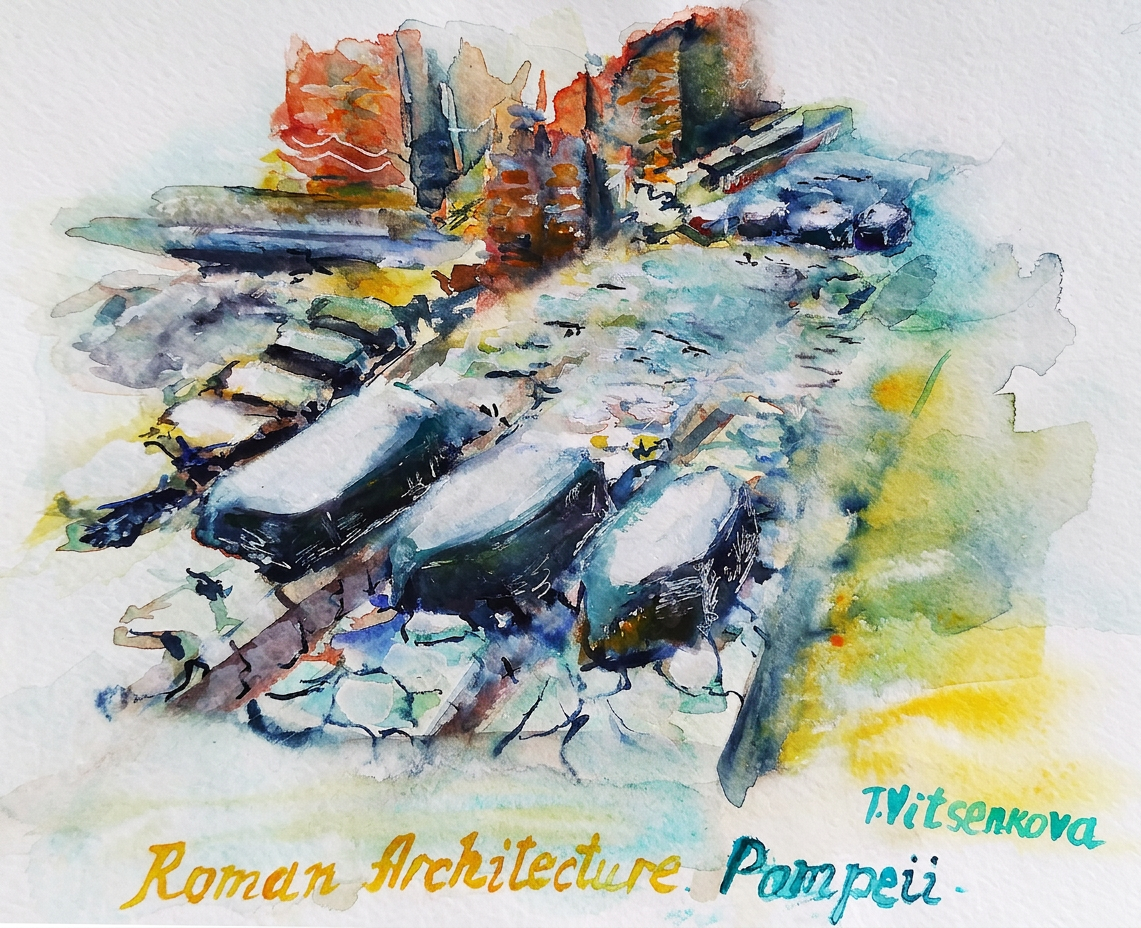
This part of Roman Architecture‘s course was about Pompeii’s daily life in general, with many photo references. Pompeii’s streets look very modern with lots of bakeries, wine shops in the residential part of the city. For example, scientists discovered more than 30 bakeries. Few people in ancient Rome could afford to bake bread at home, so most bought it in the bakeries. Millstones for bake and for bay and ovens, that are part of bakeries look exactly as today’s bakeries in Italy. There were many fountains everywhere, for example a famous fountain with representations of the goddess Ceres.
I chose to paint the residential area with BIG pedestrian polygonal blocks of stones. It is a crossing part of the street. They are “talking” to us, telling their ancient stories about Pompeii’s daily life. If there was torrential rain, and the water piled up, people needed to cross the street without stepping in the water, but how? Romans were ingenious and concerned about their roads and pedestrians.
The stepping stones were placed in the streets so that people could cross the roads during and after the rain. Ancient people could easily walk around and were not afraid to wet their shoes and long dresses. As they continued gathering with friends and families, walking to the city’s centre or theatre, enjoying their daily life.
At the same time, these stepping stones were spaced apart far enough so that carts could still pass through the streets easily. The visible ruts that came from the horses and carts, between the stepping stones, show that they had to coordinate the wheels of the cart in such a way that they would span the stepping stones. Ancient Pompeii citizens could easily make their way across that stream by utilizing these stepping stones, “pondera”.
This was a genius architecture feat with responsible thinking thought about pedestrians. And even when my family walked in the city-museum of Pompeii with its astonishing view and a background of 2 majestic mountains- Vesuvius and Montezuma, we still found ourselves completely astounded by the stepping stones!
Painting – stones on the Streets of Pompeii -Daily Life, Roman Architecture
Year of construction- 79AD
Address: Pompeii
Tools used for my painting Watercolour raw sienna, permanent rose, Charvin vert imperial, Albert Durer and Faber Castell watercolour pencils. Paper Van Gogh National gallery watercolour album, 22×30 cm (9 ×12 in.)
The magic of the holidays is in the making! Join me on this artistic adventure as I explore the captivating world of #TravelVibes #ArtAdventure
All paintings belong to the author. No image is to be copied without permission.
Roman concrete and the revolution in Roman Architecture. 3-1
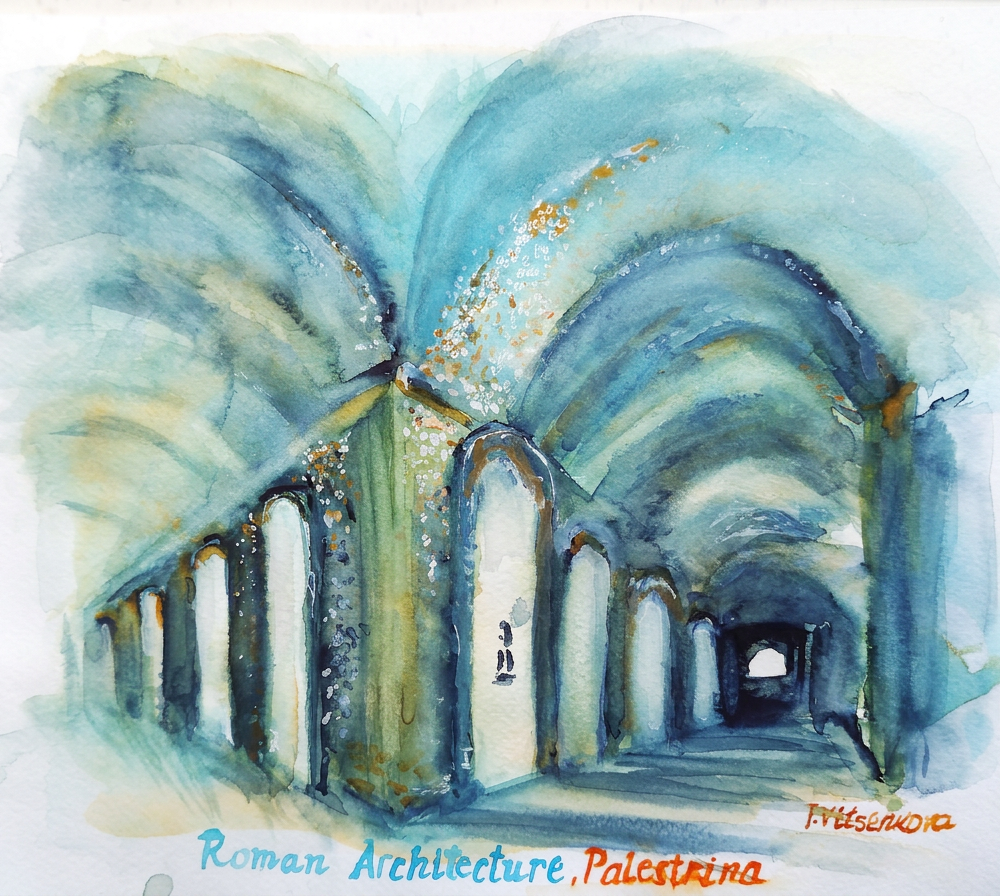
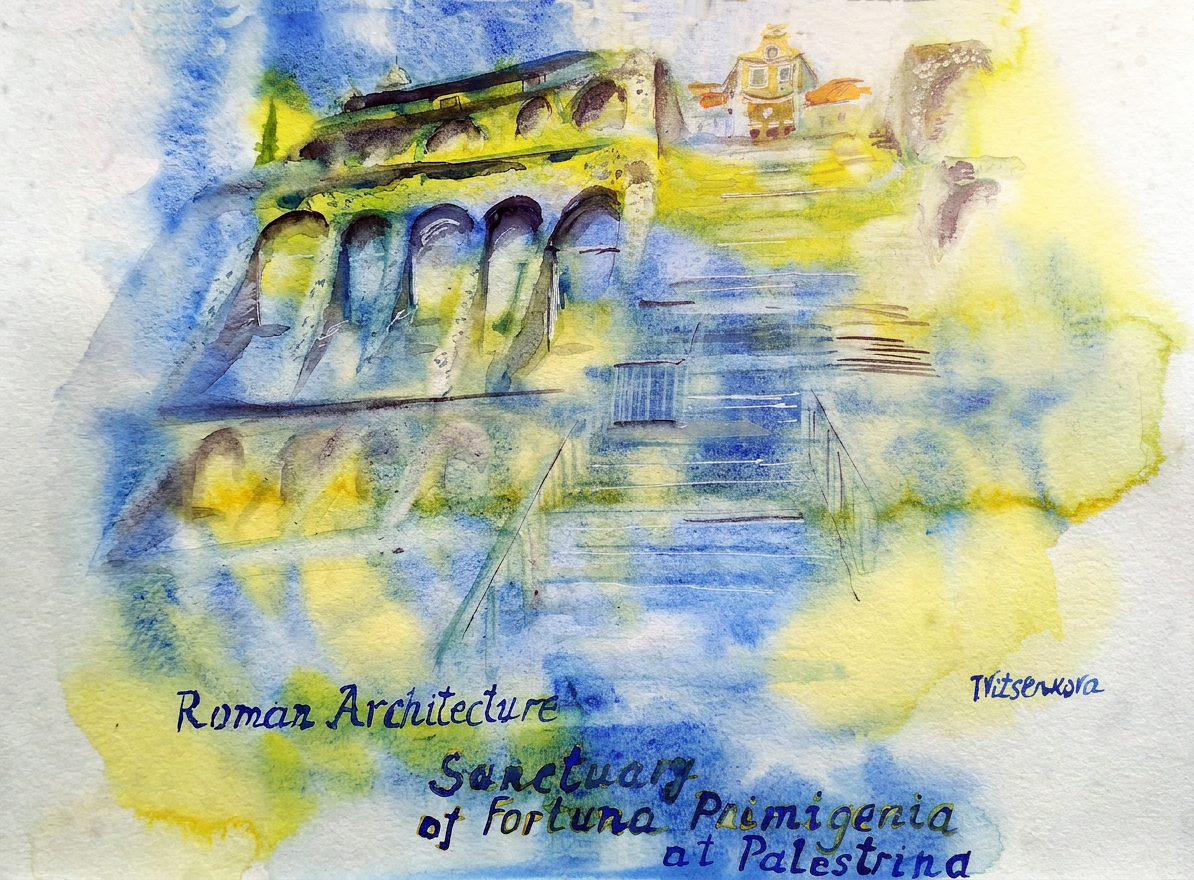
There is a wonderful place near Rome, UNESCO city of Palestrina. The Sanctuary of Fortuna Primigenia at Palestrina (ancient Praeneste) in Italy was built in the 2nd century BCE in honour of the Goddess Isis, the goddess of femininity and motherhood and Fortuna, the ancient Roman goddess of luck. It was built on a natural hill on cement.
My painting is about the interior space of the Sanctuary of Fortuna Primigenia. It was a Sanctuary with built-in shops and a detached theatre in the Middle Ages. For my painting I added subtle bluish and greenish hues, because, of course, the stones fell off and the cement had been exposed over the millennia. Luckily for us, the Temple with its delicate arches has survived until now, and modern architects and archaeologists continue to explore and discover the secrets of ancient Roman architects even after millennia.
The genius Roman architects noticed that the volcanic dust, which is found in the sea in Italy, turns into pumice when in multitude. They realized that it can be used to strengthen any building. This revolutionary discovery created the Roman cement from ash, lime, sand, pebbles of a certain size and volcanic ash and sea water. Added either be large stone blocks or it could be small pieces of stone presses into the concrete when concrete was still wet. When dried, these stones made the building look more attractive and protected the building from moisture.
Like modern constructors, the Romans erected wooden frames for the walls and ceilings and poured the concrete into them. Romans solved two problems this way, protected cement from moisture and hid the non-attractive part of cement at the same time. I would add that they were saving money for the construction and gaining valuable experience. Using the new revolutionary technology, they started to build not only Temples and villas for the rich, they started to develop and build more, and thanks to this experience and development, today we can still admire the architectural monuments of the past.
Another one-day trip from Rome is on my way in Italy:)
All roads lead to Rome – Alain de Lille
Bon voyage! Until the next travel:)
All paintings belong to the author. No image is to be copied without permission.
Address: Via Colle Pastino 20, 00036, Palestrina Italy
Tools used for my painting Watercolour Cotman terra de siena and viridian Corman, Charvin bleu royal, Derwent, Albert Durer and Faber Castell watercolour pencils. Paper Van Gogh, National gallery watercolour album, 22×30 cm (9 ×12 in.)
Innovations in Concrete at Rome: The Tabularium and the Theatre of Marcellus. 3-4
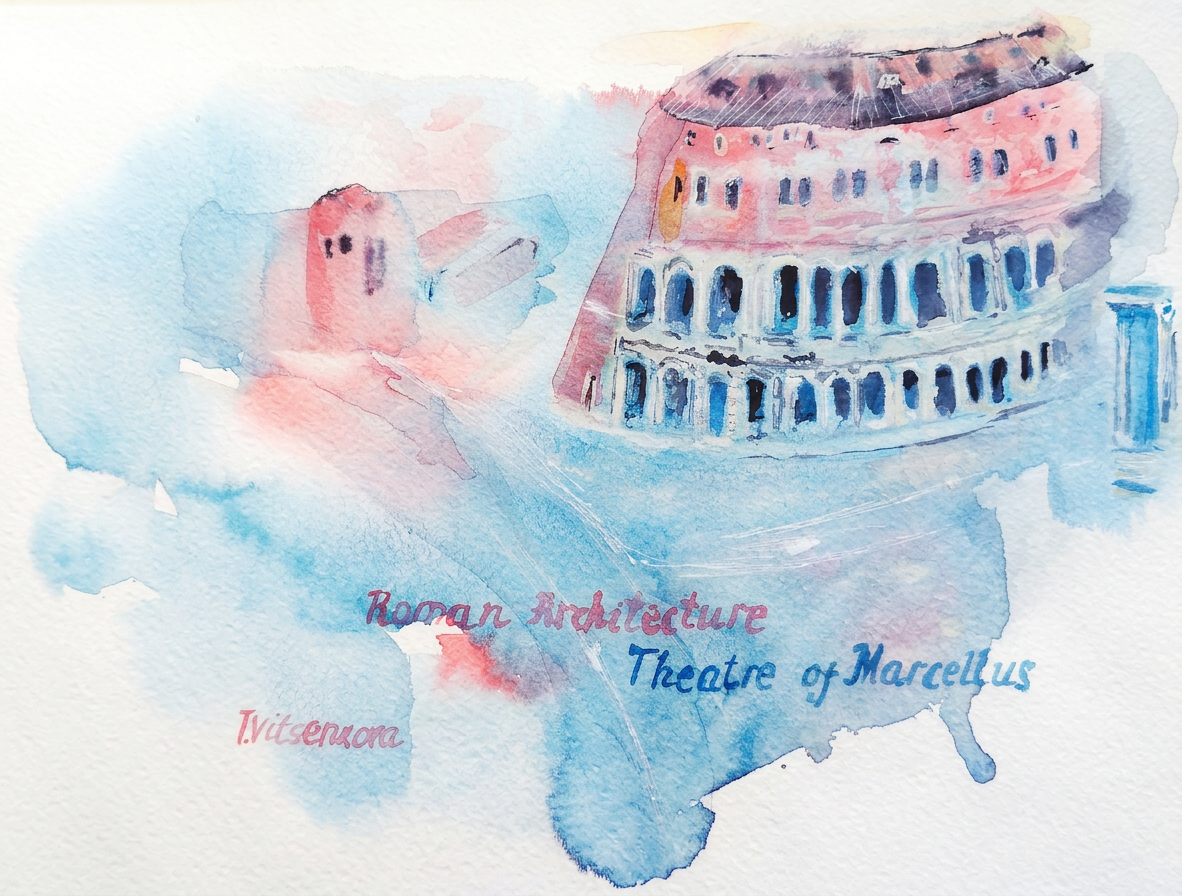
Ancient Rome offered its citizens a number of stunning venues where they could be entertained, wined and dined. The Theatre of Marcellus was one of the most impressive theatre, located in the center of Rome. Apparently Seven famous hills was not enough for Roman architects and if they wanted to build a theatre on a flat terrain, they cemented an artificial hill and built a tribune in the very center of the city where people could sit. For this monument Romans used many architectural innovations, especially their pedestal and yes, the theatre was the precedent for the Colosseum. Theatre of Marcellus was reused as a fortress in middle ages, main prototype for Roman theatres and nowadays it is an expensive condominium. The Romans took what the Greek architects did, and then they took from the Etruscan architectural achievements. They combined the best of both brilliant civilizations of architectural discoveries, then added something of their own, developed further, without fear of experimenting.
For my watercolor reference’s painting of the Theatre of Marcello with a nearby column of the Temple of Apollo , I used the Google Earth app to view the building from a bird’s eye view. Julius Caesar planned the open-air theatre but died before it was completed. Then Emperor Augustus took up the reins and dedicated the theatre to memory of his nephew and son in law Marcellus in 17 BC, when the theatre was used for dramas and arena fights.
Teatro Marcello was decorated with marble statues and large bronze vases, placed around the perimeter to enhance the sound, masks of the heroes of comedies and tragedies. The inner part consisted of three tiers of marble steps, divided into sectors for noble townspeople, places for women, a separate area for common people and slaves. And the box of the emperor was separated from the other seats. Augustus ordered that the interior design of the theatre surpass in its splendor all previous buildings.
I like how Vitruvius, the Roman genius-engineer, artist, architect and writer who wrote 10 books about architecture, described the Greek columns. Theatre of Marcellus’s Doric columns are attached to the 1st level as a “male” column: simple, courageous, no curls or ornaments. Ionic columns are on the second floor, they are the “feminine” type of column with elements of a lady’s hairstyle. Corinthian columns probably decorated the third floor, although nothing survives of the top level, this is only an assumption of scientists since this level has not been preserved.
It was also the preliminary design for the Colosseum and they are so similar… When our family first passed by the Theatre of Marcellus we thought it is the Colosseum, from a view from another side of the street… Theatre of Marcellus was built only a couple of centuries earlier than the Colosseum. I would like to buy tickets for the Roman music concerts here. Every summer there is a series of classical concerts that take place here called “Notti Romane al Teatro di Marcello” and I would imagine the ancient open-air theatre where people used to come and listen to great music or performance in 17 BC.
All roads lead to Rome – Alain de Lille
Bon voyage! Until the next travel:)
Painting – Rome, Theatre of Marcellus, Roman Architecture
Address: Via del Teatro di Marcello, 00186 Roma RM, Italy
Tools used for my painting Watercolour Cotman terra de siena and viridian Corman, Charvin bleu royal, Derwent, Albert Durer and Faber Castell watercolour pencils. Paper Van Gogh, National gallery watercolour album, 22×30 cm (9 ×12 in.)
The magic of the holidays is in the making! Join me on this artistic adventure as I explore the captivating world of #TravelVibes #ArtAdventure
All paintings belong to the author. No image is to be copied without permission.
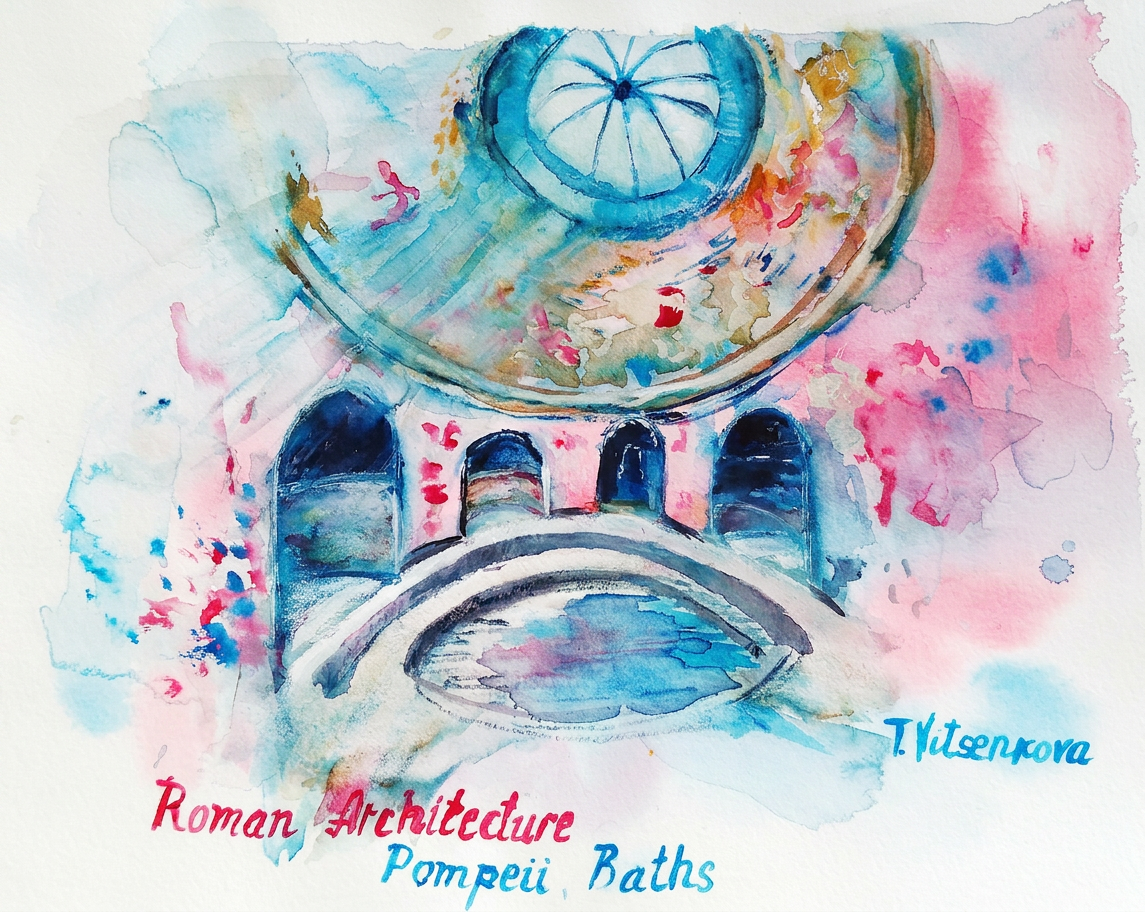
The Bathing culture was a very important aspect of Roman society. Social relations were also developed in those baths with many activities –sport, massage rooms and libraries, but sometimes the Bath complex also had direct access to … taverns:) In ancient Pompeii there were five large thermal baths and each bath could house about 1000 guests at the same time. The thermal baths were not only used to rest the body but the mind as well.
For my watercolor painting I chose one of the best preserved Bath with beautiful and ostentatious decoration, the Stabian thermal bath, painted red, blue and white colors. It was completed in the 4BC with a room that had the “eye” to the sky. It was one of the predecessors to the Pantheon’s roof. Streams of water fell in the pool directly from the niche in the upper part of the wall. The thermal baths were to help ancient people see and appreciate art! There were beautiful decorations, statues of Giants holding spa wall – everything for the people to enjoy seeing the amazing frescoes on the walls and decorate ceiling. It’s like “Louvre” of saunas..
The Stabian Bath was one of several thermal bath complexes in Pompeii, and part of the Roman Architecture development of the early bathing culture. I imagine myself in the beautiful relaxing rooms: In the Frigidarium room, the cold one with dozens of painted Atlantis figures supporting the walls, the Caldarium-hot room, the Tepidarium which was the lukewarm room and the apodyterium which served as the change room. The walls were stuccoed over, with flowering acanthus plants and creatures and animals, humans, Goddesses and Gods flying above:)
It was a wonderful place where people would enjoy their time in the company of friends and family.
Painting – Bath Complexes at Pompeii, Roman Architecture
Year of construction 4BC
Address: Stabian thermal bath, Pompeii
Tools used for my painting Watercolour Van Gogh madler red and Charvin Bleu de France, Albert Durer and Faber Castell watercolour pencils. Paper Acquarello Fabriano cold pressed watercolour album, 22×30 cm (9 ×12 in.)
The magic of the holidays is in the making! Join me on this artistic adventure as I explore the captivating world of #TravelVibes #ArtAdventure
You are welcome to visit my personal website pages. There, you can find out more about the artwork I am offering in oil and watercolor paintings. You can buy canvas prints, framed prints, and more artwork.
All paintings belong to the author. No image is to be copied without permission.
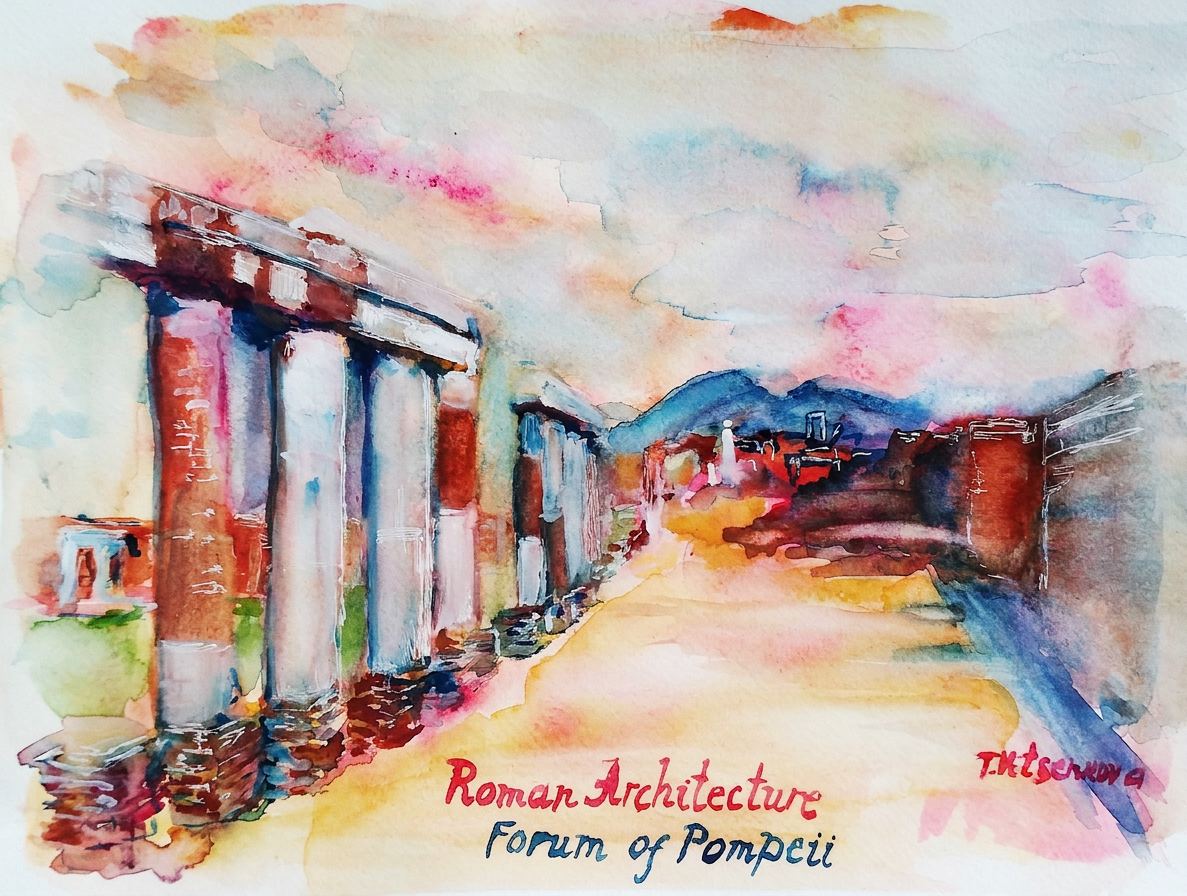
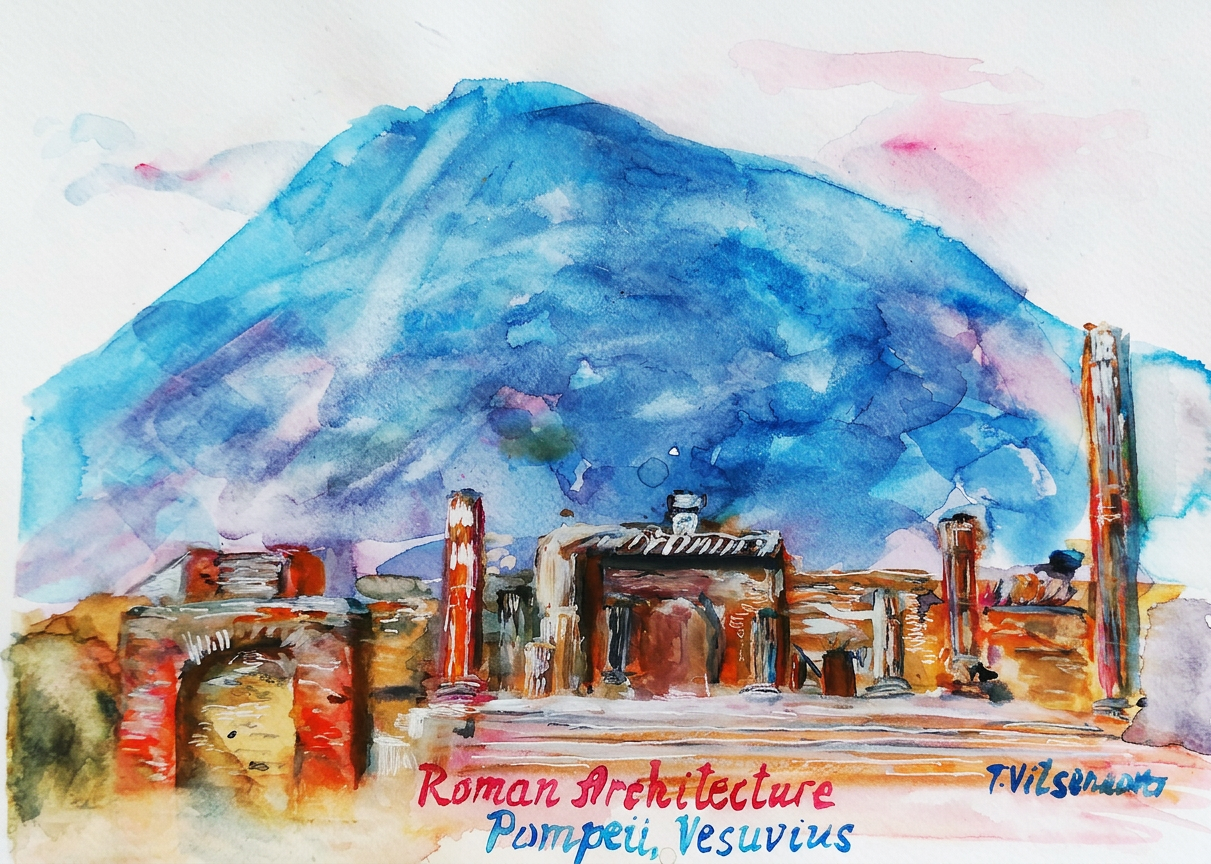
One of the main pieces of Ancient Roman public architecture in Pompeii was the Forum on the main square. Here citizens gathered to run business, gossips, and it was the urban centre of life.
On my painting is the main part of the financial district, the antique downtown of a well-preserved ancient city… The view of the colonnade with Doric columns built around the Forum with bases that supported statues. The Forum was uncovered and opened to the sky. The columns made out of limestone are similar to the Roman’s Theatre of Marcellus with the Greek orders, Doric, Ionic and Corinthian.
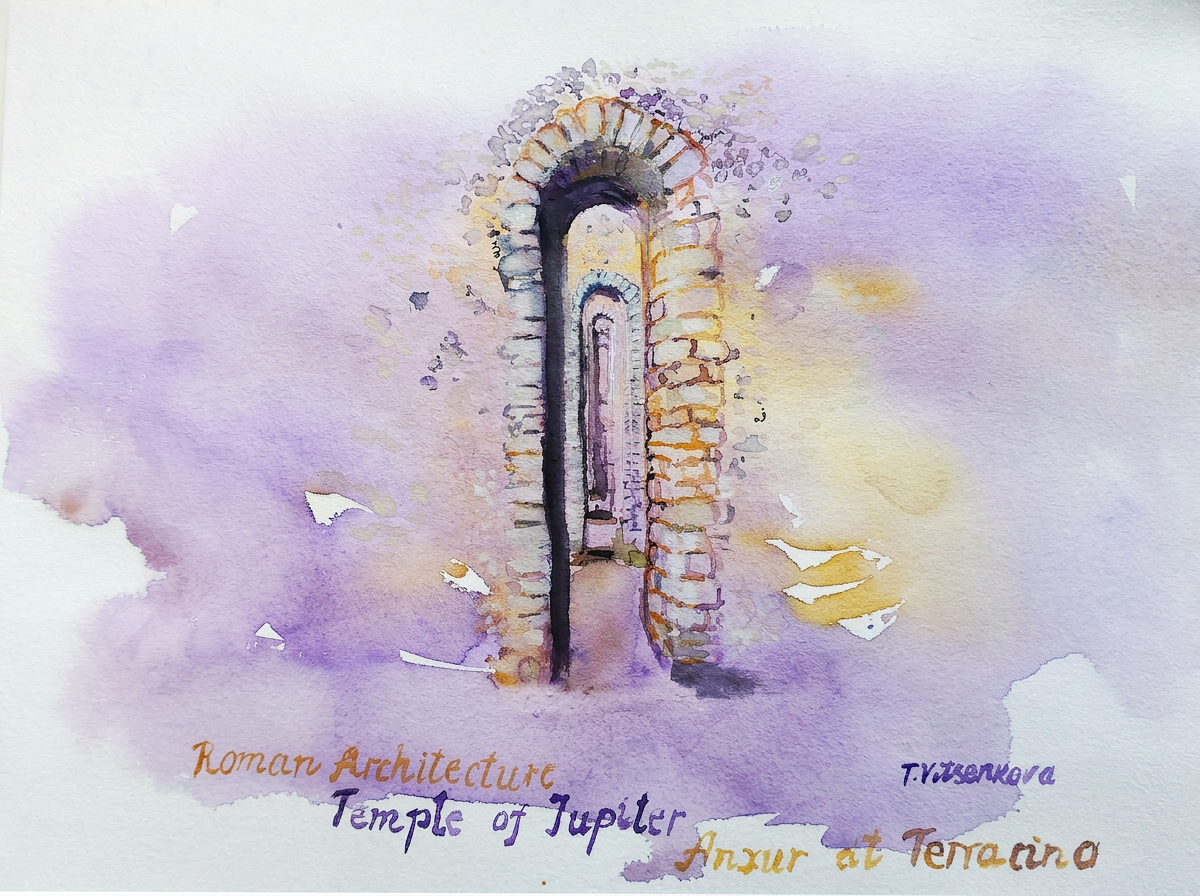
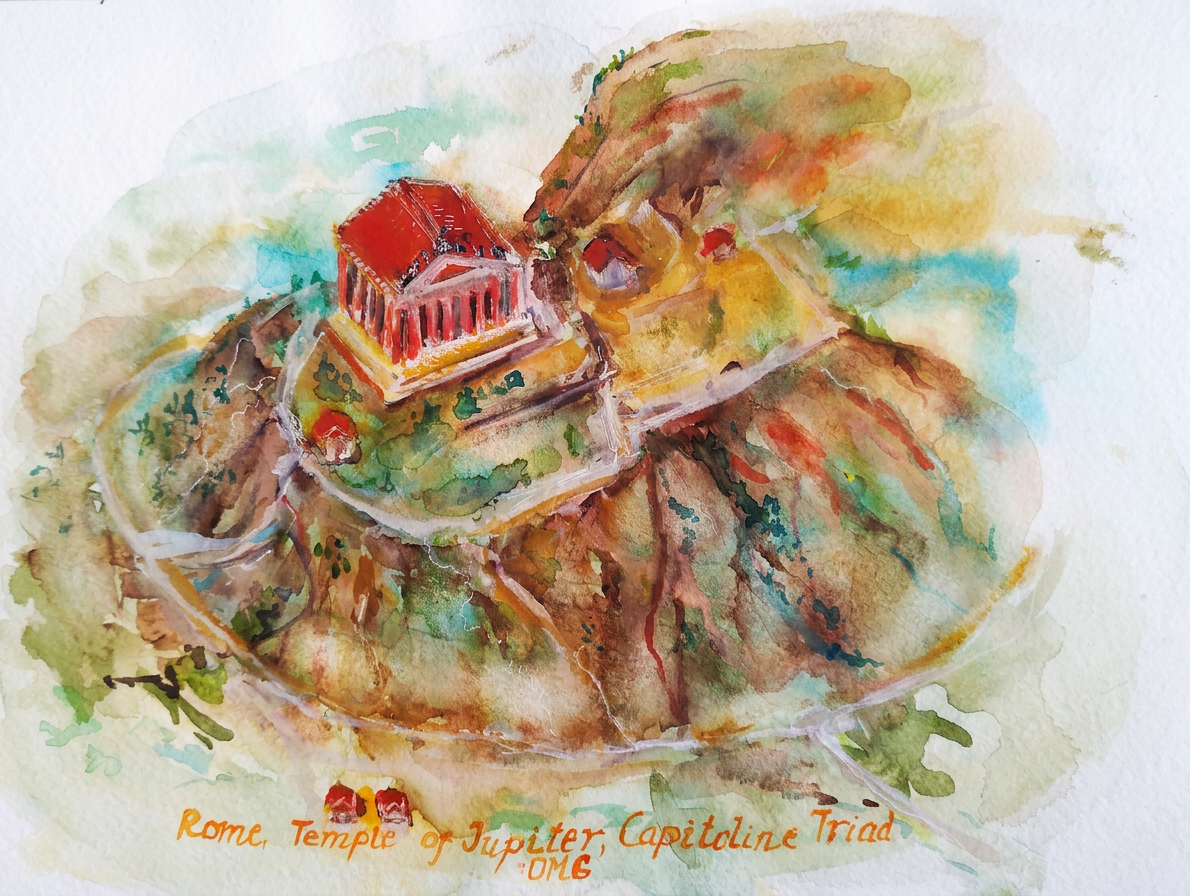
The Temple of Jupiter, Juno and Minerva was the central temple in Pompeii, sometimes called the Temple of the Capitoline Triad with spaces for statues of the Capitoline Triad – Jupiter, Juno and Minerva. The whole temple was surrounded by a colonnade with Ionic columns; this left the strongest impression on me during my travels to Italy.
Why are parts of the columns cut off? After the earthquake of 63BC and the Mount Vesuvius eruption in 79 BC while the ash and lava covered the Forum, columns and buildings came down and the materials washed away or were taken away – now it is an unknown mystery. Who knows the actual reasons? ;)
It is here that you can feel the atmosphere of those years and understand that life is eternal…
Tools used for my painting Watercolour Alizarium and raw siena Cotman, Derwent, Albert Durer and Faber Castell watercolour pencils. Paper watercolour Acquarello watercolour album. Fabriano, grana grossa rouch album, 22×30 cm (9 ×12 in.)
Δ
document.getElementById( "ak_js_8" ).setAttribute( "value", ( new Date() ).getTime() );
The magic of the holidays is in the making! Join me on this artistic adventure as I explore the captivating world of #TravelVibes #ArtAdventure
You are welcome to visit my personal website pages. There, you can find out more about the artwork I am offering in oil and watercolor paintings. You can buy canvas prints, framed prints, and more artwork.
All paintings belong to the author. No image is to be copied without permission.
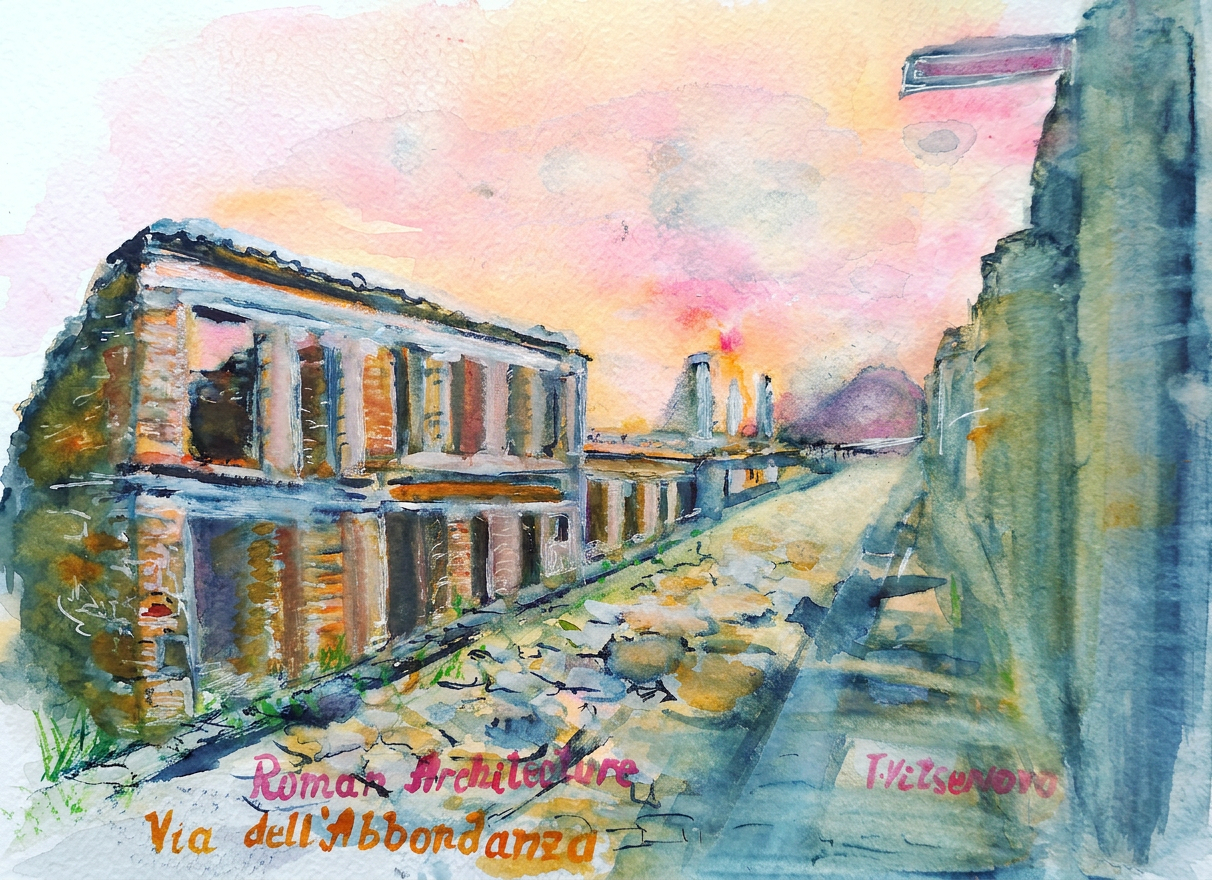
The next lecture was about residential architecture in Rome and the Roman world. It tells us about domestic architecture in between the 1st century BC and 1st century AD. There is no place where the houses are better preserved than at Pompeii, the great live reference for architects and archaeologists.
The watercolour painting is about a two-story house in Pompeii located on via dell’Abandanza, the so-called street of abundance. The house had open panoramic windows. The ancient architect designed the second floor in such a way that you could enjoy a nice view through the columns of the street and watch people outside while sitting in your dining room. I added a gentle glow of dawn on the horizon to imagine what a spring morning in that house would feel like.
There is a difference between our current understanding of how we use our homes and the ancient concept of home space. Although we enjoy having friends, family visits in our places, still, the house is our place to get away from work, transportation and schools, escaping outside life – as opposed to ancient Romans. For them, home was a place not just to live with their families, but also to do business in the house’s atrium.
This house is an example of the early domestic buildings, the part of Roman architecture. It had Domus Italica, an ideal Roman house plan according to the books of Vitruvius, the ancient architecture theoretician. The owners, family, friends and business partners could all benefit from being here. Joie de vivre in French or dolce vita in Italian:)
Painting – Residential two storied house via dell’Abandanza, Roman Architecture
Year of construction 62 AD-79 AD
Address: via dell’Abandanza, Pompeii
Tools used for my painting Watercolour Van Gogh cadmium orange and permanent rose, Albert Durer and Faber Castell watercolour pencils. Paper Acquarello Fabriano, grana grossa rough watercolour album, 22×30 cm (9 ×12 in.)
Still life and urban sketching. Because apparently, I can’t sit still OR leave my house without a sketchpad.
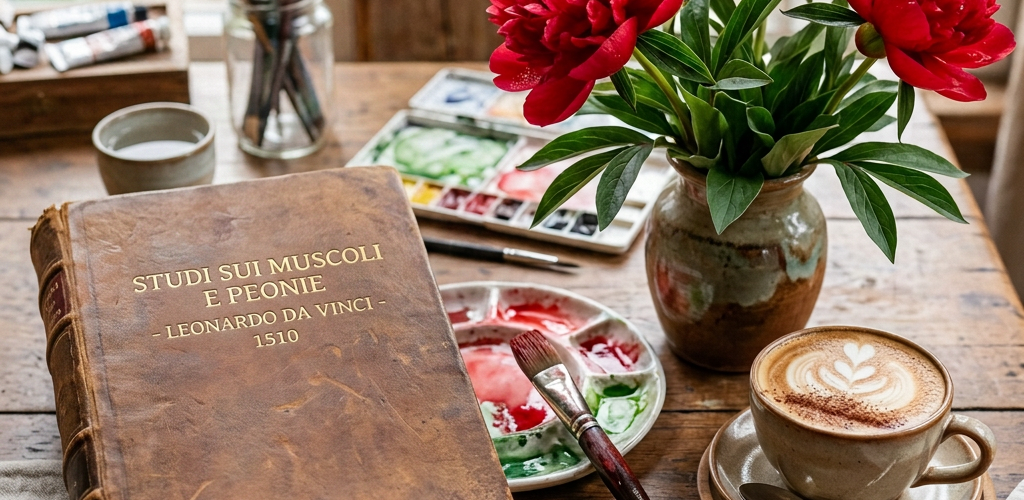
So Leonardo da Vinci’s Notebook told me something rather inconvenient: artists need to constantly find new things to paint or draw. (Thanks a lot, Leonardo—no pressure!) Thus began my endless quest to think outside the box that I’m apparently always painting inside. This summer, I had a minor epiphany: watercolor graphic technique is NOT just fancy coloring books. Shocking, I know. It was a small discovery that spiraled into full-blown artistic obsession, and now here we are.
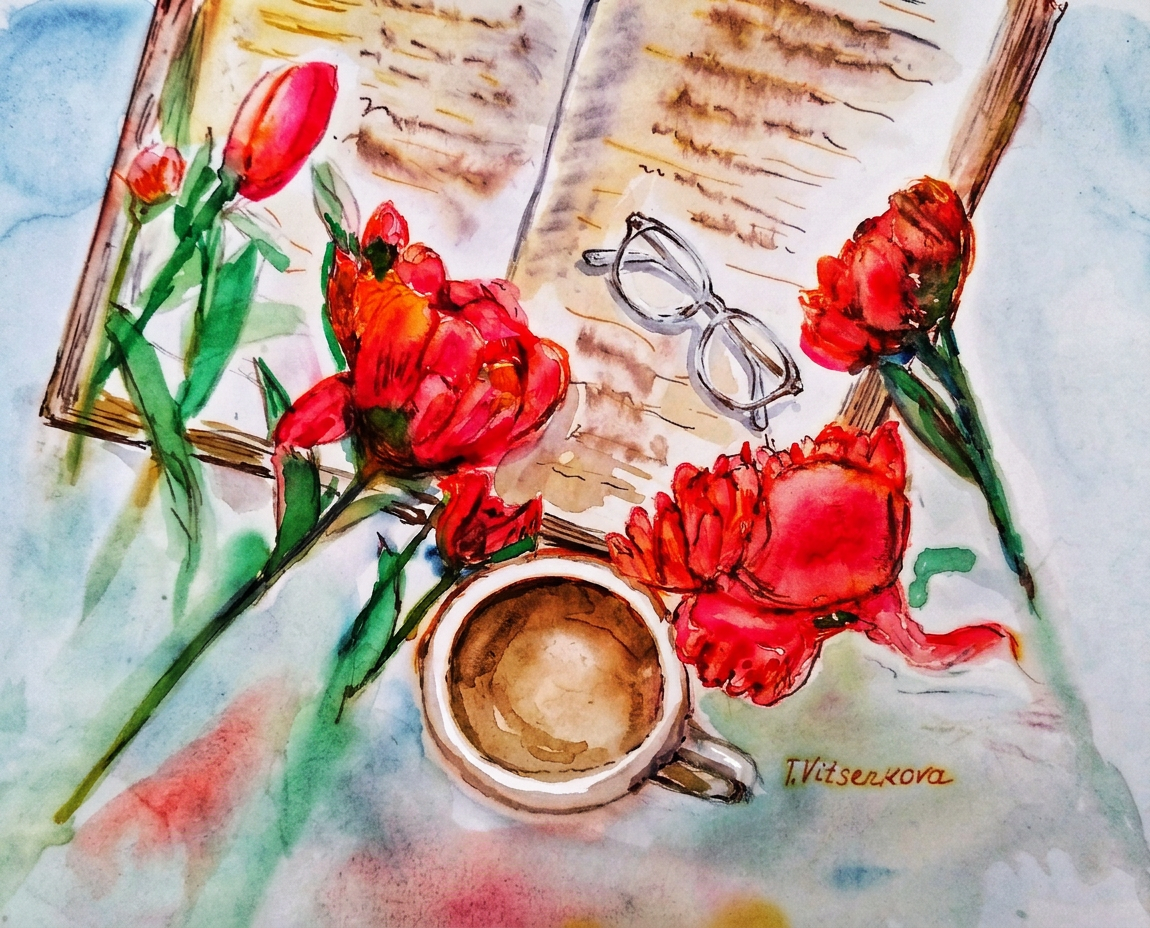
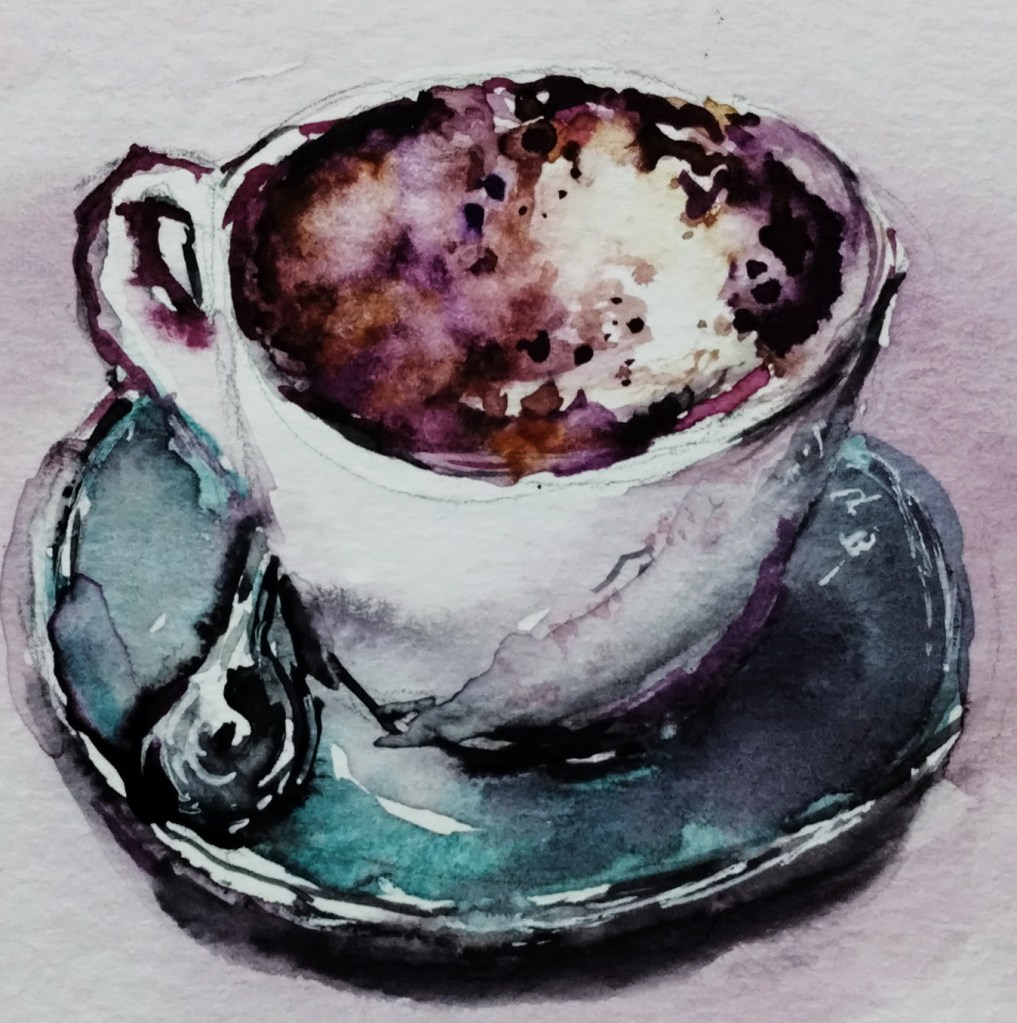
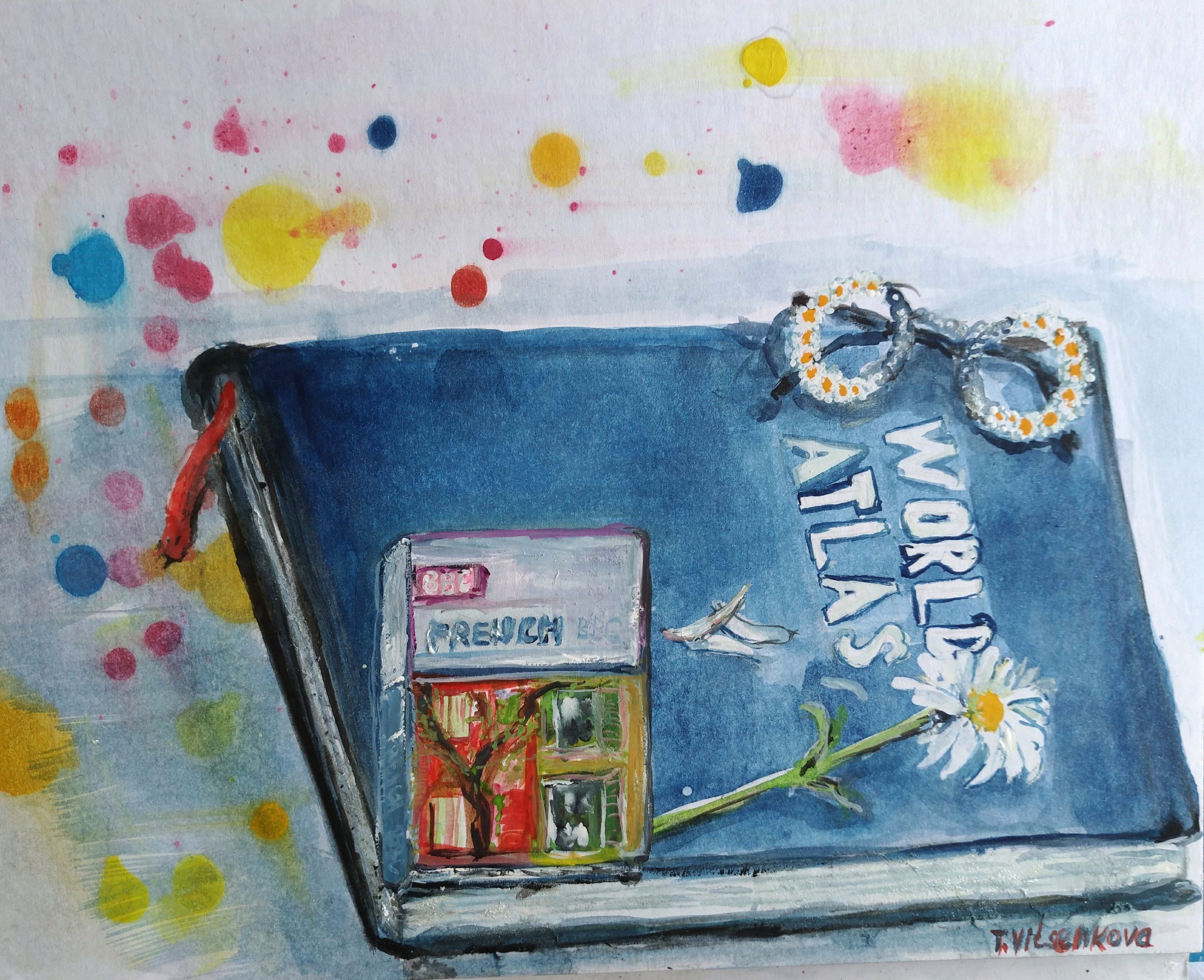
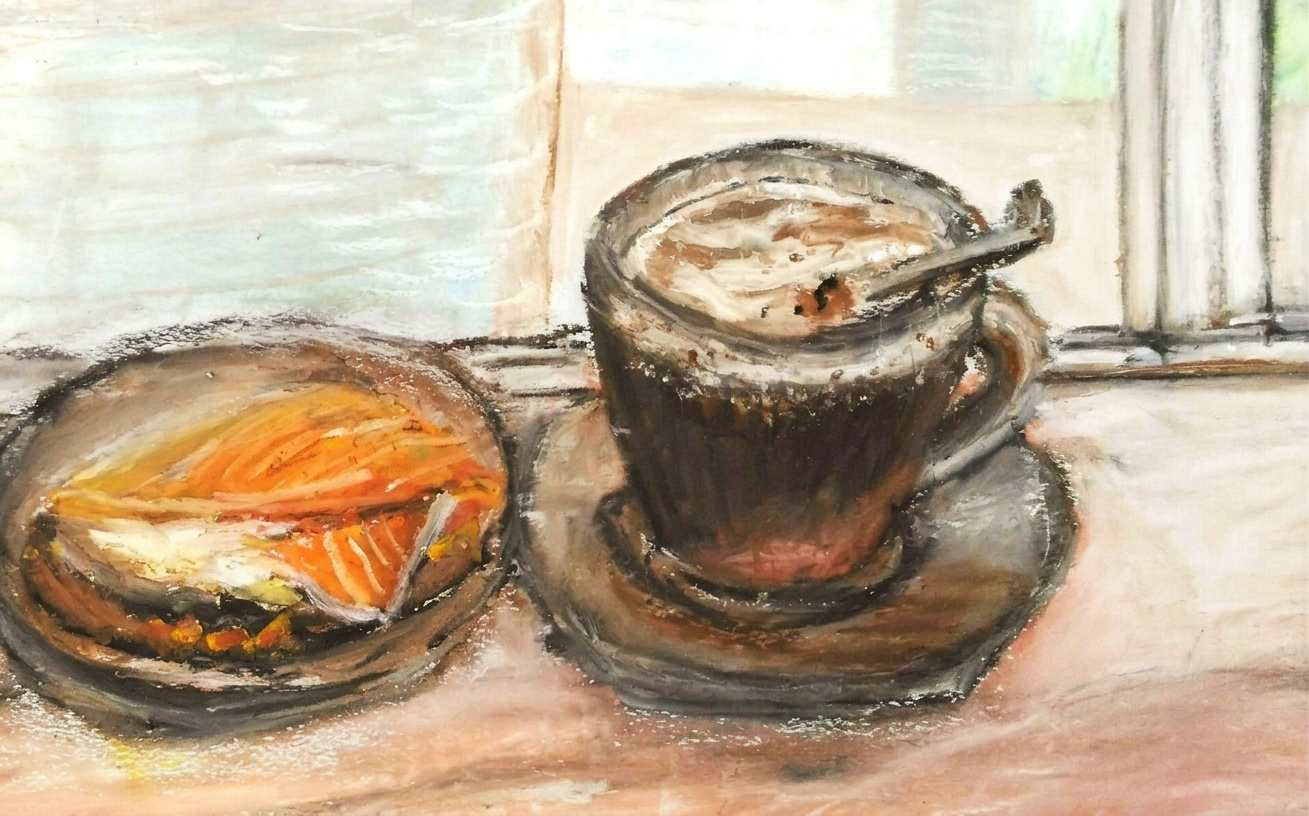
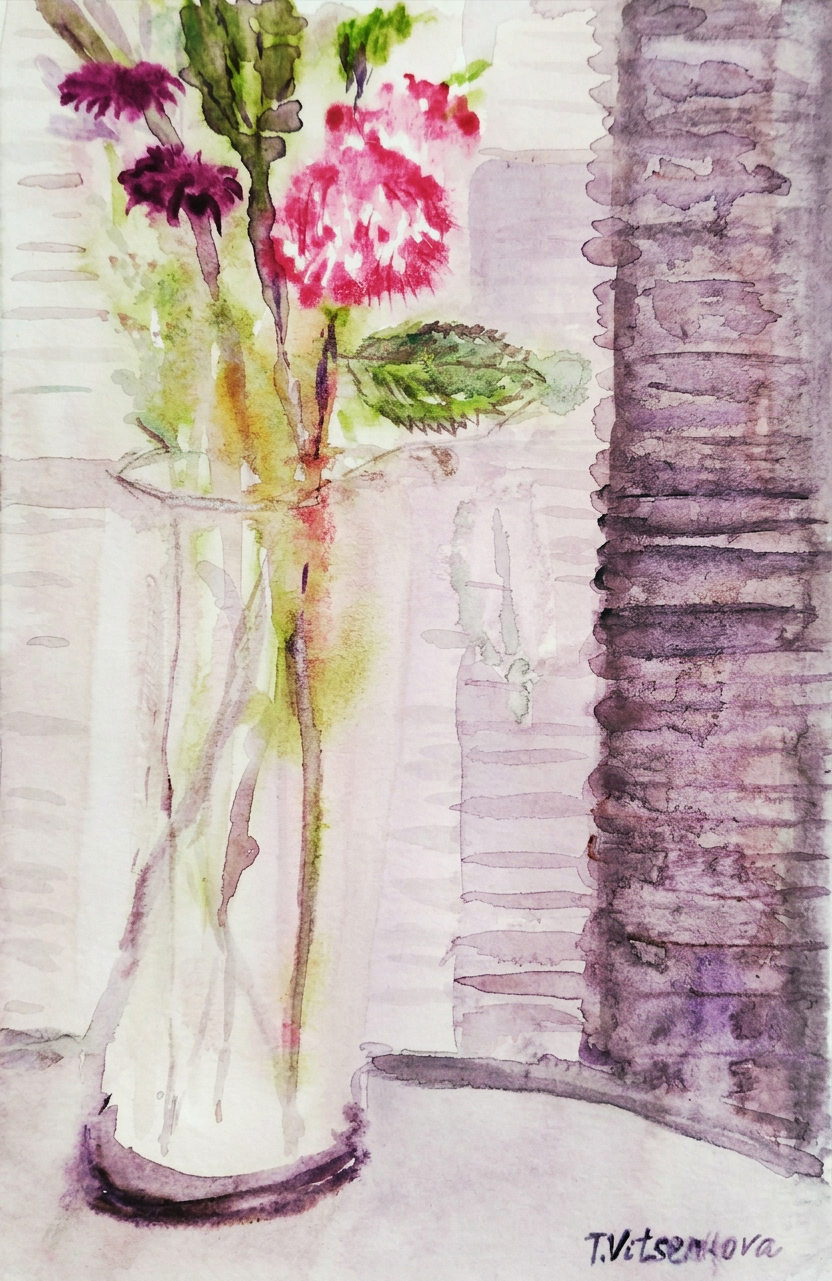
My still life muse? Bright reddish peonies, obviously. I arranged them artfully on my treasured Leonardo da Vinci book, added my glasses (for the intellectual look), threw in a cup of cappuccino (for the vibes), and created what I can only describe as a masterpiece of self-indulgence. Voilà! Another watercolor and ink painting in my beloved impressionist style was born.
Watercolor fantasy. Cappuccino and red peonies and a book
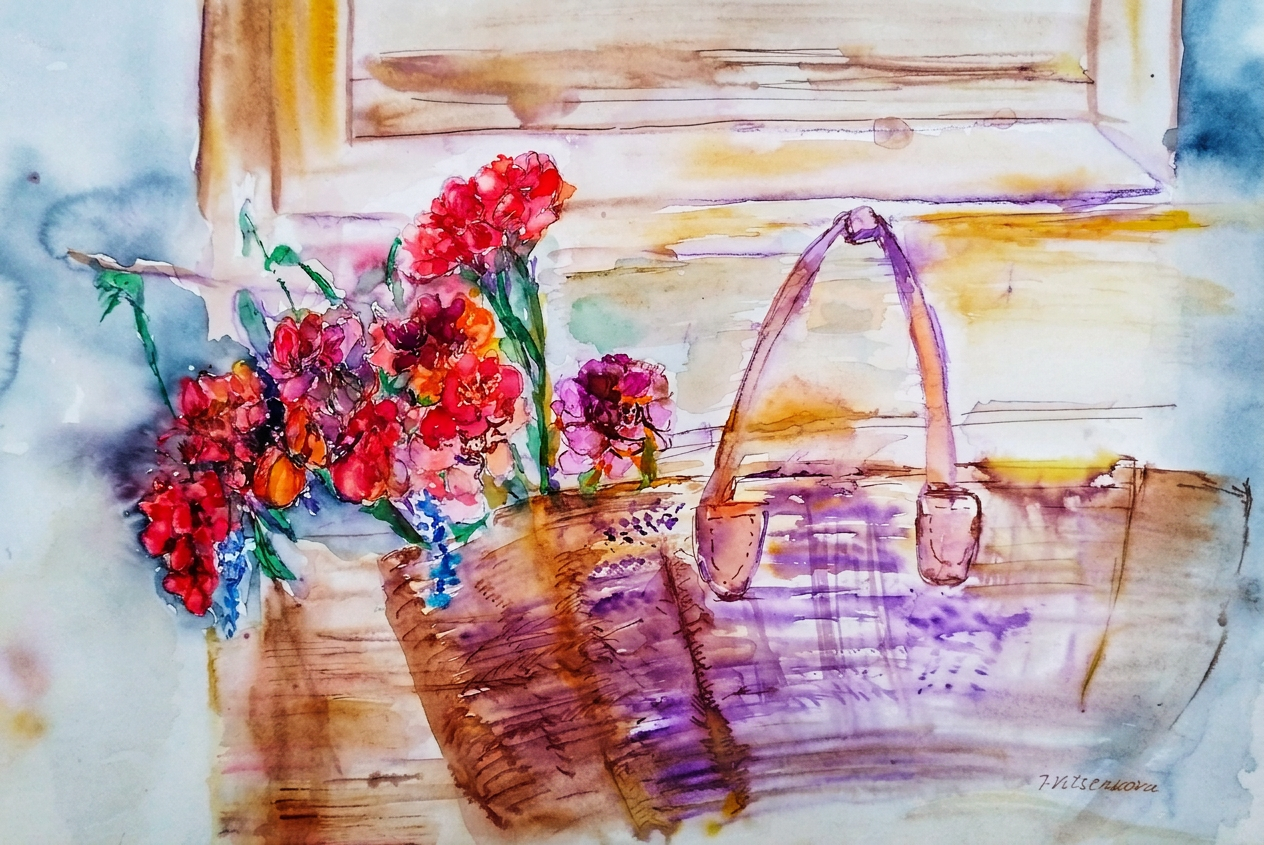
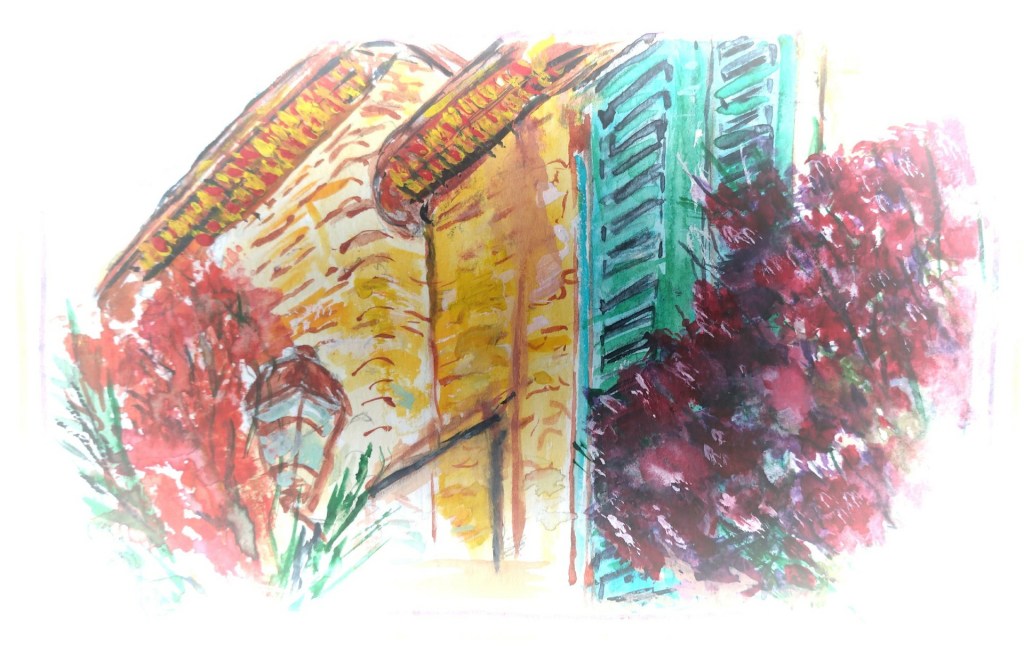
Just imagine it: a warm Mediterranean evening, you’re wandering charming cobblestone streets, and voila—red and pink peonies spill from a straw basket on some picturesque wood door or window. That’s watercolor and ink, my friend. That’s impressionism at its finest. That’s also my elaborate fantasy about our future travels to southern France, Italy, or possibly Greece (I’m not picky when it comes to vacation dreams). Who knows where wanderlust will take us? :)
Summer flower fantasy.
Shout-out to my daughter for the phenomenal gift: Leonardo’s Notebook. This book is basically the gift that keeps on giving—centuries-old wisdom from a guy who was basically good at everything. It’s like having a Renaissance master constantly looking over your shoulder with 500-year-old advice. Terrifying and inspiring in equal measure.
Bon voyage! Until the next adventure awaits! Stay healthy and hydrated (your skin will thank you when you’re sketching in the Mediterranean sun).
All paintings belong to the author. Seriously, don’t copy them. I mean it. My lawyer says I have to say that. Just go make your own masterpiece!
Tools used for my painting: Watercolors by Charvin and Van Gogh (because apparently only the best will do for this artist’s delusions). Pastels by GrayPas Expressionist (the feisty cousin of regular pastels). Derwent watercolor pencils and Faber Castell artist pens (because one type of pen is never enough). Paper: Strathmore Watercolor and Mixed Media albums in that perfect 15×20 cm (6×8 inch) size—not too big, not too small, just right for my control-freak tendencies.
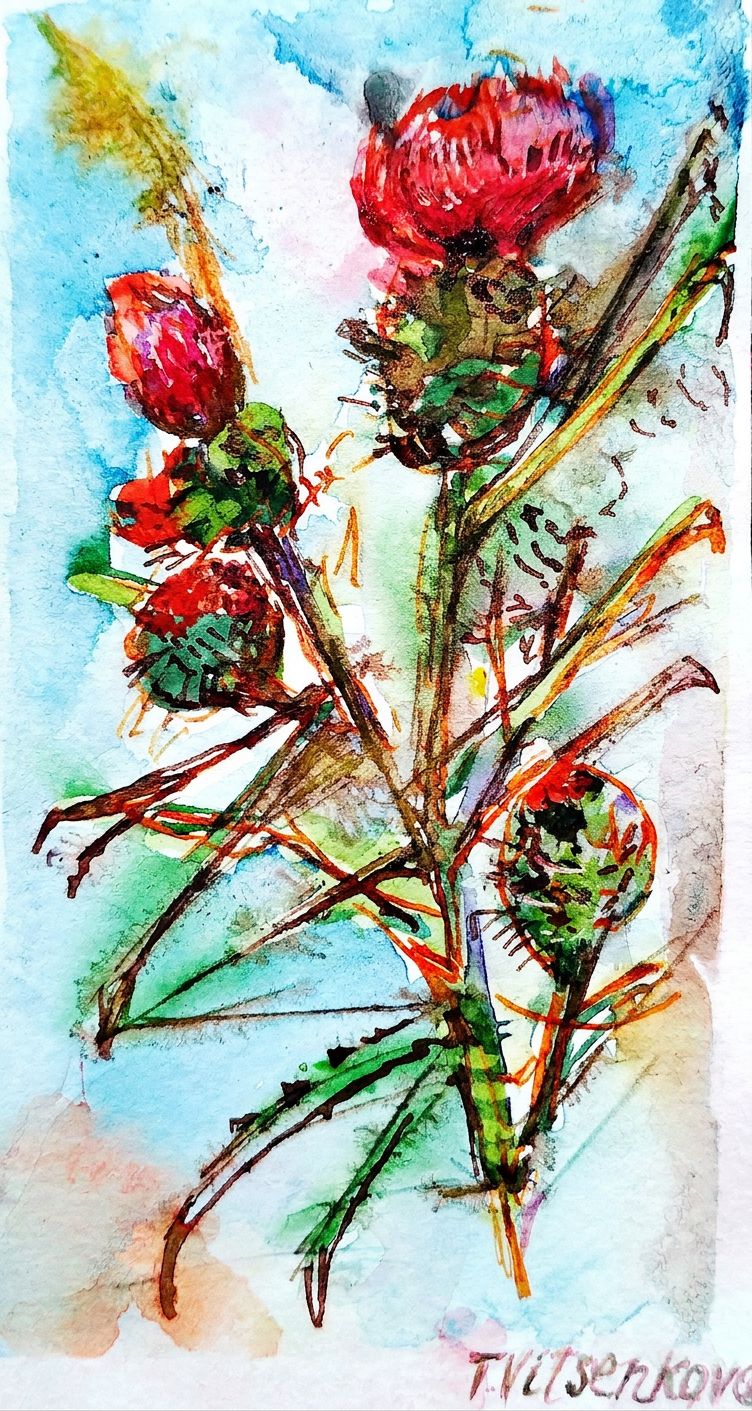
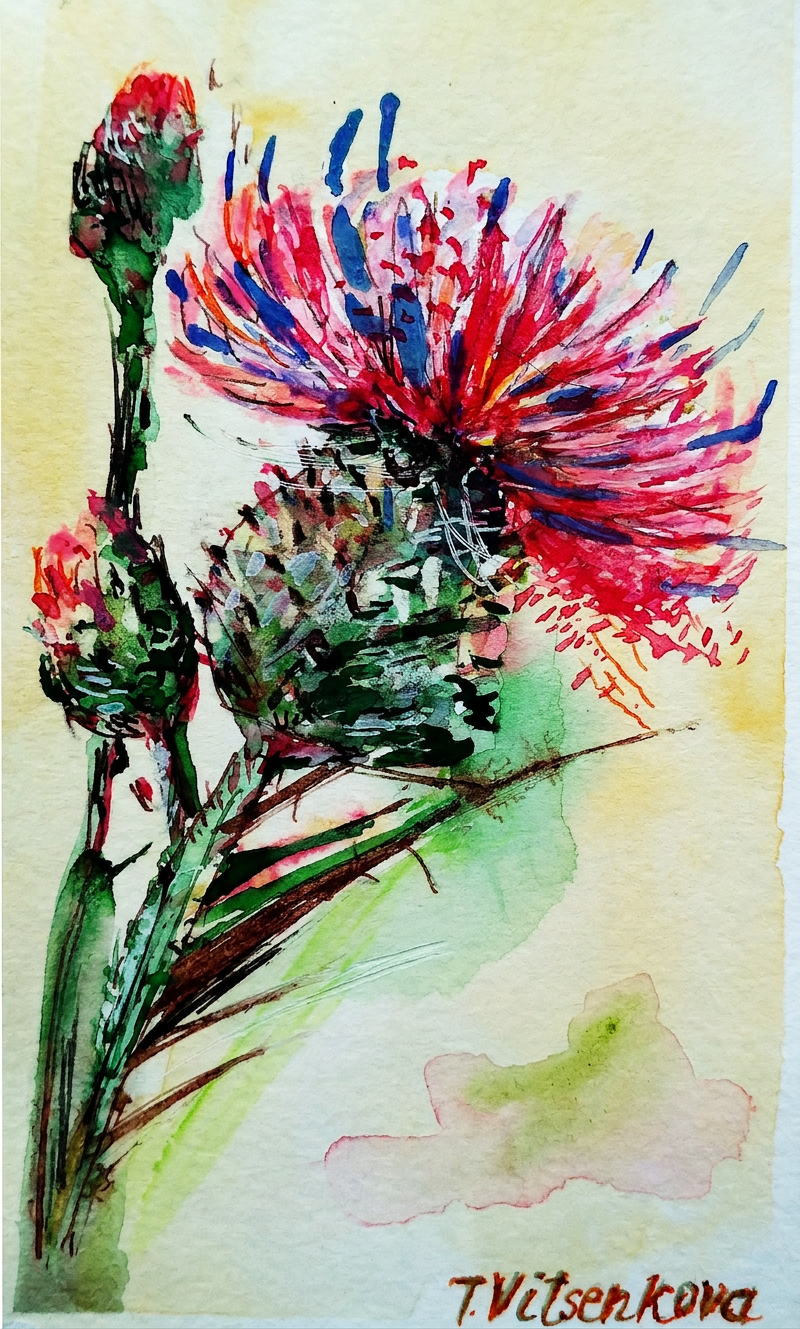
Red thistle flower and my absolute favorite city in Spain, Madrid—basically my love letter in plant form. Because apparently when I want to express passion, strength, energy, and fearlessness, I paint spiky flowers. Revolutionary, I know.
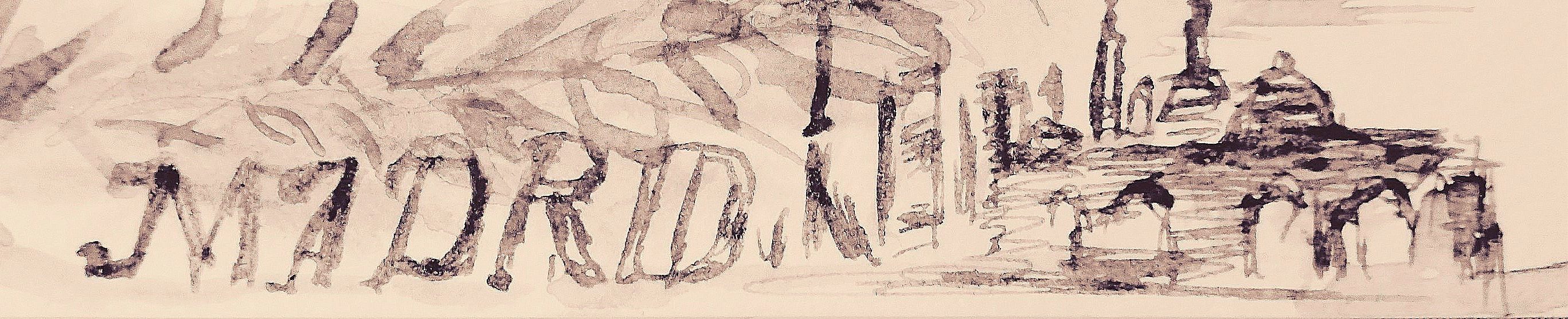
Madrid called. I answered in watercolor.
Madrid. A city with more sides to it than a geometry textbook—aristocratic, bohemian, and commercial all rolled into one impossibly stylish package. The moment you land there, something magical happens: the city whispers, “Hey, you look like you belong here,” and suddenly you feel like you actually do. Your city. Your home. The place where you’re meant to thrive (or at least enjoy really good tapas while pretending you belong).
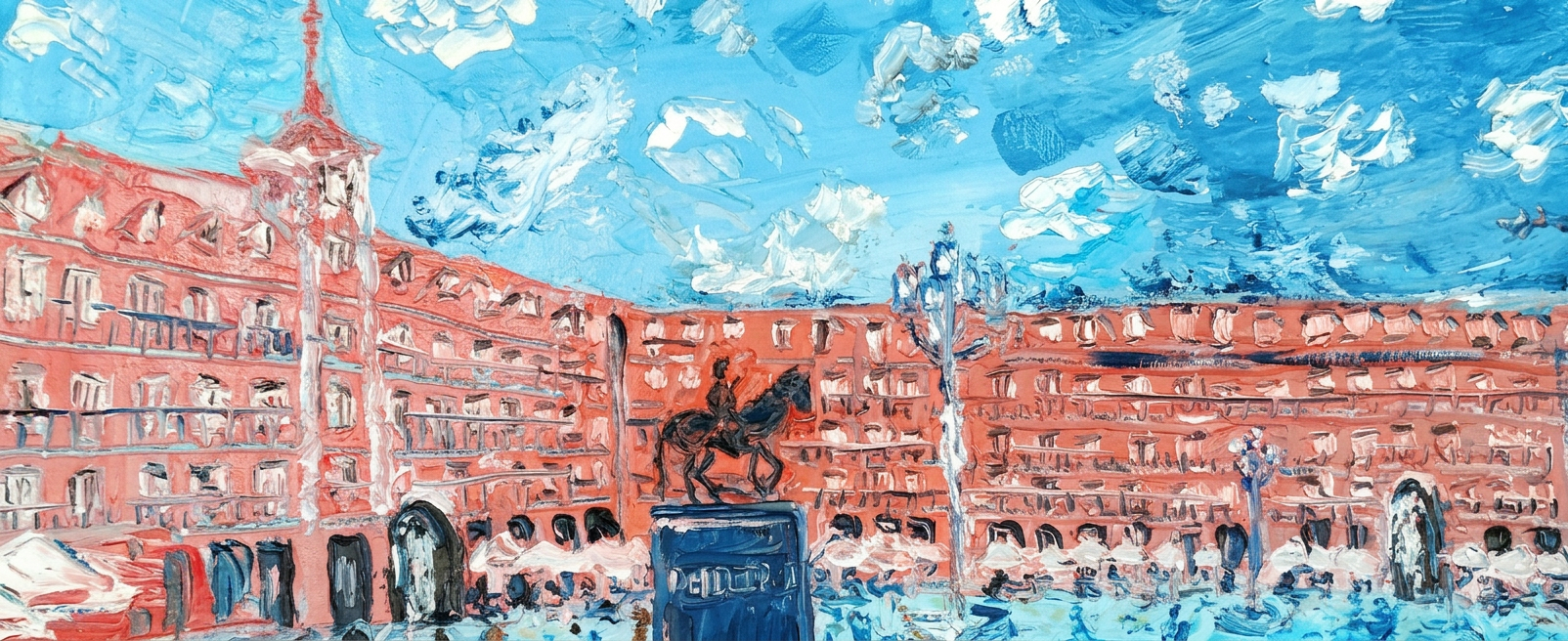
Naming just a handful of Madrid’s masterpieces would be like choosing a favorite child—borderline impossible and slightly offensive to everyone involved. But here goes: Plaza Mayor (where people-watching reaches Olympic standards), Puerto del Sol (it’s basically Grand Central Station but cooler), the Prado Museum (where you can contemplate art for hours and feel intellectually superior), the Royal Palace (proving that “bigger” sometimes actually is better), Thyssen-Bornemisza Museum of Art (for when the Prado wasn’t quite enough art for your art-hungry brain), and Retiro Park (nature’s masterpiece to balance out all the human-made masterpieces). We’ve been there more times than we’d like to admit, and it’s absolutely penciled in for our next rendezvous. Or three. :)
I got so inspired that I created an entire series of watercolor and ink paintings featuring vibrant red and warm peach-colored thistles, all dedicated to one of my favorite cities in Europe. Because nothing says “I love you, Madrid” quite like painting prickly flowers obsessively.
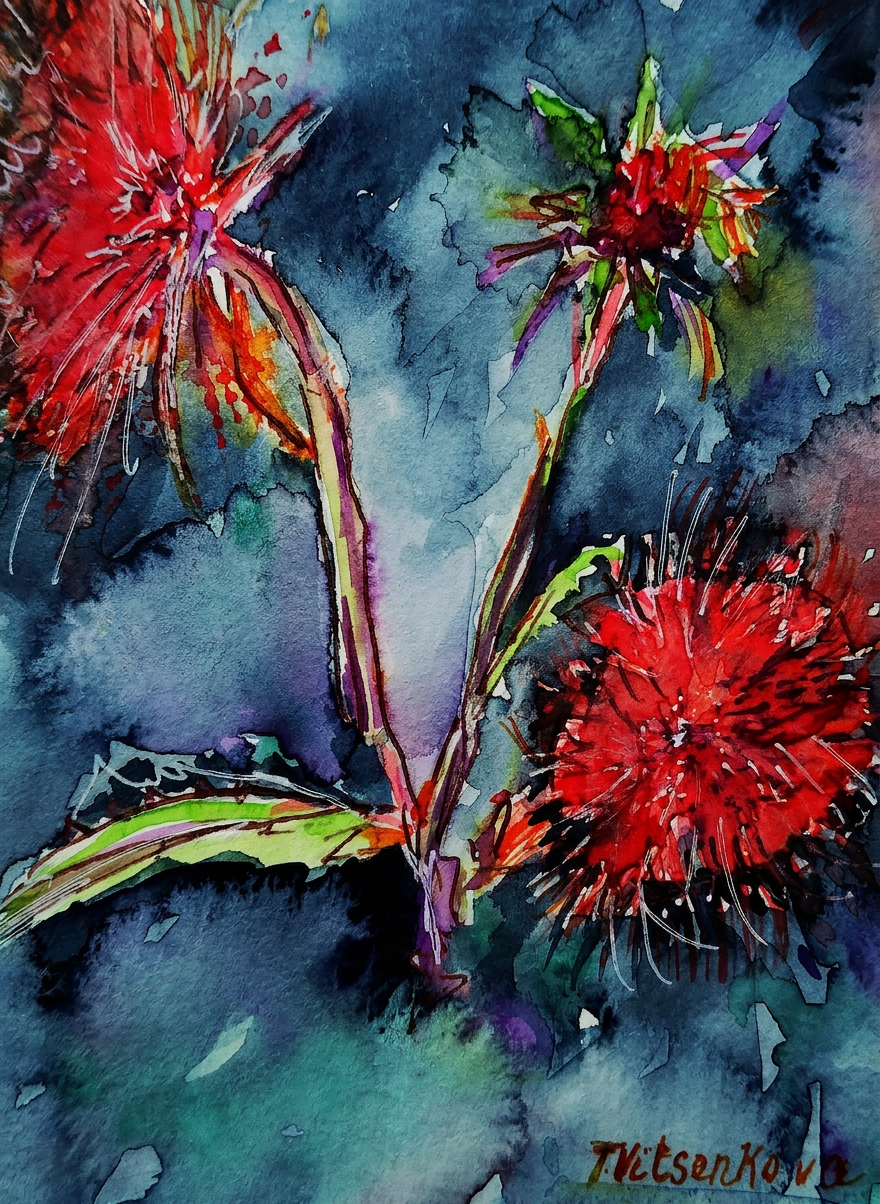
This particular thistle features petals in tomato and red cabbage tones, paired with an indigo background because apparently I’m all about dramatic color combinations and life choices.
Tomato red meets indigo. Fancy.
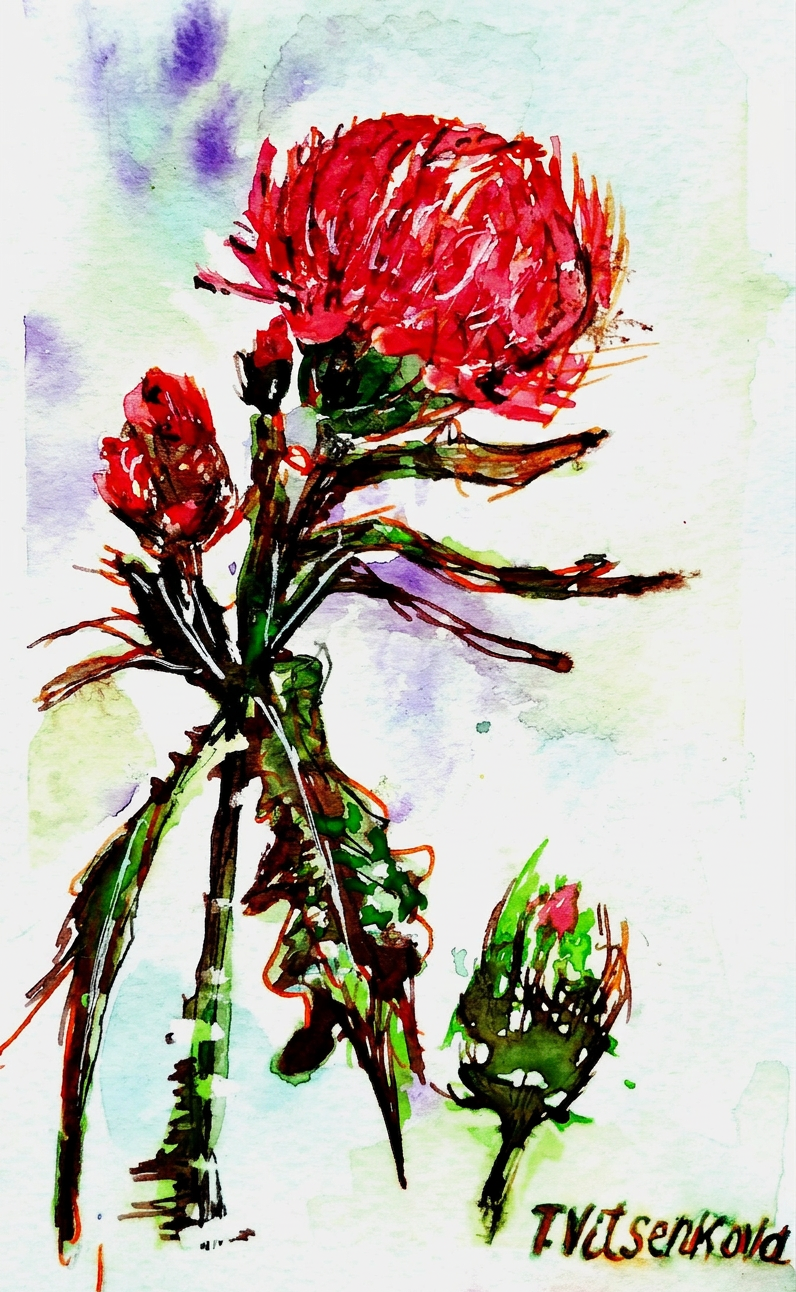
Here we have a thistle sporting pomegranate and scarlet petals against a lemon and coffee-colored backdrop—basically proving that flowers have better color sense than most interior designers I know.
Pomegranate. Scarlet. Basically a salad, but make it art.
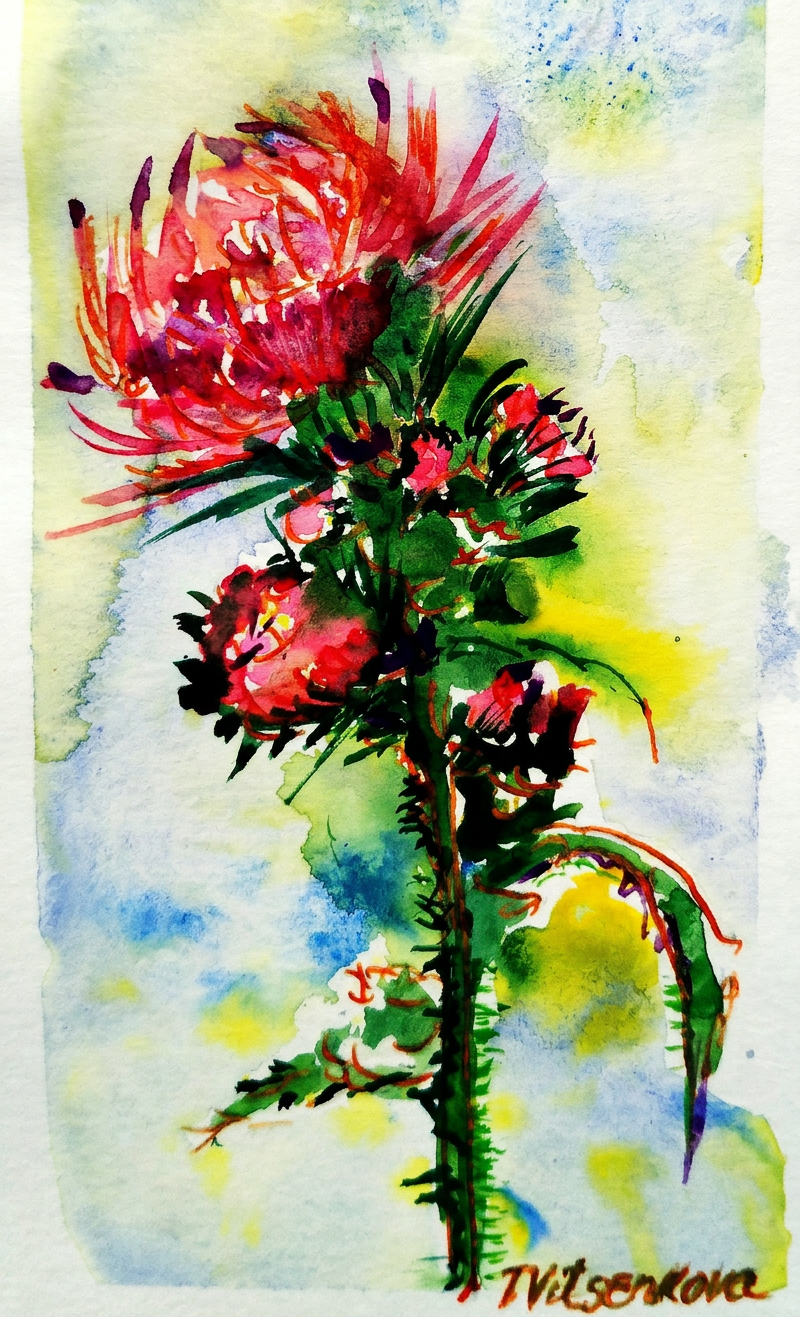
A watercolor masterpiece featuring thistle with shades of raspberry and blueberry swirling together with dark blue, crowned with celery-green leaves. Bright, bold, and absolutely gorgeous. (I’m biased, but also right.)
Raspberry, blueberry, dark blue — someone was hungry while painting.
The sunny thistle: a wildflower sporting cocoa-colored petals with artistic flourishes of cognac and a moody bluish background—basically the sophisticated cousin of all the other thistles.
Cocoa and cognac. The only acceptable breakfast palette.
And finally, a thistle with amethyst and salmon-hued petals floating against creamy, tender-feeling colors. This one’s basically the introvert of the collection—softer, dreamier, and slightly less inclined to poke you.
Amethyst and salmon walk into a painting…
If you ask me, Madrid is the red color personified. The land of gazpacho, bullfighting, and flamenco basically *is* red. Passionate, vibrant, unapologetically bold. And I’m absolutely here for it. :)
Madrid in the wild. No filter needed (okay, maybe one).
All paintings belong to yours truly (aka me). No image shall be copied without permission, or the color-mixing gods will have words with you.
Bon voyage! Until our next travel adventure (and probably another painting series). Stay healthy, stay curious, and keep your eyes open for wildflowers. You never know when one might inspire your next masterpiece.
Le Cannet: Home of the Bonnard Museum and Artfully Avoiding Cannes’ Crowds!
And then on another direction, the second trip was separate. It was a one-day independent journey from Antibes to Cannes and Le Cannet.
Provence is famous for its art museums in every small town or village. Le Cannet is a small suburb of Cannes. In North America this suburb would be part of a big city, for example Greater Toronto or Greater Vancouver.
The Central Train Station in Cannes is located in the heart of the city. To get there, take the bus # Bus Palm Express n°1. Within 10 minutes, you will reach Le Cannet famous museum Bonnard. Location: 16 boulevard Sadi Carnot, 06110 Le Cannet
House-museum artist Bonnard. Bonnard lived in Le Cannet for 25 years and created his Provencal paintings, saturated with sunlight, light and air. We were waiting for an exhibition that just opened during our vacation in Antibes. The temporary exhibition of collection Nahmad (De L’Impressionisme À Bonnard et Picasso) showcased the Impressionist artists. It organically blended into the permanent collection of Bonnard museum.
Cannes’ famous Red Carpet
We made a delightful pit stop in the glamorous city of Cannes on our journey back to Antibes. The famous film festival is very common!
We were all set to strut our stuff on Cannes’ famous Red Carpet. We perfected our best “I just won an Oscar” walk. It was finished with invisible awards and imaginary paparazzi trailing our every move!
Hand prints of a celebrity set into the pavement, commemorating their visit to the Cannes Film Festival.
In my picture, the celebrities’ prints shoot up to the sky. They resemble a really ambitious road vying for a spot in a cloud competition!
A watercolor sketch capturing the scenic views of Cannes, featuring a charming train and vibrant beach landscape.
Transportation: Our Hilarious Misadventures and Tips for Traveling in Provence
Embarking on my inaugural journey through the enchanting region of Provence was a delightful escapade fraught with unexpected adventures. The warmth and hospitality of the local residents, as well as fellow travelers, provided comfort during moments of disorientation in this picturesque landscape. My encounters with the complexities of train travel, compounded by my limited proficiency in the French language, led to a series of amusing misadventures, including missed connections and unforeseen challenges.
Yet, amidst the chaos, I discovered clever local transportation tips that may serve to conserve both time and money for future travelers. Intriguingly, these transportation mishaps ultimately enriched my experience, transforming potential frustrations into cherished memories that added a unique charm to my journey. :)
The topography of the area is a mountainous terrain. If you do not want to rent a car in a foreign country, there are a few alternatives to driving.
The first choice is the train. They are convenient, quick, comfortable, inexpensive, and all trains have an efficient schedules with small gaps in between 2 trains. For example, from Nice to Grasse the train’s cost was 10 Euros (2019). But, this choice has a disadvantage that you rarely can get to see small towns by trains.
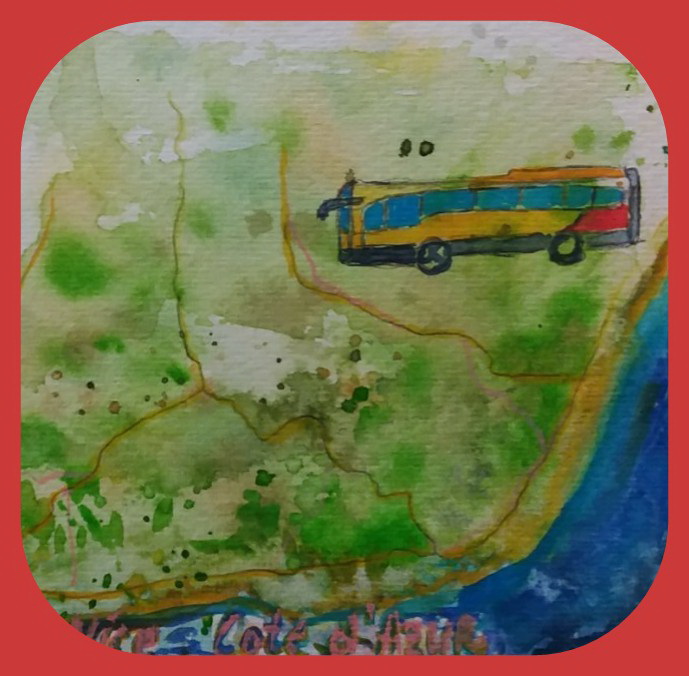
The second choice is the bus. The advantage of buses is their routes reach even the smallest mountain towns. This is the cheapest choice. The inconvenience is that sometimes you have to take a transfer between inter regional buses and local city’s buses. Most importantly, the bus trip will be longer than any train.
The third option is like a hybrid of the first two—or you can just go with a travel company. Do you want to hop between a bunch of quirky little mountain towns in just 1-2 days? Let the pros handle it. Those local or international tour operators are like your cool travel buddies. They are always ready for an adventure. (And they know where to find the best snacks). And hey, there’s something for you at the end of this post. You’ll find a link to Viator. It’s your ticket to hilarity wrapped in sightseeing!
I absolutely adore my one-day trips to the French Riviera—it’s like speed-dating with beautiful landscapes! I dash around, sketching everything from tiny crannies to towering giants. I try to look like a sophisticated artist, not just some tourist with a fancy penciland watercolor palette and brush:)
Join me on this thrilling adventure. Every moment holds the potential to uplift your spirit. It can bring joy to your life!
Tools used for my painting Watercolour used Charvin and Van Gogh brands, Derwent Watercolour pencils and Faber Castell artist pens. Paper Strathmore Watercolour and Mixed Media albums, 15×20 cm (6×8 in.)
Bon voyage! Until the next travel:)
You are welcome to visit my personal website pages. There, you can find out more about the artwork I am offering in oil and watercolor paintings. You can buy canvas prints, framed prints, and more artwork.
How to get from Antibes to Le Mougins. Take Train to Cannes, then bus to Mougins. Lines 25-27. Cannes – Ranguin <> Gare Routière des Messugues <> Collège Eganaude – Sophia Antipolis, par Mougins
How to get from Antibes to Le Cannet . Take train Antibes to Cannes, bus #1 and 4(?), 15 min =10 stops to Musee Bonnard, Bus Palm’Express n°1, arrêt « Mairie du Cannet
This was amazing little town with an unusual legend.
Just imaging, you are jauntily wandering through the medieval streets. Also trying not to trip over the cobblestones that probably date back to when dinosaurs roamed the Earth. Meanwhile, admiring the stone facades that looked like they had more stories than my grandma. Actually, this is my story that happens with everyone while traveling in a medieval town, right?:)
And then OMG, the flowers! They were so fragrant that I half expected them to start singing show tunes! It was truly an unexpected adventure in one of the prettiest settlements in France. The buildings are old, but the charm is timeless! :)
As promised, about the local legend. It says that the English Queen Victoria was riding on a donkey with her staff to the town. After this uneasy journey, she tired and ordered a road to be built to this tallest town. Thank you! the English Queen Victoria wanted everyone to see the beauties of this place. And it was completed, so now you can enjoy them too. The main square of the town is named after the Queen, with no doubt. Everybody loves this legend.
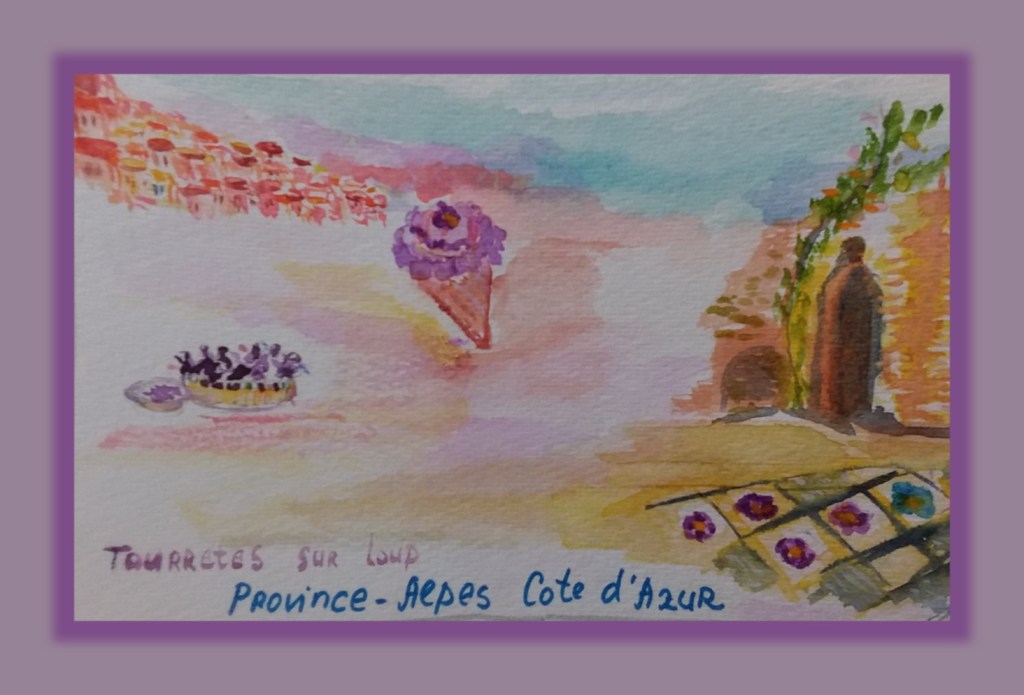
A charming watercolor sketch of Tourrettes-sur-Loup, showcasing the town’s vibrant ice cream and flower motifs characteristic of Provence.
Another Legend about Ice cream while you are exploring the town.
Ice cream transcends the realm of mere treats; it embodies the town’s most cherished secret. Yes, I found it while eating the violet rich ice cream.
As she dances around you, the air fills with the delightful aroma of freshly churned ice cream. It draws forth smiles and laughter from everyone nearby. A simple shout turns into a memorable experience that sugary dreams are made of! Even years later, I still remember this taste and scent.
As you walk around town, you will notice violets everywhere. They are painted on the asphalt and in the ice cream. Violet ice cream was a pleasant discovery for me. It’s worth coming to this mountainous town just for its sake!
The Wobbly Wonders of Cascades du Saut du Loup: Where Waterfalls Take a Dive!
The next stop was the stunning Mountain waterfalls known as Cascades du Saut du Loup. The name comes from the French language. It translates to the mouth of the wolf. I found it’s quite scary name.
This evokes an air of mystery and intrigue surrounding this natural wonder. As we approached the cascades, the sound of rushing water grew louder, filling the air with a sense of anticipation.
The scene was surrounded by lush greenery and rocky cliffs. It was breathtaking, with glistening water tumbling down the steep slopes. This created a mesmerizing spectacle. This hidden gem is more than just a beautiful sight. It holds an important place in local folklore. Tales of wolves and their enchanting habitat add to the allure of this captivating location. I think that every waterfalls has its own legends, do you agree with it?
I don’t know what mouth of a wolf it is. Now this is my secret. I personally saw a huge muzzle of an orangutan in the rocks. Everyone in our group was laughing from my imagination:)
Gourdon vs. Gordes:
As we continued our travel, the next stop was Gordon. It is the highest town of our trip. Its magnificent castle is perched 750 meters above sea level on rocks.
Watercolor sketch of Gourdon Castle in Provence, showcasing the lush landscapes of the region.
A little comment about the tour. Part of our goal for this trip was to see Provencal lavender fields. Our tour operator was also our driver and a cheerful guide.
Meanwhile, he piped up from the passenger seat, “Well, there’s a little hitch in our giddy-up!” Apparently, it would take another hour to reach the lavender fields from this town. Perfect! This was just enough time for him to regale her with his latest theory. He believed a goat named Jean-Claude should have been our co-pilot.
“Just think about it,” he said with a grin. “He’d be the best navigator. Frankly, I’d trust a goat over a GPS any day!” As they continued their winding journey, the fragrant scent of lavender teased their senses. It promised that the true adventure was only just beginning.
Gourdon and Gordes are two different cities. Ops, my bad, I did not see on this day any lavenders’ fields. So, please take my advice, enjoy your day , even you were expecting other views.
Both cities are nestled in the picturesque hills of Provence. Yet, they are distinct places rich in their own unique charm and character.
The tour company made a comical error. They mixed them up. This led to a day filled with unexpected adventures and humorous anecdotes. As the day unfolded, we constantly wondered how the mix-up could have happened. This curiosity gave us an amusing reason to return. We wanted to explore the beautiful regions more thoroughly.
It became our running joke throughout this long day. The joke lightened the mood and brought us closer together. This happened as we navigated the winding roads. We were diligently searching for the iconic lavender bushes. We were also looking for even small patches of planted lavender. Provence is so famous for this.
Every time we stumbled upon anything resembling those fragrant fields, we kept saying, “Well, here’s lavender!” We burst into laughter. What could have been an inconvenience turned into a delightful memory. It’s a memory that we’ll cherish for years to come.
The Lavender Showdown – Who Will Win the Name Game?
The locals told us that in earlier years the lavender fields really bloomed vibrantly around the town. This created a stunning visual spectacle. It attracted visitors from far and wide.
The intoxicating fragrance of the lavender filled the air, making it a beloved destination for tourists and locals alike. One unfortunate year, a particularly harsh cold winter struck. The lavender bushes not survive the frigid temperatures that followed. The once-thriving fields, which had been a source of pride and beauty for the community, fell silent and barren.
After that, despite the people’s longing for the return of the lavender, they were not planted again. This decision left a void in the landscape deeply felt by everyone. It’s truly a pity to witness such a loss of natural beauty and charm.
A watercolor sketch depicting the scenic beauty of Gourdon, France, showcasing its charming architecture and lavender foliage.
The mountain road is serpentine. It leads to mountain towns Gourdon and Tourrettes-sur-Loup. We passed through the medieval town. In the sky, we saw a cloud “goose”.
I will continue to post about one-day trips in Nice. Next up is Cannes and Le Cannet. I visited the famous museum of artist Bonnard. After all, who doesn’t want to admire the works of someone who painted like they were on a permanent vacation? More art, less sanity!
Tools used for my painting Watercolour used Charvin and Van Gogh brands, Derwent Watercolour pencils and Faber Castell artist pens. Paper Strathmore Watercolour and Mixed Media albums, 15×20 cm (6×8 in.)
A Sketching Journey Through Provence’s Artistic Towns. Urban sketching. Travel, Architecture and Art
Everything is in one bottle of flavor that brings together the image of a city or place.
Mougins: Where Art Galleries Outnumber Residents!
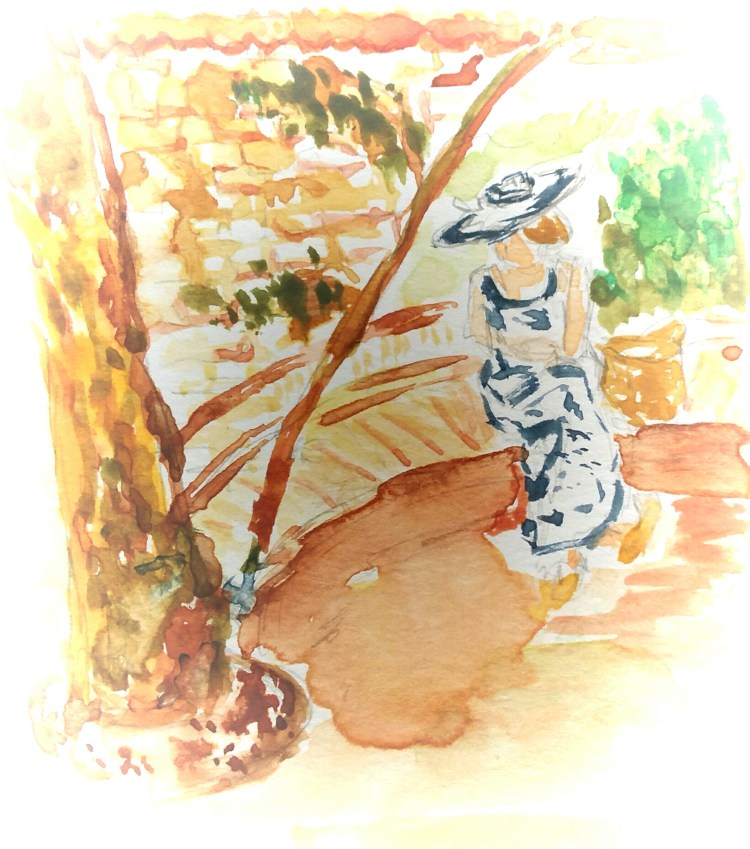
The next town we visited was Mougins, is a city of art galleries and artist’ workshops. On a small plaza, I saw a mysterious lady in a beautiful hat near the city’s legendary museum.
This is a serene sketch capturing a mysterious lady in a beautiful hat. It is set against the charming backdrop of Mougins. This town is known for its vibrant art scene.
The Art of Not Getting Bored at Mougins Museum!
The city has a famous Mougins Museum of Classical Art. It is a private museum. The entrance costs 14 Euros (2019). It’s worth it. Address: 32 Rue Commandeur, Mougins. The Mougins museum has the world’s largest private collection of antic helmets. I never would have thought that there was such a variety of helmets.
A watercolor sketch of ancient helmets displayed at the Mougins Museum of Classical Art.
In the museum, the lighting was dark so my sketches show the overall impressions of the gloom. I like to watch museums’ visitors; it shows the general impression of direction of exhibits in museum. We visited the museum on Monday when there were no visitors so the whole museum was ours. I was surprised to see such a rich collection outside the Louvre or British Museums.
One of my artistic goals is to paint the combination of houses, people, cafe, streets, landscapes, food, Provencal ice creams.
Watercolor sketch depicting the charm of Mougins, Côte d’Azur, showcasing a cafe scene and the essence of local artistry.
On the way to the city, our tour operator mentioned an interesting annual festival. It is called the ‘International Gastronomy Festival of Mougins’ or ‘Les Étoiles de Mougins’.
The festival used to be an event that brought lots of tourists and media attention to the town of Mougins.
Effective this year, the decision was made to hold the festival in other cities around the world. Mougins’ Michelin chefs will be sent to the festival to show the culinary art of the city’s chefs. So, understandably, the residents of the city are disappointed and would like to return the tourists to their city. To get here, you can take a train/bus from Antibes or Nice. At the end of this post, I will give instructions on how to get to this town.
Watercolor sketch depicting the charming scenery of Moulin d’Opio, showcasing olive trees and lanterns, reminiscent of Van Gogh’s art.
Moulin d’Opio mill, with its olive grove
Our next visit was a small place at Moulin d’Opio mill, with its olive grove and a small store. When you visit this place, you will instantly remember Van Gogh’s painting. The owners are the fifth generation of this family. They were telling us how olive oil has been produced for many centuries. We tested different varieties of olives, French oil, tapenade on toast, and drinks.
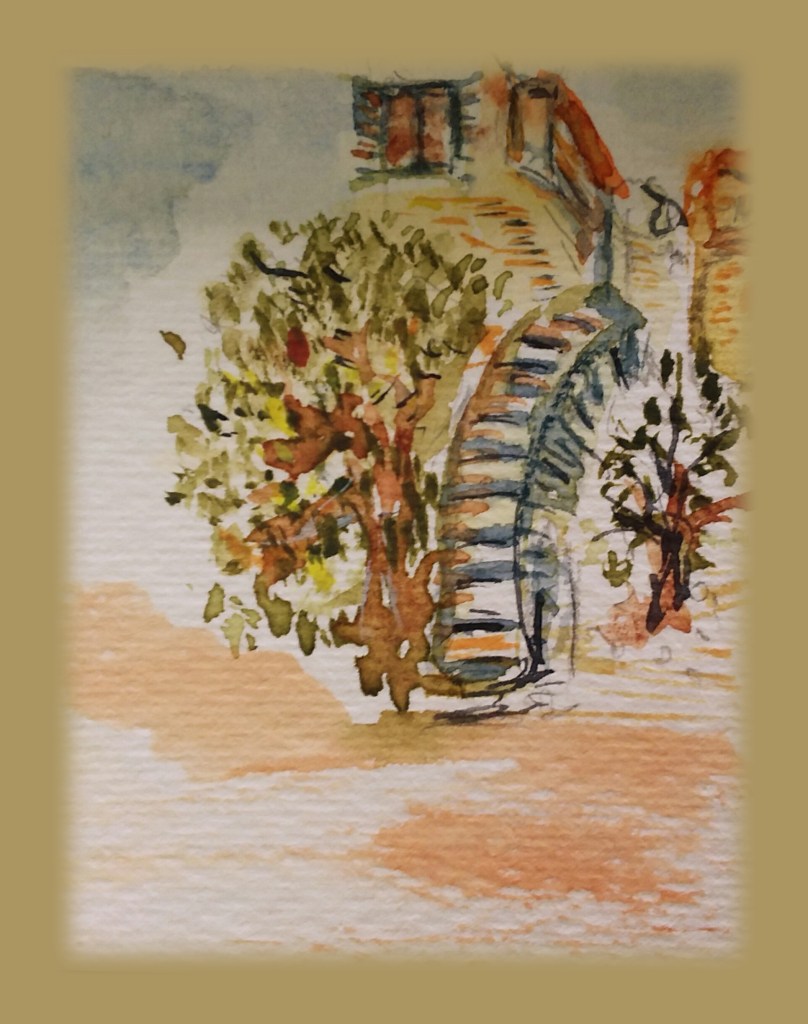
Watercolor sketch depicting a charming scene from Moulin d’Opio, highlighting the olive trees and quaint architecture of the area.
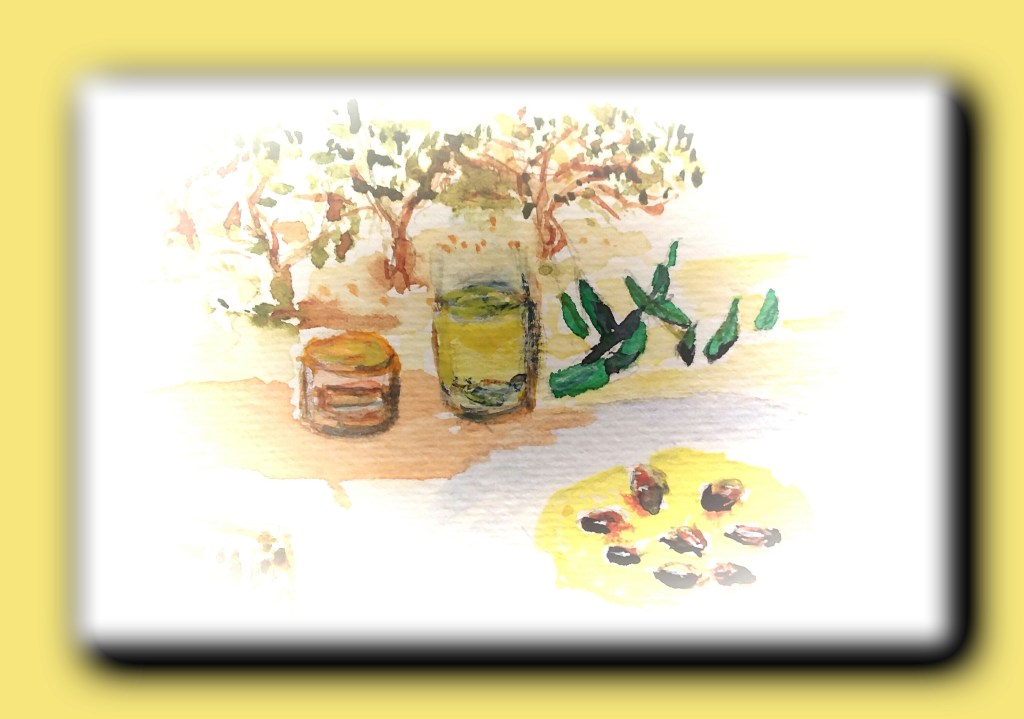
I would never have thought that I would try olive oil on its own. It was an interesting experiment.
A watercolor illustration depicting olive oil, olives, and a traditional Provencal setting, reflecting the culinary heritage of the region.A watercolor sketch depicting olive oil tasting and the scenic landscape of Le Moulin d’Opio in Côte d’Azur.
Tools used for my painting Watercolour used Charvin and Van Gogh brands, Derwent Watercolour pencils and Faber Castell artist pens. Paper Strathmore Watercolour and Mixed Media albums, 15×20 cm (6×8 in.)
Bon voyage! Until the next travel:)
You are welcome to visit my personal website pages. There, you can find out more about the artwork I am offering in oil and watercolor paintings. You can buy canvas prints, framed prints, and more artwork.
How to get from Antibes to Le Mougins. Take Train to Cannes, then bus to Mougins. Lines 25-27. Cannes – Ranguin <> Gare Routière des Messugues <> Collège Eganaude – Sophia Antipolis, par Mougins
How to get from Antibes to Le Cannet . Take train Antibes to Cannes, bus #1 and 4(?), 15 min =10 stops to Musee Bonnard, Bus Palm’Express n°1, arrêt « Mairie du Cannet
How to bring more joy to your vacation in the south of France
In this post I would like to talk about some one-day trips from Antibes or Nice. For me, sitting in one place and swimming in the sea is fine for a couple of days. I enjoy sunny beaches and cuisine, but then I need more. Provencal cities are very close to each other. They are rich in history, art, and architecture. It would be a “crime” not to visit some of the local small towns in the neighborhood.
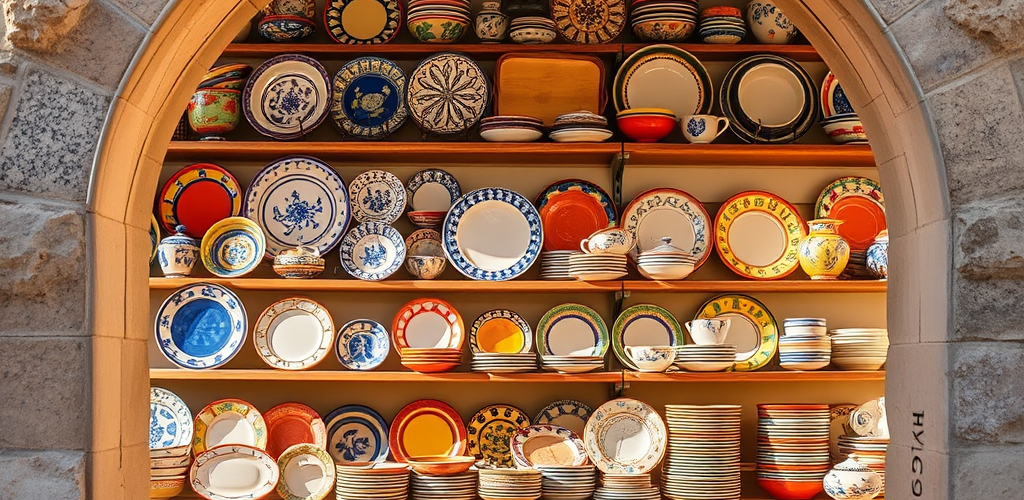
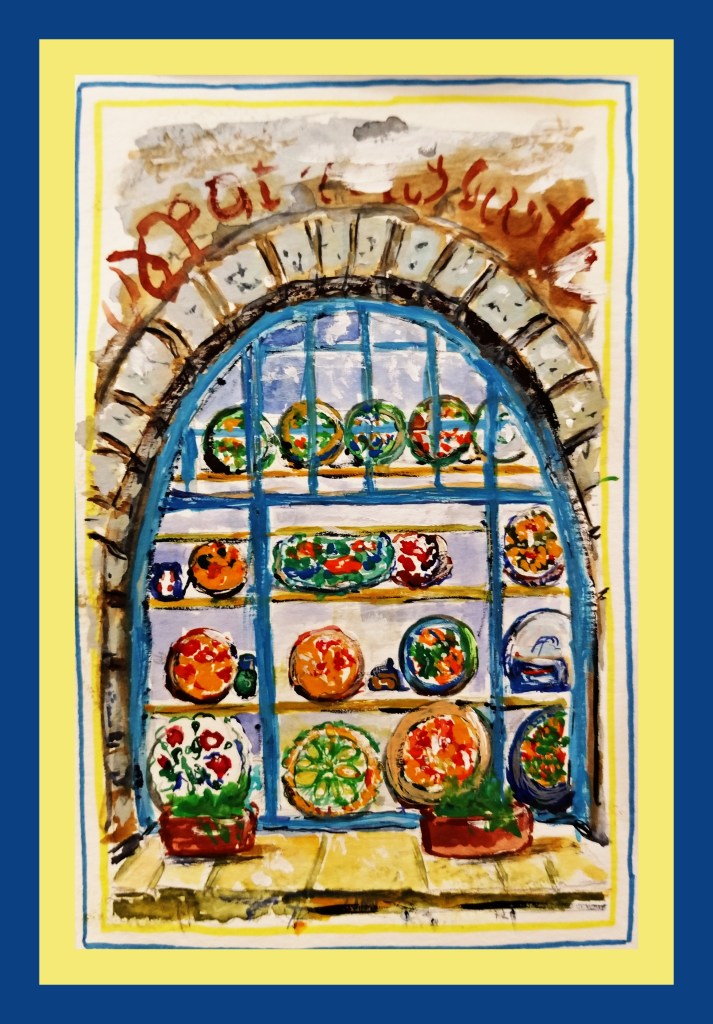
Vibrant Provencal ceramic tableware showcasing the rich colors of handmade plates from the South of France.
Exploring Art and Cuisine in Provence’s Charming Towns. Nice, France, one-day trips in Provence.
Provencal ceramic tableware with sun-drenched harmony of Provence in single handmade plates with vibrant colors found in the South of France and Italy
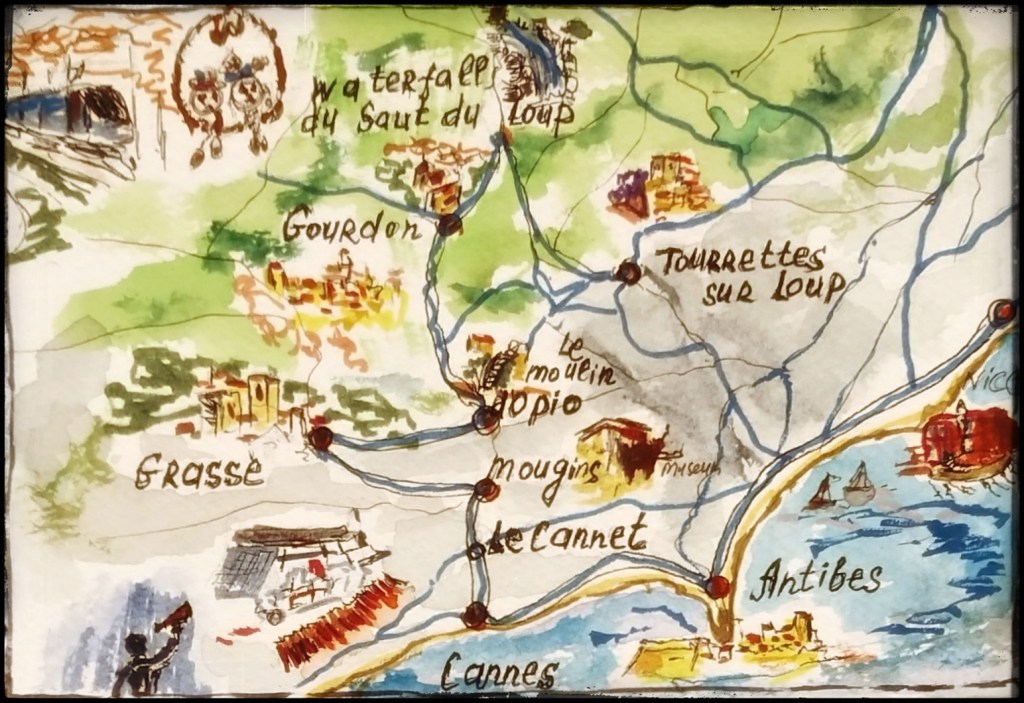
Illustration of the beautiful towns and landmarks around Provence, highlighting key locations like Grasse, Gourdon, and Tourrettes-sur-Loup.
Our Provencal Itinerary. This trip began in Nice and continued through Grasse, Mougins, and Moulins d’Opio. We also explored Waterfalle sur Loup, Tourrettes du Loup, and Gourdon.
We always travel by train or bus… but this time we decided to save our time and traveled with a tour operator.
The recently renovated Gare de Nice Ville, a welcoming gateway to the beautiful city of Nice.
Vibrant Provencal Experiences: From Grasse to Nice. Blue train brings people to Mediterranean Sea every day
Old Train station in Nice was recently renovated. It seems to be inviting visitors to join one of the most beautiful cities. Nice is conveniently located near the sea.
Our tour started from Nice. You can be picked up from your hotel by the tour operator. In our case we lived in Antibes. As a choice, a driver pick you up from your city, with an extra cost. We decided to take a train from Antibes to Nice. The journey took just 10 -15 minutes. It cost 4 Euros. It was another reason to visit Nice.
Illustration of a train station in Nice, capturing the blend of modern transportation and picturesque surroundings.
Grasse, the capital of perfumery
The 1st stop was in Grasse, the capital of perfumery. According to the legend of the 17th century, the city had many leather shops. The skin was soaked with flower essences to remove an unpleasant odour. Louis XIII and his beautiful wife, Anna of Austria, shared valuable secrets.
She was a Spanish-born queen. Thanks to them, some Spanish and Arab techniques for perfumed skins were revealed. So perfumes came to us from the city of Grasse. You want to visit Parfumerie Fragonard.
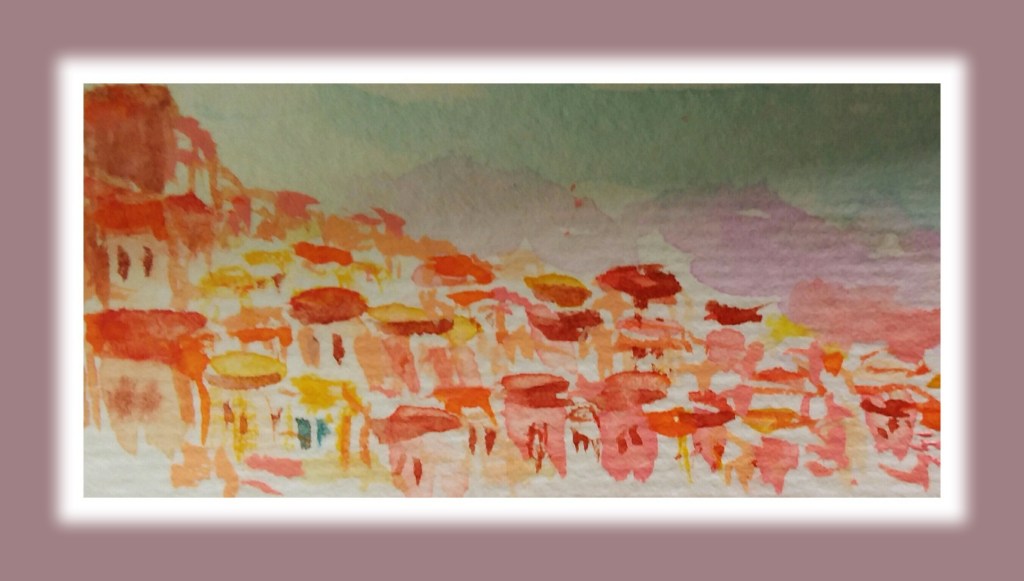
Watercolor painting depicting the vibrant atmosphere of a Provencal town, capturing colorful rooftops and the scenic beauty of the region.
The whole city is covered in flowers; a local perfume factory acquaints visitors with its spirits. During our last visit to Grasse several years ago, we walked several times through the local central square. We admired the views of the mountains from a huge cliff near the town hall.
It was blooming with floral aromas, the local fountain freshened the air with water. And only then I realized that the fountain was spraying perfumed water.
Perfume factory in Grasse
Sketch of our excursions perfume factory and olive store at Le Moulin D’Opio, Opio. Legendary Fragonard was the mayor of the city. The city has the Fragonard Museum is located at: 14 rue Jean Ossola, Hotel de Villeneuve, Grasse
This watercolor sketch depicts the perfume factory and olive store at Le Moulin d’Opio in Grasse, France. It showcases vibrant colors and local products.
Some interesting facts about Fragonard: he was the artist and pioneer of the Rococo style. There is a famous painting “The Swing” by Jean-Honoré Fragonard. Fragonard was a distant relative of my beloved impressionist artist Bertha Morisot. We visited museum D’Orsay in Paris this year, Morisot’s personal exhibition in the museum. Stay tuned for more information on it in my future posts.
More intriguing tales and delightful doodles are on their way—consider this your friendly heads-up before the next artistic adventure hits!
Tools used for my painting Watercolour used Charvin and Van Gogh brands, Derwent Watercolour pencils and Faber Castell artist pens. Paper Strathmore Watercolour and Mixed Media albums, 15×20 cm (6×8 in.)
Bon voyage! Until the next travel:)
You are welcome to visit my personal website pages. There, you can find out more about the artwork I am offering in oil and watercolor paintings. You can buy canvas prints, framed prints, and more artwork.
How to get from Antibes to Le Mougins. Take Train to Cannes, then bus to Mougins. Lines 25-27. Cannes – Ranguin <> Gare Routière des Messugues <> Collège Eganaude – Sophia Antipolis, par Mougins
How to get from Antibes to Le Cannet . Take train Antibes to Cannes, bus #1 and 4(?), 15 min =10 stops to Musee Bonnard, Bus Palm’Express n°1, arrêt « Mairie du Cannet
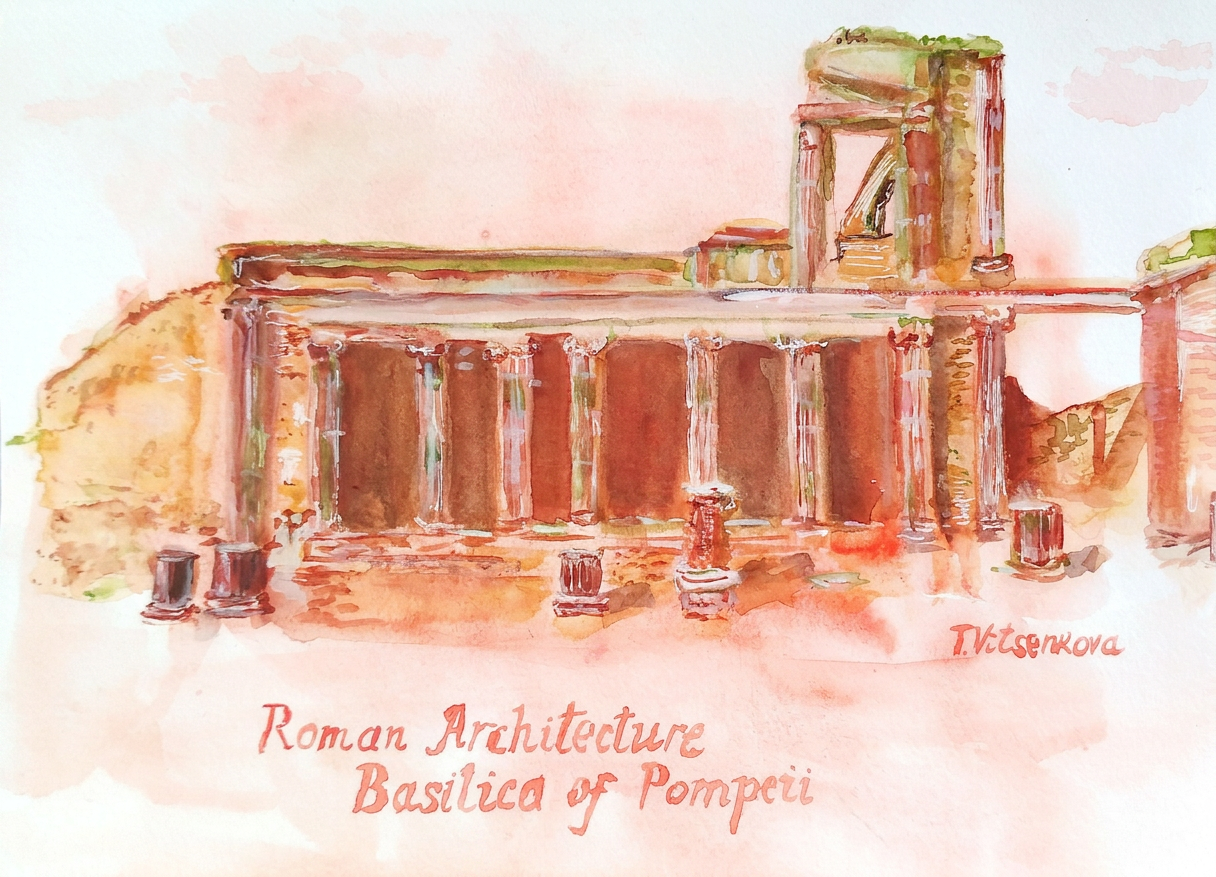
The financial public building had a very important part in the public life of ancient Romans. The ancient building has been stuccoed with white marble under Samonite’s rule and then the city became a part of the Romans colony. The Basilica was used as a site for court hearings, as well as to gather large groups to discuss some business and legal subjects and to hold public meetings. This was the place of Tribunals where the judge would reveal the law cases.
In my painting is the oldest public building in Pompeii – the Basilica. The Basilica was roofed in antiquity, but the roof has not been preserved until our days. It had Ionic capitals on the first floor and Corinthian capitals on the second floor. It consisted of two meter high podiums on top of which were six Corinthian columns. The tribunal is, amazingly, well preserved…
Imagine that you are walking inside the Basilica, enjoying the richly decorated walls with stucco like large blocks of marble, statues as you respectfully approaching the Judge who is waiting for another law-court …
Painting – Basilica of Pompeii, Roman Architecture
Year of construction- 120 BC
Address: Basilica, Pompeii
Tools used for my painting Watercolour PWC shell, Charvin revin red and sap green, Albert Durer and Faber Castell watercolour pencils. Paper Acquarello Fabriano, grana grossa rouch watercolour album, 22×30 cm (9 ×12 in.)
The magic of the holidays is in the making! Join me on this artistic adventure as I explore the captivating world of #TravelVibes #ArtAdventure
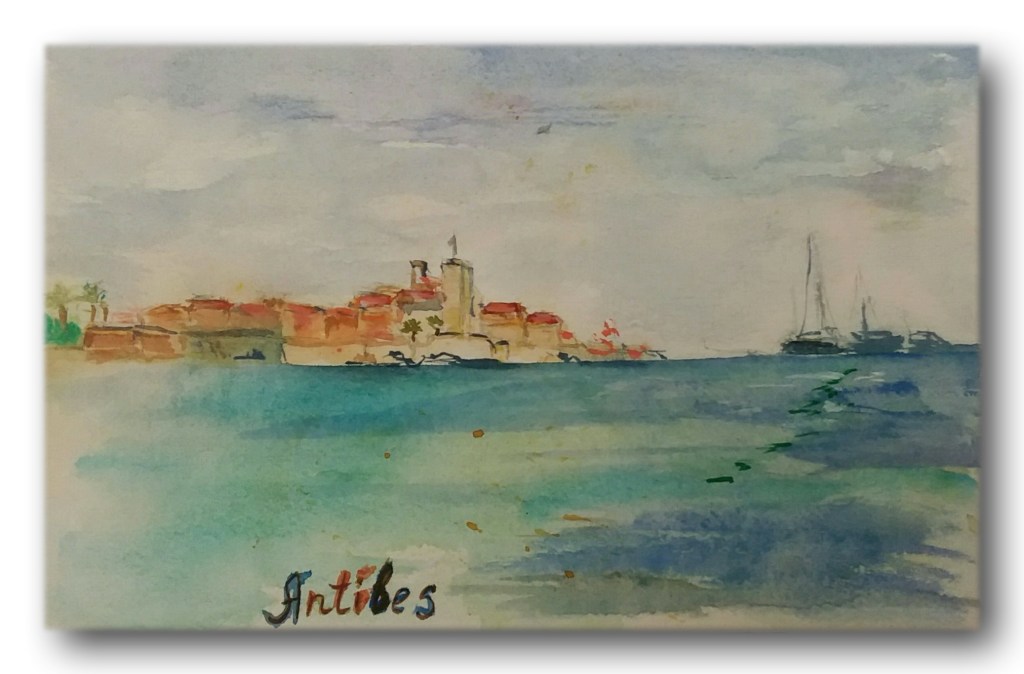
Urban sketching. Antibes, France. Itinerary for seeing one of the gem in Provence.
Going to Antibes in France… Why Antibes?
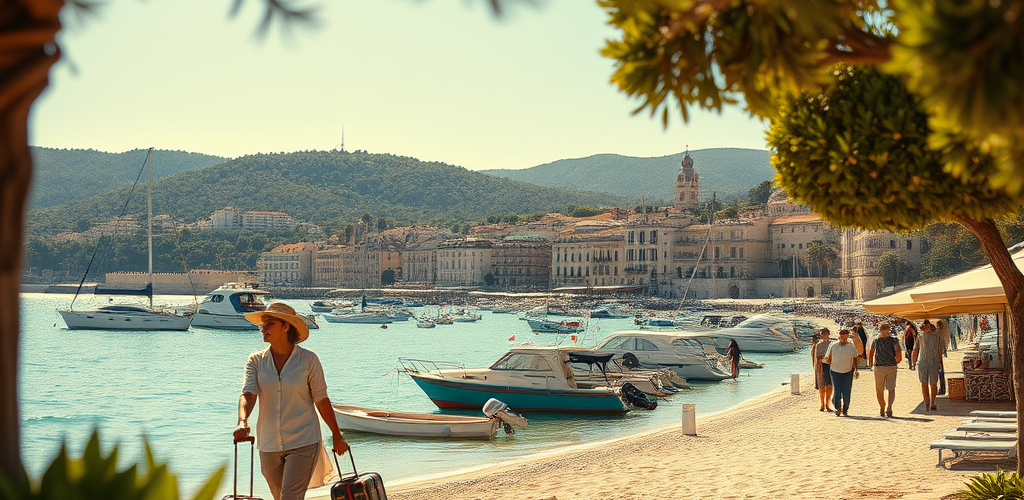
A watercolor painting capturing the scenic beauty of Antibes, with its vibrant coastal landscape and distant hills.
I will tell about the beauty of Provence based on our experience of 10 years. We have had a long relationship that we hope will continue for many years… We fell in love with the Mediterranean coast of France and its towns right away. We always come back here again and again.
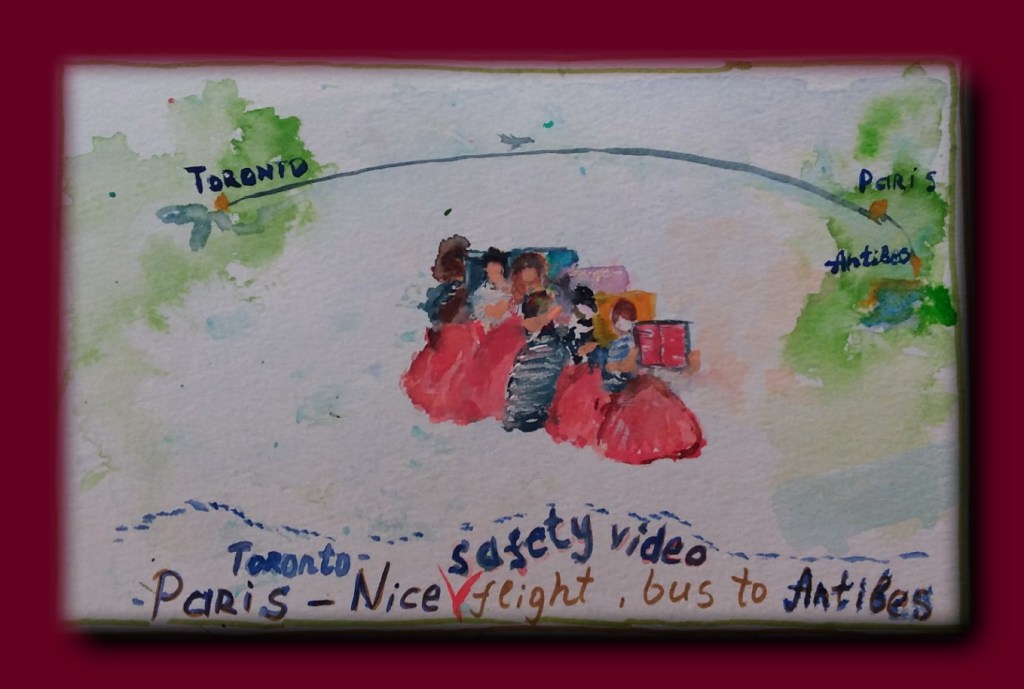
Artist’s watercolor depiction of a journey from Toronto to Antibes, highlighting the joy of travel and cultural experiences.
What is the beauty and goodness of Provence? Discovering Antibes: A Traveler’s Guide to Provence
Toronto- Paris- Antibes itinerary, 2019. Our voyage’s feeling always started from an airport door.
People are free from problems and minor life concerns. They exist between countries and continents. The air is full of a vibrant mixture of cultures, customs, and nationalities.
My favorite scene with Kevin Kline and Meg Ryan in the movie “French Kiss” is the take off scene. Everything is behind you…
Freedom of speaking with temporary neighbors is everywhere on a road. At any airport, especially during international flights, is driving my happiness as the traveling artist.
This flight was with Air France. I enjoy their safety movie featuring five young beauties. It reminds me of the French movie Eight Women with Catherine Deneve, Fanny Ardant, and Emmanuelle Bėart. Classic chic madams and mademoiselles and their flared dresses and colored shoes, beautiful and stylish, back in time.
A vibrant watercolor painting depicting women in traditional attire, evoking the charm of cultural celebrations.
The safety video shows in funny way usually regular boring but must-be learning process. Why not be entertaining and have safety training explanation at once? :)
You had a blast watching the video “Consignes de sécurité Air France – Bienvenue à bord.” It was flirtatiously fun. It felt like a romantic ad at 30,000 feet.
A vibrant watercolor painting showcasing the beauty of Provence, highlighting the colors and essence of the Mediterranean landscape.
How to get there?
In Provence, south of France, there are many intercity buses. These include both speedy and local buses between Nice airport and Cote d’Azur towns.
A watercolor illustration of the bus route from Nice to Antibes, highlighting the picturesque landscapes of the Côte d’Azur.
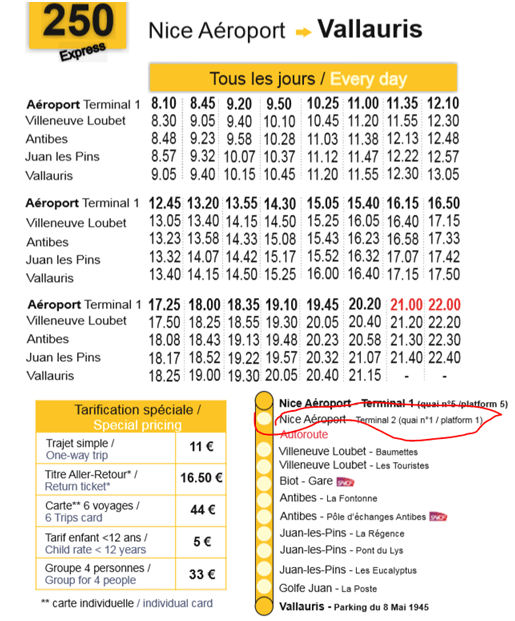
We took bus #250 that goes every 30 min from Nice airport to Antibes. It then continues to Cannes. I highly recommend taking the express bus.
It will save your time and energy especially on the first day of your vacation after flight.(information about the bus on the bottom of post)
I started to do my sketches right away :) My Watercolour painting is done with Provençal magic Watercolour box Charvin. In the Nice’s store I hesitated to buy ALL of them.
Finally, 12 clear sea and old Provençal roofs’ building color paints were chosen, and the owner unexpectedly gave me one extra for luck:)
Thank you, I will come back soon.
CHARVIN PAINTS
Artistic watercolors from Charvin Paris, perfect for capturing the vibrant colors of Provence.
French Riviera Beach painting on Salis beach (Plage de la Salis)
Watercolor painting of Salis Beach in Antibes, showcasing the serene Mediterranean coastline and vibrant skies.A serene moment on the beach in Antibes, showcasing visitors enjoying the sun and sea.Watercolor painting depicting the serene beach scene of Antibes, capturing the essence of the Mediterranean coast.
I will tell you about this wonderful place with some notes as a traveler. My artist’s paintings and drawings of the Antibes will also be included. It is one of the Mediterranean French coast’s cities. Antibes is known for its legends, friendly people, museums, and yummy food. It offers sunny beaches and a warm sea. Most importantly for me, it includes artists’ paths.
A vibrant watercolor painting depicting a sunset view over Antibes, showcasing the town’s coastal beauty.
Napoleon’s family Legend in Antibes
Let’s start with one of the Antibes’ legends is about Napoleon’s family. Locals are saying that Napoleon’s mother and his sisters lived in Antibes. It is not confirmed in fact. Nonetheless, the locals added some explanation on a house’s sign. Below is the photo from this place.
A sign on a historic building in Antibes claims Napoleon once stayed here. It is surrounded by a charming stone wall and colorful flowers.
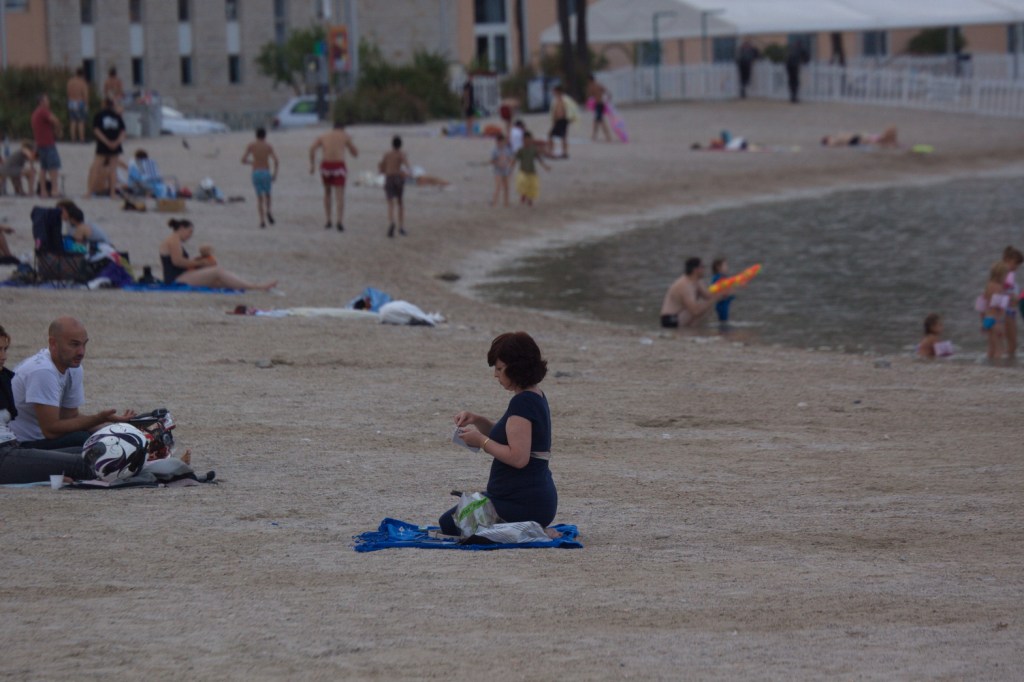
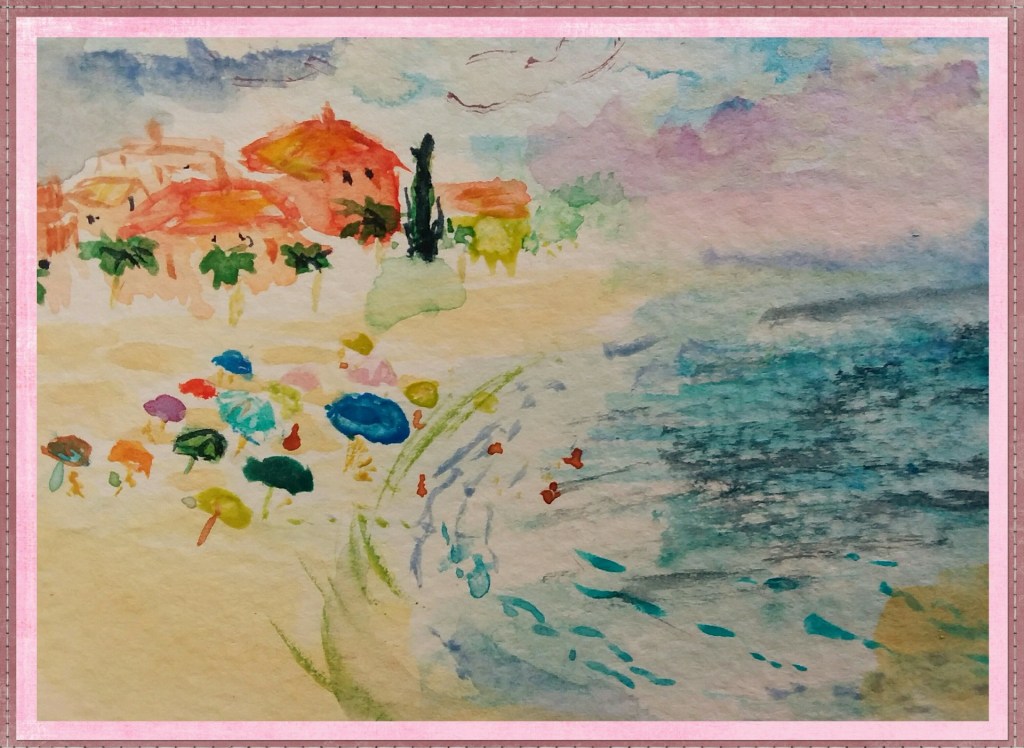
Antibes beaches with its mild colors, tender rose, blue and violet painting. I was painting this view of local houses and beach with hill surroundings. The long path leads to next town Juan les Pins, our favorite two long sandy beaches, Ponteil and Salis.I was painting sea’s stones on Antibes’ beach. This type of sketches is relaxing time spending…
I was painting sea’s stones on Antibes’ beach. This type of sketches is relaxing time spending…
This is a watercolor painting. It showcases the colorful stones and pebbles found on the beaches of Antibes. It captures the vibrant essence of this beautiful Mediterranean town.A serene watercolor painting capturing the sunset over the coastal landscape of Antibes, framed by trees.
Antibes is town with lots of energy and has “all in one”.
The old city of Antibes is full of charm
The old city of Antibes is full of charm. Under the south sun, all houses look like gold buildings. Flowers cover their walls.
A vibrant watercolor painting capturing the warm tones of Provence, showcasing charming architecture and colorful flora.
Antibes has the Archaeological museum, see below the map of the Ville d’Antipolis, how Romans used to call it.
Map of the ancient city of Antibolis, highlighting significant archaeological sites and surrounding areas.
Watercolor painting of chocolate-covered olives, a charming treat inspired by the flavors of Antibes.
Archaeological museum in Antibes
One day, I visited this small archaeological museum. Even without translation into English, I learned about the ancient history of this place. It was the former settlement of the Greeks, then the Romans, the Etruscan and then Galls. There are lots of underwater amphorae and wrecks off Antibes. These once held fine wine and were raised from the bottom of the sea.
It was the former settlement of the Greeks, then the Romans, the Etruscan and then Galls.
There are lots of underwater amphorae and wrecks off Antibes. They once contained fine wine. These were raised from the bottom of the sea.
Etruscan vase sketch, reflecting the ancient culture and art of Antibes.
Another legend is the Etruscan learned to make wine residents of Provence’s French Galas. Interesting, isn’t it?:)
I drew one of their works of pottery’s art Etruscan vase.
10 years ago, I felt a deep connection to the Etruscan culture. It had gone into oblivion. I read some books about Etruscan culture by Jean-Paul Thuillier, Nemirovsky, and Jean-Noel Robert.
It opened my eyes to many things and historical events. After this, we visited the special Etruscan museum and Villa Medici in Rome. Our local Toronto’s museum, ROM, also has an Etruscan section with some good exponents.
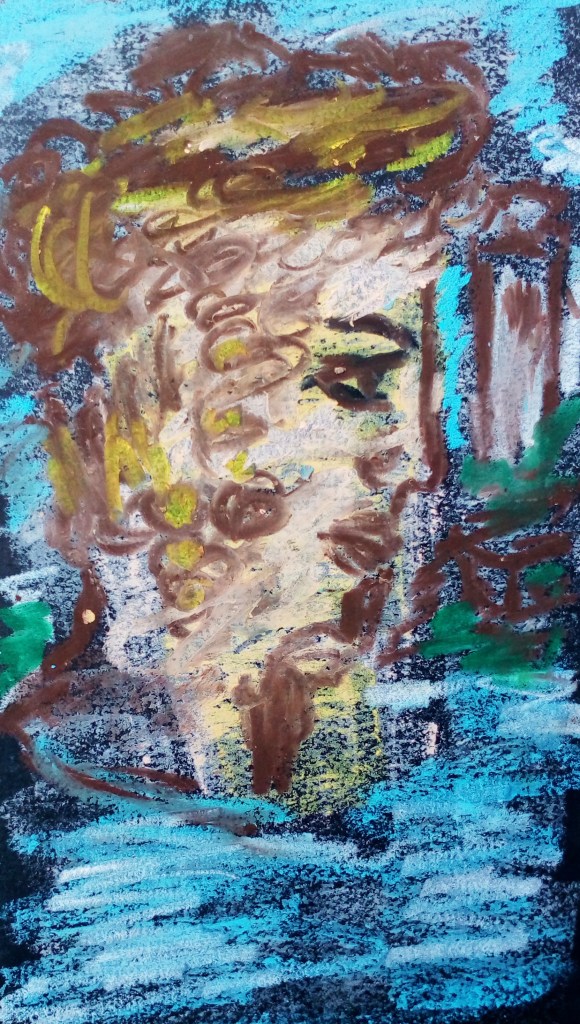
An artistic interpretation showcasing Etruscan faces, highlighting the individuality of ancient personalities.
Etruscan faces on painting what remained of the exhibits expressed the display of the personality, individuality of a person’s traits. After the influence of Greek culture it started to be prettier but faceless personal features.
Connection between Antibes and Impressionism
Another fascinating story of Antibes is about the connection between the city and Impressionism. This was a new art movement in the 19th century.
It started from Monet, my favorite artist and the creator of impressionism style.
I read the book Monet and the Mediterranean several years ago. Joachim Pissarro wrote it. This book actually opened for me the city of Antibes.
Monet stayed in Antibes for 5 months in 1988. He painted many paintings from this place. His works include “Antibes seen from La Salis”, “Morning at Antibes”, and “Gardener’s House at Antibes”.
Others include “Antibes seen from Plateau Notre-Dame.” There is also “The Gulf of Antibes.” Another one is “View of the Bay and Maritime Alps at Antibes.” Monet wrote to his wife Alice “What I will bring back from here will be pure, gentle sweetness.”
Winding paths offer a view of the ancient city. The silver-violet color of the mountains is visible in the distance. These elements are inviting for a romantic walk.
Old pines are handed close over the path, setting beyond the horizon highlights the sea and the city in distance.
There are some artists discovered this amazing city and landscape around it. Long path near Antibes is very popular among impressionists and post impressionists like Monet, Sisley, Cross, Signac. Their artworks made this town famous.
Everywhere on a long path you see lots of reproductions of artists. They are standing exactly on the places where they created by different artists. This place inspired many artists and me. It can invite you to visit for traveling and producing some artworks.
Gourmet Immigration or Mistress of the Copper Mountain
We once traveled to France for our family summer vacation. During this trip, my husband invented a new expression, “Gourmet Immigration.” It is a brilliant discovery. I hope we will implement it in the future.
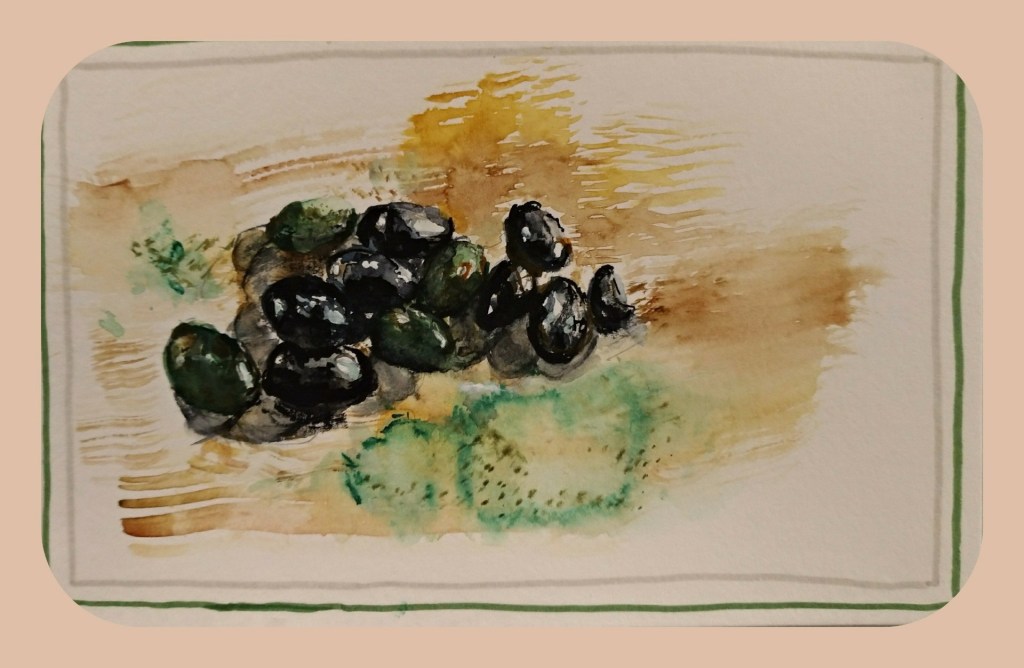
Chocolate olives in chocolate, chic, isn’t it? Full impression that it is OLIVES. No, no, no, no, no, no! It is dark and milk chocolates in the form of black and green olives
A watercolor painting of chocolate olives, highlighting the unique and delicious treats found in Antibes.
Two ladies, maybe sisters or friends offer any French chocolate treats. They seem like the mistress of Antibes’ chocolate makers with mouth-watering chocolate. Alternatively, they resemble the legendary Mistress of the Copper Mountain who loves chocolate. Instead of minerals, their product is made from chocolate.
Note. Mistress of the Copper Mountain, also known as the Malachite Maid, is a legendary creature from Slavic myths. She is a fairy tale character and the mountain spirit from the legends of the Ural miners. As the Mistress of the Ural Mountains, she is depicted as a beautiful green-eyed young woman in a malachite gown.
Watercolor painting of French chocolate olives, showcasing creative culinary delights found in Antibes.
Picasso Museum
I’m not really a fan of Picasso but his story of living in the Antibes is joyful. Picasso lived here after the Second World War when everybody’s feelings were happy because of the end of world war. Picasso drew local women Antibes, and one of his famous painting is Les Demoiselles d’Avignon (The Young Ladies of Avignon). Then suddenly he decided to learn something new, but again in his style. It was start of the new era of Picasso’s pottery.
My favorite expressions of Picasso from this period are many. One expression is, “I have spent my whole life knowing how to draw like a child.” He famously said, “J’ai mis toute ma vie à savoir dessiner comme un enfant.” Another expression is “I do not seek, I find.” In French, it’s “Je ne cherche pas, je trouve.”
A watercolor painting depicting the sculptures along the Antibes coastline, highlighting the beauty of the Mediterranean Sea and artistic inspiration.
Picasso decided to learn how to make sculptures from scratch when the local pottery master visited Picasso’s exhibition. It turned out to be 7 years of relationship. During this time, the famous artist learned from very basic vases in his 70th at the local workshop. This led to the creation of great and individually recognizable artworks.
Picasso learned it for many years, and yes, it was free of charge training. Nonetheless, the workshop can copy Picasso’s pottery artworks. These were originally made in this place. They can copy them for a certain number of times and sell these artworks. They are saying that the agreement is still in force. Picasso began with simple vases, and then went on to do art in direction. Some sculptures you see in the Antibes museum.
I’ve drawn and later finished with watercolors some of his vases. This is the advantage to being an artist. You not be allowed to take photos, but pencil sketches are fine under the museum’s rules. Voilà!
Antibes’ locals love cats; there are some signs on the doors in the Old Town. I drew them on the location.
Artistic depiction of a house sign in Antibes with a charming cat theme, reflecting the local love for cats.
The market in the Antibes is particularly remarkable. Baguettes and croissants, handmade early in the morning, are sold at the market quickly. You can buy real Antibes wine. You will also find Pâté de Foie Gras (goose liver) with colorful ripe vegetables and fruits at the Marche provencal. Address: 27 cours Massena, Antibes
Famous Gelateria is just next to the Market.
Watercolor illustration of Gelateria Del Porto in Antibes, showcasing delicious ice cream offerings.
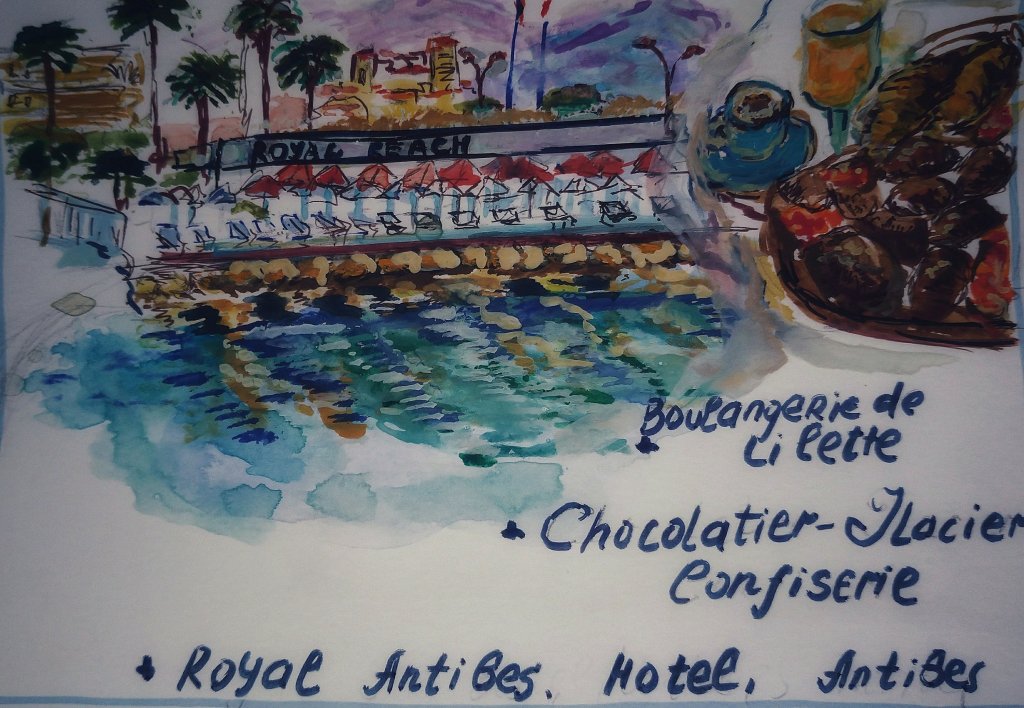
Our favorite bakery was near our Royal Antibes hotel. It is a great place that you will enjoy. It is in very close distance to Salis and the private Royal beach with a restaurant on it.
A charming watercolor painting of the Royal Antibes Hotel and nearby bakery, reflecting the beauty of the French Riviera.
The bakery is just next to the beach, named La-brasserie-de-lillette. I want to highlight some rules inside the small store that sells croissants and other bakeries. Customers must not wear swimsuits, even though it’s just a minute away from the beach. Please respect the “Queen” – French baguette.
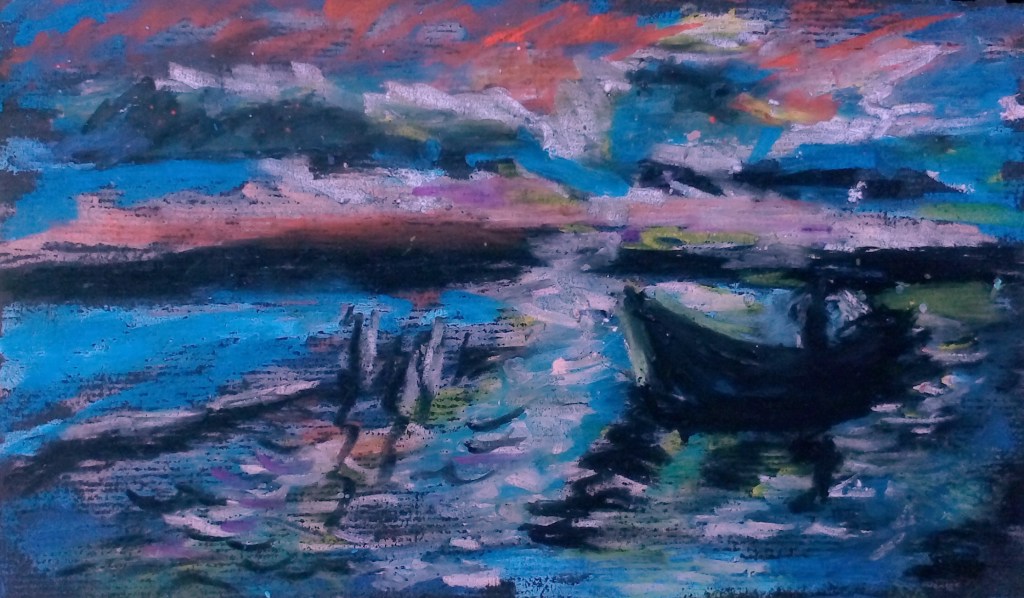
Sunset in French Riviera, Antibes
You get up at 7 in the morning and you go to meet the dawn. Nowhere in the world there is no such beauty.
A vibrant pastel painting capturing the serene beauty of a boat on water, reflecting the colorful sky in Antibes.
We visited more than 30 locations in Provence in last 10 years, and I am enjoying to paint on location, and Antibes is the city you will enjoy travel and paint with Joie de Vivre (a feeling of enjoyment of life)
A watercolor painting capturing the serene beauty of Antibes, a charming town on the French Riviera.
Daily trips from Antibes. Transportation
For daily trips I recommend to buy the “Ticket Azur” that allow you to take two transport networks in succession, to finish a journey, including one change between one of the lines on the Departmental Council’s TAM network and a line on one of the following networks: Envibus (Antibes and surrounding area), Communauté de la Riviera Française (Menton and surrounding area), Sillages (Grasse and surrounding area), Bus Varmer (Carros and surrounding area), Ligne d’Azur (Nice and surrounding area), Bus Azur (Cannes and surrounding area)
Bon voyage! Until the next travel:)
You are welcome to visit my personal website pages. There, you can find out more about the artwork I am offering in oil and watercolor paintings. You can buy canvas prints, framed prints, and more artwork.
All paintings belong to the author. No image is to be copied without permission.
Tools used for my painting include Charvin and Van Gogh watercolours. I also used Pastel GrayPas Expressionist. Derwent watercolour pencils and Faber Castell artist pens were used as well. Paper Strathmore Watercolour and Mixed Media albums, 15×20 cm (6×8 in.)
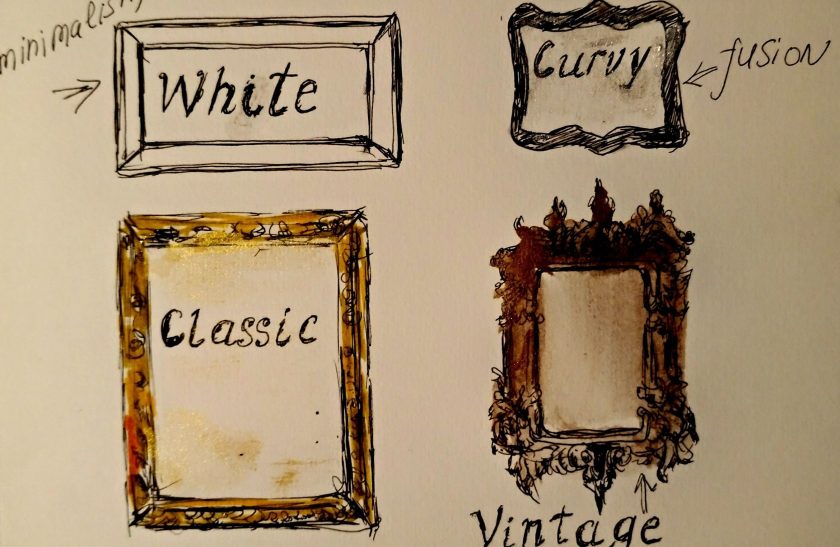
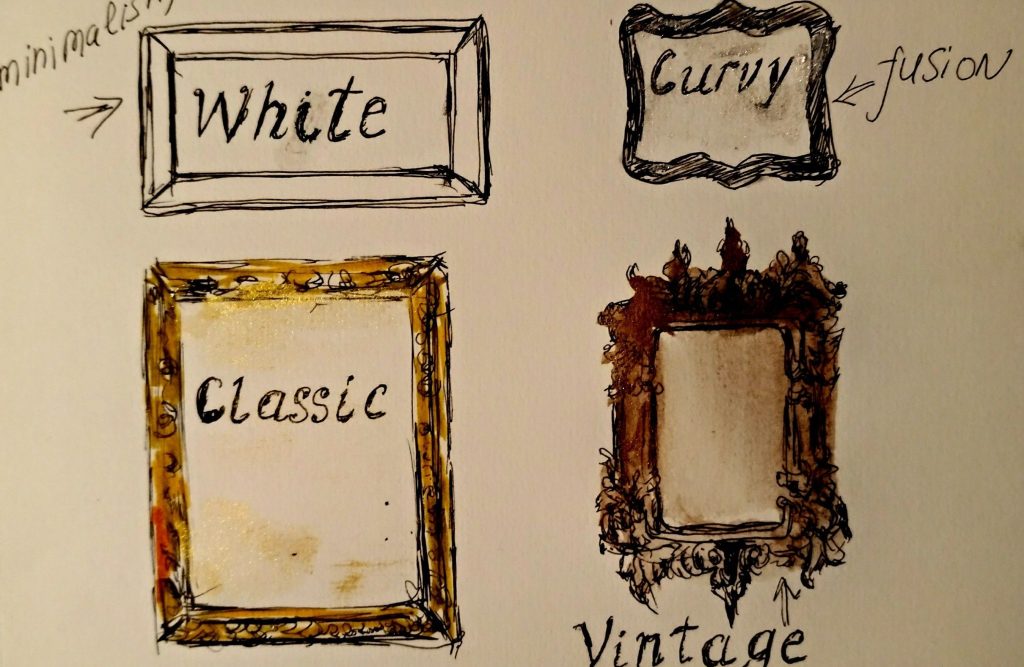
Some tips for making an original frame for art.Creating #goodmood paintings.
Recently there are some questions came from my colleagues artists.
How you are presenting your art to the clients, with or without frame?
Adding a mat to a watercolor painting or not?
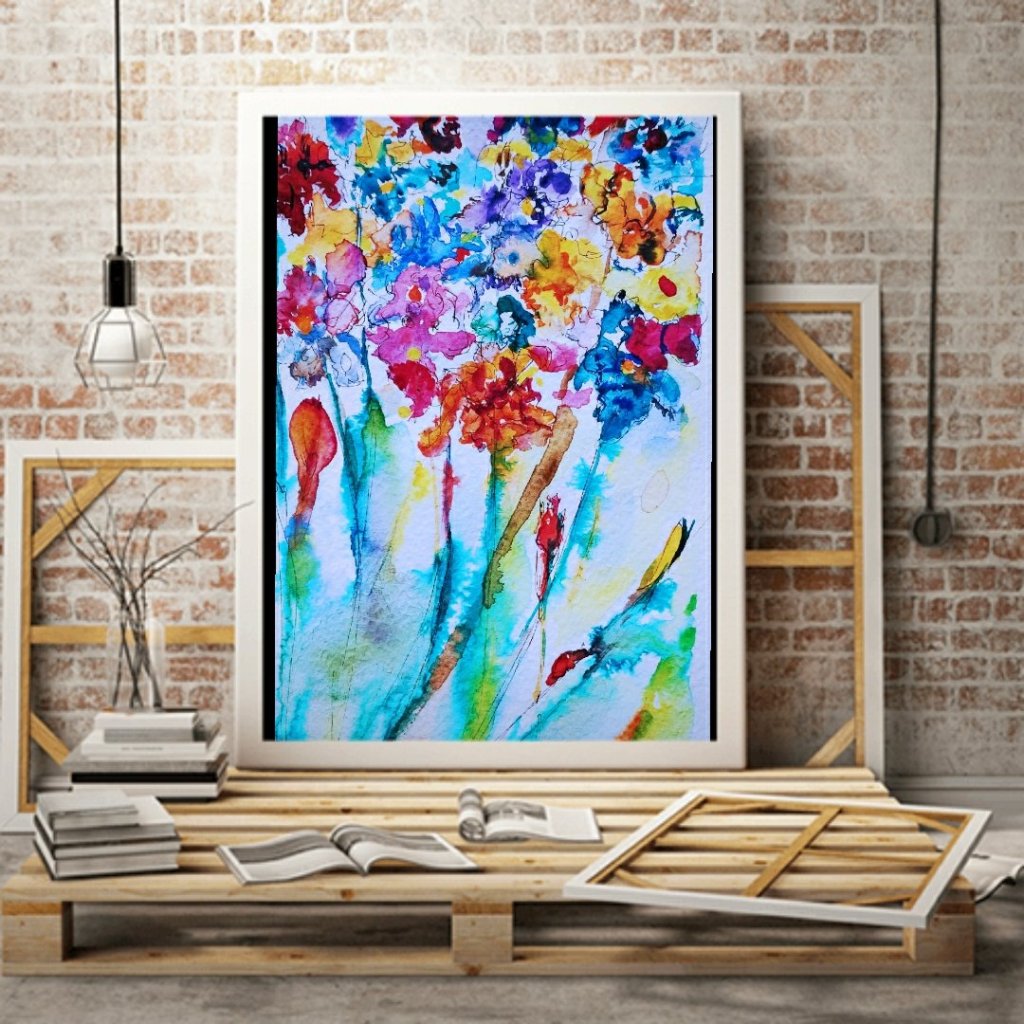
Are you buying a frame before presenting it to a client? It’s crucial to consider the overall aesthetic appeal and how the frame complements the artwork or photograph it will house. Investing in a quality frame not only enhances the visual impact but also conveys professionalism and attention to detail. This first impression is vital in establishing trust. It showcases the value of your work. Thus, it is essential to select a frame that aligns with your client’s expectations and the piece being showcased.
Standard inexpensive or hand made from a baguette store?
Frames at Target are often priced below $25. This makes it an appealing choice for those decorating on a budget. Shoppers have a variety of styles, sizes, and colors to choose from. This makes it easy to find something that fits their aesthetic. They can do so without breaking the bank. But, with custom framing, prices can significantly increase. The process involves more personalized options and high-quality materials. It also includes professional craftsmanship that caters to individual tastes and specific artwork requirements.
This can result in an investment far exceeding the cost of ready-made frames. This is something to consider when planning your interior decor.
Frame is always an architectural feature plus preserving an art and integrating it into a design of room. There many questions about framing and artists are looking for the best solution in every situation.
Which ones?
Let’s explore together. This will guarantee that painting a picture frame at home becomes an ongoing creative process.
I am completely immersing myself in this interesting and creative activity. Well.. various techniques and secrets can be used to update the frame. I am going to share my experience of modernizing a standard frame for art
Please share your experience in comments. Let’s exchange :)
All paintings belong to the author. No image is to be copied without permission
Bon voyage! Until the next travel:)
All paintings belong to the author. No image is to be copied without permission.
For my artist colleagues and students. Workshops. Innovative approach to describe artwork. Trademark:)
How do you describe and prepare paints for your artworks? For example if you need a bright or light yellow color, a brand, a particular paint? I usually do test paints from my selected colors before painting . All artists would agree that watercolors from different brands with the same names for paints give us various color’s views. Sometimes it is difficult to distinguish and choose a paint even with the same name
For example, brand PWC watercolor yellow ochre and Windsor yellow ochre paints look differently. You would describe paint of yellow ochre as something between yellow and brown, opaque. Raw sienna is mostly yellowish-brown and transparent.
At the same time, using yellow ochre or raw sienna, they look very alike to a viewer. The viewer does not care about the name of the paint or the brand. They need emotion.
Comparison of PWC and Winsor yellow ochre watercolor paints, showcasing their distinct shades.
Describing a bright yellow color in your artwork as a juicy banana is effective. It gives a clue and brings a memory about a ripe fruit. This description brings you to summer, and you feel energized. So I created my own cool way to describe colors with names from nature and food, berries, veggies and fruits colors TM :)
I pick paint from my Watercolour collection of paints. I choose the name of one of my favorite berries or fruit. This depends on the season and time of year. Some examples of artworks from my recent series of Iris flowers.
… juicy plum, blueberry and peach colors, long stems of mustard colors with background of corn and turmeric colors, little red ladybugs with dripping raindrops are on leaves of color of green apples …
… of juicy banana, strawberry and blueberry, long stems of colors of cappuccino and kiwi with vanilla background of ripe corn, little red ladybug with dripping raindrops are on milky leaves
Colorful watercolor artwork featuring flowers, inspired by nature and food descriptions.
Are you feeling the taste and smell of juicy bananas?:)
The magic of the holidays is in the making! Join me on this artistic adventure as I explore the captivating world of #TravelVibes #ArtAdventure
You are welcome to visit my personal website pages. There, you can find out more about the artwork I am offering in oil and watercolor paintings. You can buy canvas prints, framed prints, and more artwork.
All paintings belong to the author. No image is to be copied without permission.
For my artist colleagues. Workshops. Holidays spirit for creative community. Join me in artistic journey: sea waves and sunrises.
Just finished this vibrant painting of sea waves, and it instantly transported me back to a magical moment in summer. I recall finding a lively street performance in Paris. People danced samba with such energy and passion near the river Seine. It felt like the waves were dancing too! Here’s to capturing those joyful memories through art.
Imagine lovely warm Mediterranean sea. It’s a breathtaking scene when the sun gracefully rises languidly from the horizon. It casts a warm, peach-hued glow over the tranquil waters. The waves, much like spirited dancers performing a samba with vibrant life as they embrace the shoreline.
In the foreground, a majestic sailboat sways gently. Its main sail is illuminated by the peachy hue of the beginning of the day. A romantic couple is lost in each other’s gaze. They are nestled within the embrace of this idyllic moment. It is a perfect tableau of love in harmony with nature.
A watercolor painting of sailboats gliding across the shimmering waters at sunrise. It is captured in vibrant hues of red and peach.
Romance on the Water: I imagined a picture with a romantic couple sailing on the foreground. They are lost in each other’s eyes. They glide through the shimmering waters. Their sailboat reflects the vibrant hues of the sunrise, creating a perfect harmony of color and emotion.
I believe that every brushstroke holds a story. My story is about a summer day and that feeling of romantic waves and maybe the samba dance, who knows?:) What memory fuels your next masterpiece?
Let the rhythm of life inspire you to create. What’s your passion? How about dancing like nobody’s watching and painting like you’re in your favorite place? This is about me:)
Let’s celebrate this enchanting scene together. I invite you all to pick up your paints and brushes. Gather your canvases or watercolor paper. Join me in capturing this magical moment. Whether you’re a seasoned artist or a beginner, let’s unleash our creativity. Dive into the world of colors and emotions found in nature.
I love when as the sun wakes up from the horizon, it bathes the sea in enchanting hues of peach. Honestly, I can view it every morning. I never get tired of enjoying this spectacle of the sunrise over the sea. I added some lovely sailboats with vibrant sails billow against the gentle breeze. This creates an exquisite backdrop for a striking seaboard morning regatta. They are captured midst the enchanting dance of the waves. Each crest and trough swirls like the rhythmic steps of a samba. Or this is only my imagination?:)
Who’s ready to paint the magic?
In the foreground, a romantic couple is aboard the main sailboat. They share a tender moment. Their silhouettes are framed against the breathtaking sunrise. The scene is not just a vista. It is an intimate encapsulation of love and adventure. Here, the serenity of the sea meets the warmth of a setting sun.
Samba vibes and sea waves. A vibrant watercolor depiction of two dancers in a samba. It is showcasing the connection between movement and emotion against a backdrop of swirling colors.
Experience romance and creativity as you paint the waves
There are two rhythmic wonders – sea’s waves and samba dance. Imagine the vibrant hues of a peach sunrise reflecting on the waves, where art meets romance,
Every wave whispers a story! Channel your inspirations into your art—let nature and unforgettable moments shape your creativity! What stories do you have to tell?
Whether you are a seasoned painter, I welcome you to dive into this artistic journey with me. Are you a curious novice? I welcome you too. Let us celebrate the beauty of the sea and the magic of sunrises,sunsets infusing our hearts into every stroke.
Paint Your Love Story.
The sea dances with every brushstroke! Join me as we bring the energy of the waves and the warmth of the sunrise to life on paper.
Grab your brushes! We’re diving into a world of colors where waves play and couples sail. Come paint the peach skies with me, and let’s make some unforgettable memories! Join me for a colorful morning by the sea:)
Ready to unleash your inner artist?
Color palette
Inspiration from Nature: Imagine the captivating beauty of the seaboard regatta at sunrise. The sky radiates shades of peach and coral. The waves dance gracefully like a samba, inviting us to join in their joyful movement.
Art is more than just colors on a paper; it’s a celebration of experiences! Go out, explore, and let those vibrant moments inspire your creative work;)
A vibrant color palette showcasing shades of red, peach, and blue. It’s perfect for capturing the essence of a sunrise over the sea.A vibrant watercolor painting shows a serene seaside at sunset. It captures sailboats gliding over the shimmering waves. These boats sail beneath a peach-hued sky.
Soundtrack Inspiration
I was painting and listening to some vibrant songs that capture the essence of samba dance. These songs blend rhythmic beats and lively melodies. My favorite compositions for Samba Waves are “Mas, Que Nada!” – Jorge Ben Jor and “Samba de Uma Nota Só” – Antonio Carlos Jobim.
Wildlife in art
Well, this time I decided that part of my “wildlife” in the painting will be …a romantic couple and maybe some seagulls in the foreground:) Voilà!
Seeking inspiration? Look around you… Memories can turn into the most beautiful creations. Dive deep, find your magic, and paint your heart out:)
Join me in capturing the magic of a seaboard regatta and the beauty of love in our paintings!
A vibrant watercolor sketch of sailboats on serene waters at sunrise, capturing the beauty of peach-hued reflections and artistic inspiration.
A sunrise regatta. Join me for a creative journey. Capture the serenity of the sea at sunrise . #CreateYourStory
Embrace the Rhythm of the Waves: Let’s paint those waves. Feel their rhythm. Let our brushes dance like the samba they create. Each stroke can echo the gentle lapping of the waves and the warm embrace of a sunrise.
I invite you, dear friends and fellow artists, to join me in this enchanting journey. Let us gather our paints, brushes, and hearts to immortalize this picturesque scene. Together, we can translate the beauty of the seaboard regatta at sunrise onto canvas. Our creativity will flow like the waves before us.
Together We Can Create Beauty: Join me in this artistic journey and let’s inspire each other. Comment below if you’re interested in painting this beautiful scene with me!
Share Your Art: After we paint, I encourage everyone to share their creations! Let’s create a vibrant community of artists united by our love for the sea, sunrises, and the romance of life.
Thank you for reading the post. Don’t forget to like, share, and subscribe. These actions will bring you more captivating content about the history of art, nature and architecture.
Embracing the magic of imagination on this beautiful sunny day. #ArtJourney #ArtisticCommunity #ArtInspiration #CreativeJourney #CommunityPainting #CreativeLiving #DancingWaves#Imagination#NatureInspiration #RomanticArt #Samba #SeaVibes #SunriseArt #SunnyVibes #SeaView #SeaWaves #SeaboardRegatta #WildlifeArt #WavePainting
The magic of the holidays is in the making! Join me on this artistic adventure as I explore the captivating world of #TravelVibes #ArtAdventure
All paintings belong to the author. No image is to be copied without permission.
You are welcome to visit my personal website pages. There, you can find out more about the artwork I am offering in oil and watercolor paintings. You can buy canvas prints, framed prints, and more artwork.
For my artist colleagues. Workshops. Embrace Imagination in Online Art Sessions. Holidays spirit for creative community. Join me in artistic journey: sea landscapes and sunrises.
Last week, I had the absolute pleasure of hosting an online art session with my incredibly talented students. Together, we dove into a world of creativity where the theme of our artworks revolved around a lovely mystery.
The only guideline? To connect deeply with our inner child. We embraced this journey with open hearts and minds, letting go of the fear of mistakes. It was a magical experience watching my students tap into their boundless imaginations. Each stroke of their brushes revealed a unique story waiting to be told.
Each piece was a glimpse into their individual worlds, beautifully crafted through the lens of childlike curiosity !:) They brought their creativity to life and crafted their own distinctive summer sea landscapes. Look at their favorite boats glided serenely across the waves. The results were truly impressive, and it was a joy to witness the unique expressions of each artist.
_London, UK
_Toronto, Canada
Exploring the Realm of Creativity
Throughout the session, we fostered an environment of ease—encouraging spontaneity and self-expression. As the session continued, I was in awe of the varied interpretations of the theme. There are paints from vibrant colors to express joy to softer tones, evoking a sense of wonder.
I’m beyond proud of the artistry, resilience, and imagination shown by each participant. This session reminded us all that art is not just about technique, but about expressing what lies within. Here’s to more adventures in creativity together!
The Titles for artworks are amazing:
Artistic expressions of summer sea landscapes showcasing vibrant boats and serene waters.
Each stroke of paint captured the beauty of the summer sea. It also encapsulated the joy and authenticity of every participant. As their guide, I felt an overwhelming sense of pride in their achievements. The vibrant artworks emerged from our virtual studio.
The online session steps.
We started by discussing the elements of a summer sea landscape. We focused on colors, wildlife, and the movement of water. Participants then sketched their ideas and gradually transformed their visions into colorful masterpieces using various techniques like layering and blending.
It’s amazing to see how art can connect us, even while we’re apart, on different continents! I’m already looking forward to our next session and can’t wait to explore more creative horizons together. Stay tuned for updates and more artistic adventures!
Art is about feeling, freedom, and enjoyment, and these young artists truly embodied that spirit in their creations! Each stroke of their brush and every vibrant color they chose spoke volumes of their imagination and passion.
We’re excited to continue nurturing this creativity with our upcoming online art sessions
Hey, Creative Souls!
Are you tired of feeling like your artwork is just a copy of someone else? Ever left a workshop feeling unsure about your unique style? Join me in my community, where I’ll guide you to unlock your true artistic voice!
In my workshops, I focus on helping you create *completely unique pieces* that are truly yours. No two artworks will ever be the same, even if you’re sharing the space with others! Whether you want to express the beauty of nature, I’ll show you how to develop your ideas. You might also want to convey deep feelings of happiness. This process will allow you to confidently sign your name on your creation.
With my step-by-step algorithm, you will learn to break free from the fear of imitation. Plus, it’s all about having fun while we create together!
I can’t wait to see what you’ll make!
Join my Art in Travel Club and let’s explore the endless possibilities of your creativity!
And Feedback!:)
Thrilled to share that the feedback from my online art session. It is amazing to hear such kind words and support from everyone. feeling inspired to keep creating!
¨..you did such a deep-dive into how what we painted represents us so accurately, it was mind blowing. So cool!!¨
“…I really enjoyed your guidance, the fact that you repeated that we can’t make it wrong, which is quite refreshing to hear especially in a world where we have to comply with everything all the time and follow rules and standards. This felt liberating in a way”!
Thank you so much!
Embracing the magic of imagination on this beautiful sunny day. #ArtJourney #ArtisticCommunity #ArtInspiration #ArtWithPurpose #artworkshop #CommunityPainting #creativity #CreativeJourney#CreativeLiving #CreativityUnleashed #happymood#Imagination #InnerChild #OnlineArtSession #originalart #patreon#Positivevibes #SeaVibes #SunriseArt #SunnyVibes #SeaView #SeaWaves #SeaboardRegatta #WavePainting
The magic of the holidays is in the making! Join me on this artistic adventure as I explore the captivating world of #TravelVibes #ArtAdventure
You are welcome to visit my personal website pages. There, you can find out more about the artwork I am offering in oil and watercolor paintings. You can buy canvas prints, framed prints, and more artwork.
For my artist colleagues. Workshops. Holidays spirit for creative community. Join me in artistic journey: sea waves and sunrises.
First, I’ll tell you a story. Once upon a time, I went kayaking at school. Our group paddling on a lake. This lake was once artificially dug by hand, can you imagine? The youth of the city used shovels to dig it more than 80 years ago. I came with my friends to this lake and kayaking. Our classes always took place early in the morning and I saw pink sunrises in autumns’ mornings. When I painted this picture, it reminds about that time and adventure. I recalled the feeling of kayaking. You are sitting in a kayak, waist-deep in water and feel like you are a part of the water element. The waves quietly sparkle around the kayak, the kayak cuts through the water and the waves dance light jazz. You´re kayaking alone in the distance and see your friends are also in kayaks. But at that particular moment there is only you and the water dancing its morning dance and the pink sunrise.
Solo Voyage: A Jazz Overture. A watercolor painting of a kayaker enjoying a serene sunrise on the water, capturing the essence of freedom and nature.
Energy and Emotion
I usually create a vision board featuring images and words that convey the essence of freedom and nature. For this painting, I included kayaking imagery, vibrant sunrise, and jazz musical elements to inspire my creative projects. This is my process and it does work nicely for me. Voila!:)
How are coming into new ideas with your painting series?
What story do you paint in your paintings? What are you painting to recreate the scene from your memory?
Artistic exploration of jazz and nature through watercolor, capturing the essence of solo dance and serene kayaking experiences.
Color palette. Inspiration from Nature.
Two watercolor colors, Carmine and Dioxazine purple, come from the Raspberry palette. They are painted on top of one of my favorite blue colors, Cobalt. This combination gives the feeling of a comfy childhood memory. At the same time, it evokes a joyful feeling of a fresh morning while kayaking. Do you agree? If you like kayaking, what emotions were you experiencing at the time?
A watercolor painting of a kayaker on a shimmering lake, accompanied by a palette of vibrant colors and notes for inspiration.
Soundtrack Inspiration
I was painting and listening to some vibrant songs that capture the essence of solo jazz dance and music. Sea waves and jazz dance share a rhythmic nature and emotional depth. They both have the ability to communicate beyond words. Both are beautiful, natural forms of expression that show the complexity and richness of life. The connection to rhythm and movement is undeniable whether you’re standing on a shoreline. You feel the spray of splashes of water from kayak paddles on your skin. Or you watch a jazz dancer effortlessly glide across a stage. By appreciating these similarities, we can deepen our understanding of the world around us. We celebrate the art of movement in its many forms.
My favorite compositions for A Jazz overture are “Take Five” – The Dave Brubeck Quartet and “Take the a Train” – Duke Ellington Storyville Masters of Jazz – The Sampler
Memory Journal
I even started a memory journal including some childhood and vacations’ memories linked to kayaking, swimming and other water activities. It will be a combination of painting and some writing.
The first light of dawn broke. The sky transformed into a watercolor paper painted in hues of pink raspberry. It spilled warmth over the lake. The gentle and playful waves whispered a sweet jazz melody. I was alone and only my friends were far away close to the horizon. Each stroke against the water sent ripples of freedom coursing through me, a tranquil escape from a daily routine. I could almost hear the jazz melody of the waves or it just my imagination? :)
It invited me to embrace the moment—a fleeting yet infinite remembrance. These were carefree days spent dancing with nature.
Artistic representation of kayaking and jazz dance, showcasing the creative process and inspirations in watercolor.
Harmony of nature and people
I added to the painting my friends’ kayaking group. Rhythm and flow of water is musical composition produced by sea, river or lake. The ebb and flow of waves create a natural melody. Do you agree? :)
Each wave builds up and crashes down in a cyclical pattern. This is very calming and exciting at the same moment like Jazz dance with its rhythms and soft transitions.
The sea dances with every brushstroke. Join me as we bring the energy of the waves and the warmth of the sunrise to life on paper.
#PaintYourStory
Dive into the rhythm of the waves with “Solo Voyage: A Jazz Overture”! Just like the melodies of jazz, this painting captures the soul of the sea and the thrill of kayaking.
Want to learn how to create your own sea landscape masterpiece? DM me for my easy painting algorithm! Let’s make art together! #CreateYourStory
Thank you for reading the post. Don’t forget to like, share, and subscribe. These actions will bring you more captivating content about the history of art, nature and architecture.
Embracing the magic of imagination on this beautiful sunny day. #ArtJourney #ArtisticCommunity #ArtInspiration #CreativeJourney #CommunityPainting #CreativeLiving #DancingWaves#Imagination#JazzInNature#NatureInspiration #PaintWithMe #SeaVibes #SunriseArt #SunnyVibes #SeaView #SeaWaves #WavePainting
The magic of the holidays is in the making! Join me on this artistic adventure as I explore the captivating world of #TravelVibes #ArtAdventure
All paintings belong to the author. No image is to be copied without permission.
You are welcome to visit my personal website pages. There, you can find out more about the artwork I am offering in oil and watercolor paintings. You can buy canvas prints, framed prints, and more artwork.
For my artist colleagues. Workshops. Holidays spirit for creative community. Join me in artistic journey: sea waves and sunrises.
Just finished this vibrant painting of sea waves, and it instantly transported me back to a magical moment in summer. I recall finding a lively street performance in Paris. People danced samba with such energy and passion near the river Seine. It felt like the waves were dancing too! Here’s to capturing those joyful memories through art.
Imagine lovely warm Mediterranean sea. It’s a breathtaking scene when the sun gracefully rises languidly from the horizon. It casts a warm, peach-hued glow over the tranquil waters. The waves, much like spirited dancers performing a samba with vibrant life as they embrace the shoreline.
In the foreground, a majestic sailboat sways gently. Its main sail is illuminated by the peachy hue of the beginning of the day. A romantic couple is lost in each other’s gaze. They are nestled within the embrace of this idyllic moment. It is a perfect tableau of love in harmony with nature.
A watercolor painting of sailboats gliding across the shimmering waters at sunrise. It is captured in vibrant hues of red and peach.
Romance on the Water: I imagined a picture with a romantic couple sailing on the foreground. They are lost in each other’s eyes. They glide through the shimmering waters. Their sailboat reflects the vibrant hues of the sunrise, creating a perfect harmony of color and emotion.
I believe that every brushstroke holds a story. My story is about a summer day and that feeling of romantic waves and maybe the samba dance, who knows?:) What memory fuels your next masterpiece?
Let the rhythm of life inspire you to create. What’s your passion? How about dancing like nobody’s watching and painting like you’re in your favorite place? This is about me:)
Let’s celebrate this enchanting scene together. I invite you all to pick up your paints and brushes. Gather your canvases or watercolor paper. Join me in capturing this magical moment. Whether you’re a seasoned artist or a beginner, let’s unleash our creativity. Dive into the world of colors and emotions found in nature.
I love when as the sun wakes up from the horizon, it bathes the sea in enchanting hues of peach. Honestly, I can view it every morning. I never get tired of enjoying this spectacle of the sunrise over the sea. I added some lovely sailboats with vibrant sails billow against the gentle breeze. This creates an exquisite backdrop for a striking seaboard morning regatta. They are captured midst the enchanting dance of the waves. Each crest and trough swirls like the rhythmic steps of a samba. Or this is only my imagination?:)
Who’s ready to paint the magic?
In the foreground, a romantic couple is aboard the main sailboat. They share a tender moment. Their silhouettes are framed against the breathtaking sunrise. The scene is not just a vista. It is an intimate encapsulation of love and adventure. Here, the serenity of the sea meets the warmth of a setting sun.
Samba vibes and sea waves. A vibrant watercolor depiction of samba dancers celebrating life and rhythm, capturing the essence of movement and joy.
Experience romance and creativity as you paint the waves
There are two rhythmic wonders – sea’s waves and samba dance. Imagine the vibrant hues of a peach sunrise reflecting on the waves, where art meets romance,
Every wave whispers a story! Channel your inspirations into your art—let nature and unforgettable moments shape your creativity! What stories do you have to tell?
Whether you are a seasoned painter, I welcome you to dive into this artistic journey with me. Are you a curious novice? I welcome you too. Let us celebrate the beauty of the sea and the magic of sunrises,sunsets infusing our hearts into every stroke.
Paint Your Love Story.
The sea dances with every brushstroke! Join me as we bring the energy of the waves and the warmth of the sunrise to life on paper.
Grab your brushes! We’re diving into a world of colors where waves play and couples sail. Come paint the peach skies with me, and let’s make some unforgettable memories! Join me for a colorful morning by the sea:)
Ready to unleash your inner artist?
Color palette
Inspiration from Nature: Imagine the captivating beauty of the seaboard regatta at sunrise. The sky radiates shades of peach and coral. The waves dance gracefully like a samba, inviting us to join in their joyful movement.
Art is more than just colors on a paper; it’s a celebration of experiences! Go out, explore, and let those vibrant moments inspire your creative work;)
A vibrant palette showcasing a range of colors, perfect for capturing the beauty of sunrises and sea waves.A vibrant watercolor showcasing sailboats at sunset, reflecting hues of peach and red in the serene waters.
Soundtrack Inspiration
I was painting and listening to some vibrant songs that capture the essence of samba dance. These songs blend rhythmic beats and lively melodies. My favorite compositions for Samba Waves are “Mas, Que Nada!” – Jorge Ben Jor and “Samba de Uma Nota Só” – Antonio Carlos Jobim.
Wildlife in art
Well, this time I decided that part of my “wildlife” in the painting will be …a romantic couple and maybe some seagulls in the foreground:) Voilà!
Seeking inspiration? Look around you… Memories can turn into the most beautiful creations. Dive deep, find your magic, and paint your heart out:)
Join me in capturing the magic of a seaboard regatta and the beauty of love in our paintings!
A vibrant watercolor painting showcasing a sunrise regatta, with sailboats gliding over shimmering waters, reflecting hues of peach and coral.
A sunrise regatta. Join me for a creative journey. Capture the serenity of the sea at sunrise . #CreateYourStory
Embrace the Rhythm of the Waves: Let’s paint those waves. Feel their rhythm. Let our brushes dance like the samba they create. Each stroke can echo the gentle lapping of the waves and the warm embrace of a sunrise.
I invite you, dear friends and fellow artists, to join me in this enchanting journey. Let us gather our paints, brushes, and hearts to immortalize this picturesque scene. Together, we can translate the beauty of the seaboard regatta at sunrise onto canvas. Our creativity will flow like the waves before us.
Together We Can Create Beauty: Join me in this artistic journey and let’s inspire each other. Comment below if you’re interested in painting this beautiful scene with me!
Share Your Art: After we paint, I encourage everyone to share their creations! Let’s create a vibrant community of artists united by our love for the sea, sunrises, and the romance of life.
Thank you for reading the post. Don’t forget to like, share, and subscribe. These actions will bring you more captivating content about the history of art, nature and architecture.
Embracing the magic of imagination on this beautiful sunny day. #ArtJourney #ArtisticCommunity #ArtInspiration #CreativeJourney #CommunityPainting #CreativeLiving #DancingWaves#Imagination#NatureInspiration #RomanticArt #Samba #SeaVibes #SunriseArt #SunnyVibes #SeaView #SeaWaves #SeaboardRegatta #WildlifeArt #WavePainting
The magic of the holidays is in the making! Join me on this artistic adventure as I explore the captivating world of #SummerVibes #ArtAdventure
You are welcome to visit my personal website pages. There, you can find out more about the artwork I am offering in oil and watercolor paintings. You can buy canvas prints, framed prints, and more artwork.
All paintings belong to the author. No image is to be copied without permission.
✦ This is Part 2 of the Vibrant Sea Landscapes series. In Part 1 I shared the story behind this painting — the inspiration, the color palette, and the Charleston connection. Here you’ll find the full step-by-step workshop. Grab your paints!
For my artist colleagues. Workshops. Holidays spirit for creative community. Paint your world.
I documented the main stages of the painting—from sketching to layering colors. Hope you appreciate seeing the evolution of a piece. I have a simple algorithm of 10 steps. Let’s warm up first:) I feel like a child, surrounded by bright colors in my studio and at the beach:)
Step 1. Color palette
I am using a limited palette, a mixture of cobalt, ultramarine, and orange.
I’m drawing inspiration from the colors of berries and fruits. Expect vibrant hues that bring these sea landscapes to life. Let’s mix it up! Would love to hear your thoughts:)
Interestingly, in English, “orange” refers to both a fruit and a color, while other languages have separate words for each. I refer to this color as the fruit orange. “Orange sunset” sounds tasty, doesn’t it? :)
Step 2. Draftof birds
Primarily I was drawing seagulls in motion, soaring through the sky to convey a sense of freedom and movement. And occasionally I featured a hawk known as the Osprey, orsea hawk, which is known for catching fish. Never heard about this bird before… Painting is relaxing fun, always something new to learn:) Love to hear your funny stories during the painting process!
Step 3. Draft of boats
So on my photo reference the yacht is tranquil and a little bit boring. Not a problem, I added wind to my painting and voila— the yacht is moving towards distant shores.
Where is my yacht headed, and who is aboard?
Step 4. Soundtrack Inspiration
How about playing music while painting? Do you like it? I love it.
It captures the essence of sea and any imaginary story’s sounds, for this art is Charleston music! :) This rhythm can influence your brushwork and composition.
Similarly, there are some emotions linked with both the sea and the dance. How does the sight of the waves in motion resonate with you? Does it evoke joy or a sense of freedom? Maybe nostalgia?
Likewise, both are forms of expression that echo life’s rhythms. This serves as a metaphor. It merges the fluidity of sea waves with the rhythm of dance in the jazz age. Paint it like a lively Charleston—dynamic, energetic, and full of life!:)
Just listen to any Charleston music and your brush will do various brush techniques—including swirling, dabbing, and stippling—enhanced the illusion of movement in the wave paintings :)
At the end of the post, I will share my favorite list of Charleston compositions that you can find on YouTube.
Step 5. Color of yacht
Then adding color to the yacht. I chose vibrant bright orange, making it stand out against the sunset backdrop. The shadows of the yacht were painted in a mixture of ultramarine and orange.
Step 6. The 1st layer of sea, foam and waves
The foam shadow was painted with hints of a mixture of all three colors—cobalt, ultramarine, and orange—to capture the sunlight. I also left some white paper on top of the foam for contrast. Love catching the essence of the sea through art.
Step 7. The 1st layer of sky and clouds
Similarly, adding color to the sky. I was using a wet technique and adding a horizontal line. I left white spots on paper to give the clouds volume.
Step 8. The 2nd layer for sky, sea, foams and reflections
I used a gradient of warm hues for the sunset. The gradient starts with orange and lighter tones. I added blues as I moved upwards toward the sky.
For the sea, I incorporated a rich palette of blues, mixing ultramarine and cobalt to show the sea colors.
Step 9. Details for sea, yacht and birds
The main idea was to show the movement of the water. I employed swirling brush strokes to capture the water’s restless energy. The reflections in the water depict how the colors of the sunset and the yacht are mirrored beneath the waves.
Waves roll and splash joyfully. To add a bright spot, I painted an orange yacht sailing away in the strong wind.
I also added some color for seagulls circling above, their bodies glowing orange against the cloudy sky.
Step 10. Cool down
Adding some details for birds, decide what the name will be for the artwork and put the signature. Voila:)
I am capturing the essence of the sea upon my watercolor paper. Its waves are crashing gracefully. Meanwhile, an orange yacht sails onward toward the horizon of distant lands. What tale does this scene whisper?
It depicts an enchanting couple aboard the yacht. They are lost in a lively dance of the Charleston. Their laughter mingles with the sound of the waves. Who can truly say?This is my story. Can you tell me your story?:)
Every wave tells a story. Catch yours on paper! Keep an eye out for updates, sneak peeks, and finished pieces as we celebrate summer through sea landscapes.
I invite you to join me on this creative adventure. Together, let us create a series that celebrates the beauty of the sea. Let’s foster connection. We can inspire others to cherish the natural world around us. We’ll blend art and relaxation. Grab your paints; we’re about to make waves!
Thank you for reading the post. Don’t forget to like, share, and subscribe. These actions will bring you more captivating content about the history of art, nature and architecture.
Below is Soundtrack Inspiration. The list of compositions shows how the rhythm of the waves mimics the upbeat tempo of the Charleston music. Both evoke a sense of joy and liberation.
1. “Let’s twist again”-Chubby Checker California Jubilee
2. “Sway Dancing”-Rita Hayworth
3. “Hit the Road Jack”- Ray Charles
4. “It Don’t Mean a Thing (If It Ain’t Got That Swing)” – Duke Ellington
5. “Take the ‘A’ Train” – Duke Ellington
6. “Cheek to Cheek” – Ella Fitzgerald & Louis Armstrong
For my artist colleagues. Workshops. Holidays spirit for creative community. Paint your world.
Summer is officially here! I have an exciting plan to create a series of paintings depicting seascapes. I will explore these landscapes under various weather conditions, times of day, and seasons.
Some artworks will be done outdoor, on the beach (“en plein air’), while others will be created in my studio. Follow along for behind-the-scenes insights and my creative process as I navigate both worlds! Get ready for some exciting connections to dance!
What is your process of creating an imaginary artwork?
Wave in Rhythm: A sunset story is my first artwork with an imaginary sunset scene over the sea. It is illuminated by the setting sun. I captured the clouds from my photo reference that I took last week.
Waves in Rhythm: A Sunset Story. The painting is vibrant and full of colors. It depicts a sailboat with orange sails against a sunset over the sea. The artwork captures the essence of a lively Charleston dance.
Color palette. I was using a limited palette, a mixture of cobalt, ultramarine, and orange.
A vibrant color palette featuring ultramarine, transparent orange, and cobalt paints, showcasing the artist’s tools for creating seascapes.
Interestingly, in English, “orange” refers to both a fruit and a color, while other languages have separate words for each. I refer to this color as the fruit orange. “Orange sunset” sounds tasty, doesn’t it? :)
Soundtrack Inspiration
How about to play music while painting? Do you like it? I love it .
It captures the essence of sea and any imaginary story’s sounds, for this art is Charleston music! :) This rhythm can influence your brushwork and composition.
Similarly, there are some emotions linked with both the sea and the dance. How does the sight of the waves in motion resonate with you? Does it evoke joy or a sense of freedom? Maybe nostalgia?
An artistic depiction shows a couple dancing the Charleston. They are against a backdrop of dynamic waves. This scene captures the lively spirit of summer.
Likewise, both are forms of expression that echo life’s rhythms. This serves as a metaphor. It merges the fluidity of sea waves with the rhythm of dance in the jazz age. Paint it like a lively Charleston—dynamic, energetic, and full of life!:)
Just listen any Charleston music and your brush will do various brush techniques—including swirling, dabbing, and stippling—enhanced the illusion of movement in the wave paintings :)
At the end of post, I will share my favorite list of Charleston compositions that you can find on YouTube.
I am capturing the essence of the sea upon my watercolor paper. Its waves are crashing gracefully. Meanwhile, an orange yacht sails onward toward the horizon of distant lands. What tale does this scene whisper?
It depicts an enchanting couple aboard the yacht. They are lost in a lively dance of the Charleston. Their laughter mingles with the sound of the waves. Who can truly say?This is my story. Can you tell me Your story?:)
I invite you to join me on this artistic journey. Together, let us create a series that celebrates the beauty of the sea. Let’s foster connection. We can inspire others to cherish the natural world around us. We’ll blend art and relaxation. Grab your paints; we’re about to make waves!
Thank you for reading the post. Don’t forget to like, share, and subscribe. These actions will bring you more captivating content about the history of art, nature and architecture.
Every wave tells a story; Let’s make waves together! Keep an eye out for updates, sneak peeks, and finished pieces as we celebrate summer through sea landscapes.
The magic of the holidays is in the making! Join me on this artistic adventure as I explore the captivating world of #TravelVibes #ArtAdventure
All paintings belong to the author. No image is to be copied without permission.
Below is Soundtrack Inspiration. The list of compositions shows how the rhythm of the waves mimics the upbeat tempo of the Charleston music. Both evoke a sense of joy and liberation.
1. “Let’s twist again”-Chubby Checker California Jubilee
2. “Sway Dancing”-Rita Hayworth
3. “Hit the Road Jack”- Ray Charles
4. “It Don’t Mean a Thing (If It Ain’t Got That Swing)” – Duke Ellington
5. “Take the ‘A’ Train” – Duke Ellington
6. “Cheek to Cheek” – Ella Fitzgerald & Louis Armstrong
For my artist colleagues. Workshops. Holiday spirit for creative community. How about to dive into a world of color?
Are you ready to unleash your inner artist and let the colors flow? In today’s post, I am exploring the captivating world of watercolor clausura. I learned this in my watercolor course many years ago. This is my favorite technique especially during this Magic Holidays period.
The watercolor painting with Clausura technique captures the serene beauty of a scuba diver. The diver explores a vibrant sea kingdom, teeming with life appearing from nowhere:)
Before and After. Scuba diving and Marine life
How? I will share my experiments with this magic technique. You need two brushes. Choose two of your favorite watercolor paints. Get some watercolor paper (300 g). Put on your favorite music with headphones. Most importantly, make sure you have time. Close your eyes and paint with two brushes, completely spontaneously!
Before. What is it? Looks like Marine life, some fishes and a face of a person;)
As the colors blend and dance across the canvas, immerse yourself in the moment. Savor the joy of artistic expression. When you’re finished, take a moment to pause and listen – the painting just whispers something special to you. And if you’re unsure of what the painting is trying to tell you, don’t worry. Try shifting your perspective – turn the painting from vertical to horizontal, or view it from top to bottom. Sometimes, the true beauty of the art reveals itself in unexpected ways.
And your watercolor clausura painting may just shock you with its oddly charming beauty—like the artsy cousin of your stick figures—much like this delightfully dramatic scene of scuba diving and marine life.
After, with imagination painting. Scuba diving and Marine life
So, grab your brushes, embrace the spontaneity, and let the music and colors guide you on a one-of-a-kind artistic journey. Are you ready to discover what your inside voice has to say through the captivating art of watercolor clausura? Let’s dive in and unleash our creativity together!
This is a spontaneous and freeing painting technique. It will ignite your creativity! To start, grab two watercolor brushes and two of your favorite colors. Whether you prefer a dry or wet paper, the choice is yours. Now, close your eyes and immerse yourself in the soothing melodies of your favorite music. Let the rhythm guide your hand as you paint.
For my artist colleagues. Workshops. Holidays spirit for creative community. Intuitive art, and timeless tale.
I am sharing my artistic journey, highlighting the process and inspirations. The creative process is spontaneous, intuitive and enjoyment! My next funny artwork has the connection between art and literature.
Before and after: a watercolor transformation showcasing the artistic journey from abstract to the detailed fox artwork.
Painting with eyes closed, using two brushes, led to a surprising “Fox & Roosters” artwork. In my earlier posts, I described the unique process of watercolor clausura. It involves painting intuitively with eyes closed, using two hands and two brushes. A suggestion for any artist, just step outside a comfort zone – you might discover hidden ideas!:)
What is it? For me it looks like a little fox with its sly eyes and sharp ears! It was inspired by La Fontaine’s “The Raven and the Fox” depicts a scene where the fox outwits the rooster:)
Honestly, before this, I had never drawn roosters or foxes. Then, I saw the outline of a cunning fox’s face. What do these outlines remind you of? I reread this fable with eternal truths, in a beautiful version of French poetry.
The resulting outlines of this experiment is the fox’s face show the triumph of cunning. It based on the beautiful French poetic La Fontaine’s fable “The Raven and the Fox”. (Le coq et le renard, II.15) . And the oldest Greek fable “The Cock, the Dog and the Fox” by Aesop. (Ο πετεινός και η αλεπού Οι Μύθοι του Αισώπου). (at the end of the post, the links for the tales are provided.)
Both fables are about the same message, the timeless and universal appeal of a truth as old as time. The rooster’s empty-handedness highlights the importance of outsmarting those who are too clever. And it leaves the fox empty-handed:)
The moral is to outwit a too cunning fox, eternal truths that can be applied in life. Appearances can be deceiving. Sometimes, the sweetest words hide the sharpest claws.
Yes, experience of the connection between art and literature is the unexpected!
Well… my imagination plus my hands themselves painted something that I would never have thought of or remembered. Art merged with poetry and classical literature. This combination gave me the opportunity for a new experience to paint unusual objects. These ideas were in my own head, which is much more interesting. If someone is lack of art ideas what to paint next topic or plot- here you go!:)
After, with imagination painting. Fox and Roosters. Don’t let a charming smile fool you:) The cunning fox’s face emerged unexpectedly, a testament to the power of imagination:) Voila
How about an idea of series of paintings with other La Fontaine fables with strong moral lessons. I think it can lead to very interesting experiment:) Where art meets fable.
Sometimes the beauty of this approach lies in its spontaneity and unexpected results. Don’t be afraid to experiment and let your imagination guide you. The combination of your intuitive painting style and your literary inspiration is a unique and powerful creative force. Hope it helps my artist colleagues with multiple ideas for paintings:)
Unleash your inner artist and experience the unexpected!
Thank you for reading the post. Don’t forget to like, share, and subscribe. These actions will bring you more captivating content about the history of art and architecture.
The magic of the holidays is in the making! Join me on this artistic adventure as I explore the captivating world of #TravelVibes #ArtAdventure
All paintings belong to the author. No image is to be copied without permission.
You are welcome to visit my personal website pages. There, you can find out more about the artwork I am offering in oil and watercolor paintings. You can buy canvas prints, framed prints, and more artwork.
For my artist colleagues. Workshops. Holidays spirit for creative community. A vibrant explosion of color, rhythm, and unexpected artistry at the Crocodile & Dance Festival!
I am continuing to create a series of wildlife artwork while “blindfolded”. I use two brushes in two hands and two paints:) I call this series watercolor clausura. There is another completely unexpected and funny accident!
What is this? Looks like a vibrant-colored and round dance:)
When I saw this sketch, it reminded me of a Matisse painting. The vibrant Matisse colors and flowing fabrics caught my attention. I also recognized the crocodile-like forms, what do you think?
Initially, it was an idea that looked like a crocodile birthday painting with Matisse’s palette. Sometimes, you need to allow yourself to be a child with pure, bright tones. It was a festival of colors, with the muzzle of a crocodile. It felt like two crocodiles were dancing. Doesn’t it resemble a dance?
This is the magic of imagination. Crocodiles and Dance Festival. Crocodiles are round dancing or maybe twist. The swirling lines and bold colors of a Matisse painting sparked my imagination. I envisioned a crocodile birthday party, where the creatures seemed to dance across the canvas.
Or maybe it is a romantic evening in a surreal dream escape? I even hear the rhythm and tempo that would suit a crocodile dance, musical piece inspired by this image. Something playful, with a slightly jazzy or Latin feel:) I even did some crocodile research! Do you know the alligators and crocodiles are not the same creatures? Their behavior, habitats, and even their movements inspired a new artistic idea:)
Before and After. Crocodiles and a Dance Festival One person sees two dancing crocodiles. Another maybe sees abstract shapes or simply a vibrant color scheme.
As the artist, I see the symbolic power of animals. Crocodiles, often linked to danger and primal power, are here transformed into playful dancers. This symbolic shift highlights the malleability of meaning. Artistic representation reshapes our understanding of the world.
Crocodiles and a Dance Festival, it is my Matisse-Inspired mashup. The first spark came from a surprising source. It was a childlike rendering of a crocodile’s birthday, reminiscent of a Matisse painting. The vibrant, pure tones conjured a different image. They suggested not just a birthday celebration but a lively dance. The almost abstract lines, characteristic of Matisse’s style, unexpectedly changed. They formed the sinuous curves of two crocodiles. The crocodiles are locked in a playful, almost balletic, embrace. Doesn’t it resemble a dance? Absolutely!
Crocodiles & Carnival! This vibrant design started as a playful idea – a Matisse-inspired crocodile birthday, bursting with pure, festival colors!
As for me, the Matisse influence is key. His bold use of color shapes the whimsical nature of this imagined festival. He simplifies forms skillfully. He evokes emotion through seemingly simple lines. The crocodiles, rendered in a style echoing Matisse’s cut-outs, as symbolic figures. They represent primal energy that harmonizes with the celebratory spirit of the dance.
For the art enthusiasts. Maybe I will do a new Matisse-Inspired crocodile dance series, do you like this idea? I will develop a series of artworks inspired by Matisse’s style. These will feature dancing crocodiles. Each piece will show a different dance style. Another idea is exploring different dance styles – from ballet to modern to folk dances, or mood, who knows? It is an amazing technique. You paint something unusual with closed eyes, both hands, and two colors. Then something magical happens. Well, it looks like Matisse meets the Nile. The “Crocodile Dance Festival” is a fusion of the unexpected. This festival promises a vibrant and unforgettable experience. It’s a testament to the power of imagination. A childlike rendering combines with an artistic vision. This collision creates something entirely new and captivating.
Art, dance, and a touch of the wild! A vibrant artwork of dancing crocodiles at the Crocodile & Dance Festival, showcasing playful colors and joyful spirits.
The Crocodile & Dance Festival promises an unforgettable experience. Share this with a friend who needs a dose of fun!
Thank you for reading the post. Don’t forget to like, share, and subscribe. These actions will bring you more captivating content about the history of art and architecture.
The magic of the holidays is in the making! Join me on this artistic adventure as I explore the captivating world of #TravelVibes #ArtAdventure
You are welcome to visit my personal website pages. There, you can find out more about the artwork I am offering in oil and watercolor paintings. You can buy canvas prints, framed prints, and more artwork.
All paintings belong to the author. No image is to be copied without permission.
For my artist colleagues. Workshops. Holidays spirit for creative community. Find your flow: Discover intuitive art.
Blindfolded, two brushes, two paints, and a whole lot of happy accidents! My baby elephant with a dreamy look was created from my memory in Rome. This happened when I looked at Bernini’s statue Elephant and Obelisk( Obelisco della Minerva).
A comparison of the watercolor technique showcasing the transformation of abstract blue strokes into a charming baby elephant portrait.
I looked at my “art” that I did with closed eyes, 2 brushes technique. My imagination helped to find that this is a baby elephant with dreamy eyes:). I looked at photos of African wildlife. I explored some surrealist art and cartoons for inspiration. This is my tip, the key is to have fun and let your creativity flow. The clausura technique with closed eyes is already a playful approach. Embrace the unexpected results. Let them guide your artistic journey. Don’t worry about creating perfect representations; focus on capturing the essence and personality of each animal in your unique style.
Before. What is it? It looks like an elephant for me:)
Painting a blue elephant with the clausura technique (blind contour painting with two brushes and closed eyes) is inherently funny. It sets a great tone for a wildlife series. Let’s brainstorm some ideas to build on this together:)
This little blue elephant with dreamy eyes channels my inner Bernini. It has less Baroque drama and more goofy charm. It is the first in a series exploring the unexpected – African wildlife! Who knew closed eyes and clausura could lead to a safari adventure? Is this a dream? Maybe it’s just the beginning of a wild ride! Usually I do not limit myself to realistic backgrounds. I am using abstract shapes, bold colors, or even incorporate found objects into the paintings.
Another tip, be brave and experiment with color palettes and different color combinations. Unexpected colors are fun!:) bright pink giraffe, a lime green lion, or an orange zebra, why not?:)
How about a “surreal safari” – animals in unexpected colors or situations. A pink giraffe in a polka-dot landscape, a lime-green lion lounging on a rainbow, etc. The clausura technique will add to the whimsical nature. As an artists we might give each animal a distinct personality. Use posture and expression to achieve this. Even with closed eyes, you can convey personality through brushstrokes.
This little baby elephant has a dreamy look. It is painted with watercolor clausura techniques. This artwork captures the quiet magic of the predawn light.
One of my rules is not to be afraid to make mistakes. Mistakes may add to the humor and charm of your work. This blue baby elephant maybe a fantastic starting point for a truly unique and memorable artistic journey , who knows?;)
A whimsical watercolor painting of a baby elephant, showcasing dreamy blues and playful brushstrokes, perfect for inspiring creativity in art.
Thank you for reading the post. Don’t forget to like, share, and subscribe. These actions will bring you more captivating content about the history of art and architecture.
The magic of the holidays is in the making! Join me on this artistic adventure as I explore the captivating world of #TravelVibes #ArtAdventure
All paintings belong to the author. No image is to be copied without permission.
You are welcome to visit my personal website pages. There, you can find out more about the artwork I am offering in oil and watercolor paintings. You can buy canvas prints, framed prints, and more artwork.
For my artist colleagues. Workshops. Holidays spirit for creative community.
Feeling stuck? Try a 2-brush, 2-paint challenge! You might surprise yourself with the beauty you uncover. and please share your creations!
Let’s continue to learn about clausura: where creativity meets tradition
Clausura: A History of Creativity. In the 16th century, the first academies of architecture and art in Europe set the groundwork for student evaluations. They assessed true knowledge and skills in a rather unusual way.
At the end of the semester, students entered separate rooms where they were locked up. This process, known as clausura, tested their creativity and abilities in drawing, painting, and sculpture. This system led to the creation of graphic images and layouts known as clauses. These clauses became the visual representation of a student’s creativity and talents. Today, clausura legacy continues through practical assessments. It also persists in creative evaluations in art and architecture schools globally.
Before and After. Wildlife, sunset and palms. Transformation of a watercolor painting, showcasing the evolution from ‘Before’ to ‘After’ with vibrant colors and artistic techniques.
Let your imagination run wild! What creatures do you see in this piece? Tell me in the comments:)
This is what I see: Golden hour magic. Two cheeky monkeys are totally captivated by the evening twilight! Painted with watercolor and the *clausura* technique, this piece captures the serenity and vibrancy of the sunset. What’s your favorite part of the day? What’s your favorite thing about sunsets? Mine is definitely the way they paint the sky! This palm tree art perfectly captures that feeling.
This painting just *happened*. It is a spontaneous explosion of color and emotion. The artwork captures more than just a scene. It conveys the pure, awe-inspiring feeling of being there.
Bringing the wild to life, one brushstroke at a time. The process of creating this piece is truly inspiring me.
The clausura history highlights how important practical assessments are. Hands-on evaluations are crucial to accurately gauge a student’s skills and abilities.
The next time you see a stunning painting, remember that it might be the result of a tradition. A breathtaking sculpture or an awe-inspiring building might also have origins in tradition. This tradition dates back to the 16th century.
Relaxing place in a home with sunset and wildlife painting
Thank you for reading the post. Don’t forget to like, share, and subscribe. These actions will bring you more captivating content about the history of art and architecture.
The magic of the holidays is in the making! Join me on this artistic adventure as I explore the captivating world of #TravelVibes #ArtAdventure
All paintings belong to the author. No image is to be copied without permission.
You are welcome to visit my personal website pages. There, you can find out more about the artwork I am offering in oil and watercolor paintings. You can buy canvas prints, framed prints, and more artwork.
For my artist colleagues. Workshops. Holidays spirit for creative community. I continue my journey with watercolor clausura technique. What I am thinking that in the realm of imagination, anything is possible. Let your creativity soar :)
What comes to mind when you hear the word “clausura”? It might be a sense of mystery, seclusion, and tranquility. But did you know that this word holds a deeper and more intriguing meaning than meets the eye?
When I learn the technique watercolor clausura, I decided to check it out what does it mean:)
It is the world of medieval castles and abbey architecture:)
Let’s delve together into the encyclopedic interpretation of the word “clause.”
It shows a sketch, a blueprint of an idea, akin to the original plan for solving an architectural problem.. or an artist’s inspiration. Furthermore, the notion of a “clause” as a sketch or plan ties into the architectural aspect of “clausura.” But how does this connect to its origins in Latin and Italian? Apparently the term “clause” can be traced back to the Latin word “clausere,” meaning “lock,”. Also it is the Italian “klouso,” which denotes “castle.” Wow!
Okay, it is time to play with watercolor paint. We imagine ourselves as some inhabitants of a monastery. Just as an architect envisions and designs a structure somewhere in a medieval time. It is like a lock securing a treasure or a castle providing refuge…
Before and After. Saxophonist in a city. The image shows a side-by-side comparison of a watercolor painting’s transformation. It highlights the creative process from abstract to detailed representation. A side-by-side comparison presents the transformation of a watercolor painting of a saxophonist. It highlights the creative process from abstract to detailed representation.
What do you see?:)In my imagination it is a city musician:)
This is one of my creative process of a street musician. My brushes were painting some colored blots by themselves. I was listening to my favorite music while sitting in a balcony and enjoying a lovely summer sunset.
Don’t just *see* the watercolor blot; *feel* it. What emotions does it evoke? Let those feelings fuel your next masterpiece, whether it’s a painting, poem, or song.
For this painting I was lost in the rhythm of the city. This watercolor painting captures the soulful sounds of a gray-haired saxophonist. It was painted using the *clausura* technique for a unique, textured feel.
Watercolor painting of a saxophonist, capturing the essence of a street musician’s soulful performance.
After. Saxophonist in a city. Watercolor painting of a gray-haired saxophonist, capturing the soulful spirit of street music against the backdrop of a city sunset.
Capturing the soulful spirit of a seasoned musician. I saw a real-life saxophonist silhouetted against a city sunset once. His music painted its own story in the air. The gray in his hair, the vibrant colors of the city, the golden hues of the setting sun… it all came together in this piece.
The magic of the holidays is in the making! Join me on this artistic adventure as I explore the captivating world of #TravelVibes #ArtAdventure
You are welcome to visit my personal website pages. There, you can find out more about the artwork I am offering in oil and watercolor paintings. You can buy canvas prints, framed prints, and more artwork.
All paintings belong to the author. No image is to be copied without permission.
For my artist colleagues. Workshops. Holidays spirit for creative community. How about to dive into a world of color?
Are you ready to unleash your inner artist and let the colors flow? In today’s post, I am exploring the captivating world of watercolor clausura. I learned this in my watercolor course many years ago. This is my favorite technique especially during this Magic Holidays period.
The watercolor painting with Clausura technique captures the serene beauty of a scuba diver. The diver explores a vibrant sea kingdom, teeming with life and it seems from nowhere:)
Before and After. Scuba diving and Marine life A vibrant watercolor painting shows a scuba diver. The diver explores a lively underwater scene filled with colorful marine life.
How? I will share my experiments with this magic technique. You need two brushes. Choose two of your favorite watercolor paints. Get some watercolor paper (300 g). Put on your favorite music with headphones. Most importantly, make sure you have time. Close your eyes and paint with two brushes, completely spontaneously!
Before. What is it? Looks like Marina life, some fishes and a face of a person;)
As the colors blend and dance across the canvas, immerse yourself in the moment. Savor the joy of artistic expression. When you’re finished, take a moment to pause and listen – the painting just whispers something special to you. And if you’re unsure of what the painting is trying to tell you, don’t worry. Try shifting your perspective – turn the painting from vertical to horizontal, or view it from top to bottom. Sometimes, the true beauty of the art reveals itself in unexpected ways.
And your watercolor clausura painting may surprise you with its unique and unusual beauty. Just like this captivating example Scuba diving and Marine life.
A vibrant watercolor painting showcasing a scuba diver exploring a lively underwater scene filled with colorful marine life.
So, grab your brushes, embrace the spontaneity, and let the music and colors guide you on a one-of-a-kind artistic journey. Are you ready to discover what your inside voice has to say through the captivating art of watercolor clausura? Let’s dive in and unleash our creativity together!
This is a spontaneous and freeing painting technique. It will ignite your creativity! To start, grab two watercolor brushes and two of your favorite colors. Whether you prefer a dry or wet paper, the choice is yours. Now, close your eyes and immerse yourself in the soothing melodies of your favorite music. Let the rhythm guide your hand as you paint.
The artistic clausura technique adds a captivating depth and dimension, making this piece truly mesmerizing. #watercolorpainting #scubadiving #underwaterworld #seakingdom #artisticclausura #oceanart #marinelife #painting #art #instaart #oceanlover #risovatmogutvse
The magic of the holidays is in the making! Join me on this artistic adventure as I explore the captivating world of #TravelVibes #ArtAdventure
You are welcome to visit my personal website pages. There, you can find out more about the artwork I am offering in oil and watercolor paintings. You can buy canvas prints, framed prints, and more artwork.
All paintings belong to the author. No image is to be copied without permission.
“I love the way the Greeks have squeezed so much out of everything they have: oil from olive, wine from the grape, ouzo from ouzo is made from-I don’t know and I don’t care; I’ll drink it-feta cheese from sheep’s milk and salt, mosaic from pebbles, temples from stone.”
Mary Norris “Greek to me”
Exploring the Hill of Muses, ancient ruins
Let’s start a new story about Athens, its fair tale place in the ancient city. Philopappou Hill or Hill of the Muses is the forested hilltop with full view of the Parthenon.
Here artists and poets are drawing the inspiration and creativity while watching the Acropolis. Its marble seems soft pink in the setting sun. I called it the romantic and nature Atelier in the ancient city.
Would you like a cup of coffee while reading my story?:) As Greek saying about coffee: it is a way of Life.
Athens’ morning – Coffee in Greece: A Way Of Life
The Hill is close to the famous Monastiraki neighbourhood and Acropolis, has convenient location in the city and easy to walk for enjoyable atmosphere.
Like Greeks, I was ready to absorb everything the Hill of Muses is providing: the view of the Acropolis, the sunset behind the ancient city, the smell of olive trees that are growing all over the hill, the red poppies and the stones of ancient monuments and many narrow paths leading up to top’s hill of Muses where is located the monument of Prince Philopappo.
The Hill has even Prison of Socrates and ancient ruins on of the classical 5th century BC Themistoclean Wall.
Why the Hill’s second name Hill of Muses or Nymphs?
Apparently, the hill is also known as Hill of the Muses because it is believed to have been a place where the ancient Greeks worshipped the nine Muses, the goddesses of the arts and sciences. Voila!
Before a trip to Greece, I have read Theoi Project, the website exploring Greek mythology and the gods in classical literature and art. I definitely recommend this website to anyone who is interested in legends, its link is included in the post.
The Hill in spring is full of poppies, beautiful, bright and tender. Hmm… interesting thought. How can the hill of Muses whose mother was Mnemosyne, the titan goddess of Memory and Remembrance, be strewn with poppies, flowers of oblivion? :)
View of Parthenon with poppies
The nine muses from Greek mythology are patrons of the creativity. They are inspiring all sorts of discoveries and creations, from science to drama. Inspiration is something mystical, intangible, encompassing an actor, a writer, an inventor, and a scientist.
The muses give us the chosen ones new impulses and aspirations, the pangs of creativity and love, recognition and celebrity, sometimes purely and disinterestedly, and sometimes at the cost of sacrifice and complete giving up of important things. I immersed in the captivating world of metamorphosis as Zeus and Mnemosyne with their daughters from Athens’ sky and clouds.
Sky metamorphose. Zeus and Mnemosyne with daughters Muses
The Muses were the goddesses of music, song and dance, and the source of inspiration to poets. They were also goddesses of knowledge, who remembered all things that had come to pass. Later the Muses were assigned specific artistic spheres: Kalliope (Calliope), epic poetry; Kleio (Clio), history; Ourania (Urania), astronomy; Thaleia (Thalia), comedy; Melpomene, tragedy; Polymnia (Polyhymnia), religious hymns; Erato, erotic poetry; Euterpe, lyric poetry; and Terpsikhore (Terpsichore), choral song and dance.
I have only one question Why there is no Muse for the artists?:)
I created this series of Muses in Athens, thanks to the city’s inspiration and particularly Hill of Muses:)
Mnemosyne and Zeus’ nine daughters, I sketched it from Mosaic depicting the nine muses from Augusta Treverorum, colossal mosaic, a breathtaking epitome of artistic excellence, epitomizes the enchanting power of the nine muses.
There is the grace and allure of each muse.
Greek Culinary Delights
My family was visiting the Hill of Muses several times during our trip. We were feeling relaxed after busy days, it gave us inspiration and delight to our eyes, smell, even tactility:) I touched olives, poppies, the first spring green leaves of olive trees, listened to the sounds of birds and enjoyed white wine and the desserts in the restaurant Dionysos Zonar’s, its link will be provided is this post.
Do you know if you can eat olives directly from the trees? I even picked one olive from the tree, it was very hard with bitter taste:) Apparently, to obtain a delicious snack, olives and olives are soaked for a long time and then salted or pickled. It should be done in September not in spring time but it was a funny experiment:)
Talking about traditional Greek culinary, I love poppy seeds for their distinctive flavor and simply irresistible crunch.
From my childhood I remember enjoying the baked goods with poppy seeds in the mix my mom used to cook. My favourite one was the old world poppy seed rolls…
My advice to anyone visiting or living in Athens, just let you to be reach the beauty and artistry of the Hill of Muses, imagine yourself in the company with these mystical creations. Maybe the muses will guide your own creativity and unlimited inspiration.
What are your experiences or thoughts about the Hill of Muses?:)
Bon voyage! Until the next travel:) Stay healthy.
All paintings belong to the author. No image is to be copied without permission.
Tools used for my painting. Watercolour brands Van Gogh and Cotman. Paper Canson Mix Media album 28×35 cm (11×14 in.) and Canson Watercolour album 25×35 cm (11 x15 in.)
“The Benaki is Museum in Athens, one of the best museums in Greece, the Alexandrian Greek Antonis Benakis, who donated his building and his family’s house to the state…Anyone who loves language loves the alphabet… Instead of apples and bananas and cats, the book’s illustrations are pieces from the collection of the Benaki; alpha is for airplane (αεροπλάνο ), beta is for book (βιβλίο), gamma is for gorgon (γοργόνα).”
I am going to share my first impression from the ancient city Athens with you in this post. It has been in the back drawer for more than a year, but now is the time! Even if you are not going to Greece, read it over coffee – it gives you the feeling that you are walking along the pavements of an ancient city.
The Benaki museum is one of interesting places in Athens Kerameikos neighbourhood, I suggest going for their cafe on the terrace to enjoy the view while sipping the Greek coffee: and enjoy the classical falafel with peppermint as species.
It was so unusual and unexpected that our first thing to do in Athens was the Benaki museum vs. Acropolis or others #1 from the recommended lists for travellers. I have read about Benaki museum in the book “Greek to me” by Mary Norris. And Benaki Museum appears one of my favourite museum of Greek culture.
From the rich collection of Prehistoric, Ancient Green and Roman, one of the museum’s statue that impressed me was Eros and Psyche, and the myth telling about about truly love. The bone plaque with a relief representation that repeats the Hellenistic combination of Eros and Psyche was one of my highlight for that day. The myths of ancient Greece have inspired countless artists over the centuries. From Renaissance artists to modern filmmakers, Psyche and Eros (or “Cupid”) have served as sources of inspiration and have been represented in many great and sometimes lesser works of art in many variations. My art is about metamorphosis of sky and clouds on that sunny day that transformed to Psyche and Eros:)
The Legend of Psyche and Eros is a touching love story gifted to the world by the rich Greek mythology.
Athens has everything I enjoy in my life – top level museums, homemade great food with aroma species, ancient statues and architecture, rich music concerts, some luxury, shopping, a young street life and lovely musical language of Ellada.
Spring in Athens is so beautiful! Especially if you equip yourself with the right guide and know where to watch the sunset, where to drink wine and what museums not to miss and where to go in the area.
” With it rank upon rank of icons and its collections of sculpture, pottery, jewelry, silver – from the archaic to the modern -the Benaki is a world-class museum
“Greek to me” by Mary Norris
Bon voyage! Until the next travel:) Stay healthy.
All paintings belong to the author. No image is to be copied without permission.
Beautiful 🌸 gifts from one of my talented art students.
I am so grateful to have such incredible students curious about exploring – and making – their own art with me and helping me learn more in the process with them.
thank you to all of you who inspire me to continue making and sharing and teaching art❤️
Psst! I’m smelling spring in the air (and it smells nothing like pollen allergies, thank goodness for my imagination). It’s coming, and honestly, it can’t come fast enough. Ready for a whirlwind tour? We’re starting in the charming city of Arles, France, where people dress better than me just going to the grocery store. Then we’ll zoom over to the dramatic cliffs near Victoria in Canada (bring vertigo medication!), and finish with the impossibly picturesque little town of Eze near Monaco. Plus, some artworks I’ve randomly created throughout the year because apparently I can’t pick a season and stick with it. Spring is almost here—hooray!
Legend has it that the gods, taking pity on sunflower-deprived humans, created sunflowers so we’d never be without the sun. Because apparently the actual sun wasn’t enough. These botanical mood rings literally follow the sun around all day—rain, shine, or when you’re too tired to get out of bed. No wonder sunflowers symbolize joy, loyalty, and optimism. If only we humans could be as dedicated. Also, dignity. Yes, dignity. Sunflowers are very dignified about their sun-chasing lifestyle.
During my pilgrimage to the glorious (and admittedly a bit overrated but still gorgeous) town of Arles in Provence, I threw myself into painting a sunflower bouquet in a vase with Van Gogh’s spirit channeled through my paintbrush. I even added a glass with artist brushes nearby because nothing says “I’m a serious artist” like surrounding yourself with your painting tools in an artfully chaotic way.
Van Gogh called. He wants his flowers back.
There are actually many undiscovered places where flowers bloom in weird and wonderful landscapes. This painting showcases stunning tulips perched precariously above a cliff overlooking the Pacific Ocean on Vancouver Island. Yes, these flowers are living their best lives on a literal edge. No pressure, though.
Fun fact: The tulip’s name comes from the Persian word for “turban,” which means someone somewhere thought these flowers looked like hats. And honestly? I see it. Each color means something too—red tulips scream “I love you”, while I imagine yellow tulips whisper “I love you but like, casually.”
Tulips living dangerously. No safety net. No regrets.
Personally? Tulips are my spirit flower. They symbolize spring, fresh starts, freedom, and that inexplicable joy you feel when you don’t have to wear seventeen layers of clothing anymore. Pure happiness in flower form.
Orange and violet tulips: nature showing off again.
Now, what about painting cacti perched above the Mediterranean Sea alongside gorgeous stone women statues? (Asking for a friend… who is me.)
Cacti, sea views, stone ladies. Basically a dream vacation.
#VanGogh (or as I like to call it, “Channeling My Inner Van Gogh”) paper—specifically The National Gallery watercolour paper album, which I highly recommend if you also want to pretend you’re as talented as a tortured genius. It’s basically bottled confidence. For more of my chaotic artistic musings, check the link in my bio. Bon voyage! Until the next travel adventure!
All paintings belong to the author. No image is to be copied without permission.
The tools of my trade (because adulting means having hobbies that require specific, expensive supplies): Watercolour brands Van Gogh and Cotman. Paper: Canson Mix Media album 28×35 cm (11×14 in.) and Canson Watercolour album 25×35 cm (11 x 15 in.). Yes, I’m fancy about my paper. Yes, it matters.
For my drawings and painting I usually need a story or memory behind it. For prompt Vessel I had some sort of dilemma:)
My 1st option was to do a drawing from life a part of Toronto’s street sculpture with only sinking vessel’s stern is viewable for pedestrians. Yes, it was a good option for ink drawing but it would be a little bit sad one for Inktober…
The 2nd option was a boat that is peacefully swaying on the waves. I used to love watching a boat in Frejus, French riviera during our vacation in France. It would be a good option with a summer vessel’s drawing.
The third option was a gondola with beautiful boats on the Venetian festival Regata Storica. There are many bright colourful vessels with people in elegant historical costumes during competition on Grand Chanal.
Well.. a “story” from Toronto’s street sculpture or a boat from summer vacation in France or Italian festival’s boats? I chose the fall’s festival with some vessels:) My husband’s photo would be the reference for my drawing. I definitely started to receive fun in the game of Inktober!:)
Hope that I convey the atmosphere of magical days when the weather is still warm and cozy, lots of locals and tourists are gathering to enjoy the Venetian competition between teams in beautiful colourful vessels with background of Venetian architecture. The historical festival is giving an additional feeling for the city, a unique and exciting way to get in touch with the spirit of this ancient city and one of its best known traditions: Venetian rowing.
And I am ready for tomorrow’s Inktober prompt – Knot.
When Romans made Pompeii the city for their retired veterans, they needed to entertain people. The Pompeii entertainment district had several buildings such as a Theatre, Music hall and Pompeii’s Amphitheatre. I chose to paint the Amphitheatre that was completed in 80 BC; it is the oldest well-preserved stone amphitheater.
For my watercolor reference’s painting of the Pompeii’s Amphitheatre, I used the Google Earth app to view the building from a bird’s eye view. Imagine 20000 Roman veterans sitting in this arena and watching the shows in their Entertainment District. Ancient Pompeii’s citizens gathered here to watch gladiators fight one another or wild animals.
This is another example of a masterful use of concrete. The amphitheater with a staircase so unique, its design had not been repeated anywhere ever again. Although the fanning on top of the stairs that protected it against the rain has not survived until our days, what remains is a painting with the amphitheater with its staircase and the fanning hanging on top of it.
The Amphitheatre is one of the predecessors of Rome’s Coliseum and all other amphitheatres in the world. How did the Roman architects design this amazing building? A unique amphitheater creation of Roman architects. As opposed to the ancient Greeks, the Romans did not seek out a particularly fitting hill for an amphitheater that would suit the angled tribune seats. Instead, they would dig out a giant hole in the ground and use the ground level for the arena. All the dug up soil would be flattened and spread out around the diameter of the amphitheater hole and reinforced with concrete. These amphitheaters would hold up to 20,000 viewers!
Painting – Pompeii’s Amphitheater, Roman Architecture
Year of construction – 80 BC
Address: Amphitheatre, Pompeii
Tools used for my painting Watercolour Van Gogh cobalt blue, lemon yellow and cadmium orange, Albert Durer and Faber Castell watercolour pencils. Paper Acquarello Fabriano, grana grossa rough watercolour album, 22×30 cm (9 ×12 in.)
The magic of the holidays is in the making! Join me on this artistic adventure as I explore the captivating world of #TravelVibes #ArtAdventure
All paintings belong to the author. No image is to be copied without permission.
Visiting ancient Pompeii is like traveling back in time. It is a ghost town near city of Naples the Mediterranean sea. You are immediately transported to 79 AD as you walk along the streets of the ancient city, enter houses, feeling the era and the tragedy of that time.
I was painting Pompeii’s Temple of Jupiter with the background of the long-dormant volcano of Vesuvius. It was a small resort town in the 1st century BC. In 62 AD, the earthquake struck, and the city of Pompeii was shaken to the foundation, followed by 17 years of hard work to bring it back to life, only to be followed by the Mount Vesuvius eruption, which covered the nearly-restored city with a blanket of ash and lava in 79 AD.
Interestingly enough, the history of Pompeii is much longer than the Roman Pompeii. It was founded in 8 century BC during the Iron Age. It was overseen by an italic tribe called Oscans, then Samnite. For the next 1.5 century, the construction of most buildings in Pompeii had also begun and the city had well established villas. During this period, there was a very high civilization which included trade with Greek cities, among them Neapolis (Naples). The city fell to Rome in 89 BC and became a Roman colony in 80 BC. Samnite’s property was confiscated by the Roman veterans that settled here. And a new page of history began… My family visited Pompeii several years ago with the Trafalgar tour and loved the well preserved city- museum under the sky.
Painting – Pompeii, background Mount Vesuvius, Roman Architecture
Year of construction- 8 century
Address: Pompeii
Tools used for my painting Watercolour Cotman madler red, Charvin bleu royal, Albert Durer and Faber Castell watercolour pencils. Paper National Gallery watercolour album, 22×30 cm (9 ×12 in.)
The magic of the holidays is in the making! Join me on this artistic adventure as I explore the captivating world of #TravelVibes #ArtAdventure
All paintings belong to the author. No image is to be copied without permission.
The massive site spans a mountainside, built with Roman cement and remains a rare example of an intact pagan temple complex. Developing in Roman architecture later in Trajan Forum in the 2nd century AD would not be possible without experimentation in concrete that took place in Palestrina, UNESCO city. There are remains of the hemicycles with very attractive opus incertum work and embracing arms of the Barberini Palace, theatre staircase leading into it a kind of a pyramid with the goddess at the apex.
My painting is about the ancient Entertainment district with amazing complex of Sanctuary of Fortuna, the ancient market and shops, a theatre, a shopping mall, a Mecca for Romans of its day, on this hillside. Strolling past the hill with lots of terraces, with the remains of shops, you can imagine fashion lovers who went shopping, and then they could go to the theatre there. In combination with the nature on the hill, the view is fascinating and beautiful…I added blue sky colour and clean lemon yellow to my watercolour painting. The temple was dedicated to Goddess Isis and Fortune. The architecture of this monument symbolizes both of them because Isis is the loyalty, and Fortune brings good luck. I think this is why this amazing complex has survived, and multiplied and pleased, as people remember and worship this unique place.
Another revolutionary discovery for the city as UNESCO World Heritage Sites that Roman architects were able to achieve for the building was their solution for the terrace on the hill. They made the upper part of the capitol columns with an angle that made it possible for the higher level of the columns to stand at the top of the lower level. Roman architects went further than Greek and Etruscan architects; they abandoned the traditional architecture and had the willingness to change things. Concrete architecture experiments prove once again they can have a lasting impact on the architecture
Address: Via Colle Pastino 20, 00036, Palestrina, Italy
Tools used for my painting Watercolour Cotman terra de siena and viridian Corman, Charvin bleu royal, Derwent, Albert Durer and Faber Castell watercolour pencils. Paper Van Gogh, National gallery watercolour album, 22×30 cm (9 ×12 in.)
The magic of the holidays is in the making! Join me on this artistic adventure as I explore the captivating world of #TravelVibes #ArtAdventure
All paintings belong to the author. No image is to be copied without permission.
Sanctuaries and the expressive potential of Roman concrete construction. 3-3
This lecture was about two Sanctuaries, they were meant to attract large numbers of people to visit the Temples, shopping areas, souvenir shops, theatre. The Sanctuary of Hercules at Tivoli had columns placed engaged or attached, the prototype for the Coliseum in Rome, with the actual street Via Tiburtina that was leaving from Rome to Tivoli so people can’t miss it. Not just to walk through it but to see something that really amazes the eye.
My painting is about a Roman place of the Sanctuary of the Temple of Jupiter, Anxur of Terratine and its internal corridor of the Sanctuary of Jupiter, where the podium is well preserved. I was attracted by the reference in the professor’s photo, where the doors smoothly merged into one another. This reminded me of sci-fi movies where you see some doors receding to another planet or century or place…
This revolutionary design was used in many other architectural monuments. It’s not just about the view of the doors that look as if they are diminishing in size, although they aren’t in reality but also the idea of creating exciting visual experiences as you walk through something. There are rounded entrances, as if it’s a corridor of time, coming to us from the future to the past or vice versa. It’s a magical phenomenon that fascinates through the creation of vista and panorama with mirroring doors that lead you to where you wish to travel: whether to the past or the future with something new to learn and return with new knowledge.
All roads lead to Rome – Alain de Lille
Bon voyage! Until the next travel:)
Painting- Temple of Jupiter, Anxur of Terratine, Roman Architecture
Tools used for my painting Watercolour Cotman terra de siena and viridian Corman, Charvin bleu royal, Derwent, Albert Durer and Faber Castell watercolour pencils. Paper Van Gogh, National gallery watercolour album, 22×30 cm (9 ×12 in.)
The magic of the holidays is in the making! Join me on this artistic adventure as I explore the captivating world of #TravelVibes #ArtAdventure
Defensive Stone walls and regular town planning, Roman Architecture. 2-3.
The wall around Rome itself and Rome was encircled by Servian Walls in Rome dates to 373 BC. Romans were colonizing towns in Italy, and they were putting walls around them. Gate of Falerii Novi is one of the small town’s ancient walls near Rome that was built in 241 B.C. The quite spectacular arch was completed in extraordinary creative and innovative way in Roman architecture. It all begins here in the arch of the gate and the wall of Falerii Novi according to the Roman Architecture course. Romans started to think making of urban spaces and places during this particular period. They were very careful about their selection of materials, reddish brown tufa and grey peperino stones, in order to emphasize this distinction in texture and in color. They started to use the alternating square and rectangular blocks as well as the scheme of headers and stretchers for this wall.
The painting is about Gate of Falerii Novi, one of the earliest and masterfully done arch in Roman architecture. The architect has achieved is to take a series of wedge shaped blocks, it was here that stone cutting began. What is unique, because it is neatly laid out in order (long to short) and it is so elegantly done that everything is still perfectly preserved. The Romans were concerned that the barbarians could attack and destroy their cities, not only Rome, but also their small other cities, and through gaining experience, continued to make revolutionary discoveries in architecture.
Beauty and tenderness and strength that preserve the inviolability of the Roman era, which attracts me from high school, I see echoes of those first Roman gates in any world building including Toronto. It is a perfect one-day trip from Rome.
How can I ever miss such a trip before? I hope to paint En plein air this monument soon and to gaze up at and enjoy the Gate of Falerii Novi that was built more than twenty two centuries ago.
Painting — Gate of Falerii Novi, Roman Architecture
Year of construction — 241 BC
Address — Falerii, Lazio, Italy
Tools used for my painting Watercolour Charvin ochre rouge + violet-Cotman dioxazine purple, Derwent, Albert Durer and Faber Castell watercolour pencils. Paper Fluid 100, cold press watercolour album, 22×30 cm (9 ×12 in.))
The magic of the holidays is in the making! Join me on this artistic adventure as I explore the captivating world of #TravelVibes #ArtAdventure
All paintings belong to the author. No image is to be copied without permission.
I continue the painting for my course Yale’s course Roman Architecture https://www.coursera.org/learn/roman-architecture. Rome, the Temple of Jupiter Optimus Maximus Capitolinus, Roman Architecture. 2-2.
I should admit that the information from this lecture is my favourite one so far from the course. The temple of Jupiter, Juno and Minerva, was built under the rule of the Etruscan King Tarquinius Priscus and completed by his grandson king Tarquinius Superbus on the Capitoline Hill in the sixth century BC. Design of the building had a huge impact for Roman and world architecture. There was a vast and beautiful Temple dedicated to three gods- Jupiter and his two female goddess companions, Minerva, the goddess of art, wisdom, medicine, commerce, handicrafts, poetry and Juno, the goddess who protected the nation as a whole and also kept special watch over all aspects of women’s lives.
I understand why it was such a beautiful Temple… because two out of three parts were dedicated to the female goddesses, and each god had a single cella. The Temple had the triple entrance way into three cellas of the structure. Democracy and equality for the 6th century BC, do you agree? The main temple was rebuilt several times, and all the time a colossal structure towered over the city with importance as a cultural, religious and civic center of Rome. The Temple was as beautiful as a miracle. I will add two quotes about the building from the Yale Roman Architecture course to this post:
Roman emperor Constantia’s II in the 4 century AD articulates its grandeur well: “beside the Temple of Jupiter everything else is like earth compared to heaven”.
Cicero, after the great fire of 83 B.C. and the rebuilding of the Temple of Jupiter OMG in marble: “Let us feel that conflagration to have been the will of heaven, and its purpose not to destroy the temple of Almighty Jupiter, but to demand of us one more splendid and magnificent!”
My painting is about the Chief temple of ancient Rome, the most important temple completed with mud brick for the podium and for the walls, wood and a red terracotta roof.
Painting- Rome, Temple of Jupiter OMG, Capitolini Triad, Roman Architecture. Year of construction- Precisely in 509. Address Via del Tempio di Giove, 18, 00186 Roma RM, Italy
Rome, Temple of Jupiter OMG, Capitolini Triad
An absolute discovery for me was that the Temple was built prior to the construction of the Parthenon in Athens (447 B.C.). Romans looked back to other nations’ architecture, what had been done by the Greeks and what had been done by the Etruscans. Romans picked and chose what they liked in each and they brought that together in an entirely new creation, with their own culture and religion. Roman architects mixed it up and created a distinctive style, that we know now as the Roman temple. Another interesting fact is that the religious service took place outside, the priest would officiate outside the temple, and very few were allowed to go inside to see sacred cult statues.
The temple was the only building that survived after the raiding of the barbarians in the 3rd century AD. The temple stood for about 1000 years. The remains can still be seen in the Piazzale Caffarelli, now part of the Capitoline Museums, and of its garden in Rome. Our family was several times in the museum, walked along this part of the museum and did not even suspect what miracle of architecture we were passing by, we hope to return back soon and enjoy the remains of the greatest architectural project in the 6th century BC.
All roads lead to Rome – Alain de Lille
Bon voyage! Until the next travel:)
The magic of the holidays is in the making! Join me on this artistic adventure as I explore the captivating world of #TravelVibes #ArtAdventure
All paintings belong to the author. No image is to be copied without permission.
Tools used for my painting Watercolour Charvin Savannah + Van Gogh ultramarine, Derwent, Albert Durer and Faber Castell watercolour pencils. Paper Acquarello Fabriano, grana grossa rough watercolour album, 22×30 cm (9 ×12 in.)
The first experiments in Roman concrete construction. 3-2
There was an ancient large warehouse on the banks of the Tiber River in Rome. This site was found due to archaeological research in Rome. Scientists used the great Roman historian Livy’s notes, who was writing about Porticus Aemilia in the age of Augustus. In addition, the marble Map of Rome, partly readable, was helping this discovery. In the lecture there was a restored view of the Basilica Aemilia and how it looked like. It was made of concrete and it had barrel vaults that opened the walls up, created piers, and arches above those piers, so both axial movements through the building were available but also with lateral movement, revolutionary architecture.
For my painting I found a video on YouTube with Roman archeological professor at the heart of the ancient Porticus Aemilia. I added some murky greenish waters of the Tiber, as the Google earth app always shows the river with green vs. blue color. The Porticus Aemilia had four tiers rising up ever so slightly along the slope, with barrel vault, arched doorways, as well as the arched windows. The ancient four-story storage’s building had excellent architectural additions.
It was a beautiful building near the river with the light penetrating everywhere, unlike the boring gloomy modern warehouses. Roman architects were using their revolutionary solutions of using concrete. This design would be difficult to make out of stone, but concrete did its thing. Voila:)
All roads lead to Rome – Alain de Lille
Bon voyage! Until the next travel:)
Painting- Rome, Porticus Aemilia, Roman Architecture
The magic of the holidays is in the making! Join me on this artistic adventure as I explore the captivating world of #TravelVibes #ArtAdventure
All paintings belong to the author. No image is to be copied without permission.
Tools used for my painting Watercolour Cotman terra de siena and viridian Corman, Charvin bleu royal, Derwent, Albert Durer and Faber Castell watercolour pencils. Paper Van Gogh, National gallery watercolour album, 22×30 cm (9 ×12 in.)
The advent of the Corinthian Order Roman Architecture. 2-5.
In Tivoli, not far from Rome, there is a gentle, feminine temple of Vesta that is beautifully situated over a particularly verdant area of Tivoli. It is very well preserved and still has details of ancient walls and columns. The temple was built in the 1st century BC on the hill of the ancient acropolis of the city of Tibur, formerly called Tivoli. The city was under the Etruscan king’s rule and also had Greek artistic traditions. In combination it had a strong influence on local art and architecture.
My painting is about this feminine Temple, I did it with very delicate, very soft paints; my favourite colors smoothly flow and complement each other. The Temple of Vesta with its base of the structure that grows out of the rock, harmoniously continues it, and rushes to the graceful round rotunda on the ten columns of the Corinth. The frieze is decorated with reliefs depicting bull skulls, a tribute to the Roman tradition of sacrifice, and heavy garlands hanging from them. A cella is inscribed in the circumference of the rotunda, the core of all the buildings, the place where the ceremonies were carried out. The dome of the rotunda had a hole for the smoke of the sacred fire that burned here in honour of Vesta with delicate, lace and aerial structure.
The columns were invented by the Greeks and Romans and used all three types – Doric, Ionic and Corinthian. The Corinthian column is equally beautiful from all sides due to its harmony and it was more popular in Roman Architecture. The Temple is located on a hill that fits perfectly into the landscape, like a young girl, with curls; reminiscent of a popular widespread Italian flower. The column looks the same and beautiful from all angles with harmony that, objectively, makes it the best
Painting – Temple of Vesta, Tivoli, Roman Architecture
Year of construction 1st century BC
Address: Piazza Tempio di Vesta, 6, 00019 Tivoli RM, Italy
Tools used for my painting Watercolour Cotman terra de siena and viridian Corman, Charvin bleu royal, Derwent, Albert Durer and Faber Castell watercolour pencils. Paper Van Gogh, National gallery watercolour album, 22×30 cm (9 ×12 in.)
The Hellenization of late Republican temple, Roman Architecture. 2-4.
The Temple of Portunus is located in the former of the Forum Boarium, nowadays it is on the Piazza della Bocca della Verità, very popular place of the Mouth of Truth from the movie Roman Holiday with stars Audrey Hepburn and Gregory Peck.
It used to be a major commercial area along the banks of the Tiber in antiquity. In the Republican times here was a small port nearby from the side of the Tiber and market, where a lively livestock trade was carried on.
My painting is about the Temple of Portunus; the reference was my husband’s photo from our trip to Rome several years ago. From a distance the impression is that the whole building was made out of stone. The temple of Portunus by Tiber with their columns encircle the structure but is engaging into the wall. It characterizes the Ionic order, called spiral volutes. Greeks’ ionic capitals created for this type of column decoration like a hairstyle, the front parts of them with curls (ionic cymatium) and fruit garlands, and flutes were drawn along the entire trunk, descending like folds on the dress of bride ;) This is another example that Roman architects looked at Etruscan and Greek precedents, decided what they liked and mixed it up the way it best represented their own culture and religion. Another revolutionary step of Roman Architecture for this Temple was using roman concrete construction inside of the podium. This is the reason why Temple of Portunus is one of the few ancient buildings that have managed to stay intact until today.
In the middle ages the temple of Portunus was recreated to a Christian church, and this is another reason why it has been perfectly preserved. In this course the Professor showed the 19th century painting of the temple of Portunus with some architectural changes by this time. Nowadays we can see that the Temple was renovated closer to the original design of the structure, very important for the future preservation of Roman architecture.
In the ancient Roman mythology Portunus was considered the god of doors, keys and honeycomb, the guard of entrances and exits. I would like to go back and visit not just the outside and inside and I see everything with my own eyes. And I hope that the ancient god Portunus will open the door of its Temple for us.
All roads lead to Rome- Alain de Lille
Bon voyage! Until the next travel:)
Painting – Temple of Portunus, Rome, Roman Architecture
Year of construction – between 120 and 80 BC
Address – Piazza della Bocca della Verità, 00186 Roma RM, Italy
Tools used for my painting Watercolour siena, burnt siena Van Gogh, perm red light, lemon yellow, viridian Cotman Charvin ochre rouge + violet-Cotman dioxazine purple, Derwent, Albert Durer and Faber Castell watercolour pencils. Paper Acquarello watercolour album. Fabriano, grana grossa rough watercolour album, 22×30 cm (9 ×12 in.)
Δ
document.getElementById( "ak_js_46" ).setAttribute( "value", ( new Date() ).getTime() );
The magic of the holidays is in the making! Join me on this artistic adventure as I explore the captivating world of #TravelVibes #ArtAdventure
You are welcome to visit my personal website pages. There, you can find out more about the artwork I am offering in oil and watercolor paintings. You can buy canvas prints, framed prints, and more artwork.
All paintings belong to the author. No image is to be copied without permission.
This post is a collection of my October daily sketches, but we’re jumping straight to winter. Because why follow a calendar like normal people?
Toronto’s winter is basically nature’s way of saying “time to stay indoors and contemplate your life choices.” Think snow, think wind, think your home suddenly becomes a cozy fortress where you can enjoy the view from your window while secretly judging people who actually venture outside. There’s ice skating (bring your bruises), and a festive Christmas-New Years atmosphere that makes you forget your heating bill exists.
Fair warning: All paintings in this post are refugees from previous seasons. Consider them time travelers.
Ontario Place in winter, immortalized in oil. Pro tip: If you squint really hard at this painting, you can spot the CN Tower looming in the distance—you know, that charming 0.5 km tall landmark that Toronto residents can see from literally everywhere, even from their nightmares.
Spot the CN Tower. No seriously, it’s in there somewhere.
Winter at Toronto Music Garden downtown? Chef’s kiss. Fancy lights everywhere, a stunning CN Tower backdrop, and—here’s the plot twist—a couple of bright yellow summer beach chairs just casually hanging out on the frozen Ontario lake, apparently on strike from summer and refusing to acknowledge they’re in the wrong season.
Beach chairs on ice. Summer is in denial.
Queens Quay West and Spadina: The year is ending, and Toronto’s streetcar is basically in a mad dash to the finish line! This imaginary masterpiece features a Toronto tram hurtling toward the New Year like it’s late for a very important date, complete with Christmas sled deer (yes, deer—stay with me), flying gifts, and a suspiciously placed bucket of champagne just waiting to get obliterated by a speeding tram. What could go wrong? Happy Holidays will be welcoming… especially this year :)
Yet another Toronto Music Garden watercolor! Featuring: one lonesome snowman, striking a philosophical pose with the CN Tower as his existential backdrop, and a shimmering silver Christmas ball judging his life choices. This was painted during a winter when Toronto actually got snow—yes, that rare, mythical phenomenon. Spoiler: snow doesn’t usually crash this far south near Ontario lake. When it does, locals act like they’ve discovered a new planet.
Or maybe it was a family having the time of their lives, engaged in the ancient tradition of hurling snowballs at each other and collaborating on a frosty monument to their own architectural ambitions.
Behold: A breathtakingly frosty twilight of downtown Toronto—complete with the Financial district’s fortress of high-risers, a cameo by the CN Tower, and Thompson Hall photobombing the party. I even threw in some gold powder because subtlety is overrated.
Gold dust included. You’re welcome.Toronto in winter. Beautiful. Cold. Very cold.
Holiday vibes, zero heating bills pictured.
Gold fantasy extravaganza featuring the CN Tower, Thompson Hall, and Christmas balls so large they probably require their own zip codes.
Romantic. Festive. Definitely not freezing.
The romantic holiday painting with the beautiful night view of Toronto, featuring cheerful downtown during the holiday season. Clock counts down minutes to the New Year, Champagne is ready.
…and winter sunset skyline of Toronto downtown with CN Tower and Rogers centre. My dream shows lots of Christmas balls up in the air with my favorite places in Toronto – CN Tower, Rogers centre, Zoo, ROM Museum, Thompson Hall, Union station, AGO Museum, Pearson airport balls. Everybody can find their interesting places and buildings in the city. Watercolour painting with the landmarks and museums of the City on the Christmas balls, impressionism
Blue hour. Deep thoughts. Frozen toes.
The Toronto Music Garden at night, now in moody blue. Very brooding. Very mysterious. Very “I’m contemplating why I’m standing outside in the snow.”
The snowman has seen things. He stares into the void.
Fingers crossed that my Toronto posts successfully convince you that this city is beautiful and welcoming! (The winter part is negotiable.)
Bon voyage! Until the next adventure :) Stay healthy, stay warm, stay away from icy patches.
All paintings belong to the author. No image is to be copied without permission. (Yes, I’m watching.)
Tools used for my painting: Watercolour by Charvin and Van Gogh brands (yes, THE Van Gogh—no big deal), Derwent watercolour pencils that cost more than my rent, and Faber Castell artist pens for the details. Paper by Strathmore Watercolour and Mixed Media albums, 15×20 cm (6×8 in.) – perfect for when you want your masterpieces portable-sized.
Welcome to the grand finale of my daily “travel and art” expedition through my home city Toronto—specifically October, when the weather couldn’t decide if it was summer or fall and everyone just wore a hoodie with the faint hope they’d covered all their bases. This post is about my neighborhood and that delightful little oasis called the Music Garden, where I pretend I’m culturally sophisticated when really I just wanted a place to sketch away from distracting squirrels.
Yes, that lamp is judging you.
The current unusual year with #stayhome and #lockdown is giving me the “opportunity” (read: forced chance) to discover the bright and friendly place I live in. Turns out when you can’t leave your city, you get really creative about appreciating it. Who knew?
The tram that never waited for anyone.
This painting is mostly for fun :) Honestly, the main subject is that bright yellow street sign screaming “Sidewalk maybe slippery” at the pedestrians—because nothing says “artistic endeavor” like immortalizing municipal warnings in watercolor. I may or may not have laughed while painting it.
I used to trudge this way every morning to my office like a regular working human. Not this year! Almost all locals are now professional Zoom dwellers, except for our essential and frontline workers—thank you, seriously! This particular bridge? It’s on Spadina avenue at Front street, where I stand looking artistically contemplative while secretly plotting which coffee shop to revisit.
Nature doing its best impression of a painting.
Still prettier than my apartment.
The Music Garden is still blooming, stubbornly refusing to acknowledge that autumn exists. Apparently Mother Nature didn’t get the memo about the seasonal calendar this year, which honestly? Respect.
The garden, unbothered, thriving, iconic.
My fall “travel and art” adventure in October’s Toronto has officially concluded. Turns out there are buckets of lovely places in and around the city if you’re brave enough to venture beyond your kitchen during a lockdown. (Spoiler: I was.)
High Park in fall. No filter needed — but I used one anyway.
I documented some of my daily sketches this month, capturing my “art office” in all its chaotic glory—you know, that corner where I pretend to look professional while surrounded by paint-stained brushes, mysterious crumbs, and at least three empty coffee cups. It’s organized chaos. Mostly chaos.
Bon voyage! Until the next adventure :) Stay healthy—and more importantly, stay creative!
All paintings belong to the author. No image is to be copied without permission. (Yes, I’m protective of my work. You would be too if you’d spent this much time not getting paid for it.)
Tools used for my painting: Watercolor by Charvin and Van Gogh (the fancy stuff that makes you feel fancy for approximately 0.5 seconds before you drip it on your sleeve). Derwent watercolor pencils and Faber Castell artist pens (because I like to mix media and confuse myself). Paper: Strathmore Watercolor and Mixed Media albums, 15×20 cm (6×8 in.)—perfect for when you want to create art but also maintain your sanity by keeping it to a manageable size.
My daily sketches’ journey in October 2020 is very close to the end. The next chapter is Old #Toronto.
Gooderham and Worts Distillery National Historic Site of Canada with industrial skyline of pitched roofs, turrets, chimney stacks and parapet.
When every chimney has retired but still dresses for the occasion.
Brick by brick, century by century — still standing, still judging your latte choices.
Old buildings staring down the new ones like: ‘We were here first.’
There are abandoned buildings with modern city’s buildings as background. Paintings were done as mixed of watercolour pencils, watercolour paints and acrylic, above added oil to add some texture for bricks.
I added cum clouds for peaceful sky and keep the interest in the scene to substitute buildings’ pipes that do not smoke anymore.
Abandoned? Prefer ‘vintage and unbothered.’
Cobblestones: lovingly restored. Tourist elbows: free of charge.
A lovingly rebuilt historic district that’s now so touristy, even the cobblestones are posing for selfies—yet somehow the old spirit still refuses to check out.
Canada Malting Site .It is one of two remaining silos in Toronto’s Harbourfront in Ontario, Canada. It is almost 100 years.
The museum and house Sir William Campbell is a vibrant public space where members of Toronto’ communities giving life to the words “freedom of expression.” Painting was done as combination of fountain pen with watercolour paints.
Almost 100 years old and still not on TikTok. Respect.
Toronto’s CN Tower, casually photobombing downtown with its reflection on the surrounding buildings, has been the city’s superstar landmark for the last 45 years. That basically makes it ancient history by our young country and city standards. CN originally stood for Canadian National, the railway company that decided, “You know what would be fun? A *massive* tower.” At over half a kilometer tall (555 m), the CN Tower spent more than three decades as the reigning champ of tallest building, tower, and freestanding structure—because apparently “really, really tall thing” needed multiple categories.
The CN Tower refused to be painted directly. A diva to the last pixel.
I decided to be “original” and painted this famous building, the CN Tower, not directly, but as a reflection in the fancy high-rises that try very hard to look taller than Canada’s tallest landmark:) I splashed in deep blue and juicy raspberry colours for a slightly over-the-top romantic vibe. This early-dawn scene was painted in the morning before work hours—because coffee and sunrise apparently make me think I’m a landscape poet with a paintbrush.
Bon voyage! Until the next travel:) All paintings belong to the author. No image is to be copied without permission.
Tools used for my painting Watercolour used Charvin and Van Gogh brands, Derwent watercolour pencils and Faber Castell artist pens. Paper Strathmore Watercolour and Mixed Media albums, 15×20 cm (6×8 in.)
My “travelling and art” journey in my city of Toronto, and the next chapter is some… weird sculptures:) The idea is to enjoy a city and study its history and architecture while walking around the city and making sketches.
“Between the eyes” Toronto street sculpture, Ontario. We know how the smile of the Cheshire Cat looks like from the book Alice’s Adventures popularized by Lewis Carroll. My guess that the sculpture shows how the Cheshire Cat’s eyes look like:) I added some silver powder to my painting with sea-colored and raspberry paints for the buildings on Yonge street.
Another weird and funny statue is “Rising” in downtown of Toronto, at University avenue. I would say that it is a combination of an animal …maybe an elk or.. a deer or… an elephant in combination with the branches of forest’ trees. The “Rising” like the Atlant carries on himself the whole colossus of a high rise building. I added spicy brown color to the wall that gives some warmth to the cold silver’s colour of the statue.
The next interesting composition called “Fair grounds”, consists of four pairs of stainless chairs in the middle of a street Wellington W. at John st. One pair of the chairs is “looking” in the same direction, representing a “familiar/family” relationship. The 2nd pair is “arguing” as they are set back to back, just like when two people don’t want to look at or talk to each other. The 3rd pair is “friends”: they are set facing each other, just like friends who sit down to have a chat. And the last pair is set near each other but they are looking in different directions – just like “strangers” would.
Some of these chairs are elegant, some are simple, and each has a unique style, just like people… Next time you walk by these, have a seat at this unique composition. It’d be interesting to see which pair of chairs you would chose: “Family”, “Arguing”, “Friends” or “Strangers”?:)
And adding the bright sketch of Red canoe. Why I am adding this drawing to the post with the weird statues? Because this red boat is standing on top of my neighborhood’s hill!:) Nice warm weather is helping for outdoor art. Enjoying the sun and fresh air and local sketching exersises!:)
Bon voyage! Until the next travel:)
All paintings belong to the author. No image is to be copied without permission.
Tools used for my painting Watercolour used Charvin and Van Gogh brands, Derwent watercolour pencils and Faber Castell artist pens. Paper Strathmore Watercolour and Mixed Media albums, 15×20 cm (6×8 in.)
Ontario Place is an artificially created island park in downtown with recreation area, on the territory of which there are venues for various festivals, an IMAX cinema, a Budweiser concert stage, well this year they are quite empty..
It has a small marina with snow-white yachts, and many pleasant paths for walking and cycling.
Lovely sunset in Ontario Place and its lonely standing windshare. It reminds me about its famous windmills near Amsterdam, or Cervantes Don Quichotte mills in Spain or a flour mill of my grandgrandparents as per our family’s legends in Belarus. Yes, I am missing so much our annual vacation in Europe, hope that this “stayhome” will be over soon…
Toronto’s fall is very soft and warm, so you can enjoy all this beauty, leisurely walking through numerous the local parks and the picturesque waterfront of Lake Ontario.
Beautiful maples, painted in bright red and gold, are planted along the Ontario lake’s parks.
Bon voyage! Until the next travel:)
All paintings belong to the author. No image is to be copied without permission.
Tools used for my painting Watercolour used Charvin and Van Gogh brands, Derwent watercolour pencils and Faber Castell artist pens. Paper Strathmore Watercolour and Mixed Media albums, 15×20 cm (6×8 in.)
Still life and urban sketching. Where I convince tiny flowers to sit still for their portraits while dodging pigeons in European streets.
Why do I love daisies? Because they’re basically flower emojis that actually exist. Adorable, cheerful, and completely indifferent to my sketching abilities.
Daisies in the wild. They had no idea I was about to make them famous.
I genuinely hope to return to a truly cozy Norman village in the near future. You know, the kind where every cobblestone has probably been stepped on by centuries of people who knew how to properly enjoy apple cider and weren’t obsessed with their phone cameras. Picture this: leisurely evening strolls down the main street, gawking at the kind of farm architecture that makes you question every design choice you’ve ever made, ducking into tiny restaurants that smell like butter and dreams, and pairing crisp apple cider with slices of camembert so good you’ll question why you’ve wasted money on cheese your whole life.
White daisies: looking effortlessly elegant since forever. Unlike me before coffee.
Here’s a fun daisy fact that I definitely verified on Wikipedia (so you know it’s true): the word “daisy” is the French word “marguerite,” which sounds way more exotic and romantic. In Greek, it means “pearl” — which explains why they’re basically the Beyoncé of flowers. The English “daisy” comes from Old English “daeges eage,” meaning “day’s eye.” Our word “day” comes from “dawn,” so basically daisies are just flower alarm clocks. The term “day’s eye” refers to how the flower opens its petals in the morning and closes them at night, like a tiny botanical snooze button. Cute? Absolutely. Slightly controlling? Let’s not judge.
Early summer morning — the kind where everything is still wet with dew and the moist grass looks almost black in the shadow. This is the moment I attempted to paint marguérites (fancy name, same flower) in watercolor. Featuring the majestic shasta daisy: nature’s way of saying “I’m delightful AND low-maintenance.”
Watercolor daisies. Took 2 hours. They still look happier than I do on Mondays.
Plot twist: in the Middle Ages, daisies were called the “Romanov Flower.” Honestly, they should still go by that name. It makes them sound like royalty instead of something a five-year-old picked for you because you were standing still long enough.
In ancient Egypt, daisies were dedicated to Ra, the sun god. Clearly, ancient Egyptians had excellent taste and questionable work priorities. Meanwhile, the Greek name translates to “white flower,” which honestly is just giving up on poetry entirely.
Summer daisies at golden hour. Even flowers know how to pose better than most people.
Unpopular opinion: the whole “he loves me, he loves me not” petal-plucking game is deeply pessimistic and needs a rebrand. My version goes: “he loves me, he loves me dearly, he loves me tenderly, he loves me passionately, he loves me…” (you get the idea). This way, your mood is GUARANTEED to be good, and the daisy feels validated that she didn’t sacrifice her petals for nothing. The daisy is pleased. The daisy is wise. The daisy says: “Guess the right way, love and be loved.” So believe the daisy, because it will absolutely confirm that your person loves you! (Even if the original game said otherwise. Trust the flower, not the math.) 😊
Still life. The daisy was still. I was not.
Another watercolor masterpiece starring the glamorous Gerbera daisy, nature’s way of saying “regular daisies, but make it EXTRA.”
Want to nerd out about Giverny? (And honestly, who doesn’t?) Check out the Foundation Monet at fondation-monet.com/en/giverny/ — it’s basically a pilgrimage site for everyone who has ever been emotionally affected by water lilies and French gardens.
Can’t find it? No problem. Giverny’s address is 84 rue Claude Monet, 27620 Giverny. GPS coordinates probably not required, since it’s the place where literally everyone is taking the same photo.
Bon voyage! Until the next adventure. Stay happy, and hug a daisy for me.
All paintings belong to the author. No image is to be copied without permission. (The author has very strong feelings about this and also a decent lawyer.)
Daisies have already helped millions of lovesick romantics settle the eternal question: does this person actually like me, or are they just being nice? (Spoiler: the flower doesn’t know either, but at least it looks pretty while lying.)
Recited solemnly while engaged in the delicate art of aggressive petal plucking—because apparently, we decided flowers could predict love better than therapy ever could.
He loves me, He loves me not. He loves me, He loves me not. He loves me, He loves me not…
(Narrator voice: “The flower had no opinions on the matter.”)
Petals: the original dating app. No wifi required.
Watercolour painting of a flower plume of daisy petals—captured before they could escape the romantic nonsense being projected onto them.
Giverny. With the arrival of spring, the first flowers appear in Claude Monet’s garden—hyacinths, daffodils, pansies, and daisies all staging a botanical fashion show that makes the rest of us look bad by comparison.
Monet’s garden in spring — where even the flowers are better dressed than you.
Giverny is a small village in Normandy where the home and garden of the famous impressionist painter Claude Monet is located—basically the botanical equivalent of a celebrity mansion, except the residents are flowers and the paparazzi are just a bunch of very serious garden enthusiasts.
A summer hat painting. For when you want to look chic but a daisy already stole your spotlight.
Watercolour painting: a bird’s-eye view of daisies—painted from the perspective of someone who probably should have been working, but got distracted by flowers instead (relatable).
Bird’s-eye view of daisies. They had no idea they were being watched. Classic daisies.
#workfromhome goals: We are dreaming, planning future vacations around the world, and learning other languages. In my example, French—because nothing says “I’m productive” like avoiding actual work by becoming weirdly fluent in compliments and croissant-related vocabulary. :)
Fantasy. French countryside vibes. Currently unavailable to anyone with a job and responsibilities.
You might visit the Foundation Monet website to learn more about Giverny—or you could just stare at it longingly on the internet for free like most of us mortals do. http://fondation-monet.com/en/giverny/
Giverny address: 84 rue Claude Monet 27620 Giverny
(GPS is optional; just follow the trail of art students and disappointed daisy pluckers.)
Bon voyage! Until the next travel adventure—may your daisies be abundant and your romantic outcomes less dependent on flower petals. :)
All paintings belong to the author. No image is to be copied without permission—unlike the daisies, which are free to be plucked and interrogated by anyone with questions about their romantic future.
Even a regular #MondayMorning could be enjoyable and relaxing—especially when #WorkingFromHome means you can attend Zoom calls in your pajamas. This is the view from my downtown Toronto home office: a dark rye sandwich piled high with salmon (nature’s way of saying “I’m fancy”), a small cup of coffee (the fuel that makes Mondays bearable), and the burning question on every artist’s mind: “What else could an artist possibly need?” Well, possibly some watercolour paint. And maybe a shower. But mostly coffee.
Salmon on rye: because adulting requires at least one fancy breakfast decision.
Paintings with oil pastel: A small cup of coffee for a busy-morning breakfast—because nothing says “healthy nutrition” like caffeinated courage and hope in a ceramic vessel.
Coffee: officially a still life subject AND a survival strategy.
Wild flowers in a vase: fighting back against Toronto grey, one petal at a time.
Paintings with oil pastel. Coffee aromas come in all different flavours: fruity, caramelized, sometimes nutty, and occasionally burnt (which tastes suspiciously like Monday morning mistakes). It always energizes me. I take a few precious moments every morning to savour my coffee while watching the vibrant young Toronto hustle and bustle outside my window—basically, I spy on everyone else’s productivity while I’m still in my pajamas. Living the dream!
A cup of coffee and flowers—what could be better in the morning? Absolutely nothing, unless you count oxygen and consciousness. I add some bright and delicate colours to the grey downtown city landscape of #Toronto to prove that life doesn’t have to be monotone—a wild summer flower bouquet in a vase, basically nature’s rebellion against urban beige.
Bon voyage! Until the next adventure :) Stay healthy, stay caffeinated, and for heaven’s sake, use sunscreen—your future self will thank you.
All paintings belong to the author. No image is to be copied without permission. (Yes, even if you think you can sneak it past the internet. You can’t. We all know about screenshots.)
Summer vacation is basically nature’s way of saying “Go forth and create art!” So naturally, the only sensible thing to do is pack paint supplies and pretend you’re not sweating through your shirt. What do you actually need to paint masterpieces in the great outdoors? Just some simple art tools and the delusion that you won’t spill watercolors all over your lap.
Love the summer feeling with this hat
Behold! My beloved art bag—the tiny vessel that somehow holds a travel brush, a modest watercolor paint box, a sketchbook for doodling my failures, AND a silk scarf. That scarf serves dual purposes: it makes me look artistically sophisticated and doubles as a mask when I need to hide from other hikers questioning my life choices.
The whole studio. It fits in a bag. Take that, real artists.
So there I was at #Toronto #downtown, perched on the shore of #Ontario lake, racing against an impending #downpour because apparently I make terrible weather-based decisions. The park was eerily quiet—that perfectly calm, slightly ominous feeling right before a storm hits, with only a few boats gently creaking and swaying on the waves, as if they, too, were nervously waiting for nature’s tantrum to begin.
Boats patiently waiting for the storm. Relatable.
I could literally smell the ozone (which sounds more dramatic than it actually is), so I wisely abandoned ship and sprinted away just before the rain started its assault. But plot twist: I totally captured the pre-storm atmosphere in my painting—see those actual raindrops? I didn’t accidentally get water on the paper; those are intentional artistic choices. I absolutely love summer storms, even when they’re chasing me away like an angry mob.
Those dots are raindrops. On purpose. Obviously.
#Ontario #Kawarta #lakes—This watercolor was painted directly on a boat during a warm summer evening while my husband was fishing approximately one foot away from me in the same tiny boat. The artistic process is truly romantic, except for when you realize you’re both taking up maximum space and someone’s going to accidentally knock over the paint water.
Painted this while my husband caught fish. We both tried our best.
My mission: capture the soft, dreamy evening hues of a charming little cottage on the shore, surrounded by lush green leaves and moody monochrome stones. The lake and those two birches on the high shore? They took me straight back to #Belarus, my motherland—minus the actual traveling part, which is the real dream during #lockdown.
A cottage so cosy it made me homesick for a place I’ve never lived.
Bon voyage, you absolute legends! Until our next adventure. Now go forth and create some art before something terrible happens on the weather front!
All paintings belong to the author and are protected by the international law of “I made this and you can’t copy it.” No image is to be copied without permission. Seriously, don’t do it.
Visiting Carnival in Venice is the kind of over-the-top, feather-filled spectacle that blows every other life event out of the water. But if you’re an artist, it imprints on your brain so hard you’ll be raving about it for the rest of your days. Cold? Raining? Who cares—I was too busy trying to paint every mask in sight before they ran away.
Watercolor painting of a seated figure in a flowing purple cloak and white Venetian carnival mask, holding a small dark object, with an ornate latticed window in the background
Half my sketches look like the subjects suddenly remembered they were late for a gondola and bolted mid-brushstroke. By the end, my camera roll was full, my sketchbook was soaked, and I was seriously considering listing “chasing sequins in a downpour” as a new artistic discipline on my resume.
A colorful expressionist painting of three figures in 18th-century Venetian costumes gathered around a table, with a portrait labeled ‘Casanova’ hanging on the wall behind them. The figures wear ornate blue military-style jackets and tricorn hats, and a dish is visible on the table in the foregroundA bearded artist in a tall red hat, standing beside an easel.
Later I stumbled across Prendergast’s painting, tried to copy it like a total art thief, and ended up absolutely loving the result. Somehow my “master plan” to fake it turned into me squinting at brushstrokes, muttering about color palettes like a wannabe curator, and realizing I might actually be… into this whole painting thing. By the time I was done, I wasn’t sure if I’d honored the original or committed a stylish crime of passion, but I knew I couldn’t wait to “borrow inspiration” again.
after Printergast painting Watercolour painting of a rainy day in a Venetian piazza with crowds of people carrying colourful umbrellas in red, pink, blue, and orange crossing an arched stone bridge.
Love Prindergast’ Venetian paintings Umbrellas in Rain and Bridge. I miss these beautiful colourful dresses and umbrellas. I painted my versions of these paintings.
the crowded Venetian bridge, the parasol-carrying figures in period costume, the gas lamp, and the architectural backdrop, with a note that it’s painted after Prentergast
Venice is famous for its moody fog, romantic canals, and so many bridges you’ll start to wonder if the streets ever existed at all—or if Google Maps is just playing an elaborate prank on you. It’s the kind of place where you can get lost three times on the way to breakfast and still feel like you’re in a movie set, dodging pigeons in the piazza and pretending you totally meant to end up in a dead-end alleyway. And just when you think it can’t get any more surreal, along comes Venice Carnival, with masked strangers, lavish costumes, and the constant suspicion that the person in the feathered mask might actually recognize you. Have you ever watched or taken part in the Venice Carnival yourself?
Summer is here! Are you one of those people who gets bizarrely excited about local markets while traveling? Because I am definitely guilty. My favorite one in Rome is practically next door to the Vatican (meaning I can repent immediately after overspending on berries). It’s called Mercato Trionfale, and yes, the address is coming up—patience, my friend!
Our family camped out in a Vatican-adjacent hotel, and we visited Mercato Trionfale so often the vendors probably thought we were casing the joint. But no—we were just on a top-secret berry reconnaissance mission. Berry shopping was our favorite activity. Yes, that’s how wild we live.
For this post, I hunted down the brightest, most absurdly colorful paintings from the market—because apparently I’m obsessed with painting fruit. And not just any fruit, mind you. Only Italian berries would do. My standards are ridiculous, I know.
(And yes, watermelon technically counts as a berry—yes, really. The internet didn’t lie to you this time.)
A watermelon is technically a berry. Botany is a liar and I love it.
Now, cherries. I absolutely adore Italian cherries, especially because they somehow trigger my most sentimental memories. Apparently, my brain associates their aroma with my parents’ summer house—you know, that magical place where there was always a bowl of bright, juicy cherries on the table, sometimes sweet, sometimes shockingly sour (the betrayal!). The smell of cherries instantly transports me to endless summer evenings at the cottage, all leisurely and carefree. Cherries basically smell like bottled joy and femininity and everything summer is supposed to be. Romantic, right? (I’ll wait while you roll your eyes.)
Sweet. Sour. Zero warning. Cherries are the trust-fall of fruit.
My daughter texted me this photo of their breakfast in Positano, Italy—perched dramatically above the Mediterranean Sea with berries, fruit, and orange juice spread out like they were posing for Vogue. Naturally, I was instantly jealous. So, I did what any reasonable artist does: I added myself to the scene by painting in my sketchbook and favorite Staedtler pencil. Problem solved! Now it’s basically like I was there (in my imagination, which is just as good, right?). Fingers crossed my dream trip actually happens someday!
My daughter’s breakfast view. I painted myself into it.
And then there are grapes. Fun fact #1: they’re also berries. Fun fact #2: apparently they’ve been lounging around Earth for 65 million years. Now, here’s where it gets delightfully ridiculous. According to a (probably made-up) ancient legend, grapes showed up eons ago as the children of Earth and Sun. Back then, they didn’t take months to ripen like spoiled celebrities—nope, they went from morning to sunset in one day, like productivity on steroids. The ones that ripened by dawn got the rosy blush from the morning sky and turned pink. The afternoon bunch hoarded the sun’s gold rays and went golden yellow. And the latecomers? They borrowed the Southern night’s dark, velvety blue tones and went deep purple. Essentially, grapes are just showing off their gradient wardrobe collection.
Grapes: 65 million years old, still unbothered, still gorgeous.
And that, my friends, is why grapes come in so many fabulous colors. Voilà! Nature’s color palette at its most extra.
Bon voyage! Until the next travel misadventure! (And stay healthy—berries help with that.)
All paintings belong to the author. No image is to be copied without permission. (Yes, I’m watching. I have eyes.)
Nerdy tools section: All these beauties were painted with Watercolour brands Van Gogh and Cotman. Paper: Canson Mix Media album 28×35 cm (11×14 in.) and Canson Watercolour album 25×35 cm (11×15 in.). Yes, I’m that person with the fancy supplies. Don’t judge.
Mercato Trionfale address (for your pilgrimage): Via la Goletta, 1, Rome. GPS coordinates recommended to avoid wandering around like a lost tourist. (Though we all know you’re going to wander anyway—that’s half the fun.)
#lemon #art #travel #Italy (aka my holy trinity of happiness)
Yellow, sour, fragrant… and absolutely the diva of the citrus world. In tea with sugar? *Chef’s kiss.* It’s pleasant. Also full of vitamins (or so I tell myself between paintings). And its name is LEMON! Perhaps each of us, both adults and children, knows this bright, yellow citrus fruit—unless you’ve been living under a Mediterranean rock your whole life.
Still life. Still delicious. Still not edible.
It was in Italy (the land of carbs, art, and lemons galore) where my family dragged me around the Italian “boot” from top to toe several years ago. Because nothing says “family vacation” like touring every inch of a country! The painting happened in the south of Italy, in one of those charming little towns where time moves slower and espresso is cheaper than water. Naturally.
Rome wasn’t built in a day, but this lemon was painted in one. (Lies. It took three.)
Our next stop was the north of Italy, literally the “top of the boot” (geography humor—I’m here all week). Lemon trees were EVERYWHERE on the Borromean islands, like someone’s obsessed Pinterest board came to life. The backdrop? Mountains. Swiss mountains. Beautiful, indifferent, Swiss mountains that made the lemons look even more golden and smug.
Lemon trees: nature’s way of saying ‘you’re in Italy now, calm down.’
The lemons were HUGE. Like, absurdly huge. And their aroma? Everywhere. It was less “fresh citrus scent” and more “olfactory assault in the best way possible.” I still remember the weight of those yellow orbs in my hand—fruit so heavy it could double as a gym weight. Nature’s dumbbell.
Shall we have tea with lemon now? Or should we just sit and contemplate the sheer absurdity of how a little yellow fruit has consumed my entire artistic existence?
Tea. Lemon. Existential peace. You know the vibe.
According to legend (and I’m not making this up, mythology nerds), the aromatic fruits the color of the sun were gifted to Hera’s wedding when she married Zeus. Because if Zeus’s new wife wanted to stay young and beautiful forever, obviously you give her lemons. Logic. The ancient Greeks apparently believed: “Its aroma amuses the mind, the peel and grains are good for the heart, the flesh is excellent food, and the juice quenches thirst.” Basically, lemons are fruit’s overachiever. They’re doing cardio, aesthetics therapy, AND hydration all at once.
All paintings belong to the author. Seriously, don’t copy them. I’m watching. (Jk, but also—don’t.)
Tools used for my paintings: Watercolour brands Van Gogh and Cotman (because why choose when you can be indecisive?). Derwent watercolour pencils for when I need surgical precision on my lemon chaos. Paper from Canson Mix Media albums (28×35 cm / 11×14 in.) and Canson Watercolour albums (25×35 cm / 11×15 in.)—basically, I invested in better paper than I invest in my actual life stability.
Bon voyage! Until the next travel adventure (hopefully with fewer lemons and more personal growth, but let’s be realistic). Stay healthy, stay hydrated, and may your tea always have the perfect squeeze of lemon.
Do you like the smell of oranges as I like it? Sweetish, light, slightly tart and such a sunny smell of orange peel.
Still life with oranges. The oranges were not harmed. The painting took forever.
Oranges remind me about the sunny summer days and New Year’s eve at the same time—which is a bit confusing if you think about it. My mom used to put these little bright balls on the Christmas trees as additional decorations. Later we ate the oranges (because what else would you do with fruit on a Christmas tree?), and the smell was the mixture of summer’s aroma and pine needles’ smell. It was like someone blended vacation and holidays into one delicious, contradictory scent. Such a holiday feeling from these fruits—honestly, oranges deserve a marketing team.
More oranges. Yes, there’s a theme.
This spring we are on hold for travelling (thanks for that, world). I continue “flying” through our family images via my paintings—which is a fancy way of saying I’ve become a professional procrastinator with a paintbrush. My paintings are the versions of some summer photos in Spain, because apparently traveling through a screen is the new normal. Spanish cities have whole alleys of orange trees. I mean, entire streets of them. It’s like someone took a nature documentary and just… paved over it.
Spain called. It smelled like citrus.
Orange paradises with the smell of flowering orange trees are in the cities and their gardens: Barcelona, Cordoba, Madrid, Seville… If you’re looking for a reason to visit Spain besides the architecture, paella, and charming people, well, here it is—an entire country that smells like a delightful citrus dream. Seriously, they should bottle this and sell it as an air freshener. “Spanish Orange Bliss: Guaranteed to make your commute more bearable.”
Painted in Spain. Eaten shortly after.
Cordoba: where the streets are paved with orange trees and good decisions.
There are many interesting legends associated with the orange. One of them claims that it was not an apple, but an orange, that was the forbidden fruit that served as the reason for the expulsion of our ancestors from paradise. Think about it—if Adam and Eve had just been offered an apple like the biblical told us, fine. But an orange? That’s oddly specific. And honestly? If I were Eve, I probably would have eaten it too. Have you tasted an orange? They’re incredible.
The forbidden fruit, allegedly. Worth every consequence.
According to the legend, Eve was succumbing to the temptation of the snake tempter and tasted the fruit of an orange from the tree of knowledge—because apparently tempters have taste. She offered it to Adam, and the archangels blew their trumpets and showered her head with the snow-white, fragrant flowers of an orange tree (orange blossom). It was a moment of divine appreciation, honestly—even the angels were like, “Yeah, okay, that orange move was pretty good, but here are the consequences anyway.” Classic biblical irony. After this delicious episode, Adam and Eve were expelled from the Garden of Eden. So basically, we all owe our suffering to oranges. You’re welcome, humanity.
Orange still life
Last orange. For now. (It wasn’t the last orange.)
Bon voyage! Until the next travel :) if you find yourself in Spain, send me orange blossom perfume back, would you?)
Tools used for my painting: Watercolour brands Van Gogh and Cotman (because apparently orange fruit deserves fancy art supplies). Paper Canson Mix Media album 28×35 cm (11×14 in.) and Canson Watercolour album 25×35 cm (11×15 in.)—basically, I bought a lot of paper to paint the same fruit in different ways. It’s called commitment. Or obsession. Probably both.
All paintings belong to the author. No image is to be copied without permission. (Yes, I’m talking to you—put that orange painting down!).
Rome. You know, that place where tourists arrive and immediately lose their minds over the one thing Romans have been casually ignoring for literally centuries: oranges hanging from trees. On actual trees:)
Lovely oranges- juicy
Orange trees minding their own business on a Rome street, casually photobombing motorcycles and architecture like they own the place. Spoiler: they kind of do.
Rome in May. The oranges are thriving. The tourists are not.
If you venture to Rome (and let’s be real, who wouldn’t?), prepare your schnoz for a fresh, jasmine-adjacent aroma that will make you question every candle you’ve ever bought. Visit in May? Congratulations! You’ve hit the citrus lottery—blooming orange trees will be photobombing every selfie you take on Rome’s charming streets.
Still life with oranges. They posed. We did not ask.
The Doria Pamphili Garden in Rome is the perfect place to collapse dramatically between museum tours, all while inhaling the intoxicating fragrance and gawking at the aggressively vibrant oranges hanging overhead. It’s like nature installed a mood enhancer specifically for exhausted art lovers.
Doria Pamphili Garden — where art lovers go to dramatically recover.
According to ancient Greek legend (and what’s more reliable than ancient mythology, am I right?), Gaea straight-up gifterd golden orange orchards to Hera as a wedding present when she married Zeus. Their first night of newlywed bliss? Three hundred years. Talk about going the distance! Now that’s a honeymoon.
Hera’s wedding gift. Three hundred years of honeymoon sold separately.
The couple had access to magical spring water—basically the ancient equivalent of a spa day—which kept Hera perpetually refreshed and virginal (plot twist: marriage!). And to make sure nobody crashed their citrus paradise, they hired the Hesperids and a monstrous dragon as bouncers. Talk about taking ‘No Trespassing’ to mythological extremes.
More oranges. Because apparently one painting wasn’t enough.
Spoiler: also oranges.
Oranges’ recipe for the salad we devoured in Rome like it had personally offended us. Main ingredients? Arugula (the fancy lettuce), feta cheese (the salty stuff), oranges (obviously), and olives (because why not). For dressing: red wine vinegar, honey, and olive oil—basically, liquid gold. The result? A light, refreshingly bright salad so good you’ll forget how much you hate summer heat. You’re welcome.
The salad’s main character. Bow down.
Bon voyage! Until the next adventure! Keep your sense of humor (and your appetite) sharp. Stay healthy, stay weird, and always look up to see what fruit-related adventure the universe has in store.
All paintings and sarcasm belong to the author. No image or witty observation is to be copied without permission (they’re copyrighted treasures, thank you very much).
Doria Pamphili Gallery—it’s on Via del Corso in Rome, if you ever need an excuse to eat more salad surrounded by Renaissance paintings and smug orange trees.
The behind-the-scenes reveal: my artistic arsenal includes watercolor brands Van Gogh and Cotman (because yes, we splash out on the fancy stuff). For sketching, I abuse Strathmore Watercolor albums (14×21 cm / 5.5×8.5 in.) and Acquarello (12.5×18 cm). Studio albums? Canson Mix Media (28×35 cm / 11×14 in.) and Canson Watercolor (25×35 cm / 11×15 in.)—basically enough paper to create my own forest, which ironically I’m using to draw pictures of trees. The irony is exquisite.
Behold: Billy Bishop Toronto City Airport, the adorably tiny airfield tucked on Toronto Island like a boutique coffee shop in a corporate office park. This spring, however, 2020 decided to crash the party—and by crash, I mean everything literally stopped. No boats. No airplanes. No noise. Just the lake doing its best impression of a yoga retreat while the world had a collective panic attack. Spoiler alert: it was eerily peaceful.
It feels so unusual to see this normally busy lake so quiet and empty. As I work on these three paintings – morning, late morning/noon, and afternoon – a few people pause at a little distance, gently saying hello and offering kind words of support to us as artists. Their warmth has touched me, and I know I will carry the memory of this day with me for a long time.
Morning. The lake is barely awake. Same.
A watercolour painting I did at noon by Ontario Lake (which, let’s be honest, was probably the most exciting thing happening in Toronto that day).
Late morning. The light warmed up. So did the lake.
Afternoon vibes: the lake is serving calm waves with a side of tired, melancholic yellow sun—nature’s way of saying, “Yeah, I’m exhausted too. Let’s just rest.” By evening, Ontario Lake had achieved what none of us could: the zen state of not caring about literally anything.
Afternoon. Everything glowing, everything shifting. Nature, clocking in.
Leonardo da Vinci, history’s ultimate Renaissance overachiever, was obsessed with water. He called it “vetturale di natura”—”the vehicle of nature.” Translation: the man understood that water is basically nature’s delivery service, and honestly? He wasn’t wrong. Water shows up, does all the work, and everyone else takes the credit.
Bon voyage! Until our next adventure (hopefully with fewer apocalyptic vibes). Stay healthy and keep painting!
All paintings are mine. Like, I actually made them with my own two hands. No stealing, copycats! Seriously though, I worked hard on these—respect the artist hustle.
My artist toolkit of choice: Van Gogh and Cotman watercolours (for when you want your paintings to have that authentic starry-night-versus-budget-friendly chaos), plus a Canson Mix Media album at 28×35 cm (11×14 in.)—the Goldilocks size of art paper.
There’s an old joke—and I’m about to prove its timelessness—that there are only three things worth watching forever: fire, water, and other people working. (Presumably while you avoid doing any of those three yourself.)
Me, pretending this 5-min walk counts as ‘travel’.
So there I was, “travelling” to Ontario Lake—which is basically a five-minute walk from my downtown Toronto apartment, but let’s call it travel and feel adventurous—doing art between sips of coffee and existential dread.
Spring morning fog was performing its usual magic trick: making water ripples look like they’ve achieved enlightenment before 9 AM, while I was still figuring out which end of the paintbrush to hold.
Fog: nature’s way of saying ‘not a morning person either’.
Here’s where it gets philosophical (buckle up): when I throw a rock into the water and watch those perfect circles expand outward, I’m basically witnessing the universe’s most patient motivational poster. Each ripple is like the water’s way of saying, “Hey, something happened here. Everything matters.” Which is beautiful, except when you realize most of my “important actions” are just throwing rocks at nature. Still counts as meaning-making, right?
Throwing rocks at water. This is my art practice. I’m serious.
But here’s the kicker—and this is where my brain decided to get uncomfortably deep—if you DON’T look at the circles, if you just throw the rock and walk away, then the whole thing is pointless. It’s not the throwing that matters; it’s witnessing the ripples. Which is basically life, except we’re all terrible at the “witnessing” part because we’re too busy scrolling through our phones. (No judgment. I’m absolutely guilty of this.)
The lake’s reflection — two skylines for the price of zero effort.
Think about it: all our accomplishments, our achievements, our “I finally got my life together” moments—they’re all like circles on the water. Here today, dispersed by tomorrow, absorbed back into the lake of indifference. The point isn’t that they disappear; the point is that we actually LOOKED at them, that we paid attention to our own ripples. We cared about what we left behind. Which, admittedly, is a lot more meaningful than most of what I do on a Tuesday afternoon—and that’s precisely why this spring is giving me permission to be delightfully philosophical about it. :)
The lake’s waves are pulling off their own art project—reflecting trees, buildings, the skyline—basically acting as nature’s Instagram filter, but with better composition and no ads.
Some spring raindrops plunge into the lake like tiny philosophers themselves, joining the water’s existential crisis. (The lake is very moody this time of year.)
Nature’s Instagram filter. No ads. No sponsored content. Just vibes.
Reflection of trees and water in the lake—basically nature’s way of saying, “Let me show you everything twice so you don’t miss it the first time.”
Ripples: the universe’s polite reminder that something happened here.
Raindrops joining the lake’s existential crisis. Relatable.
Claude Monet—a man who clearly understood obsession—once said: “The essence of the motif is the mirror of water, whose appearance alters at every moment.” Which is a fancy way of saying, “Water is always changing, so you better pay attention.” He gets it. He spent years painting the same water lilies from every possible angle because he understood that meaning isn’t fixed. It’s fluid. (I’ll see myself out.)
Bon voyage to you, dear reader! May your next travel adventure be as profound as a pebble hitting water—or at least half as pretentious. Until next time, stay healthy and keep looking at your ripples! :)
All paintings belong to the author. No image is to be copied without permission. (The ripples, however, are free for everyone.)
The tools I use for my paintings—including Watercolour brands Van Gogh and Cotman, plus Canson Mix Media and Watercolour albums (sizes 28×35 cm and 25×35 cm). Everything an artist needs to obsess over water ripples professionally!
Travel and Art. Urban Sketching in Paris: Bastille Day Highlights.
French National Day
Every year, French Nation celebrates the most important day for the country French National Day or Bastille Day.
July 14 in 2019 was year of 230 anniversary of Bastille and 130 years of Eiffel Tower. It was one of my life’s highlights and here are some tips how to celebrate the Bastille Day in Paris.
A watercolor painting of the bustling Pont Alexandre III in Paris. It showcases its iconic golden statues and lively atmosphere. This is perfect for celebrating Bastille Day.
The most attractive bridge in Paris, Alexander III, that connects Artillery Academy and Concord square. It is illuminated day and night. The bridge features gold statues and gorgeous street lamps. Relaxing and busy locals and visitors from all countries enjoy it.
Sketches capturing the festive atmosphere of Bastille Day in Paris, featuring fireworks, a military parade, and iconic street lamps.
Fireworks in Paris
July 14, some sketches were done on location with fireworks, parade and street lamps on the streets of Paris.
A vibrant urban sketch captures the Eiffel Tower against a colorful sunset. It showcases the lively atmosphere of Paris during Bastille Day celebrations.
Sketch of a military parade during Bastille Day celebrations, showcasing uniformed soldiers and a festive atmosphere in Paris.
I suggest watching Paris’ morning military parade down the Avenue des Champs Élysées, there are representatives of different military units. Interesting view when airplane planes are painting the sky in a 3-color rainbow- red, blue and white.
Wedding in Paris
Then, relaxing walking around city, it is nice holiday atmosphere. I made few sketches on location.
How about wedding in Paris? I did the painting of a bride on one of the Parisian bridge when a designer, groom and photographer were around this young lady in her white dress in one of important day in the life:)
A bride poses for a painting on a Parisian bridge. She is surrounded by her wedding party. The iconic Eiffel Tower is in the background.
Sport in Paris
In the center, next to Grand Palais, people are playing football. Others are sitting and enjoying lunch on the grass. They are waiting for the fireworks. I noticed there were no one unpleasant incident during a day even the city is full of people:)
Sketch of people enjoying leisure activities at Grand Palais in Paris, capturing the festive atmosphere of Bastille Day.
There is a young couple on scooters exploring the city. A mother and a girl are playing games next to the Paris Military Academy. This day has a very relaxing feeling.
A lively sketch shows a young couple on scooters. A mother and her daughter are enjoying a relaxing day near the Paris Military Academy.
Where to eat- how about the historical place?
The restaurant Bouillon Chartier is known for its magnificent stucco molding on the walls.
In Les beaux quartiers, Louis Aragon mentioned Le bouillon Chartier. The young medical student character Edmond Barbentane has lunch there regularly…
It has a majestic atmosphere. The waiters write the bill directly on the tablecloth. They have followed this custom since the opening in 1896.
An artistic watercolor depiction of Bouillon Chartier, highlighting its historic charm and vibrant ambiance.
Most importantly, its food is ingenious, homemade, and varied. The dishes are not very expensive, always offering something to surprise and welcome their clients. There is even a song about this restaurant. The restaurant is mentioned in Albert Willemetz’s 1939 song “Félicie aussi”, sung by Fernandel.
Evening events on National French Day
A vibrant watercolor sketch captures the fireworks above the Eiffel Tower. The scene reflects on the Seine River during Bastille Day celebrations in Paris.
And of course the highlight of this day- firework in the evening! We chose a place to watch firework on the bridge. We were standing in Parisian Babylon. We admired the view of the Eiffel Tower and the firework itself. We also saw the reflection of the city and the next bridge, Alexander III. People were shouting joyful exclamations, they were from different parts of the world, enjoying of this show there were people from the UK, China, Portugal, Russia, Japan, and us, from Canada:)
Well, there are 5 reasons to be in Paris in National French Day
Start with the morning parade. You can relax or play football with your friends in the center of Paris. Alternatively, rent a scooter and enjoy Paris with some speed. Don’t forget to view the Eiffel Tower with some snack. A baguette is a must-have. Enjoy the night fireworks. Additionally, engage in urban sketching of happy life. Capture the architecture of the old and young city of Paris.
Bon voyage! Until the next travel:)
All paintings belong to the author. No image is to be copied without permission.
You are welcome to visit my personal website pages. There, you can find out more about the artwork I am offering in oil and watercolor paintings. You can buy canvas prints, framed prints, and more artwork.
Tools used for my painting. Watercolour used Charvin and Van Gogh brands, Pastel GrayPas Expressionist, Derwent watercolour pencils and Faber Castell artist pens. Paper Strathmore Watercolour and Mixed Media albums, 15×20 cm (6×8 in.)
There are many options to do one-day trips from Paris. This time we chose a day trip to Fontainebleau & Vaux le Vicomte chateaus.
The Château de Vaux-le-Vicomte is accessible by public transport. But, it will take a couple of hours with subway, train, and a local bus. Alternatively, you drive by car.
Illustrated map detailing the route from Paris to the châteaux of Vaux-le-Vicomte and Fontainebleau, highlighting a romantic one-day trip itinerary.
Map to two chateaus. Our one day trip’s itinerary is from Paris to Chateau de Veux le Vicomte and Fountenableau, back to Paris. We took a bus from Paris City Vision.
Departure is from Paris’ center, highly recommend this trip, just book it in advance:)
In the middle of sketch is our couple, my husband and I, who loves traveling, art and architecture.
The first castle was Vaux le Vicomte château
A view to stunning Vaux le Vicomte château that later inspired the famous Versailles. I imagined that beautiful ladies with little colored umbrellas from 17th century are walking at the park.
A watercolor depiction of the stunning Château de Vaux-le-Vicomte, showcasing its elegant architecture and surrounding water features.
The legend says that Nicolas Fouquet invited King Louis XIV. He also invited the whole court to the inauguration of the Château de Vaux-le-Vicomte.
The owners organized a grand and luxurious party and a dinner. Gold-plated gondolas glided through the channels. Gold salad bowls decorated its tables.
The monarch was blinded by the brilliance of the stolen gold. He refused to stay away for the night. Instead, he went to Fontainebleau. The unlucky aristocrat dared to challenge the Sun King. The musketeers arrested him on charges of fraud of the state treasury. Sentenced to life imprisonment and deprived of connection with the outside world.
Illustration of a legendary lady associated with the Chateau de Vaux-le-Vicomte, representing the influence of women in its history.
Ladies who guard the family and peace. What is the most fascinating in the history of the chateau are their legendary ladies of Vaux les Vicomte chateaux. Just some of amazing legends.
The first, Marie-Madeleinede Castille, the spouse of Vaux les Vicomte, continued supporting her husband. He received what was initially supposed to be three months of detention. It was later changed to a life sentence.
Mme Fouquet fought for her husband for many years, and recovered their family property 10 years later. Guyonne de Durfort was another intelligent lady. During the revolution, she didn’t let the castle be plundered. She kept the whole situation in her hands. She gave the castle to the “disposal” of the revolutionary committee and … voila … the whole furniture is still in place.
One more heroic lady Permisine Cas de Dorier set up a military hospital in the chateau during World War.
Artistic illustration of the history of Château de Vaux-le-Vicomte, highlighting Nicolas Fouquet and the architectural team behind the masterpiece.
The history says that the castle was built by three masters. Nicolas Fouquet, Louis XIV’s Superintendent, assembled a team. He brought together an architect, Louis Le Vau. Charles Le Brun, a painter, was included as well. Lastly, André Le Notre, a landscape gardener, joined to execute the entire project. The result of this fraternal union was a work of supreme gorgeousness.
Artistic representation highlighting Nicolas Fouquet, architect Louis Le Vau, painter Charles Le Brun, and gardener André Le Nôtre, who collaborated on the magnificent Château de Vaux-le-Vicomte.
By the way, a cafe in the chateau will appeal to any lover of French cuisine
A watercolor depiction of the elegant gardens and architecture at Château de Vaux-le-Vicomte, showcasing its stunning design and historical significance.
Crews and fun were present at only during the first ball. You feel ghosts everywhere…
Artistic representation of Vaux-le-Vicomte château, depicting its iconic features and surroundings.
Why do not buy a magnet and little spoons with little squirrels on top. Yes, squirrel is emblem of the family and chateau.
On summer evenings, costume candles are held here by candlelight, we will definitely return…
Next castle was Fontainebleau chateau, Stendhal called it the “architectural encyclopedia” and Napoleon called the “House of Ages”.
UNESCO World Heritage
Four French monarchs were born in the Fontainebleau palace, and for many rulers it was the main residence. At present, the palace is part of UNESCO World Heritage. Its chambers, galleries, parks, and gardens are simply amazing.
BBC series “The Impressionists”
I’ve learned about the Fontainebleau garden from BBC “The Impressionists” where young Monet, Renoir and Bazille were painting Fontainebleau forest.
Artistic depiction of the Egyptian Sphinx statue at the Château de Fontainebleau.
In the middle of the magnificent French-style formal gardens, there is a statue. This statue is the Egyptian Sphinx of Chateau de Fontainebleau, Paris, France. Why did it here, in the majestic royal and imperial château in the heart of the forest of Fontainebleau.
A colorful watercolor depicting the throne room at Fontainebleau, where Napoleon famously signed his abdication.
Chambers of Napoleon
The chateau was the first to be conceived as a residential complex and not a bastion. Kings were born here; Napoleon signed the abdication in this room, on this chair the great commander was sitting. According to the legend Napoleon said to his subordinates “Did you want to relax? You will get your rest”.
Artistic depiction of Napoleon’s throne from the chambers of Chateau de Fontainebleau, showcasing the grandeur of French history.
In the chambers of Napoleon, you can immerse yourself in the time of the great emperor.
He was famous for his wish to go down in history.
Gallery of Diana
The Fontainebleau library bathed in the sun, thanks to Italian masters, the French Renaissance was born. In the middle of the library there is a vast globe. The library holds the originals of books dating back to the 13th century.
Watercolor illustration of the Gallery of Diana in the Fontainebleau library, showcasing its grandeur and historical significance.
Well next time we visit another chateau, maybe Versailles?:)
Bon voyage! Until the next travel:)
You are welcome to visit my personal website pages. There, you can find out more about the artwork I am offering in oil and watercolor paintings. You can buy canvas prints, framed prints, and more artwork.
All paintings belong to the author. No image is to be copied without permission.
Tools used for my painting include Charvin and Van Gogh watercolours. I also used Pastel GrayPas Expressionist. Derwent watercolour pencils and Faber Castell artist pens were also utilized. Paper Strathmore Watercolour and Mixed Media albums, 15×20 cm (6×8 in.)
PARISCityVISION agency. address: 2 Rue des Pyramides, 75001 Paris. Trip to Fontainebleau & Vaux le Vicomte
Chateau de Vaux-Le-Vicomte. address 77950 Maincy, France
Chateau de Fontainebleau. address Pl. du General-de-Gaulle, 77300, Fontainebleau, France.

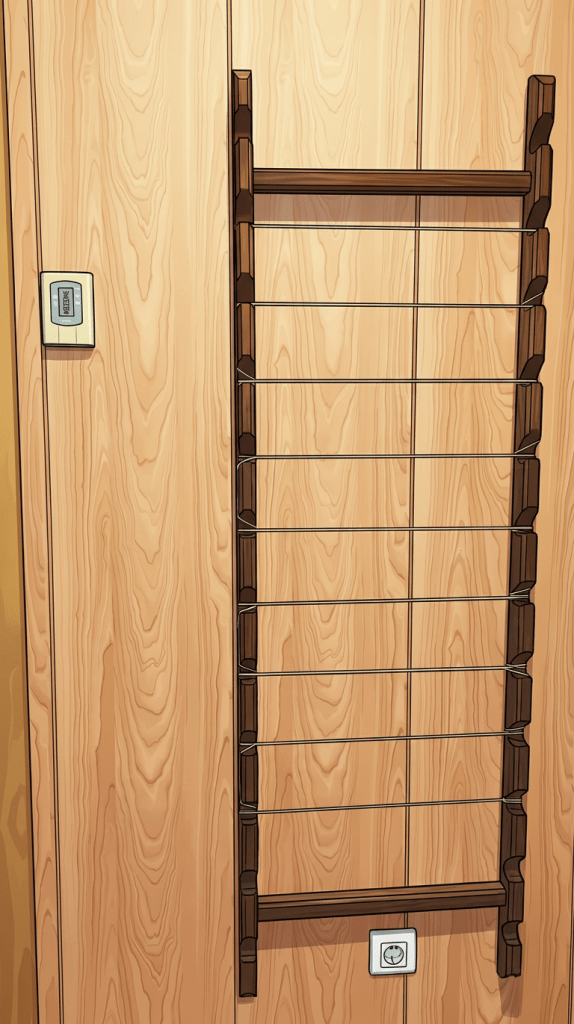
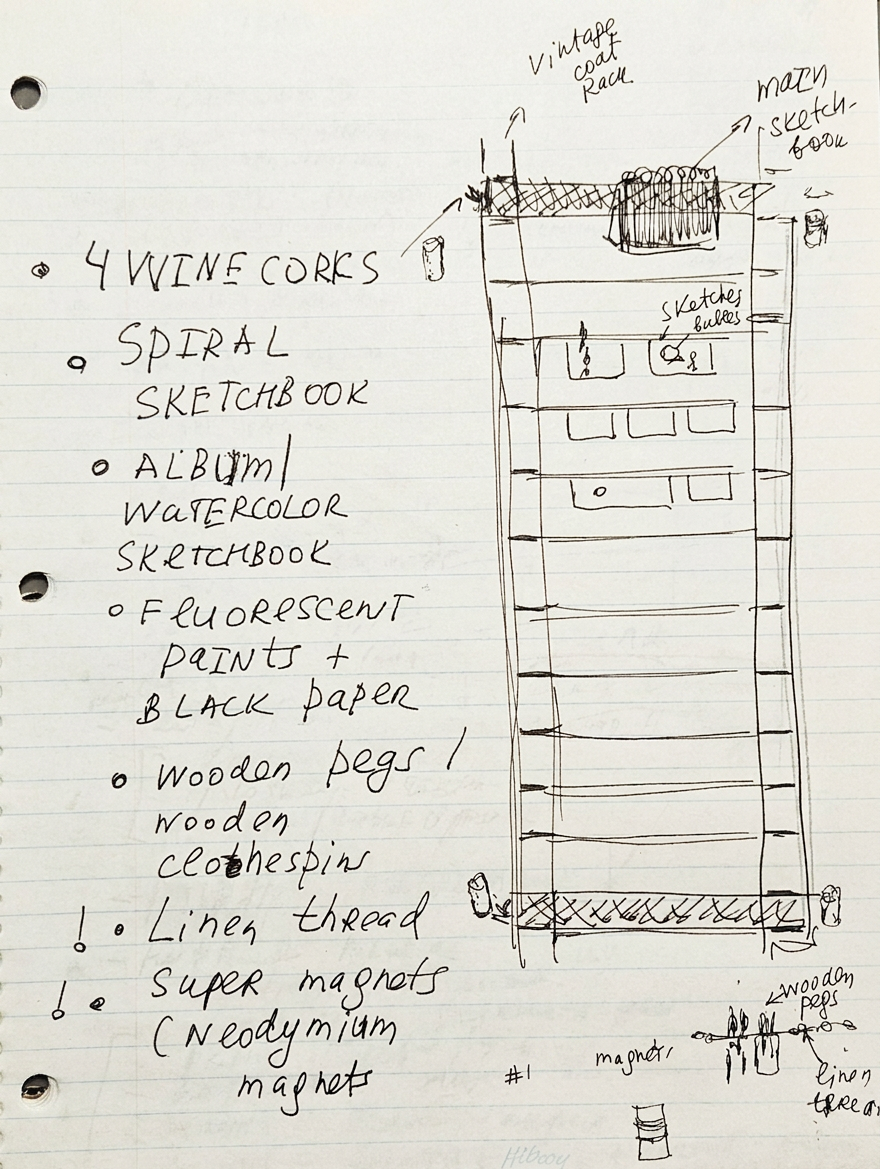
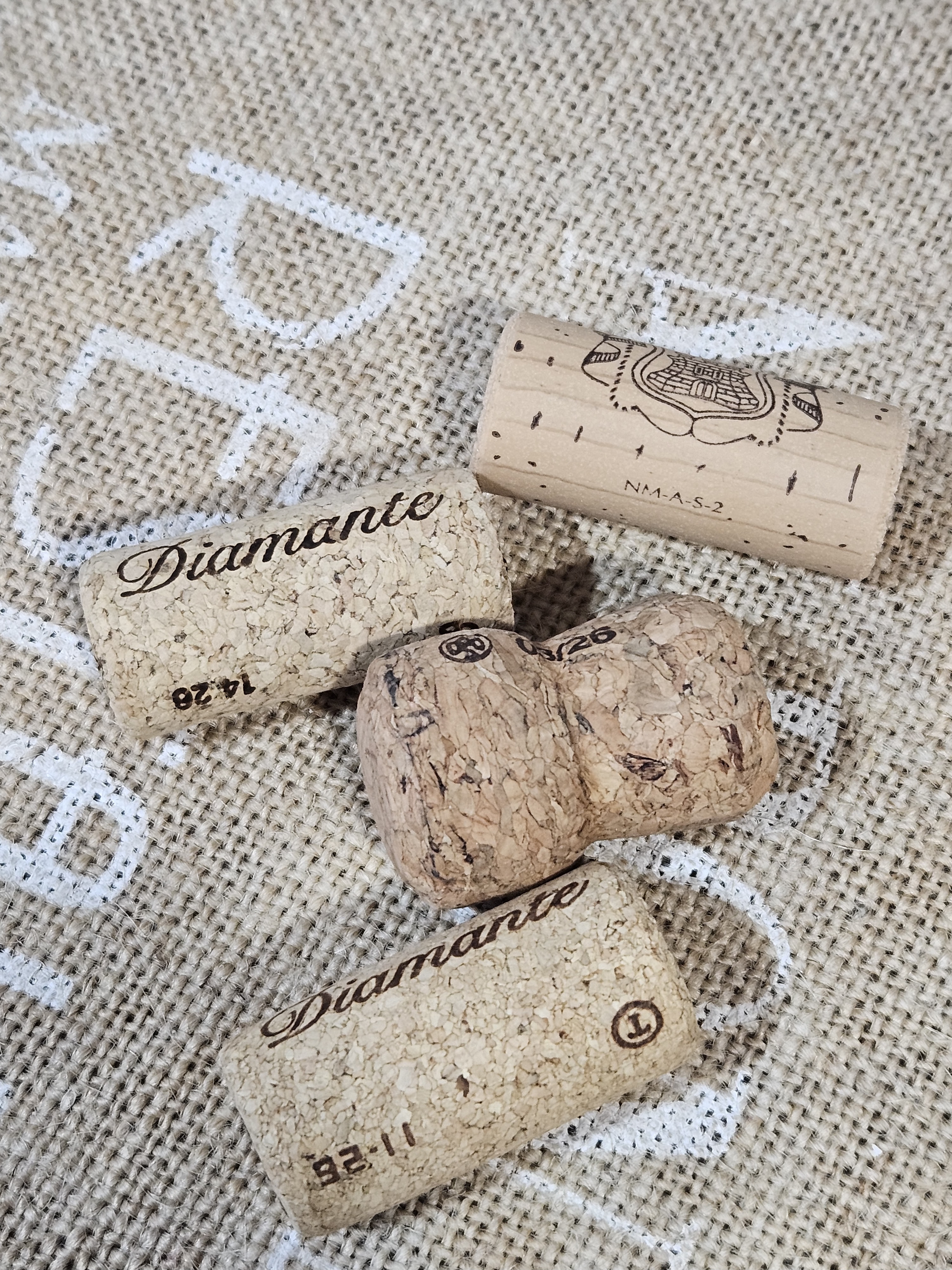
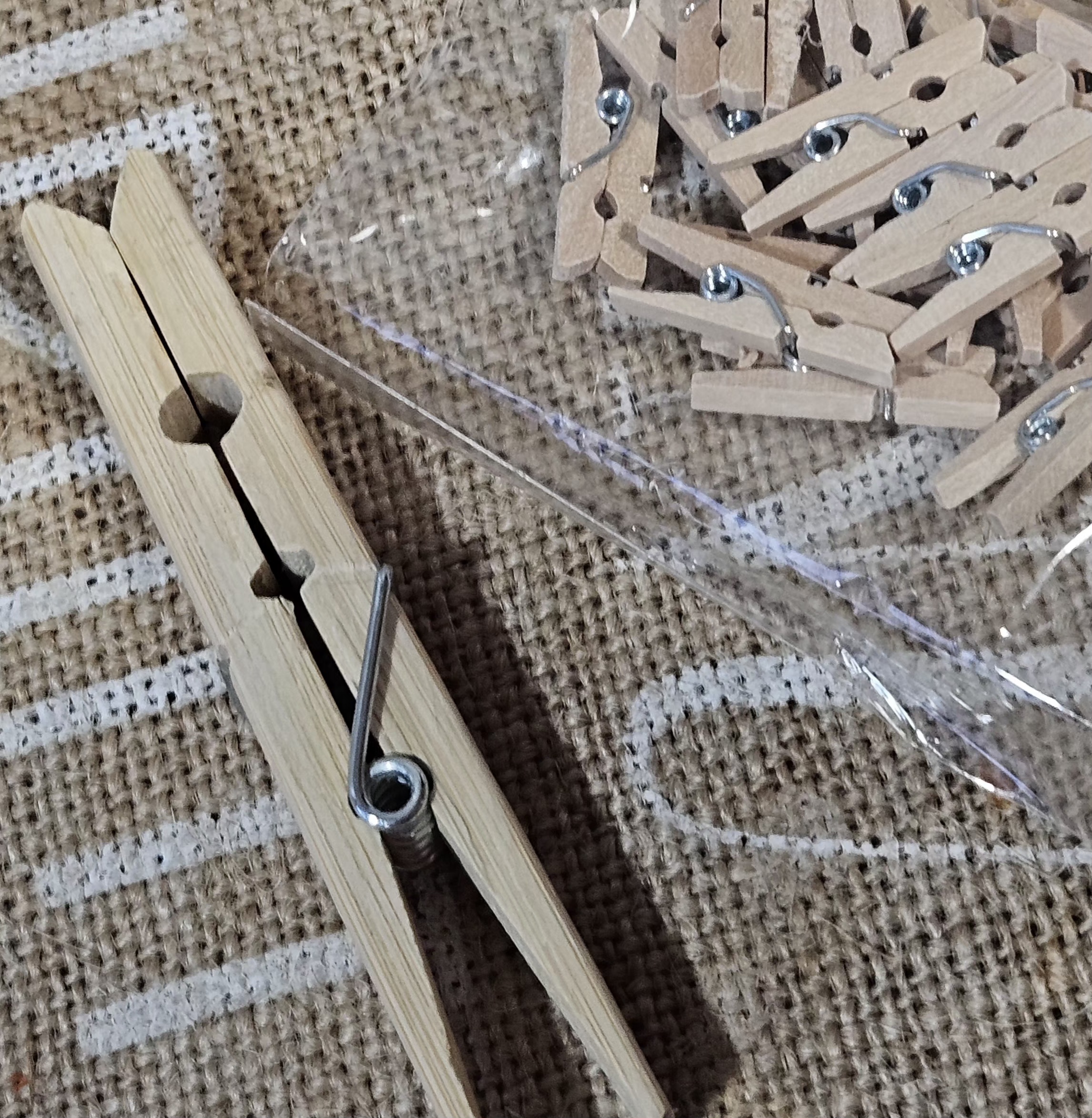
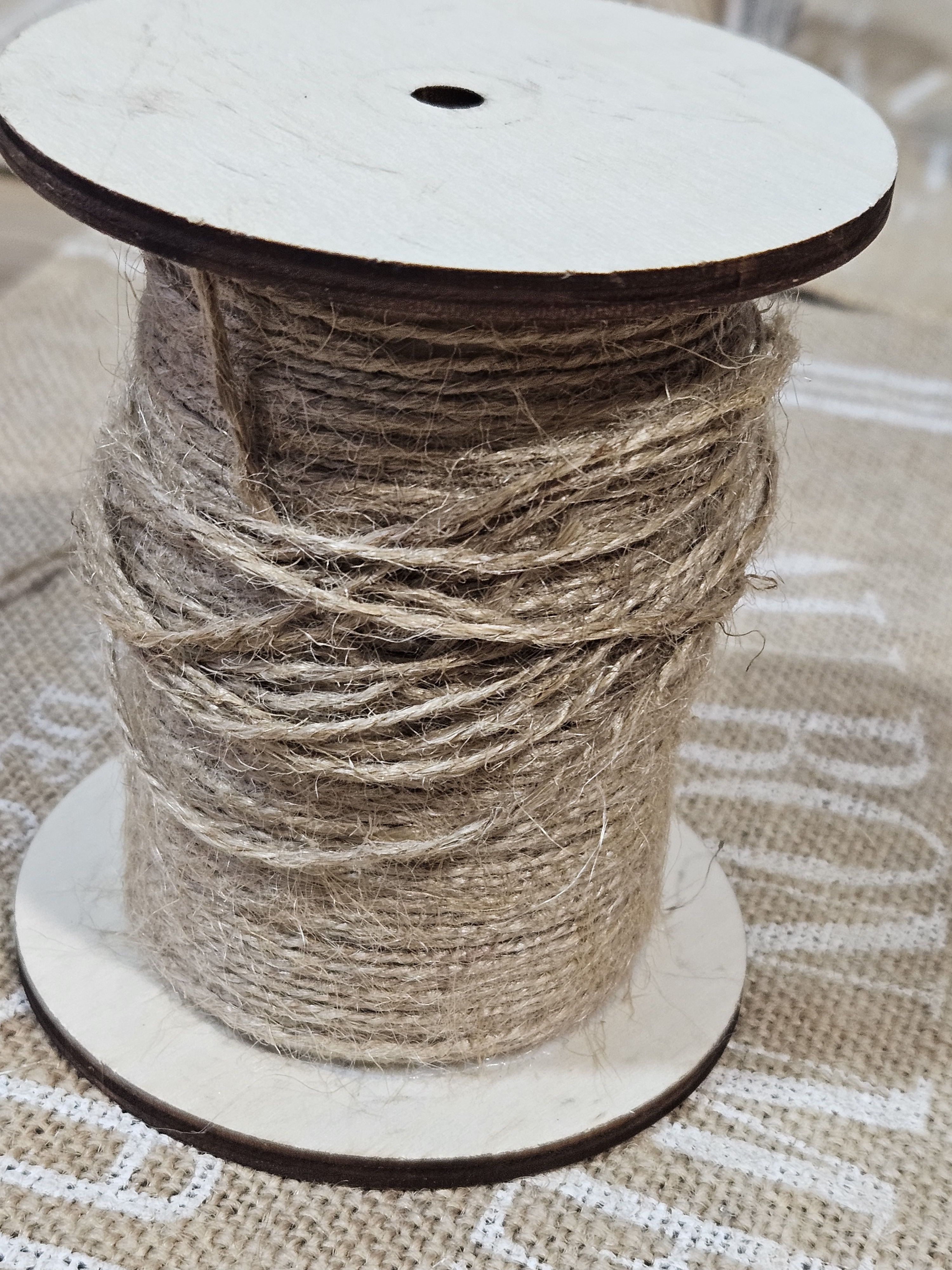


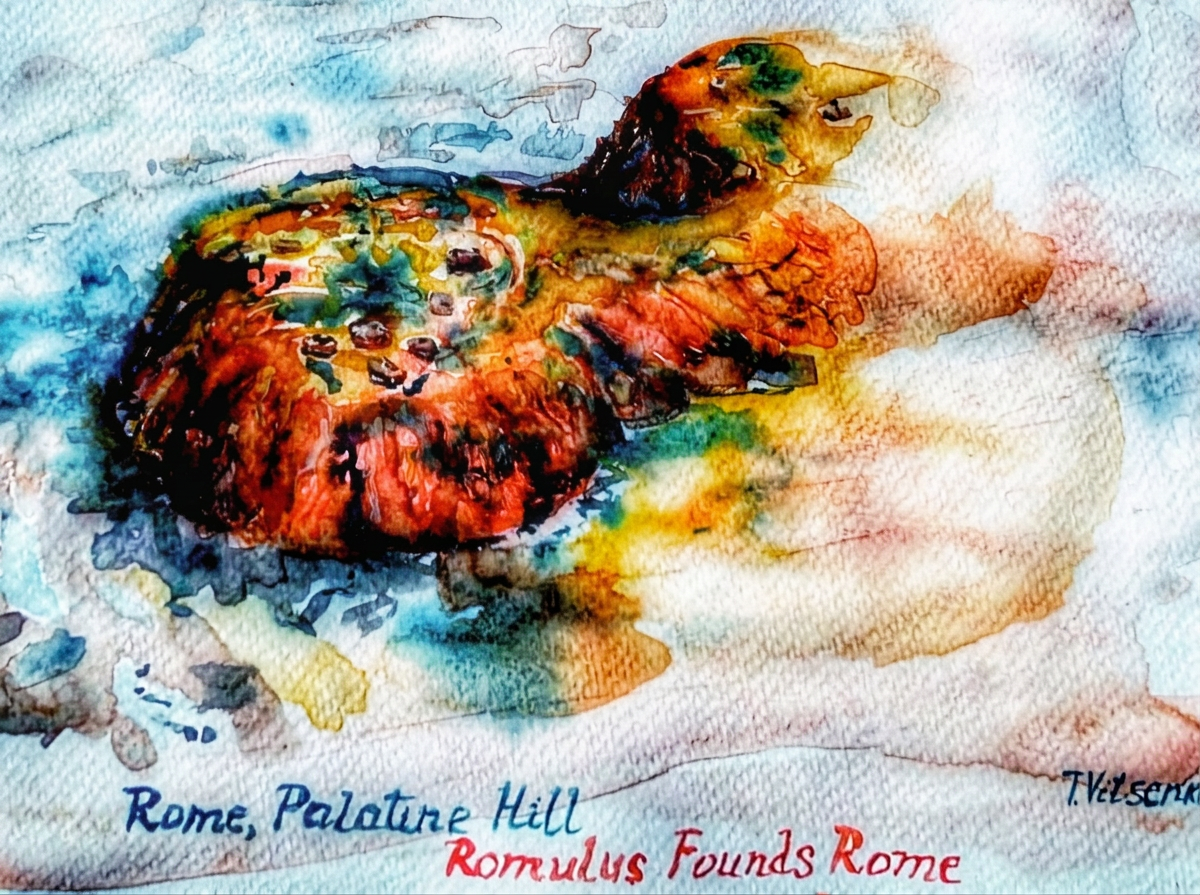
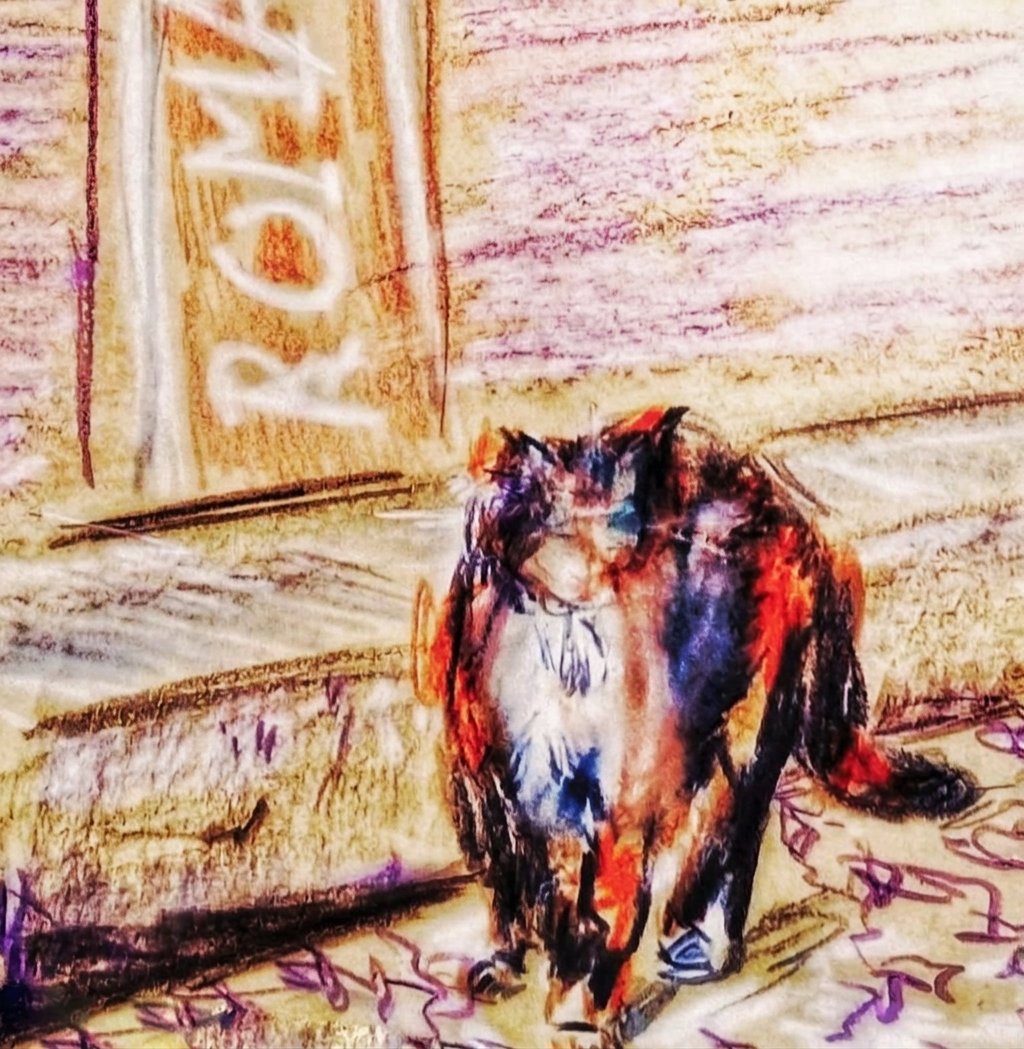
 Join me on this artistic adventure as I explore the captivating world of #TravelVibes #ArtAdventure