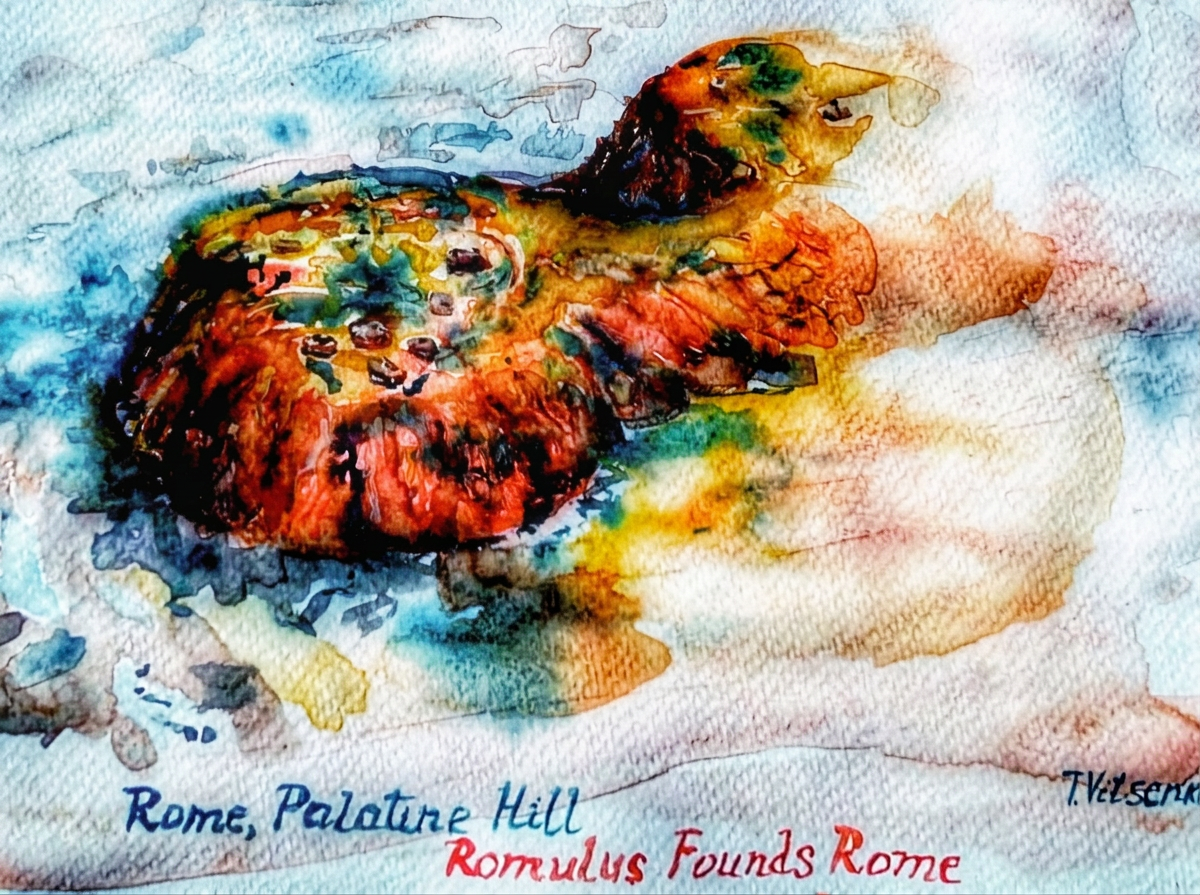
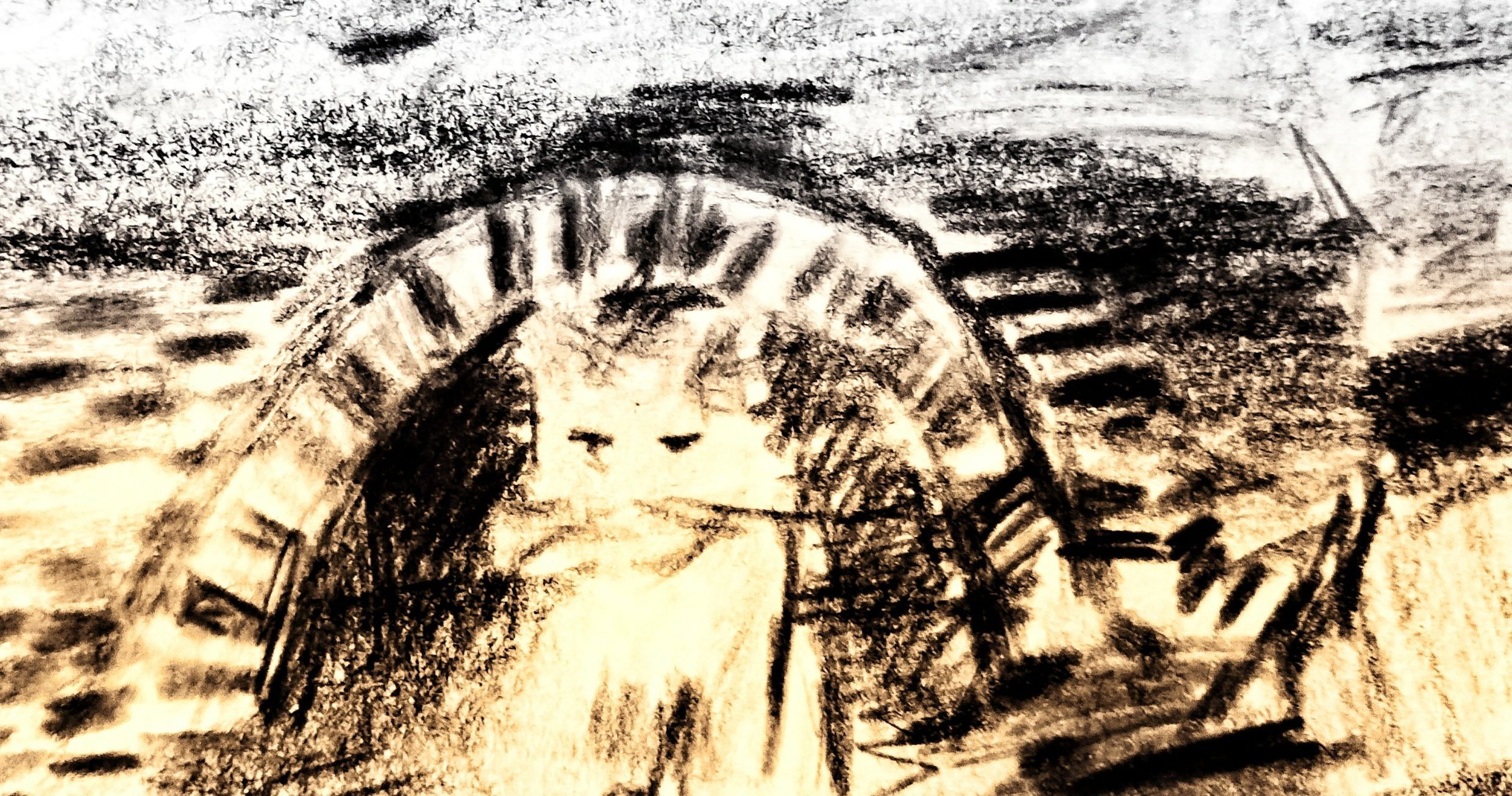
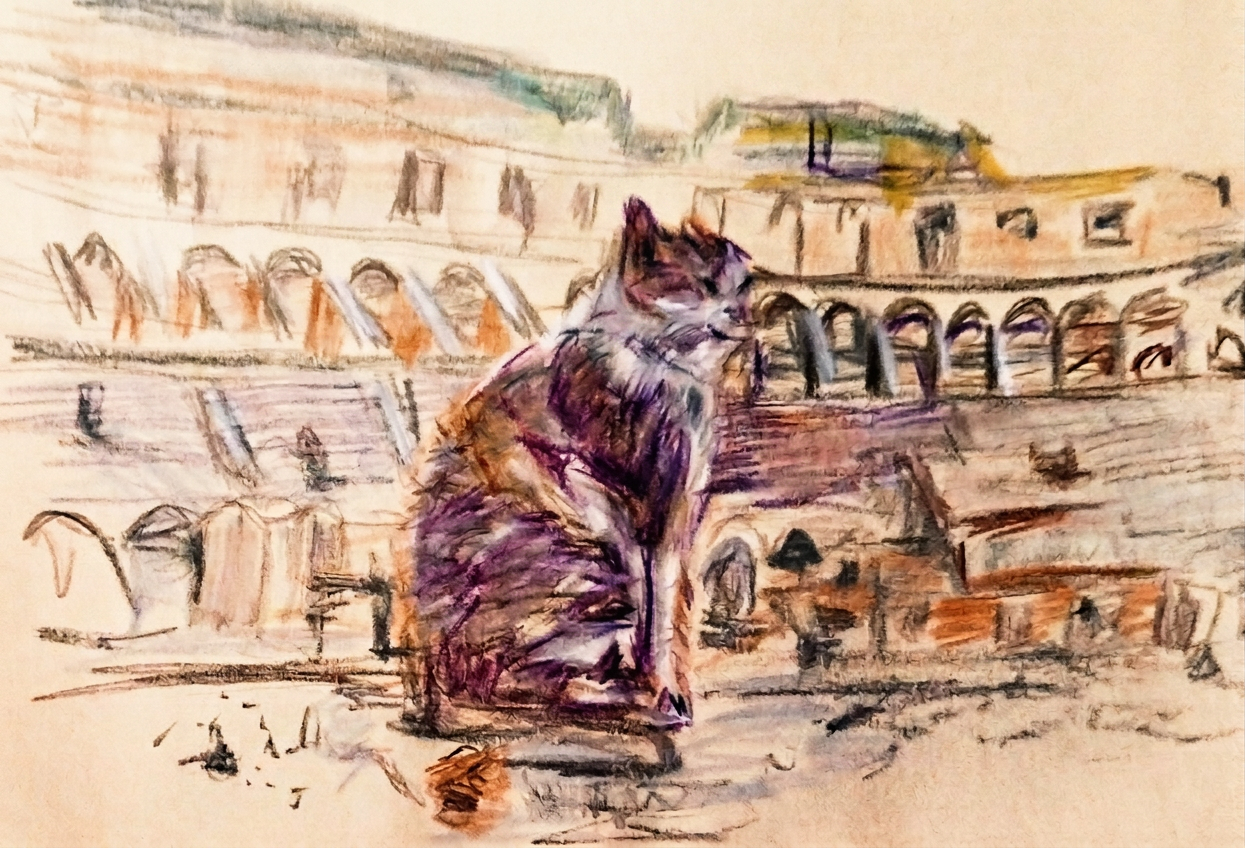
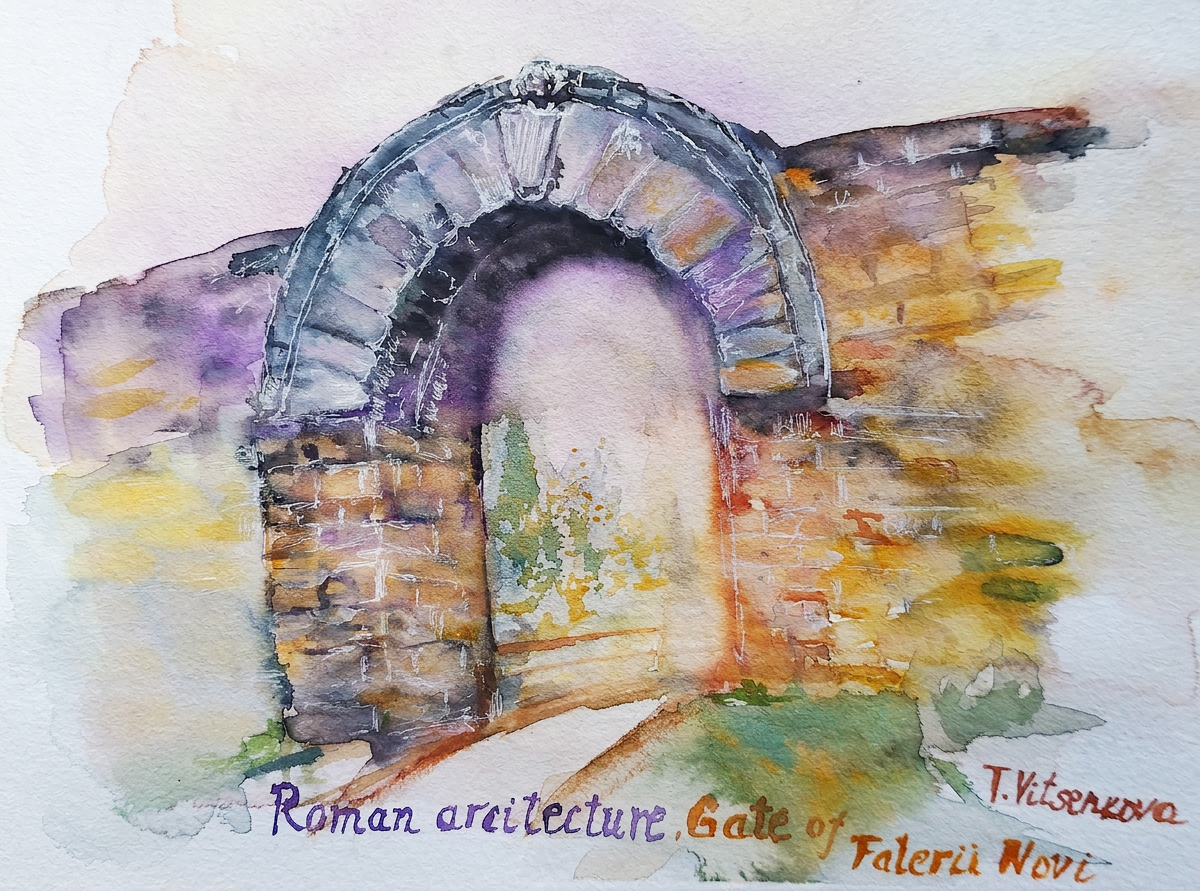
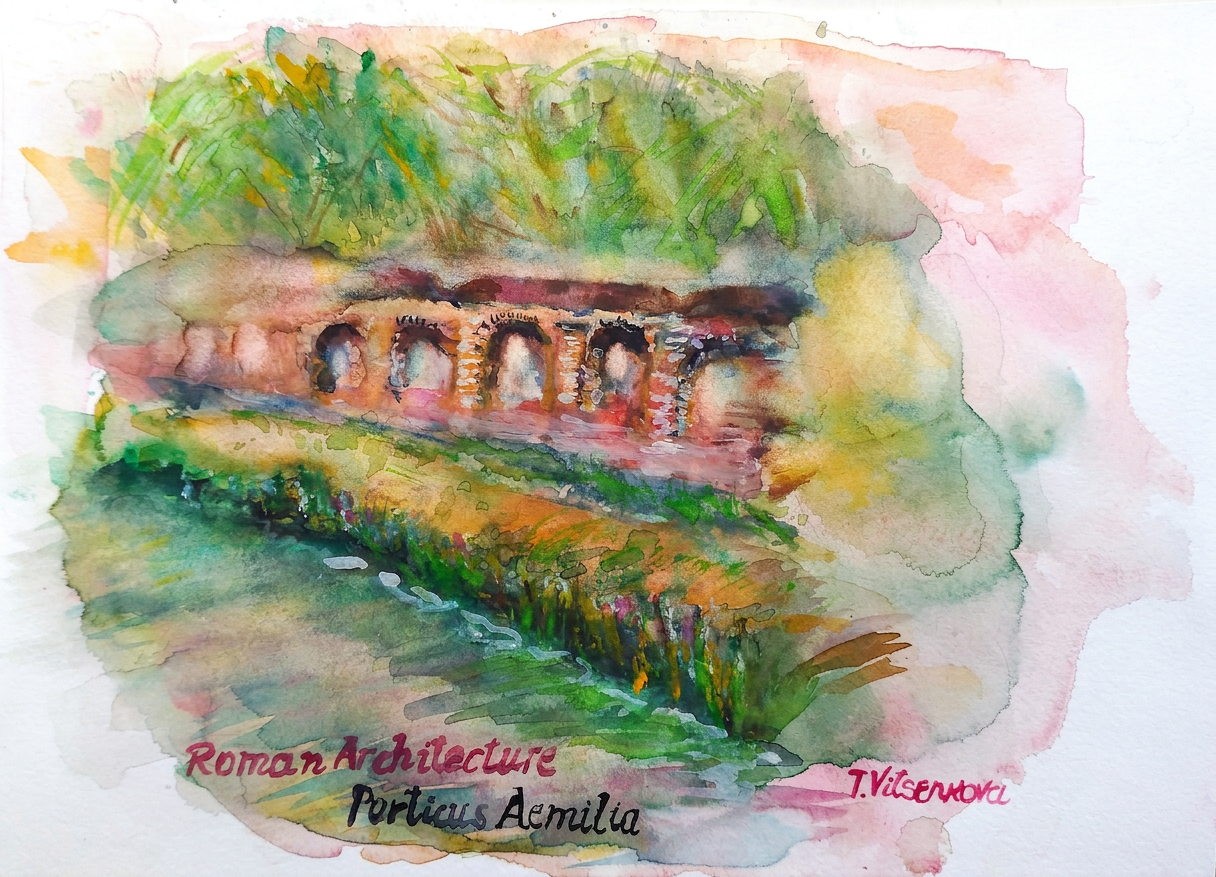
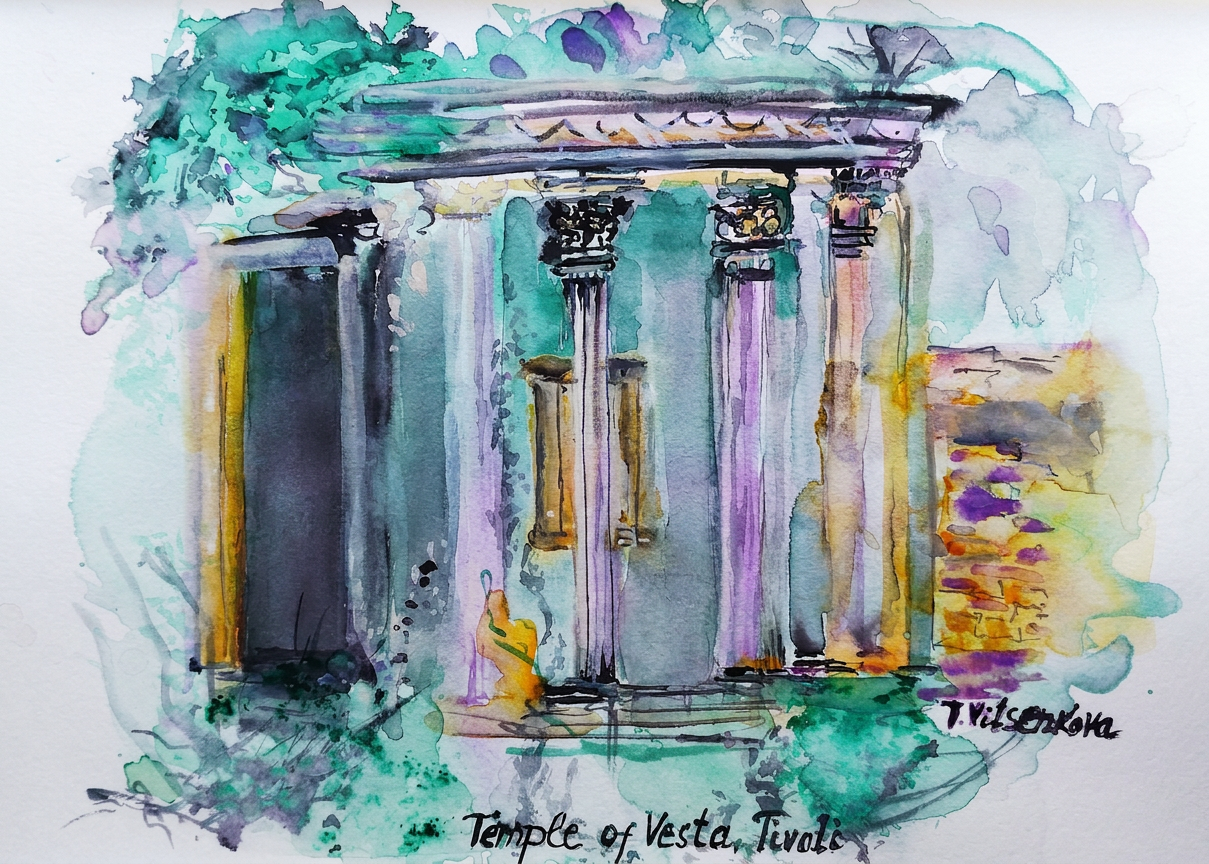
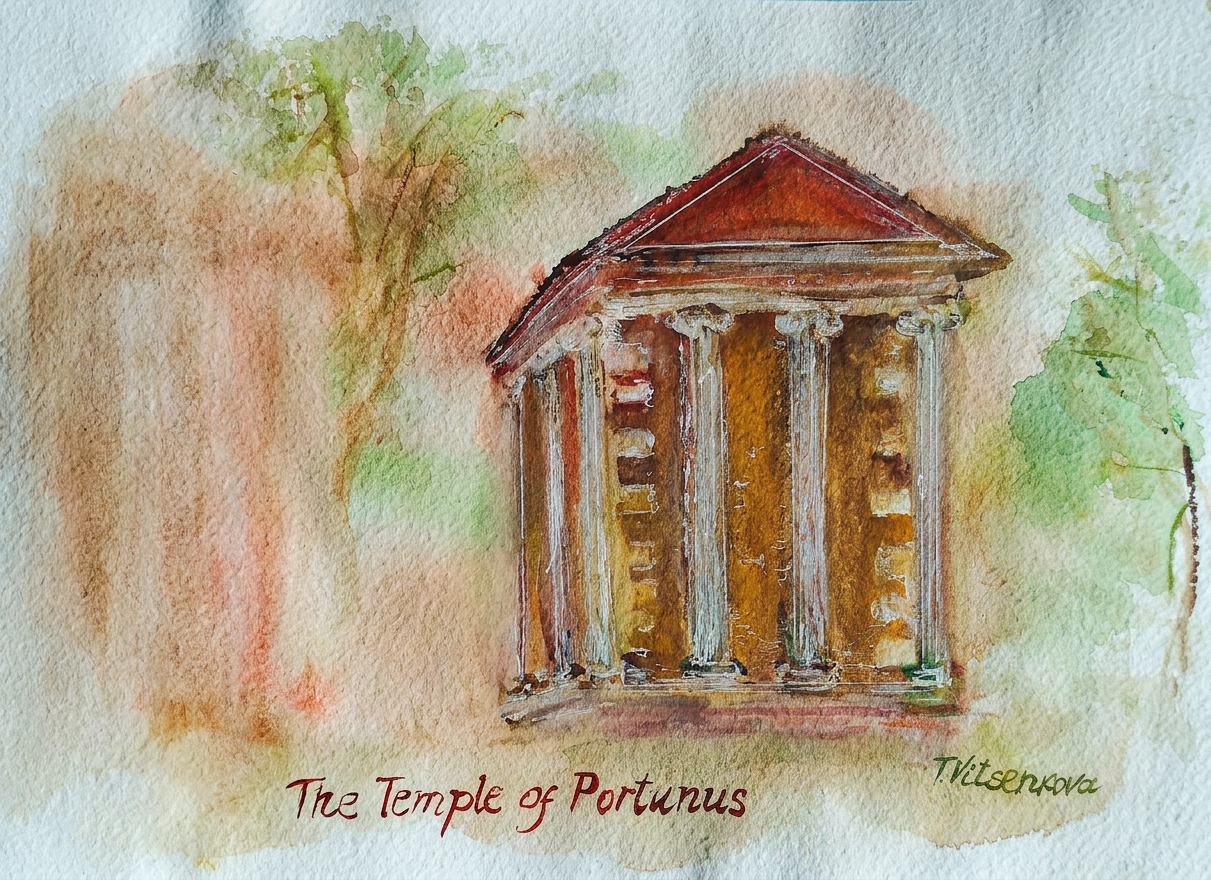
2-1. Art and Travel. – Rome, Palatine Hill, Romulus Founds Rome.

Artist, Roman Architecture, Uncategorized, Urban sketching, Voyage

Watercolor journey with the course Roman Architecture by the Yale University.

All roads lead to Rome – Alain de Lille

← Back

Thank you for your response. ✨

Name
Email
Your message

Δ document.getElementById( "ak_js_1" ).setAttribute( "value", ( new Date() ).getTime() );

The Art of Pompeii: Depicting Daily Life Through Bakeries. Watercolor journey with the course Roman Architecture by the Yale University.

An Artist's Perspective on Roman Architecture, Artist, Roman Architecture, Uncategorized, Urban sketching, Voyage

Art and Travel.  Pompeii, bakeries and millstones. Introduction. Bathing, Entertainment, and Housing in the Roman City. 1-4.

The Daily Grind

The Inspiration – Juvenal
The Sensory Experience

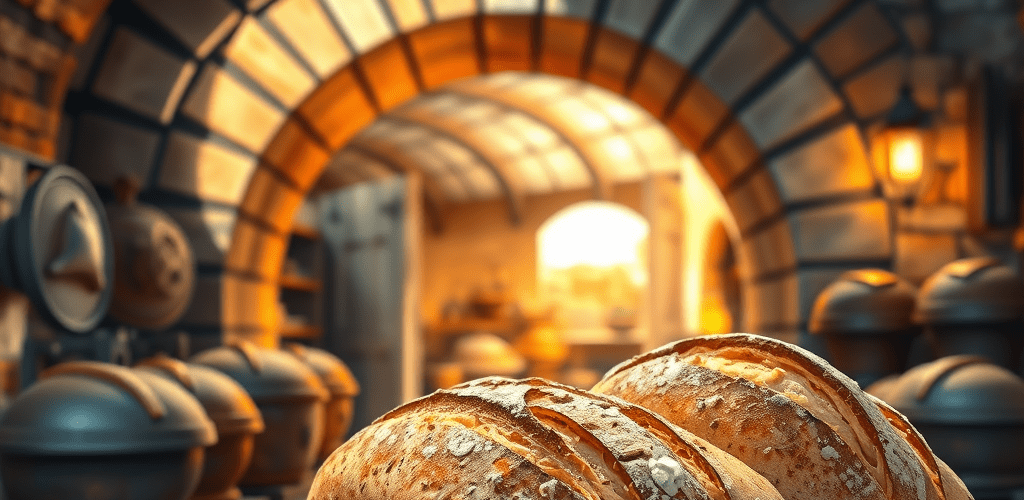
Can you smell the fresh bread?:)

The Scene Setter. Itinerary to Pompeii
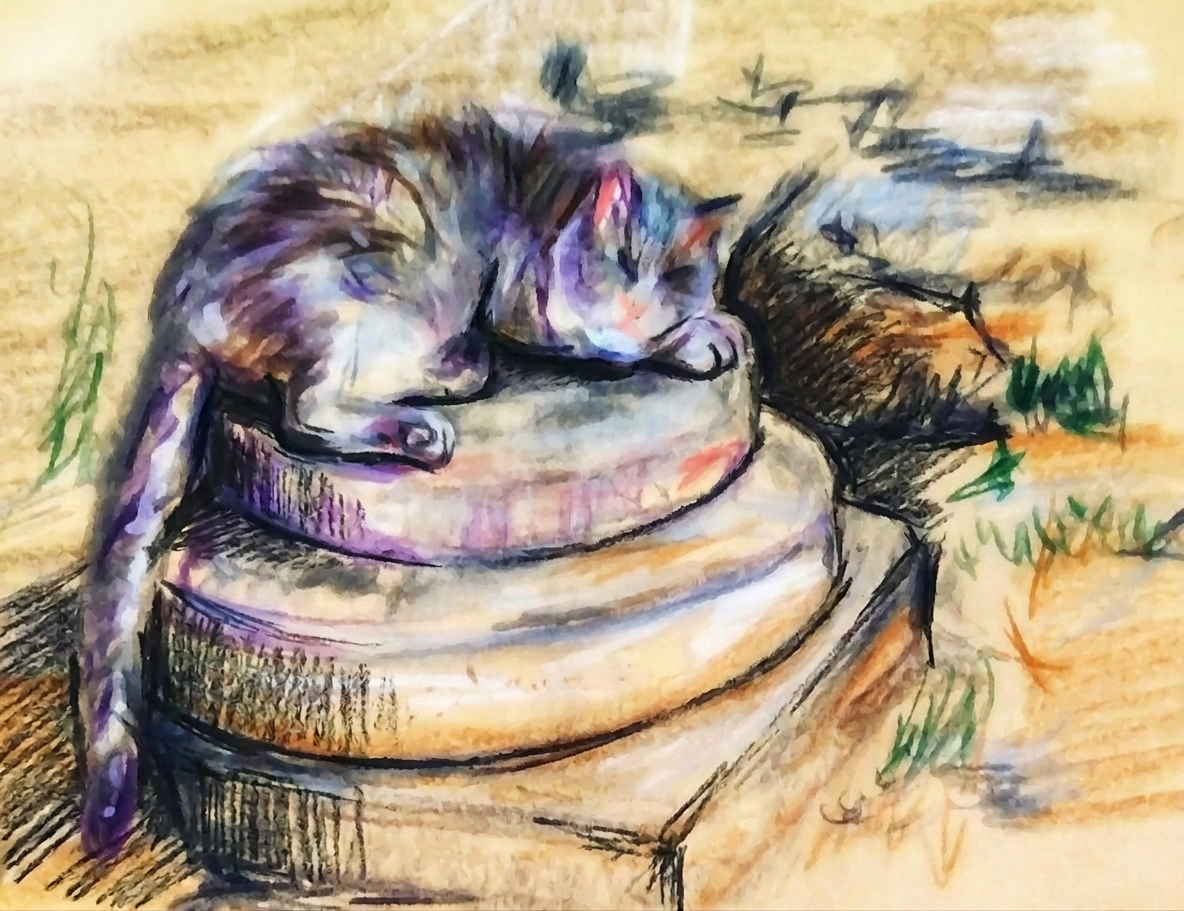
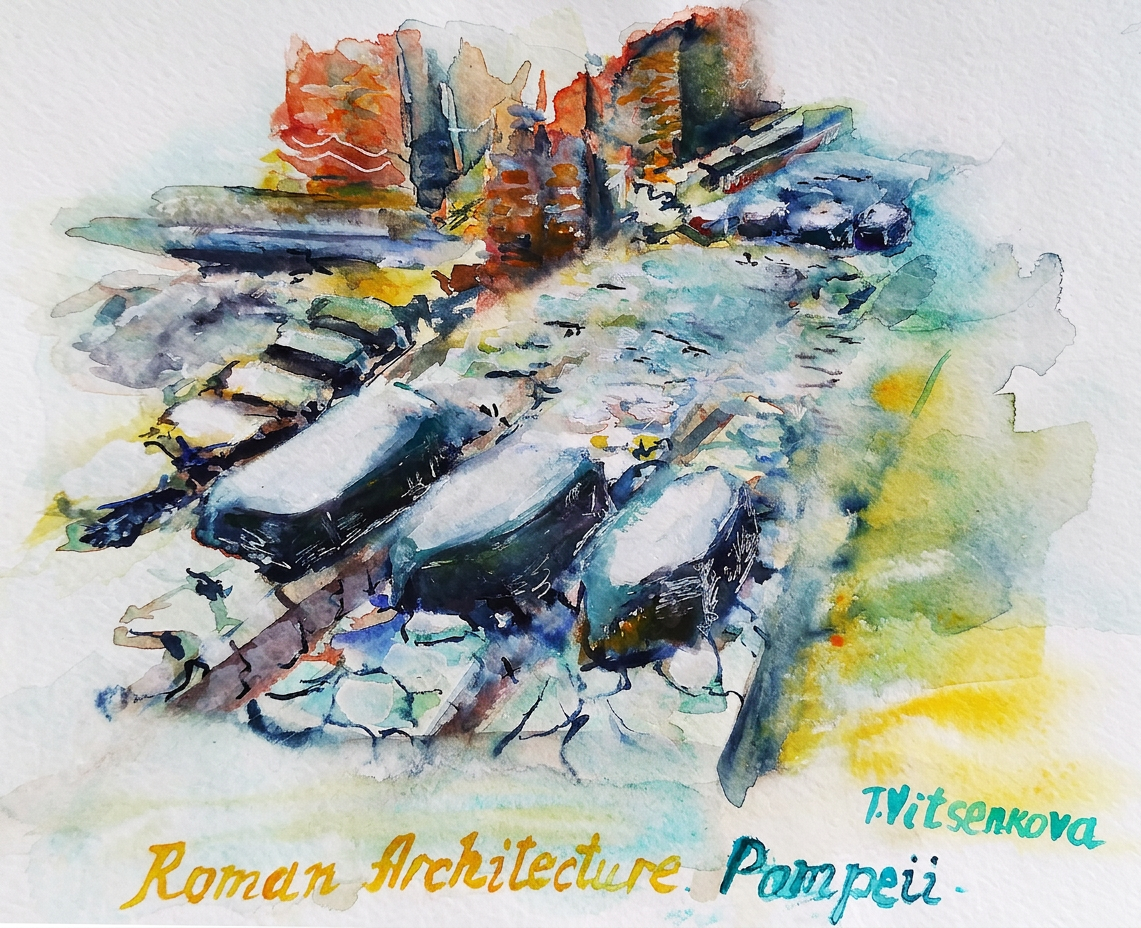
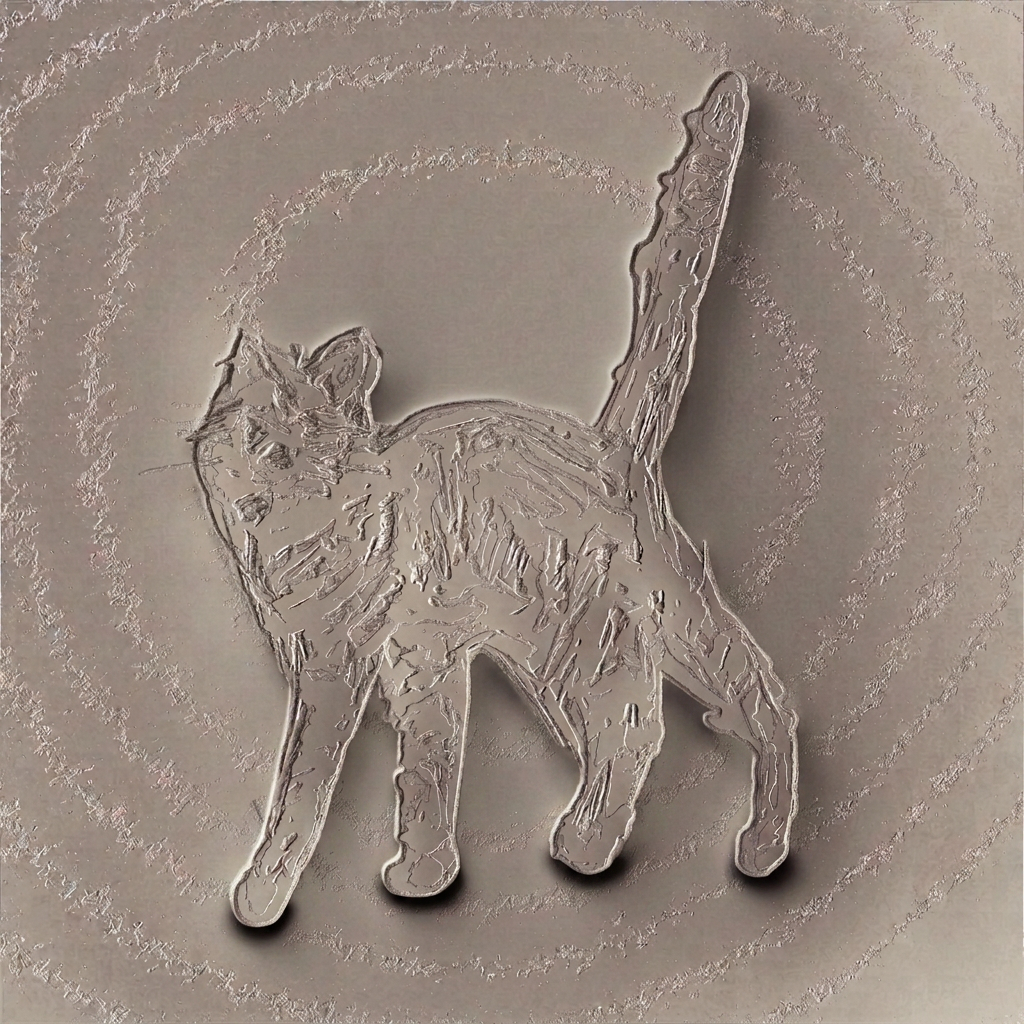
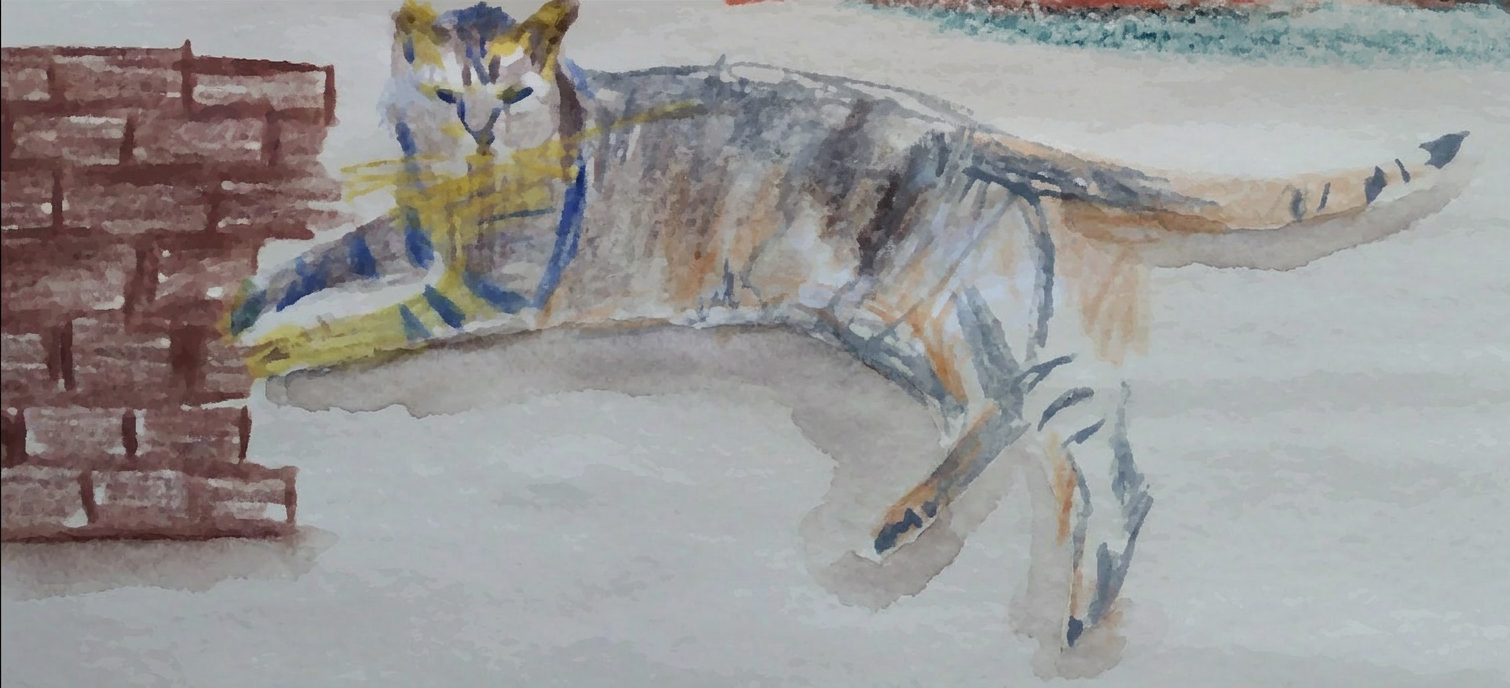
A peaceful scene depicting a resting cat atop stone millstones, reminiscent of ancient Pompeii.

← Back

Thank you for your response. ✨

The Artistic Impact of Trajan’s Market in Watercolor. Exploring Yale’s Course on Roman Architecturer.

Artist, Roman Architecture, Uncategorized, Urban sketching, Voyage

Roman Tombs, Aqueducts, and the lasting impact of Roman Architecture

Trajan’s Forum and Market: A Shopping Paradise in Ancient Rome
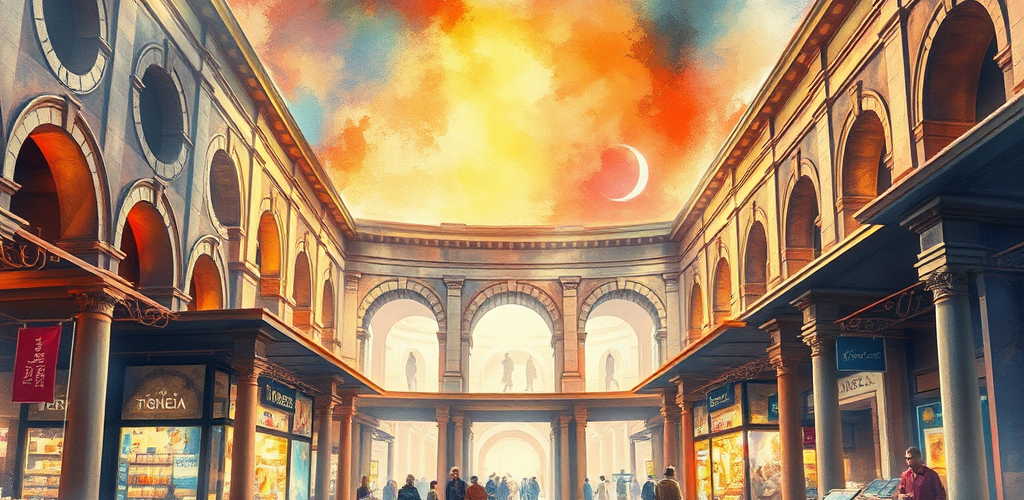
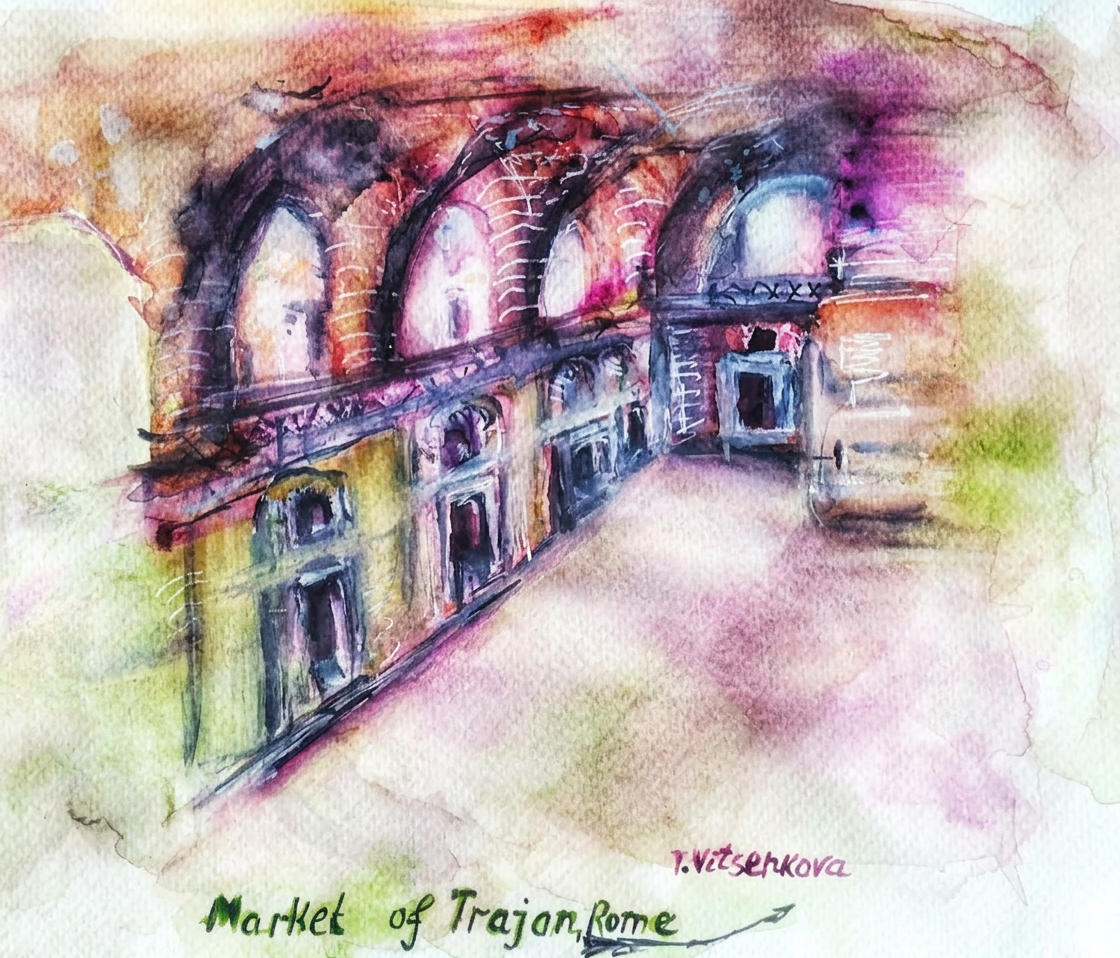
A watercolor depiction of the historic Trajan’s Market in Rome, showcasing its ancient architectural beauty.
The Construction: A feat of Roman Engineering
The Architecture: A Symphony in Stone. Grand Canyon and Roman Architecture
Roman Architecture soundtrack
Live in Rome (past and present)
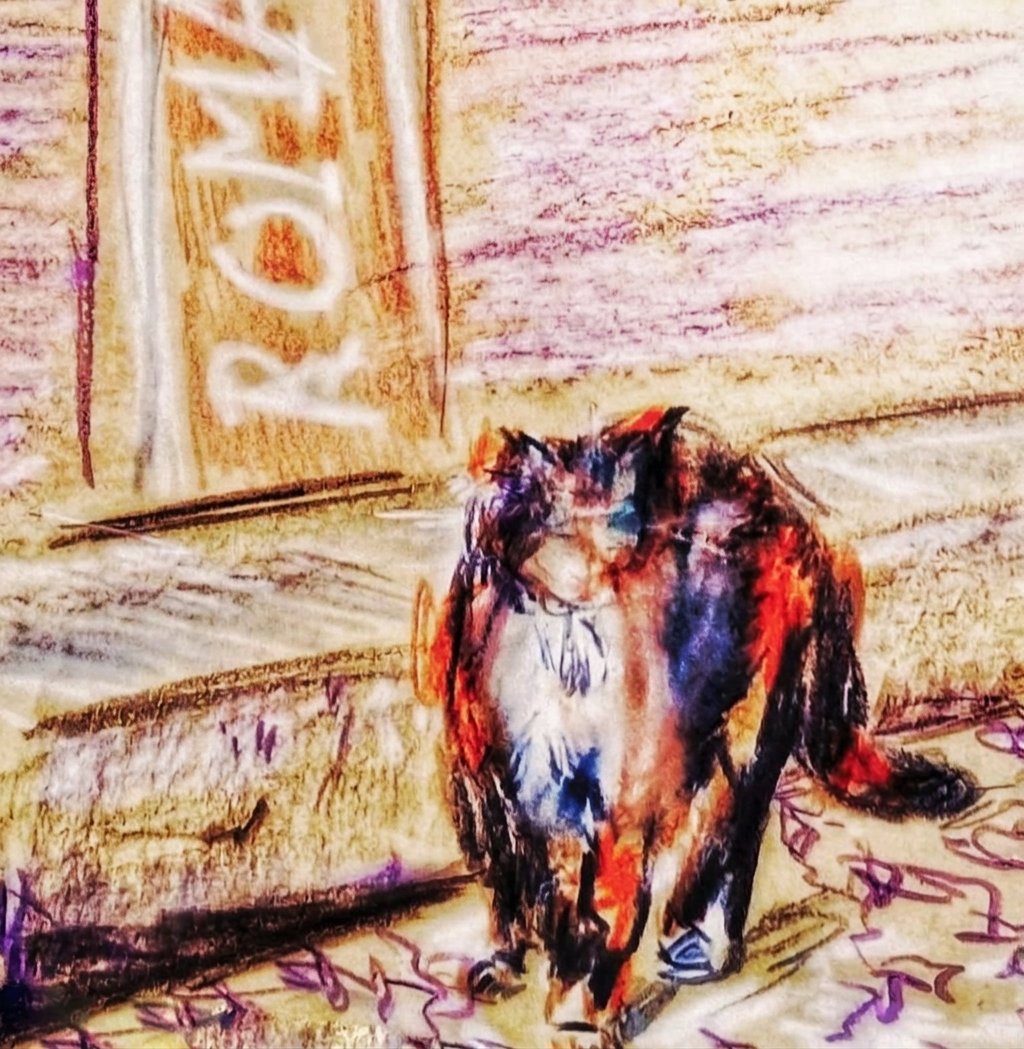
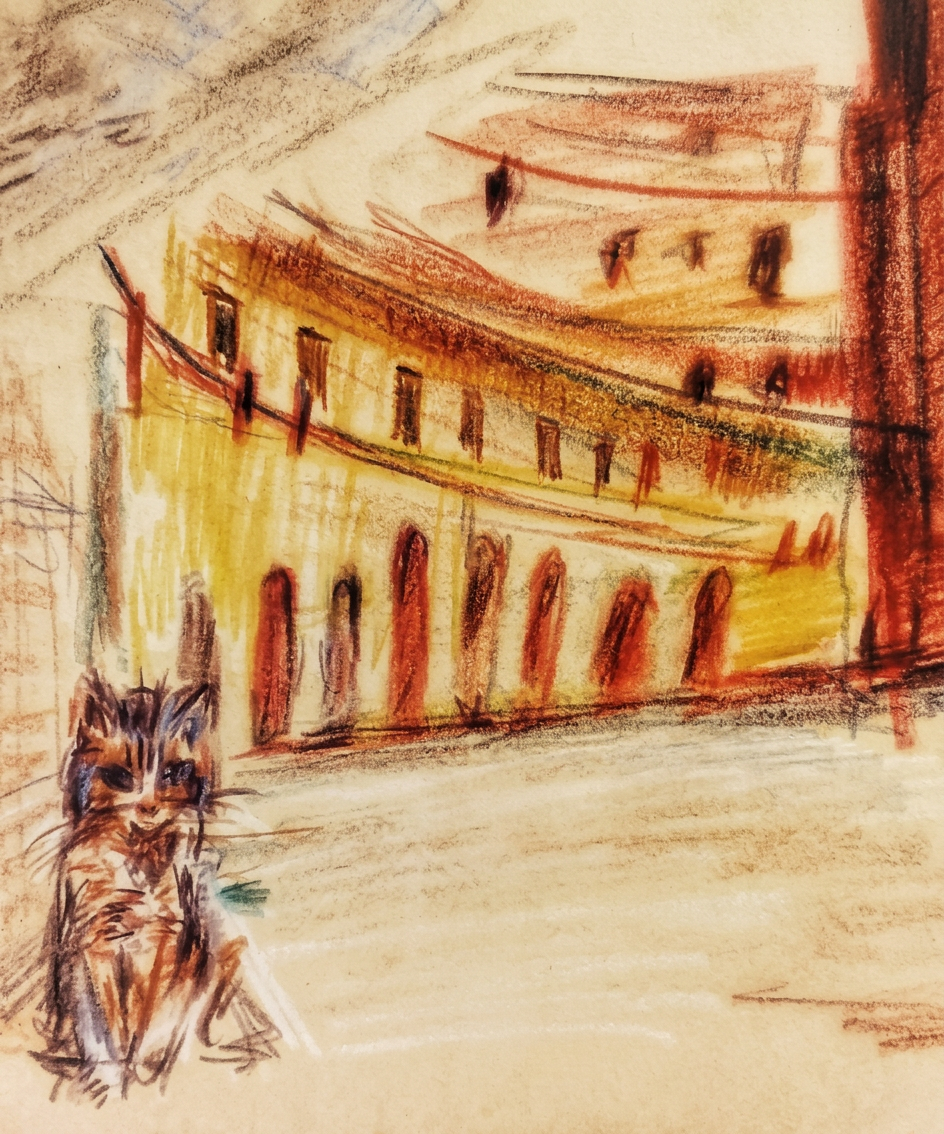
A vibrant watercolor illustration of Trajan’s Market, showcasing its ancient architectural beauty, with a playful cat in the foreground.

https://www.coursera.org/learn/roman-architecture/home/welcome

← Back

Thank you for your response. ✨

4-6.Art and Travel. Daily Life and the Eruption of Vesuvius

Artist, Roman Architecture, Uncategorized, Urban sketching, Voyage

Watercolor journey with the course Roman Architecture by the Yale University.

All roads lead to Rome – Alain de Lille

https://www.coursera.org/learn/roman-architecture/home/welcome

← Back

Thank you for your response. ✨

Name
Email
Your message

Δ document.getElementById( "ak_js_4" ).setAttribute( "value", ( new Date() ).getTime() );

3-1.Art and Travel.   Roman concrete and the revolution in Roman Architecture. Watercolor journey with the course Roman Architecture by the Yale University.

Artist, Roman Architecture, Uncategorized, Urban sketching, Voyage

I continue the stay-at-home travel Art + Roman Architecture + the city of Rome with Yale’s course Roman Architecture https://www.coursera.org/learn/roman-architecture.

Roman concrete and the revolution in Roman Architecture. 3-1

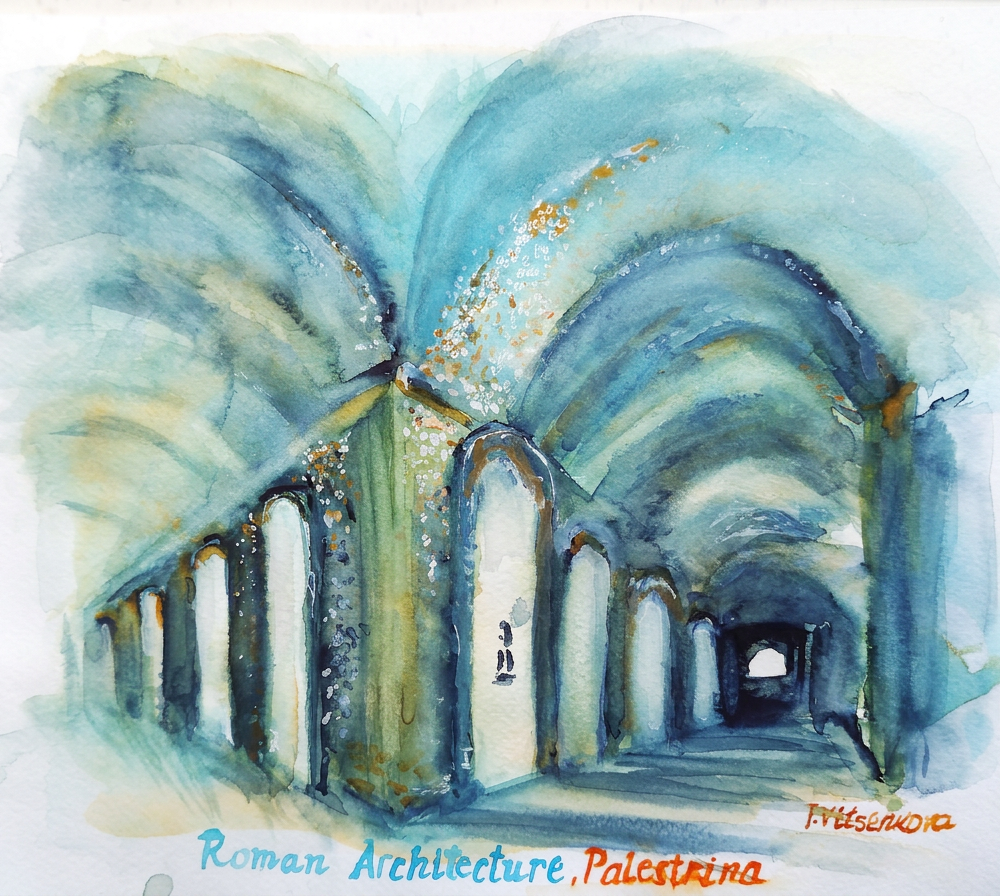
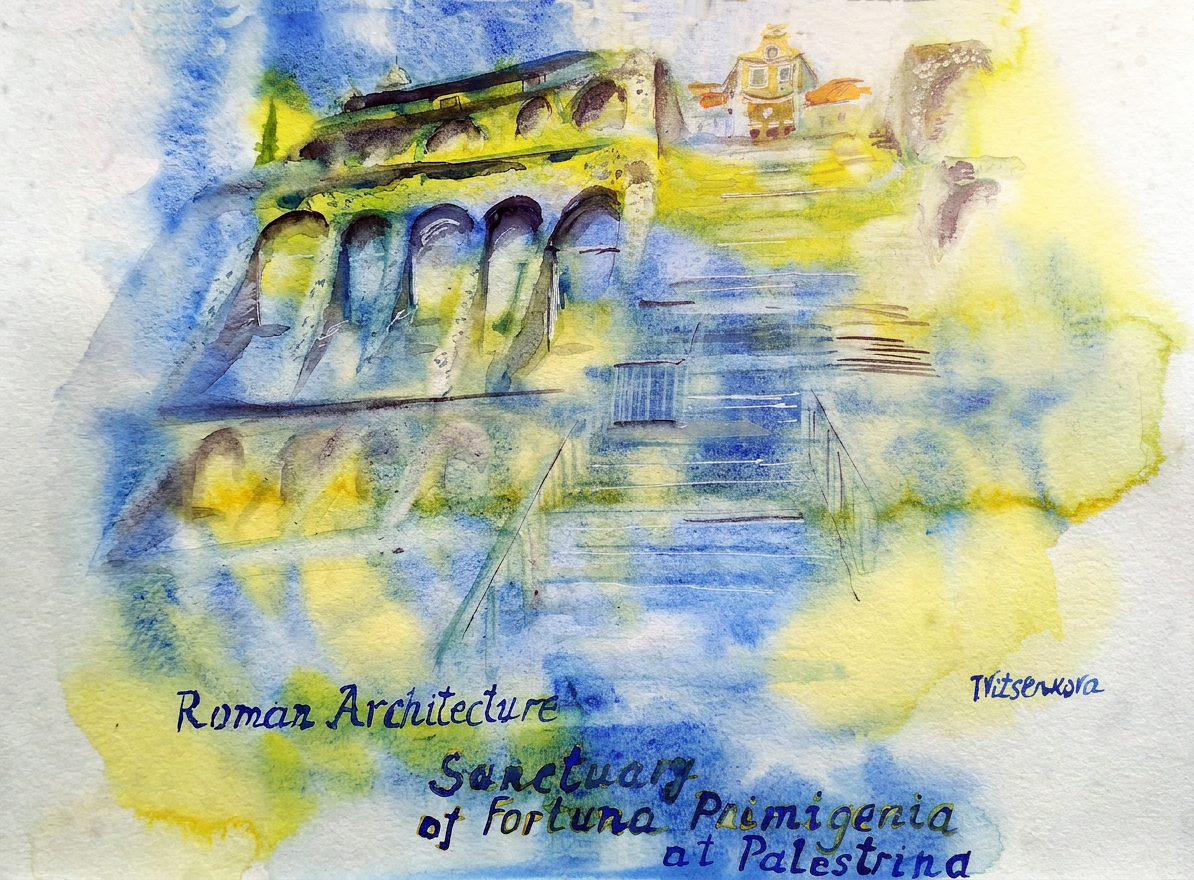
There is a wonderful place near Rome, UNESCO city of Palestrina. The Sanctuary of Fortuna Primigenia at Palestrina (ancient Praeneste) in Italy was built in the 2nd century BCE in honour of the Goddess Isis, the goddess of femininity and motherhood and Fortuna, the ancient Roman goddess of luck. It was built on a natural hill on cement.


My painting is about the interior space of the Sanctuary of Fortuna Primigenia. It was a Sanctuary with built-in shops and a detached theatre in the Middle Ages. For my painting I added subtle bluish and greenish hues, because, of course, the stones fell off and the cement had been exposed over the millennia. Luckily for us, the Temple with its delicate arches has survived until now, and modern architects and archaeologists continue to explore and discover the secrets of ancient Roman architects even after millennia.


The genius Roman architects noticed that the volcanic dust, which is found in the sea in Italy, turns into pumice when in multitude. They realized that it can be used to strengthen any building. This revolutionary discovery created the Roman cement from ash, lime, sand, pebbles of a certain size and volcanic ash and sea water. Added either be large stone blocks or it could be small pieces of stone presses into the concrete when concrete was still wet. When dried, these stones made the building look more attractive and protected the building from moisture.


Like modern constructors, the Romans erected wooden frames for the walls and ceilings and poured the concrete into them. Romans solved two problems this way, protected cement from moisture and hid the non-attractive part of cement at the same time. I would add that they were saving money for the construction and gaining valuable experience. Using the new revolutionary technology, they started to build not only Temples and villas for the rich, they started to develop and build more, and thanks to this experience and development, today we can still admire the architectural monuments of the past.

Another one-day trip from Rome is on my way in Italy:)

All roads lead to Rome – Alain de Lille

Bon voyage! Until the next travel:)

All paintings belong to the author. No image is to be copied without permission.

https://www.coursera.org/learn/roman-architecture/home/welcome

Painting – Palestrina, Roman Architecture

Year of construction 2nd century BC

Address: Via Colle Pastino 20, 00036, Palestrina Italy

Tools used for my painting Watercolour Cotman terra de siena and viridian Corman, Charvin bleu royal, Derwent, Albert Durer and Faber Castell watercolour pencils. Paper Van Gogh, National gallery   watercolour album, 22×30 cm (9 ×12 in.)

Roman Architecture and the Iconic Pantheon. Art and Travel

Artist, Roman Architecture, Uncategorized, Urban sketching, Voyage
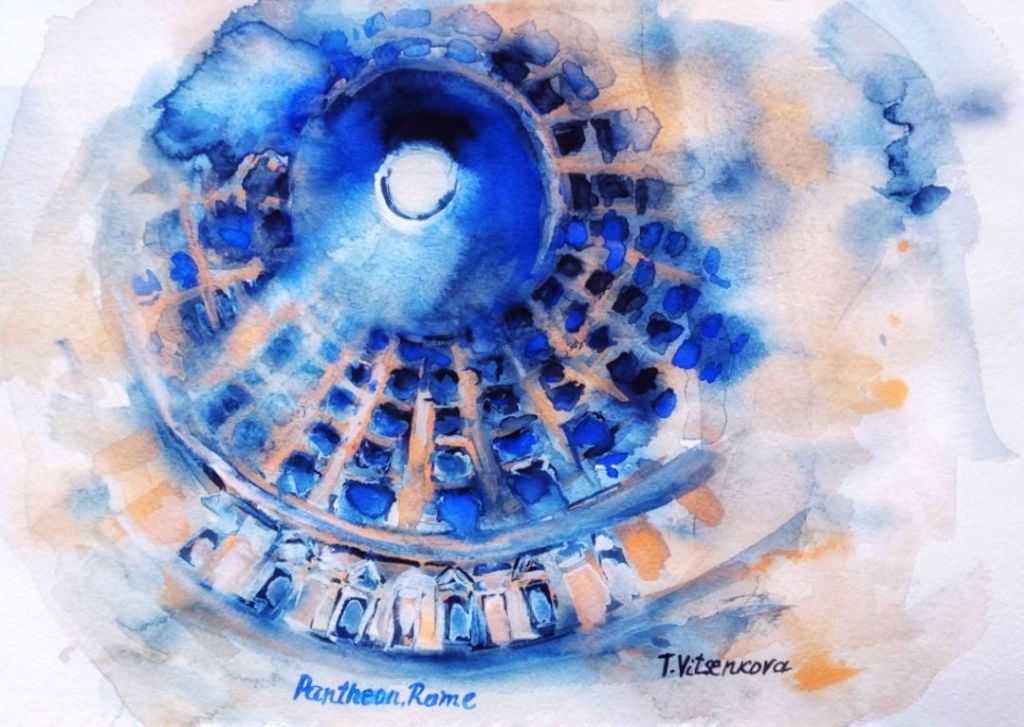
Painting –Rome, Pantheon, Roman Architecture. Year of construction-126 AD. Address: Piazza della Rotonda, 00186 Roma RM, Italy
Watercolor painting of the Pantheon in Rome, highlighting its iconic oculus and intricate dome structure, with a blend of blue and warm tones.
A watercolor depiction of the Pantheon in Rome, highlighting its iconic oculus and intricate architectural details.
The Pantheon is a masterpiece of Roman architecture with an innovative structure

Lost in Time & Whispers of History

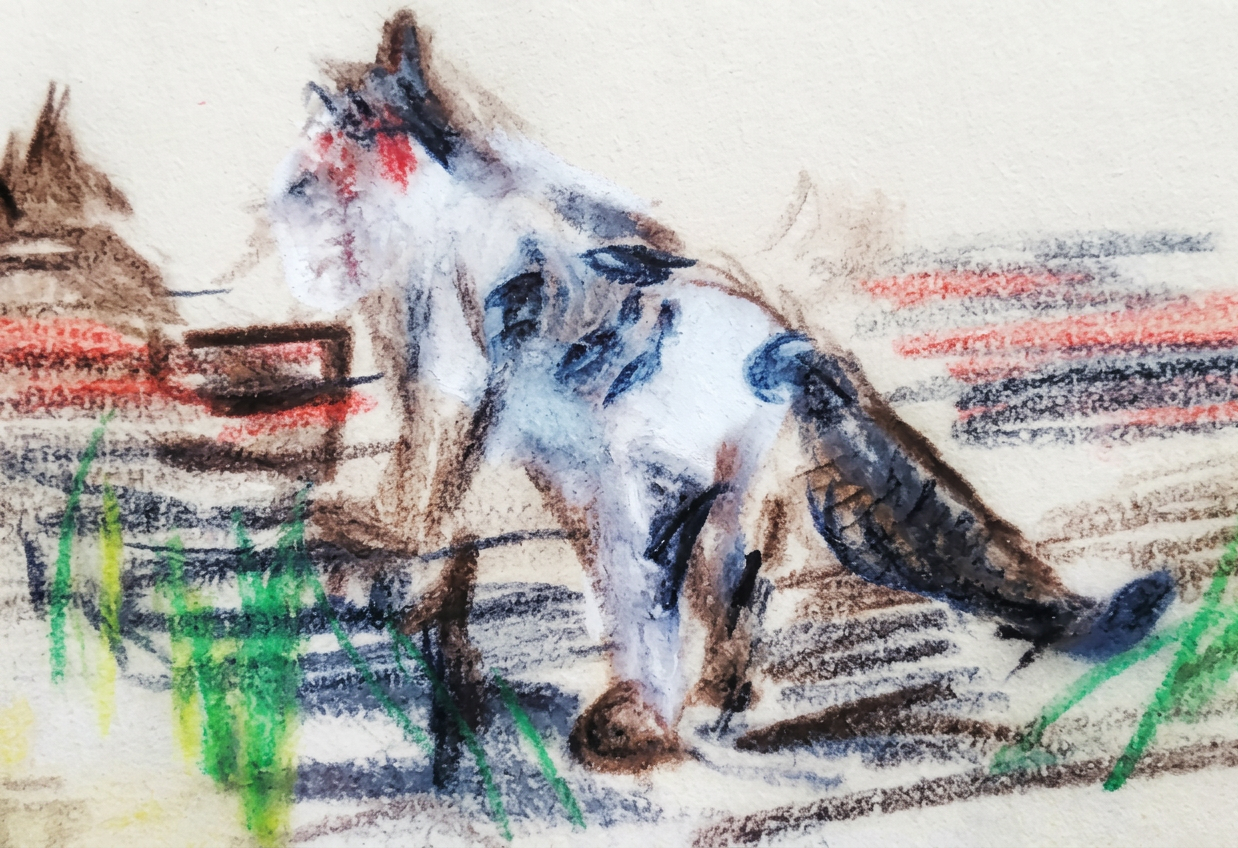
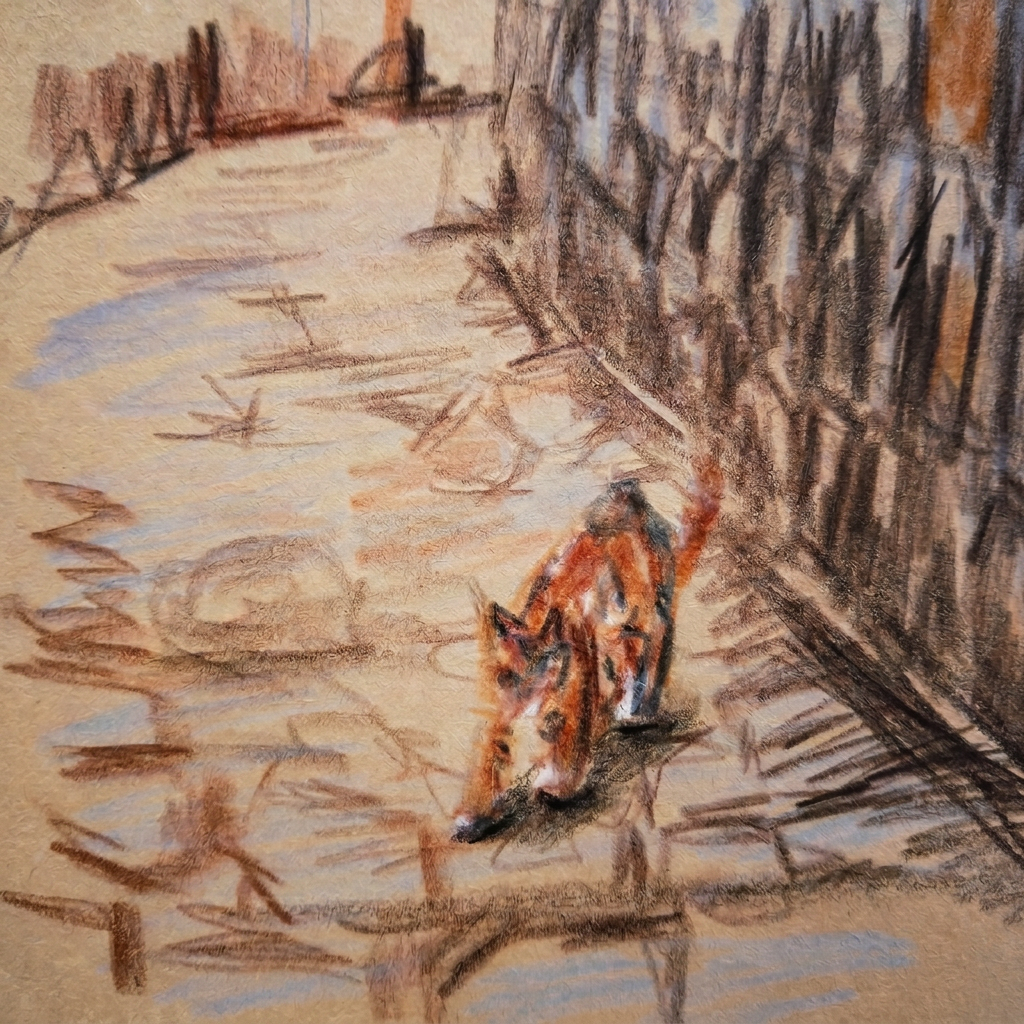
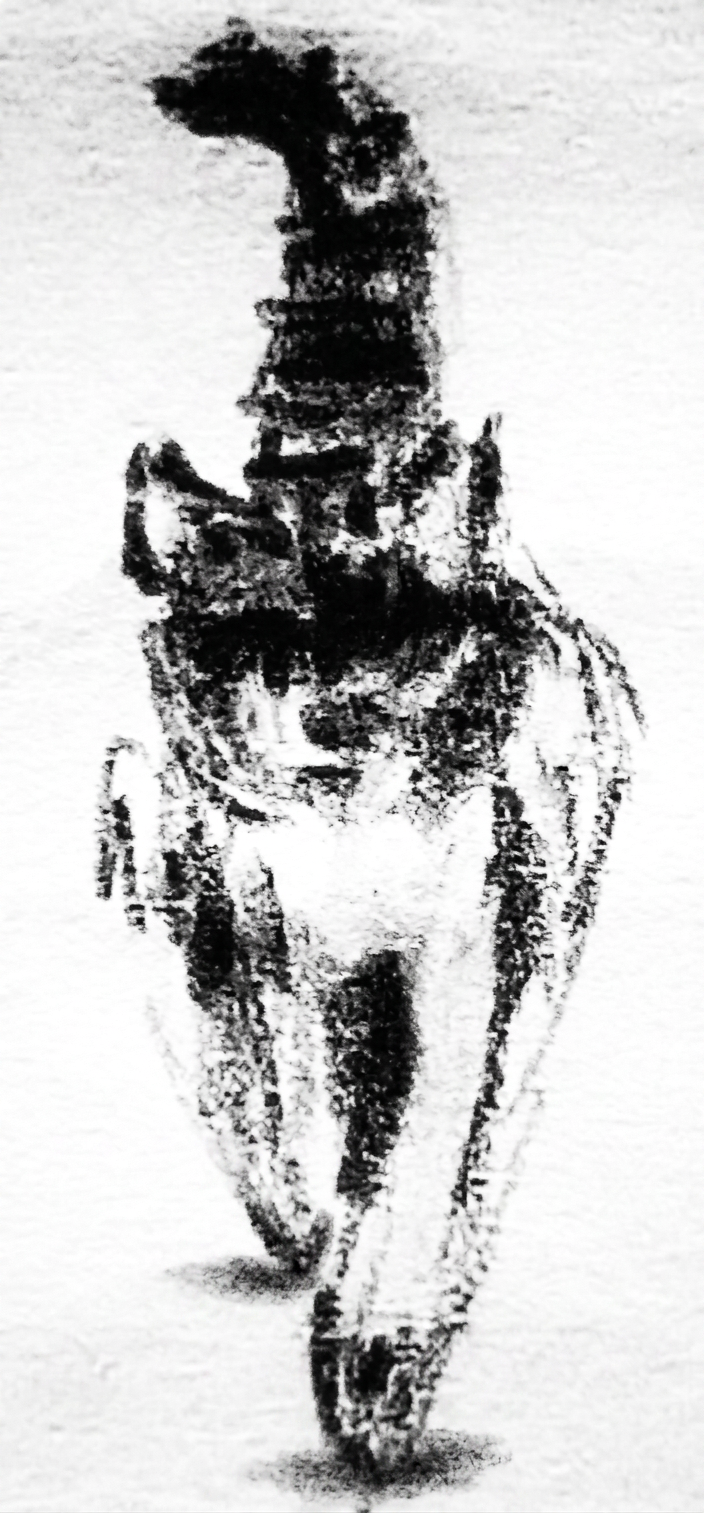
A sketch of a cat gracefully navigating ancient stairs, symbolizing the contrast between modern life and Rome’s timeless architecture.

https://www.coursera.org/learn/roman-architecture

← Back

Thank you for your response. ✨

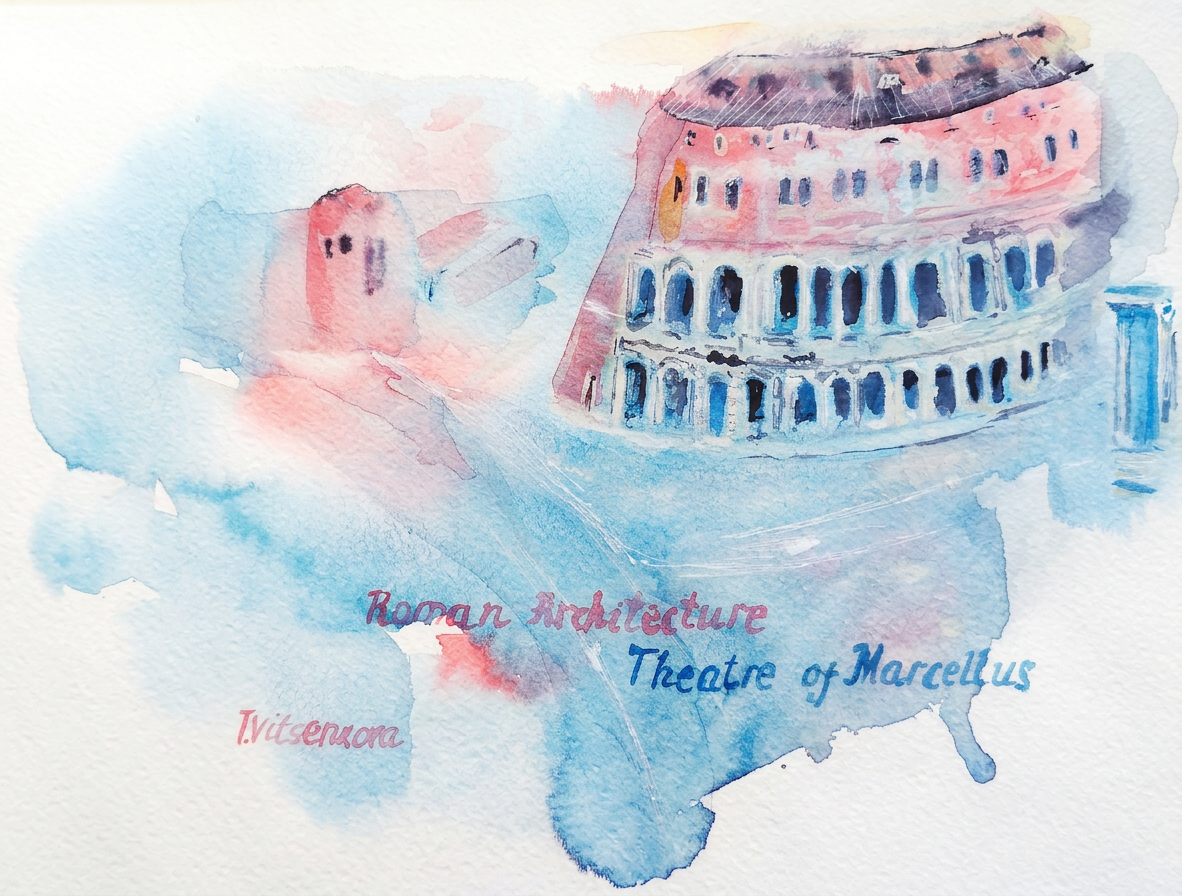
3-4.Art and Travel. Innovations in Concrete at Rome: The Tabularium and the Theatre of Marcellus. Watercolor journey with the course Roman Architecture by the Yale University.

Artist, Roman Architecture, Uncategorized, Urban sketching, Voyage

I continue the course Roman Architecture + the city of Rome with Yale’s course Roman Architecture https://www.coursera.org/learn/roman-architecture.

Innovations in Concrete at Rome: The Tabularium and the Theatre of Marcellus. 3-4

For my watercolor reference’s painting of the Theatre of Marcello with a nearby column of the Temple of Apollo , I used the Google Earth app to view the building from a bird’s eye view. Julius Caesar planned the open-air theatre but died before it was completed. Then Emperor Augustus took up the reins and dedicated the theatre to memory of his nephew and son in law Marcellus in 17 BC, when the theatre was used for dramas and arena fights. 

All roads lead to Rome – Alain de Lille

Bon voyage! Until the next travel:)

https://www.coursera.org/learn/roman-architecture/home/welcome

← Back

Thank you for your response. ✨

Name
Email
Your message

Δ document.getElementById( "ak_js_6" ).setAttribute( "value", ( new Date() ).getTime() );

Discover Yale’s Roman Architecture Course. Servian Wall.

An Artist's Perspective on Roman Architecture, Artist, Roman Architecture, Uncategorized
Why did I decide to dive headfirst into the world of Roman architecture
My visual path to learn Roman Architecture course
Middle tone watercolor technique
Introduction. Roman Urbanism. 1-1
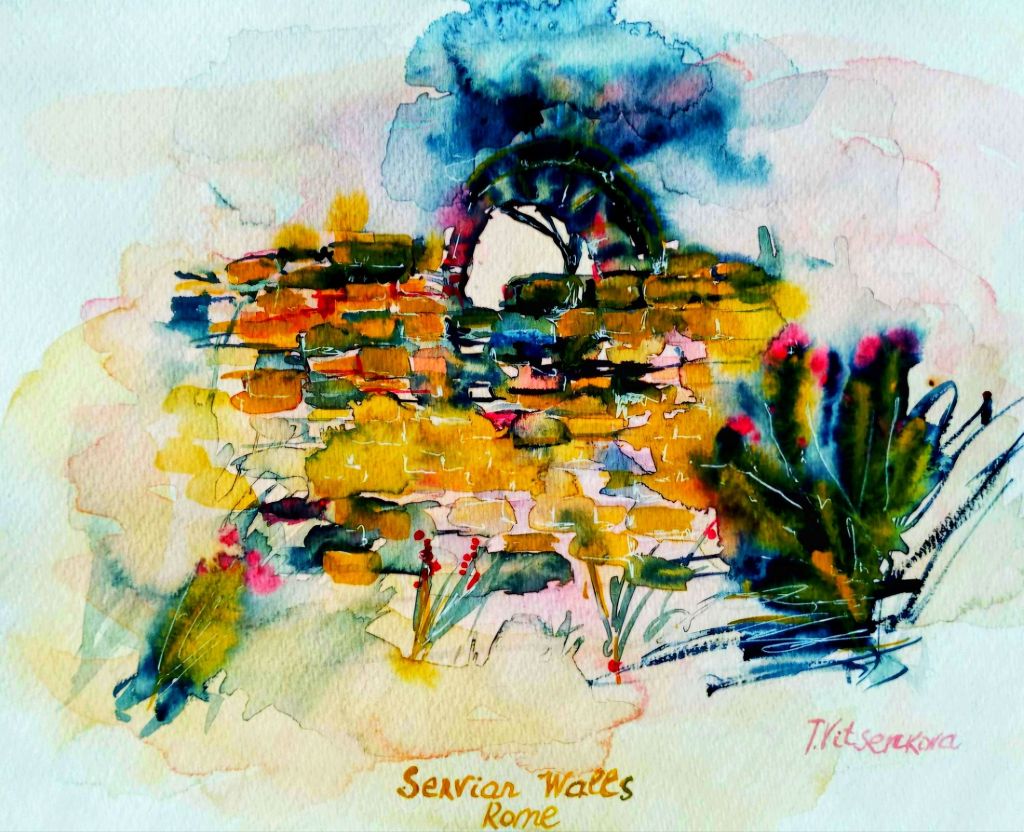
Rome, Servian Walls, Roman Architecture. Year of construction- 3 century B.C.
Watercolor painting of the Servian Walls in Rome, showcasing a blend of colors and light highlights. The artwork captures the ancient structure surrounded by greenery, symbolizing Roman architectural heritage.
Watercolor painting of the Servian Walls in Rome, showcasing the vibrant colors and textures inspired by ancient Roman architecture.
The early period of Roman architecture
The walls spanned approximately 19 kilometers
A watercolor sketch depicting a cat sitting in front of colorful buildings and trees, showcasing a view of Roman architecture.
Watercolor sketch featuring a cat overlooking a view of Roman architecture, inspired by the Servian Walls and the Roman landscape.
Termini station in Rome and nearby hidden gem
“All roads lead to Rome” Alain de Lille

← Back

Thank you for your response. ✨

art online school https://mogut-vse.ru/

Exploring Roman Architecture Through Watercolor Art

An Artist's Perspective on Roman Architecture, Artist, Roman Architecture, Uncategorized, Urban sketching, Voyage

Art and Travel. Watercolor journey with the course Roman Architecture by the Yale University.

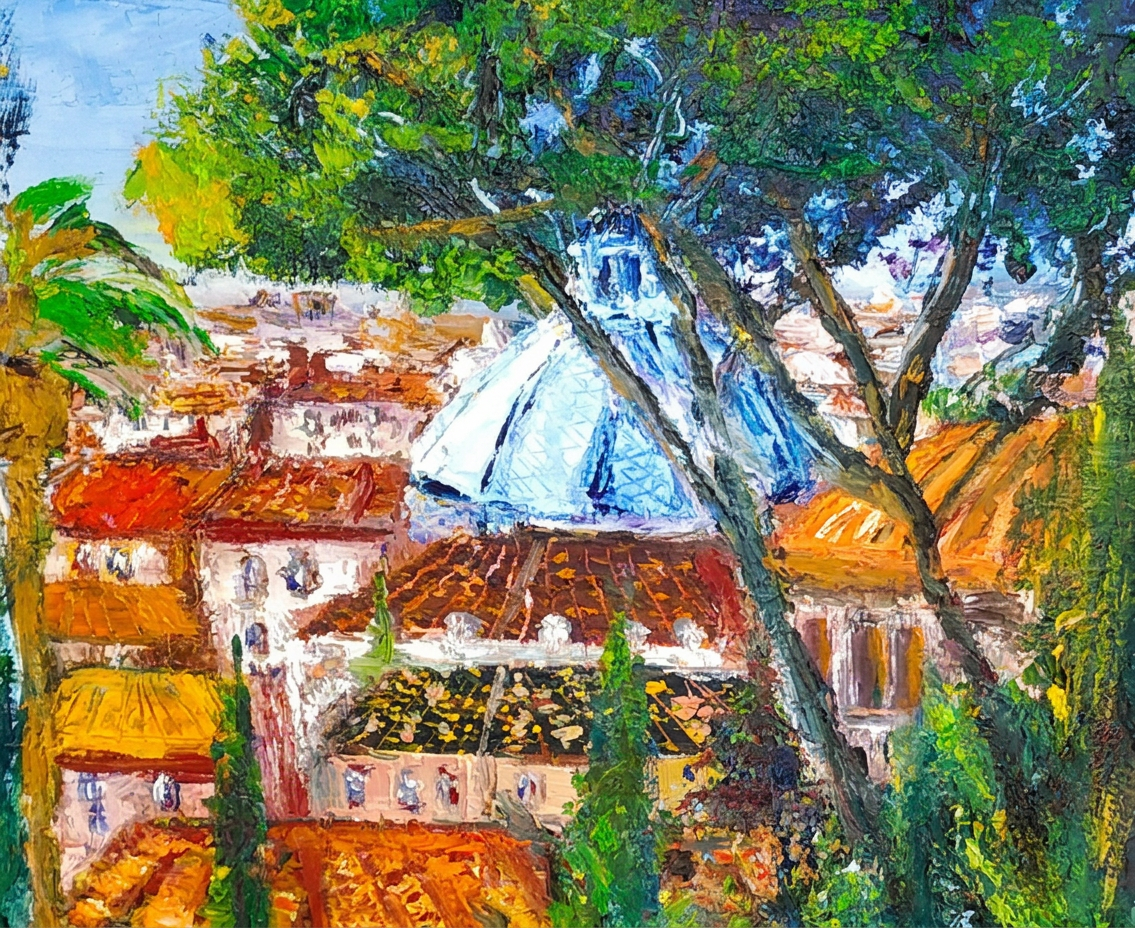
A vibrant watercolor painting showcases the rooftops and architecture of a city.
It is framed by lush greenery. The painting reflects the themes of Roman architecture explored in the Yale course.
Painting journey of my three passions
The nine-week course explores the great cities and their building
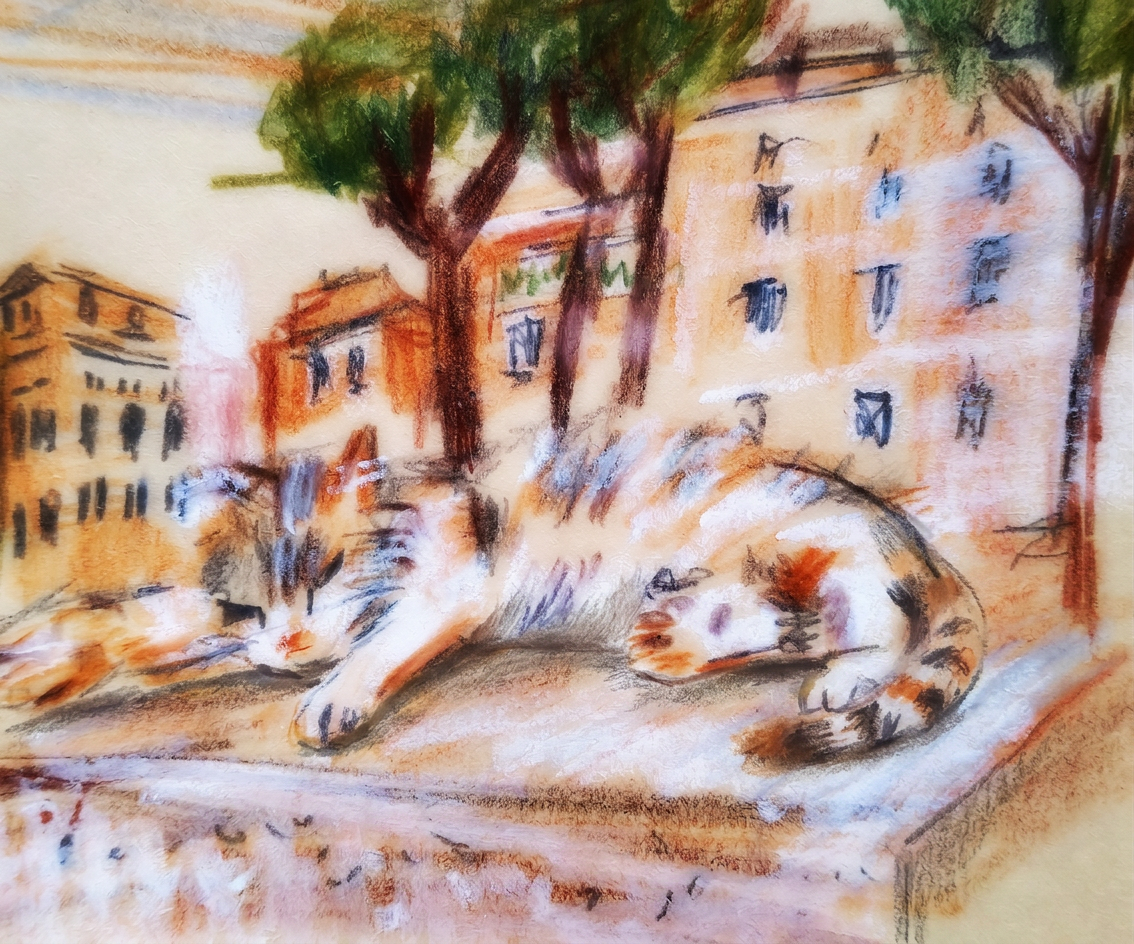
Cats sketching as part of my learning journey
A vibrant pastel sketch depicts Italian architecture. It reflects the beauty of Roman structures.
The influence of art was studied in the Yale University course.
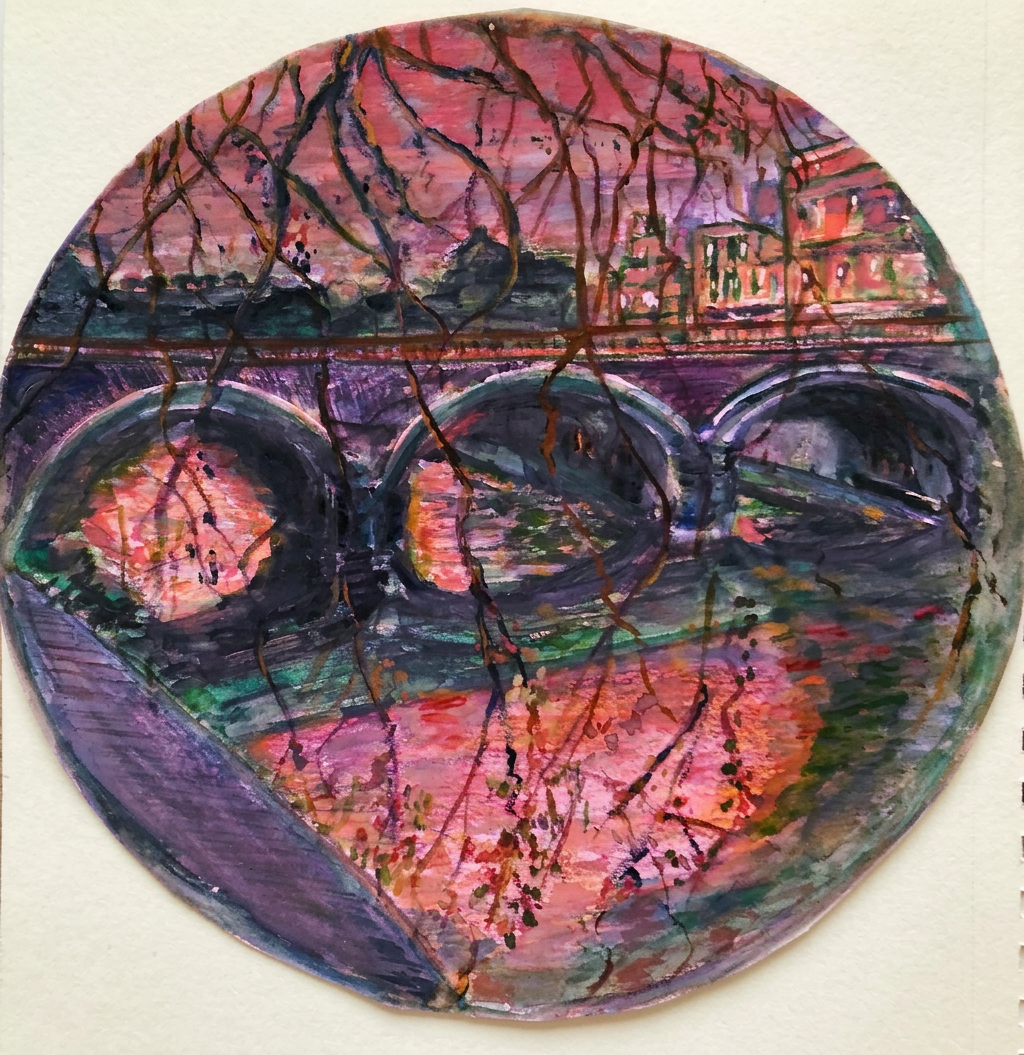
Watercolor painting of a bridge scene, capturing a vibrant sunset reflection on the water.

https://www.coursera.org/learn/roman-architecture

← Back

Thank you for your response. ✨

Tools used for my painting:

Watercolour used Charvin and Van Gogh brands, Pastel GrayPas Expressionist, Derwent watercolour pencils and Faber Castell artist pens, Paper Strathmore Watercolour and Mixed Media albums, 15×20 cm (6×8 in.)

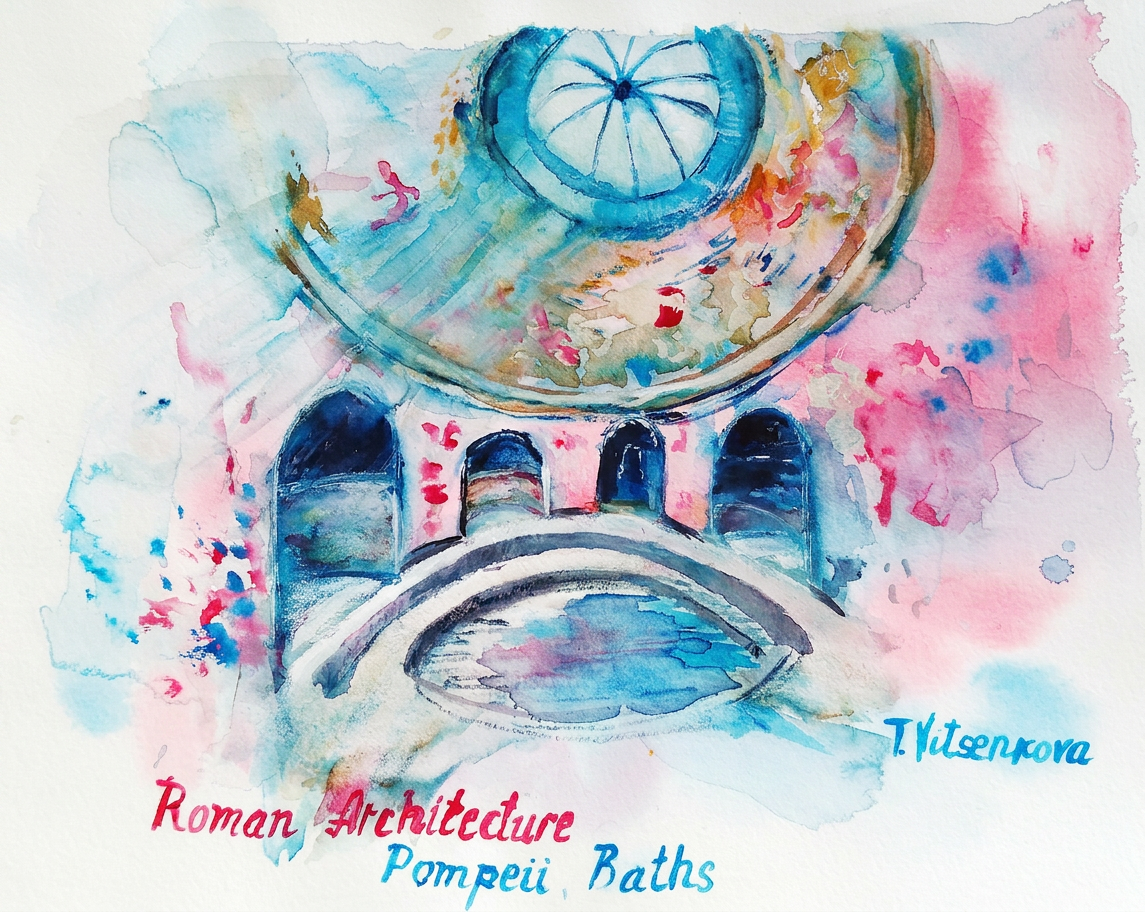
4-5. Art and Travel. Bath Complexes at Pompeii.

Artist, Roman Architecture, Uncategorized

Watercolor journey with the course Roman Architecture by Yale University.

C. 4-5

All roads lead to Rome – Alain de Lille

Bon voyage! Until the next travel:)

https://www.coursera.org/learn/roman-architecture/home/welcome

← Back

Thank you for your response. ✨

Name
Email
Your message

Δ document.getElementById( "ak_js_9" ).setAttribute( "value", ( new Date() ).getTime() );

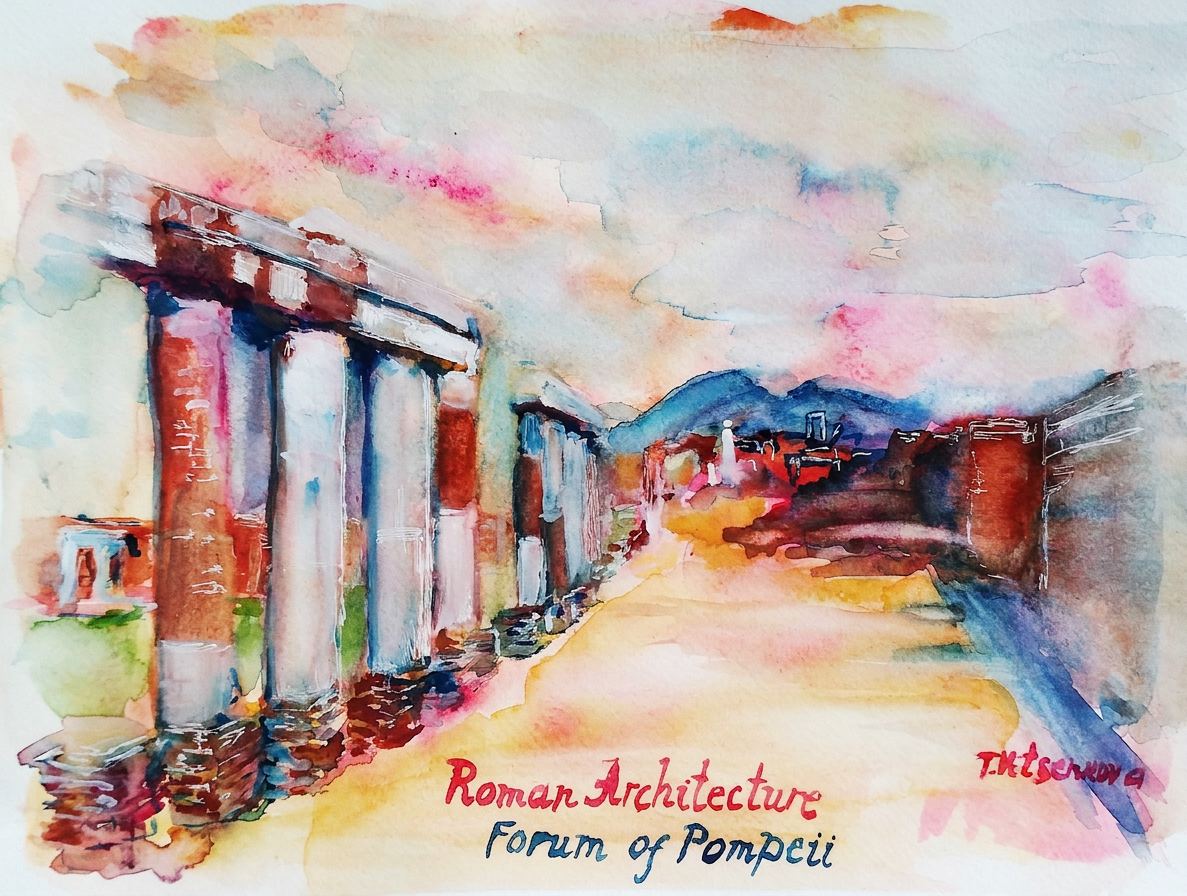
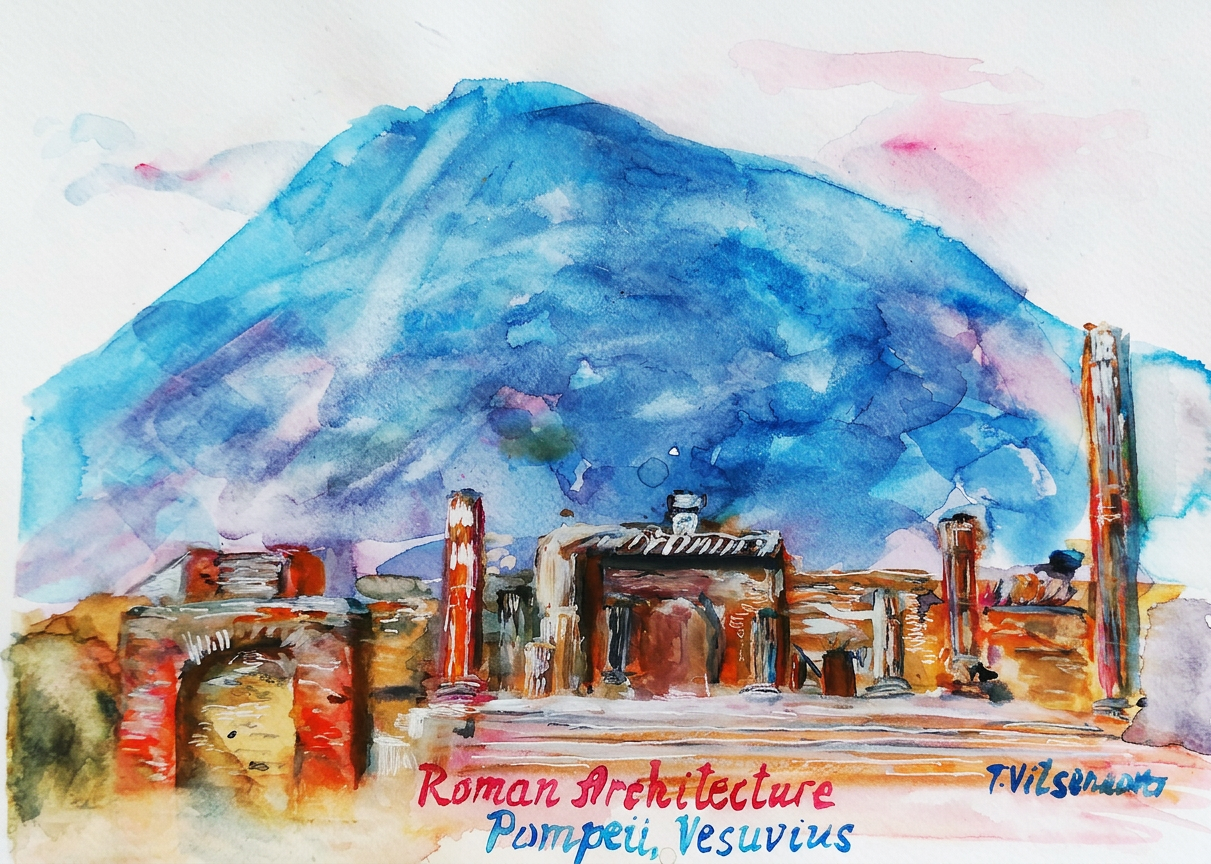
4-2.Art and Travel. The Early Settlement and the Forum at Pompeii .

Artist, Roman Architecture

Watercolor journey with the course Roman Architecture by the Yale University.

C. 4-2

All roads lead to Rome – Alain de Lille

Bon voyage! Until the next travel:)

https://www.coursera.org/learn/roman-architecture/home/welcome

← Back

Thank you for your response. ✨

Name
Email
Your message

Δ document.getElementById( "ak_js_10" ).setAttribute( "value", ( new Date() ).getTime() );

5-1.Art and Travel. Introduction and the Ideal Domus Italica.

Roman Architecture, Uncategorized

Watercolor journey with the course Roman Architecture by the Yale University.

I continue the painting series with the course Roman Architecture + the city of Rome with Yale’s course Roman Architecture https://www.coursera.org/learn/roman-architecture.

C. 5-1

https://pixels.com/featured/domus-italica-residential-house-in-pompeii-tamara-vitsenkova.html

All roads lead to Rome – Alain de Lille

https://www.coursera.org/learn/roman-architecture/home/welcome

← Back

Thank you for your response. ✨

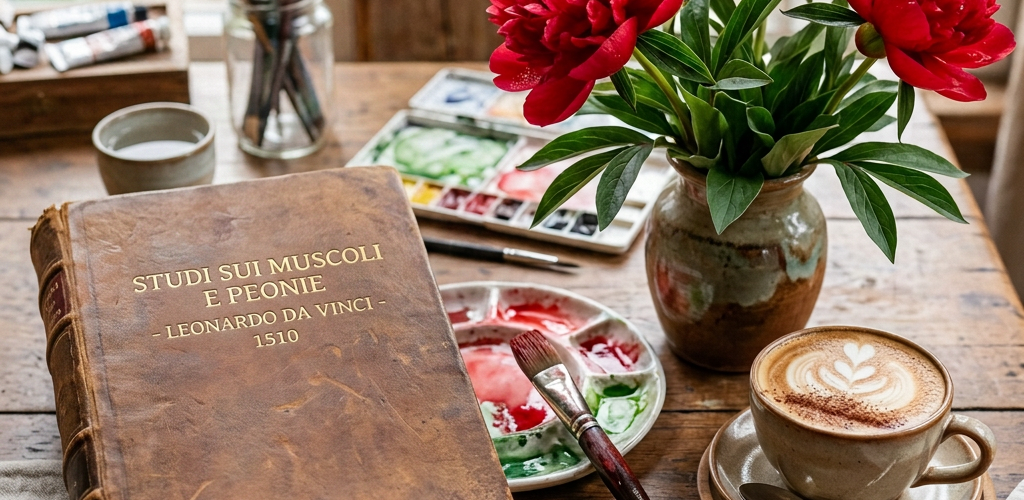
Open Italian anatomy book beside red flowers, paint palette, brushes, and cappuccino

Magic and beauty, red peonies, cappuccino and Leonardo’s Notebook. Part 3.

ArtTravel

Still life and urban sketching. Because apparently, I can’t sit still OR leave my house without a sketchpad.

So Leonardo da Vinci’s Notebook told me something rather inconvenient: artists need to constantly find new things to paint or draw. (Thanks a lot, Leonardo—no pressure!) Thus began my endless quest to think outside the box that I’m apparently always painting inside. This summer, I had a minor epiphany: watercolor graphic technique is NOT just fancy coloring books. Shocking, I know. It was a small discovery that spiraled into full-blown artistic obsession, and now here we are.

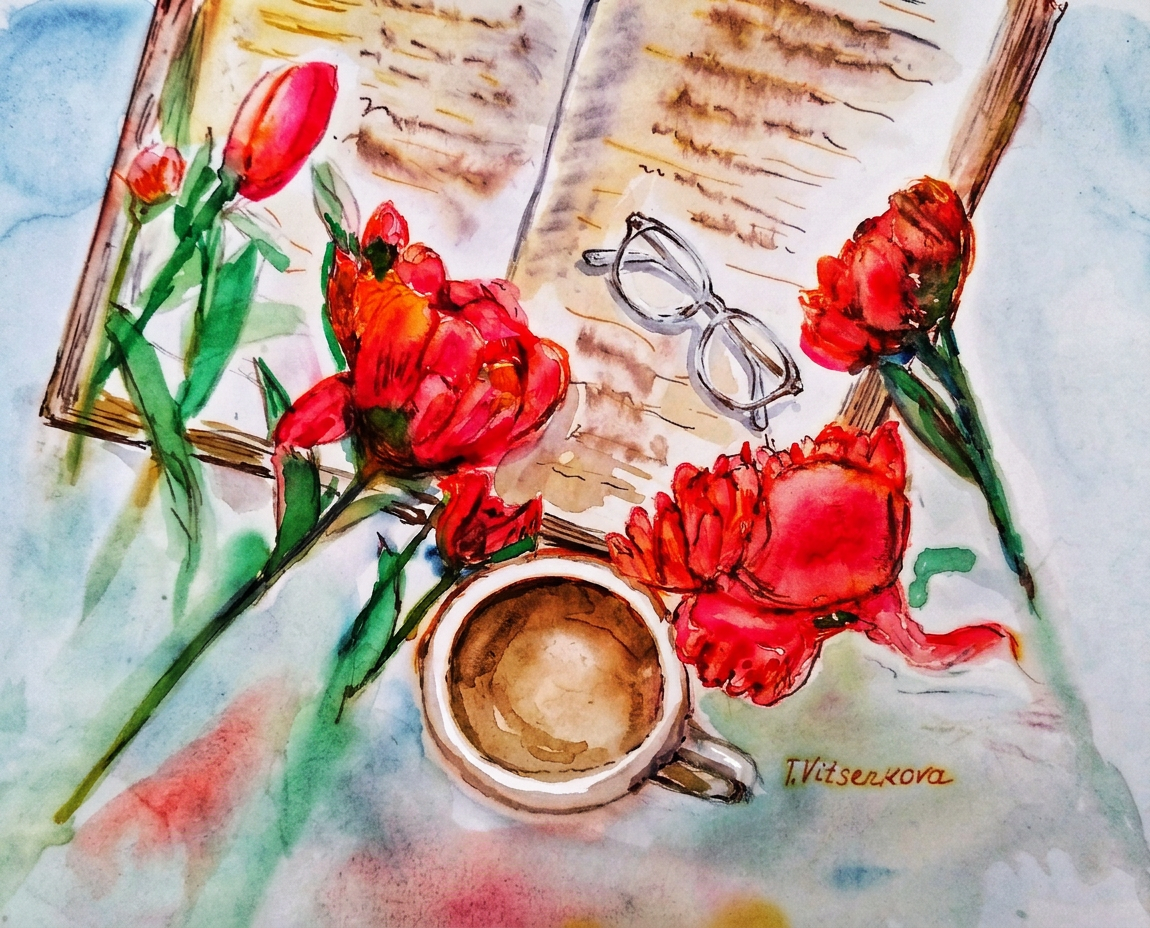
My still life muse? Bright reddish peonies, obviously. I arranged them artfully on my treasured Leonardo da Vinci book, added my glasses (for the intellectual look), threw in a cup of cappuccino (for the vibes), and created what I can only describe as a masterpiece of self-indulgence. Voilà! Another watercolor and ink painting in my beloved impressionist style was born.

Watercolor fantasy. Cappuccino and red peonies and a book

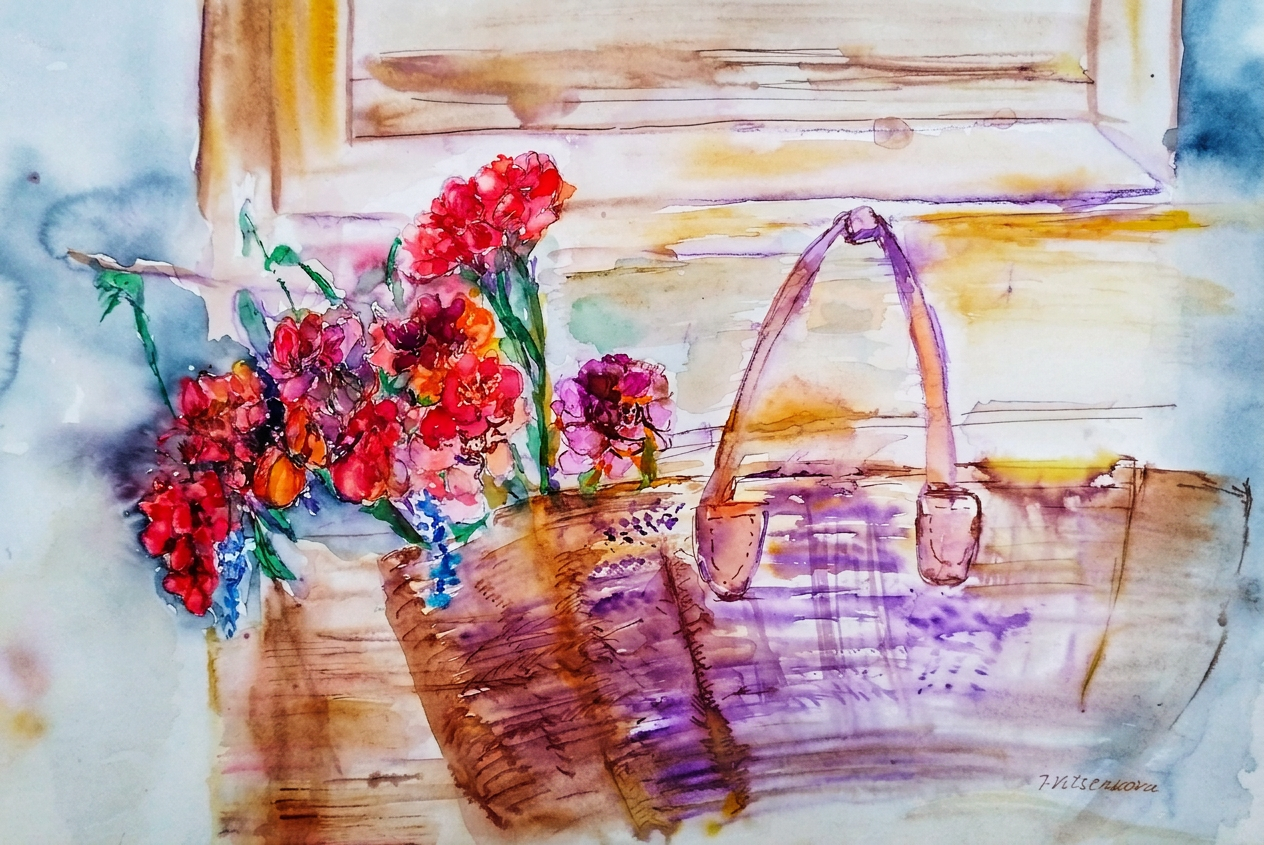
Just imagine it: a warm Mediterranean evening, you’re wandering charming cobblestone streets, and voila—red and pink peonies spill from a straw basket on some picturesque wood door or window. That’s watercolor and ink, my friend. That’s impressionism at its finest. That’s also my elaborate fantasy about our future travels to southern France, Italy, or possibly Greece (I’m not picky when it comes to vacation dreams). Who knows where wanderlust will take us? :)

Summer flower fantasy.

Shout-out to my daughter for the phenomenal gift: Leonardo’s Notebook. This book is basically the gift that keeps on giving—centuries-old wisdom from a guy who was basically good at everything. It’s like having a Renaissance master constantly looking over your shoulder with 500-year-old advice. Terrifying and inspiring in equal measure.

Bon voyage! Until the next adventure awaits! Stay healthy and hydrated (your skin will thank you when you’re sketching in the Mediterranean sun).

All paintings belong to the author. Seriously, don’t copy them. I mean it. My lawyer says I have to say that. Just go make your own masterpiece!

Tools used for my painting: Watercolors by Charvin and Van Gogh (because apparently only the best will do for this artist’s delusions). Pastels by GrayPas Expressionist (the feisty cousin of regular pastels). Derwent watercolor pencils and Faber Castell artist pens (because one type of pen is never enough). Paper: Strathmore Watercolor and Mixed Media albums in that perfect 15×20 cm (6×8 inch) size—not too big, not too small, just right for my control-freak tendencies.

← Back

Thank you for your response. ✨

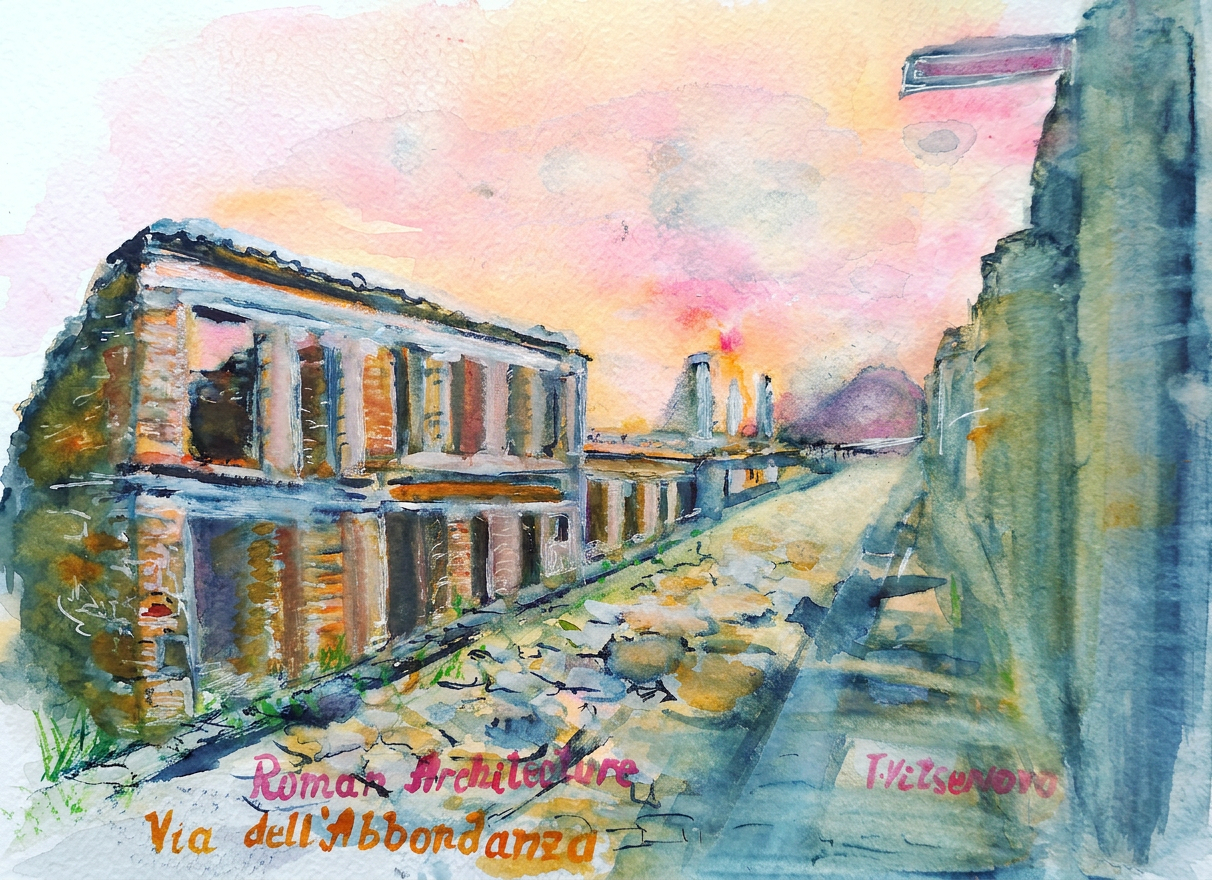
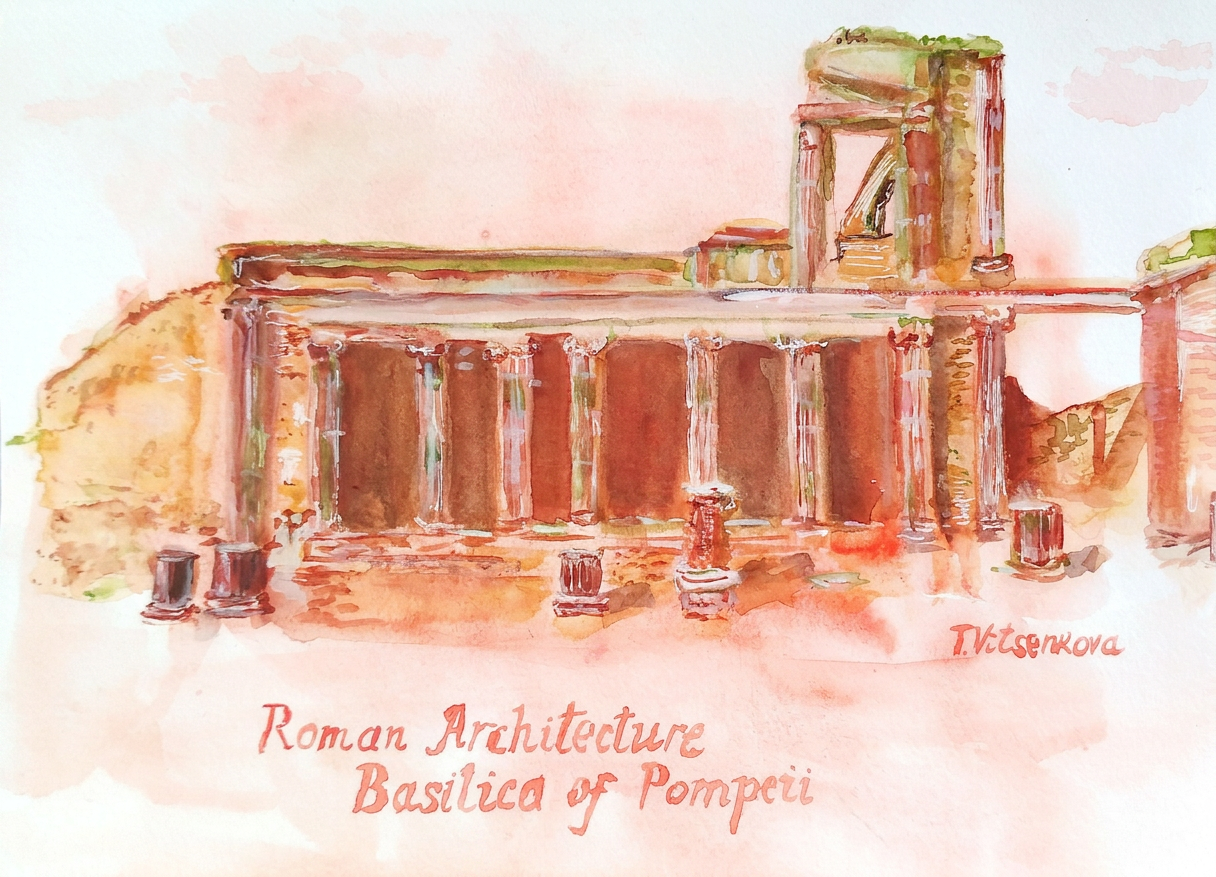
4-3.Art and Travel. The Capitolium and Basilica of Pompeii.

An Artist's Perspective on Roman Architecture, Roman Architecture, Uncategorized

Watercolor journey in the course Roman Architecture by the Yale University.

I continue the painting in the course Roman Architecture + the city of Rome with Yale’s course Roman Architecture https://www.coursera.org/learn/roman-architecture.

C. 4-3

All roads lead to Rome- Alain de Lille

Bon voyage! Until the next travel:)

https://www.coursera.org/learn/roman-architecture/home/welcome

← Back

Thank you for your response. ✨

Name
Email
Your message

Δ document.getElementById( "ak_js_13" ).setAttribute( "value", ( new Date() ).getTime() );

Step-by-Step Guide to Vibrant Sea Landscapes

Art workshops, Artist, ArtTravel, sea, Spain

For my artist colleagues. Workshops. Holidays spirit for creative community. Paint your world.

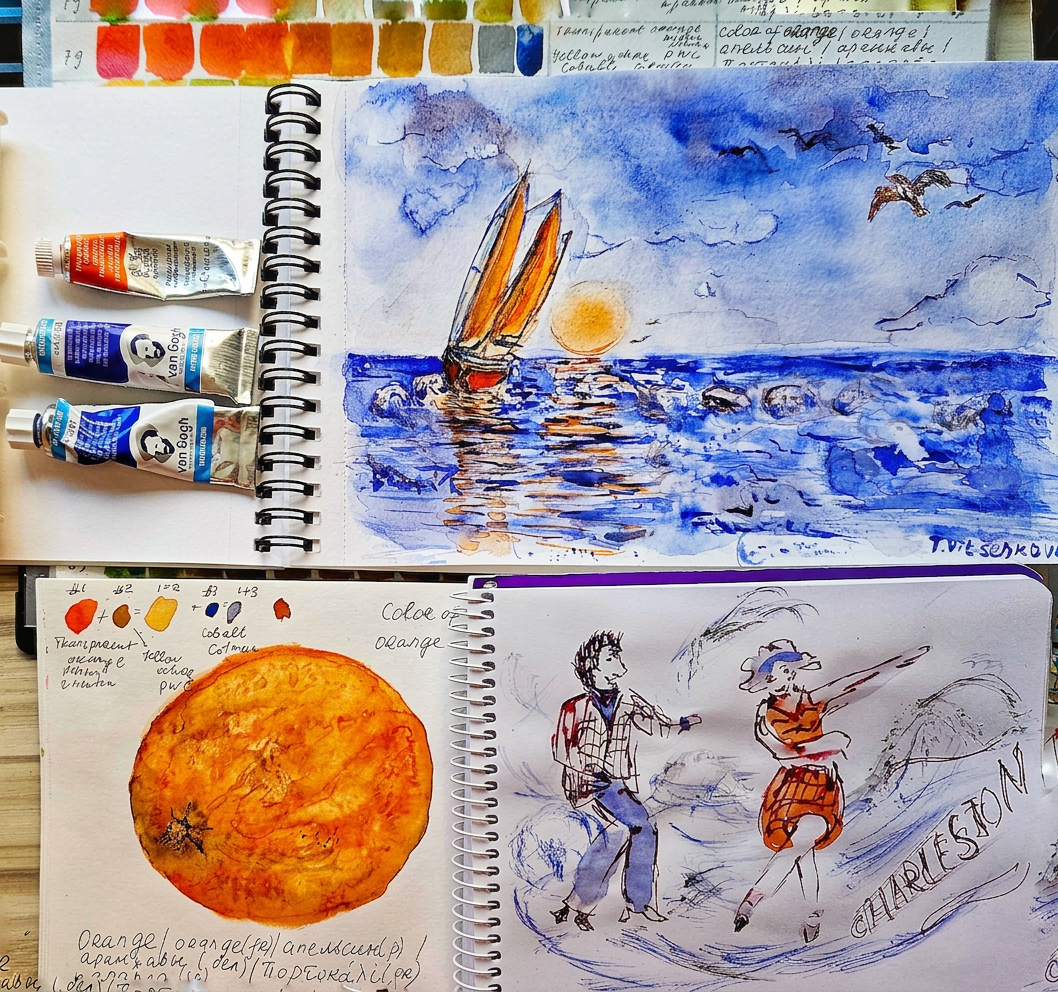
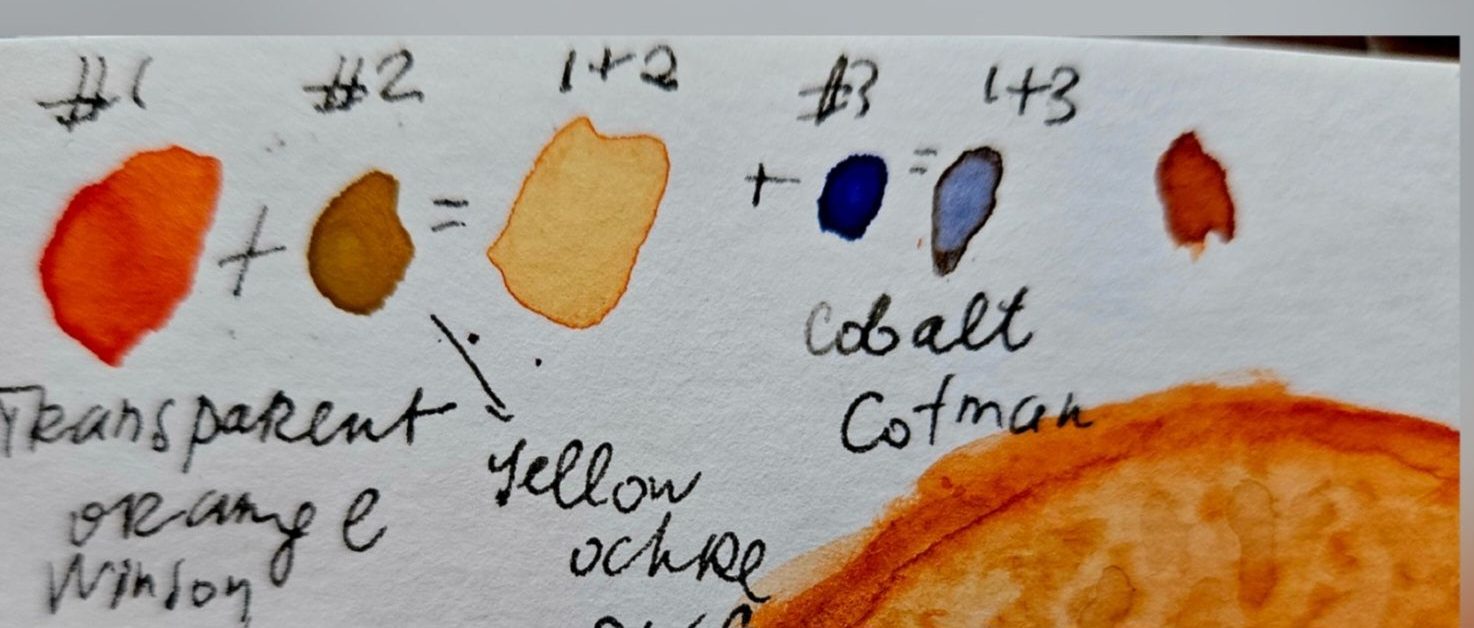
Three watercolor paint pans labeled Ultramarine, Transparent Orange, and Cobalt, shown from above with wet, glossy pigment. Below, a handwritten color mixing chart on watercolor paper showing combinations of Transparent Orange (Winsor), Yellow Ochre, and Cobalt Cotman, with painted swatches demonstrating each mix.

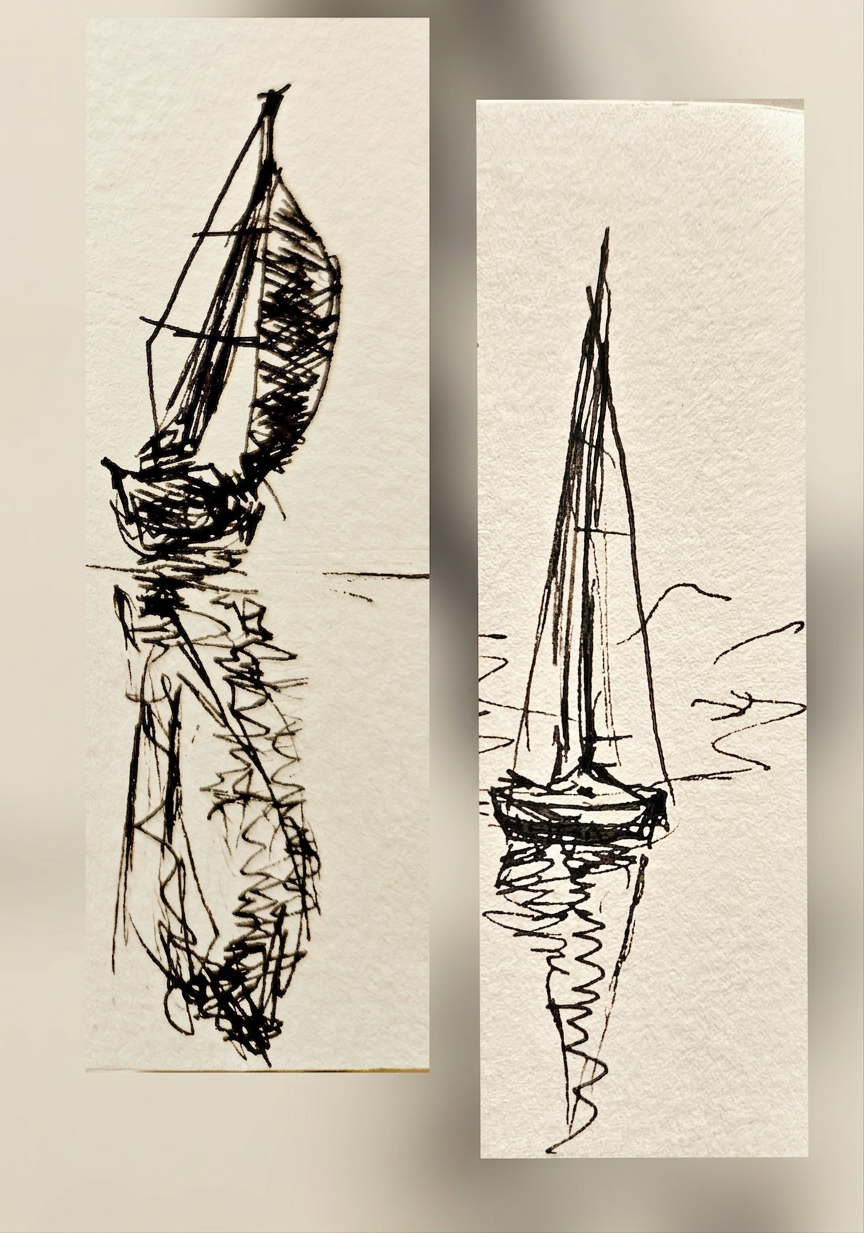
Step 3. Draft of boats

draft boats

Step 4. Soundtrack Inspiration

Step 5. Color of yacht

Step 6. The 1st layer of sea, foam and waves

Step 7. The 1st layer of sky and clouds

Step 8. The 2nd layer for sky, sea, foams and reflections

Step 9. Details for sea, yacht and birds

Step 10. Cool down

← Back

Thank you for your response. ✨

Vibrant Sea Landscapes. Painting the Rhythm of Summer. The magic of imagination.

Art workshops, Artist, ArtTravel, sea, Spain

For my artist colleagues. Workshops. Holidays spirit for creative community. Paint your world.

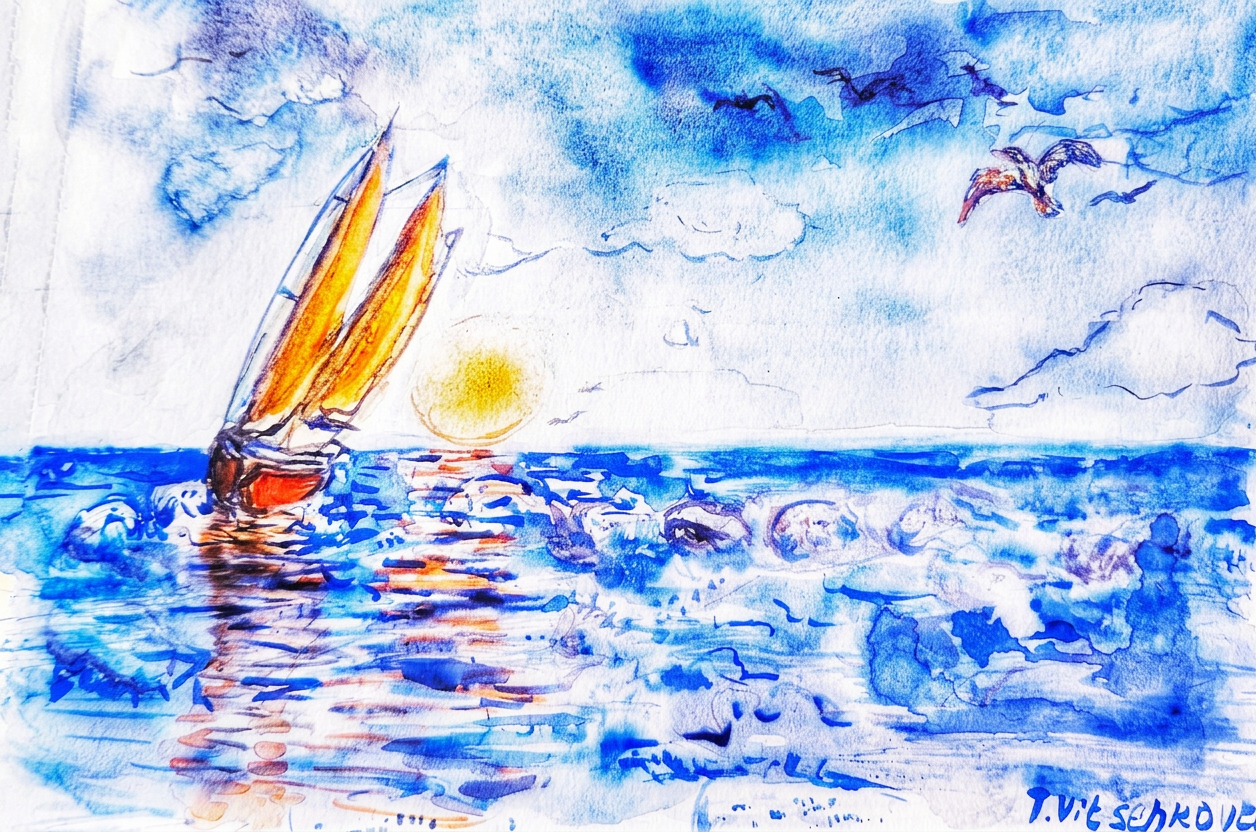
Waves in Rhythm: A Sunset Story.
The painting is vibrant and full of colors. It depicts a sailboat with orange sails against a sunset over the sea. The artwork captures the essence of a lively Charleston dance.
A close-up view of a watercolor palette showcasing three colors: ultramarine blue, transparent orange, and cobalt blue, along with a color mixing guide and swatches.
A vibrant color palette featuring ultramarine, transparent orange, and cobalt paints, showcasing the artist’s tools for creating seascapes.
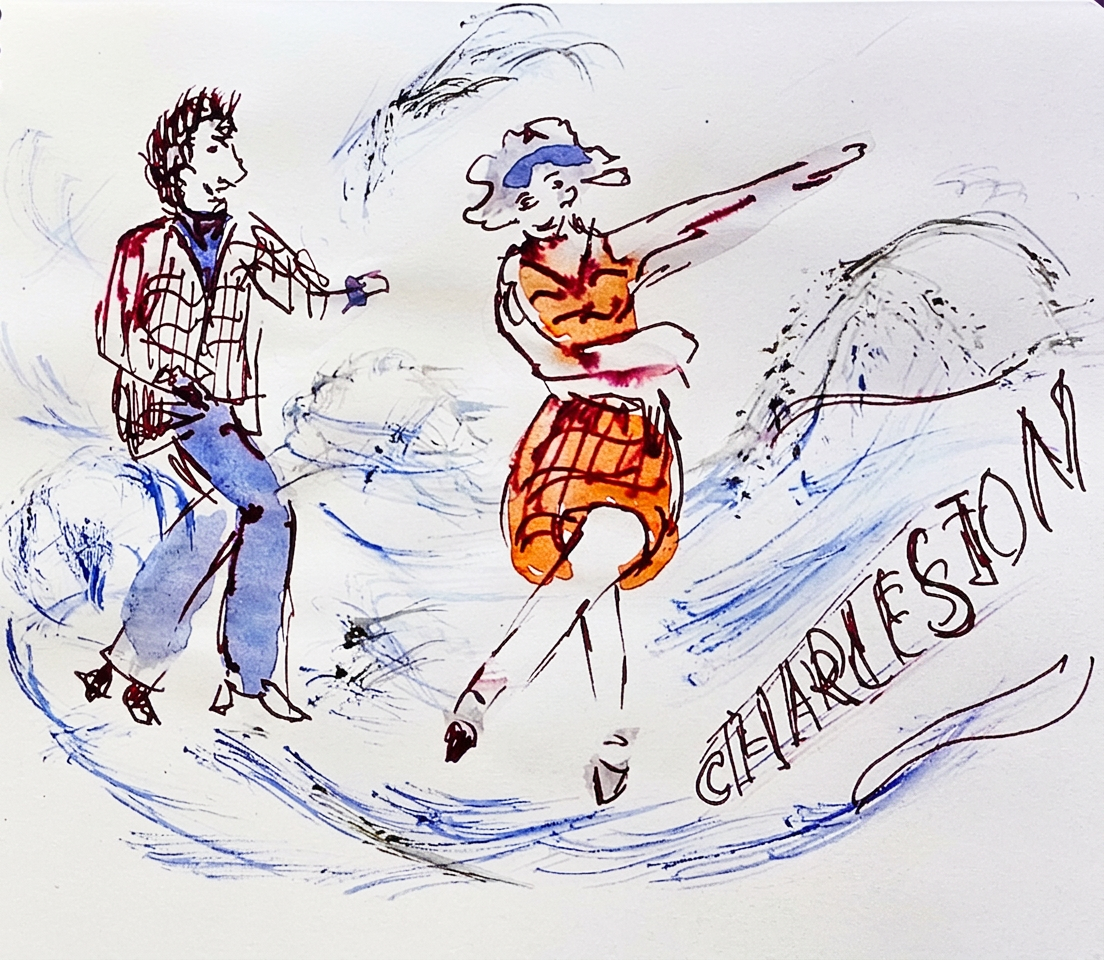
An artistic depiction shows a couple dancing the Charleston.
They are against a backdrop of dynamic waves. This scene captures the lively spirit of summer.

← Back

Thank you for your response. ✨

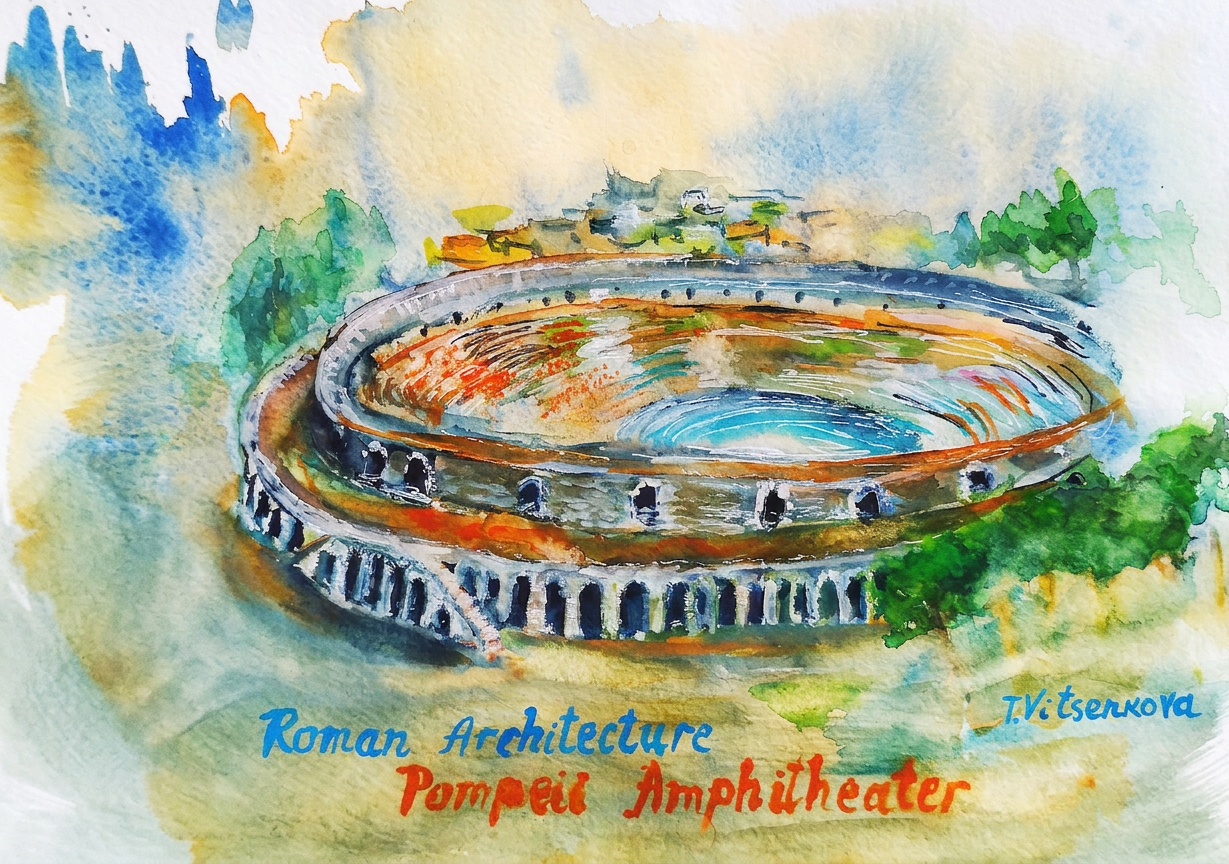
4-4.Art and Travel. Pompeii’s Entertainment District: The Amphitheater, Theater, and Music Hall.

Artist, Roman Architecture, Uncategorized

Watercolor journey in the course Roman Architecture by the Yale University.

All roads lead to Rome – Alain de Lille

https://www.coursera.org/learn/roman-architecture/home/welcome

← Back

Thank you for your response. ✨

Name
Email
Your message

Δ document.getElementById( "ak_js_16" ).setAttribute( "value", ( new Date() ).getTime() );

4-1.Art and Travel. Introduction to Pompeii and the City’s History.

Artist, Roman Architecture, Uncategorized, Urban sketching, Voyage

Watercolor journey with the course Roman Architecture by the Yale University.

All roads lead to Rome – Alain de Lille

Bon voyage! Until the next travel:)

https://www.coursera.org/learn/roman-architecture/home/welcome

← Back

Thank you for your response. ✨

Name
Email
Your message

Δ document.getElementById( "ak_js_17" ).setAttribute( "value", ( new Date() ).getTime() );

3-5.Art and Travel. Concrete Transforms a Mountain at Palestrina.

Artist, Roman Architecture, Uncategorized, Urban sketching, Voyage

Watercolor journey with the course Roman Architecture by the Yale University.

I continue the paintings with the course Roman Architecture + the city of Rome with Yale’s course Roman Architecture https://www.coursera.org/learn/roman-architecture.

All roads lead to Rome— Alain de Lille

https://www.coursera.org/learn/roman-architecture/home/welcome

← Back

Thank you for your response. ✨

Name
Email
Your message

Δ document.getElementById( "ak_js_18" ).setAttribute( "value", ( new Date() ).getTime() );

3-3.Art and Travel. Sanctuaries and the expressive potential of Roman concrete construction.

Artist, Roman Architecture, Uncategorized, Urban sketching, Voyage

Watercolor journey with the course Roman Architecture by the Yale University.

I continue the paintings after the course Roman Architecture + the city of Rome with Yale’s course Roman Architecture https://www.coursera.org/learn/roman-architecture.

Sanctuaries and the expressive potential of Roman concrete construction. 3-3

All roads lead to Rome – Alain de Lille

https://www.coursera.org/learn/roman-architecture/home/welcome

← Back

Thank you for your response. ✨

Name
Email
Your message

Δ document.getElementById( "ak_js_19" ).setAttribute( "value", ( new Date() ).getTime() );

2-3.Art and Travel. Defensive Stone walls and regular town -planning, Roman Architecture.

Artist, Roman Architecture, Uncategorized, Urban sketching, Voyage

Watercolor journey with the course Roman Architecture by the Yale University.

All roads lead to Rome — Alain de Lille

← Back

Thank you for your response. ✨

Name
Email
Your message

Δ document.getElementById( "ak_js_20" ).setAttribute( "value", ( new Date() ).getTime() );

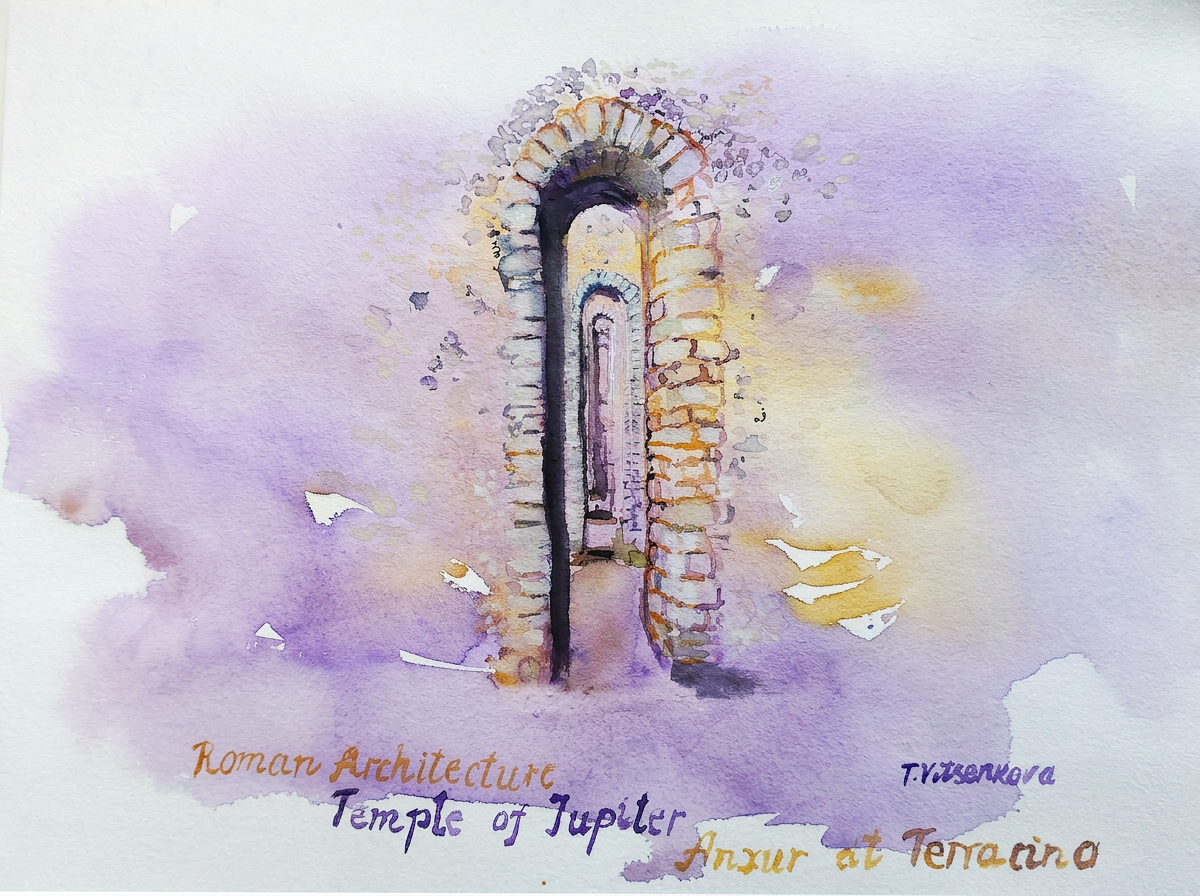
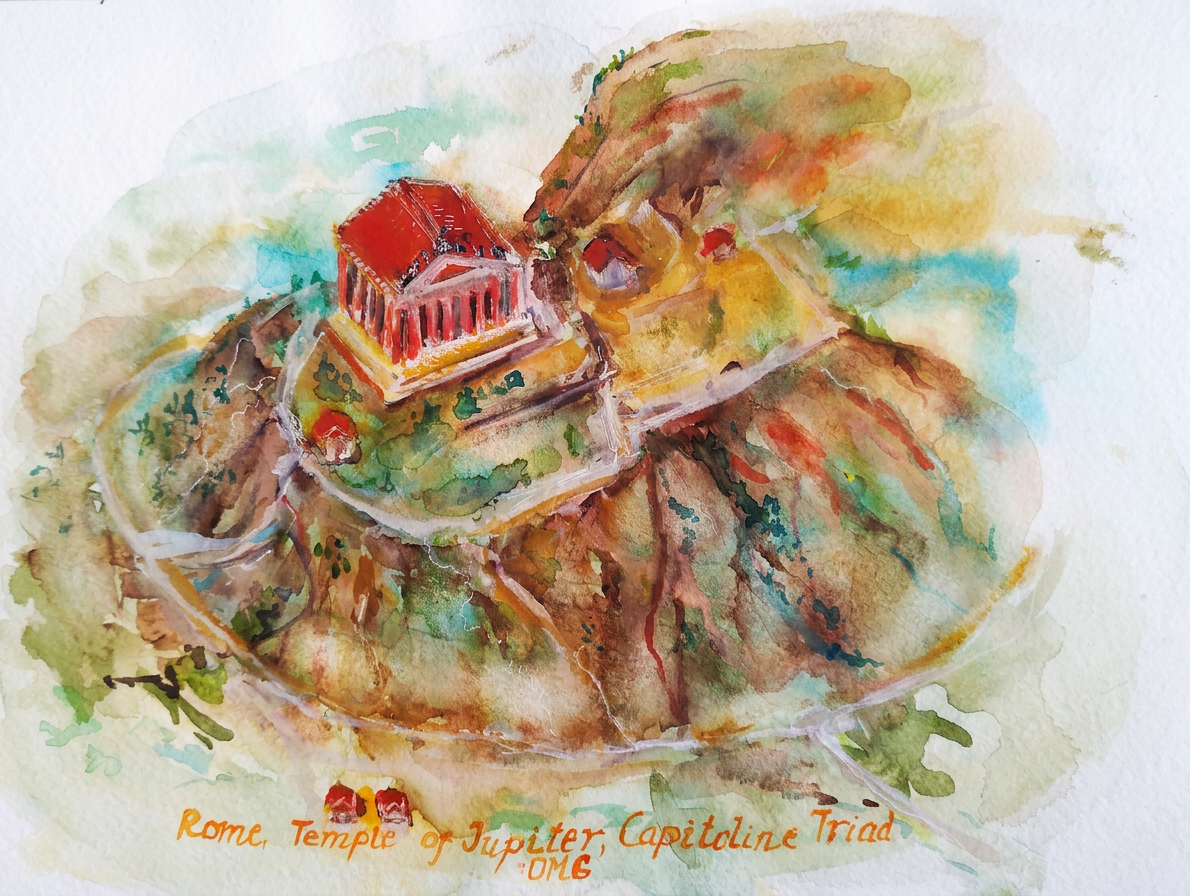
2-2.Art and Travel. Rome, Temple of Jupiter OMG, Capitolini Triad, Roman Architecture. Watercolor journey with the course Roman Architecture by the Yale University.

Artist, Roman Architecture, Uncategorized, Urban sketching, Voyage

All roads lead to Rome – Alain de Lille

Bon voyage! Until the next travel:)

← Back

Thank you for your response. ✨

Name
Email
Your message

Δ document.getElementById( "ak_js_21" ).setAttribute( "value", ( new Date() ).getTime() );

Link to the Roman Architecture Course:

https://www.coursera.org/learn/roman-architecture/home/welcome

3-2.Art and Travel. The first experiments in Roman concrete construction.

Artist, Roman Architecture, Uncategorized, Urban sketching, Voyage

Watercolor journey with the course Roman Architecture by the Yale University.

The first experiments in Roman concrete construction. 3-2

All roads lead to Rome – Alain de Lille

Bon voyage! Until the next travel:)

← Back

Thank you for your response. ✨

Name
Email
Your message

Δ document.getElementById( "ak_js_22" ).setAttribute( "value", ( new Date() ).getTime() );

2-5.Art and Travel. The advent of the Corinthian Order, Roman Architecture.

Artist, Roman Architecture, Uncategorized, Urban sketching, Voyage

Watercolor journey with the course Roman Architecture by the Yale University.

I continue my artistic series with the course Roman Architecture + the city of Rome with Yale’s course Roman Architecture https://www.coursera.org/learn/roman-architecture.

The advent of the Corinthian Order Roman Architecture. 2-5.

All roads lead to Rome – Alain de Lille

← Back

Thank you for your response. ✨

Name
Email
Your message

Δ document.getElementById( "ak_js_23" ).setAttribute( "value", ( new Date() ).getTime() );

2-4.Art and Travel. The Hellenization of late Republican temple, Roman Architecture.

Artist, Roman Architecture, Uncategorized, Urban sketching, Voyage

Watercolor journey with the course Roman Architecture by the Yale University

The Hellenization of late Republican temple, Roman Architecture. 2-4.

All roads lead to Rome- Alain de Lille

← Back

Thank you for your response. ✨

Name
Email
Your message

Δ document.getElementById( "ak_js_24" ).setAttribute( "value", ( new Date() ).getTime() );

My Toronto. Stay home and Urban sketching. Travel and Art. November, Winter mood. Part 10

ArtTravel

This post is a collection of my October daily sketches, but we’re jumping straight to winter. Because why follow a calendar like normal people?

Toronto’s winter is basically nature’s way of saying “time to stay indoors and contemplate your life choices.” Think snow, think wind, think your home suddenly becomes a cozy fortress where you can enjoy the view from your window while secretly judging people who actually venture outside. There’s ice skating (bring your bruises), and a festive Christmas-New Years atmosphere that makes you forget your heating bill exists.

Fair warning: All paintings in this post are refugees from previous seasons. Consider them time travelers.

Ontario Place in winter, immortalized in oil. Pro tip: If you squint really hard at this painting, you can spot the CN Tower looming in the distance—you know, that charming 0.5 km tall landmark that Toronto residents can see from literally everywhere, even from their nightmares.

Spot the CN Tower. No seriously, it’s in there somewhere.

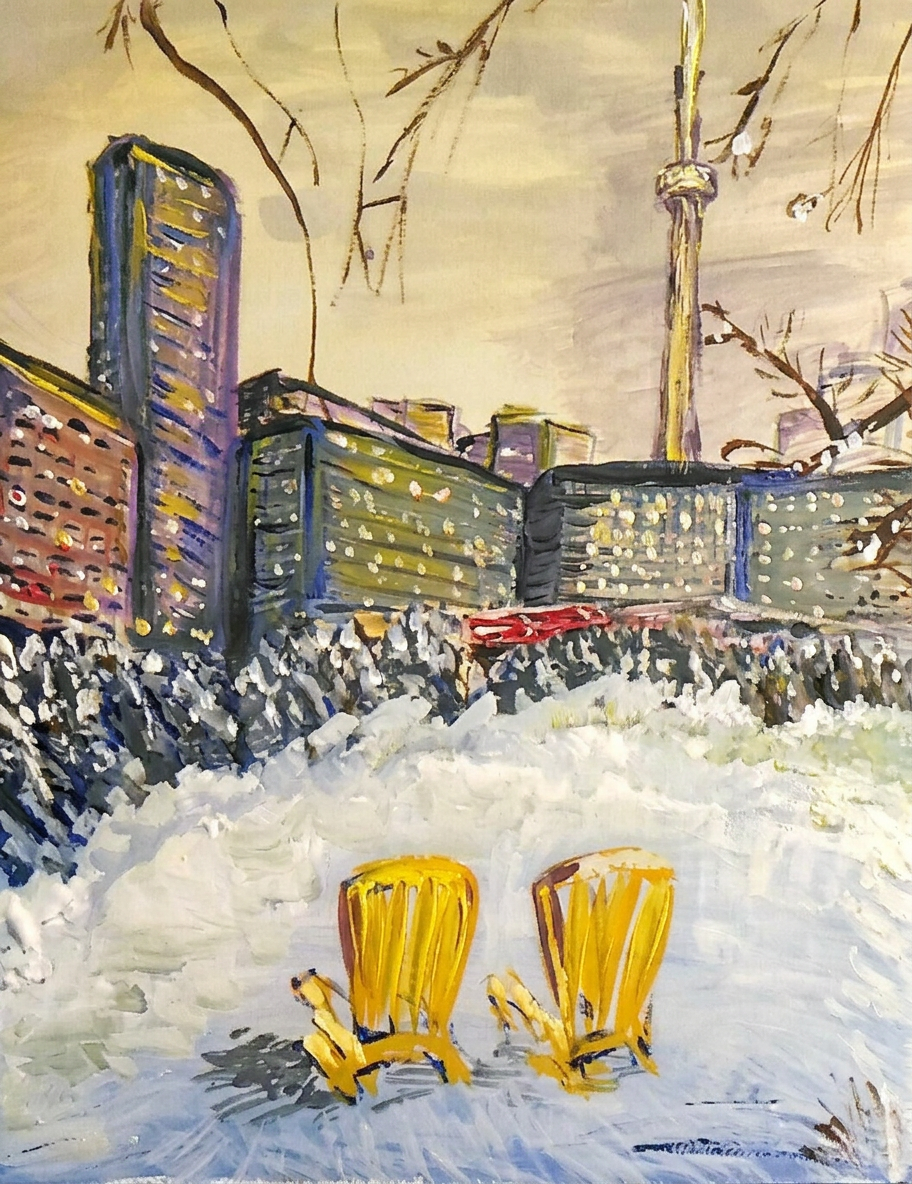
Winter at Toronto Music Garden downtown? Chef’s kiss. Fancy lights everywhere, a stunning CN Tower backdrop, and—here’s the plot twist—a couple of bright yellow summer beach chairs just casually hanging out on the frozen Ontario lake, apparently on strike from summer and refusing to acknowledge they’re in the wrong season.

Beach chairs on ice. Summer is in denial.

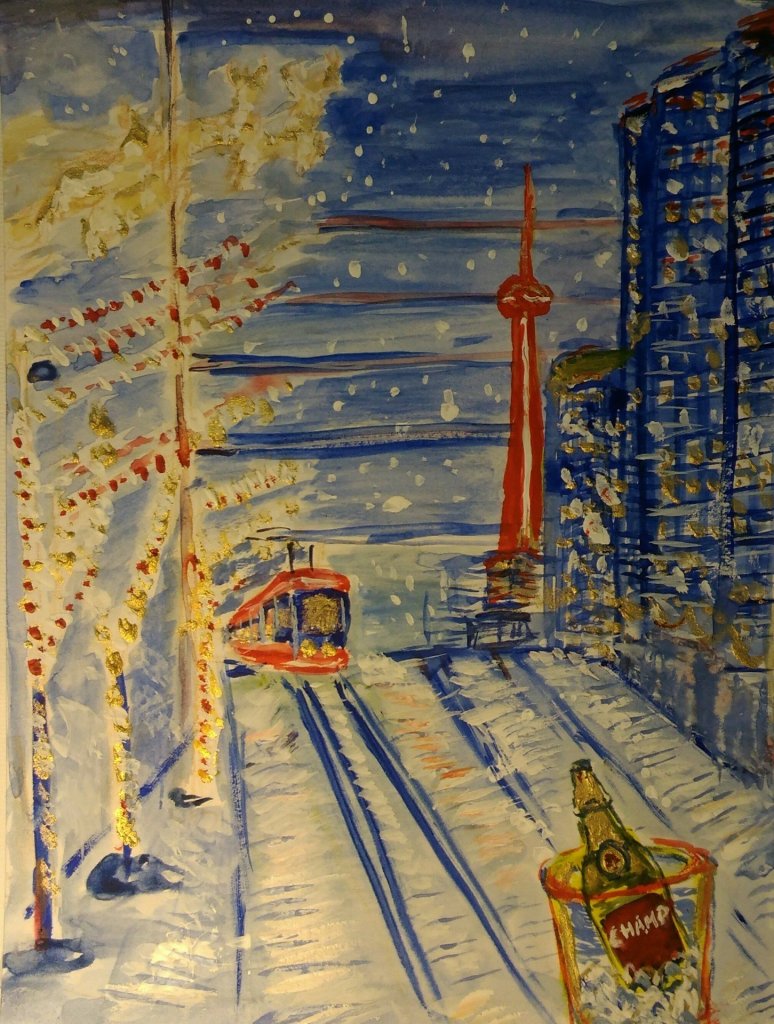
Queens Quay West and Spadina: The year is ending, and Toronto’s streetcar is basically in a mad dash to the finish line! This imaginary masterpiece features a Toronto tram hurtling toward the New Year like it’s late for a very important date, complete with Christmas sled deer (yes, deer—stay with me), flying gifts, and a suspiciously placed bucket of champagne just waiting to get obliterated by a speeding tram. What could go wrong? Happy Holidays will be welcoming… especially this year :)

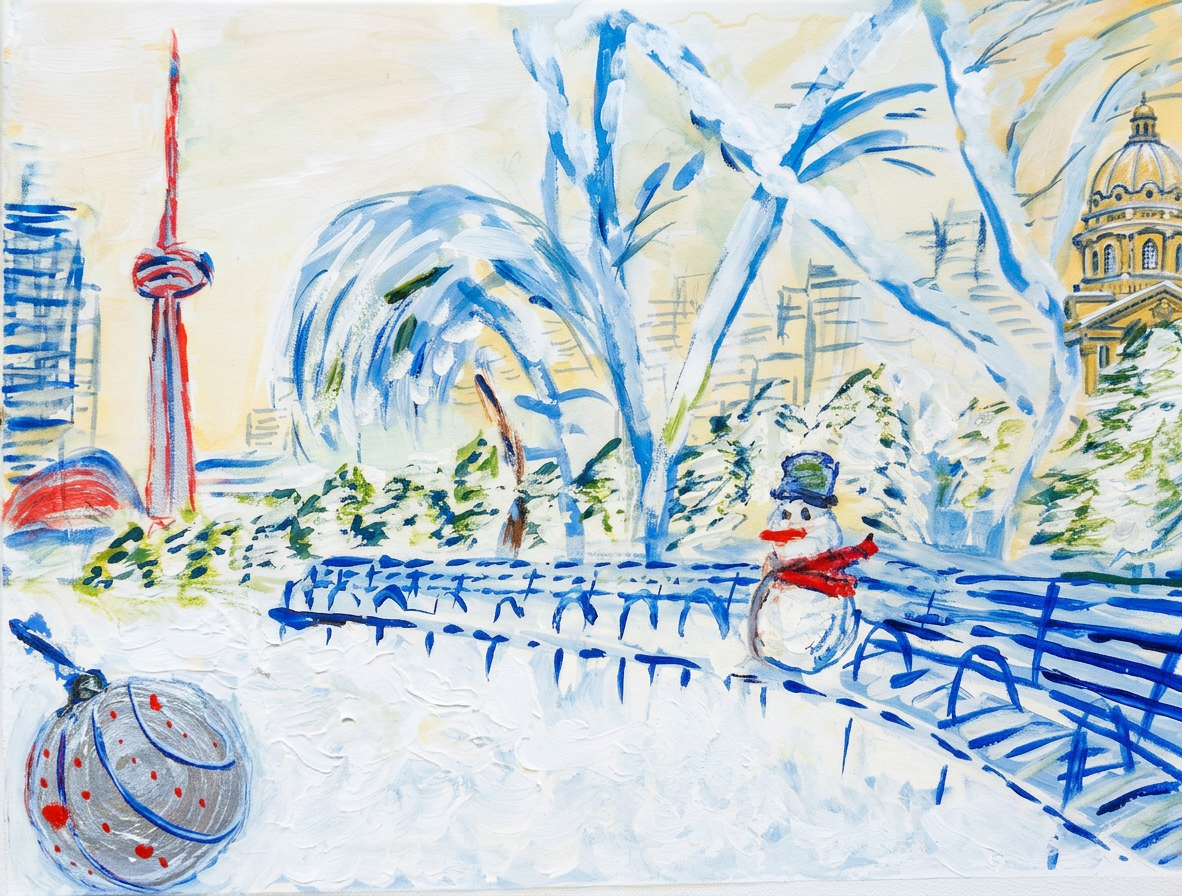
Yet another Toronto Music Garden watercolor! Featuring: one lonesome snowman, striking a philosophical pose with the CN Tower as his existential backdrop, and a shimmering silver Christmas ball judging his life choices. This was painted during a winter when Toronto actually got snow—yes, that rare, mythical phenomenon. Spoiler: snow doesn’t usually crash this far south near Ontario lake. When it does, locals act like they’ve discovered a new planet.

Or maybe it was a family having the time of their lives, engaged in the ancient tradition of hurling snowballs at each other and collaborating on a frosty monument to their own architectural ambitions.

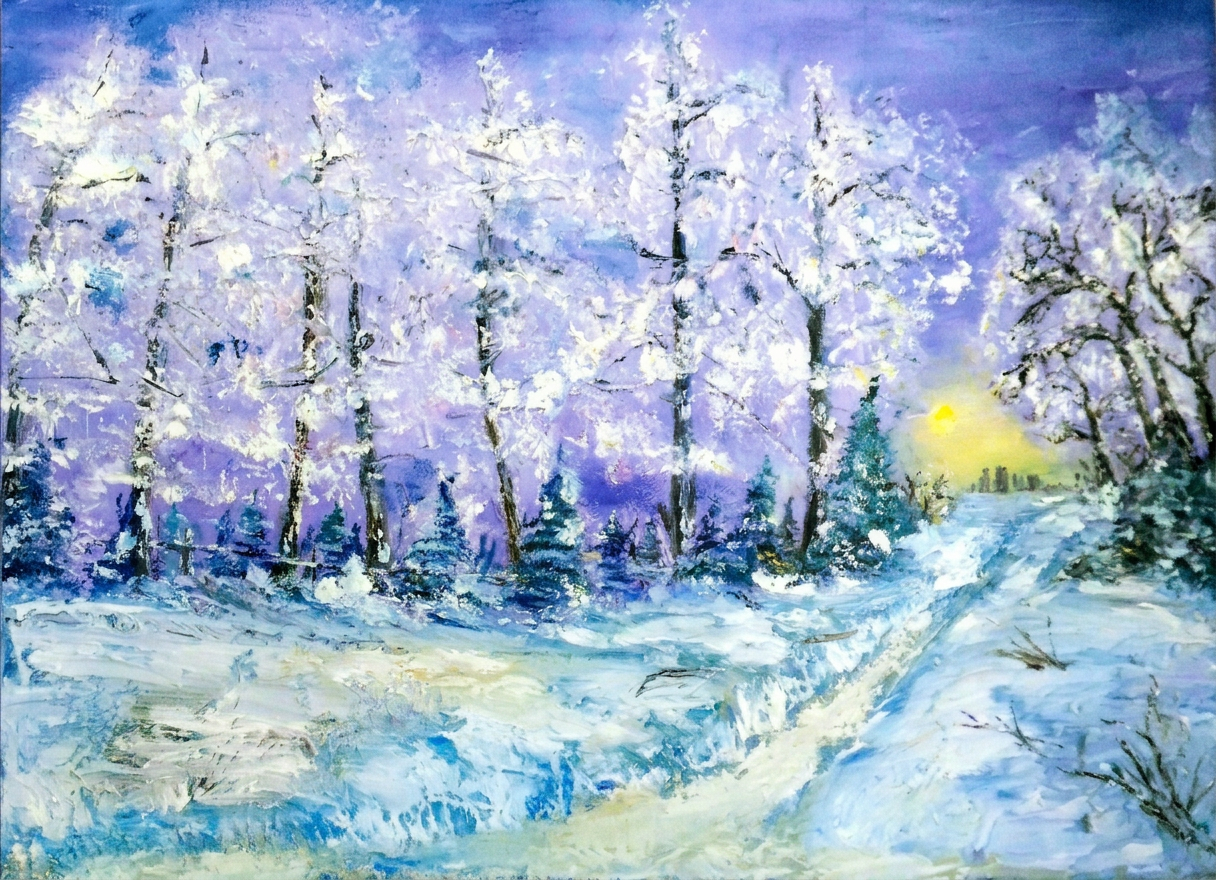
Behold: A breathtakingly frosty twilight of downtown Toronto—complete with the Financial district’s fortress of high-risers, a cameo by the CN Tower, and Thompson Hall photobombing the party. I even threw in some gold powder because subtlety is overrated.
Gold dust included. You’re welcome.
Toronto in winter. Beautiful. Cold. Very cold.
Holiday vibes, zero heating bills pictured.

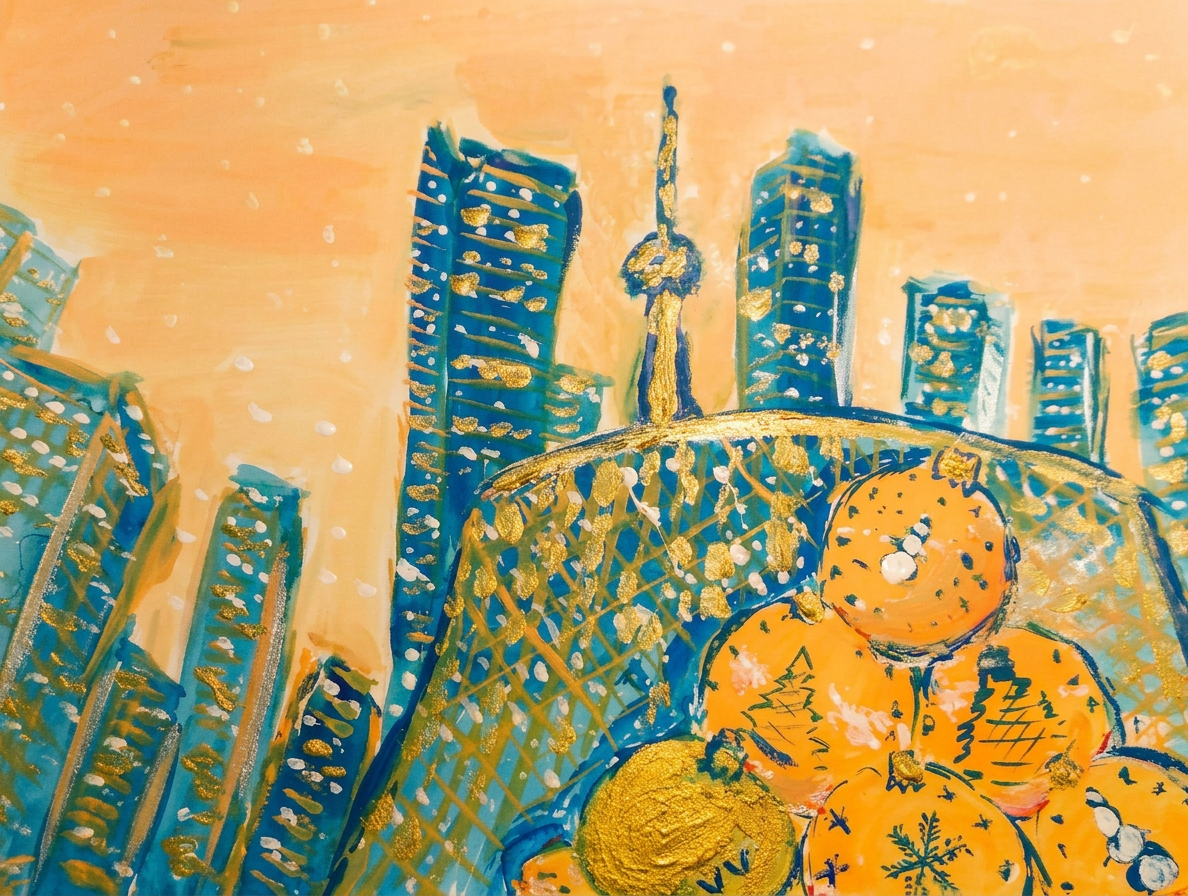
Gold fantasy extravaganza featuring the CN Tower, Thompson Hall, and Christmas balls so large they probably require their own zip codes.

Romantic. Festive. Definitely not freezing.

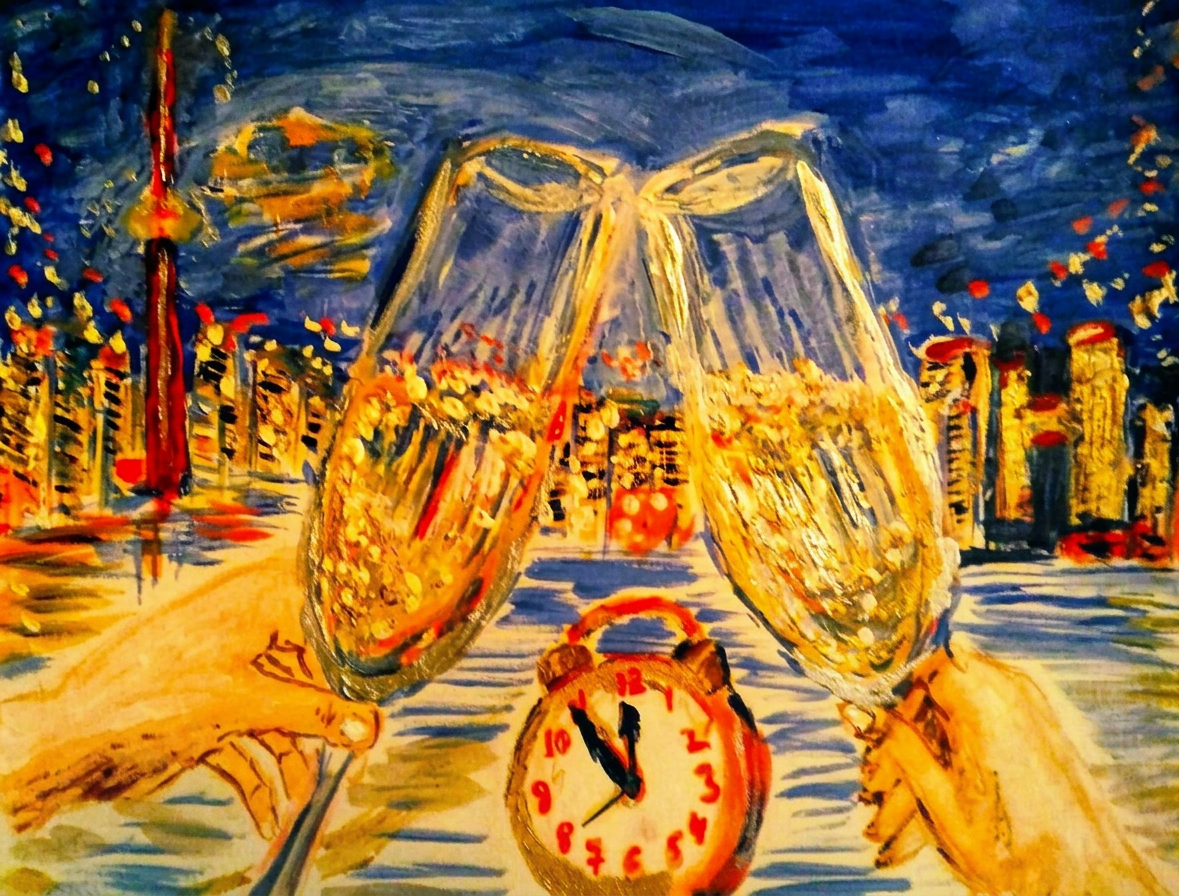
The romantic holiday painting with the beautiful night view of Toronto, featuring cheerful downtown during the holiday season. Clock counts down minutes to the New Year, Champagne is ready.

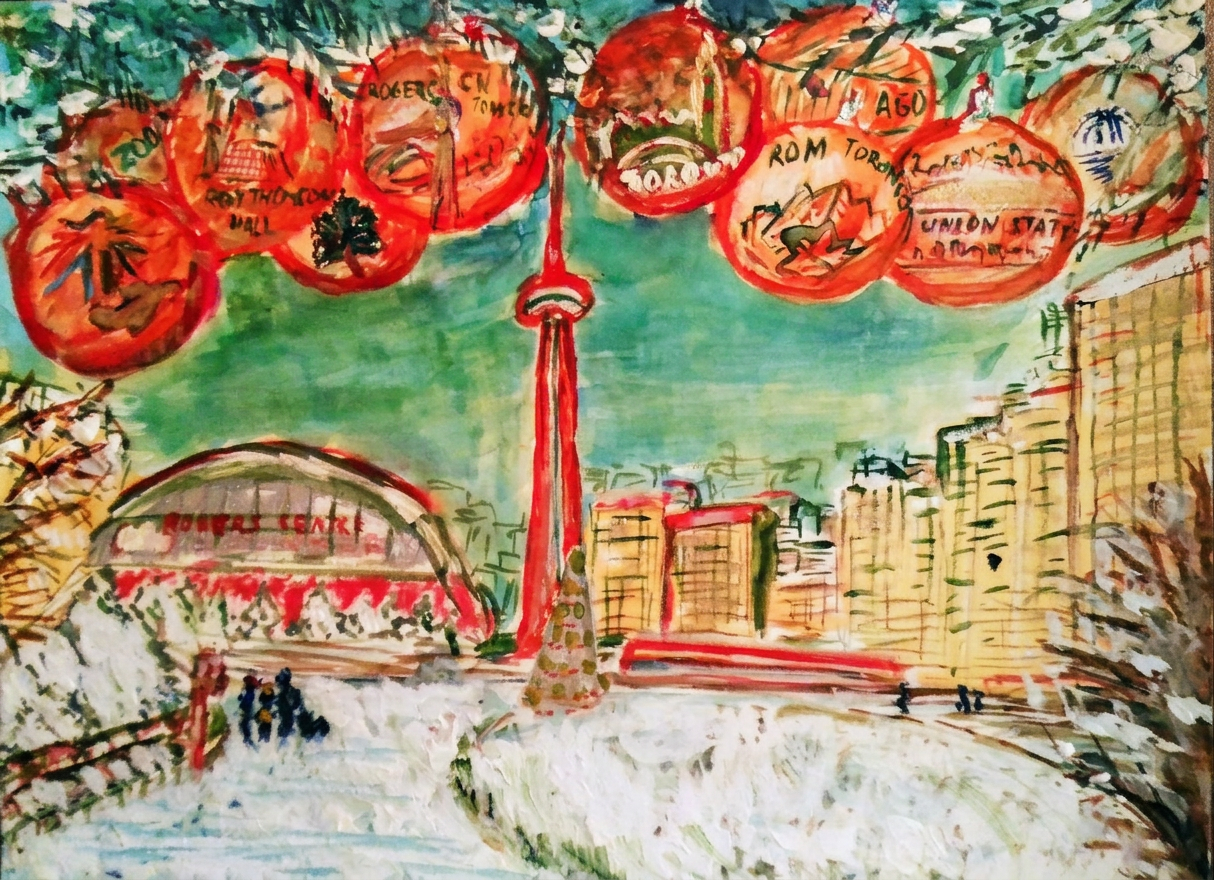
…and winter sunset skyline of Toronto downtown with CN Tower and Rogers centre. My dream shows lots of Christmas balls up in the air with my favorite places in Toronto – CN Tower, Rogers centre, Zoo, ROM Museum, Thompson Hall, Union station, AGO Museum, Pearson airport balls. Everybody can find their interesting places and buildings in the city. Watercolour painting with the landmarks and museums  of the City on the Christmas balls, impressionism

Blue hour. Deep thoughts. Frozen toes.

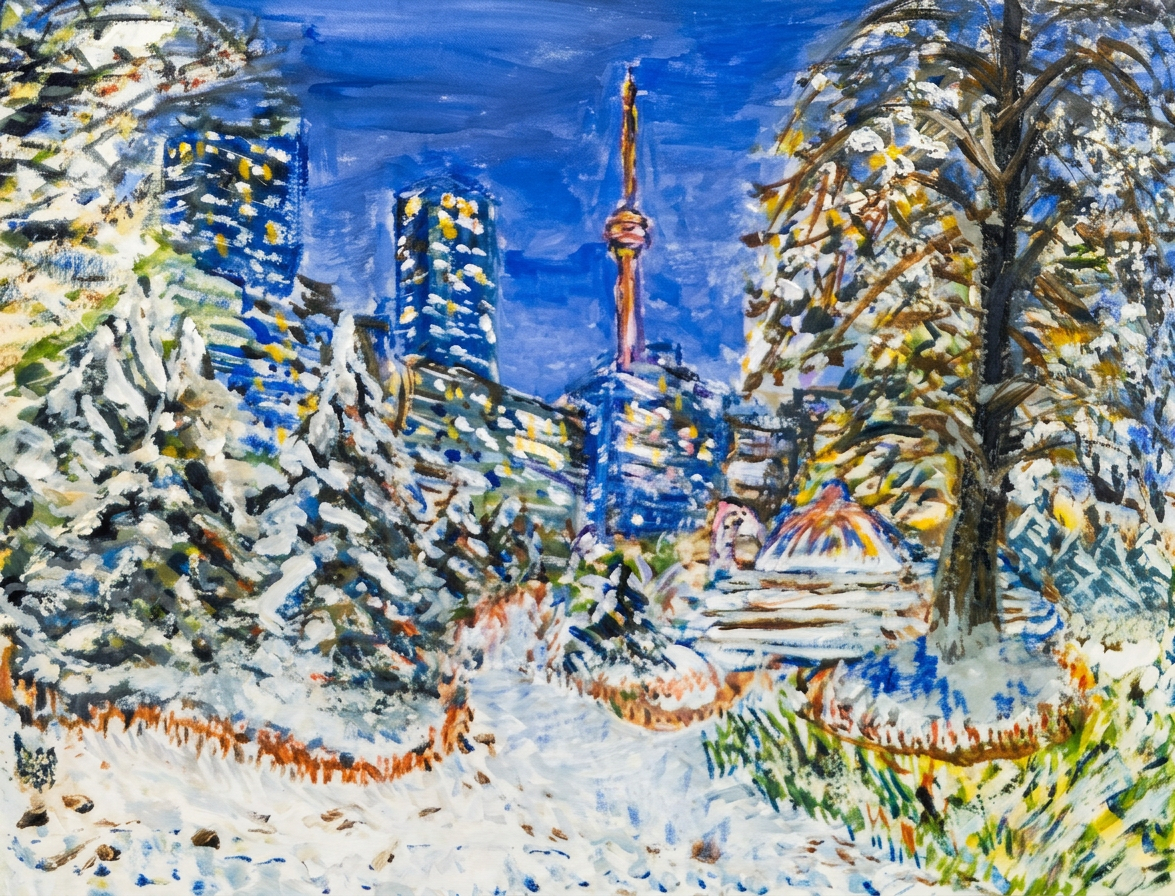
The Toronto Music Garden at night, now in moody blue. Very brooding. Very mysterious. Very “I’m contemplating why I’m standing outside in the snow.”

The snowman has seen things. He stares into the void.

Fingers crossed that my Toronto posts successfully convince you that this city is beautiful and welcoming! (The winter part is negotiable.)

Bon voyage! Until the next adventure :) Stay healthy, stay warm, stay away from icy patches.

All paintings belong to the author. No image is to be copied without permission. (Yes, I’m watching.)

Tools used for my painting: Watercolour by Charvin and Van Gogh brands (yes, THE Van Gogh—no big deal), Derwent watercolour pencils that cost more than my rent, and Faber Castell artist pens for the details. Paper by Strathmore Watercolour and Mixed Media albums, 15×20 cm (6×8 in.) – perfect for when you want your masterpieces portable-sized.

← Back

Thank you for your response. ✨

My Toronto. Stay home and Urban sketching. Travel and Art. Music Garden, downtown. Part 9

ArtTravel

Welcome to the grand finale of my daily “travel and art” expedition through my home city Toronto—specifically October, when the weather couldn’t decide if it was summer or fall and everyone just wore a hoodie with the faint hope they’d covered all their bases. This post is about my neighborhood and that delightful little oasis called the Music Garden, where I pretend I’m culturally sophisticated when really I just wanted a place to sketch away from distracting squirrels.

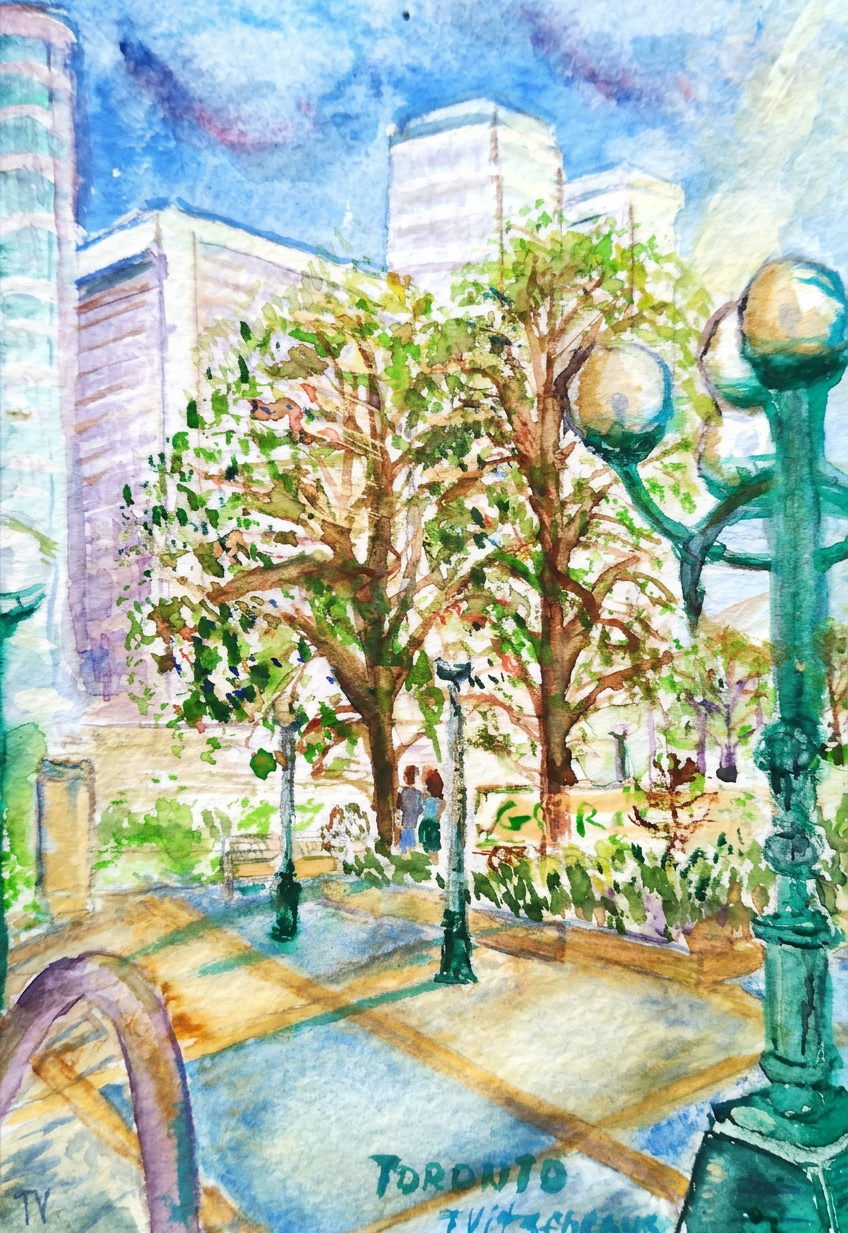
Yes, that lamp is judging you.

The current unusual year with #stayhome and #lockdown is giving me the “opportunity” (read: forced chance) to discover the bright and friendly place I live in. Turns out when you can’t leave your city, you get really creative about appreciating it. Who knew?

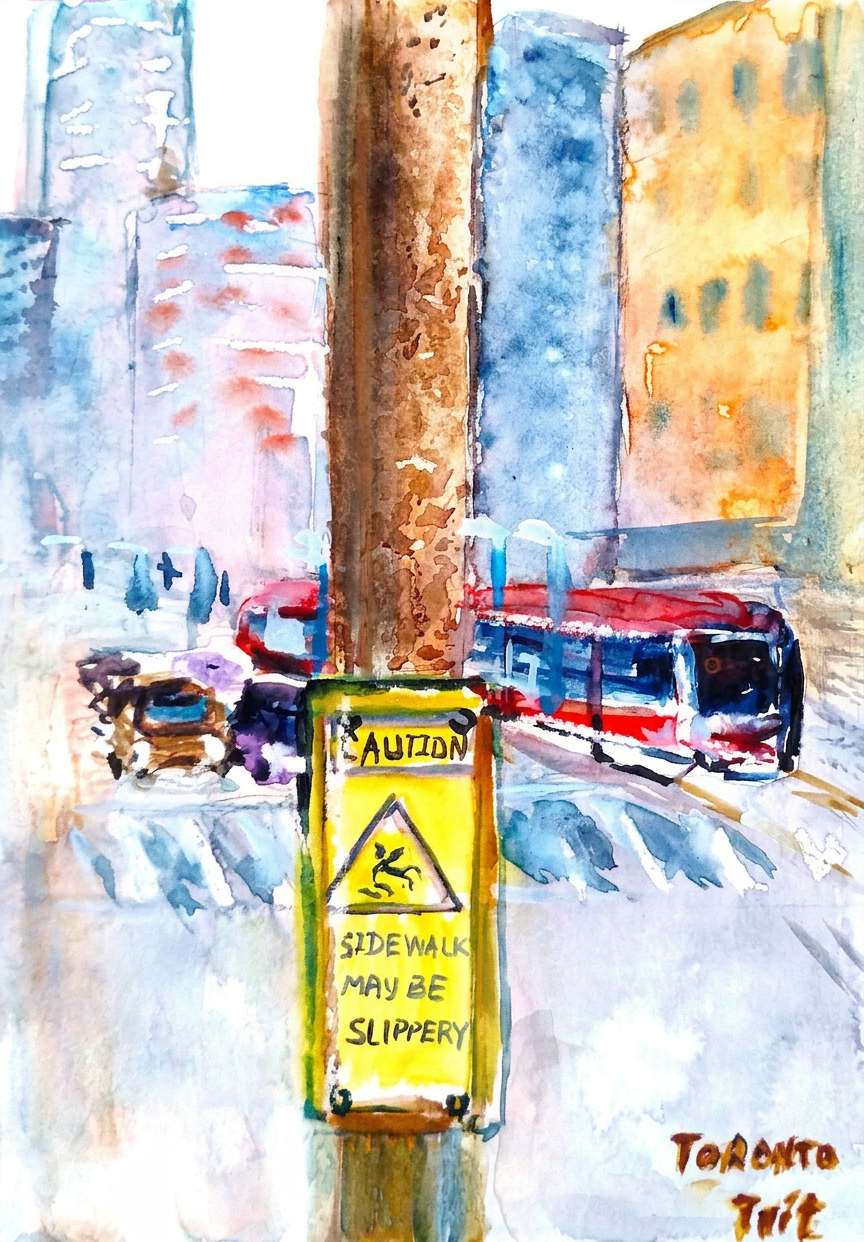
The tram that never waited for anyone.

This painting is mostly for fun :) Honestly, the main subject is that bright yellow street sign screaming “Sidewalk maybe slippery” at the pedestrians—because nothing says “artistic endeavor” like immortalizing municipal warnings in watercolor. I may or may not have laughed while painting it.

I used to trudge this way every morning to my office like a regular working human. Not this year! Almost all locals are now professional Zoom dwellers, except for our essential and frontline workers—thank you, seriously! This particular bridge? It’s on Spadina avenue at Front street, where I stand looking artistically contemplative while secretly plotting which coffee shop to revisit.

Nature doing its best impression of a painting.
Still prettier than my apartment.

The Music Garden is still blooming, stubbornly refusing to acknowledge that autumn exists. Apparently Mother Nature didn’t get the memo about the seasonal calendar this year, which honestly? Respect.

The garden, unbothered, thriving, iconic.

My fall “travel and art” adventure in October’s Toronto has officially concluded. Turns out there are buckets of lovely places in and around the city if you’re brave enough to venture beyond your kitchen during a lockdown. (Spoiler: I was.)

High Park in fall. No filter needed — but I used one anyway.

I documented some of my daily sketches this month, capturing my “art office” in all its chaotic glory—you know, that corner where I pretend to look professional while surrounded by paint-stained brushes, mysterious crumbs, and at least three empty coffee cups. It’s organized chaos. Mostly chaos.

Bon voyage! Until the next adventure :) Stay healthy—and more importantly, stay creative!

All paintings belong to the author. No image is to be copied without permission. (Yes, I’m protective of my work. You would be too if you’d spent this much time not getting paid for it.)

Tools used for my painting: Watercolor by Charvin and Van Gogh (the fancy stuff that makes you feel fancy for approximately 0.5 seconds before you drip it on your sleeve). Derwent watercolor pencils and Faber Castell artist pens (because I like to mix media and confuse myself). Paper: Strathmore Watercolor and Mixed Media albums, 15×20 cm (6×8 in.)—perfect for when you want to create art but also maintain your sanity by keeping it to a manageable size.

← Back

Thank you for your response. ✨

My Toronto. Stay home and Urban sketching. Travel and Art. Weird statues-2. Part 7.

ArtTravel

Daily sketches in downtown Toronto with some funny sculptures. In this post I am adding 3 interesting sculptures and architecture that are located at one park, very convenient for the artists, locals and tourists:)

Dog Fountain at Berczy park. 2020 new reality. I saw some disposable masks on the sculptures of dogs. It is still one of the favorite meet point for friends in the city:) I added coolers of sour cream, tobacco and cappuccino to add warmth of the last days of the Indian summer. 

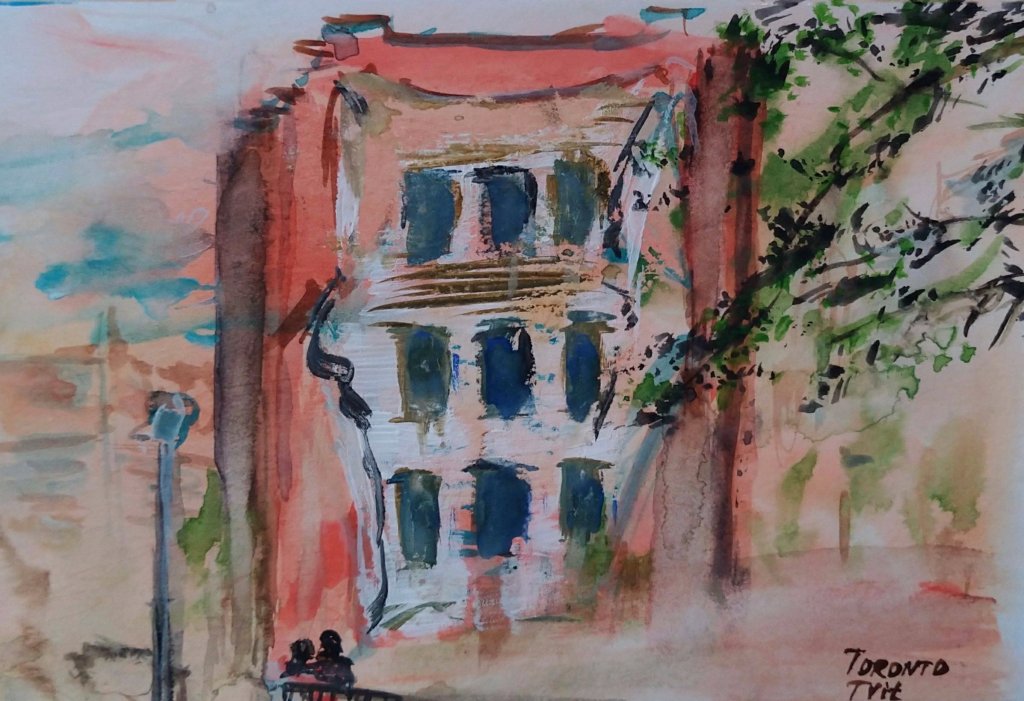
Toronto downtown beautiful Flatiron building by architector Derek Besant. It has a narrow angle from one side, but I like its facade on Berczy park, overlooking the square, like the wrapped edges of autumn leaves. I using colors salmon + rose + vanilla

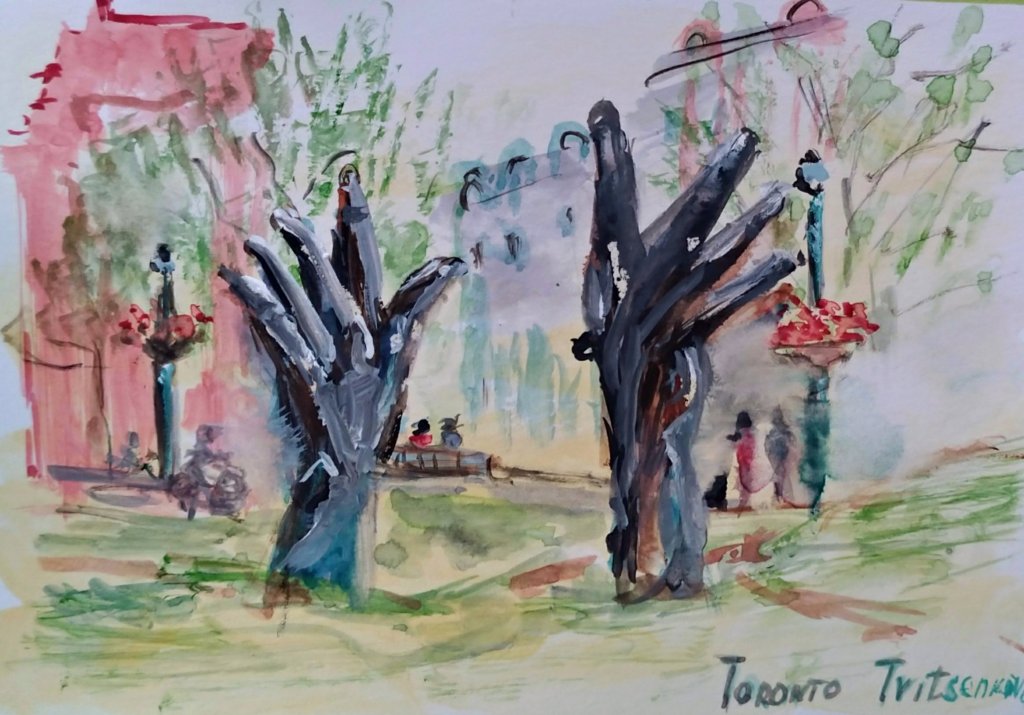
And another weird and fanciful sculpture of hands out of the ground. Maybe they are life-giving hands of the Earth?:) In my painting I used matte and very deep black with indigo, grass is an autumn shade of flax. The background is the peach-colored building Flatiron building at Berczy park.

Bon voyage! Until the next travel:)

All paintings belong to the author. No image is to be copied without permission

Tools used for my painting Watercolour used Charvin and Van Gogh brands, Derwent watercolour pencils and Faber Castell artist pens. Paper Strathmore Watercolour and Mixed Media albums, 15×20 cm (6×8 in.)

← Back

Thank you for your response. ✨