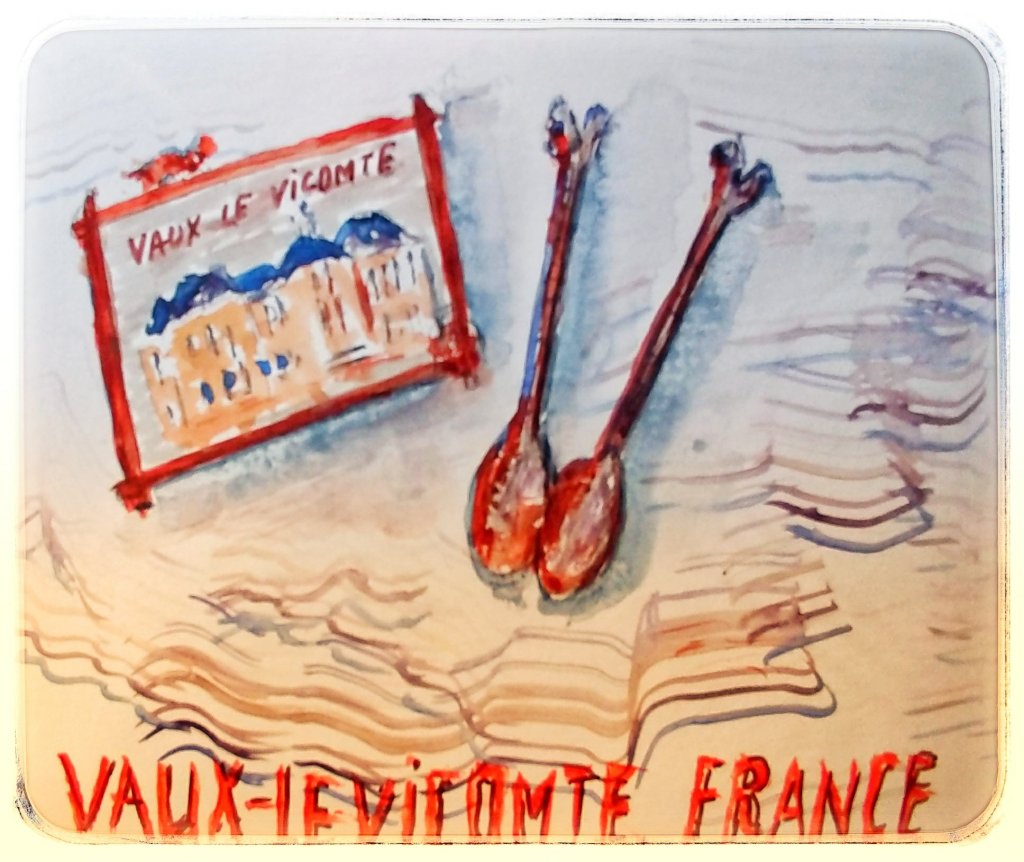
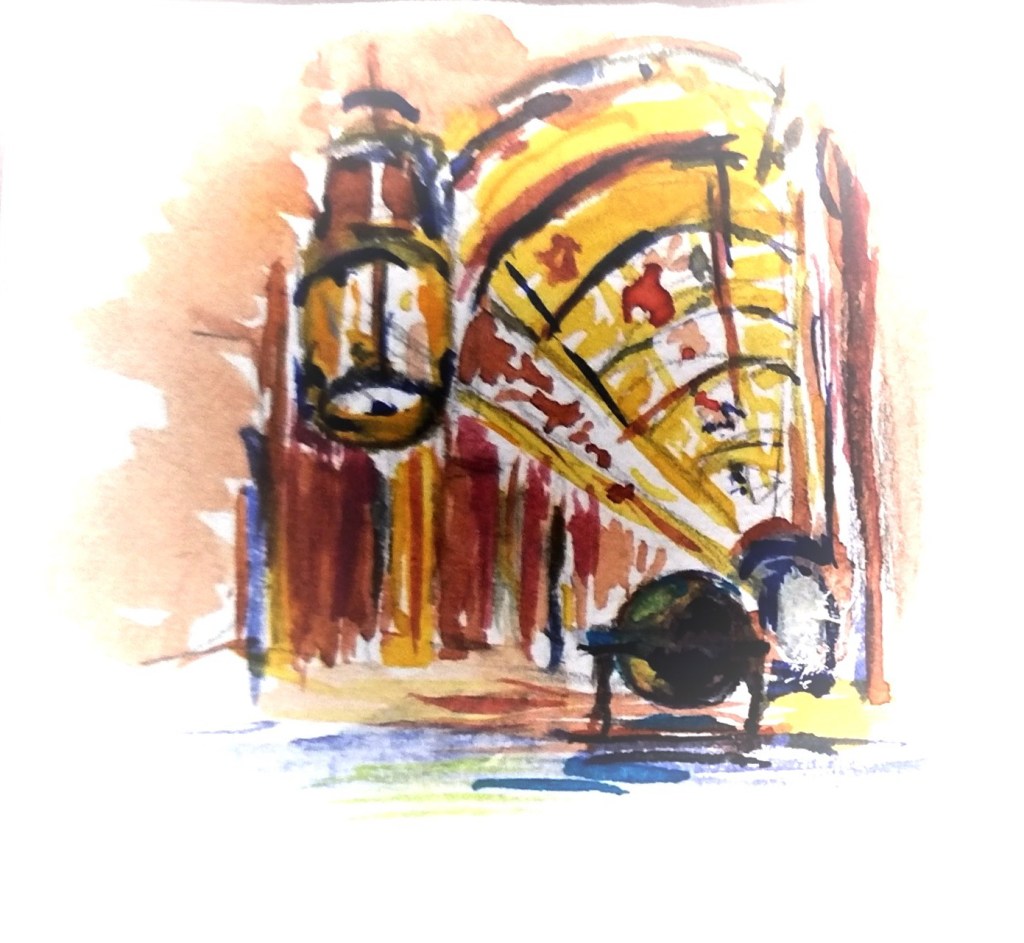
Still life and urban sketching. Because apparently, I can’t sit still OR leave my house without a sketchpad.
So Leonardo da Vinci’s Notebook told me something rather inconvenient: artists need to constantly find new things to paint or draw. (Thanks a lot, Leonardo—no pressure!) Thus began my endless quest to think outside the box that I’m apparently always painting inside. This summer, I had a minor epiphany: watercolor graphic technique is NOT just fancy coloring books. Shocking, I know. It was a small discovery that spiraled into full-blown artistic obsession, and now here we are.
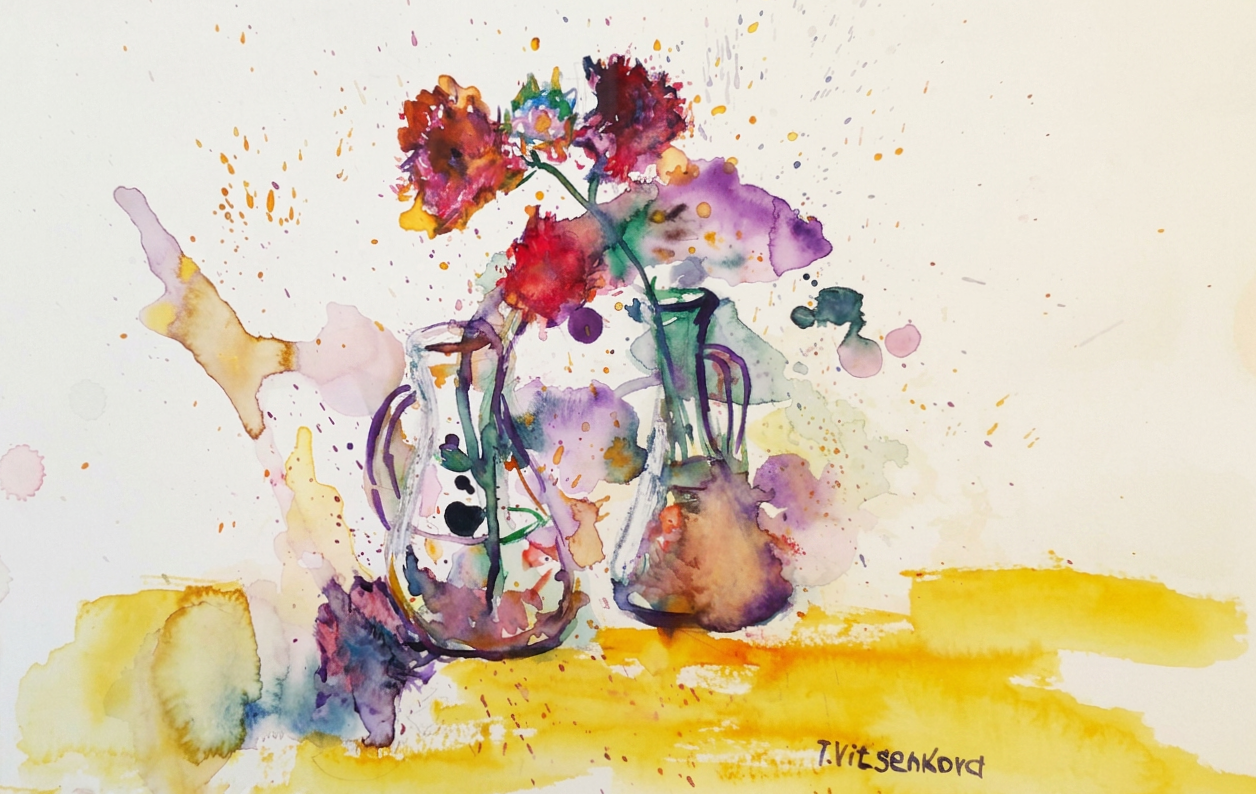
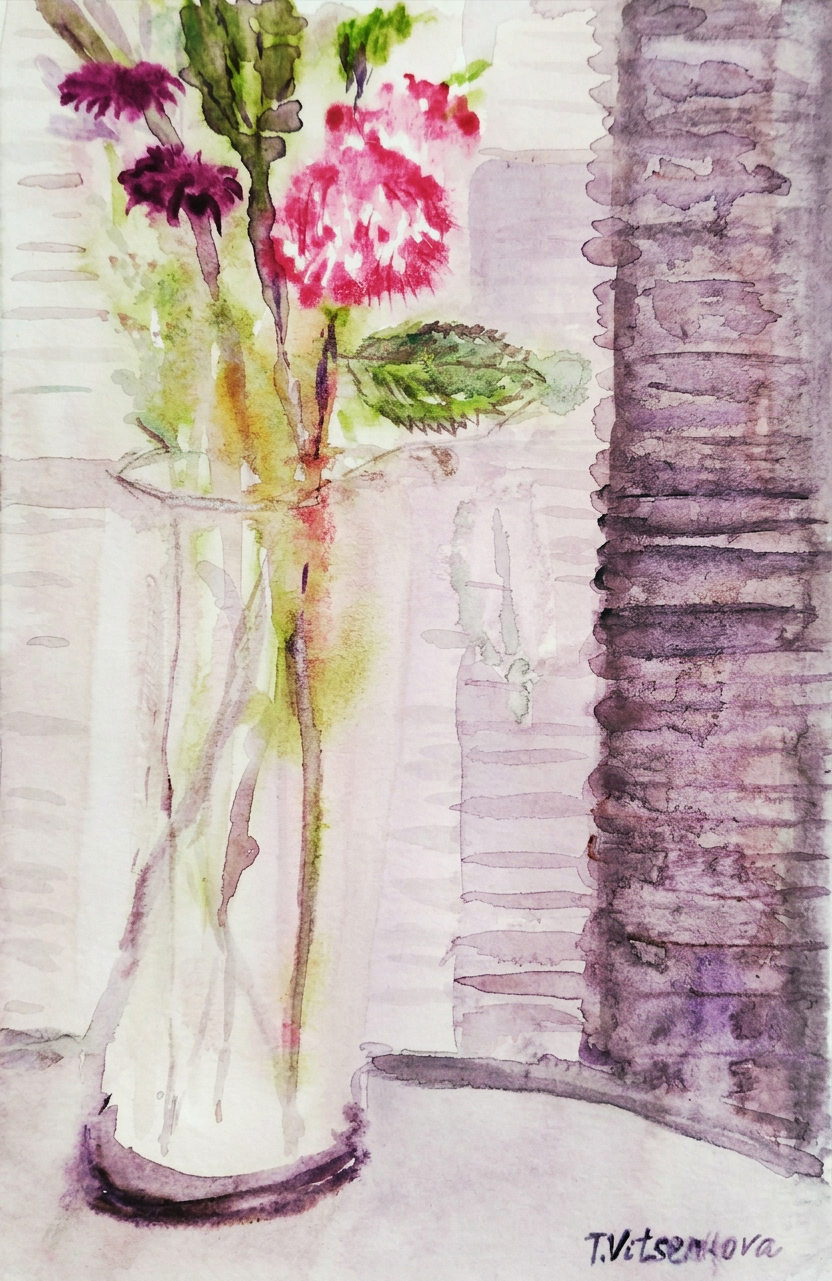
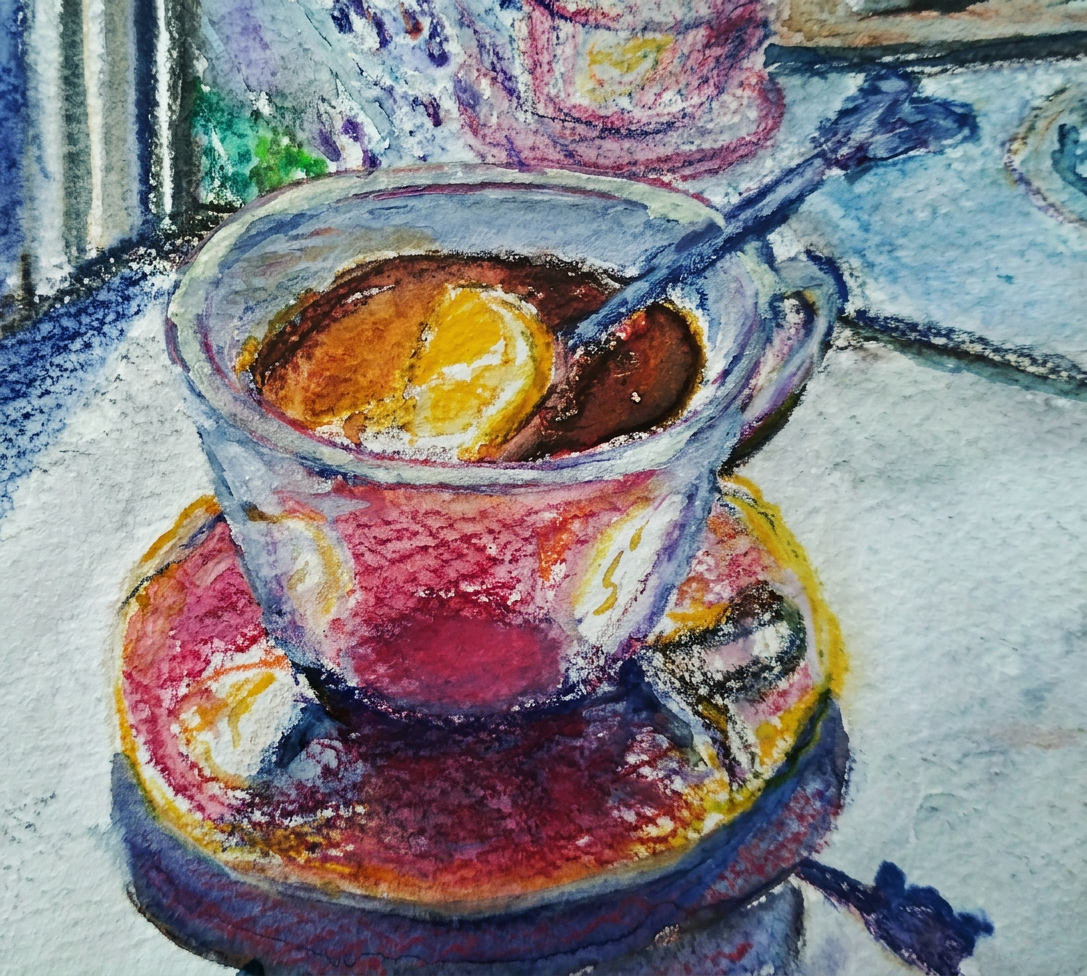
My still life muse? Bright reddish peonies, obviously. I arranged them artfully on my treasured Leonardo da Vinci book, added my glasses (for the intellectual look), threw in a cup of cappuccino (for the vibes), and created what I can only describe as a masterpiece of self-indulgence. Voilà! Another watercolor and ink painting in my beloved impressionist style was born.
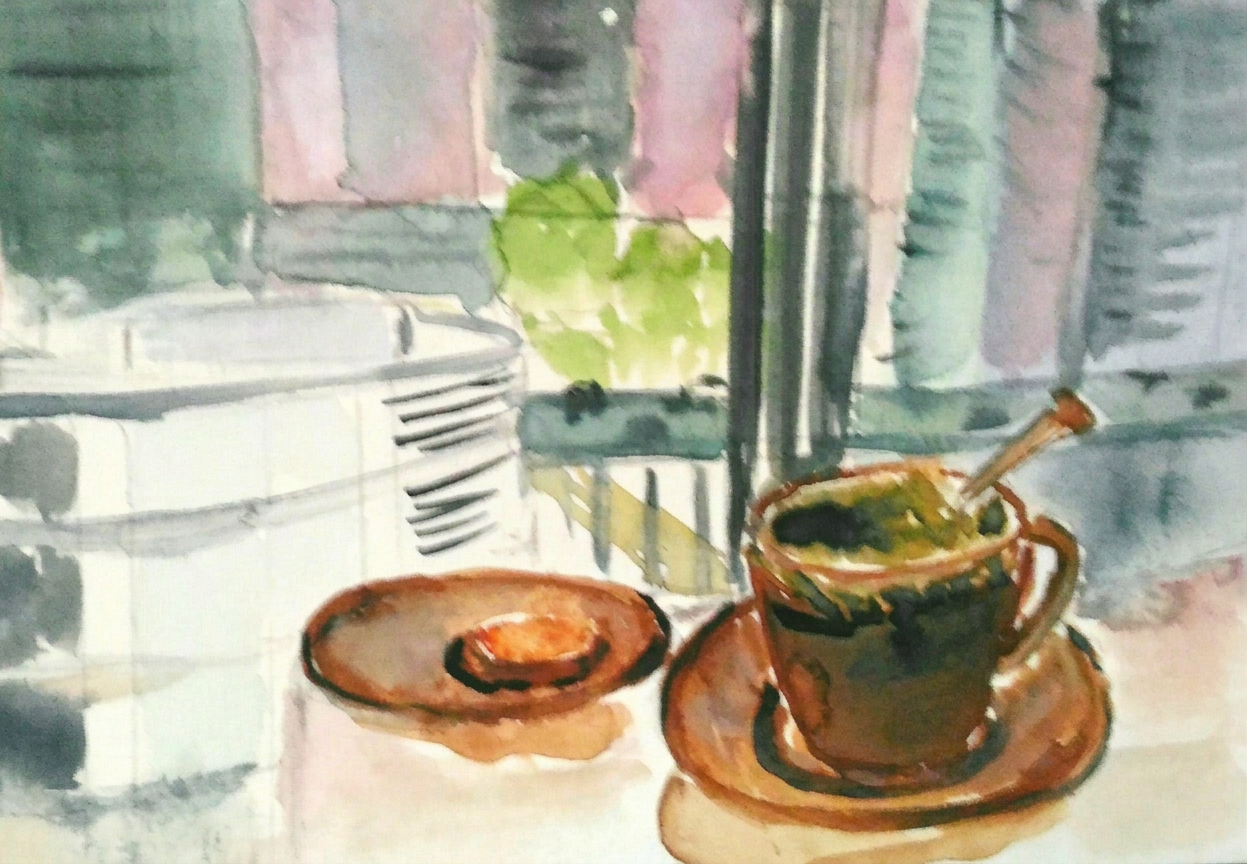
Watercolor fantasy. Cappuccino and red peonies and a book
Just imagine it: a warm Mediterranean evening, you’re wandering charming cobblestone streets, and voila—red and pink peonies spill from a straw basket on some picturesque wood door or window. That’s watercolor and ink, my friend. That’s impressionism at its finest. That’s also my elaborate fantasy about our future travels to southern France, Italy, or possibly Greece (I’m not picky when it comes to vacation dreams). Who knows where wanderlust will take us? :)
Summer flower fantasy.
Shout-out to my daughter for the phenomenal gift: Leonardo’s Notebook. This book is basically the gift that keeps on giving—centuries-old wisdom from a guy who was basically good at everything. It’s like having a Renaissance master constantly looking over your shoulder with 500-year-old advice. Terrifying and inspiring in equal measure.
Bon voyage! Until the next adventure awaits! Stay healthy and hydrated (your skin will thank you when you’re sketching in the Mediterranean sun).
All paintings belong to the author. Seriously, don’t copy them. I mean it. My lawyer says I have to say that. Just go make your own masterpiece!
Tools used for my painting: Watercolors by Charvin and Van Gogh (because apparently only the best will do for this artist’s delusions). Pastels by GrayPas Expressionist (the feisty cousin of regular pastels). Derwent watercolor pencils and Faber Castell artist pens (because one type of pen is never enough). Paper: Strathmore Watercolor and Mixed Media albums in that perfect 15×20 cm (6×8 inch) size—not too big, not too small, just right for my control-freak tendencies.
Le Cannet: Home of the Bonnard Museum and Artfully Avoiding Cannes’ Crowds!
And then on another direction, the second trip was separate. It was a one-day independent journey from Antibes to Cannes and Le Cannet.
Provence is famous for its art museums in every small town or village. Le Cannet is a small suburb of Cannes. In North America this suburb would be part of a big city, for example Greater Toronto or Greater Vancouver.
The Central Train Station in Cannes is located in the heart of the city. To get there, take the bus # Bus Palm Express n°1. Within 10 minutes, you will reach Le Cannet famous museum Bonnard. Location: 16 boulevard Sadi Carnot, 06110 Le Cannet
House-museum artist Bonnard. Bonnard lived in Le Cannet for 25 years and created his Provencal paintings, saturated with sunlight, light and air. We were waiting for an exhibition that just opened during our vacation in Antibes. The temporary exhibition of collection Nahmad (De L’Impressionisme À Bonnard et Picasso) showcased the Impressionist artists. It organically blended into the permanent collection of Bonnard museum.
Cannes’ famous Red Carpet
We made a delightful pit stop in the glamorous city of Cannes on our journey back to Antibes. The famous film festival is very common!
We were all set to strut our stuff on Cannes’ famous Red Carpet. We perfected our best “I just won an Oscar” walk. It was finished with invisible awards and imaginary paparazzi trailing our every move!
Hand prints of a celebrity set into the pavement, commemorating their visit to the Cannes Film Festival.
In my picture, the celebrities’ prints shoot up to the sky. They resemble a really ambitious road vying for a spot in a cloud competition!
A watercolor sketch capturing the scenic views of Cannes, featuring a charming train and vibrant beach landscape.
Transportation: Our Hilarious Misadventures and Tips for Traveling in Provence
Embarking on my inaugural journey through the enchanting region of Provence was a delightful escapade fraught with unexpected adventures. The warmth and hospitality of the local residents, as well as fellow travelers, provided comfort during moments of disorientation in this picturesque landscape. My encounters with the complexities of train travel, compounded by my limited proficiency in the French language, led to a series of amusing misadventures, including missed connections and unforeseen challenges.
Yet, amidst the chaos, I discovered clever local transportation tips that may serve to conserve both time and money for future travelers. Intriguingly, these transportation mishaps ultimately enriched my experience, transforming potential frustrations into cherished memories that added a unique charm to my journey. :)
The topography of the area is a mountainous terrain. If you do not want to rent a car in a foreign country, there are a few alternatives to driving.
The first choice is the train. They are convenient, quick, comfortable, inexpensive, and all trains have an efficient schedules with small gaps in between 2 trains. For example, from Nice to Grasse the train’s cost was 10 Euros (2019). But, this choice has a disadvantage that you rarely can get to see small towns by trains.
The second choice is the bus. The advantage of buses is their routes reach even the smallest mountain towns. This is the cheapest choice. The inconvenience is that sometimes you have to take a transfer between inter regional buses and local city’s buses. Most importantly, the bus trip will be longer than any train.
The third option is like a hybrid of the first two—or you can just go with a travel company. Do you want to hop between a bunch of quirky little mountain towns in just 1-2 days? Let the pros handle it. Those local or international tour operators are like your cool travel buddies. They are always ready for an adventure. (And they know where to find the best snacks). And hey, there’s something for you at the end of this post. You’ll find a link to Viator. It’s your ticket to hilarity wrapped in sightseeing!
I absolutely adore my one-day trips to the French Riviera—it’s like speed-dating with beautiful landscapes! I dash around, sketching everything from tiny crannies to towering giants. I try to look like a sophisticated artist, not just some tourist with a fancy penciland watercolor palette and brush:)
Join me on this thrilling adventure. Every moment holds the potential to uplift your spirit. It can bring joy to your life!
Tools used for my painting Watercolour used Charvin and Van Gogh brands, Derwent Watercolour pencils and Faber Castell artist pens. Paper Strathmore Watercolour and Mixed Media albums, 15×20 cm (6×8 in.)
Bon voyage! Until the next travel:)
You are welcome to visit my personal website pages. There, you can find out more about the artwork I am offering in oil and watercolor paintings. You can buy canvas prints, framed prints, and more artwork.
How to get from Antibes to Le Mougins. Take Train to Cannes, then bus to Mougins. Lines 25-27. Cannes – Ranguin <> Gare Routière des Messugues <> Collège Eganaude – Sophia Antipolis, par Mougins
How to get from Antibes to Le Cannet . Take train Antibes to Cannes, bus #1 and 4(?), 15 min =10 stops to Musee Bonnard, Bus Palm’Express n°1, arrêt « Mairie du Cannet
This was amazing little town with an unusual legend.
Just imaging, you are jauntily wandering through the medieval streets. Also trying not to trip over the cobblestones that probably date back to when dinosaurs roamed the Earth. Meanwhile, admiring the stone facades that looked like they had more stories than my grandma. Actually, this is my story that happens with everyone while traveling in a medieval town, right?:)
And then OMG, the flowers! They were so fragrant that I half expected them to start singing show tunes! It was truly an unexpected adventure in one of the prettiest settlements in France. The buildings are old, but the charm is timeless! :)
As promised, about the local legend. It says that the English Queen Victoria was riding on a donkey with her staff to the town. After this uneasy journey, she tired and ordered a road to be built to this tallest town. Thank you! the English Queen Victoria wanted everyone to see the beauties of this place. And it was completed, so now you can enjoy them too. The main square of the town is named after the Queen, with no doubt. Everybody loves this legend.
A charming watercolor sketch of Tourrettes-sur-Loup, showcasing the town’s vibrant ice cream and flower motifs characteristic of Provence.
Another Legend about Ice cream while you are exploring the town.
Ice cream transcends the realm of mere treats; it embodies the town’s most cherished secret. Yes, I found it while eating the violet rich ice cream.
As she dances around you, the air fills with the delightful aroma of freshly churned ice cream. It draws forth smiles and laughter from everyone nearby. A simple shout turns into a memorable experience that sugary dreams are made of! Even years later, I still remember this taste and scent.
As you walk around town, you will notice violets everywhere. They are painted on the asphalt and in the ice cream. Violet ice cream was a pleasant discovery for me. It’s worth coming to this mountainous town just for its sake!
The Wobbly Wonders of Cascades du Saut du Loup: Where Waterfalls Take a Dive!
The next stop was the stunning Mountain waterfalls known as Cascades du Saut du Loup. The name comes from the French language. It translates to the mouth of the wolf. I found it’s quite scary name.
This evokes an air of mystery and intrigue surrounding this natural wonder. As we approached the cascades, the sound of rushing water grew louder, filling the air with a sense of anticipation.
The scene was surrounded by lush greenery and rocky cliffs. It was breathtaking, with glistening water tumbling down the steep slopes. This created a mesmerizing spectacle. This hidden gem is more than just a beautiful sight. It holds an important place in local folklore. Tales of wolves and their enchanting habitat add to the allure of this captivating location. I think that every waterfalls has its own legends, do you agree with it?
I don’t know what mouth of a wolf it is. Now this is my secret. I personally saw a huge muzzle of an orangutan in the rocks. Everyone in our group was laughing from my imagination:)
Gourdon vs. Gordes:
As we continued our travel, the next stop was Gordon. It is the highest town of our trip. Its magnificent castle is perched 750 meters above sea level on rocks.
Watercolor sketch of Gourdon Castle in Provence, showcasing the lush landscapes of the region.
A little comment about the tour. Part of our goal for this trip was to see Provencal lavender fields. Our tour operator was also our driver and a cheerful guide.
Meanwhile, he piped up from the passenger seat, “Well, there’s a little hitch in our giddy-up!” Apparently, it would take another hour to reach the lavender fields from this town. Perfect! This was just enough time for him to regale her with his latest theory. He believed a goat named Jean-Claude should have been our co-pilot.
“Just think about it,” he said with a grin. “He’d be the best navigator. Frankly, I’d trust a goat over a GPS any day!” As they continued their winding journey, the fragrant scent of lavender teased their senses. It promised that the true adventure was only just beginning.
Gourdon and Gordes are two different cities. Ops, my bad, I did not see on this day any lavenders’ fields. So, please take my advice, enjoy your day , even you were expecting other views.
Both cities are nestled in the picturesque hills of Provence. Yet, they are distinct places rich in their own unique charm and character.
The tour company made a comical error. They mixed them up. This led to a day filled with unexpected adventures and humorous anecdotes. As the day unfolded, we constantly wondered how the mix-up could have happened. This curiosity gave us an amusing reason to return. We wanted to explore the beautiful regions more thoroughly.
It became our running joke throughout this long day. The joke lightened the mood and brought us closer together. This happened as we navigated the winding roads. We were diligently searching for the iconic lavender bushes. We were also looking for even small patches of planted lavender. Provence is so famous for this.
Every time we stumbled upon anything resembling those fragrant fields, we kept saying, “Well, here’s lavender!” We burst into laughter. What could have been an inconvenience turned into a delightful memory. It’s a memory that we’ll cherish for years to come.
The Lavender Showdown – Who Will Win the Name Game?
The locals told us that in earlier years the lavender fields really bloomed vibrantly around the town. This created a stunning visual spectacle. It attracted visitors from far and wide.
The intoxicating fragrance of the lavender filled the air, making it a beloved destination for tourists and locals alike. One unfortunate year, a particularly harsh cold winter struck. The lavender bushes not survive the frigid temperatures that followed. The once-thriving fields, which had been a source of pride and beauty for the community, fell silent and barren.
After that, despite the people’s longing for the return of the lavender, they were not planted again. This decision left a void in the landscape deeply felt by everyone. It’s truly a pity to witness such a loss of natural beauty and charm.
A watercolor sketch depicting the scenic beauty of Gourdon, France, showcasing its charming architecture and lavender foliage.
The mountain road is serpentine. It leads to mountain towns Gourdon and Tourrettes-sur-Loup. We passed through the medieval town. In the sky, we saw a cloud “goose”.
I will continue to post about one-day trips in Nice. Next up is Cannes and Le Cannet. I visited the famous museum of artist Bonnard. After all, who doesn’t want to admire the works of someone who painted like they were on a permanent vacation? More art, less sanity!
Tools used for my painting Watercolour used Charvin and Van Gogh brands, Derwent Watercolour pencils and Faber Castell artist pens. Paper Strathmore Watercolour and Mixed Media albums, 15×20 cm (6×8 in.)
A Sketching Journey Through Provence’s Artistic Towns. Urban sketching. Travel, Architecture and Art
Everything is in one bottle of flavor that brings together the image of a city or place.
Mougins: Where Art Galleries Outnumber Residents!
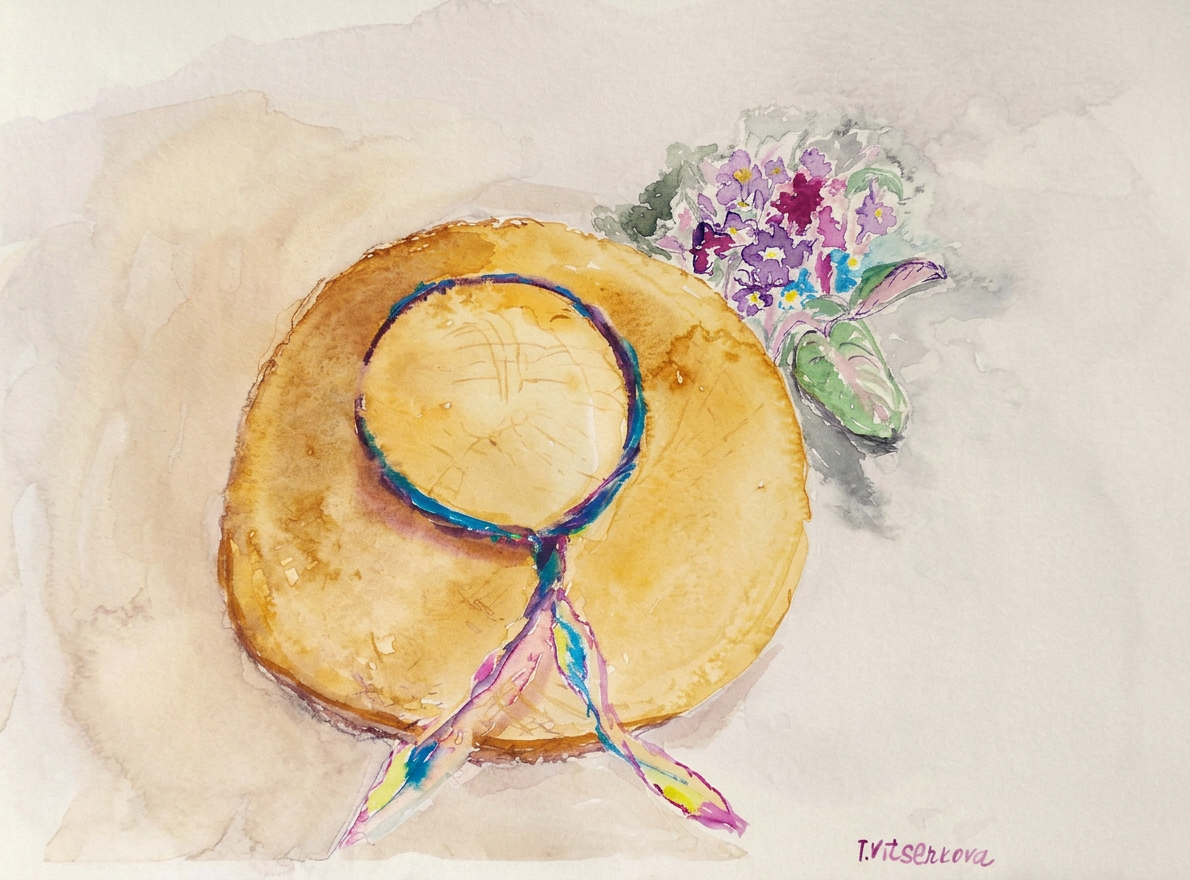
The next town we visited was Mougins, is a city of art galleries and artist’ workshops. On a small plaza, I saw a mysterious lady in a beautiful hat near the city’s legendary museum.
This is a serene sketch capturing a mysterious lady in a beautiful hat. It is set against the charming backdrop of Mougins. This town is known for its vibrant art scene.
The Art of Not Getting Bored at Mougins Museum!
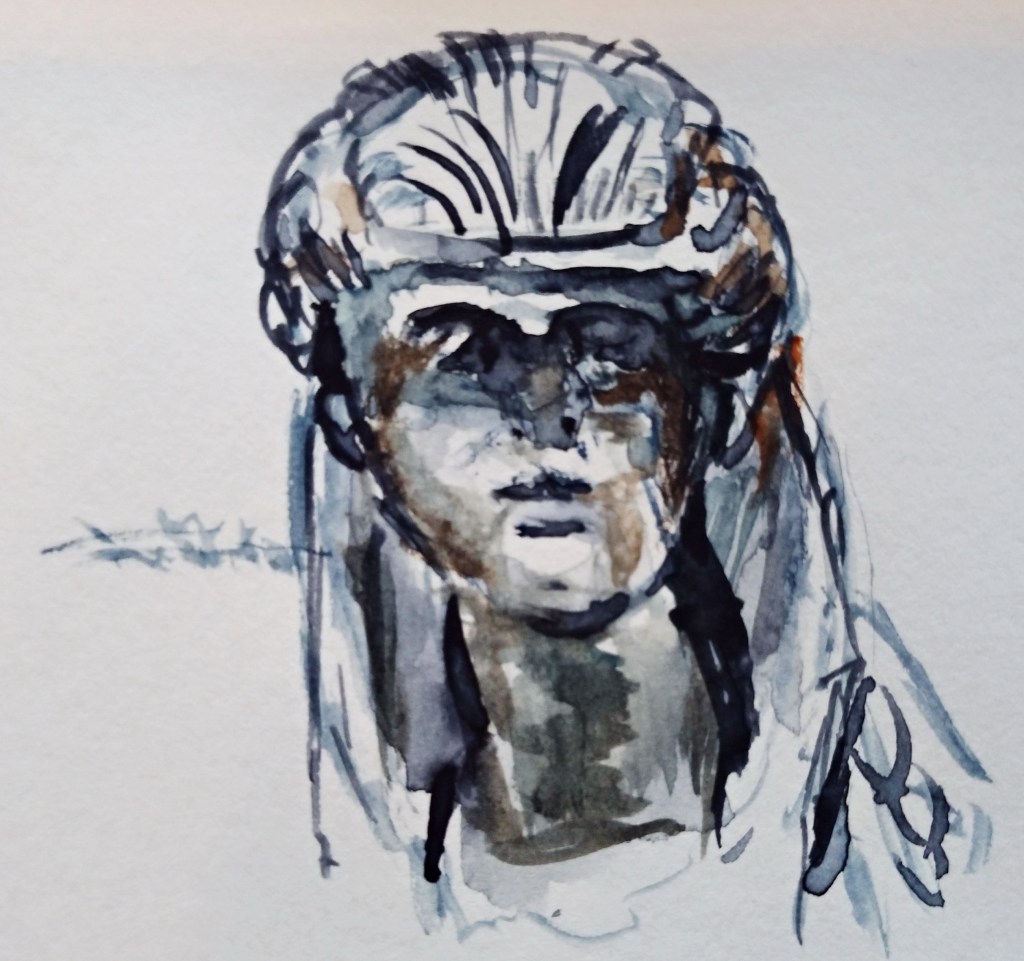
The city has a famous Mougins Museum of Classical Art. It is a private museum. The entrance costs 14 Euros (2019). It’s worth it. Address: 32 Rue Commandeur, Mougins. The Mougins museum has the world’s largest private collection of antic helmets. I never would have thought that there was such a variety of helmets.
A watercolor sketch of ancient helmets displayed at the Mougins Museum of Classical Art.
In the museum, the lighting was dark so my sketches show the overall impressions of the gloom. I like to watch museums’ visitors; it shows the general impression of direction of exhibits in museum. We visited the museum on Monday when there were no visitors so the whole museum was ours. I was surprised to see such a rich collection outside the Louvre or British Museums.
One of my artistic goals is to paint the combination of houses, people, cafe, streets, landscapes, food, Provencal ice creams.
Watercolor sketch depicting the charm of Mougins, Côte d’Azur, showcasing a cafe scene and the essence of local artistry.
On the way to the city, our tour operator mentioned an interesting annual festival. It is called the ‘International Gastronomy Festival of Mougins’ or ‘Les Étoiles de Mougins’.
The festival used to be an event that brought lots of tourists and media attention to the town of Mougins.
Effective this year, the decision was made to hold the festival in other cities around the world. Mougins’ Michelin chefs will be sent to the festival to show the culinary art of the city’s chefs. So, understandably, the residents of the city are disappointed and would like to return the tourists to their city. To get here, you can take a train/bus from Antibes or Nice. At the end of this post, I will give instructions on how to get to this town.
Watercolor sketch depicting the charming scenery of Moulin d’Opio, showcasing olive trees and lanterns, reminiscent of Van Gogh’s art.
Moulin d’Opio mill, with its olive grove
Our next visit was a small place at Moulin d’Opio mill, with its olive grove and a small store. When you visit this place, you will instantly remember Van Gogh’s painting. The owners are the fifth generation of this family. They were telling us how olive oil has been produced for many centuries. We tested different varieties of olives, French oil, tapenade on toast, and drinks.
Watercolor sketch depicting a charming scene from Moulin d’Opio, highlighting the olive trees and quaint architecture of the area.
I would never have thought that I would try olive oil on its own. It was an interesting experiment.
A watercolor illustration depicting olive oil, olives, and a traditional Provencal setting, reflecting the culinary heritage of the region.A watercolor sketch depicting olive oil tasting and the scenic landscape of Le Moulin d’Opio in Côte d’Azur.
Tools used for my painting Watercolour used Charvin and Van Gogh brands, Derwent Watercolour pencils and Faber Castell artist pens. Paper Strathmore Watercolour and Mixed Media albums, 15×20 cm (6×8 in.)
Bon voyage! Until the next travel:)
You are welcome to visit my personal website pages. There, you can find out more about the artwork I am offering in oil and watercolor paintings. You can buy canvas prints, framed prints, and more artwork.
How to get from Antibes to Le Mougins. Take Train to Cannes, then bus to Mougins. Lines 25-27. Cannes – Ranguin <> Gare Routière des Messugues <> Collège Eganaude – Sophia Antipolis, par Mougins
How to get from Antibes to Le Cannet . Take train Antibes to Cannes, bus #1 and 4(?), 15 min =10 stops to Musee Bonnard, Bus Palm’Express n°1, arrêt « Mairie du Cannet
How to bring more joy to your vacation in the south of France
In this post I would like to talk about some one-day trips from Antibes or Nice. For me, sitting in one place and swimming in the sea is fine for a couple of days. I enjoy sunny beaches and cuisine, but then I need more. Provencal cities are very close to each other. They are rich in history, art, and architecture. It would be a “crime” not to visit some of the local small towns in the neighborhood.
Vibrant Provencal ceramic tableware showcasing the rich colors of handmade plates from the South of France.
Exploring Art and Cuisine in Provence’s Charming Towns. Nice, France, one-day trips in Provence.
Provencal ceramic tableware with sun-drenched harmony of Provence in single handmade plates with vibrant colors found in the South of France and Italy
Illustration of the beautiful towns and landmarks around Provence, highlighting key locations like Grasse, Gourdon, and Tourrettes-sur-Loup.
Our Provencal Itinerary. This trip began in Nice and continued through Grasse, Mougins, and Moulins d’Opio. We also explored Waterfalle sur Loup, Tourrettes du Loup, and Gourdon.
We always travel by train or bus… but this time we decided to save our time and traveled with a tour operator.
The recently renovated Gare de Nice Ville, a welcoming gateway to the beautiful city of Nice.
Vibrant Provencal Experiences: From Grasse to Nice. Blue train brings people to Mediterranean Sea every day
Old Train station in Nice was recently renovated. It seems to be inviting visitors to join one of the most beautiful cities. Nice is conveniently located near the sea.
Our tour started from Nice. You can be picked up from your hotel by the tour operator. In our case we lived in Antibes. As a choice, a driver pick you up from your city, with an extra cost. We decided to take a train from Antibes to Nice. The journey took just 10 -15 minutes. It cost 4 Euros. It was another reason to visit Nice.
Illustration of a train station in Nice, capturing the blend of modern transportation and picturesque surroundings.
Grasse, the capital of perfumery
The 1st stop was in Grasse, the capital of perfumery. According to the legend of the 17th century, the city had many leather shops. The skin was soaked with flower essences to remove an unpleasant odour. Louis XIII and his beautiful wife, Anna of Austria, shared valuable secrets.
She was a Spanish-born queen. Thanks to them, some Spanish and Arab techniques for perfumed skins were revealed. So perfumes came to us from the city of Grasse. You want to visit Parfumerie Fragonard.
Watercolor painting depicting the vibrant atmosphere of a Provencal town, capturing colorful rooftops and the scenic beauty of the region.
The whole city is covered in flowers; a local perfume factory acquaints visitors with its spirits. During our last visit to Grasse several years ago, we walked several times through the local central square. We admired the views of the mountains from a huge cliff near the town hall.
It was blooming with floral aromas, the local fountain freshened the air with water. And only then I realized that the fountain was spraying perfumed water.
Perfume factory in Grasse
Sketch of our excursions perfume factory and olive store at Le Moulin D’Opio, Opio. Legendary Fragonard was the mayor of the city. The city has the Fragonard Museum is located at: 14 rue Jean Ossola, Hotel de Villeneuve, Grasse
This watercolor sketch depicts the perfume factory and olive store at Le Moulin d’Opio in Grasse, France. It showcases vibrant colors and local products.
Some interesting facts about Fragonard: he was the artist and pioneer of the Rococo style. There is a famous painting “The Swing” by Jean-Honoré Fragonard. Fragonard was a distant relative of my beloved impressionist artist Bertha Morisot. We visited museum D’Orsay in Paris this year, Morisot’s personal exhibition in the museum. Stay tuned for more information on it in my future posts.
More intriguing tales and delightful doodles are on their way—consider this your friendly heads-up before the next artistic adventure hits!
Tools used for my painting Watercolour used Charvin and Van Gogh brands, Derwent Watercolour pencils and Faber Castell artist pens. Paper Strathmore Watercolour and Mixed Media albums, 15×20 cm (6×8 in.)
Bon voyage! Until the next travel:)
You are welcome to visit my personal website pages. There, you can find out more about the artwork I am offering in oil and watercolor paintings. You can buy canvas prints, framed prints, and more artwork.
How to get from Antibes to Le Mougins. Take Train to Cannes, then bus to Mougins. Lines 25-27. Cannes – Ranguin <> Gare Routière des Messugues <> Collège Eganaude – Sophia Antipolis, par Mougins
How to get from Antibes to Le Cannet . Take train Antibes to Cannes, bus #1 and 4(?), 15 min =10 stops to Musee Bonnard, Bus Palm’Express n°1, arrêt « Mairie du Cannet
Urban sketching. Antibes, France. Itinerary for seeing one of the gem in Provence.
Going to Antibes in France… Why Antibes?
A watercolor painting capturing the scenic beauty of Antibes, with its vibrant coastal landscape and distant hills.
I will tell about the beauty of Provence based on our experience of 10 years. We have had a long relationship that we hope will continue for many years… We fell in love with the Mediterranean coast of France and its towns right away. We always come back here again and again.
Artist’s watercolor depiction of a journey from Toronto to Antibes, highlighting the joy of travel and cultural experiences.
What is the beauty and goodness of Provence? Discovering Antibes: A Traveler’s Guide to Provence
Toronto- Paris- Antibes itinerary, 2019. Our voyage’s feeling always started from an airport door.
People are free from problems and minor life concerns. They exist between countries and continents. The air is full of a vibrant mixture of cultures, customs, and nationalities.
My favorite scene with Kevin Kline and Meg Ryan in the movie “French Kiss” is the take off scene. Everything is behind you…
Freedom of speaking with temporary neighbors is everywhere on a road. At any airport, especially during international flights, is driving my happiness as the traveling artist.
This flight was with Air France. I enjoy their safety movie featuring five young beauties. It reminds me of the French movie Eight Women with Catherine Deneve, Fanny Ardant, and Emmanuelle Bėart. Classic chic madams and mademoiselles and their flared dresses and colored shoes, beautiful and stylish, back in time.
A vibrant watercolor painting depicting women in traditional attire, evoking the charm of cultural celebrations.
The safety video shows in funny way usually regular boring but must-be learning process. Why not be entertaining and have safety training explanation at once? :)
You had a blast watching the video “Consignes de sécurité Air France – Bienvenue à bord.” It was flirtatiously fun. It felt like a romantic ad at 30,000 feet.
A vibrant watercolor painting showcasing the beauty of Provence, highlighting the colors and essence of the Mediterranean landscape.
How to get there?
In Provence, south of France, there are many intercity buses. These include both speedy and local buses between Nice airport and Cote d’Azur towns.
A watercolor illustration of the bus route from Nice to Antibes, highlighting the picturesque landscapes of the Côte d’Azur.
We took bus #250 that goes every 30 min from Nice airport to Antibes. It then continues to Cannes. I highly recommend taking the express bus.
It will save your time and energy especially on the first day of your vacation after flight.(information about the bus on the bottom of post)
I started to do my sketches right away :) My Watercolour painting is done with Provençal magic Watercolour box Charvin. In the Nice’s store I hesitated to buy ALL of them.
Finally, 12 clear sea and old Provençal roofs’ building color paints were chosen, and the owner unexpectedly gave me one extra for luck:)
Thank you, I will come back soon.
CHARVIN PAINTS
Artistic watercolors from Charvin Paris, perfect for capturing the vibrant colors of Provence.
French Riviera Beach painting on Salis beach (Plage de la Salis)
Watercolor painting of Salis Beach in Antibes, showcasing the serene Mediterranean coastline and vibrant skies.A serene moment on the beach in Antibes, showcasing visitors enjoying the sun and sea.Watercolor painting depicting the serene beach scene of Antibes, capturing the essence of the Mediterranean coast.
I will tell you about this wonderful place with some notes as a traveler. My artist’s paintings and drawings of the Antibes will also be included. It is one of the Mediterranean French coast’s cities. Antibes is known for its legends, friendly people, museums, and yummy food. It offers sunny beaches and a warm sea. Most importantly for me, it includes artists’ paths.
A vibrant watercolor painting depicting a sunset view over Antibes, showcasing the town’s coastal beauty.
Napoleon’s family Legend in Antibes
Let’s start with one of the Antibes’ legends is about Napoleon’s family. Locals are saying that Napoleon’s mother and his sisters lived in Antibes. It is not confirmed in fact. Nonetheless, the locals added some explanation on a house’s sign. Below is the photo from this place.
A sign on a historic building in Antibes claims Napoleon once stayed here. It is surrounded by a charming stone wall and colorful flowers.
Antibes beaches with its mild colors, tender rose, blue and violet painting. I was painting this view of local houses and beach with hill surroundings. The long path leads to next town Juan les Pins, our favorite two long sandy beaches, Ponteil and Salis.I was painting sea’s stones on Antibes’ beach. This type of sketches is relaxing time spending…
I was painting sea’s stones on Antibes’ beach. This type of sketches is relaxing time spending…
This is a watercolor painting. It showcases the colorful stones and pebbles found on the beaches of Antibes. It captures the vibrant essence of this beautiful Mediterranean town.A serene watercolor painting capturing the sunset over the coastal landscape of Antibes, framed by trees.
Antibes is town with lots of energy and has “all in one”.
The old city of Antibes is full of charm
The old city of Antibes is full of charm. Under the south sun, all houses look like gold buildings. Flowers cover their walls.
A vibrant watercolor painting capturing the warm tones of Provence, showcasing charming architecture and colorful flora.
Antibes has the Archaeological museum, see below the map of the Ville d’Antipolis, how Romans used to call it.
Map of the ancient city of Antibolis, highlighting significant archaeological sites and surrounding areas.
Watercolor painting of chocolate-covered olives, a charming treat inspired by the flavors of Antibes.
Archaeological museum in Antibes
One day, I visited this small archaeological museum. Even without translation into English, I learned about the ancient history of this place. It was the former settlement of the Greeks, then the Romans, the Etruscan and then Galls. There are lots of underwater amphorae and wrecks off Antibes. These once held fine wine and were raised from the bottom of the sea.
It was the former settlement of the Greeks, then the Romans, the Etruscan and then Galls.
There are lots of underwater amphorae and wrecks off Antibes. They once contained fine wine. These were raised from the bottom of the sea.
Etruscan vase sketch, reflecting the ancient culture and art of Antibes.
Another legend is the Etruscan learned to make wine residents of Provence’s French Galas. Interesting, isn’t it?:)
I drew one of their works of pottery’s art Etruscan vase.
10 years ago, I felt a deep connection to the Etruscan culture. It had gone into oblivion. I read some books about Etruscan culture by Jean-Paul Thuillier, Nemirovsky, and Jean-Noel Robert.
It opened my eyes to many things and historical events. After this, we visited the special Etruscan museum and Villa Medici in Rome. Our local Toronto’s museum, ROM, also has an Etruscan section with some good exponents.
An artistic interpretation showcasing Etruscan faces, highlighting the individuality of ancient personalities.
Etruscan faces on painting what remained of the exhibits expressed the display of the personality, individuality of a person’s traits. After the influence of Greek culture it started to be prettier but faceless personal features.
Connection between Antibes and Impressionism
Another fascinating story of Antibes is about the connection between the city and Impressionism. This was a new art movement in the 19th century.
It started from Monet, my favorite artist and the creator of impressionism style.
I read the book Monet and the Mediterranean several years ago. Joachim Pissarro wrote it. This book actually opened for me the city of Antibes.
Monet stayed in Antibes for 5 months in 1988. He painted many paintings from this place. His works include “Antibes seen from La Salis”, “Morning at Antibes”, and “Gardener’s House at Antibes”.
Others include “Antibes seen from Plateau Notre-Dame.” There is also “The Gulf of Antibes.” Another one is “View of the Bay and Maritime Alps at Antibes.” Monet wrote to his wife Alice “What I will bring back from here will be pure, gentle sweetness.”
Winding paths offer a view of the ancient city. The silver-violet color of the mountains is visible in the distance. These elements are inviting for a romantic walk.
Old pines are handed close over the path, setting beyond the horizon highlights the sea and the city in distance.
There are some artists discovered this amazing city and landscape around it. Long path near Antibes is very popular among impressionists and post impressionists like Monet, Sisley, Cross, Signac. Their artworks made this town famous.
Everywhere on a long path you see lots of reproductions of artists. They are standing exactly on the places where they created by different artists. This place inspired many artists and me. It can invite you to visit for traveling and producing some artworks.
Gourmet Immigration or Mistress of the Copper Mountain
We once traveled to France for our family summer vacation. During this trip, my husband invented a new expression, “Gourmet Immigration.” It is a brilliant discovery. I hope we will implement it in the future.
Chocolate olives in chocolate, chic, isn’t it? Full impression that it is OLIVES. No, no, no, no, no, no! It is dark and milk chocolates in the form of black and green olives
A watercolor painting of chocolate olives, highlighting the unique and delicious treats found in Antibes.
Two ladies, maybe sisters or friends offer any French chocolate treats. They seem like the mistress of Antibes’ chocolate makers with mouth-watering chocolate. Alternatively, they resemble the legendary Mistress of the Copper Mountain who loves chocolate. Instead of minerals, their product is made from chocolate.
Note. Mistress of the Copper Mountain, also known as the Malachite Maid, is a legendary creature from Slavic myths. She is a fairy tale character and the mountain spirit from the legends of the Ural miners. As the Mistress of the Ural Mountains, she is depicted as a beautiful green-eyed young woman in a malachite gown.
Watercolor painting of French chocolate olives, showcasing creative culinary delights found in Antibes.
Picasso Museum
I’m not really a fan of Picasso but his story of living in the Antibes is joyful. Picasso lived here after the Second World War when everybody’s feelings were happy because of the end of world war. Picasso drew local women Antibes, and one of his famous painting is Les Demoiselles d’Avignon (The Young Ladies of Avignon). Then suddenly he decided to learn something new, but again in his style. It was start of the new era of Picasso’s pottery.
My favorite expressions of Picasso from this period are many. One expression is, “I have spent my whole life knowing how to draw like a child.” He famously said, “J’ai mis toute ma vie à savoir dessiner comme un enfant.” Another expression is “I do not seek, I find.” In French, it’s “Je ne cherche pas, je trouve.”
A watercolor painting depicting the sculptures along the Antibes coastline, highlighting the beauty of the Mediterranean Sea and artistic inspiration.
Picasso decided to learn how to make sculptures from scratch when the local pottery master visited Picasso’s exhibition. It turned out to be 7 years of relationship. During this time, the famous artist learned from very basic vases in his 70th at the local workshop. This led to the creation of great and individually recognizable artworks.
Picasso learned it for many years, and yes, it was free of charge training. Nonetheless, the workshop can copy Picasso’s pottery artworks. These were originally made in this place. They can copy them for a certain number of times and sell these artworks. They are saying that the agreement is still in force. Picasso began with simple vases, and then went on to do art in direction. Some sculptures you see in the Antibes museum.
I’ve drawn and later finished with watercolors some of his vases. This is the advantage to being an artist. You not be allowed to take photos, but pencil sketches are fine under the museum’s rules. Voilà!
Antibes’ locals love cats; there are some signs on the doors in the Old Town. I drew them on the location.
Artistic depiction of a house sign in Antibes with a charming cat theme, reflecting the local love for cats.
The market in the Antibes is particularly remarkable. Baguettes and croissants, handmade early in the morning, are sold at the market quickly. You can buy real Antibes wine. You will also find Pâté de Foie Gras (goose liver) with colorful ripe vegetables and fruits at the Marche provencal. Address: 27 cours Massena, Antibes
Famous Gelateria is just next to the Market.
Watercolor illustration of Gelateria Del Porto in Antibes, showcasing delicious ice cream offerings.
Our favorite bakery was near our Royal Antibes hotel. It is a great place that you will enjoy. It is in very close distance to Salis and the private Royal beach with a restaurant on it.
A charming watercolor painting of the Royal Antibes Hotel and nearby bakery, reflecting the beauty of the French Riviera.
The bakery is just next to the beach, named La-brasserie-de-lillette. I want to highlight some rules inside the small store that sells croissants and other bakeries. Customers must not wear swimsuits, even though it’s just a minute away from the beach. Please respect the “Queen” – French baguette.
Sunset in French Riviera, Antibes
You get up at 7 in the morning and you go to meet the dawn. Nowhere in the world there is no such beauty.
A vibrant pastel painting capturing the serene beauty of a boat on water, reflecting the colorful sky in Antibes.
We visited more than 30 locations in Provence in last 10 years, and I am enjoying to paint on location, and Antibes is the city you will enjoy travel and paint with Joie de Vivre (a feeling of enjoyment of life)
A watercolor painting capturing the serene beauty of Antibes, a charming town on the French Riviera.
Daily trips from Antibes. Transportation
For daily trips I recommend to buy the “Ticket Azur” that allow you to take two transport networks in succession, to finish a journey, including one change between one of the lines on the Departmental Council’s TAM network and a line on one of the following networks: Envibus (Antibes and surrounding area), Communauté de la Riviera Française (Menton and surrounding area), Sillages (Grasse and surrounding area), Bus Varmer (Carros and surrounding area), Ligne d’Azur (Nice and surrounding area), Bus Azur (Cannes and surrounding area)
Bon voyage! Until the next travel:)
You are welcome to visit my personal website pages. There, you can find out more about the artwork I am offering in oil and watercolor paintings. You can buy canvas prints, framed prints, and more artwork.
All paintings belong to the author. No image is to be copied without permission.
Tools used for my painting include Charvin and Van Gogh watercolours. I also used Pastel GrayPas Expressionist. Derwent watercolour pencils and Faber Castell artist pens were used as well. Paper Strathmore Watercolour and Mixed Media albums, 15×20 cm (6×8 in.)
For this I was doing an ink drawing of Splat water, with splashes of water that flow down from a long green leaf. I already miss summer days:) A person can forever look at three things: how the fire burns,how the other person works and how the water flows…
And I am ready for tomorrow’s Inktober prompt – Connect.
For my artist colleagues. Workshops. Holidays spirit for creative community. Intuitive art, and timeless tale.
I am sharing my artistic journey, highlighting the process and inspirations. The creative process is spontaneous, intuitive and enjoyment! My next funny artwork has the connection between art and literature.
Before and after: a watercolor transformation showcasing the artistic journey from abstract to the detailed fox artwork.
Painting with eyes closed, using two brushes, led to a surprising “Fox & Roosters” artwork. In my earlier posts, I described the unique process of watercolor clausura. It involves painting intuitively with eyes closed, using two hands and two brushes. A suggestion for any artist, just step outside a comfort zone – you might discover hidden ideas!:)
What is it? For me it looks like a little fox with its sly eyes and sharp ears! It was inspired by La Fontaine’s “The Raven and the Fox” depicts a scene where the fox outwits the rooster:)
Honestly, before this, I had never drawn roosters or foxes. Then, I saw the outline of a cunning fox’s face. What do these outlines remind you of? I reread this fable with eternal truths, in a beautiful version of French poetry.
The resulting outlines of this experiment is the fox’s face show the triumph of cunning. It based on the beautiful French poetic La Fontaine’s fable “The Raven and the Fox”. (Le coq et le renard, II.15) . And the oldest Greek fable “The Cock, the Dog and the Fox” by Aesop. (Ο πετεινός και η αλεπού Οι Μύθοι του Αισώπου). (at the end of the post, the links for the tales are provided.)
Both fables are about the same message, the timeless and universal appeal of a truth as old as time. The rooster’s empty-handedness highlights the importance of outsmarting those who are too clever. And it leaves the fox empty-handed:)
The moral is to outwit a too cunning fox, eternal truths that can be applied in life. Appearances can be deceiving. Sometimes, the sweetest words hide the sharpest claws.
Yes, experience of the connection between art and literature is the unexpected!
Well… my imagination plus my hands themselves painted something that I would never have thought of or remembered. Art merged with poetry and classical literature. This combination gave me the opportunity for a new experience to paint unusual objects. These ideas were in my own head, which is much more interesting. If someone is lack of art ideas what to paint next topic or plot- here you go!:)
After, with imagination painting. Fox and Roosters. Don’t let a charming smile fool you:) The cunning fox’s face emerged unexpectedly, a testament to the power of imagination:) Voila
How about an idea of series of paintings with other La Fontaine fables with strong moral lessons. I think it can lead to very interesting experiment:) Where art meets fable.
Sometimes the beauty of this approach lies in its spontaneity and unexpected results. Don’t be afraid to experiment and let your imagination guide you. The combination of your intuitive painting style and your literary inspiration is a unique and powerful creative force. Hope it helps my artist colleagues with multiple ideas for paintings:)
Unleash your inner artist and experience the unexpected!
Thank you for reading the post. Don’t forget to like, share, and subscribe. These actions will bring you more captivating content about the history of art and architecture.
The magic of the holidays is in the making! Join me on this artistic adventure as I explore the captivating world of #TravelVibes #ArtAdventure
All paintings belong to the author. No image is to be copied without permission.
You are welcome to visit my personal website pages. There, you can find out more about the artwork I am offering in oil and watercolor paintings. You can buy canvas prints, framed prints, and more artwork.
For my artist colleagues. Workshops. Holidays spirit for creative community.
Feeling stuck? Try a 2-brush, 2-paint challenge! You might surprise yourself with the beauty you uncover. and please share your creations!
Let’s continue to learn about clausura: where creativity meets tradition
Clausura: A History of Creativity. In the 16th century, the first academies of architecture and art in Europe set the groundwork for student evaluations. They assessed true knowledge and skills in a rather unusual way.
At the end of the semester, students entered separate rooms where they were locked up. This process, known as clausura, tested their creativity and abilities in drawing, painting, and sculpture. This system led to the creation of graphic images and layouts known as clauses. These clauses became the visual representation of a student’s creativity and talents. Today, clausura legacy continues through practical assessments. It also persists in creative evaluations in art and architecture schools globally.
Before and After. Wildlife, sunset and palms. Transformation of a watercolor painting, showcasing the evolution from ‘Before’ to ‘After’ with vibrant colors and artistic techniques.
Let your imagination run wild! What creatures do you see in this piece? Tell me in the comments:)
This is what I see: Golden hour magic. Two cheeky monkeys are totally captivated by the evening twilight! Painted with watercolor and the *clausura* technique, this piece captures the serenity and vibrancy of the sunset. What’s your favorite part of the day? What’s your favorite thing about sunsets? Mine is definitely the way they paint the sky! This palm tree art perfectly captures that feeling.
This painting just *happened*. It is a spontaneous explosion of color and emotion. The artwork captures more than just a scene. It conveys the pure, awe-inspiring feeling of being there.
Bringing the wild to life, one brushstroke at a time. The process of creating this piece is truly inspiring me.
The clausura history highlights how important practical assessments are. Hands-on evaluations are crucial to accurately gauge a student’s skills and abilities.
The next time you see a stunning painting, remember that it might be the result of a tradition. A breathtaking sculpture or an awe-inspiring building might also have origins in tradition. This tradition dates back to the 16th century.
Relaxing place in a home with sunset and wildlife painting
Thank you for reading the post. Don’t forget to like, share, and subscribe. These actions will bring you more captivating content about the history of art and architecture.
The magic of the holidays is in the making! Join me on this artistic adventure as I explore the captivating world of #TravelVibes #ArtAdventure
All paintings belong to the author. No image is to be copied without permission.
You are welcome to visit my personal website pages. There, you can find out more about the artwork I am offering in oil and watercolor paintings. You can buy canvas prints, framed prints, and more artwork.
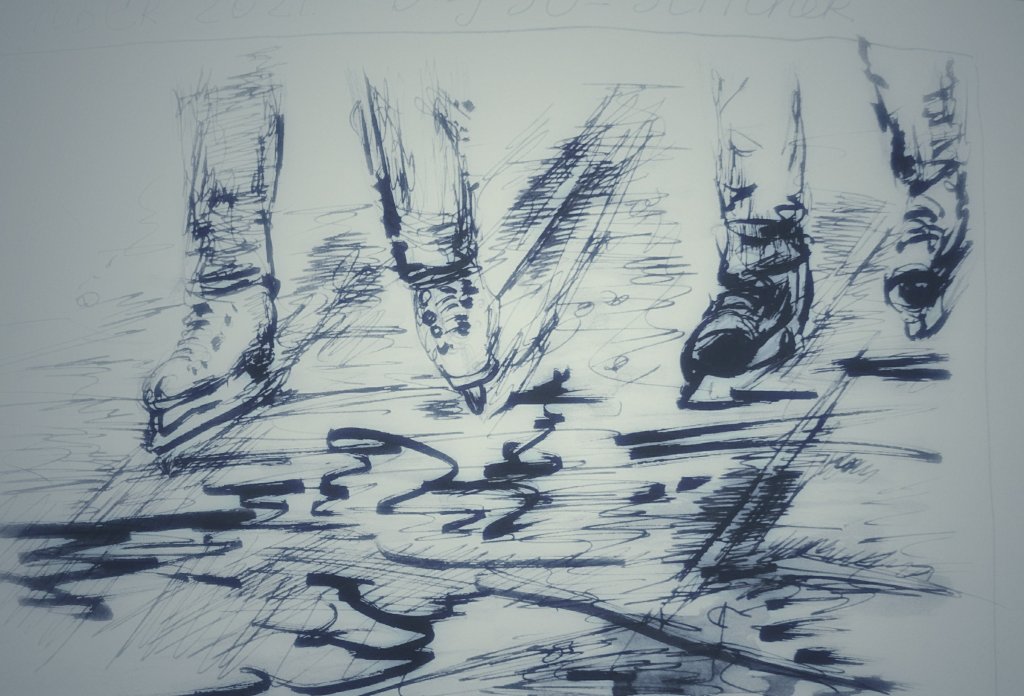
For Inktober prompt Slitcher I did an ink drawing of ice skaters. This joy that you experience from sliding … fast and not very … Lightness, smiles!Beautiful lighting, music and a huge amount of endorphins – hormones of happiness – are released into your body and you are full of optimism and joy:)
How long have you been skating? Last winter? Or many years ago, as a child? Cutting through the air, rushing on skates is fun that charges us with positive and makes us feel so fast and light:)
I am looking forward for skating here, in Toronto this winter!:)
And I am ready for tomorrow’s Inktober prompt – Risk.
All paintings belong to the author. No image is to be copied without permission.
You can visit my personal website pages here and find out more about the artwork I am offering in oil and watercolor paintings; purchase canvas prints, framed prints, and more artwork.
My favourite art store in Toronto Deserres, Spadina Ave
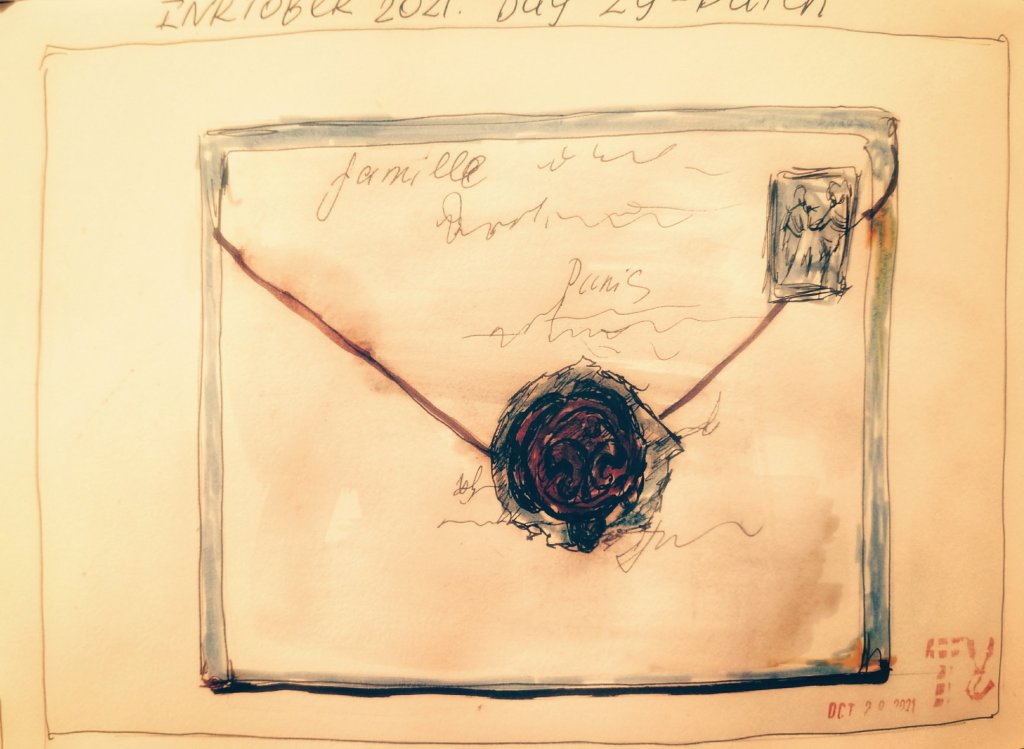
For prompt Patch I am doing a wax seal stamp on an old envelope. Why envelopes with a wax seal stamp are full of romance?:)This is what exudes antiquity, palace coups, conspiracies and secrets. These are love letters, secret messages that were not supposed to be read by those to whom they were not intended. All envelopes were sealed with a wax seal by that time. It was the “password” on the mailbox for many centuries, which could only be cracked by skilled hands:) The antic cybersecurity was committing to protect their private secters…
And I am ready for tomorrow’s Inktober prompt – Slither.
You can visit my personal website pages here and find out more about the artwork I am offering in oil and watercolor paintings; purchase canvas prints, framed prints, and more artwork.
All paintings belong to the author. No image is to be copied without permission.
Ink drawing of spark on red embers. Barbeque might just be the most delicious food on the planet. We did it this fall in Bruce Peninsula in Ontario, Canada. Most people like to watch the flame cover, sparks gleam, firewood crackles and yammy barbeque will warm up you on a cold evening.
All paintings belong to the author. No image is to be copied without permission.
You can visit my personal website pages here and find out more about the artwork I am offering in oil and watercolor paintings; purchase canvas prints, framed prints, and more artwork.
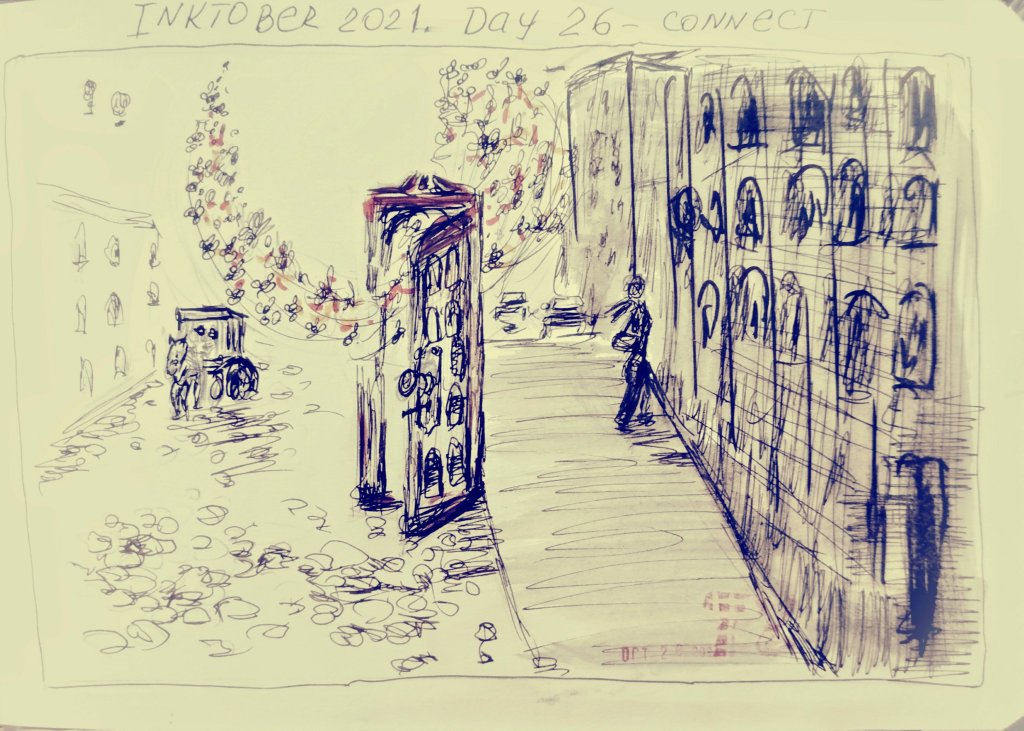
I did some kind of surrealistic and impressionist ink drawing for prompt CONNECTion in between past, current and future worlds. The painting shows an imaginary door with floral plume of daisy petals that leads into another world, a parallel reality of times past. A curious mind will always find a path, a door, a way to explore others worlds.
How was it to live in previous centuries? And what will our future look like? And where is that DOOR that lets us peek into the other realities? These are among many questions one could ask in a question of finding interesting answers.
“The most beautiful things we can experience is the mysterious” Albert Einstein.
A link to my original painting is below.
And I am ready for tomorrow’s Inktober prompt – Spark.
I am doing an ink drawing of opposite meaning of extinct:) There is active and non -Extinct, long-dormant volcano of Vesuvius with the foreground of city Pompeii. Today, Mount Vesuvius is the only volcano on the European mainland. Mount Vesuvius eruption, which covered the nearly-restored city with blanket of ash and lava in 79 AD.
I would like to go back to this city with background of formidable and majestic volcano in Pompeii.
And I am ready for tomorrow’s Inktober prompt – Splat.
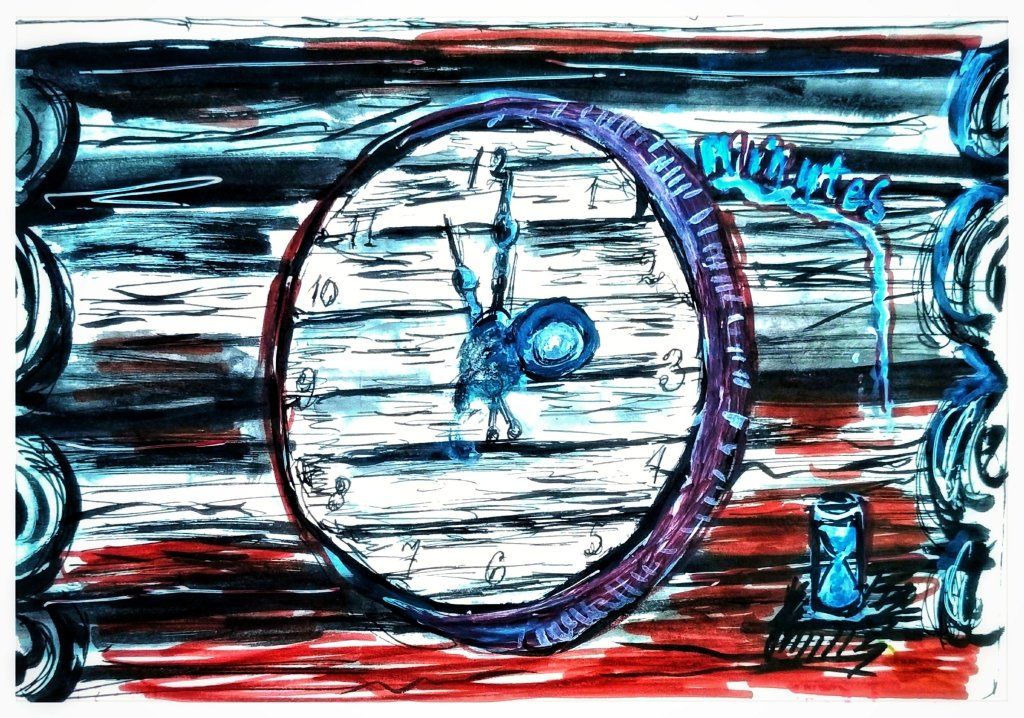
For the prompt Leak I did some sort of philosophical drawing of “leakage” of flowing time out of a wood watch. It is surrealistic ink drawing of hour and minute hands of watch that are “tightened” with a scotch tape. The idea came to me when we visited Dalí Theatre-Museum Figueres in Spain. Dali’s painting The Persistence of Memory is one of the my favorite work of Surrealism. Live in the moment:)
Realize deeply that the present moment is all you have. Make the NOW the primary focus of your life. Eckhart Tolle, The Power of Now: A Guide
And I am ready for tomorrow’s Inktober prompt – Extinct.
You are welcome to visit my personal website pages. There, you can find out more about the artwork I am offering in oil and watercolor paintings. You can buy canvas prints, framed prints, and more artwork.
All paintings belong to the author. No image is to be copied without permission.
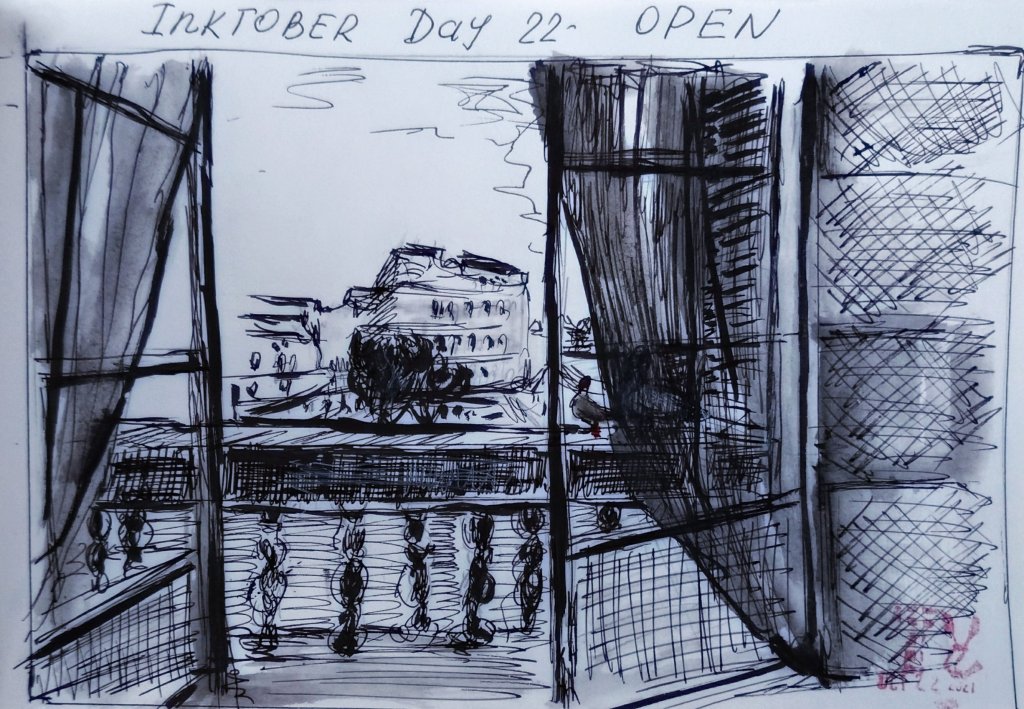
For prompt Open I am doing an ink drawing of an Open window to the city of Rome with the Colosseum as background. A white dove sitting on a balcony and enjoying the Eternal city. Scientists believe space travel is possible. You just need a portal, for example a window…voilà and you are in Rome or Paris or another your dream place:) My Yales’ course the Roman Archtecture is helping imagine it:)
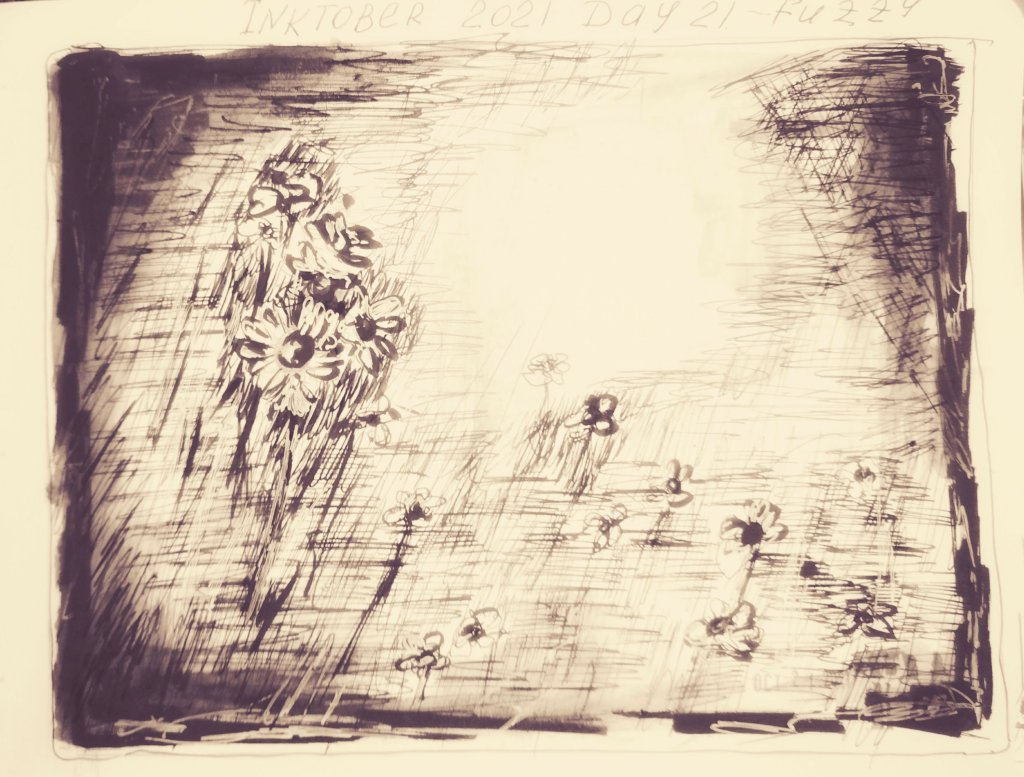
For the prompt Fuzzy I imagined a foggy morning, forest glade with some summer flowers, everything is a little bit sleepy and fuzzy… You might get lost in the fog and find yourself in a mysterious world, where different amazing creatures live:)
And I am ready for tomorrow’s Inktober prompt – Open.
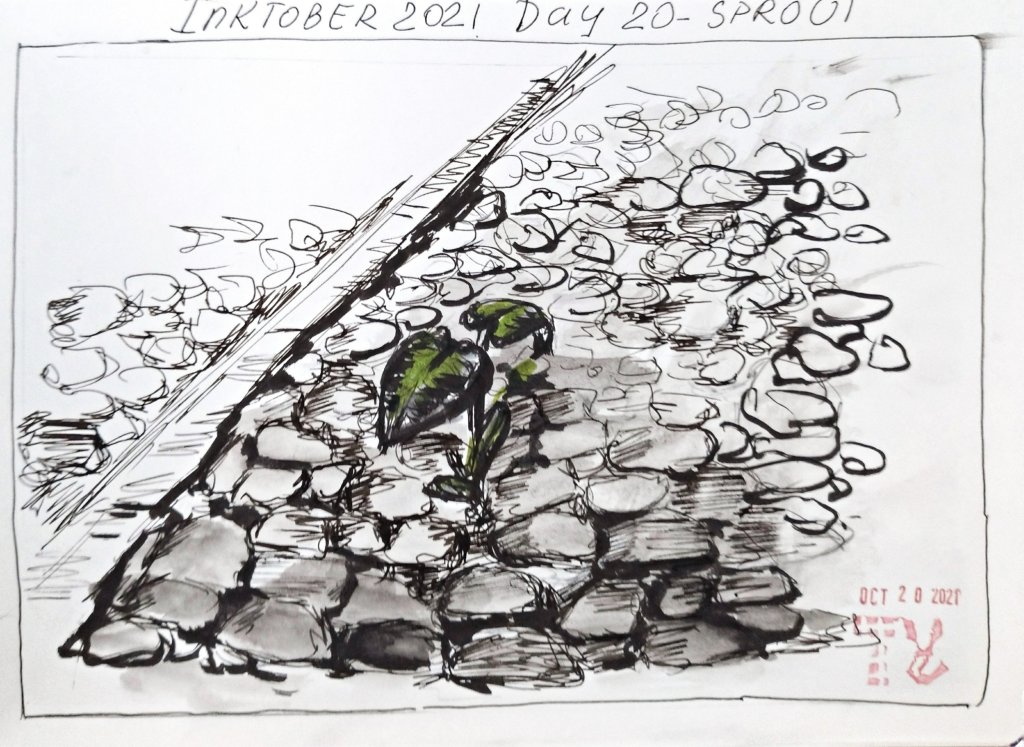
I was doing an ink drawing of a little sprout I saw once in Rome. A small green bud made its way between the big and heavy stones in the ancient pavement.
And I am ready for tomorrow’s Inktober prompt – Fuzzy.
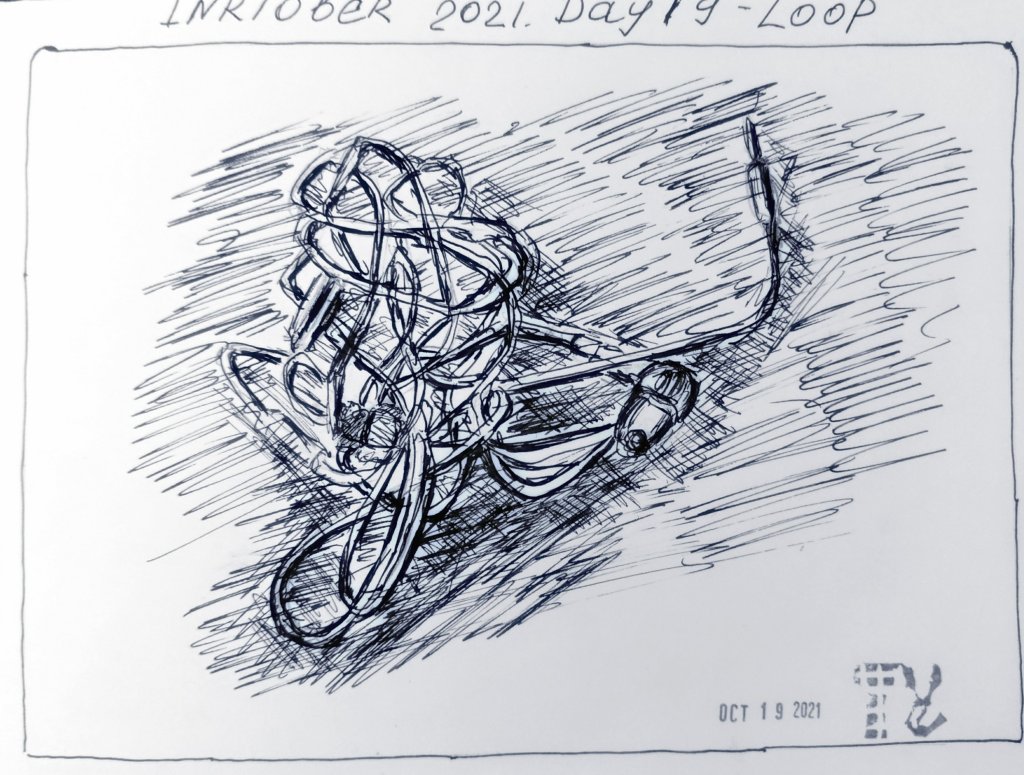
For the prompt Loop I am doing an ank drawing of my interwined headphones:) How they can get so tangled in loops and knots when although they lie peacefully in my bag:)
Do you know a joke about Bluetooth? – You will only know that your phone was picked up by a pickpocket when the bus leaves the stop … haha, still like my headphones beside their “loops”:)
And I am ready for tomorrow’s Inktober prompt – Sprout
Do you like warm summer evenings when the moon starts to light up? It gives fresh, romantic and cozy look. A lunar path appears on the water surface, lighting up the landscape with its warm brilliance.
The link to my original oil painting Lunar track on the southern night is below
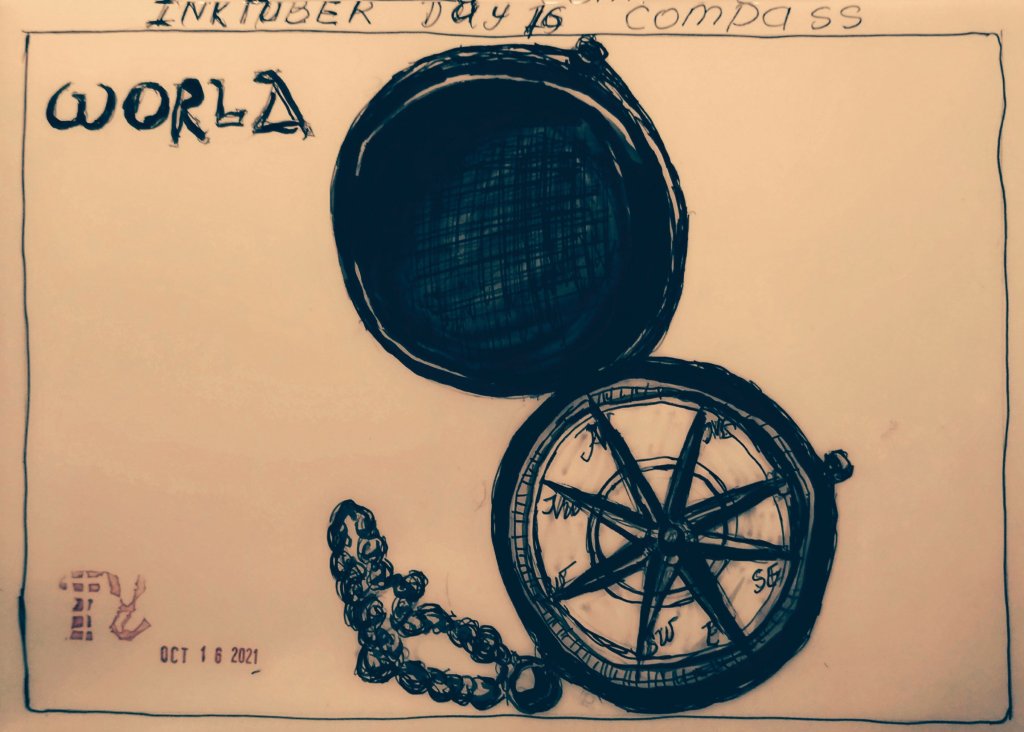
The next Inktober prompt is Compass. I am doing an ink drawing of compass we used to have at home, I was playing with it when I was a kid. From my childhood’s memory, it was a piece of art, nice to touch with a cover with a velvet cushion. It was a classical compass, my dad was explaining how to use it, it was the masterpiece… What a pity that now we do not use a compass, everything is built into our smartphones:)
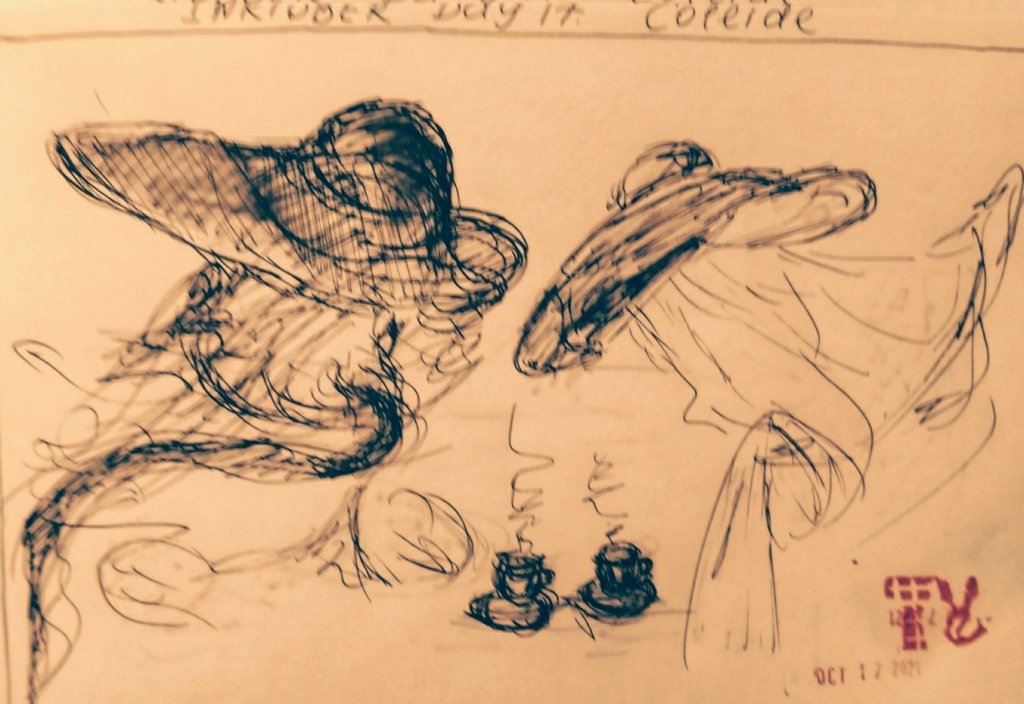
And I am ready for tomorrow’s Inktober prompt – Collide
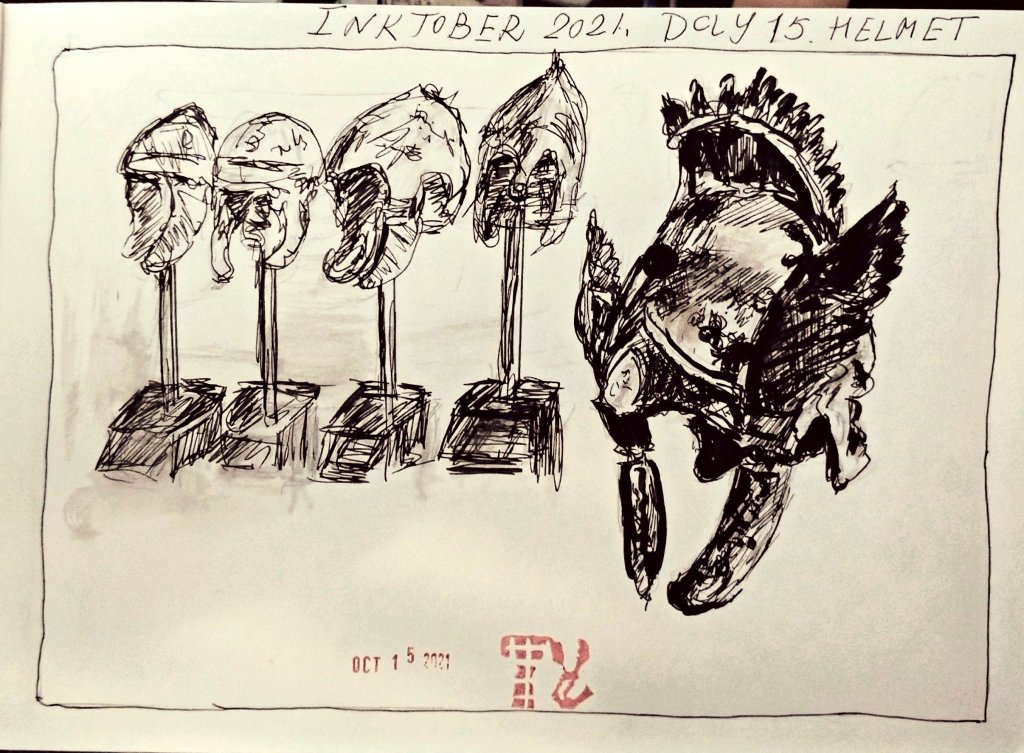
My next Inktober ink drawing is about a Helmet, part of Armoury museum in Mougins, France. It has the huge collection of ancient helmets. Soldiers lived, fought, and died in this equipment, and much of it bears the scars of battle from ancient military campaigns in past.
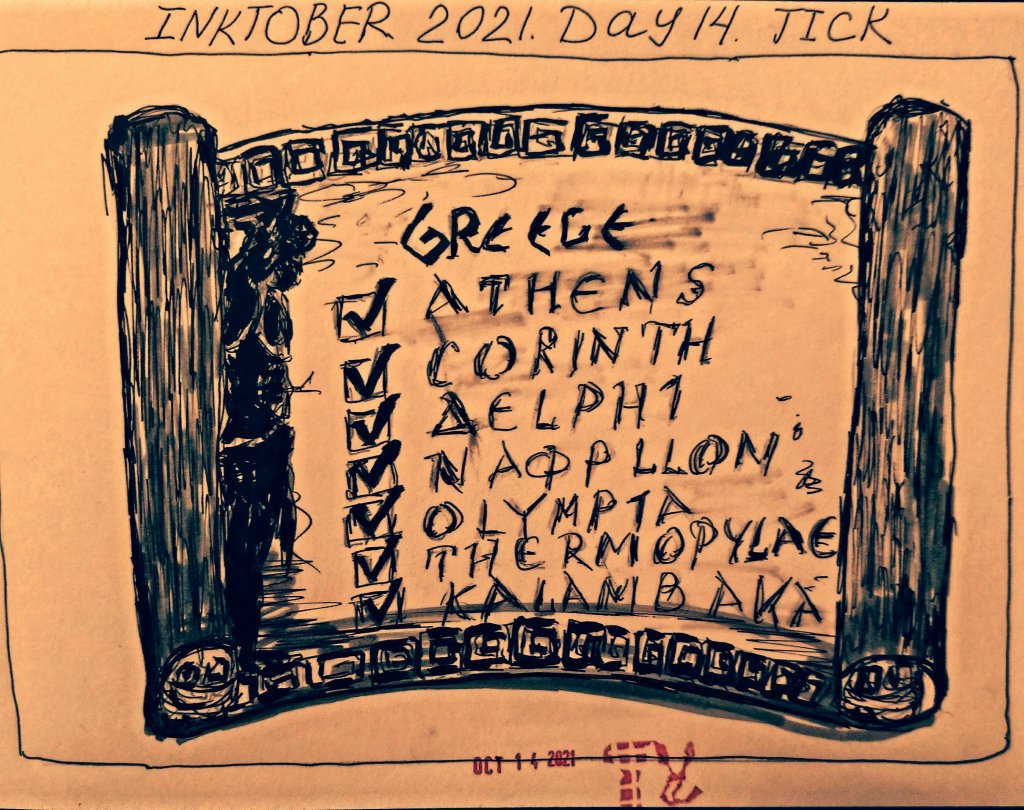
Next Inktober prompt is Pick. I did an ink drawing of Greek papyrus with TO DO tick mark for the travel bucket list:) It is my last year’s failed trip because of the pandemia and a planned trip in the future to the Greece, one of the most amazing and unique in its beauty countries in Europe. Travel Checkmark list is helpful for all travellers who is in love with history, architecture and voyage, ticks will help do not to miss anything and remember everything, have experience as many emotions as possible, so that there is something to dream about the next trip!:)
And I am ready for tomorrow’s Inktober prompt – Helmet.
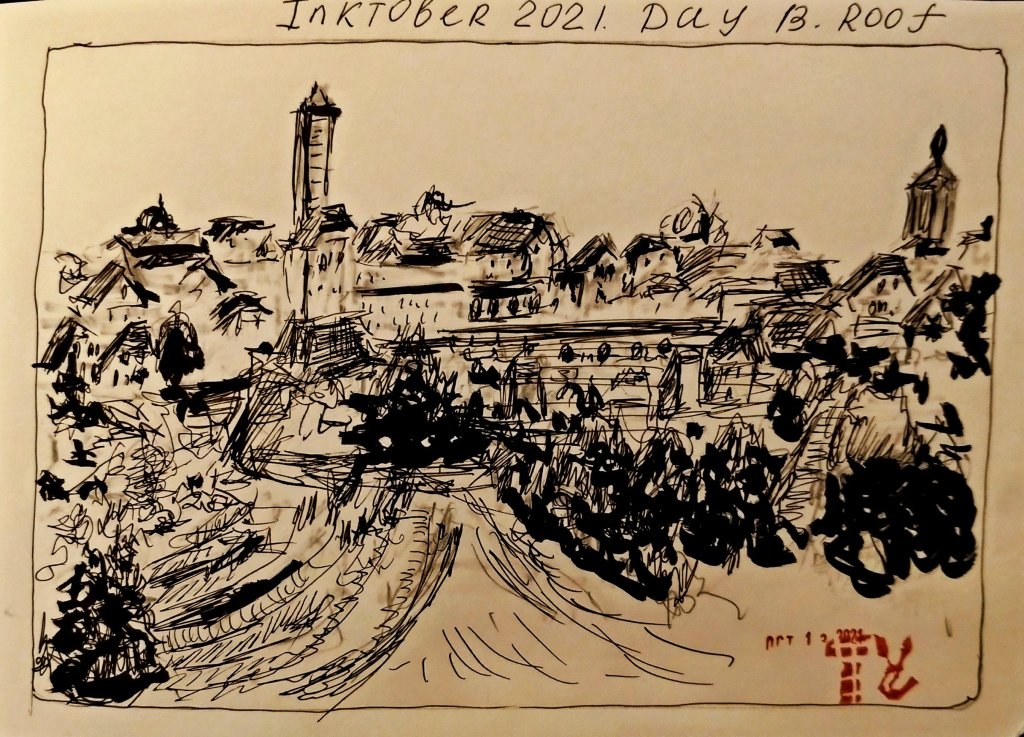
Next Inktober prompt is Roof. For this prompt I have some ideas, thank you to my husband’s photos of many places we visited:) I will add a link to his site.
Firstly, it is the Roof of beautiful Milan’s Cathedral with its graceful spiers and pointed turrets that are directed into the sky, and slightly pinkish marble walls are decorated with many sculptural images. Secondly, an ink drawing of extraordinary roofs in Provence, south of France. The warm and cozy brown, orange and yellowish shades of roofs with background of the blue water of the Mediterranean Sea are one of my coming art project:) Another option, the “roof” of yellow and red colours leaves’ trees in any Ontario places in Canada. The trees’ brushes are like ceillings for roads when you drive or walk. This nature “roof” looks the same in Canada and in my motherland Belarus or any place in Earth. And next idea brings me to the “decision” for this prompt that includes both Roof and Autumn, 2 in 1!:)
For the prompt Roof I am doing an ink drawing of lovely roofs of the pastoral town Rottenburg ob der Tauber in Germany we stayed once in the fall. Here, you can enjoy viewing of the little houses’ roofs with background of golden trees’ leaves that nature itself painted land in the Northen Bavaria. Rothenburg ob der Tauber is the place …its like you are in an alternative universe or you have gone back in time:)
This is the site with images belong to and can be purchased from Vlad Vitsenkou
And I am ready for tomorrow’s Inktober prompt – Pick
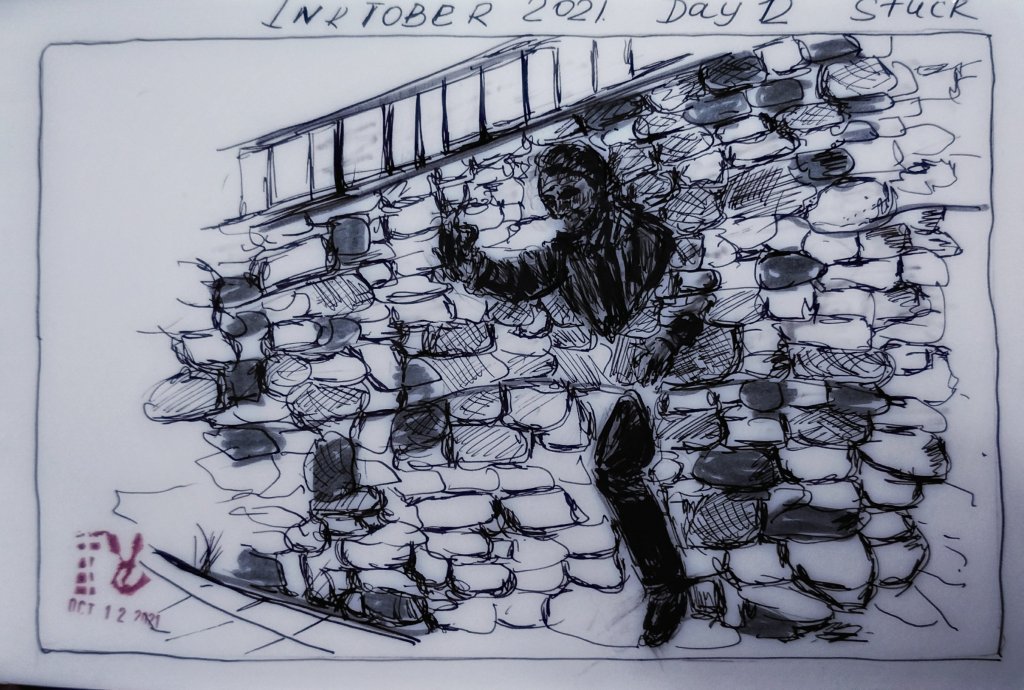
I am doing an ink drawing of one of fascinating sculptute in Paris. It is completed after the book “The man who passed through walls”/”Le passer muraille” by Marcel Aymé. It tells of the adventures of a “little” person in a ministry who realized that he can walk through walls:). He became a powerful man, what happened next? One day, the man was stuck in the wall… The sculpture’s figure coming out from a high wall, looks very intriguing… I recommend to read this book and visit the Place Marcel-Aymé in Monmartre’s Paris when you travel to Paris next time:)
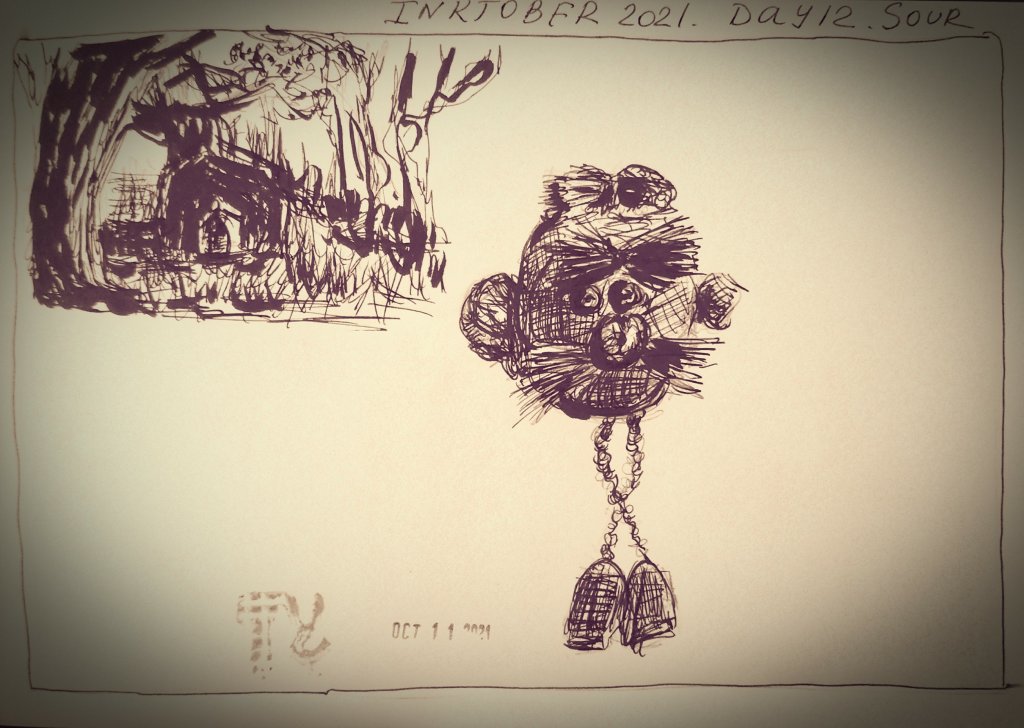
For prompt Sour I am doing an ink drawing of one mythical creature Leshy from slavic mythology. It is very popular character in Belarusian fairy tales that I remember from my childhood. “The Witcher” has many bad sour and tempered faces, like the forest itself. In all fairy tales Leshy is the forest’s owner, this is his house and all the animals are his wards. Leshy jokes over people, leads them into the thicket, frightens, leads astray, makes noise, whistles, claps his hands. Sometimes in fairy tales, the Leshy is nice character who helps those who get lost out of the forest, protects the heroes from wolves and bears:)
And I am ready for tomorrow’s Inktober prompt – Stuck.
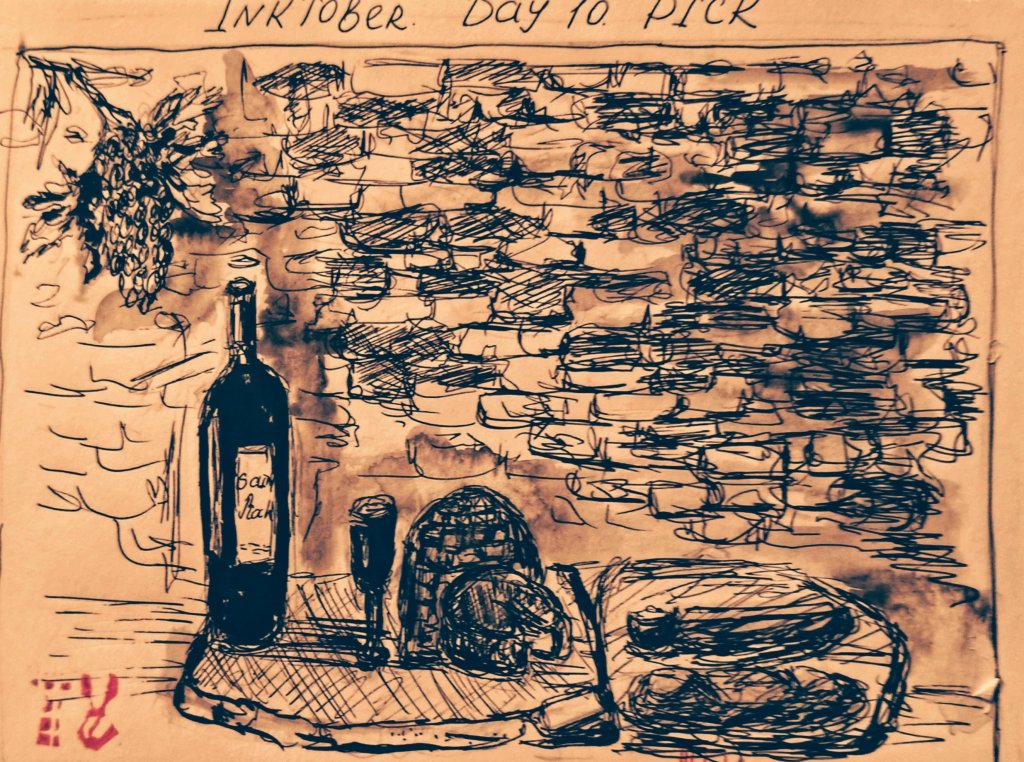
My interpretation of this world for my Inktober 2022 is “choose something from a number of alternatives, typically after careful thought.” Well, I am chosing an ink drawing of … French charcuterie:)
French cuisine is not a collection of dishes, but a ceremonial, a feast is a moment of communication,it is a part of French culture. When people have lunch or dinner together, they share it with each other. The food we eat matters not only for the body, but also for the mind. I pick ballotines, pâtés, and confit, wine, a cheese,ham a baguette, as the maginicifient French charcuterie.
And I am ready for tomorrow’s Inktober prompt – Sour.
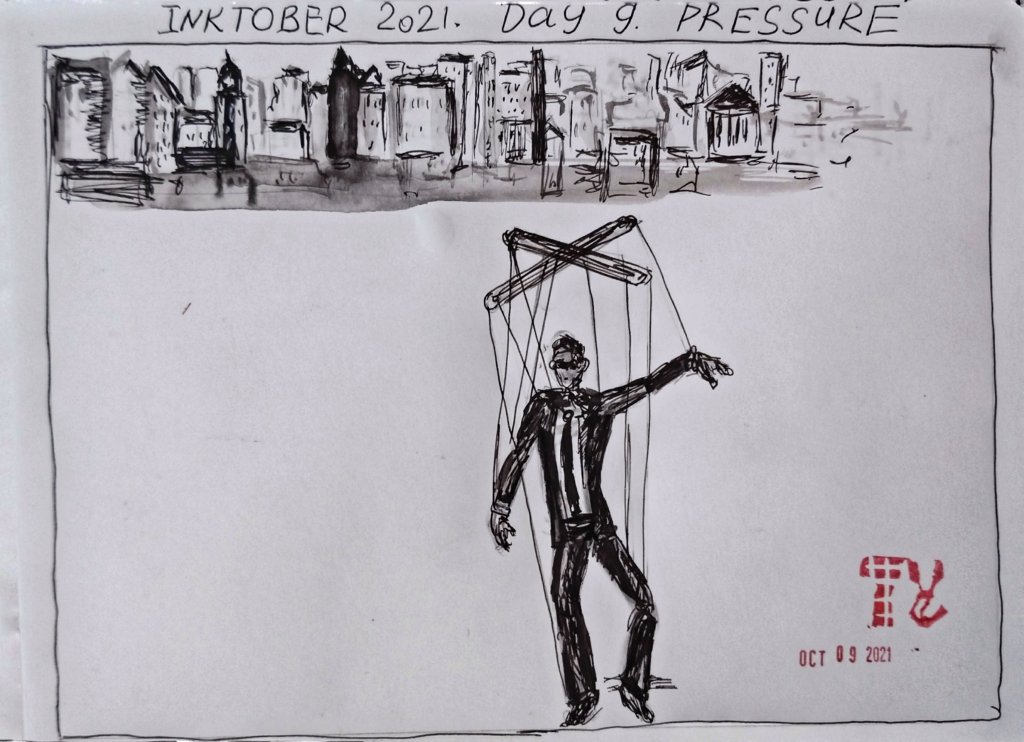
A rainy Saturday afternoon encouraged me to draw some sort of social ink drawing for Inktober 2021. Pressure and manipulation of public opinion to a person, pressure from a city, pressure from the employer…And it would be great to break the “fetters” from a manipulator and manage your life by yourself:)
And I am ready for tomorrow’s Inktober prompt – Pick.
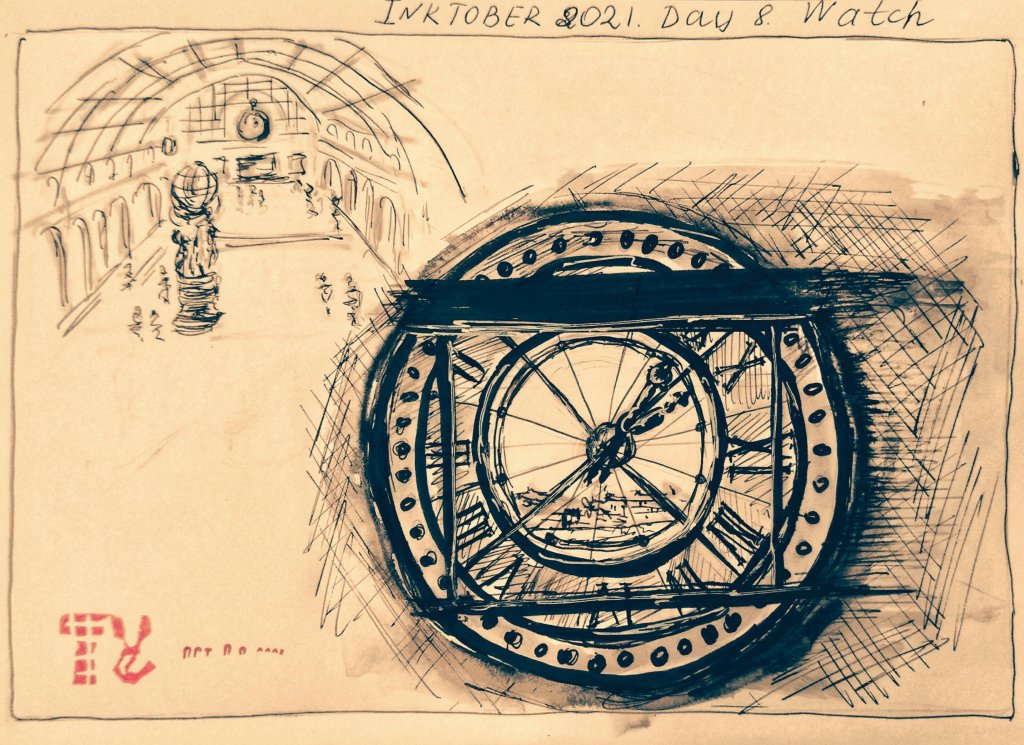
For prompt Watch I was doing ink drawing of the interior clock of the D’Orsay museum in Paris. The clock is in between the museum building and sky, it looks out over the river Seine and garden Jardin des Tuileries. Looking through the clock, you can enjoy the magificient capital of France.
At first the Musée d’Orsay was a train station, the Gare d’Orsay built for the Universal Exposition of 1900. The clock is actually a reminder from the train station that overlooked the platforms of the rail station a century ago.
I love the D’Orsay clock because they’re so large, they also function as a window. How many important and romantic meetings have taken place under this clock, who knows?:)
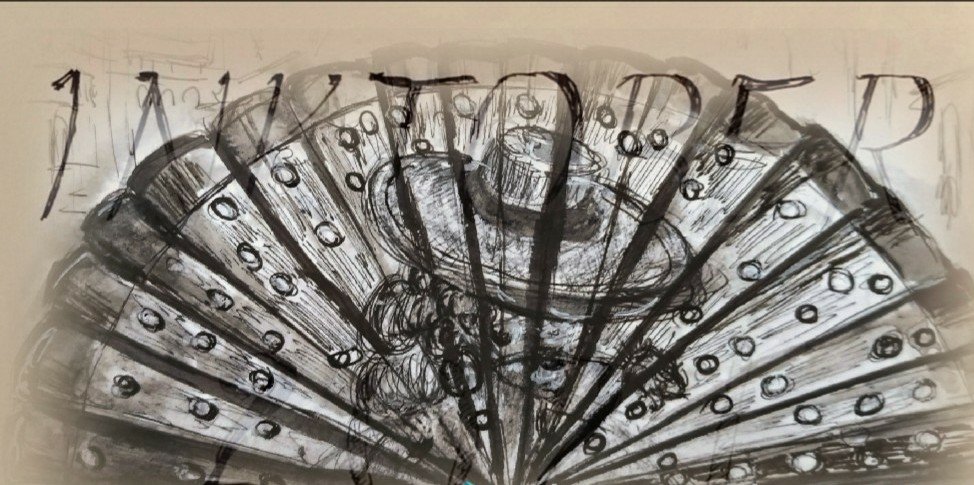
For prompt Fan I was doing ink drawing of my fan that we bought during our European traveling in Barcelona in Poble Espanyol – Spanish village. There are so many artistic and elegant souvenirs in this place:) I do recommend shopping here…
Fan, in addition to the obvious usage to create a stream of air around the face, neck and shoulders when it’s hot, is also used to be the art of flirting.
So, if a lady touched her lips and heart with an open fan, she would say: “You are my ideal.” If she applied the fan with her right hand to her left cheek, then, alas, she made it clear that courtship was useless. It used be a real fan language that allowed a woman to conduct a love affair without resorting to words and letters that could expose her:)
And I am ready for tomorrow’s Inktober prompt – Watch.
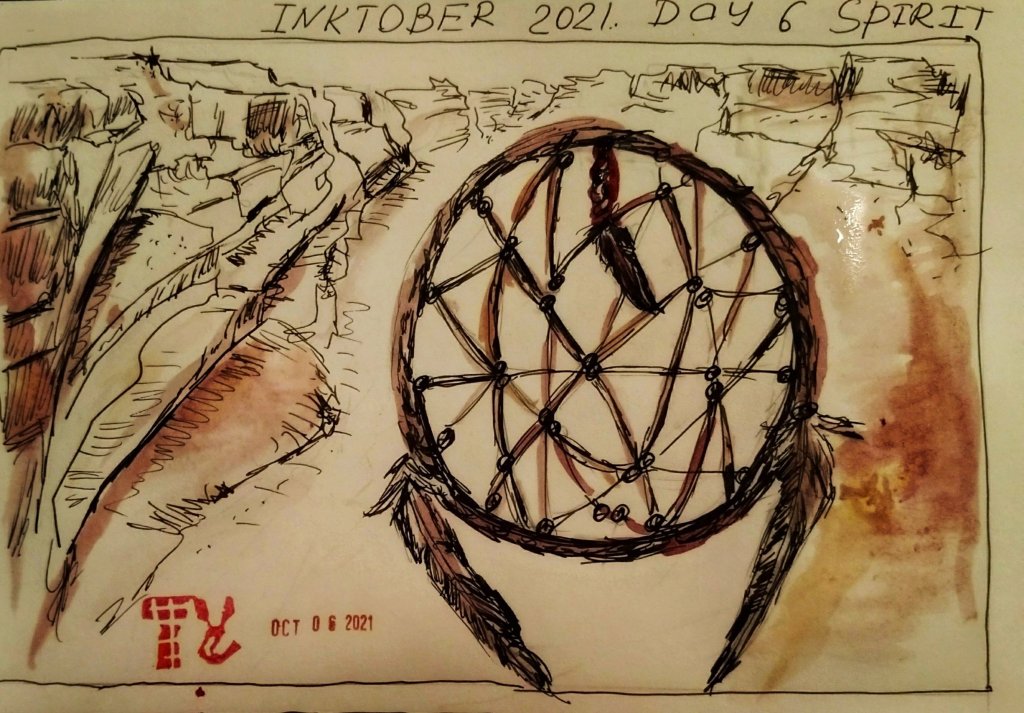
For prompt Spirit I was doing ink drawing of a spiritual Dream Catcher with background of the Grand Canyon in USA. A dream catcher is a symbol of armor and protection among numerous indigenous cultures and tribes. It’s a handmade willow hoop woven to a web or literally, a net with feathers.
The dream catcher is a talisman that is ptotecting people from bad dreams. The Canadian and American aboriginal cultures believe that both good and bad dreams fill the air at night.
Someone said that Soulmates cherish each other’s feelings and believe in each other’s dreams. Cool, isn’t it?:)
And I am ready for tomorrow’s Inktober prompt – Fan.
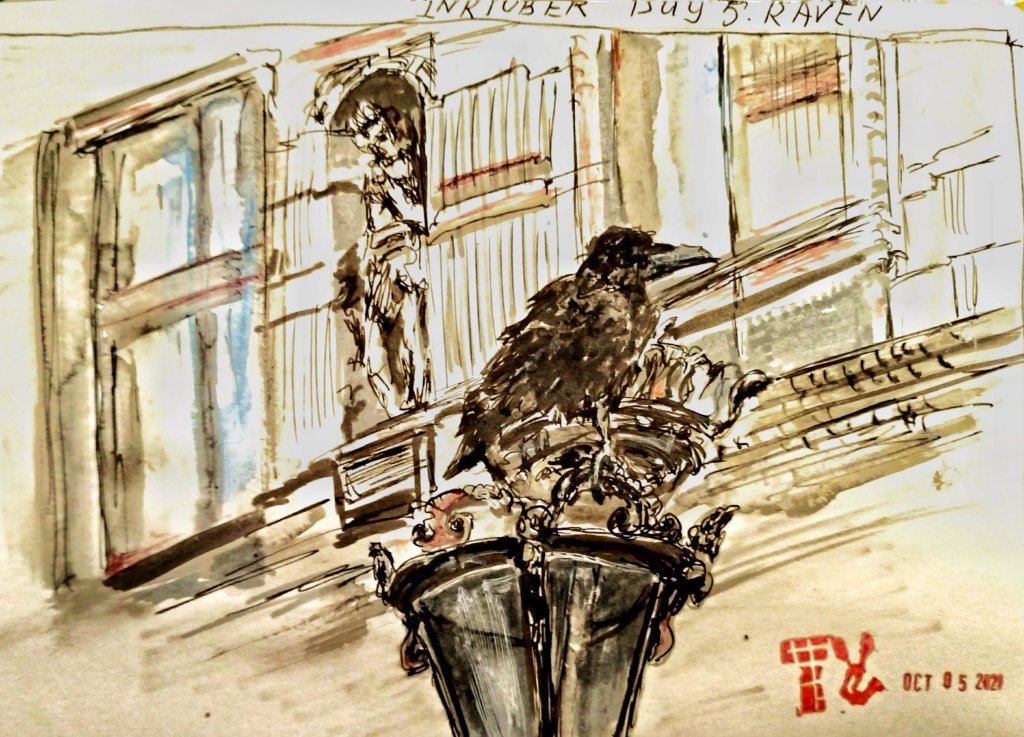
For prompt Raven I was doing ink drawing of a raven sitting on a street lamp next to the Louvre museum in Paris.
It was an old and wise raven who was looking down on all the tourists queuing up at the museum. Perhaps this bird remembers events that happened in France 300 years ago, who knows?:)
And I am ready for tomorrow’s Inktober prompt – Spirit.
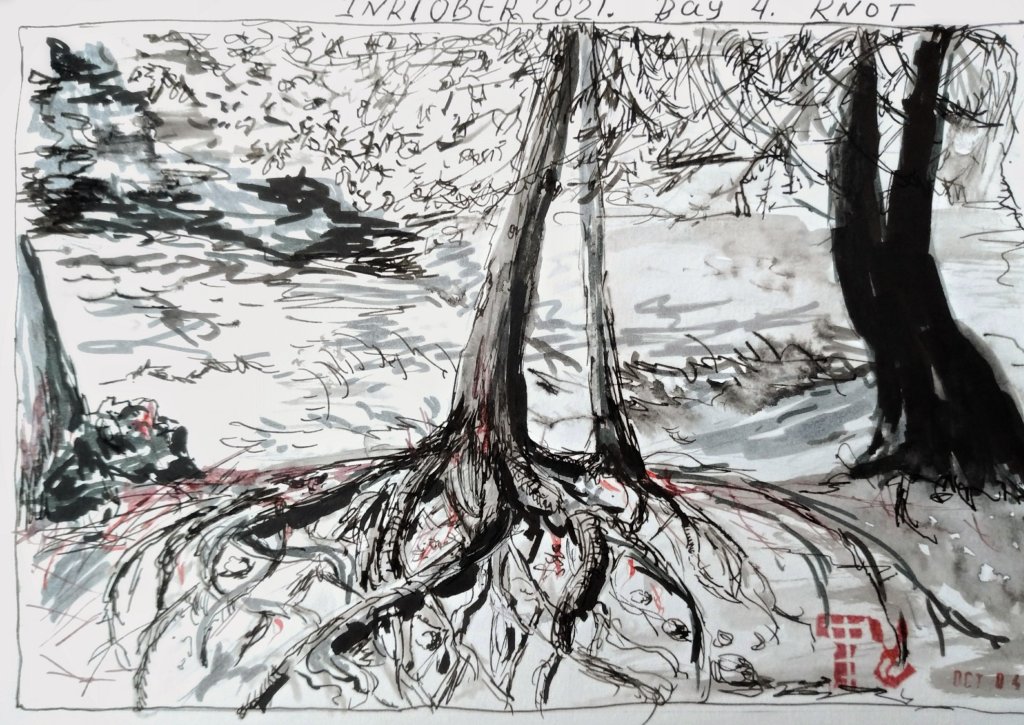
For this prompt I was doing a drawing with trees’ roots intertwined into knots in this enchanted forest. We visited Jones waterfall on Ontario, Canada and were impressed by it by view of these trees’ “knots”…
There is a raging and rumbling waterfall right in the forest. Well.. it was a combination of a scary fair tale’s feelings to overlook many huge intertwined roots in knots of gigantic trees on the edge of the abyss and at the same time a magic view of the waterfall.. I do recommend to visit this place to everyone:)
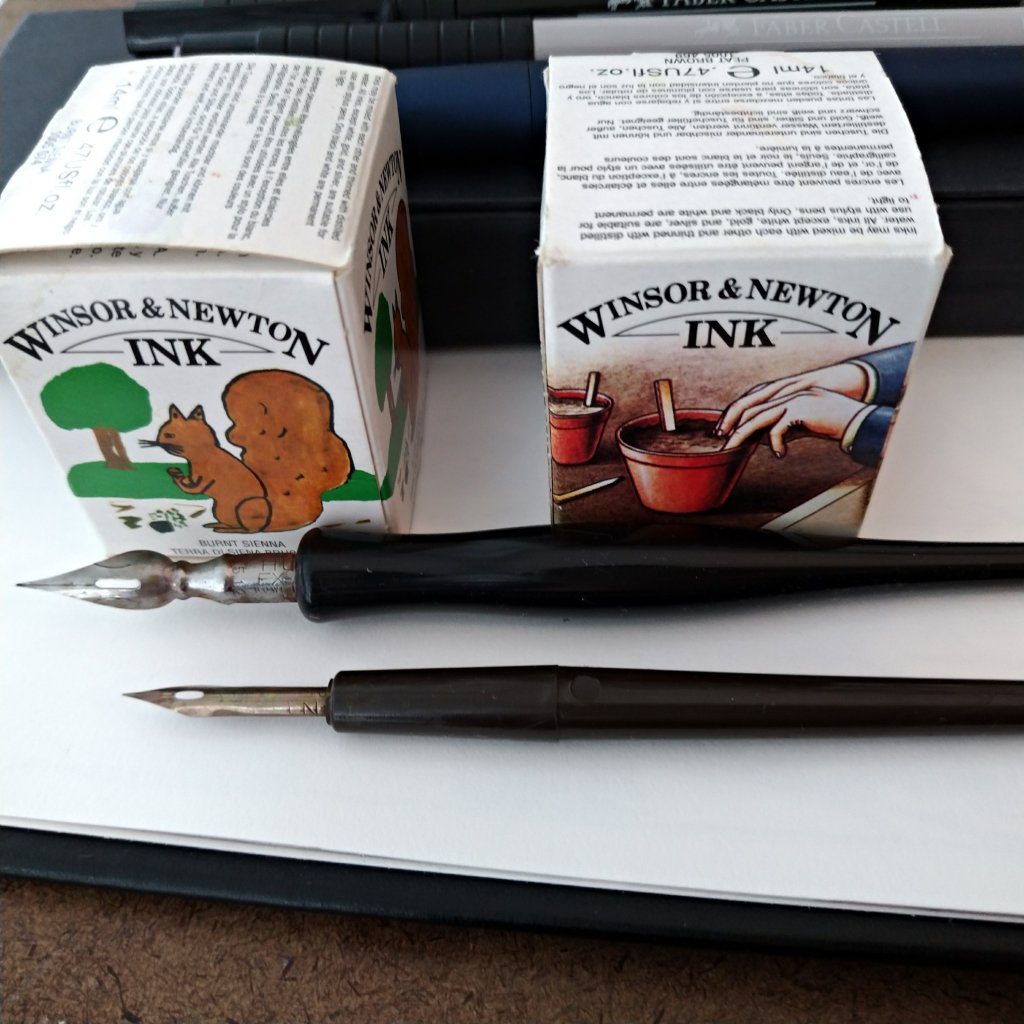
I added a little bit burnt sienna and peat brown ink for adding some autumn’s atmosphere for my drawing.
And I am ready for tomorrow’s Inktober prompt – Raven
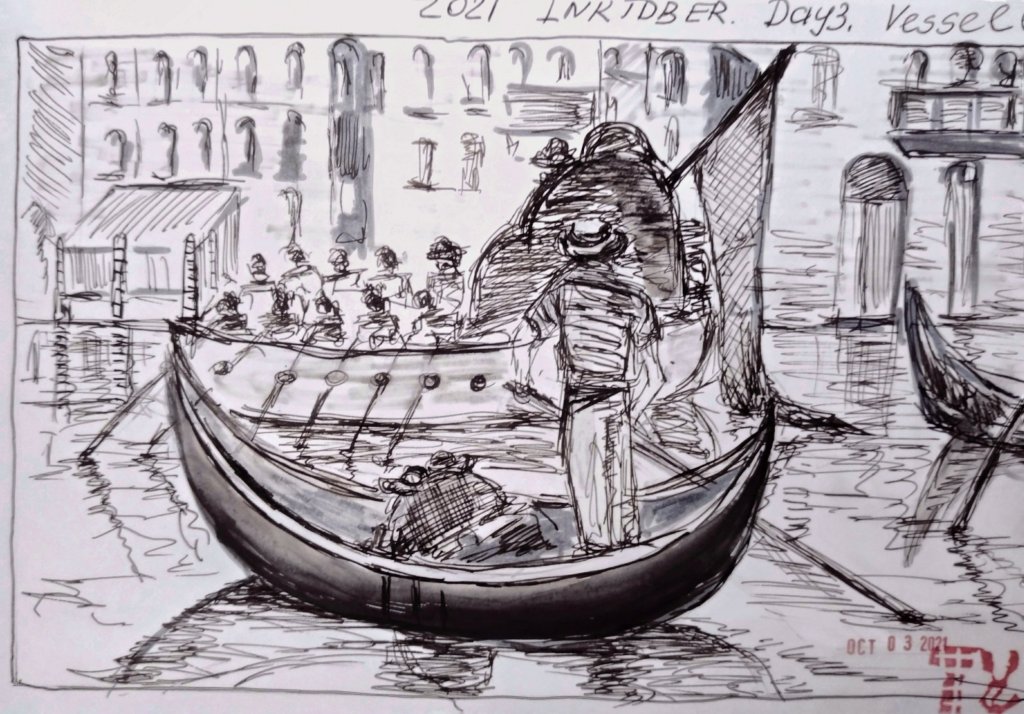
For my drawings and painting I usually need a story or memory behind it. For prompt Vessel I had some sort of dilemma:)
My 1st option was to do a drawing from life a part of Toronto’s street sculpture with only sinking vessel’s stern is viewable for pedestrians. Yes, it was a good option for ink drawing but it would be a little bit sad one for Inktober…
The 2nd option was a boat that is peacefully swaying on the waves. I used to love watching a boat in Frejus, French riviera during our vacation in France. It would be a good option with a summer vessel’s drawing.
The third option was a gondola with beautiful boats on the Venetian festival Regata Storica. There are many bright colourful vessels with people in elegant historical costumes during competition on Grand Chanal.
Well.. a “story” from Toronto’s street sculpture or a boat from summer vacation in France or Italian festival’s boats? I chose the fall’s festival with some vessels:) My husband’s photo would be the reference for my drawing. I definitely started to receive fun in the game of Inktober!:)
Hope that I convey the atmosphere of magical days when the weather is still warm and cozy, lots of locals and tourists are gathering to enjoy the Venetian competition between teams in beautiful colourful vessels with background of Venetian architecture. The historical festival is giving an additional feeling for the city, a unique and exciting way to get in touch with the spirit of this ancient city and one of its best known traditions: Venetian rowing.
And I am ready for tomorrow’s Inktober prompt – Knot.
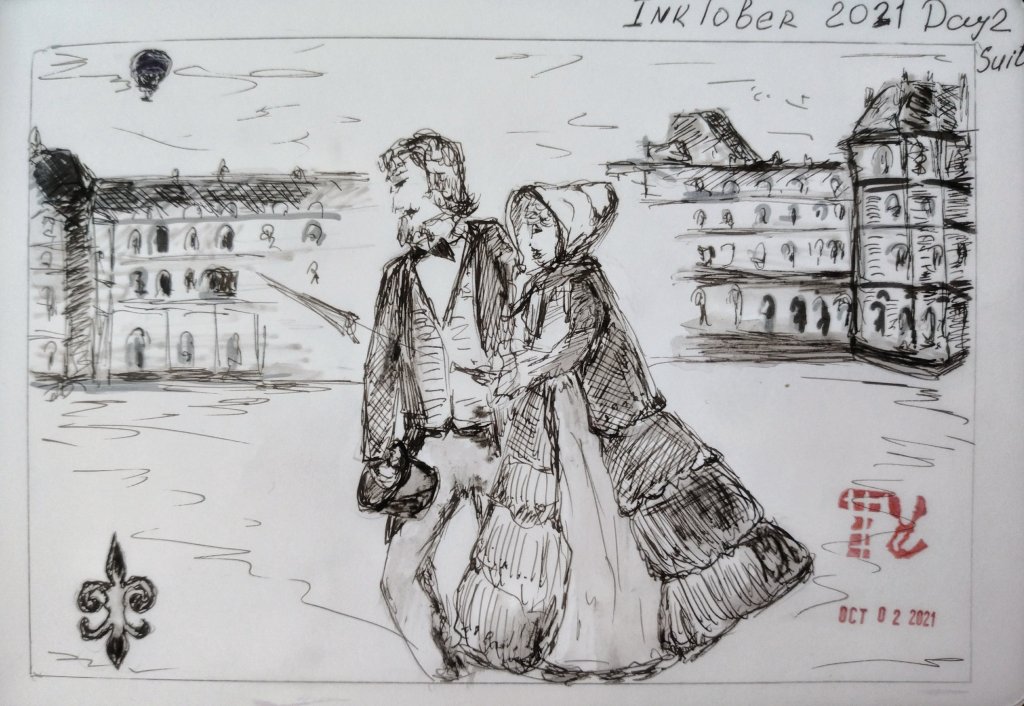
Suit is very important part of appearance of any person, it is showing the epoch when a person lived, their gender, society status, etc.
Well, my favorite 19 century and the city of Paris as a place will be my story’s drawing.
I need a time machine to go there and to do my drawing from their real life’s elegent suits, frock coats and cylinders for men and wearing long flowing dresses with high collars and puffed sleeves, skirts with layer upon layer of lace for women.
…It was an iconic era for France and fashion . Yes, France is famous for is fashion forever:)
For this drawing I chose using ink and Fabel Castell markers to add some vintage atmosphere.
And I am ready for tomorrow’s Inktober prompt – Vessel.
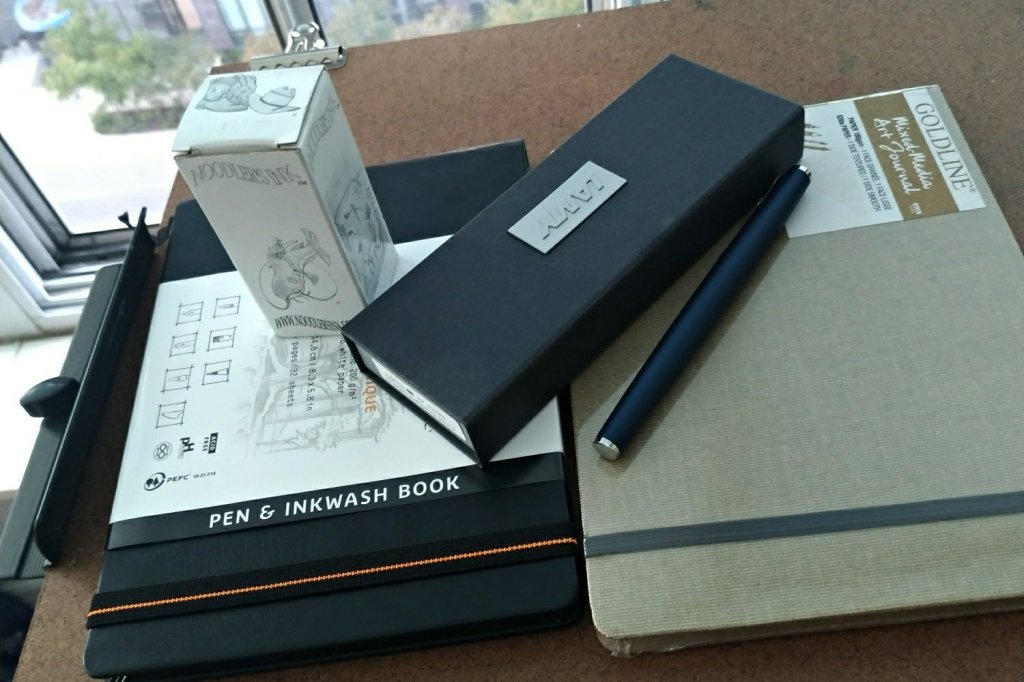
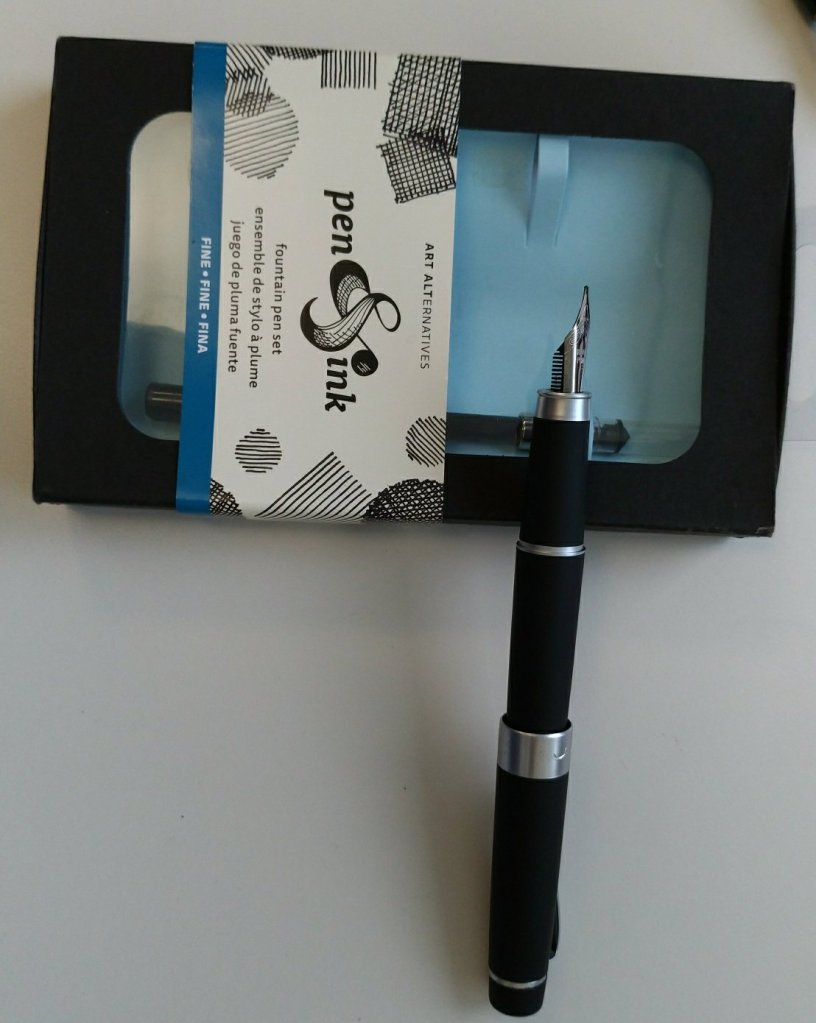
For Inktober I bought two new albums and tested both, Rhodia and Clairefontaine Goldline. Both have great quality of paper,hmm not easy desicision..:)
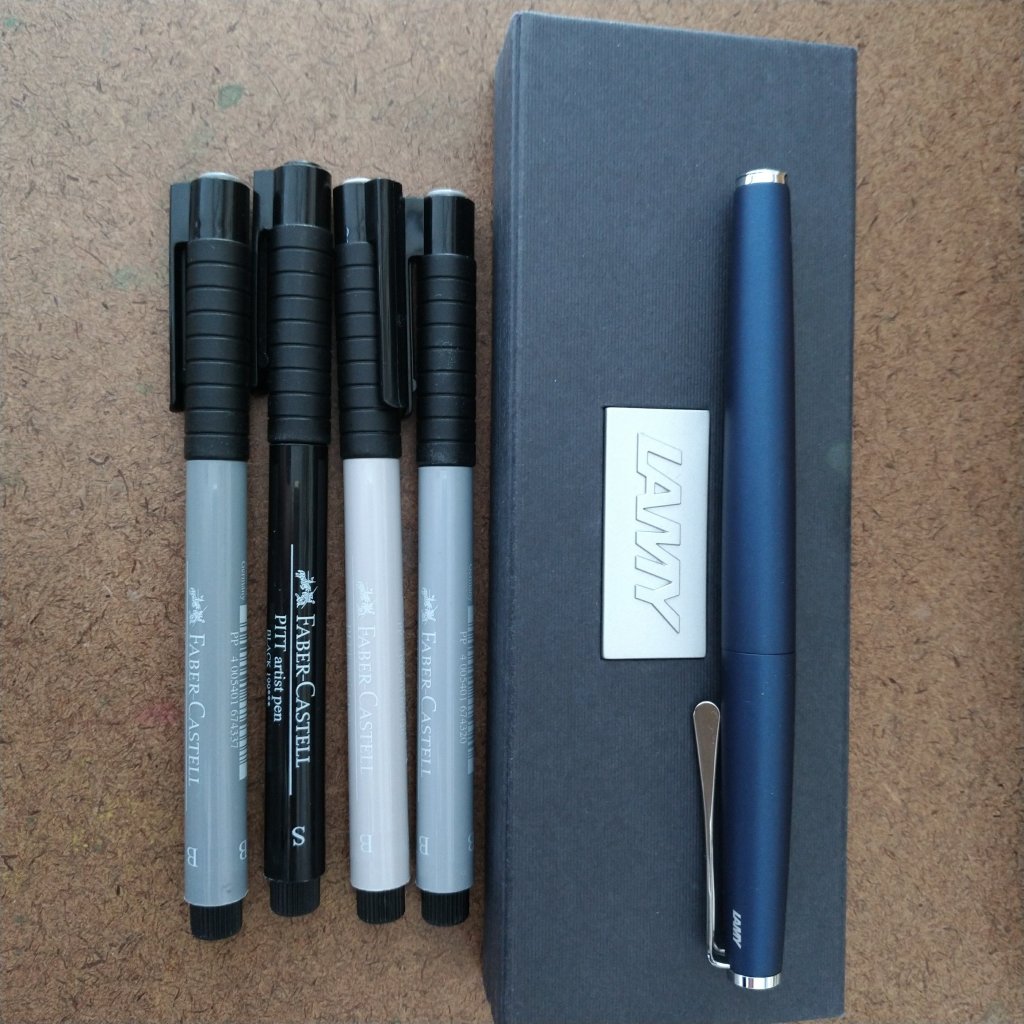
I chose Rhodia ink album, Noodler’s ink and Lamy pen for my Inktober 31 days maraphon 2021. Let’s start FUN!:)
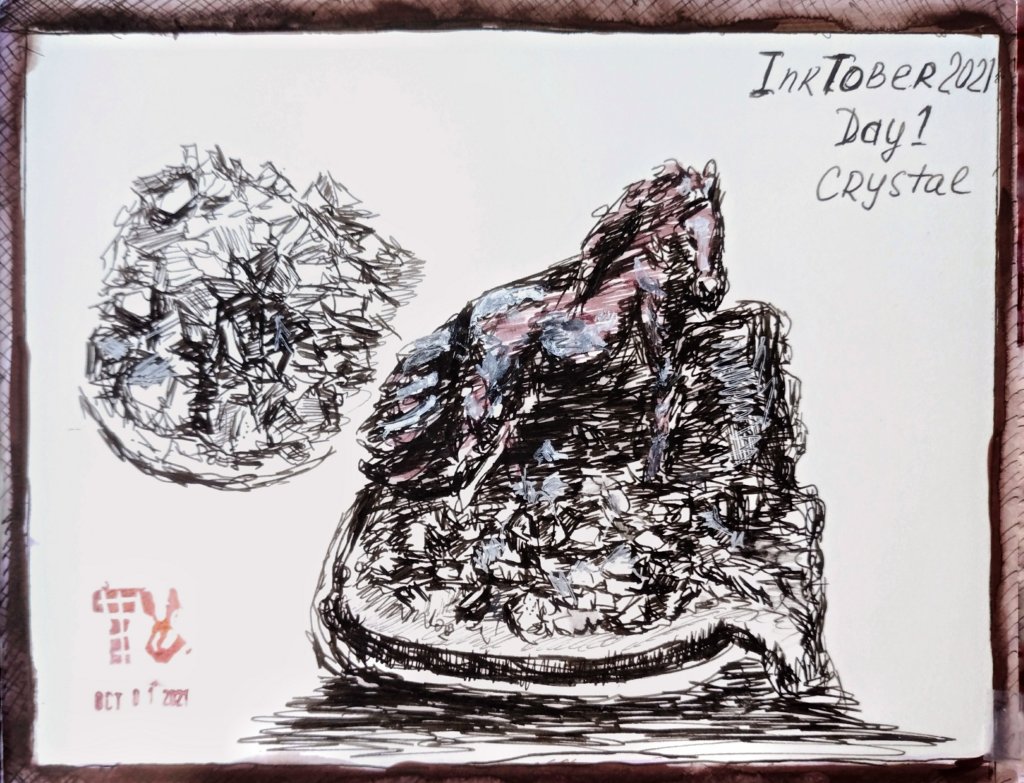
The October 1st prompt is Crystal. I choose our daughter’s souvenir from Denver, USA as my reference to draw a crystal. A little iron horse is standing on a postament made from ametist.
Crystal of ametist has interesting option to refract light and its dark view has magical power to this stone, looks like very fregile and light but it is strong and beautiful. Did you know that crystals were used by some medieval poets as a way to question desire and the wonder of love?:)
My discovery that ink drawing is easy to do with Lines and Spots and enjoy the process:) And one more thought, next time during my travelling I will buy more souverirs, they are the best memory:)
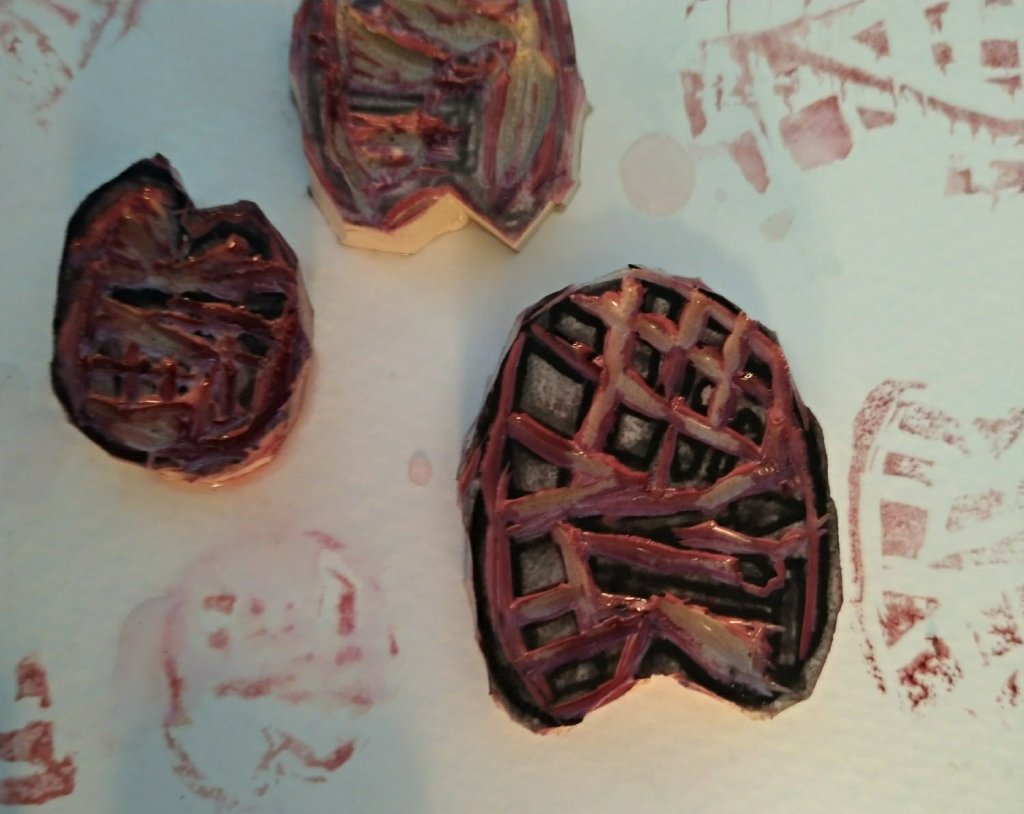
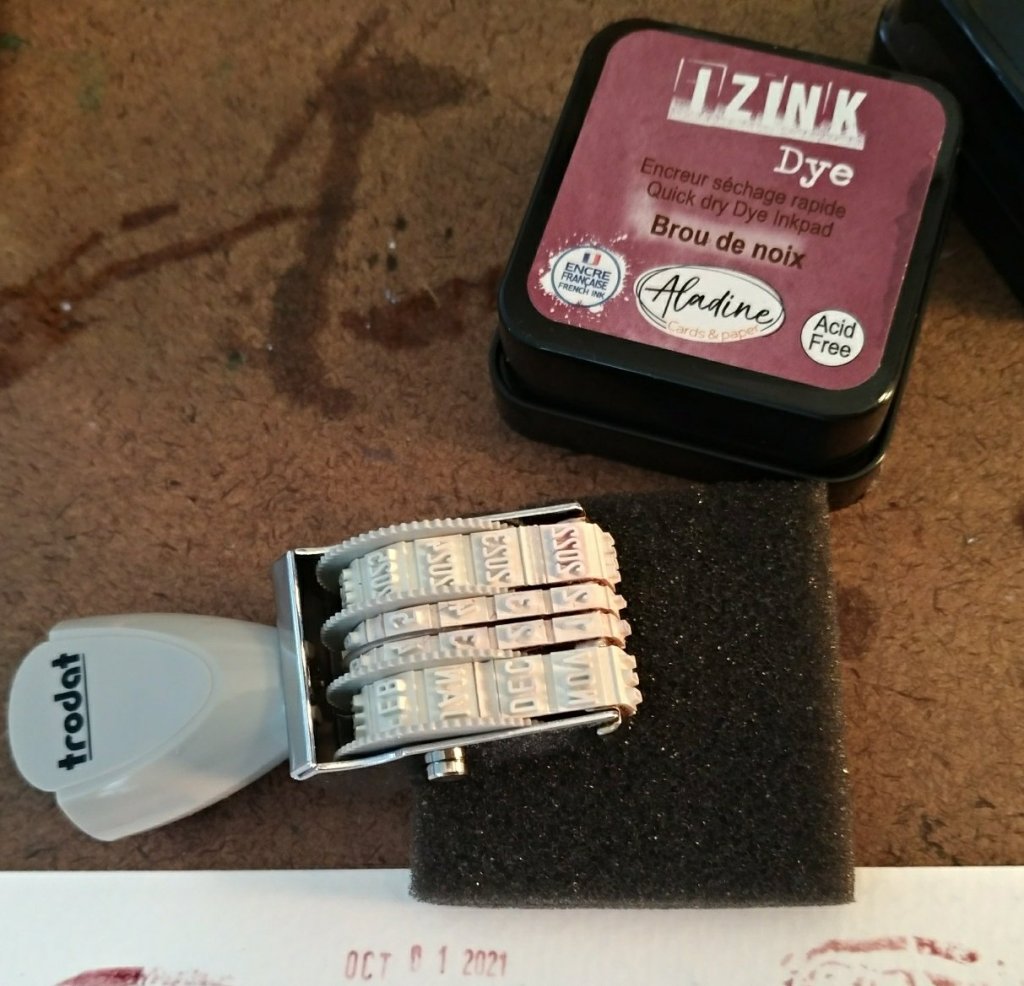
I am adding my stamp with logo of Travel and Art that I did by myself and date for my records.
And I am ready for tomorrow’s Inktober prompt – Suit.
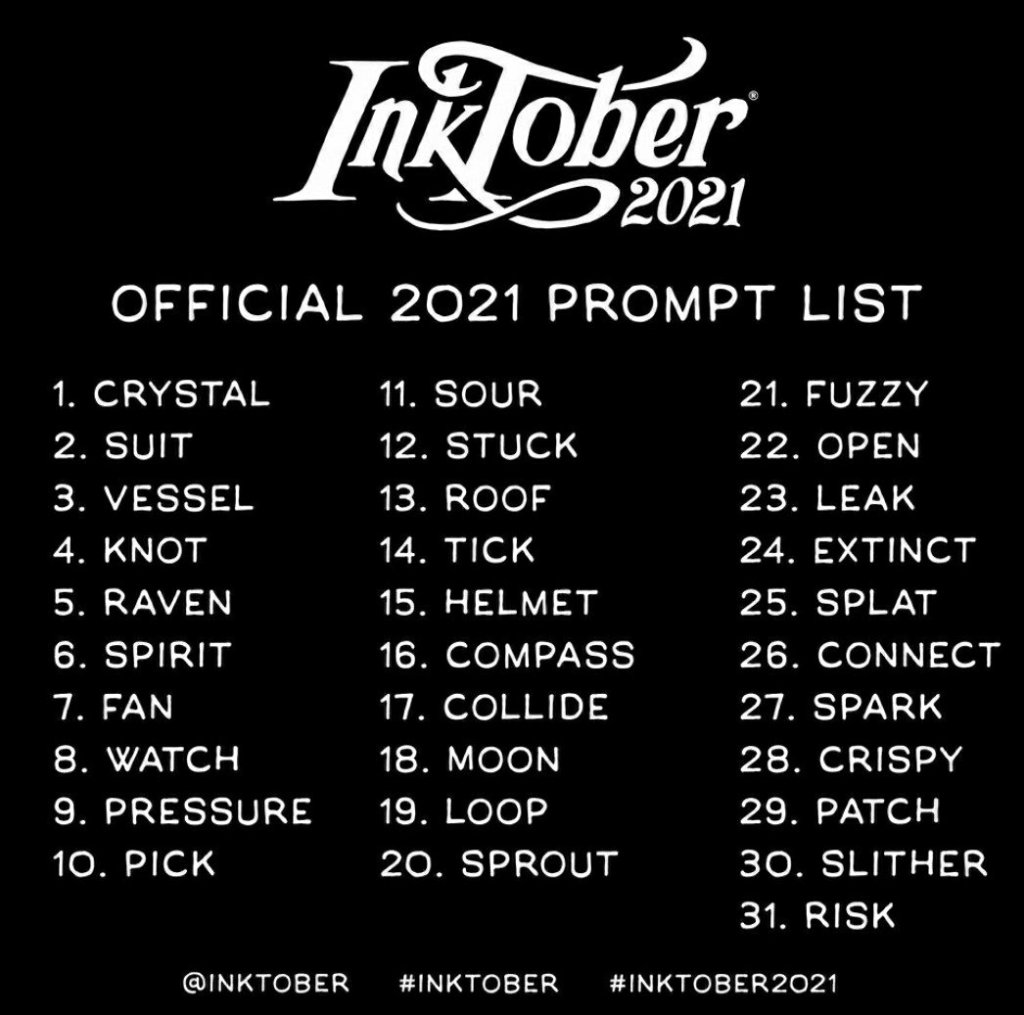
This is the 1st time I decided to participate in the famous global challenge Inktober 31 days maraphon. Let’s start FUN!:) Here is the official site with prompts and rules https://inktober.com/
My drawings Inktober will be based on some little stories about travel, happened in past and planning future ones. It will be about my favourite places in France, Italy, Spain, motherland Belarus and my current home country Canada, maybe I will discover new places with my virtual travel and art.
Who knows it will be an easy or hard journey for future 31 days or after couple days my regular full time job tasks will stop my optimism to do daily drawings and posts and move it away with Toronto fall windy weather.. will see:)
My goal is attempt to learn something new and be part of my colleagues artists in all countries. I am inviting everybody to join our community:)
I am planning to use watercolor paper and black ink, maybe will add some light tones with other ink’s colours or some watercolours, will see how it goes. The October 1st prompt is Crystal, until tomorrow:)
All paintings belong to the author. No image is to be copied without permission.
You can visit my personal website pages here and find out more about the artwork I am offering in oil and watercolor paintings; purchase canvas prints, framed prints, and more artwork.
My favourite art store in Toronto Deserres, Spadina Ave
This post is a collection of my October daily sketches, but we’re jumping straight to winter. Because why follow a calendar like normal people?
Toronto’s winter is basically nature’s way of saying “time to stay indoors and contemplate your life choices.” Think snow, think wind, think your home suddenly becomes a cozy fortress where you can enjoy the view from your window while secretly judging people who actually venture outside. There’s ice skating (bring your bruises), and a festive Christmas-New Years atmosphere that makes you forget your heating bill exists.
Fair warning: All paintings in this post are refugees from previous seasons. Consider them time travelers.
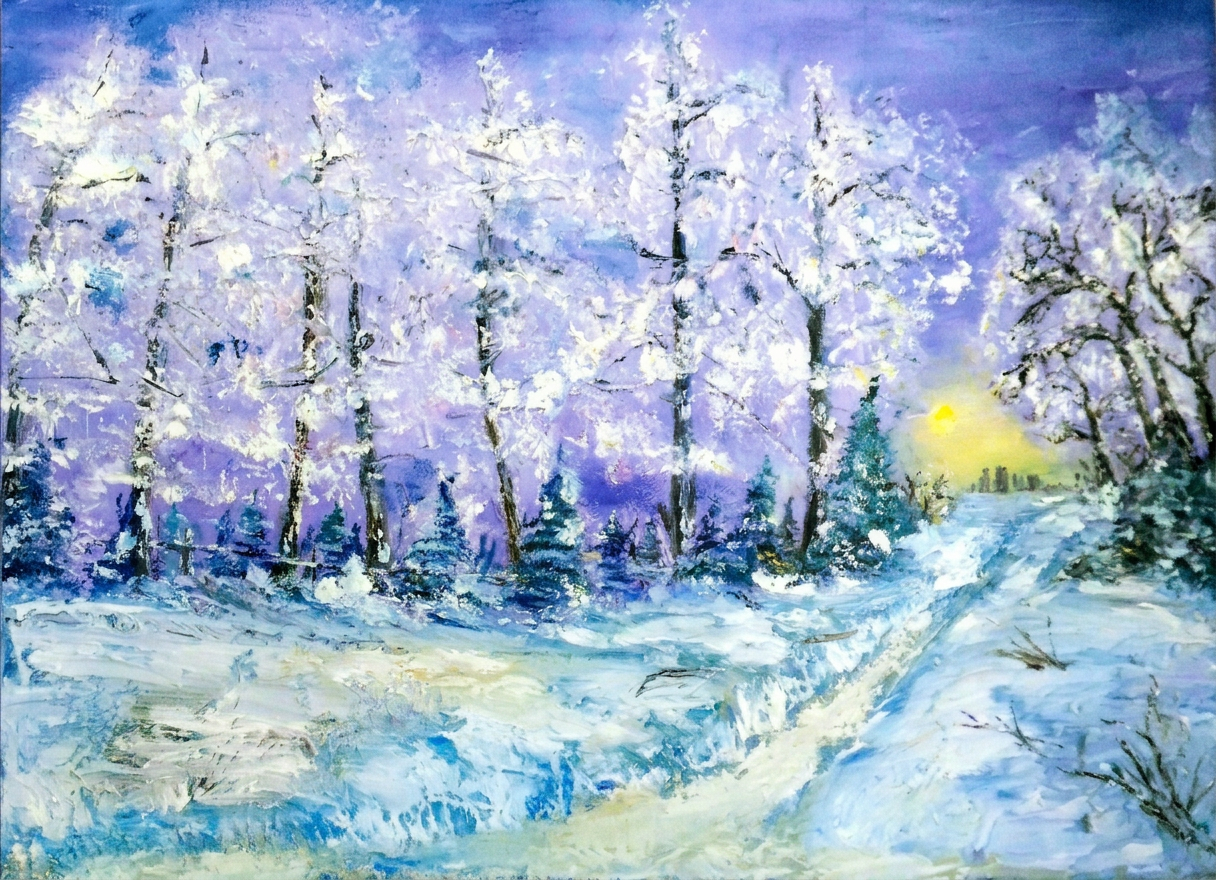
Ontario Place in winter, immortalized in oil. Pro tip: If you squint really hard at this painting, you can spot the CN Tower looming in the distance—you know, that charming 0.5 km tall landmark that Toronto residents can see from literally everywhere, even from their nightmares.
Spot the CN Tower. No seriously, it’s in there somewhere.
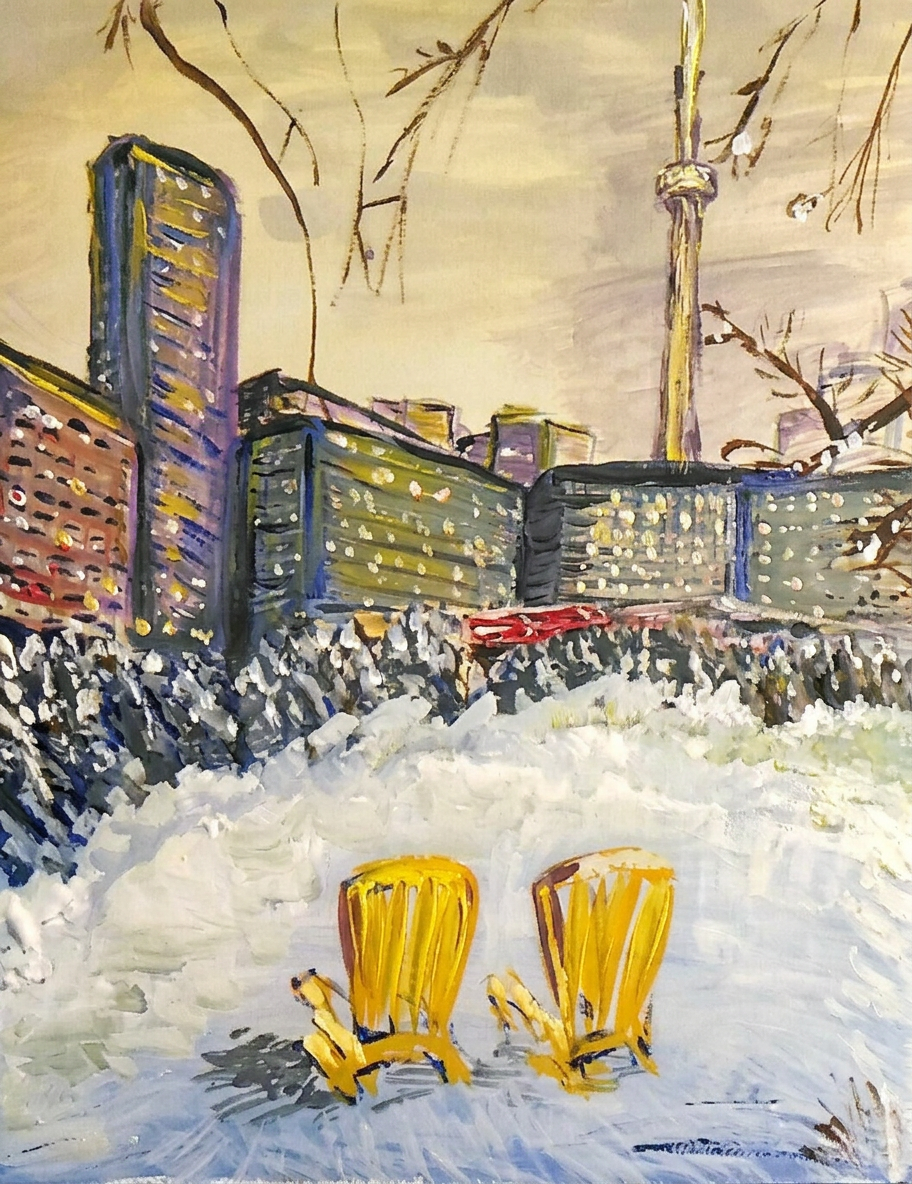
Winter at Toronto Music Garden downtown? Chef’s kiss. Fancy lights everywhere, a stunning CN Tower backdrop, and—here’s the plot twist—a couple of bright yellow summer beach chairs just casually hanging out on the frozen Ontario lake, apparently on strike from summer and refusing to acknowledge they’re in the wrong season.
Beach chairs on ice. Summer is in denial.
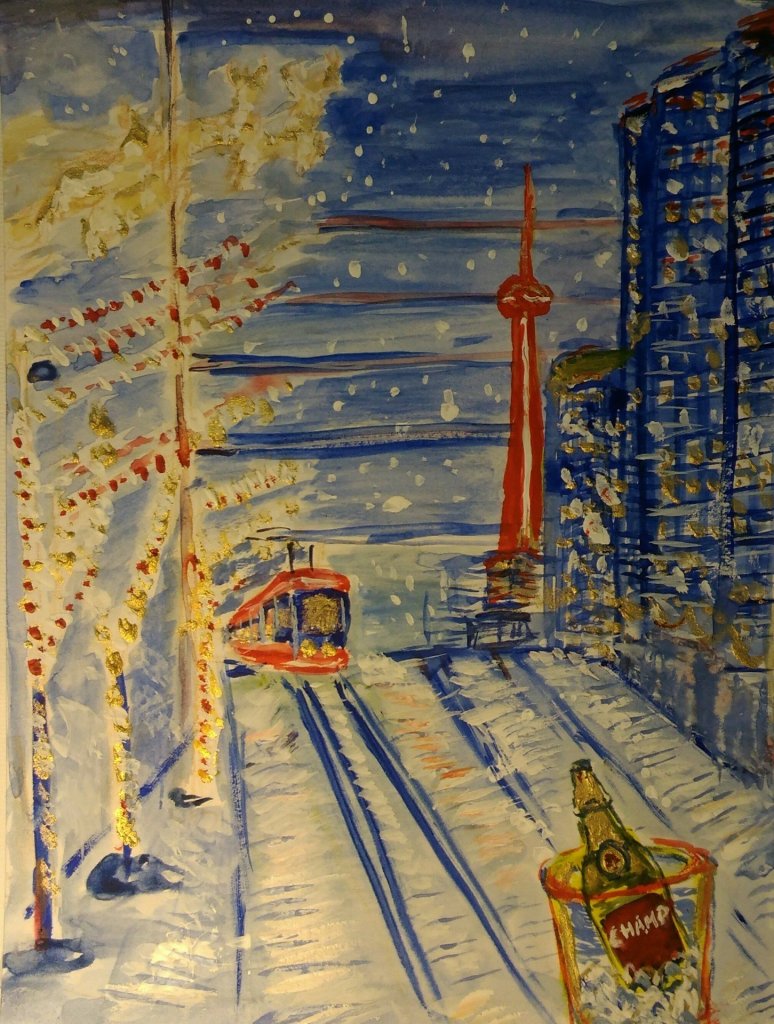
Queens Quay West and Spadina: The year is ending, and Toronto’s streetcar is basically in a mad dash to the finish line! This imaginary masterpiece features a Toronto tram hurtling toward the New Year like it’s late for a very important date, complete with Christmas sled deer (yes, deer—stay with me), flying gifts, and a suspiciously placed bucket of champagne just waiting to get obliterated by a speeding tram. What could go wrong? Happy Holidays will be welcoming… especially this year :)
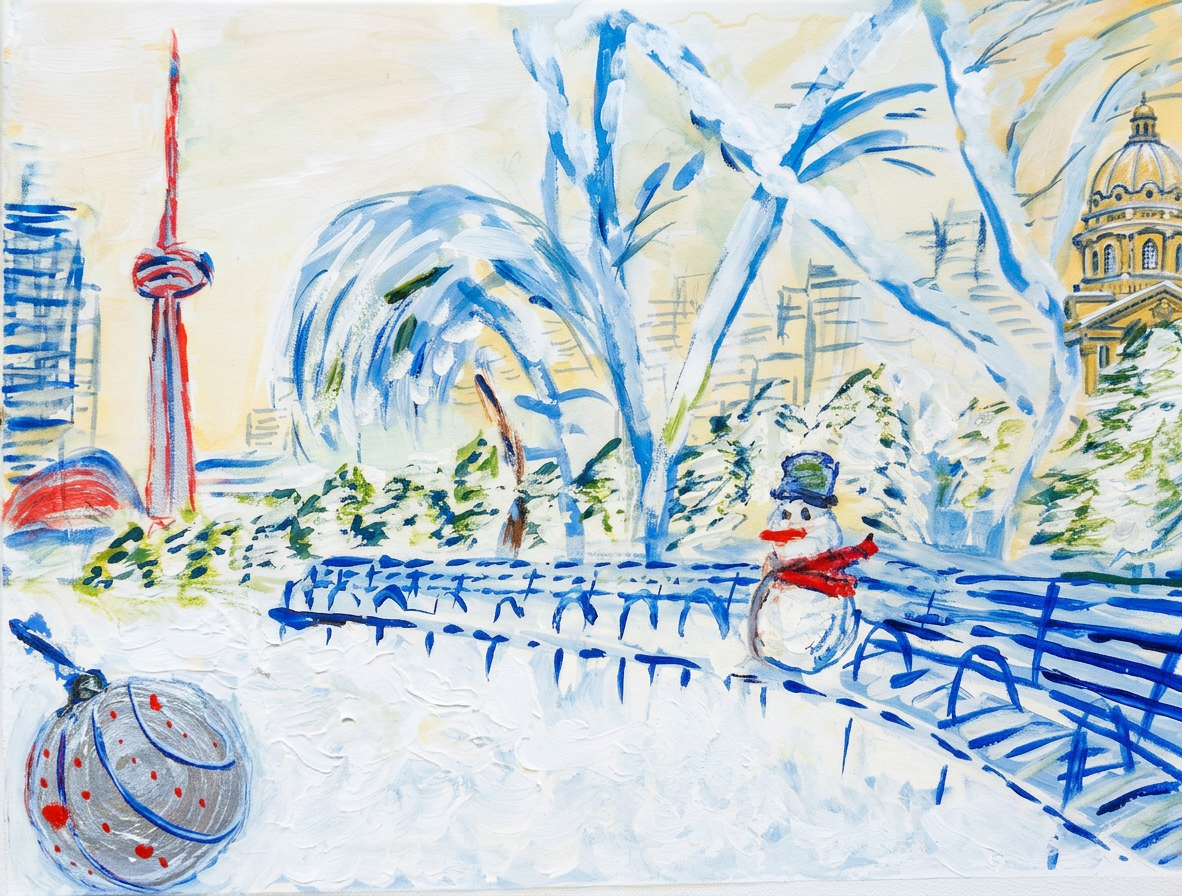
Yet another Toronto Music Garden watercolor! Featuring: one lonesome snowman, striking a philosophical pose with the CN Tower as his existential backdrop, and a shimmering silver Christmas ball judging his life choices. This was painted during a winter when Toronto actually got snow—yes, that rare, mythical phenomenon. Spoiler: snow doesn’t usually crash this far south near Ontario lake. When it does, locals act like they’ve discovered a new planet.
Or maybe it was a family having the time of their lives, engaged in the ancient tradition of hurling snowballs at each other and collaborating on a frosty monument to their own architectural ambitions.
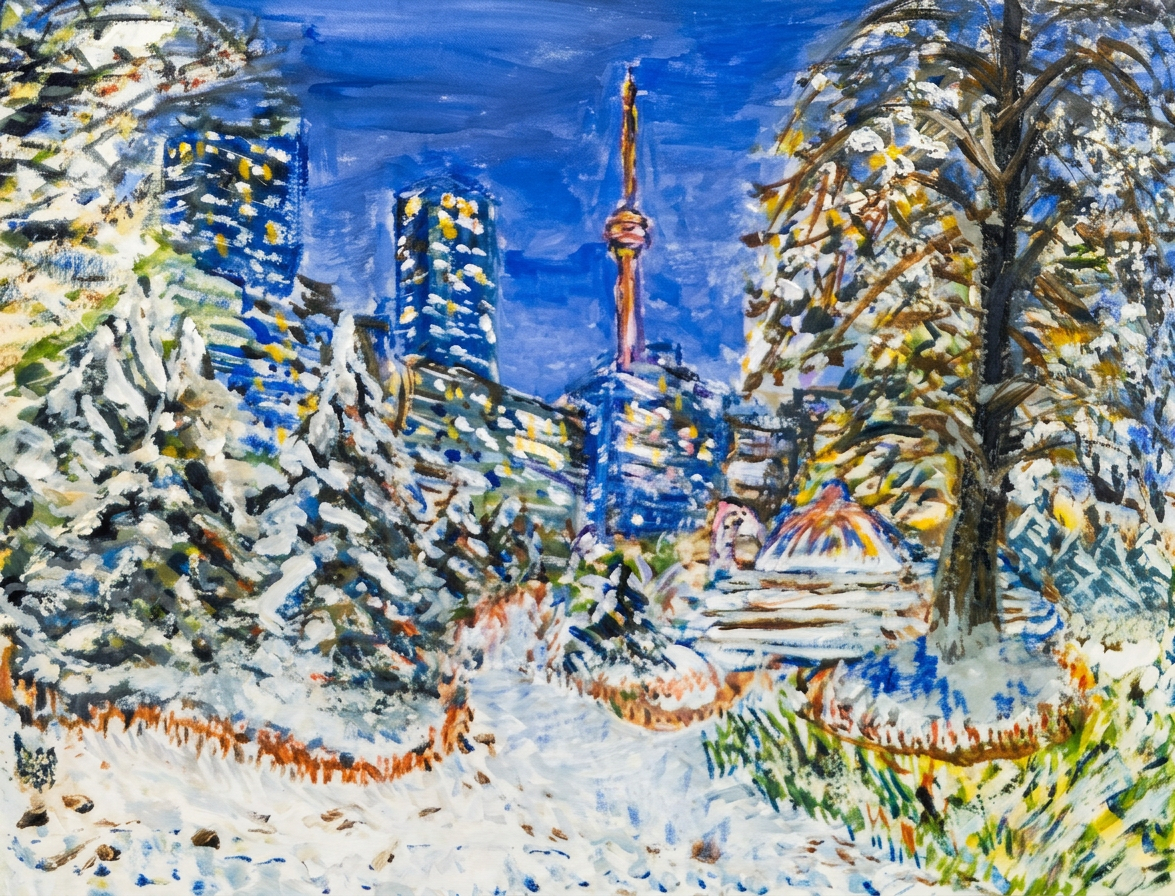
Behold: A breathtakingly frosty twilight of downtown Toronto—complete with the Financial district’s fortress of high-risers, a cameo by the CN Tower, and Thompson Hall photobombing the party. I even threw in some gold powder because subtlety is overrated.
Gold dust included. You’re welcome.Toronto in winter. Beautiful. Cold. Very cold.
Holiday vibes, zero heating bills pictured.
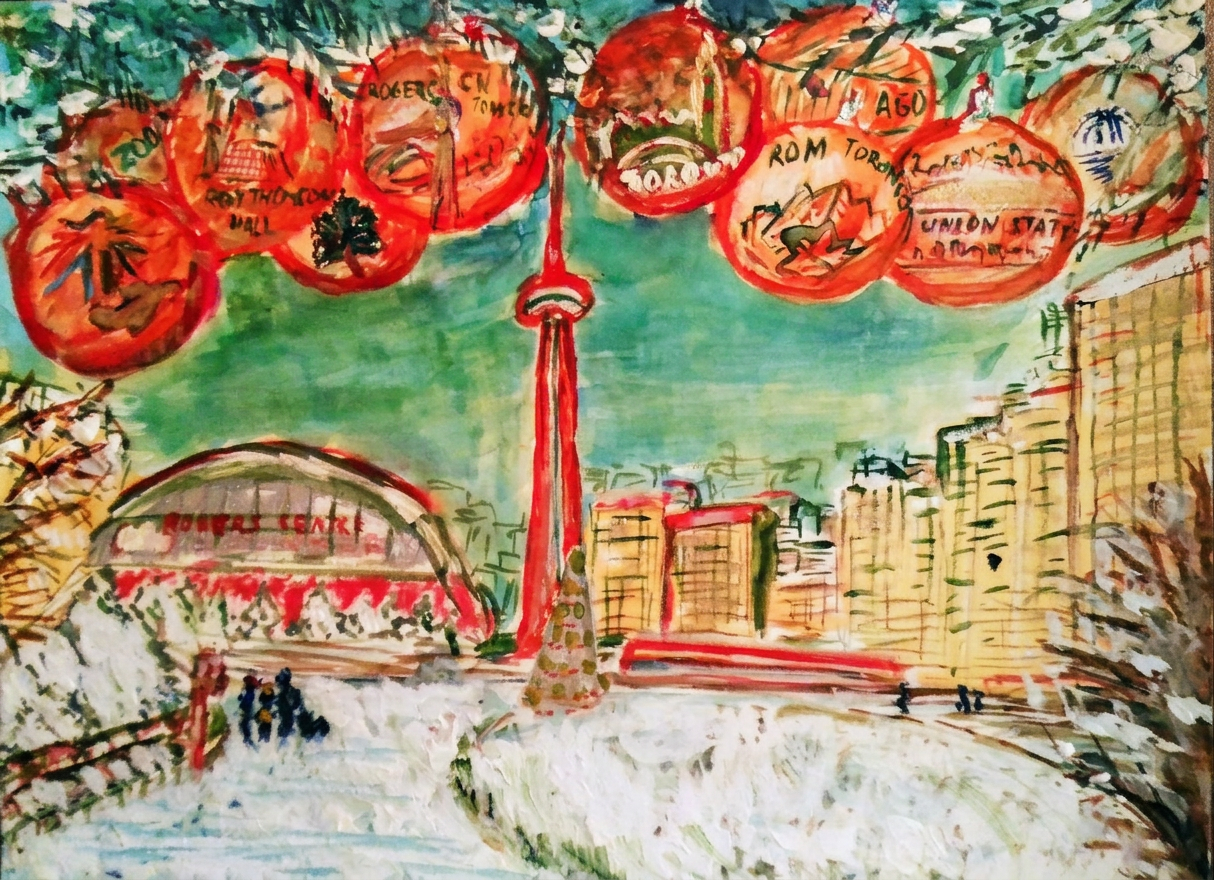
Gold fantasy extravaganza featuring the CN Tower, Thompson Hall, and Christmas balls so large they probably require their own zip codes.
Romantic. Festive. Definitely not freezing.
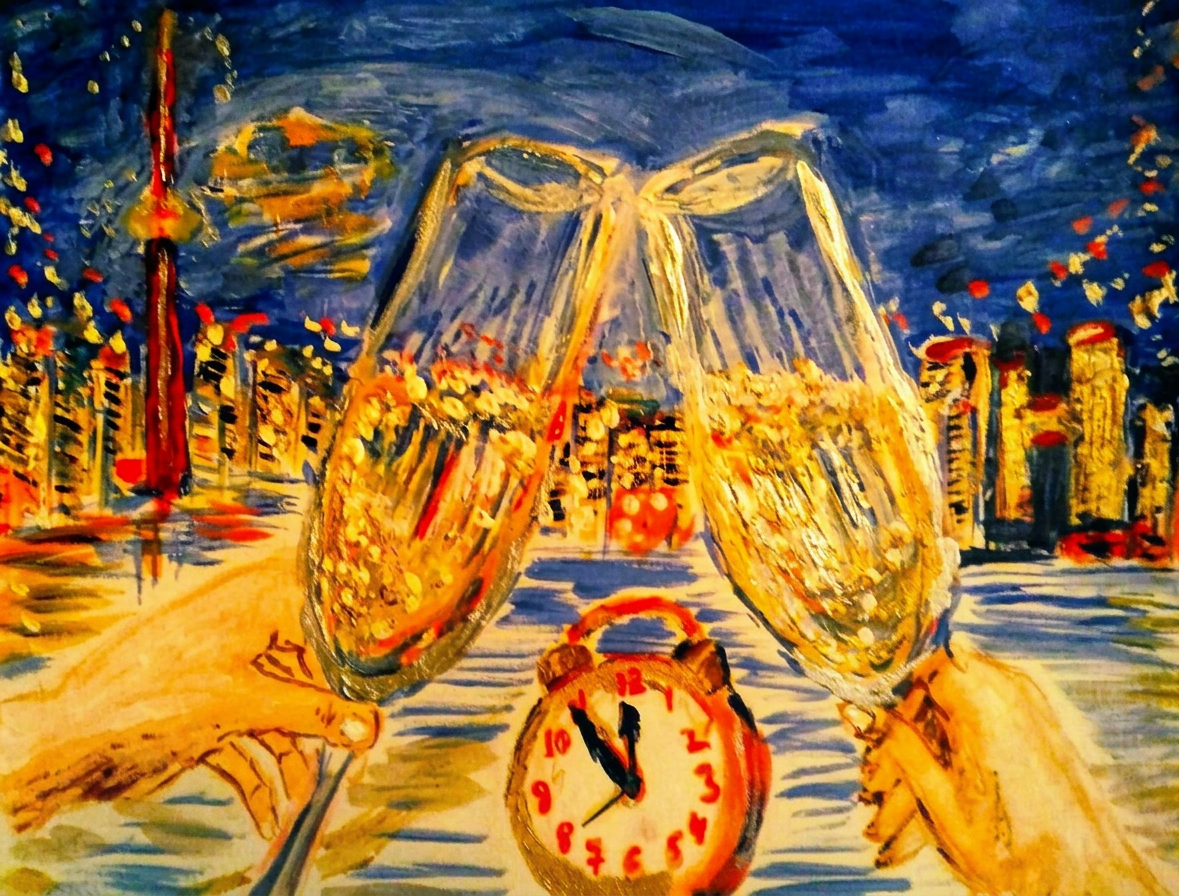
The romantic holiday painting with the beautiful night view of Toronto, featuring cheerful downtown during the holiday season. Clock counts down minutes to the New Year, Champagne is ready.
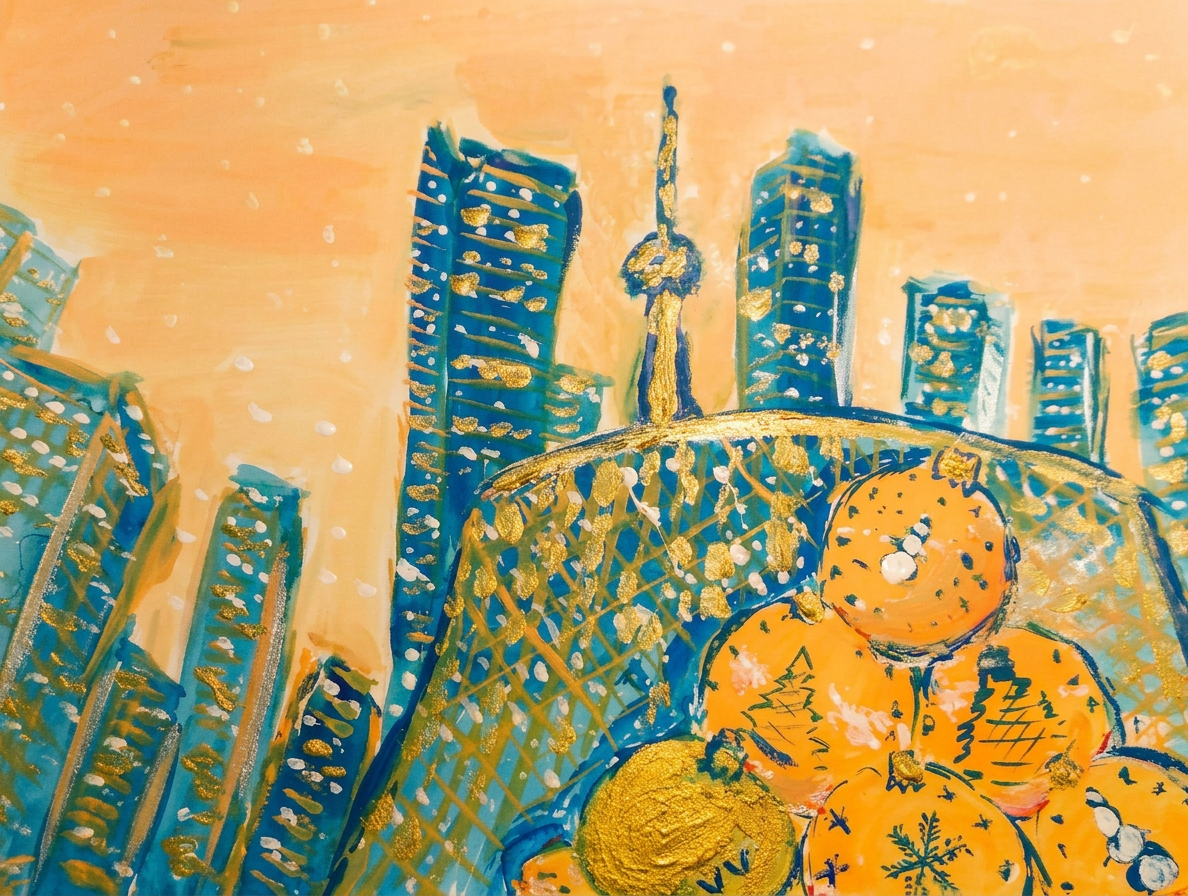
…and winter sunset skyline of Toronto downtown with CN Tower and Rogers centre. My dream shows lots of Christmas balls up in the air with my favorite places in Toronto – CN Tower, Rogers centre, Zoo, ROM Museum, Thompson Hall, Union station, AGO Museum, Pearson airport balls. Everybody can find their interesting places and buildings in the city. Watercolour painting with the landmarks and museums of the City on the Christmas balls, impressionism
Blue hour. Deep thoughts. Frozen toes.
The Toronto Music Garden at night, now in moody blue. Very brooding. Very mysterious. Very “I’m contemplating why I’m standing outside in the snow.”
The snowman has seen things. He stares into the void.
Fingers crossed that my Toronto posts successfully convince you that this city is beautiful and welcoming! (The winter part is negotiable.)
Bon voyage! Until the next adventure :) Stay healthy, stay warm, stay away from icy patches.
All paintings belong to the author. No image is to be copied without permission. (Yes, I’m watching.)
Tools used for my painting: Watercolour by Charvin and Van Gogh brands (yes, THE Van Gogh—no big deal), Derwent watercolour pencils that cost more than my rent, and Faber Castell artist pens for the details. Paper by Strathmore Watercolour and Mixed Media albums, 15×20 cm (6×8 in.) – perfect for when you want your masterpieces portable-sized.
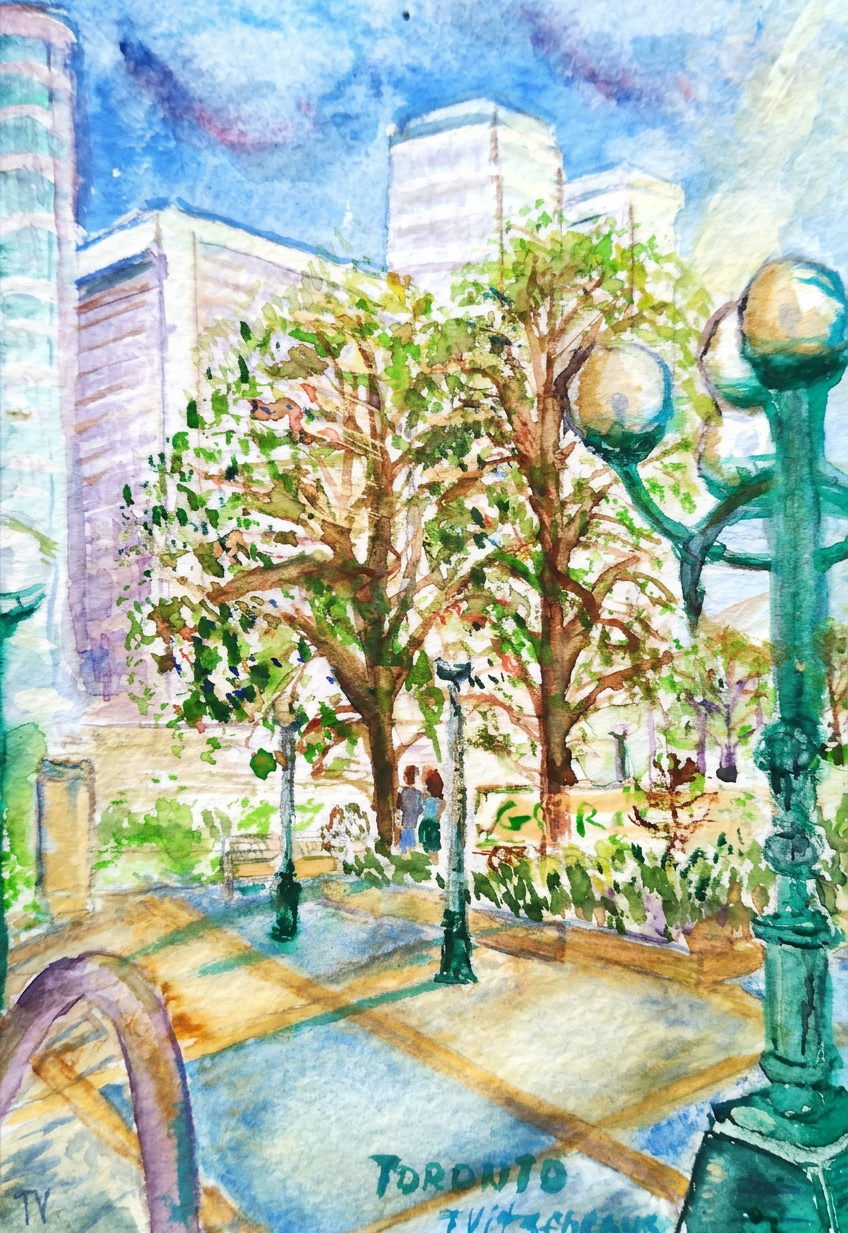
Welcome to the grand finale of my daily “travel and art” expedition through my home city Toronto—specifically October, when the weather couldn’t decide if it was summer or fall and everyone just wore a hoodie with the faint hope they’d covered all their bases. This post is about my neighborhood and that delightful little oasis called the Music Garden, where I pretend I’m culturally sophisticated when really I just wanted a place to sketch away from distracting squirrels.
Yes, that lamp is judging you.
The current unusual year with #stayhome and #lockdown is giving me the “opportunity” (read: forced chance) to discover the bright and friendly place I live in. Turns out when you can’t leave your city, you get really creative about appreciating it. Who knew?
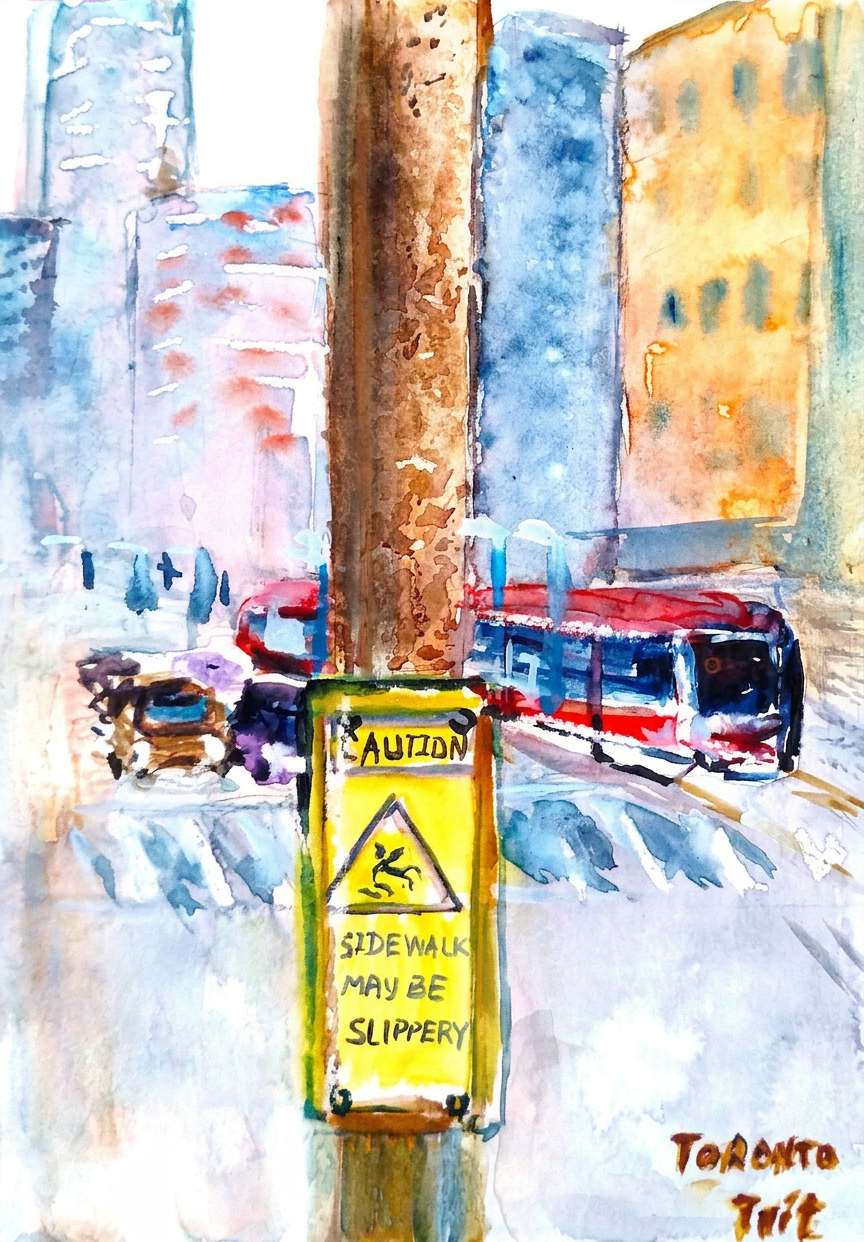
The tram that never waited for anyone.
This painting is mostly for fun :) Honestly, the main subject is that bright yellow street sign screaming “Sidewalk maybe slippery” at the pedestrians—because nothing says “artistic endeavor” like immortalizing municipal warnings in watercolor. I may or may not have laughed while painting it.
I used to trudge this way every morning to my office like a regular working human. Not this year! Almost all locals are now professional Zoom dwellers, except for our essential and frontline workers—thank you, seriously! This particular bridge? It’s on Spadina avenue at Front street, where I stand looking artistically contemplative while secretly plotting which coffee shop to revisit.
Nature doing its best impression of a painting.
Still prettier than my apartment.
The Music Garden is still blooming, stubbornly refusing to acknowledge that autumn exists. Apparently Mother Nature didn’t get the memo about the seasonal calendar this year, which honestly? Respect.
The garden, unbothered, thriving, iconic.
My fall “travel and art” adventure in October’s Toronto has officially concluded. Turns out there are buckets of lovely places in and around the city if you’re brave enough to venture beyond your kitchen during a lockdown. (Spoiler: I was.)
High Park in fall. No filter needed — but I used one anyway.
I documented some of my daily sketches this month, capturing my “art office” in all its chaotic glory—you know, that corner where I pretend to look professional while surrounded by paint-stained brushes, mysterious crumbs, and at least three empty coffee cups. It’s organized chaos. Mostly chaos.
Bon voyage! Until the next adventure :) Stay healthy—and more importantly, stay creative!
All paintings belong to the author. No image is to be copied without permission. (Yes, I’m protective of my work. You would be too if you’d spent this much time not getting paid for it.)
Tools used for my painting: Watercolor by Charvin and Van Gogh (the fancy stuff that makes you feel fancy for approximately 0.5 seconds before you drip it on your sleeve). Derwent watercolor pencils and Faber Castell artist pens (because I like to mix media and confuse myself). Paper: Strathmore Watercolor and Mixed Media albums, 15×20 cm (6×8 in.)—perfect for when you want to create art but also maintain your sanity by keeping it to a manageable size.
My daily sketches’ journey in October 2020 is very close to the end. The next chapter is Old #Toronto.
Gooderham and Worts Distillery National Historic Site of Canada with industrial skyline of pitched roofs, turrets, chimney stacks and parapet.
When every chimney has retired but still dresses for the occasion.
Brick by brick, century by century — still standing, still judging your latte choices.
Old buildings staring down the new ones like: ‘We were here first.’
There are abandoned buildings with modern city’s buildings as background. Paintings were done as mixed of watercolour pencils, watercolour paints and acrylic, above added oil to add some texture for bricks.
I added cum clouds for peaceful sky and keep the interest in the scene to substitute buildings’ pipes that do not smoke anymore.
Abandoned? Prefer ‘vintage and unbothered.’
Cobblestones: lovingly restored. Tourist elbows: free of charge.
A lovingly rebuilt historic district that’s now so touristy, even the cobblestones are posing for selfies—yet somehow the old spirit still refuses to check out.
Canada Malting Site .It is one of two remaining silos in Toronto’s Harbourfront in Ontario, Canada. It is almost 100 years.
The museum and house Sir William Campbell is a vibrant public space where members of Toronto’ communities giving life to the words “freedom of expression.” Painting was done as combination of fountain pen with watercolour paints.
Almost 100 years old and still not on TikTok. Respect.
Toronto’s CN Tower, casually photobombing downtown with its reflection on the surrounding buildings, has been the city’s superstar landmark for the last 45 years. That basically makes it ancient history by our young country and city standards. CN originally stood for Canadian National, the railway company that decided, “You know what would be fun? A *massive* tower.” At over half a kilometer tall (555 m), the CN Tower spent more than three decades as the reigning champ of tallest building, tower, and freestanding structure—because apparently “really, really tall thing” needed multiple categories.
The CN Tower refused to be painted directly. A diva to the last pixel.
I decided to be “original” and painted this famous building, the CN Tower, not directly, but as a reflection in the fancy high-rises that try very hard to look taller than Canada’s tallest landmark:) I splashed in deep blue and juicy raspberry colours for a slightly over-the-top romantic vibe. This early-dawn scene was painted in the morning before work hours—because coffee and sunrise apparently make me think I’m a landscape poet with a paintbrush.
Bon voyage! Until the next travel:) All paintings belong to the author. No image is to be copied without permission.
Tools used for my painting Watercolour used Charvin and Van Gogh brands, Derwent watercolour pencils and Faber Castell artist pens. Paper Strathmore Watercolour and Mixed Media albums, 15×20 cm (6×8 in.)
Daily sketches in downtown Toronto with some funny sculptures. In this post I am adding 3 interesting sculptures and architecture that are located at one park, very convenient for the artists, locals and tourists:)
Dog Fountain at Berczy park. 2020 new reality. I saw some disposable masks on the sculptures of dogs. It is still one of the favorite meet point for friends in the city:) I added coolers of sour cream, tobacco and cappuccino to add warmth of the last days of the Indian summer.
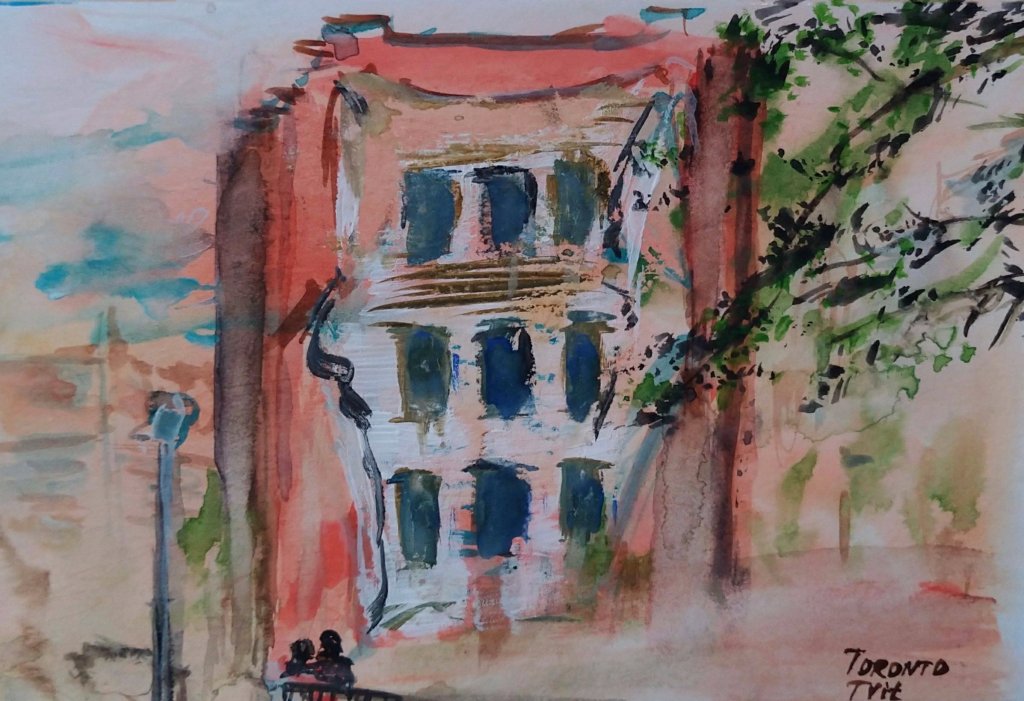
Toronto downtown beautiful Flatiron building by architector Derek Besant. It has a narrow angle from one side, but I like its facade on Berczy park, overlooking the square, like the wrapped edges of autumn leaves. I using colors salmon + rose + vanilla
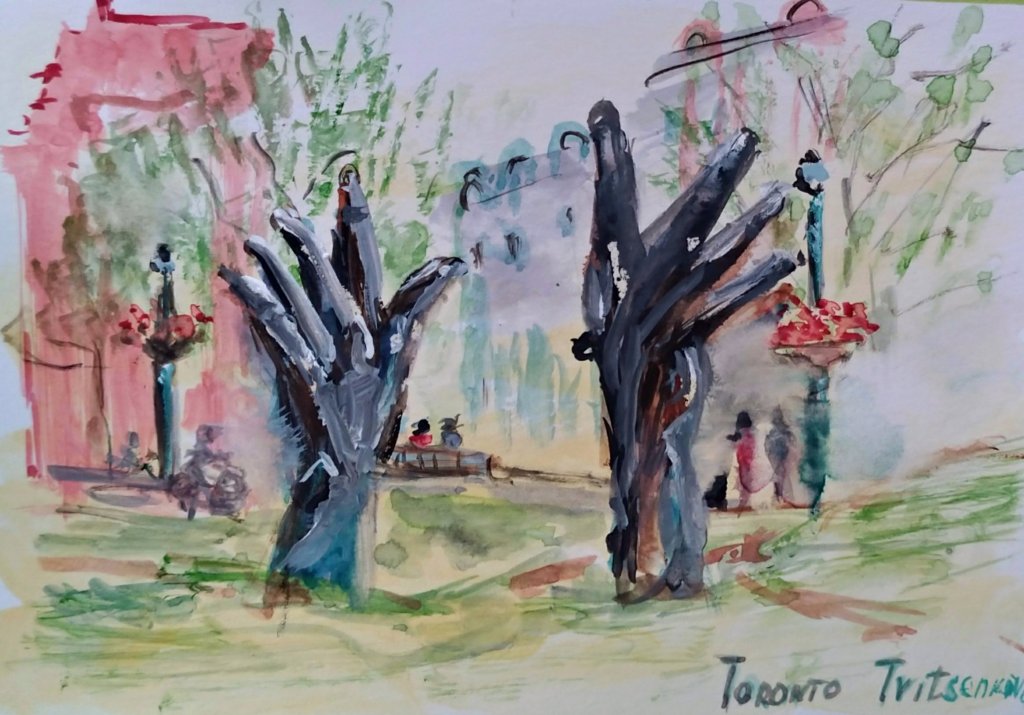
And another weird and fanciful sculpture of hands out of the ground. Maybe they are life-giving hands of the Earth?:) In my painting I used matte and very deep black with indigo, grass is an autumn shade of flax. The background is the peach-colored building Flatiron building at Berczy park.
All paintings belong to the author. No image is to be copied without permission
Tools used for my painting Watercolour used Charvin and Van Gogh brands, Derwent watercolour pencils and Faber Castell artist pens. Paper Strathmore Watercolour and Mixed Media albums, 15×20 cm (6×8 in.)
Still life and urban sketching. Where I convince tiny flowers to sit still for their portraits while dodging pigeons in European streets.
Why do I love daisies? Because they’re basically flower emojis that actually exist. Adorable, cheerful, and completely indifferent to my sketching abilities.
Daisies in the wild. They had no idea I was about to make them famous.
I genuinely hope to return to a truly cozy Norman village in the near future. You know, the kind where every cobblestone has probably been stepped on by centuries of people who knew how to properly enjoy apple cider and weren’t obsessed with their phone cameras. Picture this: leisurely evening strolls down the main street, gawking at the kind of farm architecture that makes you question every design choice you’ve ever made, ducking into tiny restaurants that smell like butter and dreams, and pairing crisp apple cider with slices of camembert so good you’ll question why you’ve wasted money on cheese your whole life.
White daisies: looking effortlessly elegant since forever. Unlike me before coffee.
Here’s a fun daisy fact that I definitely verified on Wikipedia (so you know it’s true): the word “daisy” is the French word “marguerite,” which sounds way more exotic and romantic. In Greek, it means “pearl” — which explains why they’re basically the Beyoncé of flowers. The English “daisy” comes from Old English “daeges eage,” meaning “day’s eye.” Our word “day” comes from “dawn,” so basically daisies are just flower alarm clocks. The term “day’s eye” refers to how the flower opens its petals in the morning and closes them at night, like a tiny botanical snooze button. Cute? Absolutely. Slightly controlling? Let’s not judge.
Early summer morning — the kind where everything is still wet with dew and the moist grass looks almost black in the shadow. This is the moment I attempted to paint marguérites (fancy name, same flower) in watercolor. Featuring the majestic shasta daisy: nature’s way of saying “I’m delightful AND low-maintenance.”
Watercolor daisies. Took 2 hours. They still look happier than I do on Mondays.
Plot twist: in the Middle Ages, daisies were called the “Romanov Flower.” Honestly, they should still go by that name. It makes them sound like royalty instead of something a five-year-old picked for you because you were standing still long enough.
In ancient Egypt, daisies were dedicated to Ra, the sun god. Clearly, ancient Egyptians had excellent taste and questionable work priorities. Meanwhile, the Greek name translates to “white flower,” which honestly is just giving up on poetry entirely.
Summer daisies at golden hour. Even flowers know how to pose better than most people.
Unpopular opinion: the whole “he loves me, he loves me not” petal-plucking game is deeply pessimistic and needs a rebrand. My version goes: “he loves me, he loves me dearly, he loves me tenderly, he loves me passionately, he loves me…” (you get the idea). This way, your mood is GUARANTEED to be good, and the daisy feels validated that she didn’t sacrifice her petals for nothing. The daisy is pleased. The daisy is wise. The daisy says: “Guess the right way, love and be loved.” So believe the daisy, because it will absolutely confirm that your person loves you! (Even if the original game said otherwise. Trust the flower, not the math.) 😊
Still life. The daisy was still. I was not.
Another watercolor masterpiece starring the glamorous Gerbera daisy, nature’s way of saying “regular daisies, but make it EXTRA.”
Want to nerd out about Giverny? (And honestly, who doesn’t?) Check out the Foundation Monet at fondation-monet.com/en/giverny/ — it’s basically a pilgrimage site for everyone who has ever been emotionally affected by water lilies and French gardens.
Can’t find it? No problem. Giverny’s address is 84 rue Claude Monet, 27620 Giverny. GPS coordinates probably not required, since it’s the place where literally everyone is taking the same photo.
Bon voyage! Until the next adventure. Stay happy, and hug a daisy for me.
All paintings belong to the author. No image is to be copied without permission. (The author has very strong feelings about this and also a decent lawyer.)
Even a regular #MondayMorning could be enjoyable and relaxing—especially when #WorkingFromHome means you can attend Zoom calls in your pajamas. This is the view from my downtown Toronto home office: a dark rye sandwich piled high with salmon (nature’s way of saying “I’m fancy”), a small cup of coffee (the fuel that makes Mondays bearable), and the burning question on every artist’s mind: “What else could an artist possibly need?” Well, possibly some watercolour paint. And maybe a shower. But mostly coffee.
Salmon on rye: because adulting requires at least one fancy breakfast decision.
Paintings with oil pastel: A small cup of coffee for a busy-morning breakfast—because nothing says “healthy nutrition” like caffeinated courage and hope in a ceramic vessel.
Coffee: officially a still life subject AND a survival strategy.
Wild flowers in a vase: fighting back against Toronto grey, one petal at a time.
Paintings with oil pastel. Coffee aromas come in all different flavours: fruity, caramelized, sometimes nutty, and occasionally burnt (which tastes suspiciously like Monday morning mistakes). It always energizes me. I take a few precious moments every morning to savour my coffee while watching the vibrant young Toronto hustle and bustle outside my window—basically, I spy on everyone else’s productivity while I’m still in my pajamas. Living the dream!
A cup of coffee and flowers—what could be better in the morning? Absolutely nothing, unless you count oxygen and consciousness. I add some bright and delicate colours to the grey downtown city landscape of #Toronto to prove that life doesn’t have to be monotone—a wild summer flower bouquet in a vase, basically nature’s rebellion against urban beige.
Bon voyage! Until the next adventure :) Stay healthy, stay caffeinated, and for heaven’s sake, use sunscreen—your future self will thank you.
All paintings belong to the author. No image is to be copied without permission. (Yes, even if you think you can sneak it past the internet. You can’t. We all know about screenshots.)
Summer vacation is basically nature’s way of saying “Go forth and create art!” So naturally, the only sensible thing to do is pack paint supplies and pretend you’re not sweating through your shirt. What do you actually need to paint masterpieces in the great outdoors? Just some simple art tools and the delusion that you won’t spill watercolors all over your lap.
Love the summer feeling with this hat
Behold! My beloved art bag—the tiny vessel that somehow holds a travel brush, a modest watercolor paint box, a sketchbook for doodling my failures, AND a silk scarf. That scarf serves dual purposes: it makes me look artistically sophisticated and doubles as a mask when I need to hide from other hikers questioning my life choices.
The whole studio. It fits in a bag. Take that, real artists.
So there I was at #Toronto #downtown, perched on the shore of #Ontario lake, racing against an impending #downpour because apparently I make terrible weather-based decisions. The park was eerily quiet—that perfectly calm, slightly ominous feeling right before a storm hits, with only a few boats gently creaking and swaying on the waves, as if they, too, were nervously waiting for nature’s tantrum to begin.
Boats patiently waiting for the storm. Relatable.
I could literally smell the ozone (which sounds more dramatic than it actually is), so I wisely abandoned ship and sprinted away just before the rain started its assault. But plot twist: I totally captured the pre-storm atmosphere in my painting—see those actual raindrops? I didn’t accidentally get water on the paper; those are intentional artistic choices. I absolutely love summer storms, even when they’re chasing me away like an angry mob.
Those dots are raindrops. On purpose. Obviously.
#Ontario #Kawarta #lakes—This watercolor was painted directly on a boat during a warm summer evening while my husband was fishing approximately one foot away from me in the same tiny boat. The artistic process is truly romantic, except for when you realize you’re both taking up maximum space and someone’s going to accidentally knock over the paint water.
Painted this while my husband caught fish. We both tried our best.
My mission: capture the soft, dreamy evening hues of a charming little cottage on the shore, surrounded by lush green leaves and moody monochrome stones. The lake and those two birches on the high shore? They took me straight back to #Belarus, my motherland—minus the actual traveling part, which is the real dream during #lockdown.
A cottage so cosy it made me homesick for a place I’ve never lived.
Bon voyage, you absolute legends! Until our next adventure. Now go forth and create some art before something terrible happens on the weather front!
All paintings belong to the author and are protected by the international law of “I made this and you can’t copy it.” No image is to be copied without permission. Seriously, don’t do it.
#lemon #art #travel #Italy (aka my holy trinity of happiness)
Yellow, sour, fragrant… and absolutely the diva of the citrus world. In tea with sugar? *Chef’s kiss.* It’s pleasant. Also full of vitamins (or so I tell myself between paintings). And its name is LEMON! Perhaps each of us, both adults and children, knows this bright, yellow citrus fruit—unless you’ve been living under a Mediterranean rock your whole life.
Still life. Still delicious. Still not edible.
It was in Italy (the land of carbs, art, and lemons galore) where my family dragged me around the Italian “boot” from top to toe several years ago. Because nothing says “family vacation” like touring every inch of a country! The painting happened in the south of Italy, in one of those charming little towns where time moves slower and espresso is cheaper than water. Naturally.
Rome wasn’t built in a day, but this lemon was painted in one. (Lies. It took three.)
Our next stop was the north of Italy, literally the “top of the boot” (geography humor—I’m here all week). Lemon trees were EVERYWHERE on the Borromean islands, like someone’s obsessed Pinterest board came to life. The backdrop? Mountains. Swiss mountains. Beautiful, indifferent, Swiss mountains that made the lemons look even more golden and smug.
Lemon trees: nature’s way of saying ‘you’re in Italy now, calm down.’
The lemons were HUGE. Like, absurdly huge. And their aroma? Everywhere. It was less “fresh citrus scent” and more “olfactory assault in the best way possible.” I still remember the weight of those yellow orbs in my hand—fruit so heavy it could double as a gym weight. Nature’s dumbbell.
Shall we have tea with lemon now? Or should we just sit and contemplate the sheer absurdity of how a little yellow fruit has consumed my entire artistic existence?
Tea. Lemon. Existential peace. You know the vibe.
According to legend (and I’m not making this up, mythology nerds), the aromatic fruits the color of the sun were gifted to Hera’s wedding when she married Zeus. Because if Zeus’s new wife wanted to stay young and beautiful forever, obviously you give her lemons. Logic. The ancient Greeks apparently believed: “Its aroma amuses the mind, the peel and grains are good for the heart, the flesh is excellent food, and the juice quenches thirst.” Basically, lemons are fruit’s overachiever. They’re doing cardio, aesthetics therapy, AND hydration all at once.
All paintings belong to the author. Seriously, don’t copy them. I’m watching. (Jk, but also—don’t.)
Tools used for my paintings: Watercolour brands Van Gogh and Cotman (because why choose when you can be indecisive?). Derwent watercolour pencils for when I need surgical precision on my lemon chaos. Paper from Canson Mix Media albums (28×35 cm / 11×14 in.) and Canson Watercolour albums (25×35 cm / 11×15 in.)—basically, I invested in better paper than I invest in my actual life stability.
Bon voyage! Until the next travel adventure (hopefully with fewer lemons and more personal growth, but let’s be realistic). Stay healthy, stay hydrated, and may your tea always have the perfect squeeze of lemon.
Rome. You know, that place where tourists arrive and immediately lose their minds over the one thing Romans have been casually ignoring for literally centuries: oranges hanging from trees. On actual trees:)
Lovely oranges- juicy
Orange trees minding their own business on a Rome street, casually photobombing motorcycles and architecture like they own the place. Spoiler: they kind of do.
Rome in May. The oranges are thriving. The tourists are not.
If you venture to Rome (and let’s be real, who wouldn’t?), prepare your schnoz for a fresh, jasmine-adjacent aroma that will make you question every candle you’ve ever bought. Visit in May? Congratulations! You’ve hit the citrus lottery—blooming orange trees will be photobombing every selfie you take on Rome’s charming streets.
Still life with oranges. They posed. We did not ask.
The Doria Pamphili Garden in Rome is the perfect place to collapse dramatically between museum tours, all while inhaling the intoxicating fragrance and gawking at the aggressively vibrant oranges hanging overhead. It’s like nature installed a mood enhancer specifically for exhausted art lovers.
Doria Pamphili Garden — where art lovers go to dramatically recover.
According to ancient Greek legend (and what’s more reliable than ancient mythology, am I right?), Gaea straight-up gifterd golden orange orchards to Hera as a wedding present when she married Zeus. Their first night of newlywed bliss? Three hundred years. Talk about going the distance! Now that’s a honeymoon.
Hera’s wedding gift. Three hundred years of honeymoon sold separately.
The couple had access to magical spring water—basically the ancient equivalent of a spa day—which kept Hera perpetually refreshed and virginal (plot twist: marriage!). And to make sure nobody crashed their citrus paradise, they hired the Hesperids and a monstrous dragon as bouncers. Talk about taking ‘No Trespassing’ to mythological extremes.
More oranges. Because apparently one painting wasn’t enough.
Spoiler: also oranges.
Oranges’ recipe for the salad we devoured in Rome like it had personally offended us. Main ingredients? Arugula (the fancy lettuce), feta cheese (the salty stuff), oranges (obviously), and olives (because why not). For dressing: red wine vinegar, honey, and olive oil—basically, liquid gold. The result? A light, refreshingly bright salad so good you’ll forget how much you hate summer heat. You’re welcome.
The salad’s main character. Bow down.
Bon voyage! Until the next adventure! Keep your sense of humor (and your appetite) sharp. Stay healthy, stay weird, and always look up to see what fruit-related adventure the universe has in store.
All paintings and sarcasm belong to the author. No image or witty observation is to be copied without permission (they’re copyrighted treasures, thank you very much).
Doria Pamphili Gallery—it’s on Via del Corso in Rome, if you ever need an excuse to eat more salad surrounded by Renaissance paintings and smug orange trees.
The behind-the-scenes reveal: my artistic arsenal includes watercolor brands Van Gogh and Cotman (because yes, we splash out on the fancy stuff). For sketching, I abuse Strathmore Watercolor albums (14×21 cm / 5.5×8.5 in.) and Acquarello (12.5×18 cm). Studio albums? Canson Mix Media (28×35 cm / 11×14 in.) and Canson Watercolor (25×35 cm / 11×15 in.)—basically enough paper to create my own forest, which ironically I’m using to draw pictures of trees. The irony is exquisite.
There are many options to do one-day trips from Paris. This time we chose a day trip to Fontainebleau & Vaux le Vicomte chateaus.
The Château de Vaux-le-Vicomte is accessible by public transport. But, it will take a couple of hours with subway, train, and a local bus. Alternatively, you drive by car.
Illustrated map detailing the route from Paris to the châteaux of Vaux-le-Vicomte and Fontainebleau, highlighting a romantic one-day trip itinerary.
Map to two chateaus. Our one day trip’s itinerary is from Paris to Chateau de Veux le Vicomte and Fountenableau, back to Paris. We took a bus from Paris City Vision.
Departure is from Paris’ center, highly recommend this trip, just book it in advance:)
In the middle of sketch is our couple, my husband and I, who loves traveling, art and architecture.
The first castle was Vaux le Vicomte château
A view to stunning Vaux le Vicomte château that later inspired the famous Versailles. I imagined that beautiful ladies with little colored umbrellas from 17th century are walking at the park.
A watercolor depiction of the stunning Château de Vaux-le-Vicomte, showcasing its elegant architecture and surrounding water features.
The legend says that Nicolas Fouquet invited King Louis XIV. He also invited the whole court to the inauguration of the Château de Vaux-le-Vicomte.
The owners organized a grand and luxurious party and a dinner. Gold-plated gondolas glided through the channels. Gold salad bowls decorated its tables.
The monarch was blinded by the brilliance of the stolen gold. He refused to stay away for the night. Instead, he went to Fontainebleau. The unlucky aristocrat dared to challenge the Sun King. The musketeers arrested him on charges of fraud of the state treasury. Sentenced to life imprisonment and deprived of connection with the outside world.
Illustration of a legendary lady associated with the Chateau de Vaux-le-Vicomte, representing the influence of women in its history.
Ladies who guard the family and peace. What is the most fascinating in the history of the chateau are their legendary ladies of Vaux les Vicomte chateaux. Just some of amazing legends.
The first, Marie-Madeleinede Castille, the spouse of Vaux les Vicomte, continued supporting her husband. He received what was initially supposed to be three months of detention. It was later changed to a life sentence.
Mme Fouquet fought for her husband for many years, and recovered their family property 10 years later. Guyonne de Durfort was another intelligent lady. During the revolution, she didn’t let the castle be plundered. She kept the whole situation in her hands. She gave the castle to the “disposal” of the revolutionary committee and … voila … the whole furniture is still in place.
One more heroic lady Permisine Cas de Dorier set up a military hospital in the chateau during World War.
Artistic illustration of the history of Château de Vaux-le-Vicomte, highlighting Nicolas Fouquet and the architectural team behind the masterpiece.
The history says that the castle was built by three masters. Nicolas Fouquet, Louis XIV’s Superintendent, assembled a team. He brought together an architect, Louis Le Vau. Charles Le Brun, a painter, was included as well. Lastly, André Le Notre, a landscape gardener, joined to execute the entire project. The result of this fraternal union was a work of supreme gorgeousness.
Artistic representation highlighting Nicolas Fouquet, architect Louis Le Vau, painter Charles Le Brun, and gardener André Le Nôtre, who collaborated on the magnificent Château de Vaux-le-Vicomte.
By the way, a cafe in the chateau will appeal to any lover of French cuisine
A watercolor depiction of the elegant gardens and architecture at Château de Vaux-le-Vicomte, showcasing its stunning design and historical significance.
Crews and fun were present at only during the first ball. You feel ghosts everywhere…
Artistic representation of Vaux-le-Vicomte château, depicting its iconic features and surroundings.
Why do not buy a magnet and little spoons with little squirrels on top. Yes, squirrel is emblem of the family and chateau.
On summer evenings, costume candles are held here by candlelight, we will definitely return…
Next castle was Fontainebleau chateau, Stendhal called it the “architectural encyclopedia” and Napoleon called the “House of Ages”.
UNESCO World Heritage
Four French monarchs were born in the Fontainebleau palace, and for many rulers it was the main residence. At present, the palace is part of UNESCO World Heritage. Its chambers, galleries, parks, and gardens are simply amazing.
BBC series “The Impressionists”
I’ve learned about the Fontainebleau garden from BBC “The Impressionists” where young Monet, Renoir and Bazille were painting Fontainebleau forest.
Artistic depiction of the Egyptian Sphinx statue at the Château de Fontainebleau.
In the middle of the magnificent French-style formal gardens, there is a statue. This statue is the Egyptian Sphinx of Chateau de Fontainebleau, Paris, France. Why did it here, in the majestic royal and imperial château in the heart of the forest of Fontainebleau.
A colorful watercolor depicting the throne room at Fontainebleau, where Napoleon famously signed his abdication.
Chambers of Napoleon
The chateau was the first to be conceived as a residential complex and not a bastion. Kings were born here; Napoleon signed the abdication in this room, on this chair the great commander was sitting. According to the legend Napoleon said to his subordinates “Did you want to relax? You will get your rest”.
Artistic depiction of Napoleon’s throne from the chambers of Chateau de Fontainebleau, showcasing the grandeur of French history.
In the chambers of Napoleon, you can immerse yourself in the time of the great emperor.
He was famous for his wish to go down in history.
Gallery of Diana
The Fontainebleau library bathed in the sun, thanks to Italian masters, the French Renaissance was born. In the middle of the library there is a vast globe. The library holds the originals of books dating back to the 13th century.
Watercolor illustration of the Gallery of Diana in the Fontainebleau library, showcasing its grandeur and historical significance.
Well next time we visit another chateau, maybe Versailles?:)
Bon voyage! Until the next travel:)
You are welcome to visit my personal website pages. There, you can find out more about the artwork I am offering in oil and watercolor paintings. You can buy canvas prints, framed prints, and more artwork.
All paintings belong to the author. No image is to be copied without permission.
Tools used for my painting include Charvin and Van Gogh watercolours. I also used Pastel GrayPas Expressionist. Derwent watercolour pencils and Faber Castell artist pens were also utilized. Paper Strathmore Watercolour and Mixed Media albums, 15×20 cm (6×8 in.)
PARISCityVISION agency. address: 2 Rue des Pyramides, 75001 Paris. Trip to Fontainebleau & Vaux le Vicomte
Chateau de Vaux-Le-Vicomte. address 77950 Maincy, France
Chateau de Fontainebleau. address Pl. du General-de-Gaulle, 77300, Fontainebleau, France.

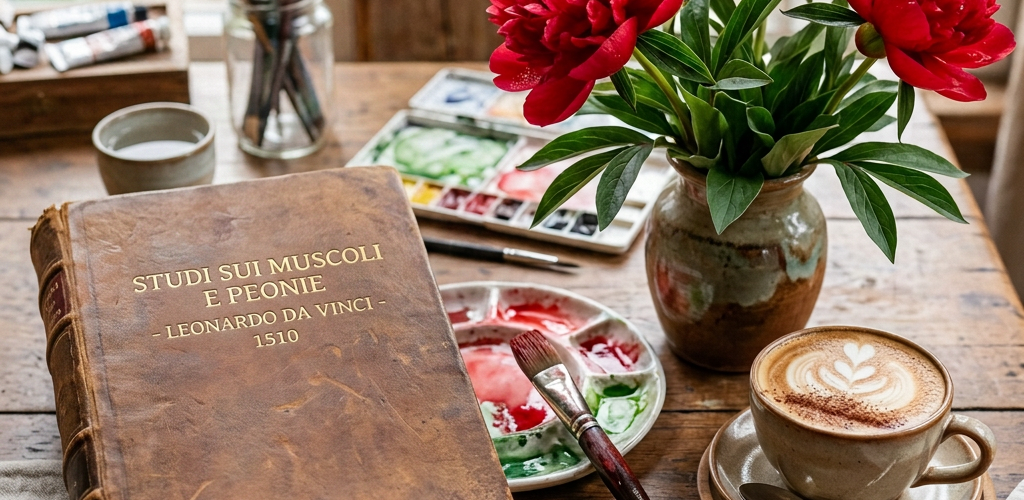
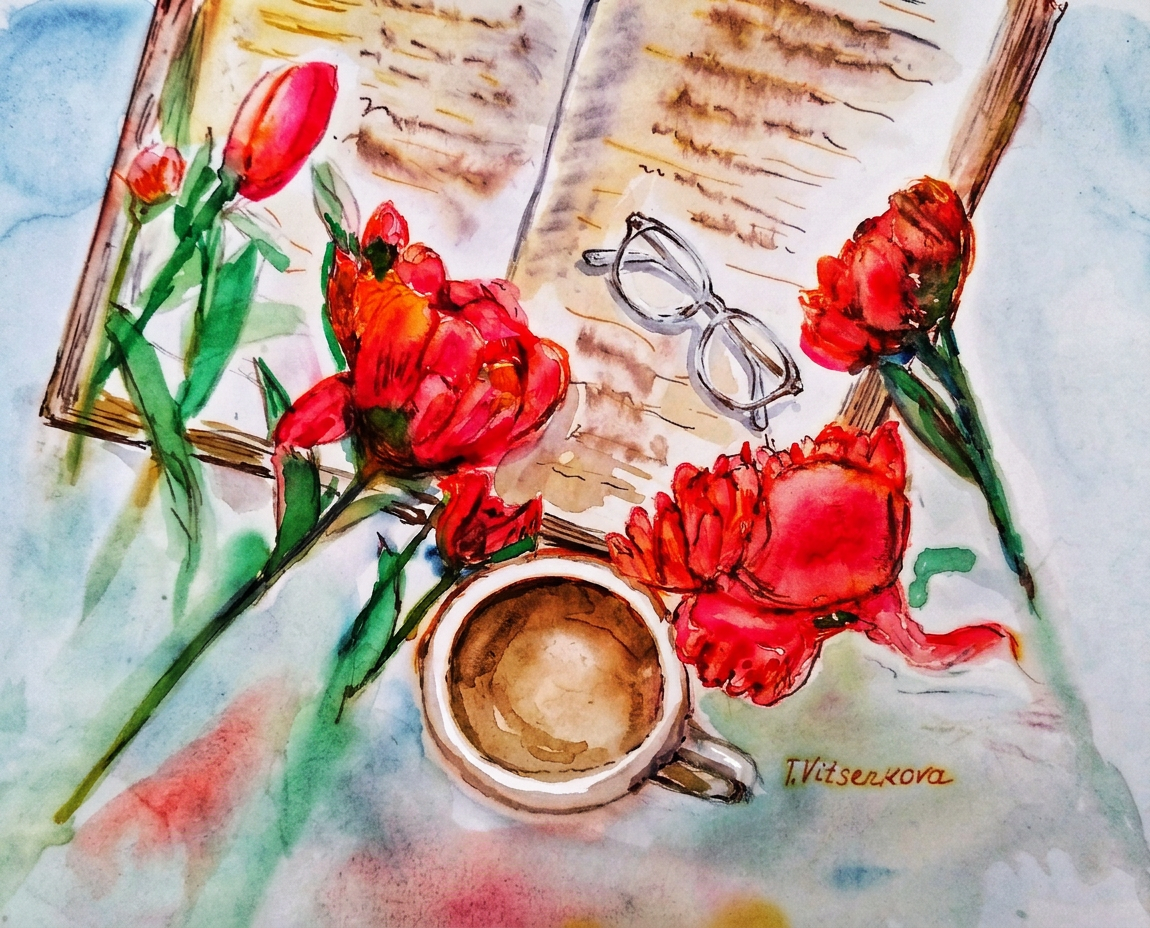
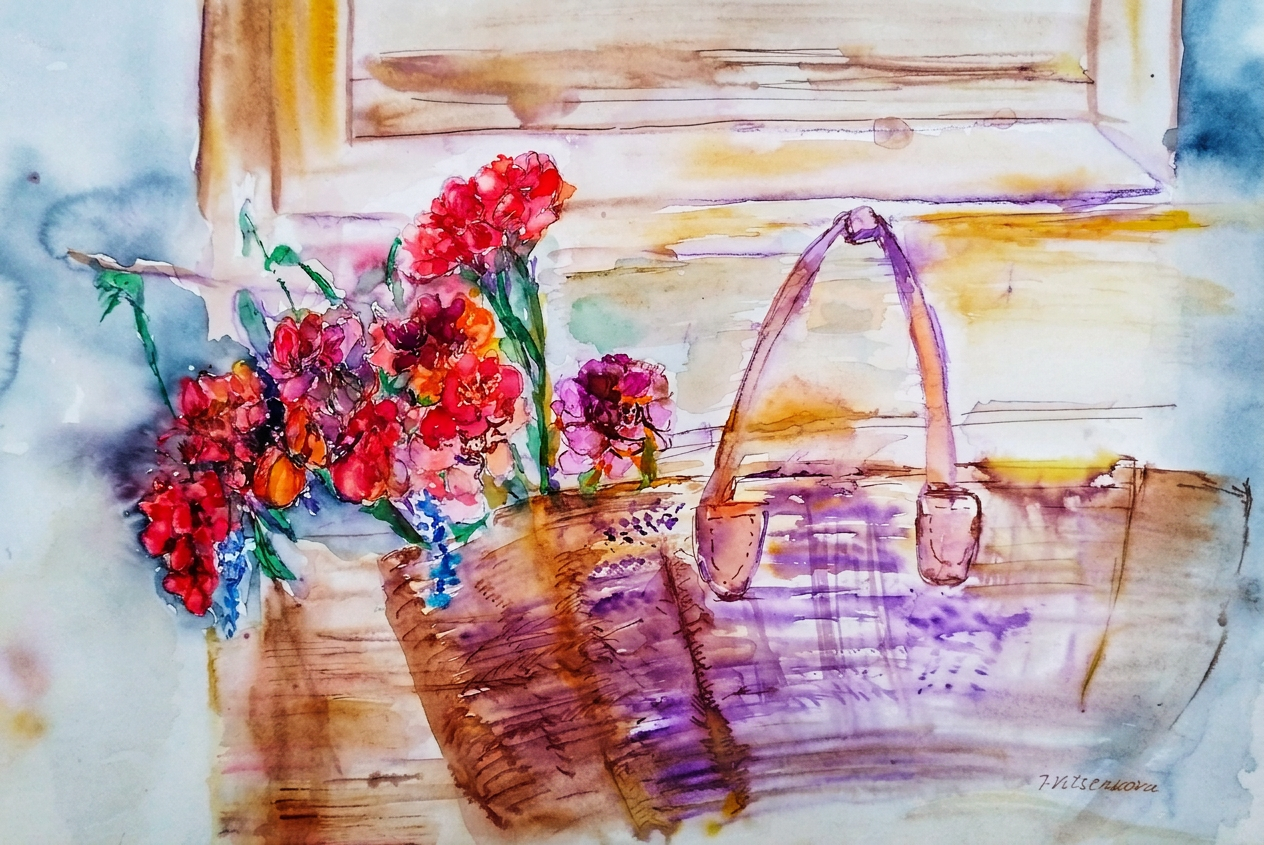




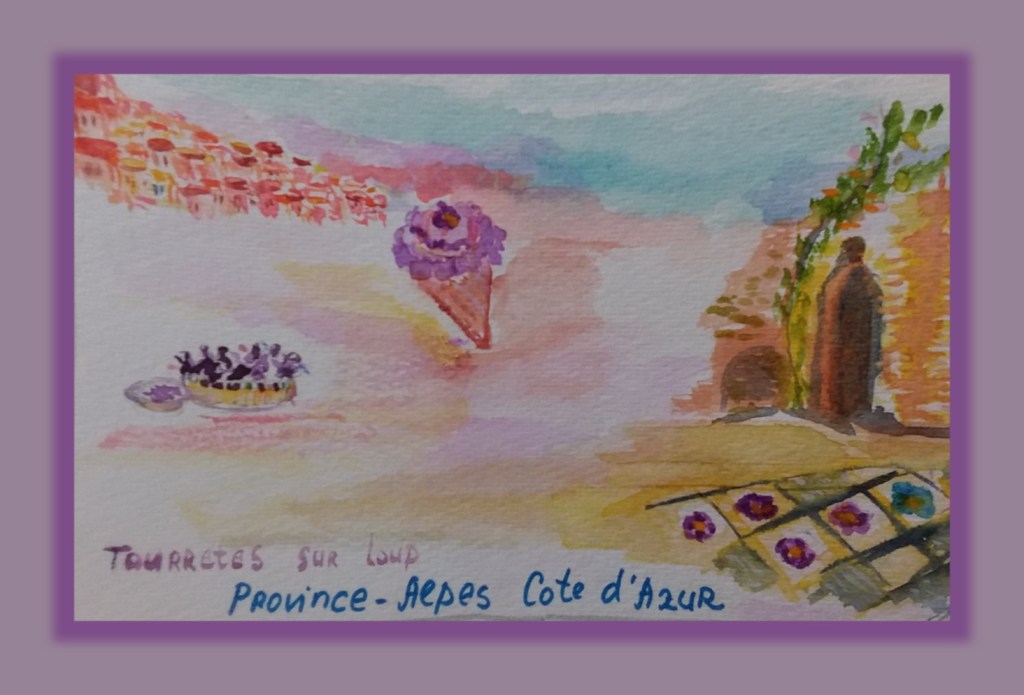


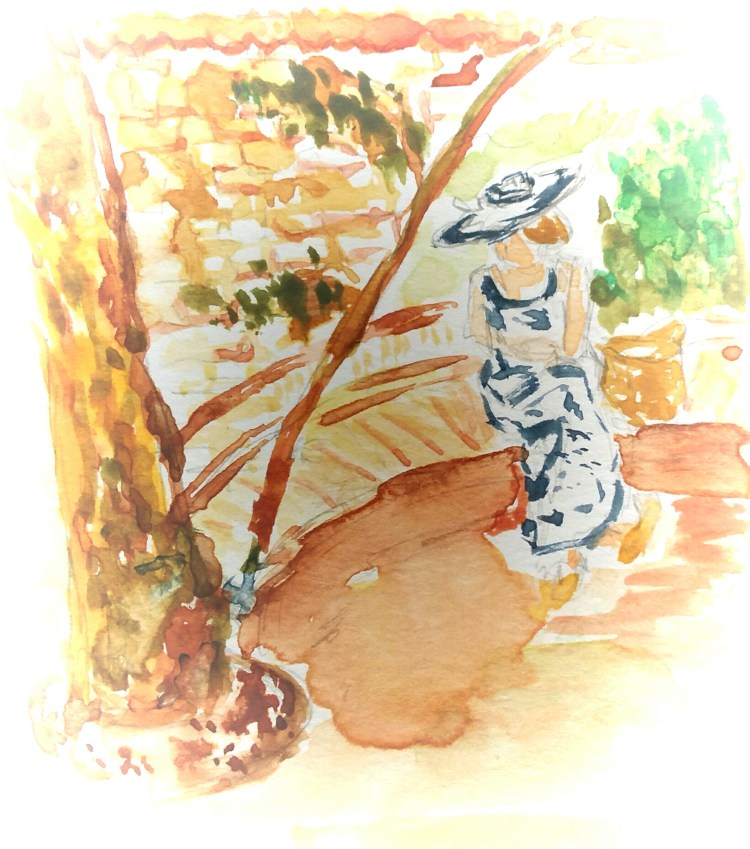


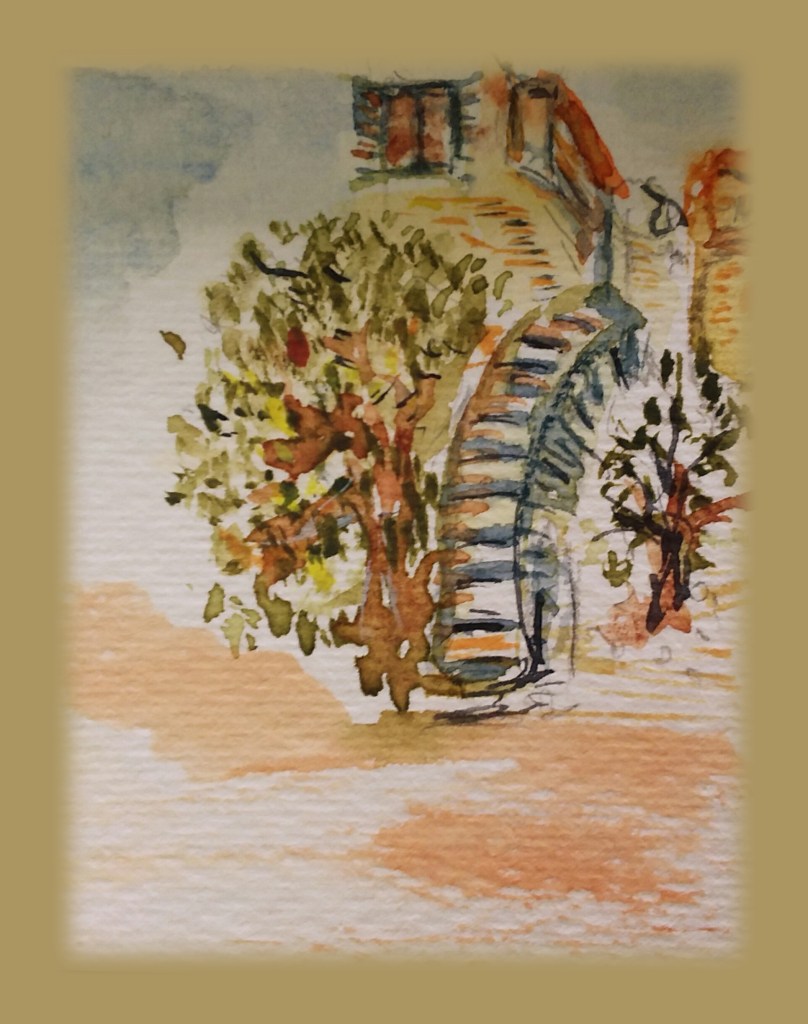
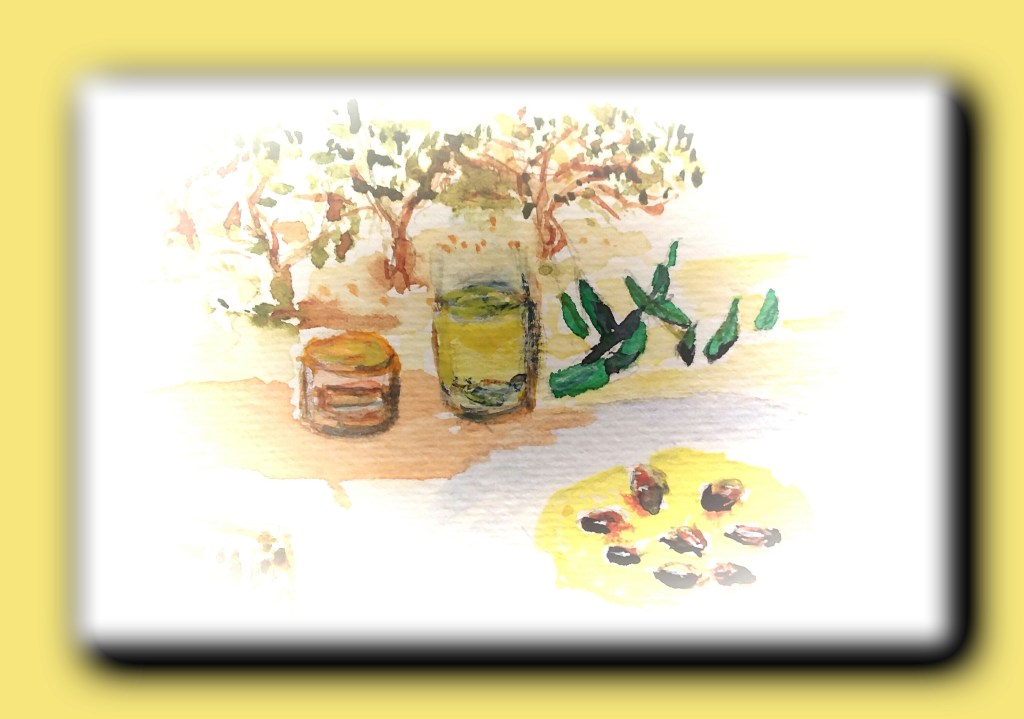

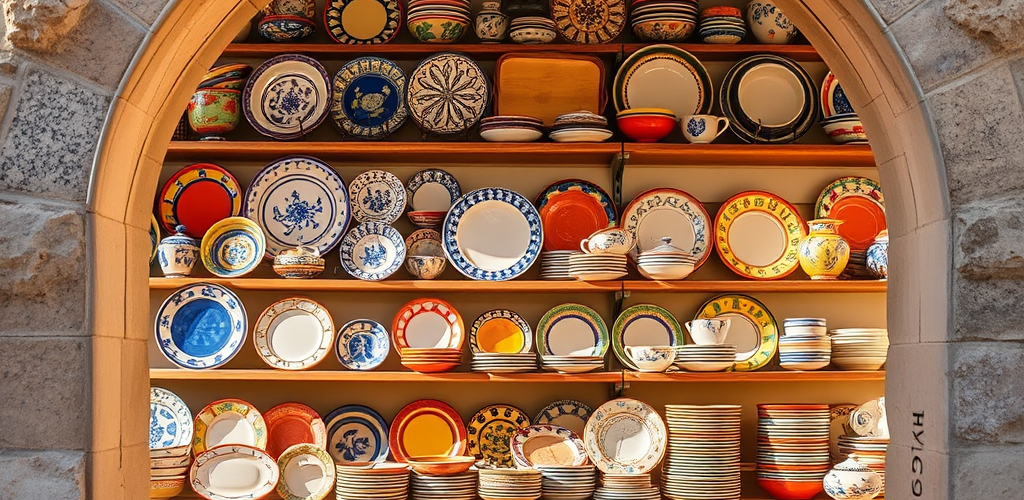
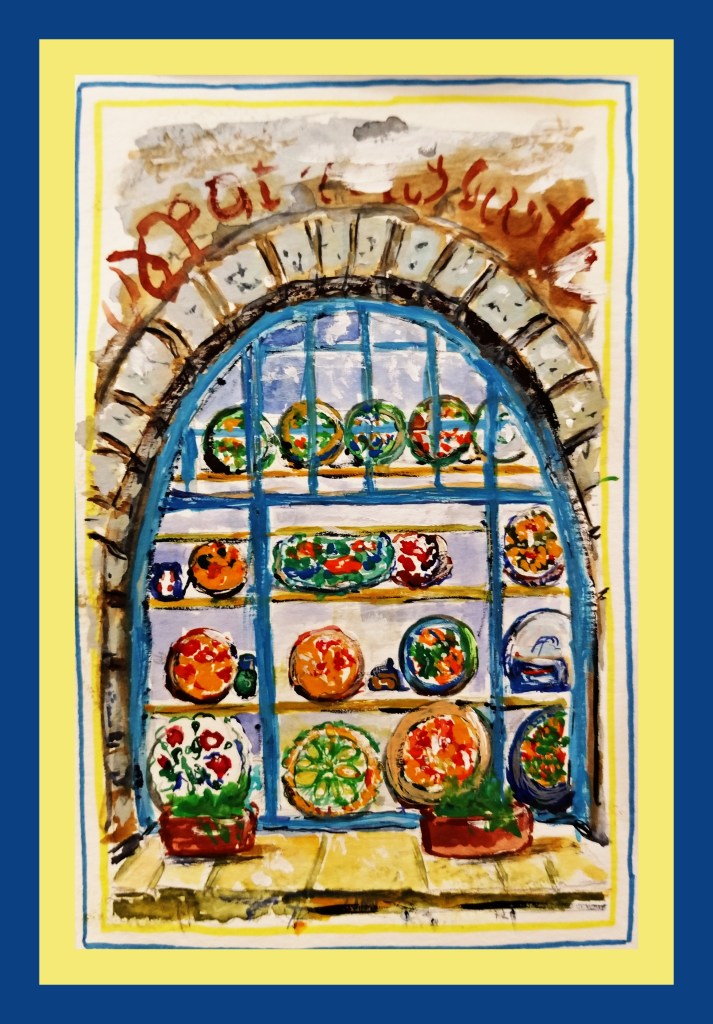
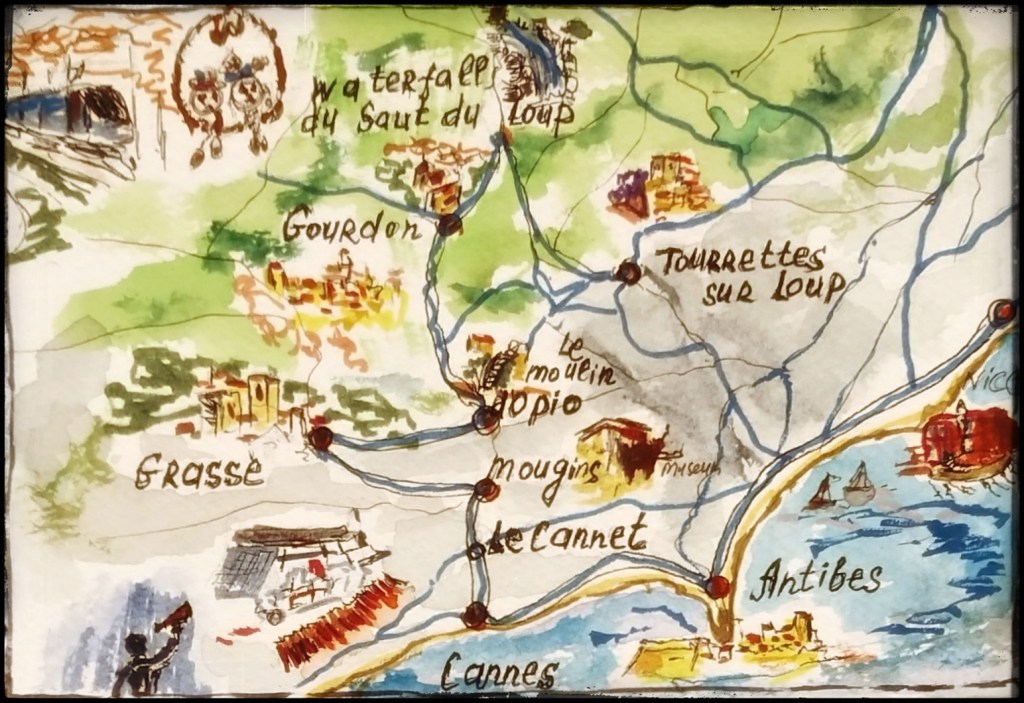


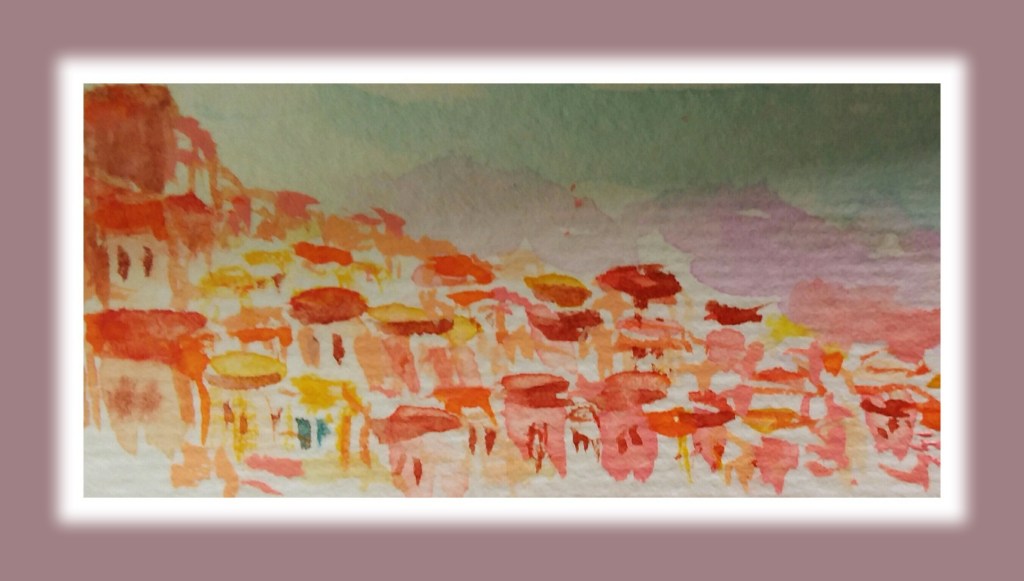


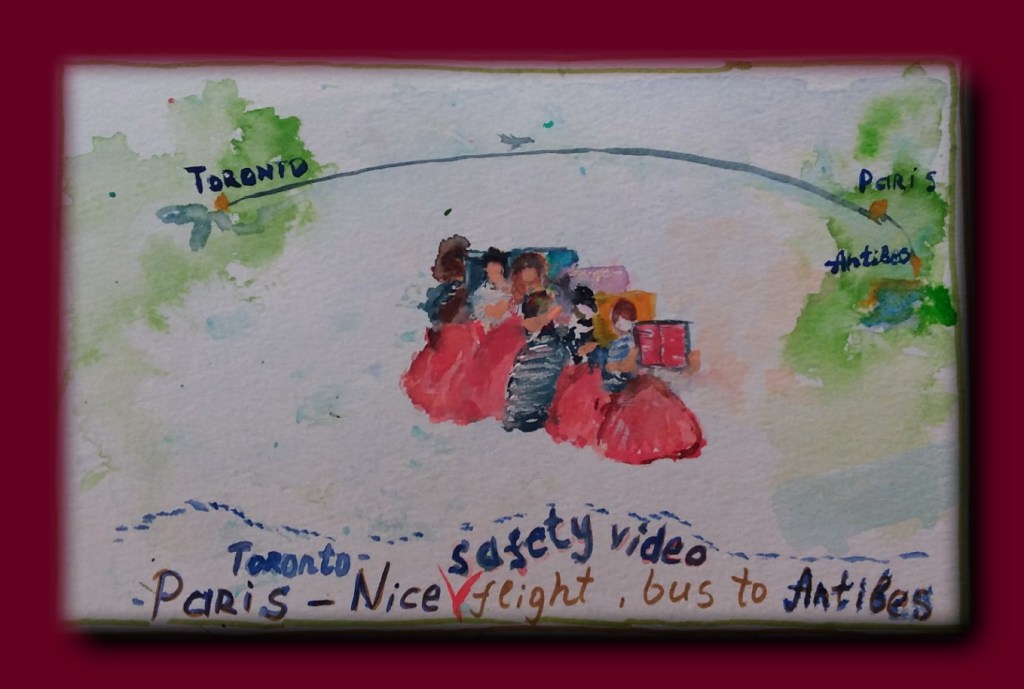

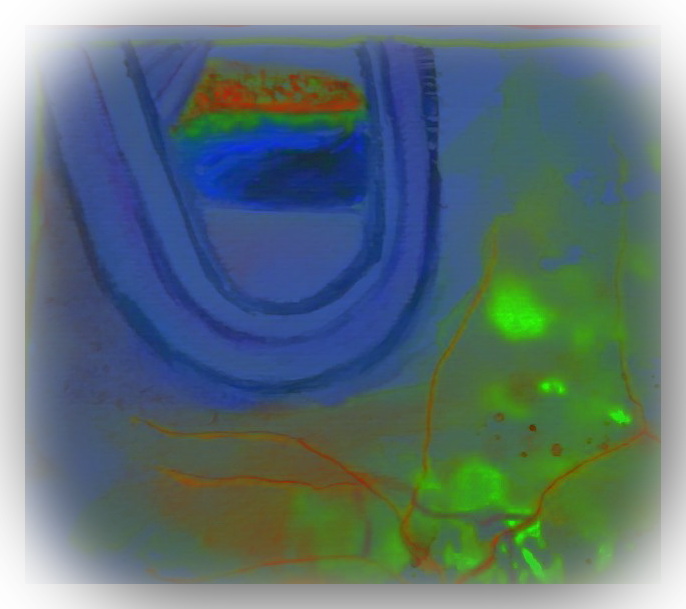
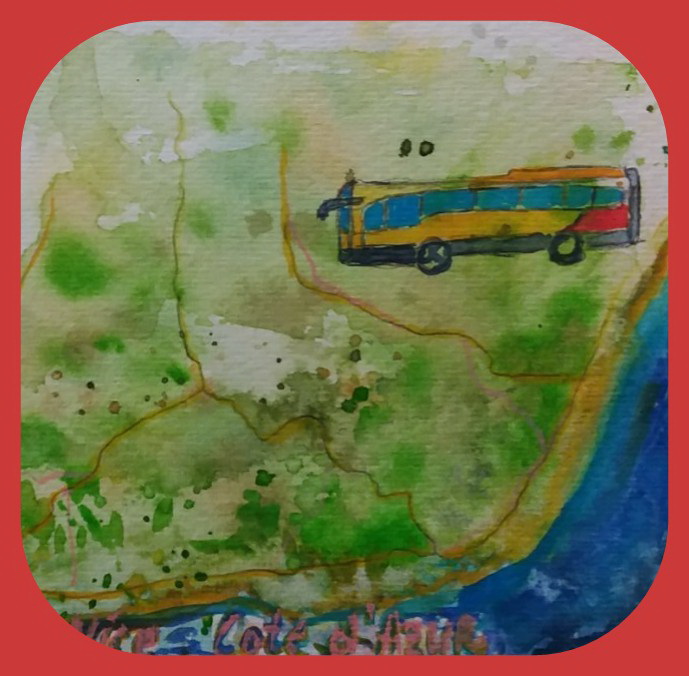


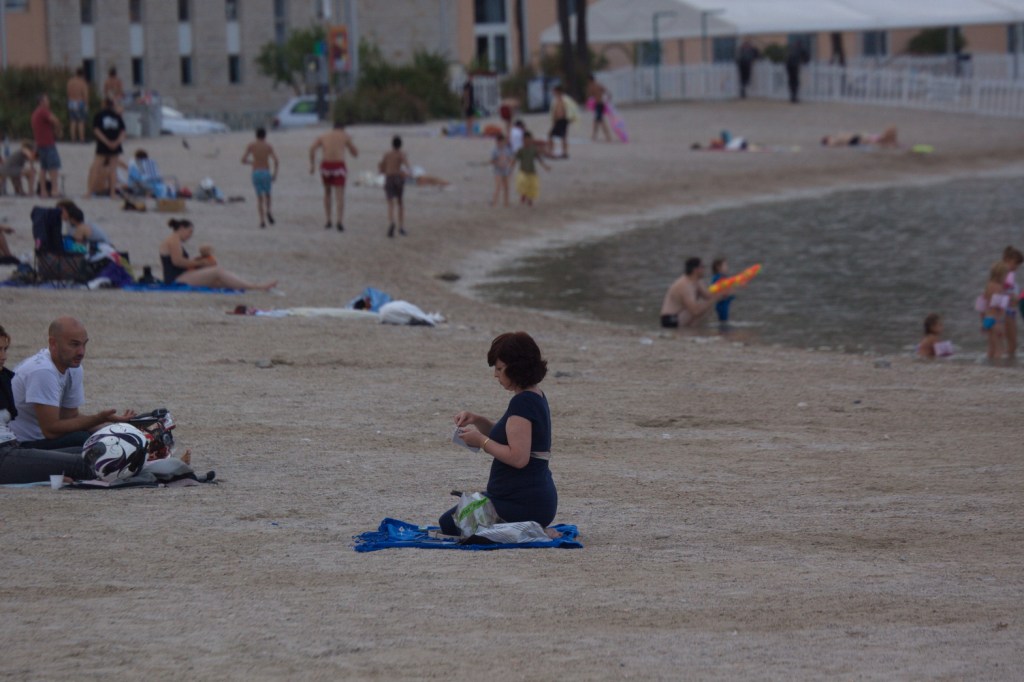
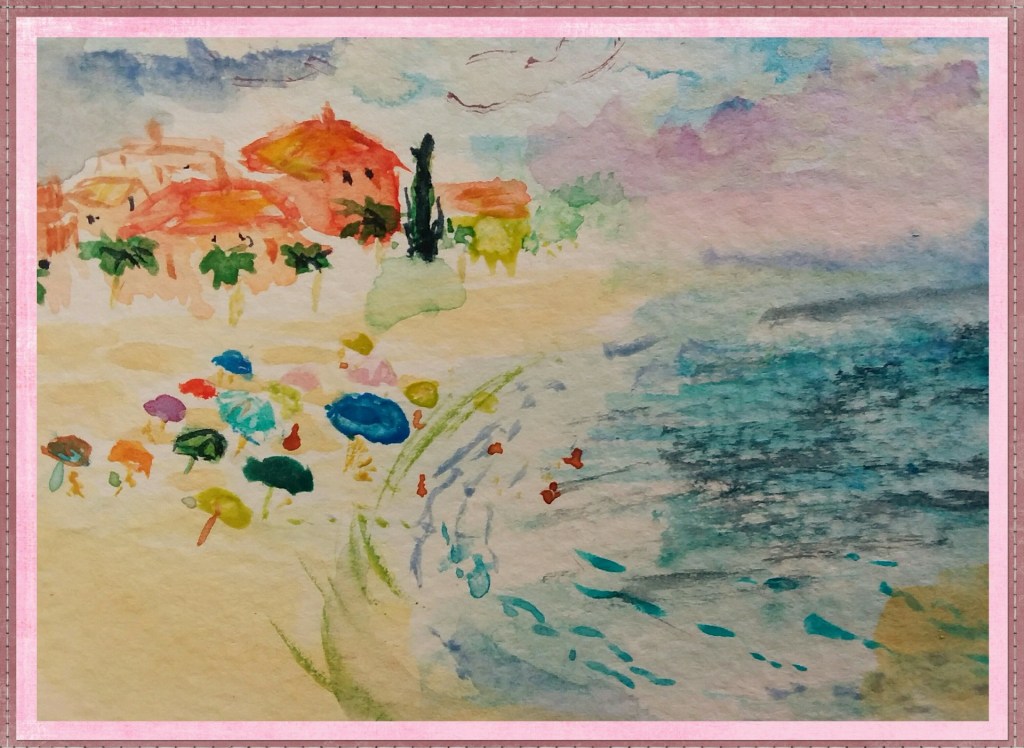


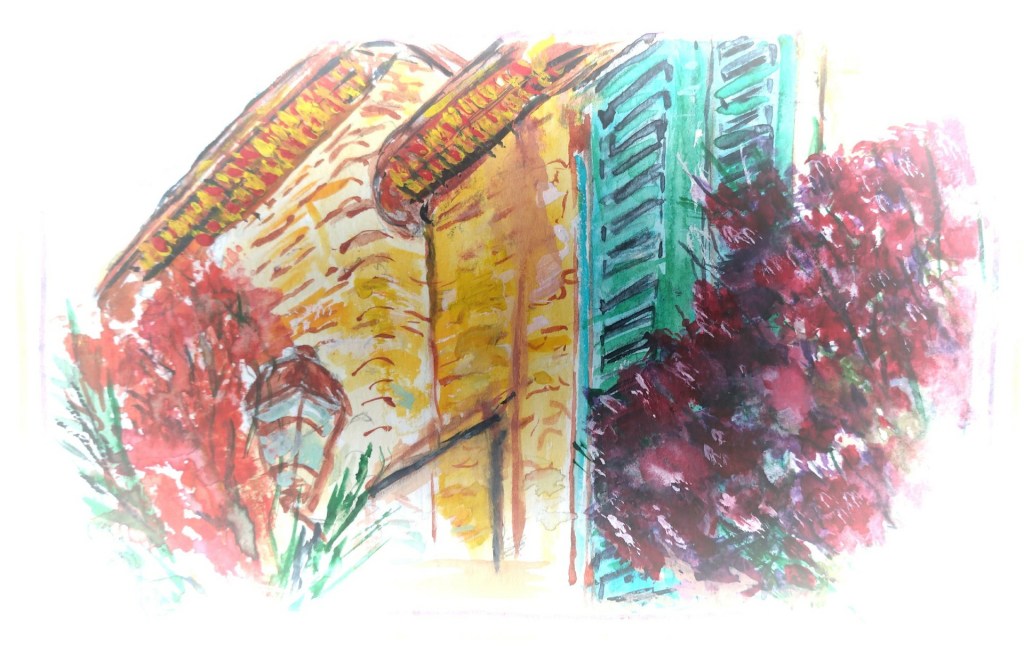

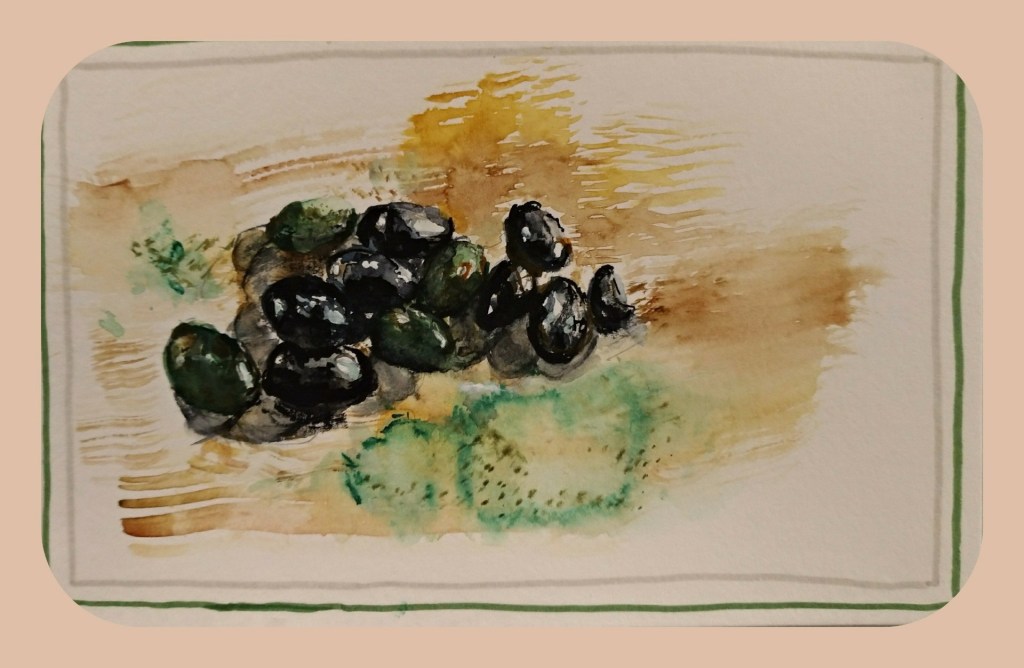



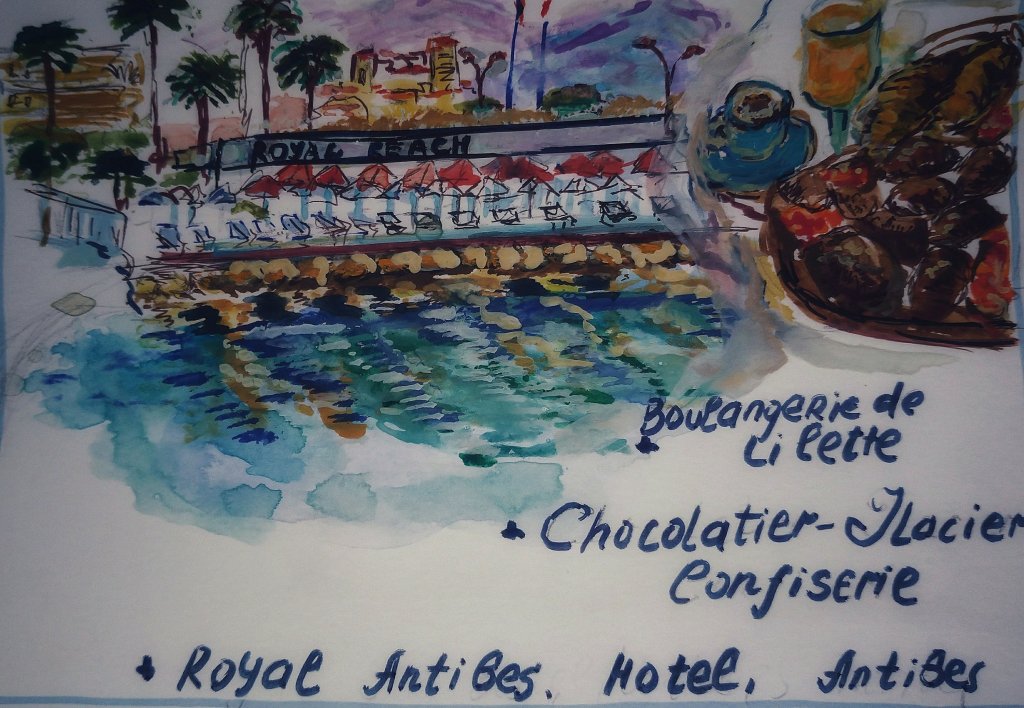
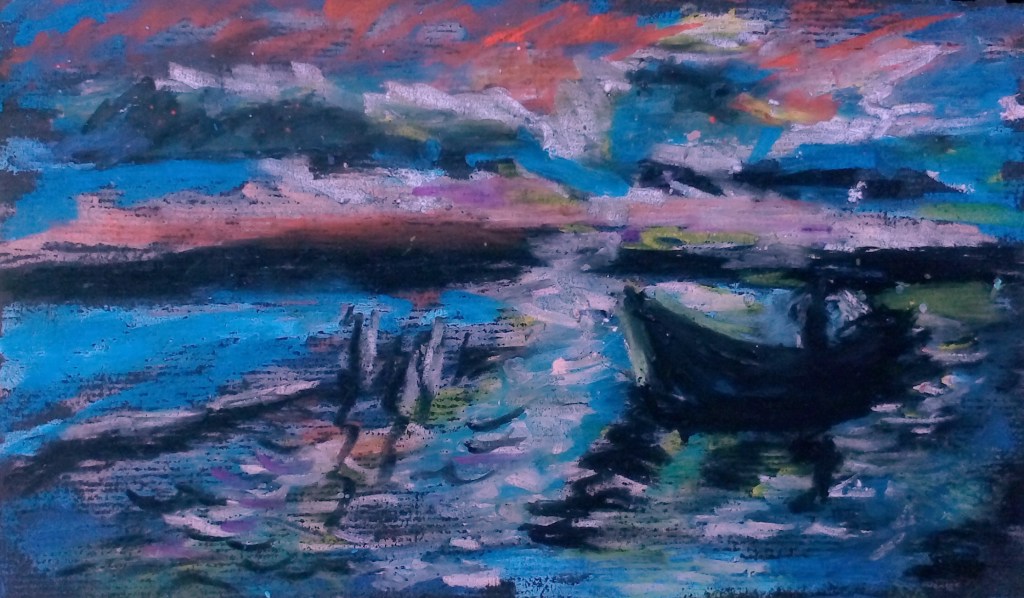
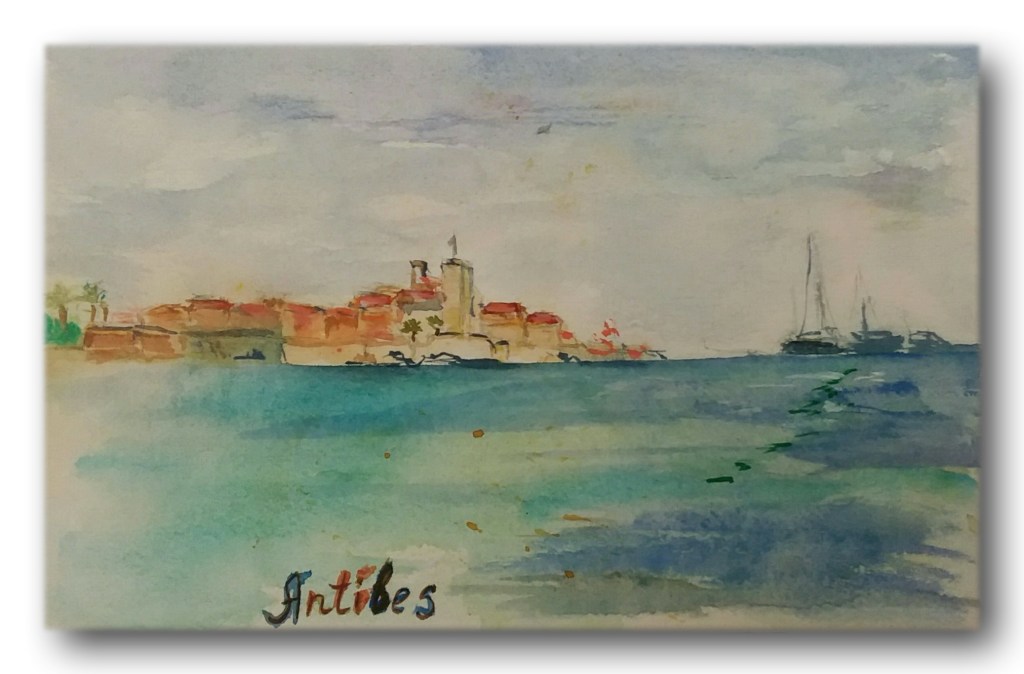
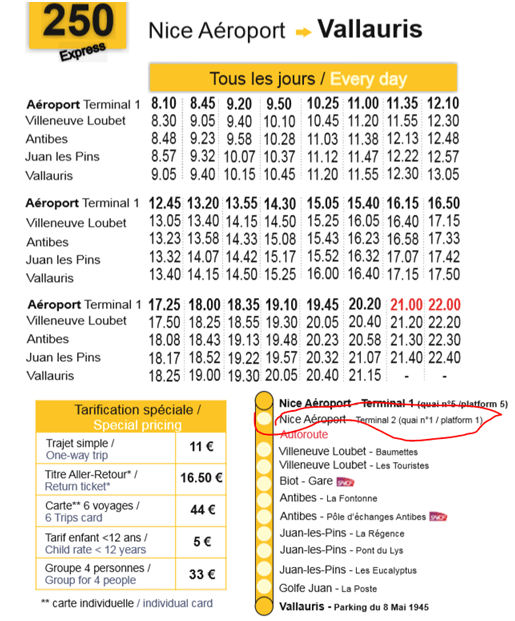

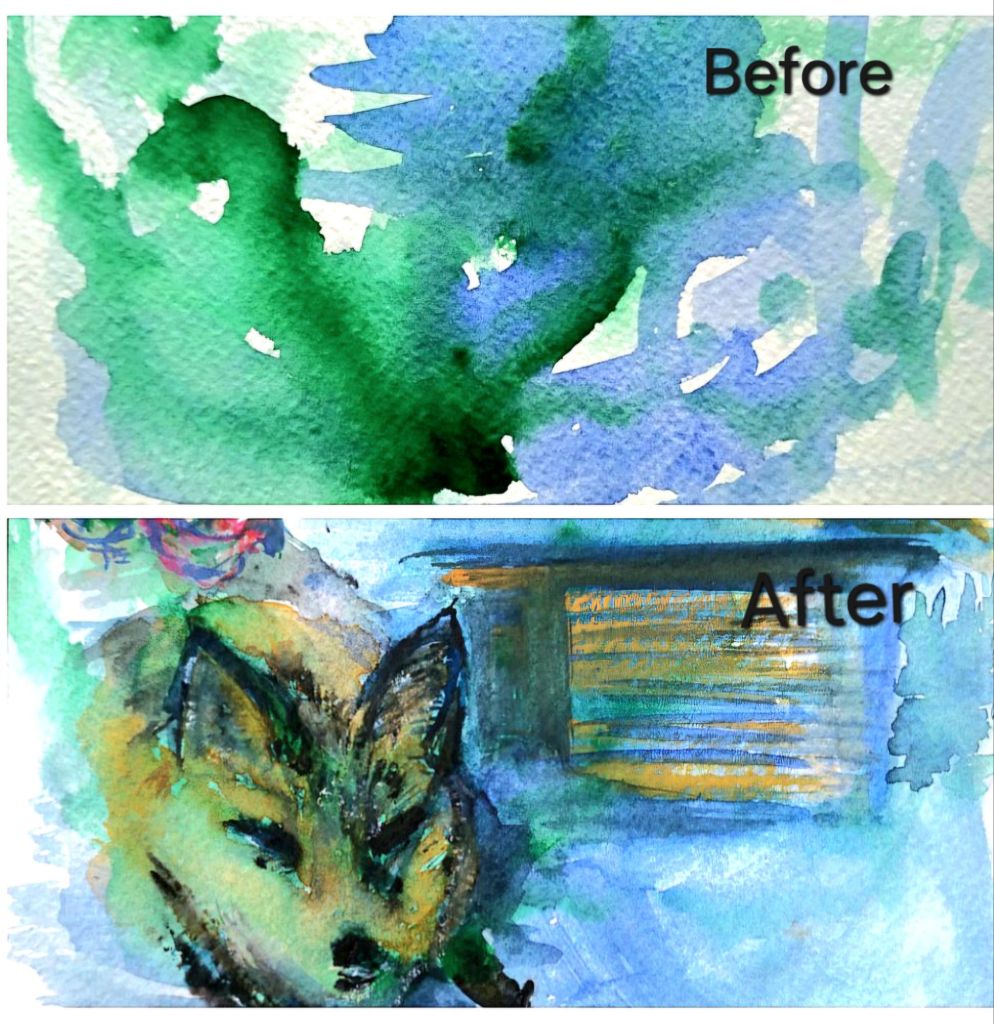
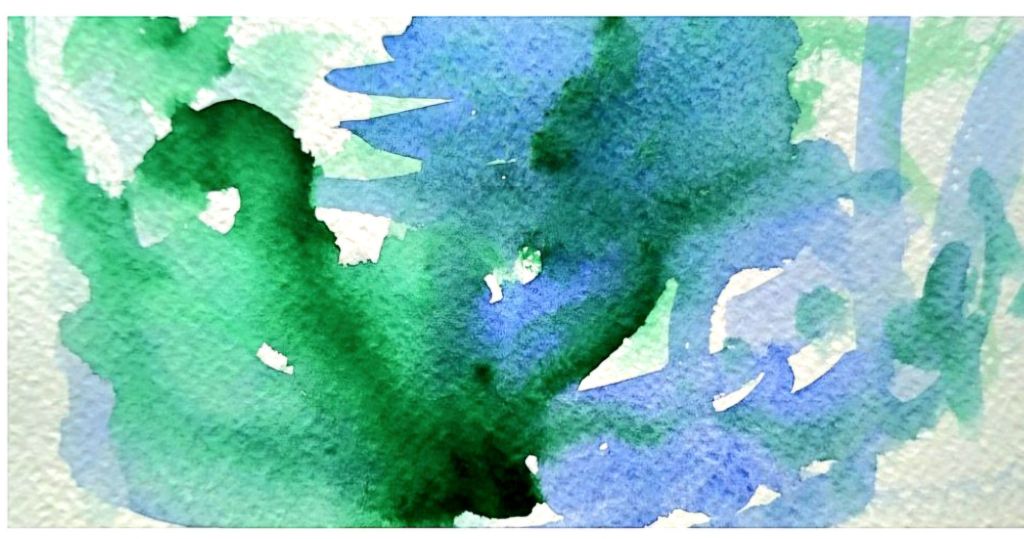

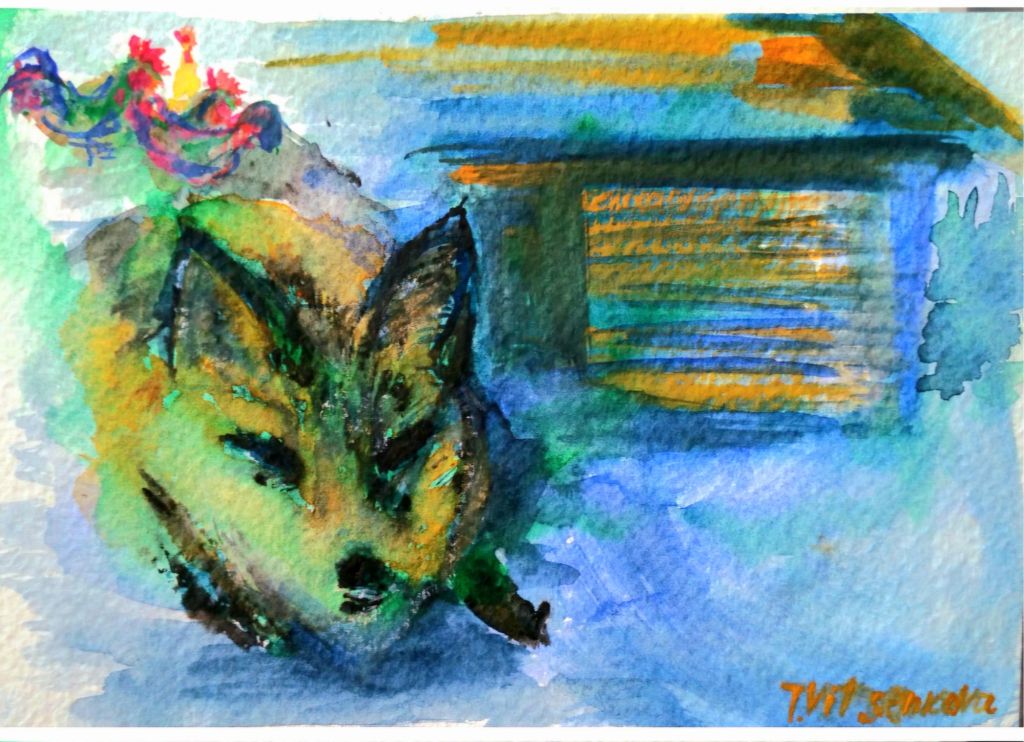

 Join me on this artistic adventure as I explore the captivating world of #TravelVibes #ArtAdventure