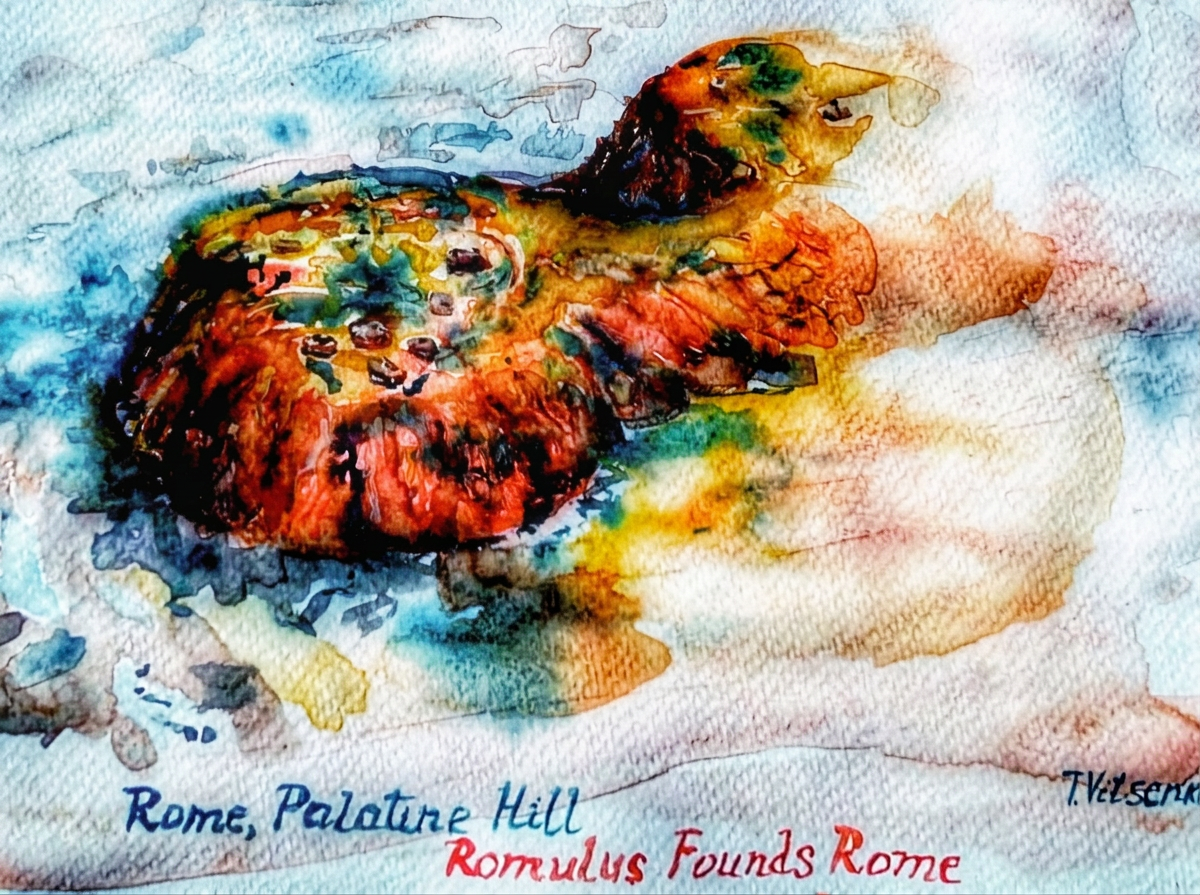
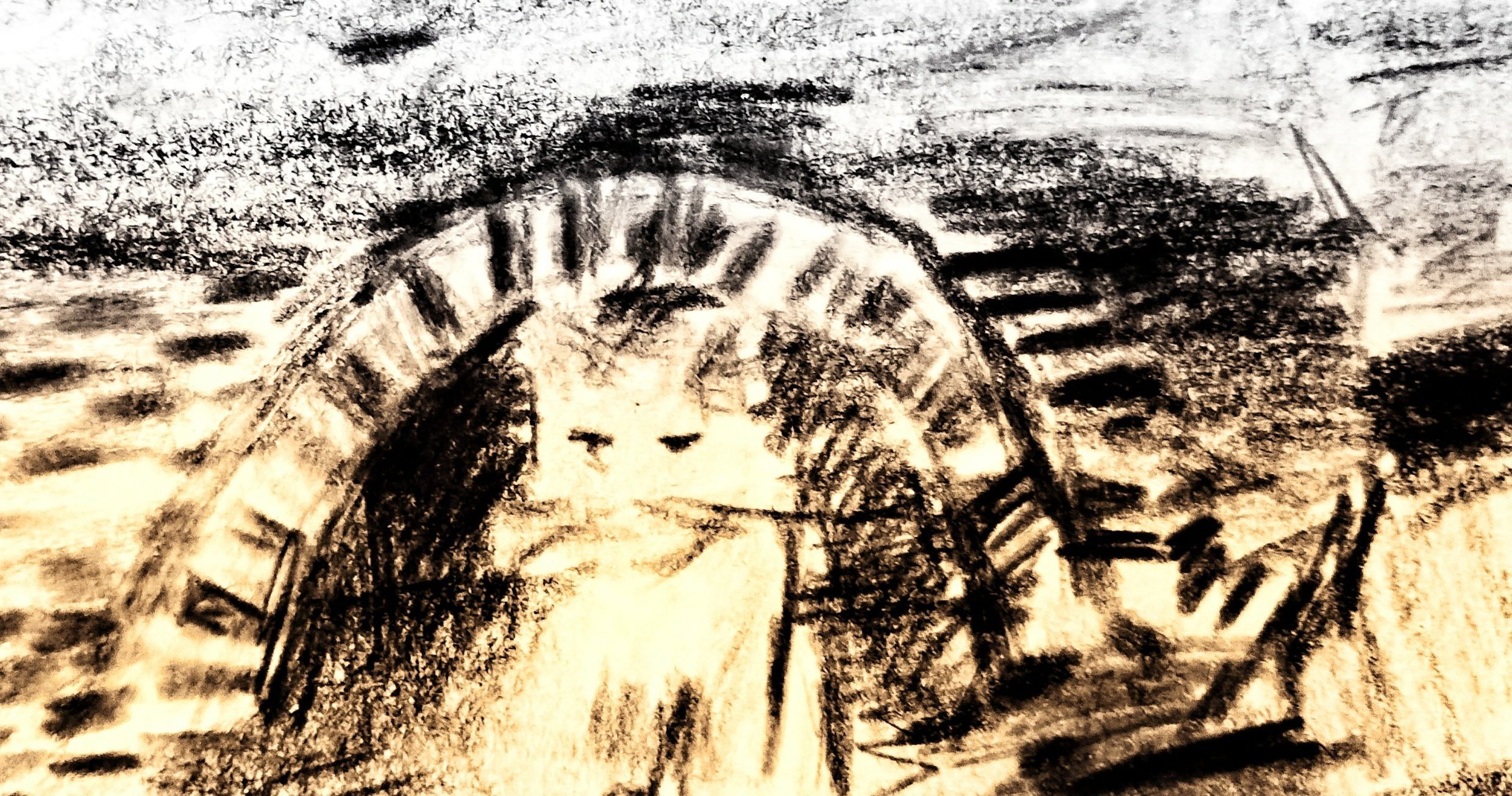
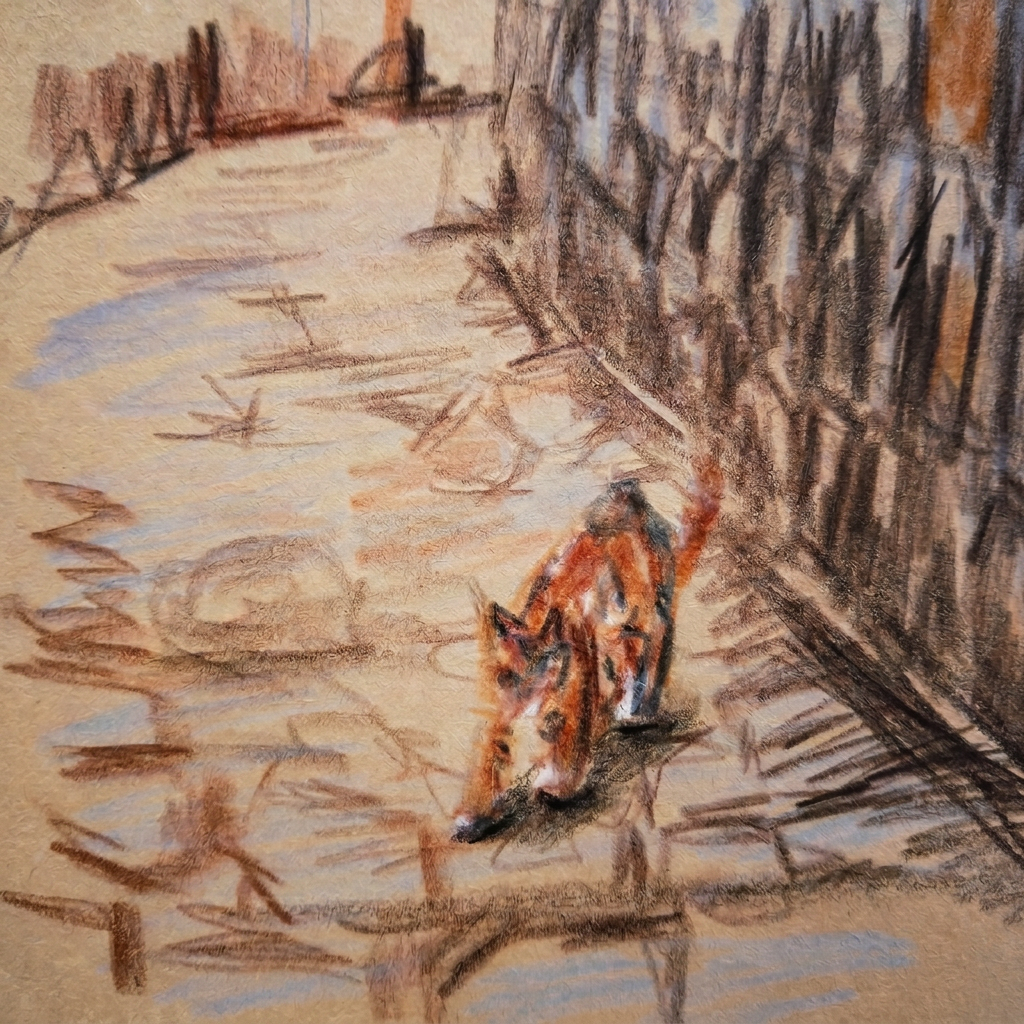
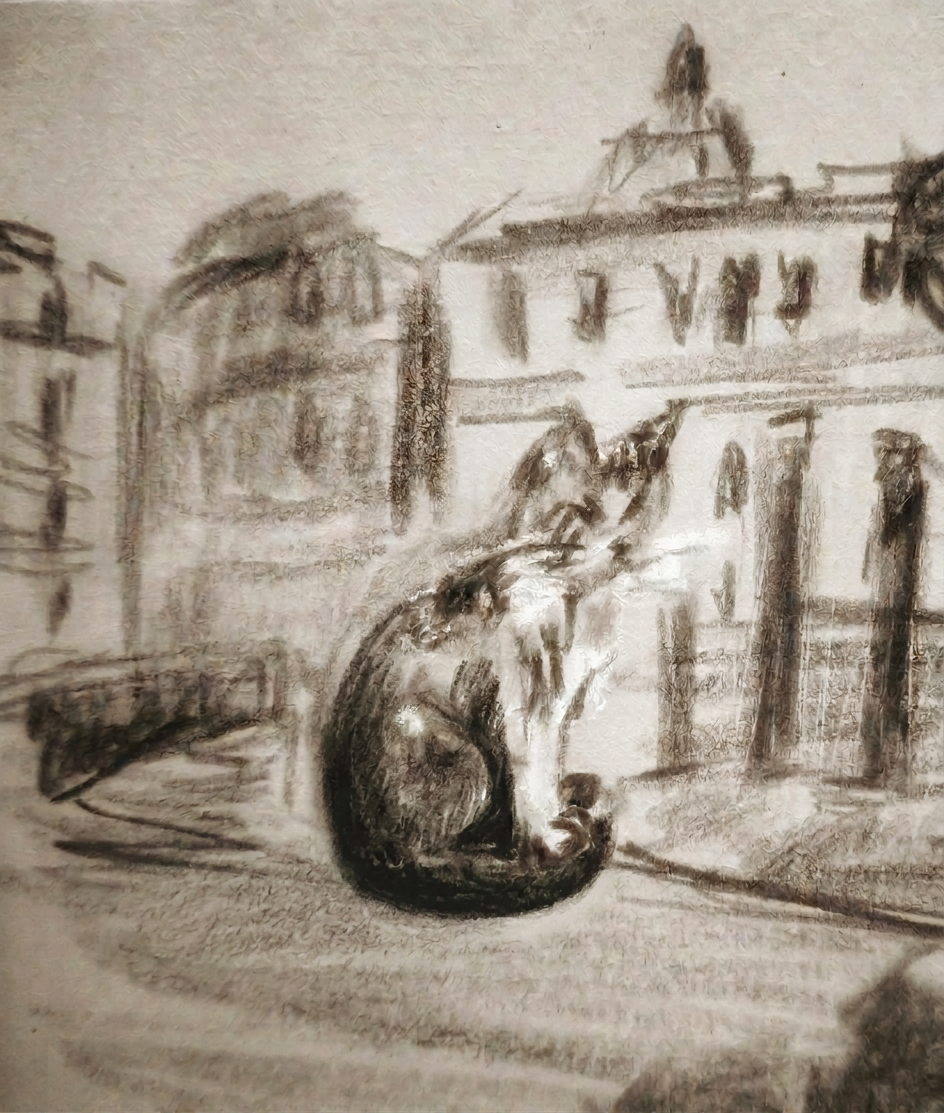
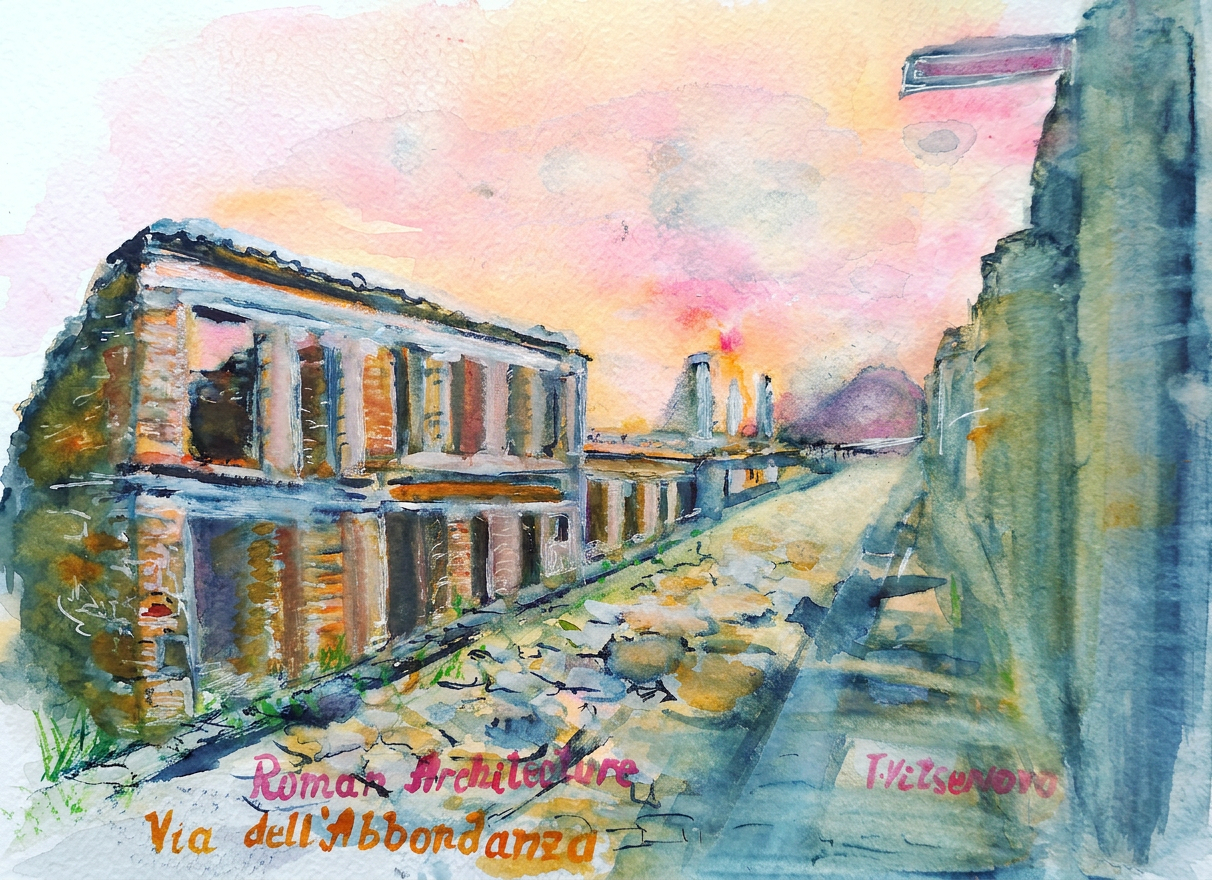
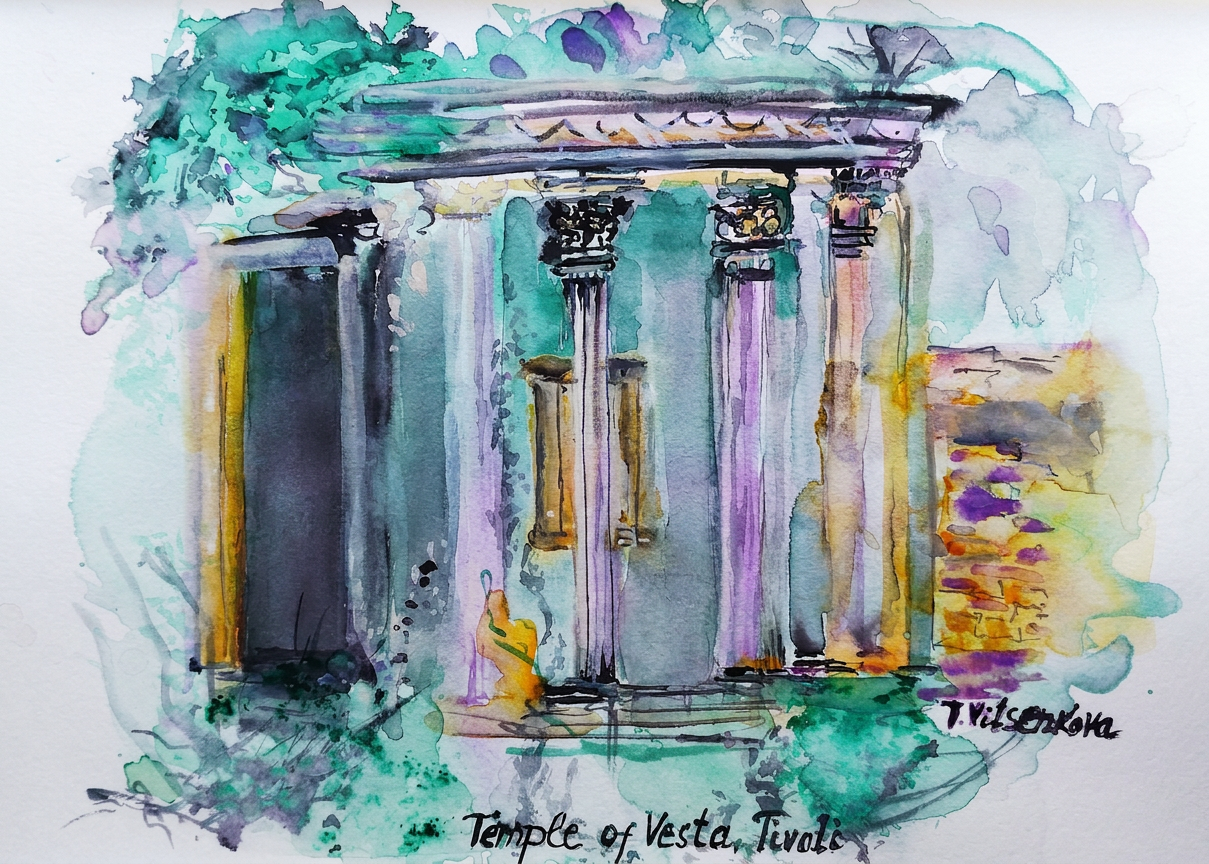
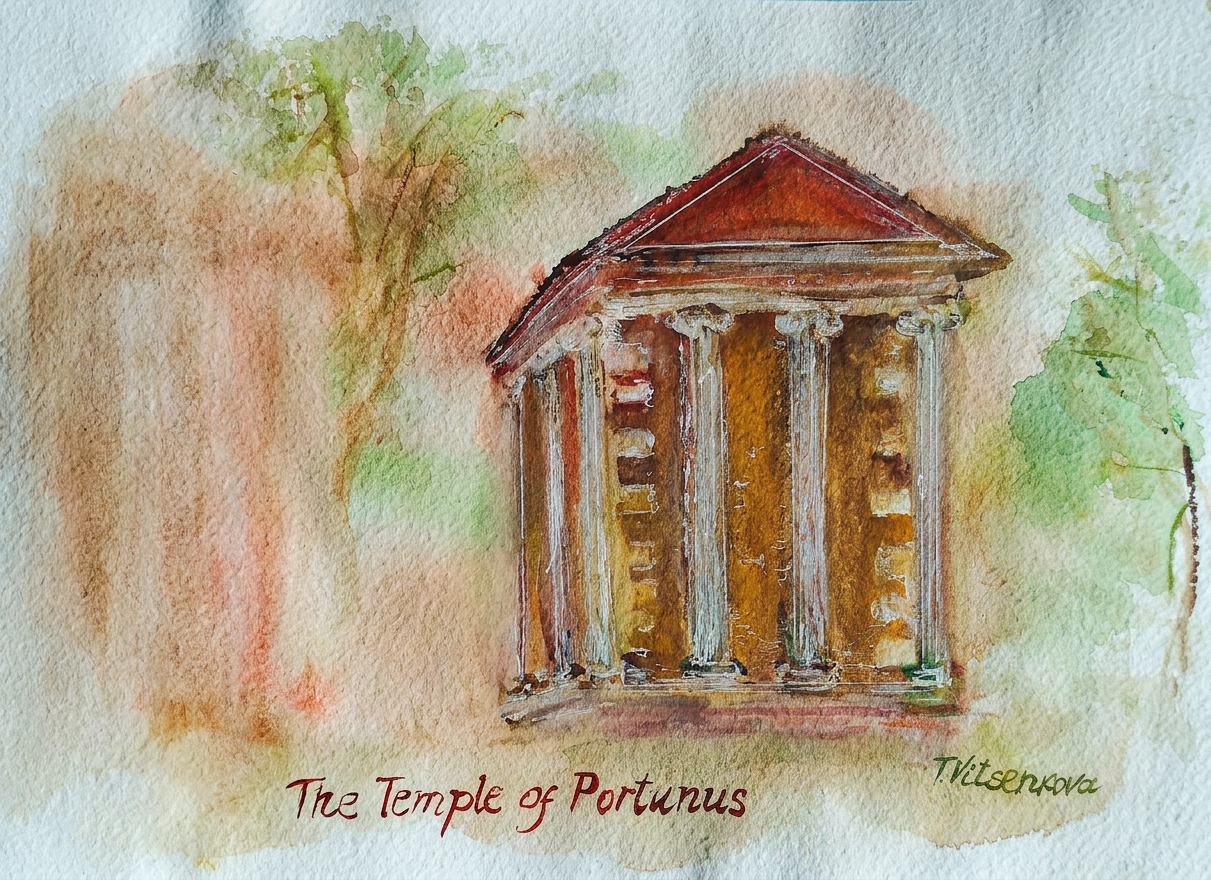
2-1. Art and Travel. – Rome, Palatine Hill, Romulus Founds Rome.

Artist, Roman Architecture, Uncategorized, Urban sketching, Voyage

Watercolor journey with the course Roman Architecture by the Yale University.

All roads lead to Rome – Alain de Lille

← Back

Thank you for your response. ✨

Name
Email
Your message

Δ document.getElementById( "ak_js_1" ).setAttribute( "value", ( new Date() ).getTime() );

The Art of Pompeii: Depicting Daily Life Through Bakeries. Watercolor journey with the course Roman Architecture by the Yale University.

An Artist's Perspective on Roman Architecture, Artist, Roman Architecture, Uncategorized, Urban sketching, Voyage

Art and Travel.  Pompeii, bakeries and millstones. Introduction. Bathing, Entertainment, and Housing in the Roman City. 1-4.

The Daily Grind

The Inspiration – Juvenal
The Sensory Experience

Can you smell the fresh bread?:)

The Scene Setter. Itinerary to Pompeii
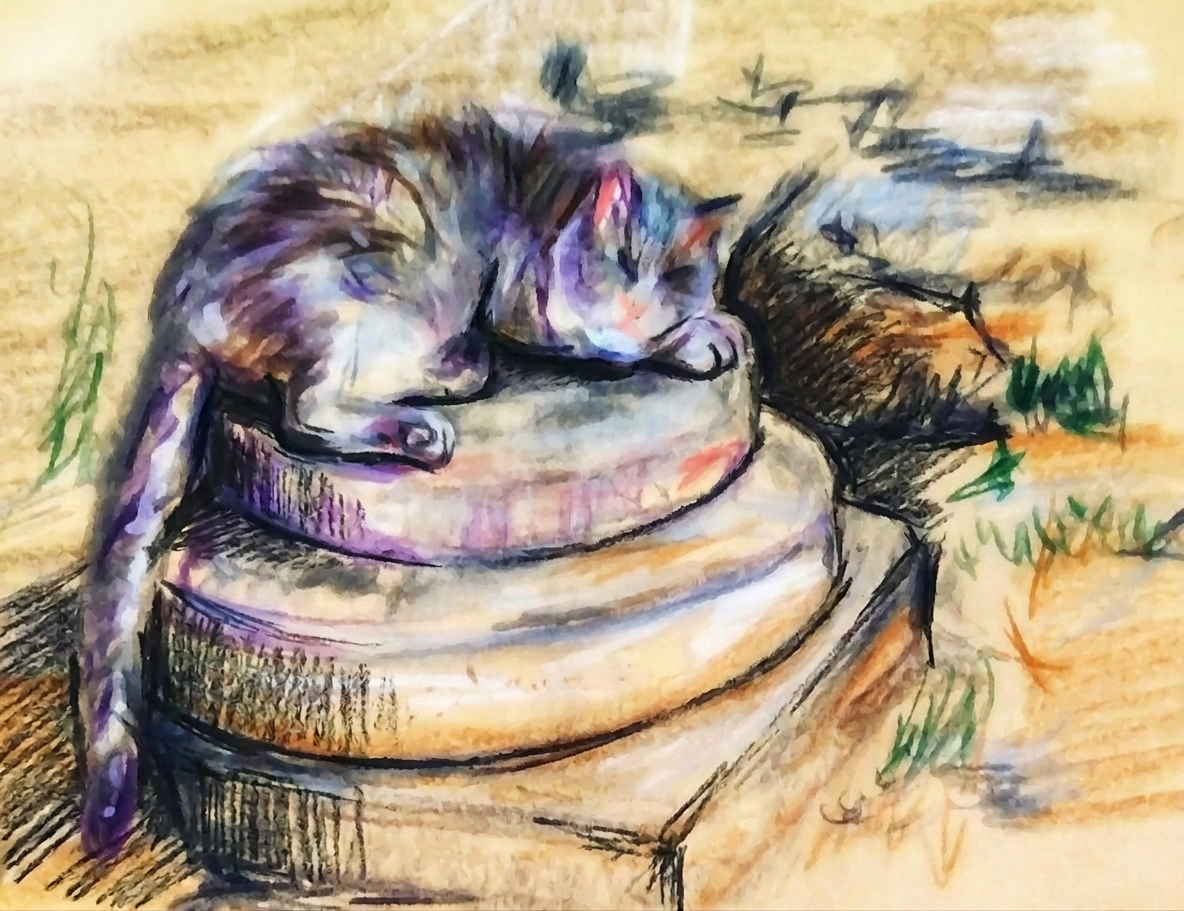
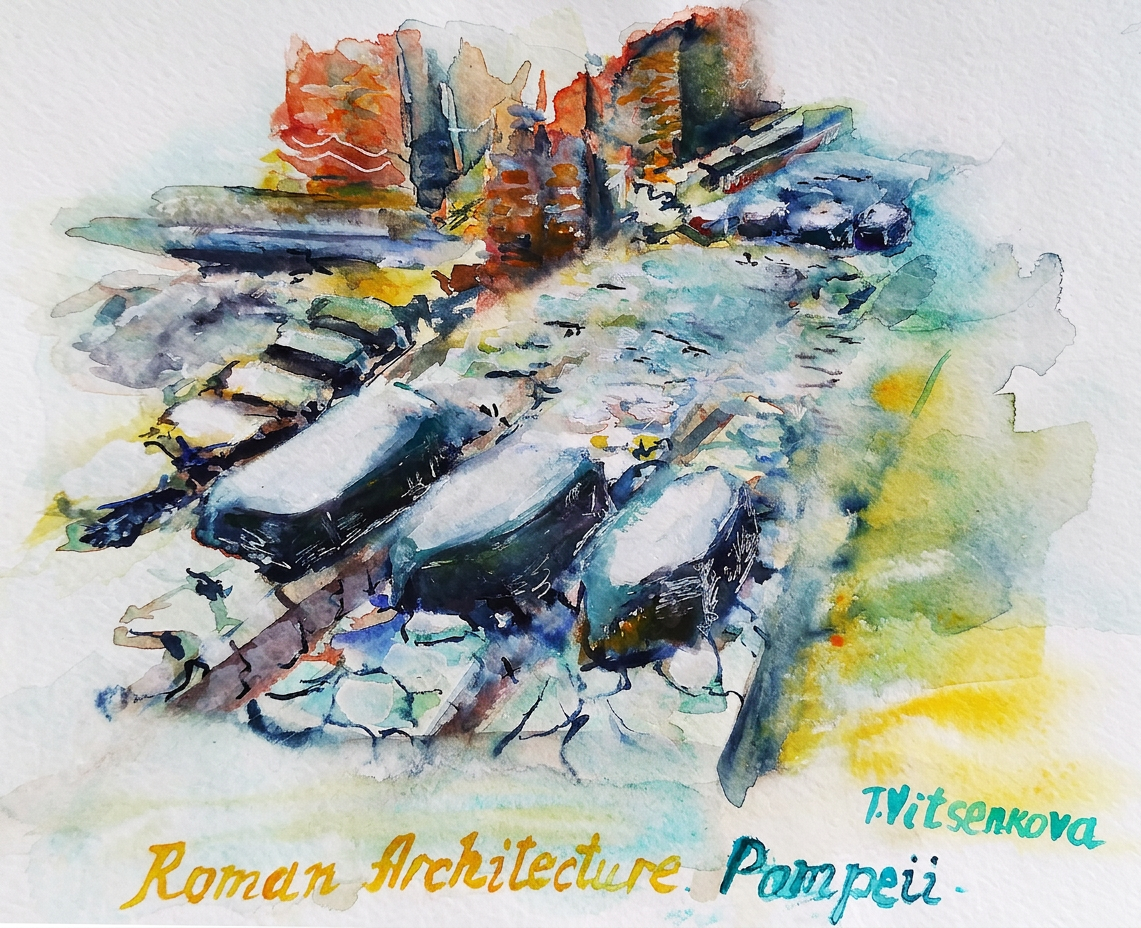
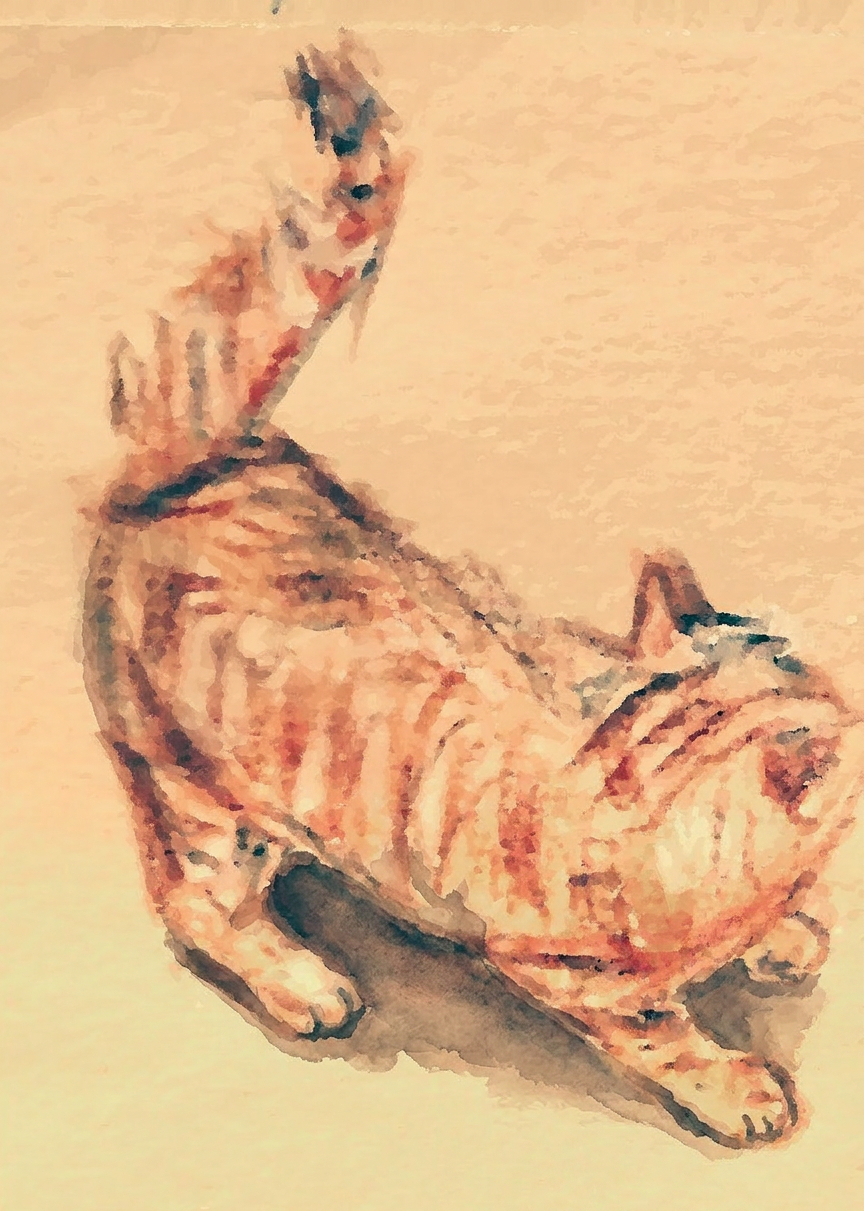
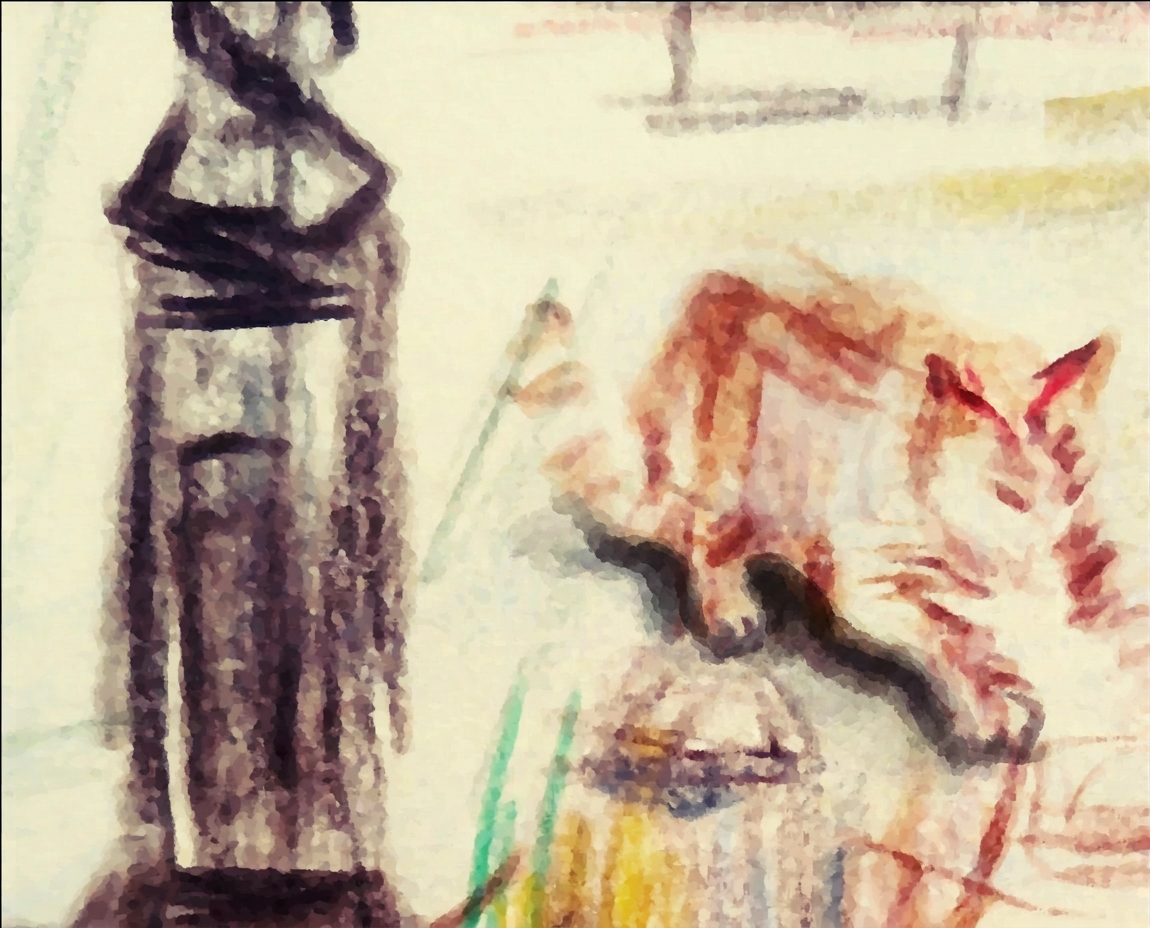
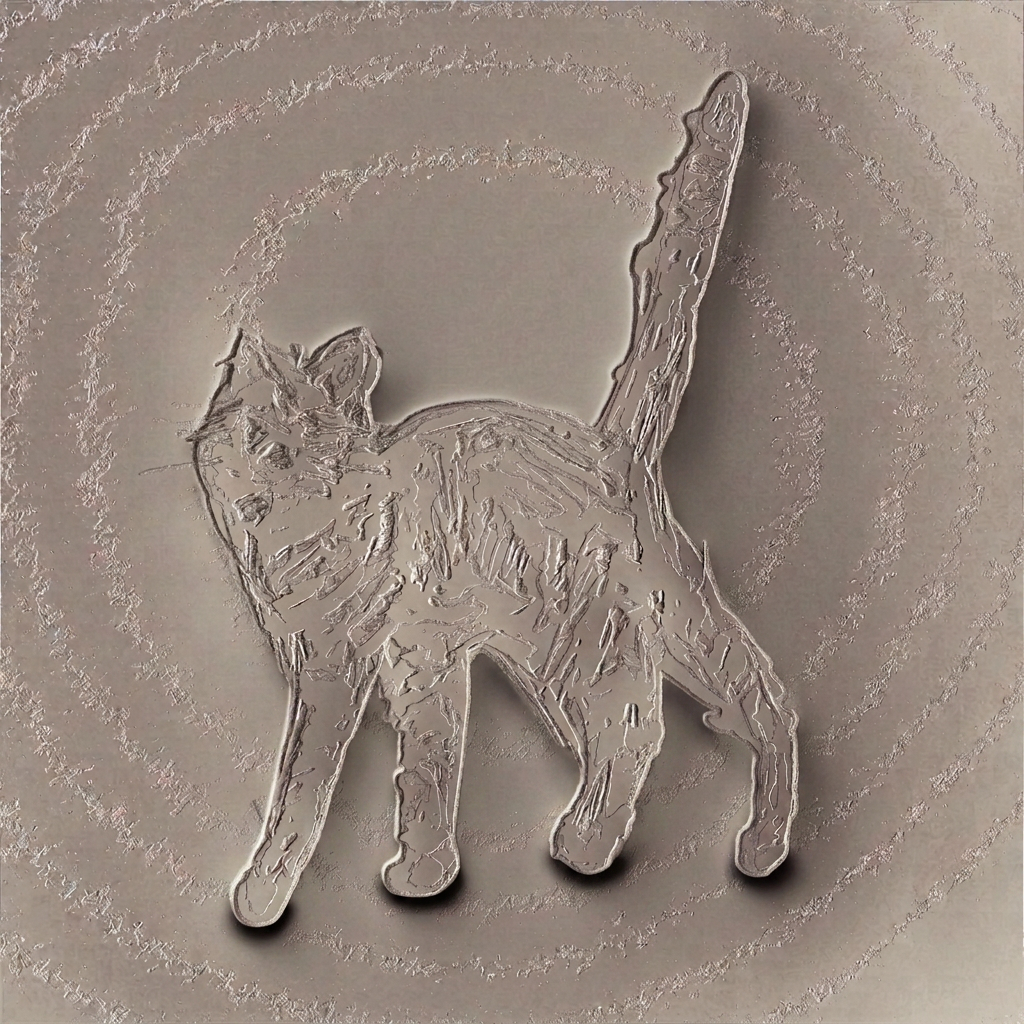
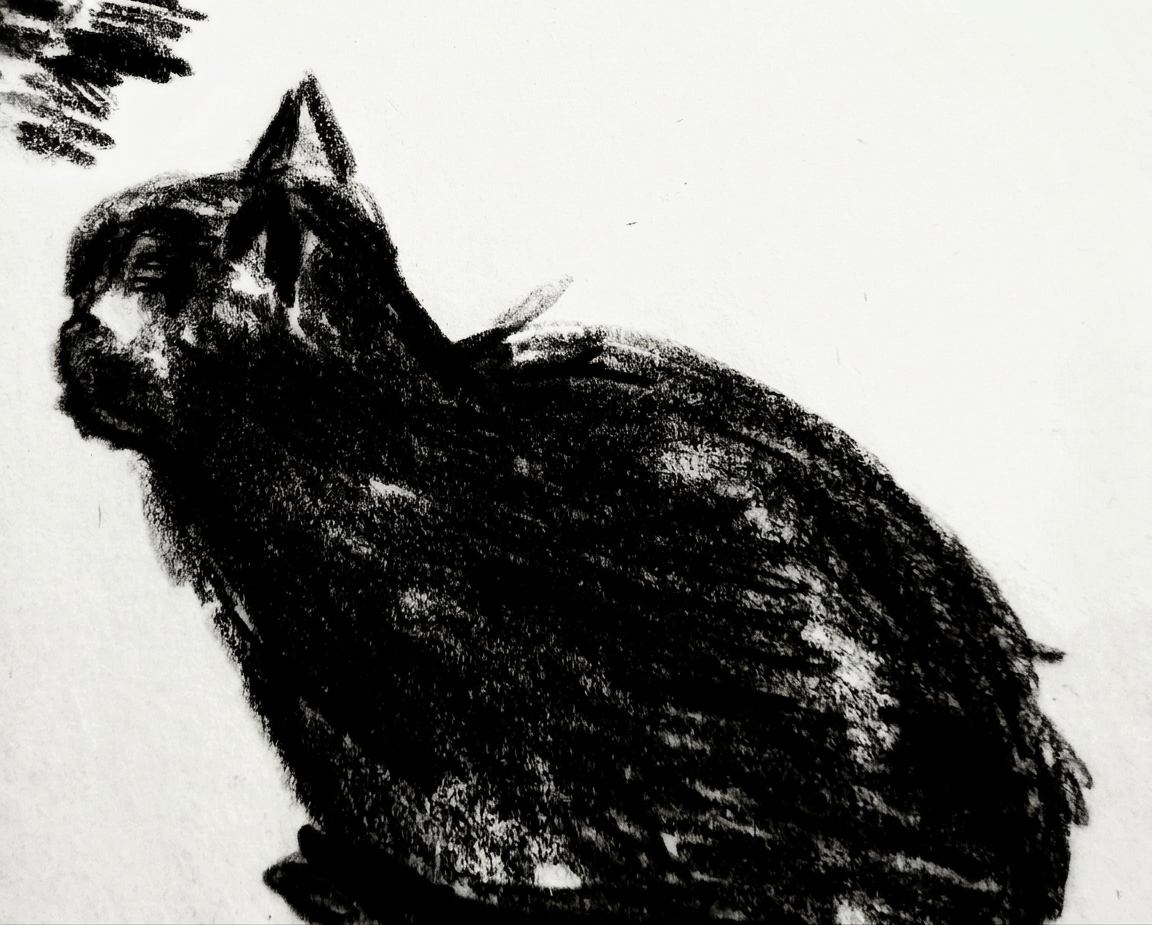
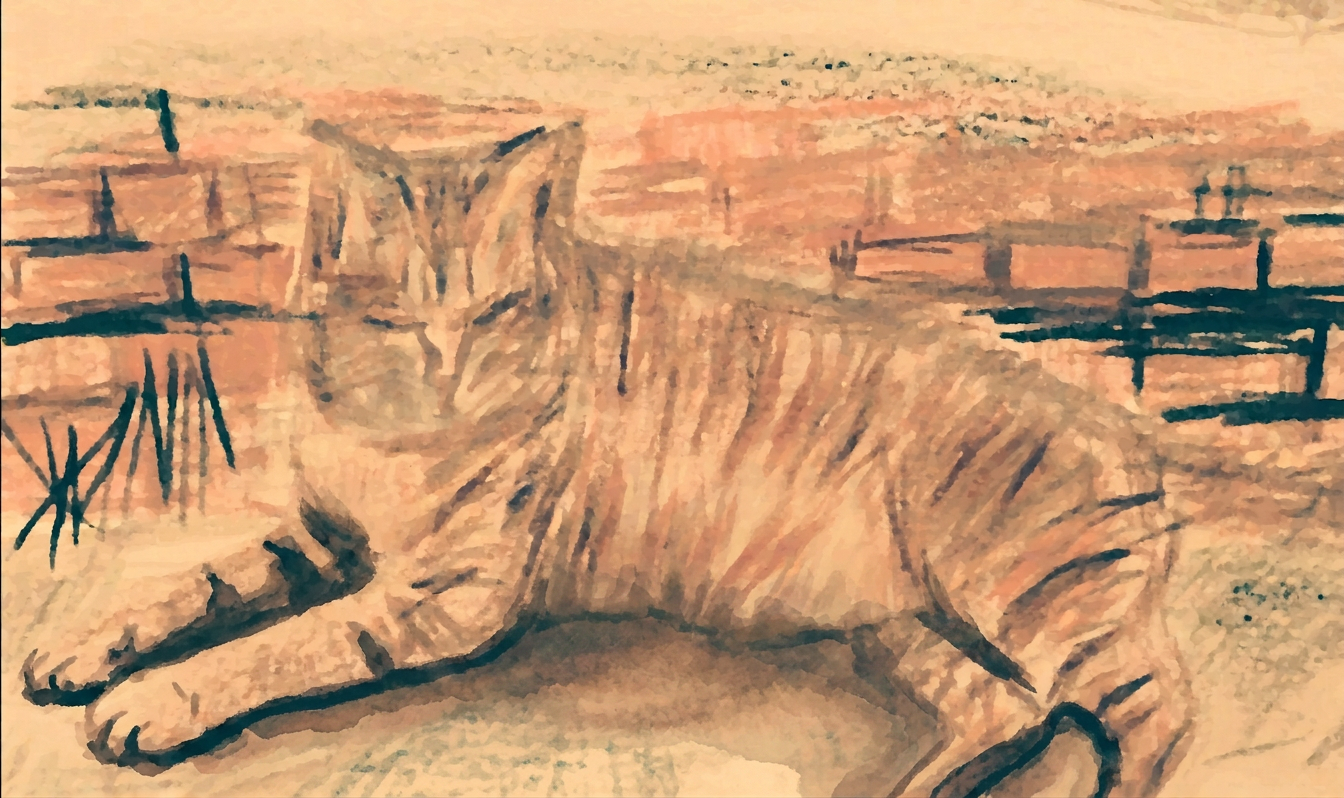
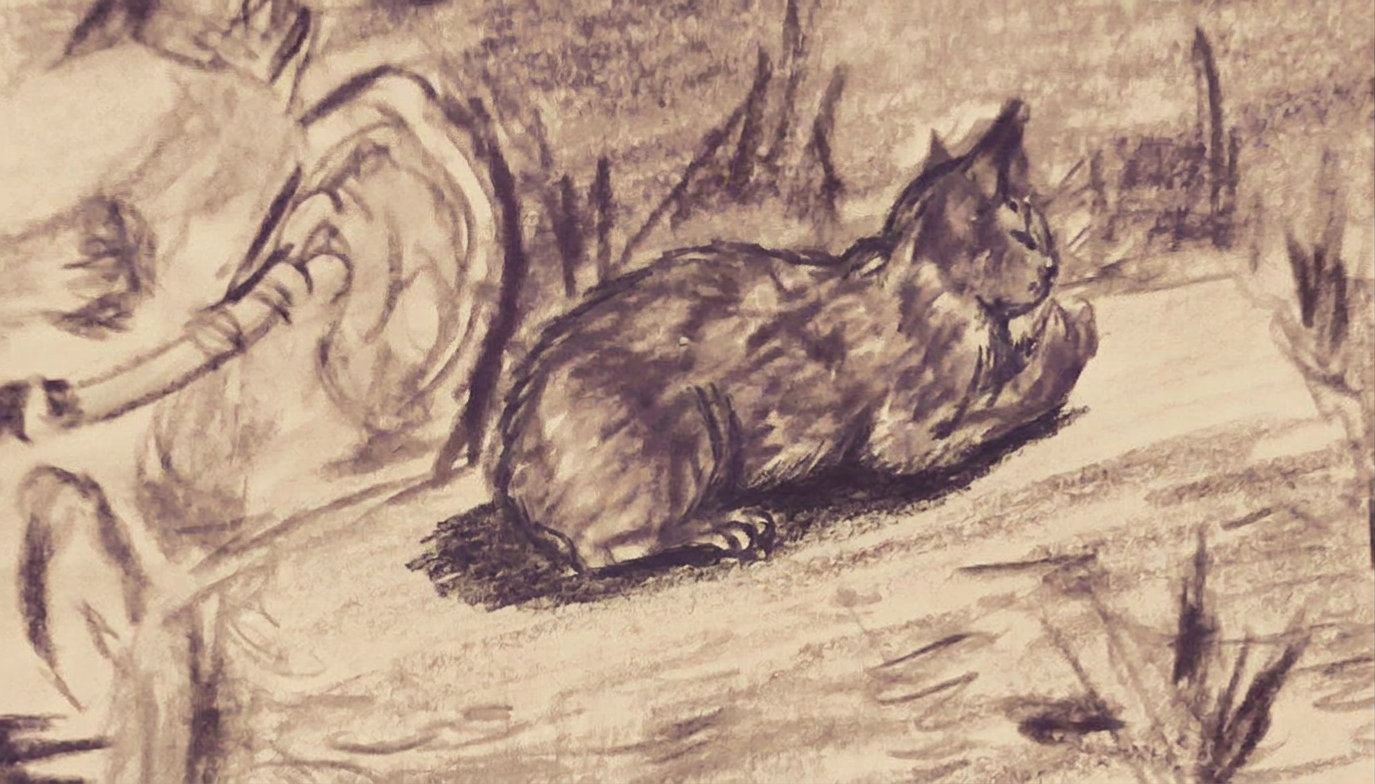
A peaceful scene depicting a resting cat atop stone millstones, reminiscent of ancient Pompeii.

← Back

Thank you for your response. ✨

The Artistic Impact of Trajan’s Market in Watercolor. Exploring Yale’s Course on Roman Architecturer.

Artist, Roman Architecture, Uncategorized, Urban sketching, Voyage

Roman Tombs, Aqueducts, and the lasting impact of Roman Architecture

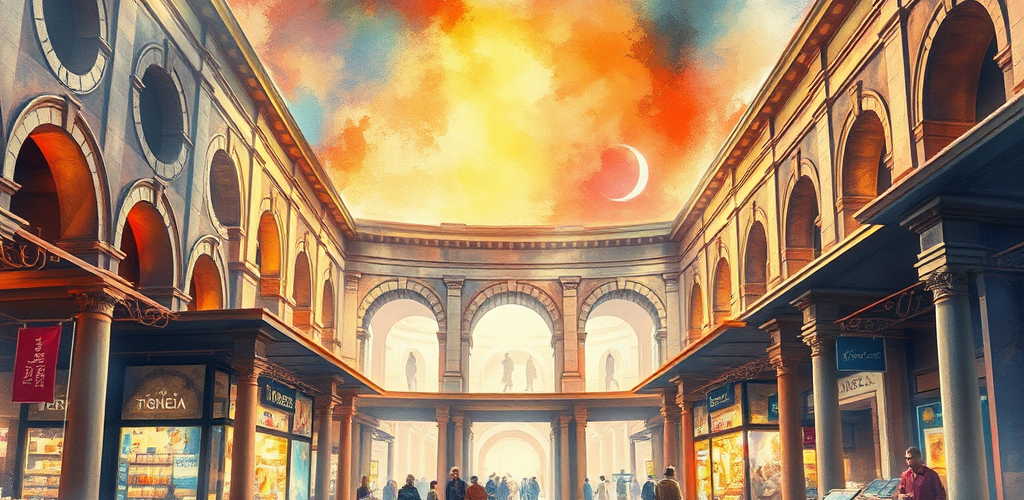
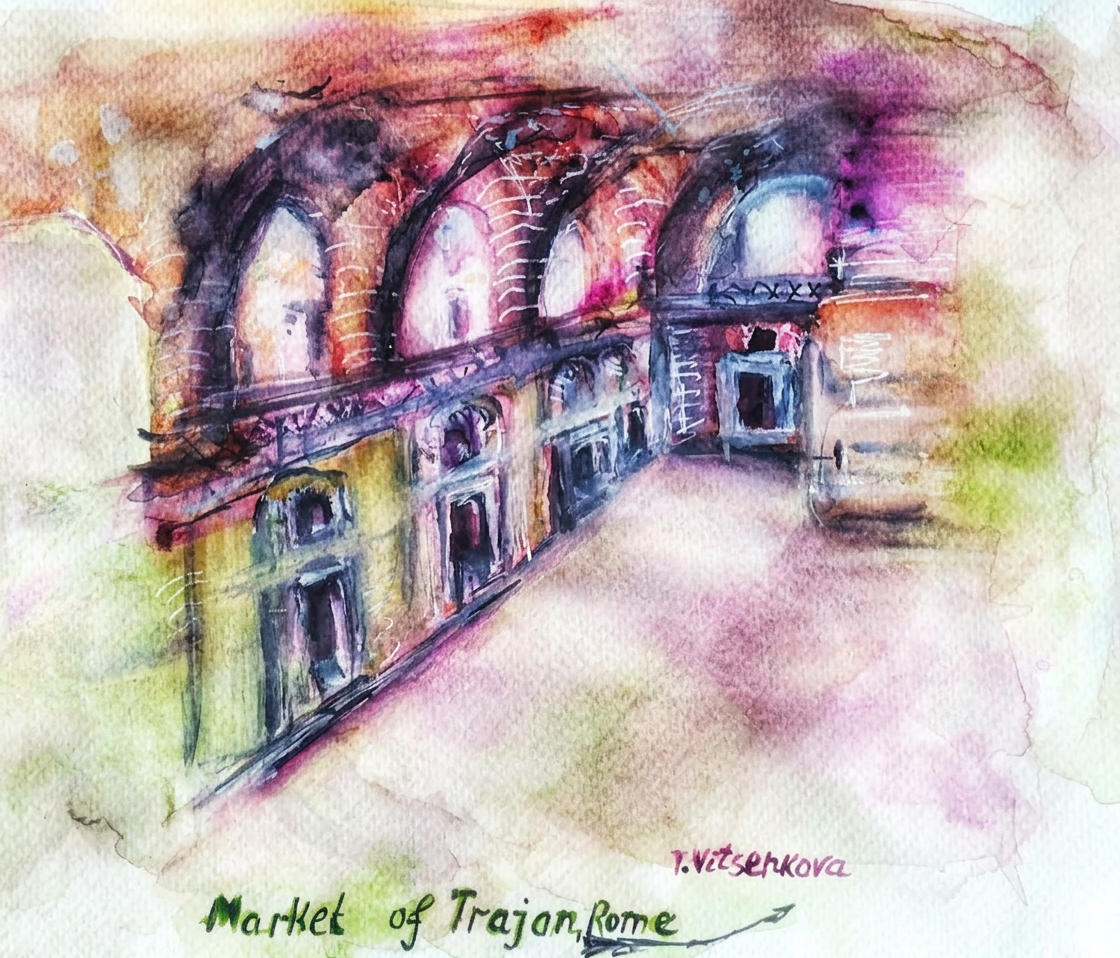
Trajan’s Forum and Market: A Shopping Paradise in Ancient Rome
A watercolor depiction of the historic Trajan’s Market in Rome, showcasing its ancient architectural beauty.
The Construction: A feat of Roman Engineering
The Architecture: A Symphony in Stone. Grand Canyon and Roman Architecture
Roman Architecture soundtrack
Live in Rome (past and present)
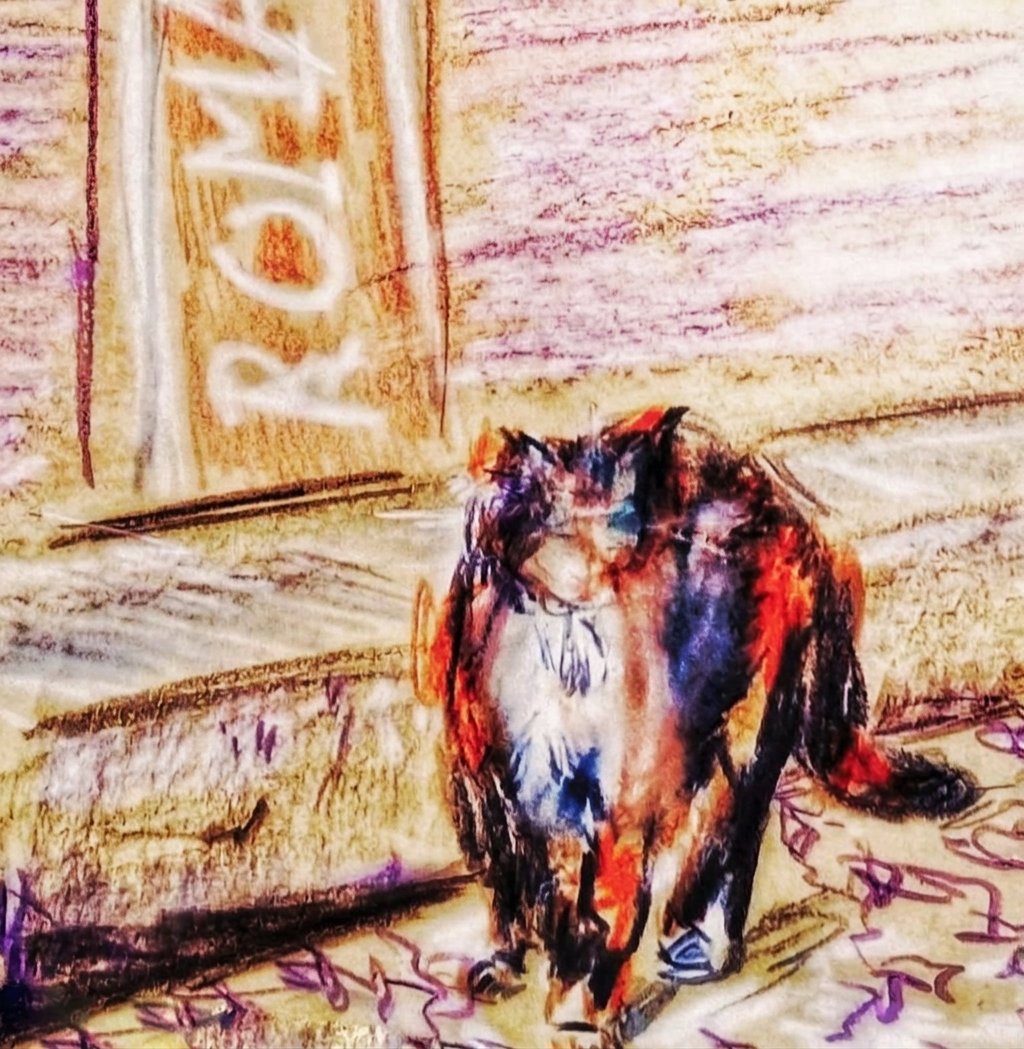
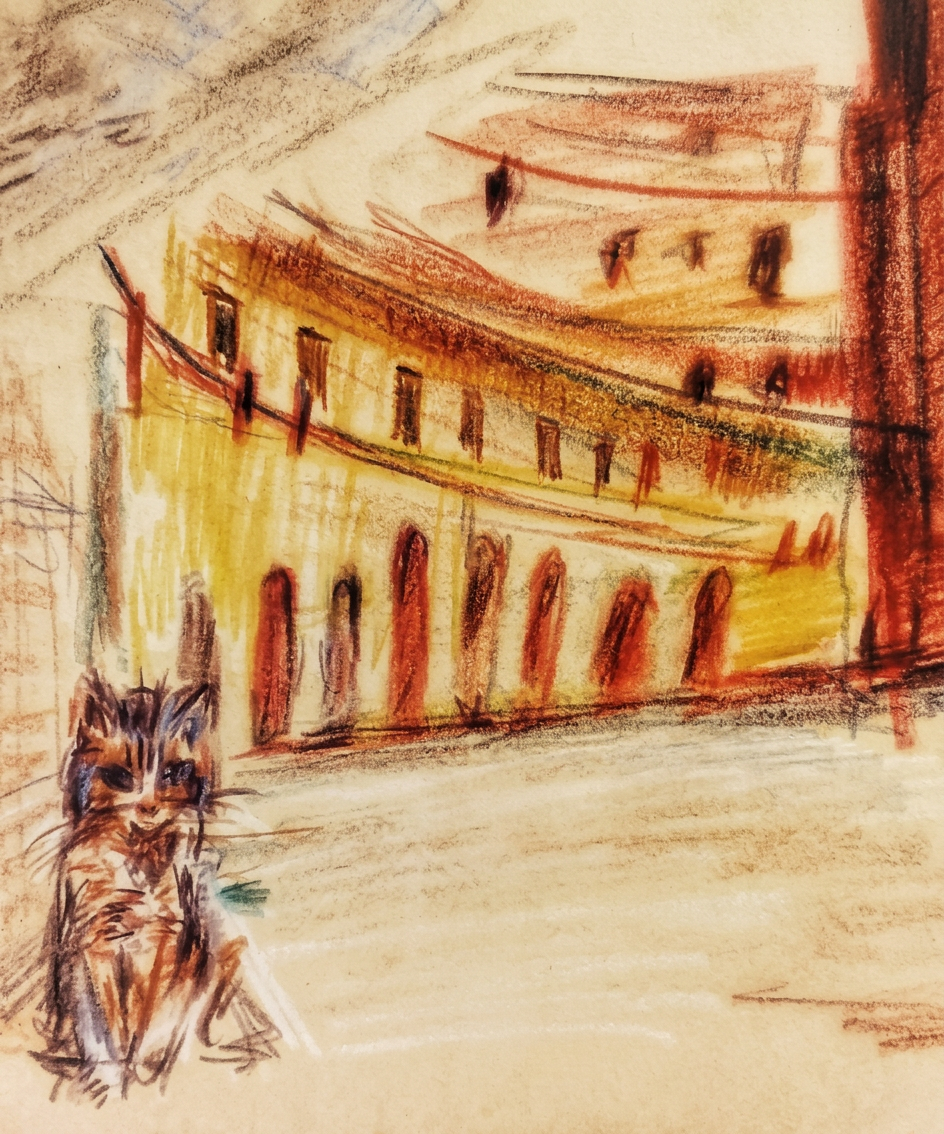
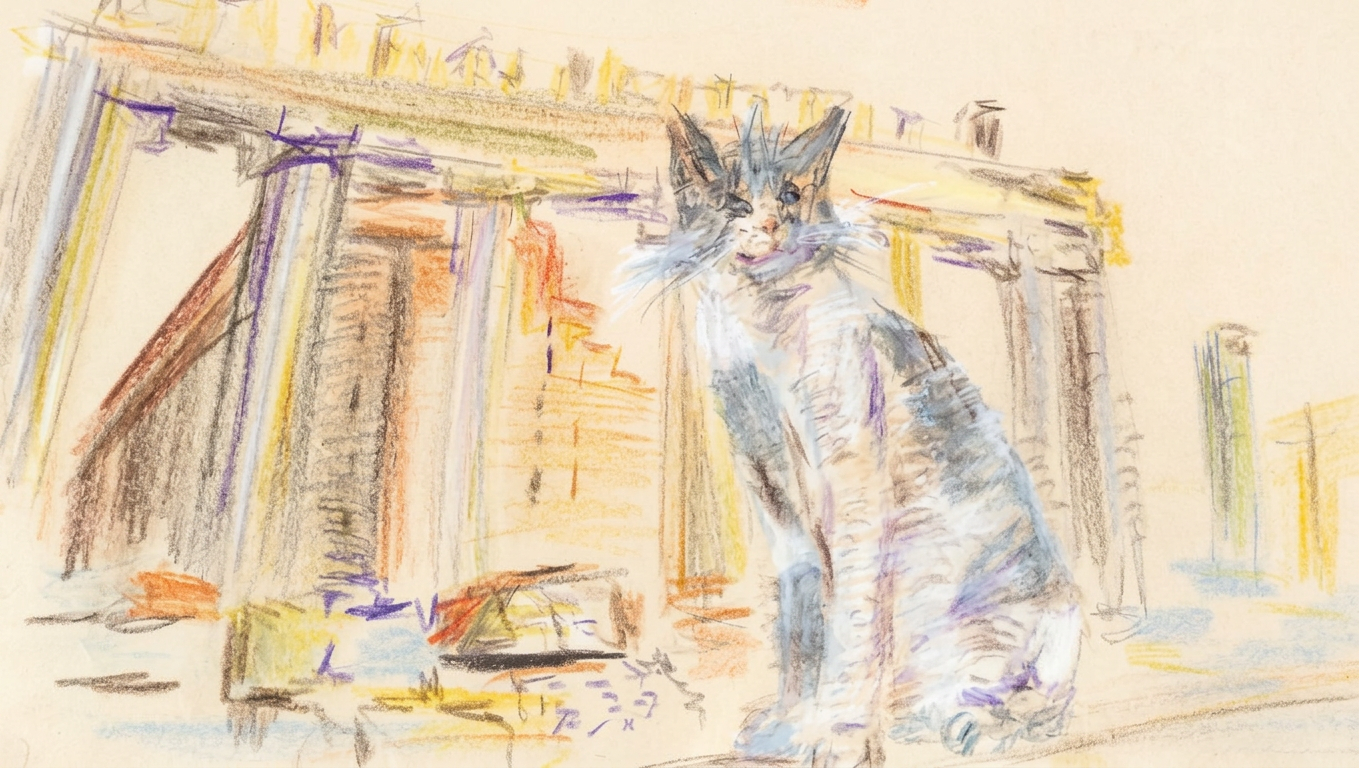
A vibrant watercolor illustration of Trajan’s Market, showcasing its ancient architectural beauty, with a playful cat in the foreground.

https://www.coursera.org/learn/roman-architecture/home/welcome

← Back

Thank you for your response. ✨

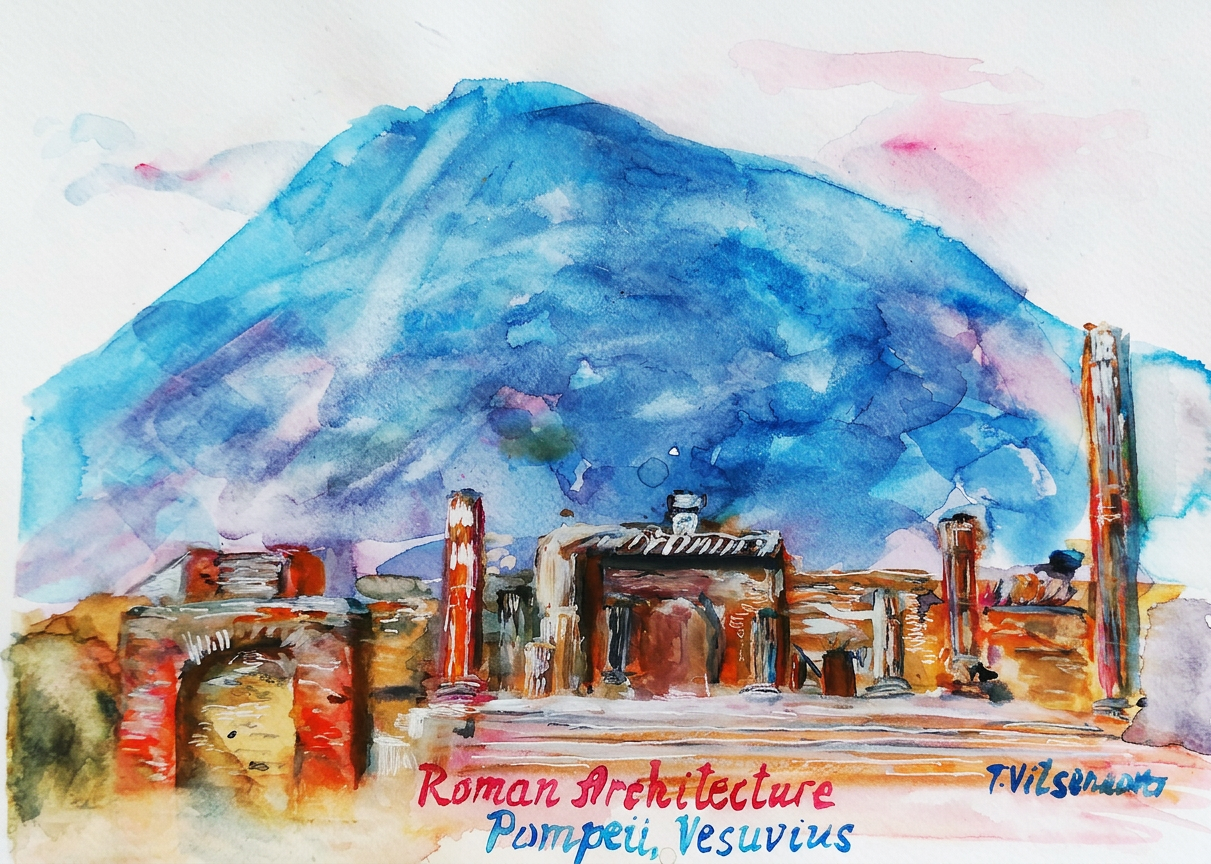
4-6.Art and Travel. Daily Life and the Eruption of Vesuvius

Artist, Roman Architecture, Uncategorized, Urban sketching, Voyage

Watercolor journey with the course Roman Architecture by the Yale University.

All roads lead to Rome – Alain de Lille

https://www.coursera.org/learn/roman-architecture/home/welcome

← Back

Thank you for your response. ✨

Name
Email
Your message

Δ document.getElementById( "ak_js_4" ).setAttribute( "value", ( new Date() ).getTime() );

3-1.Art and Travel.   Roman concrete and the revolution in Roman Architecture. Watercolor journey with the course Roman Architecture by the Yale University.

Artist, Roman Architecture, Uncategorized, Urban sketching, Voyage

I continue the stay-at-home travel Art + Roman Architecture + the city of Rome with Yale’s course Roman Architecture https://www.coursera.org/learn/roman-architecture.

Roman concrete and the revolution in Roman Architecture. 3-1

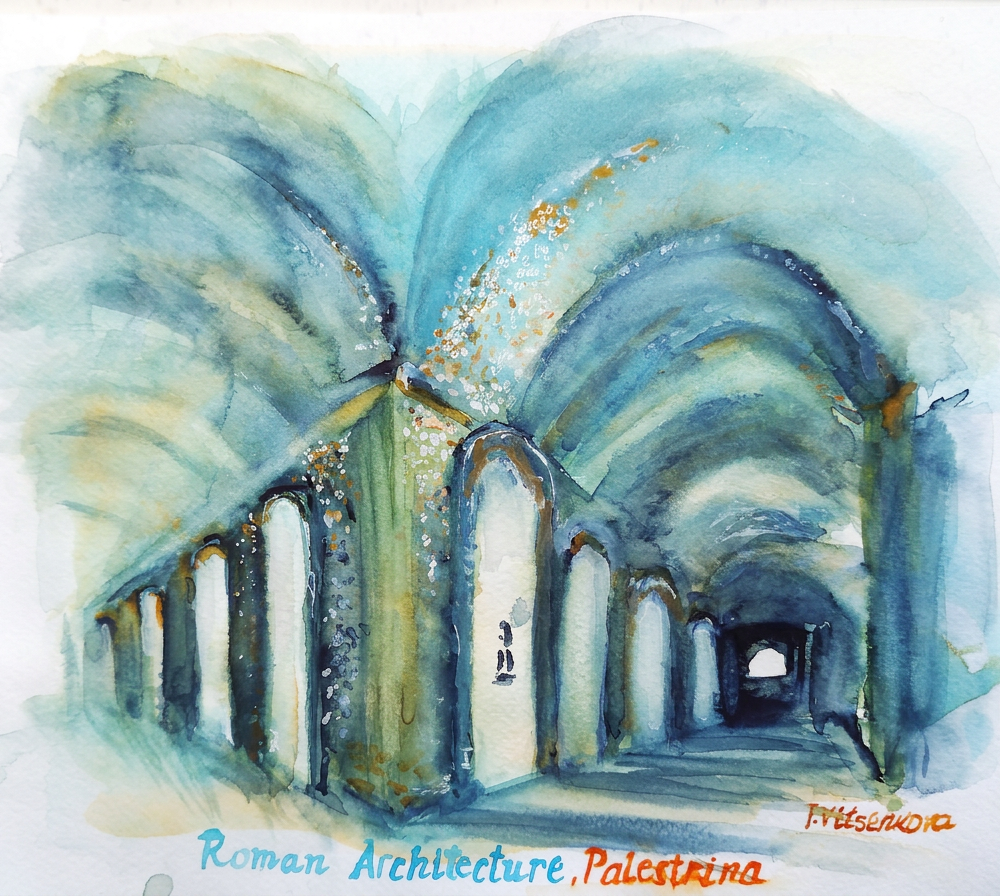
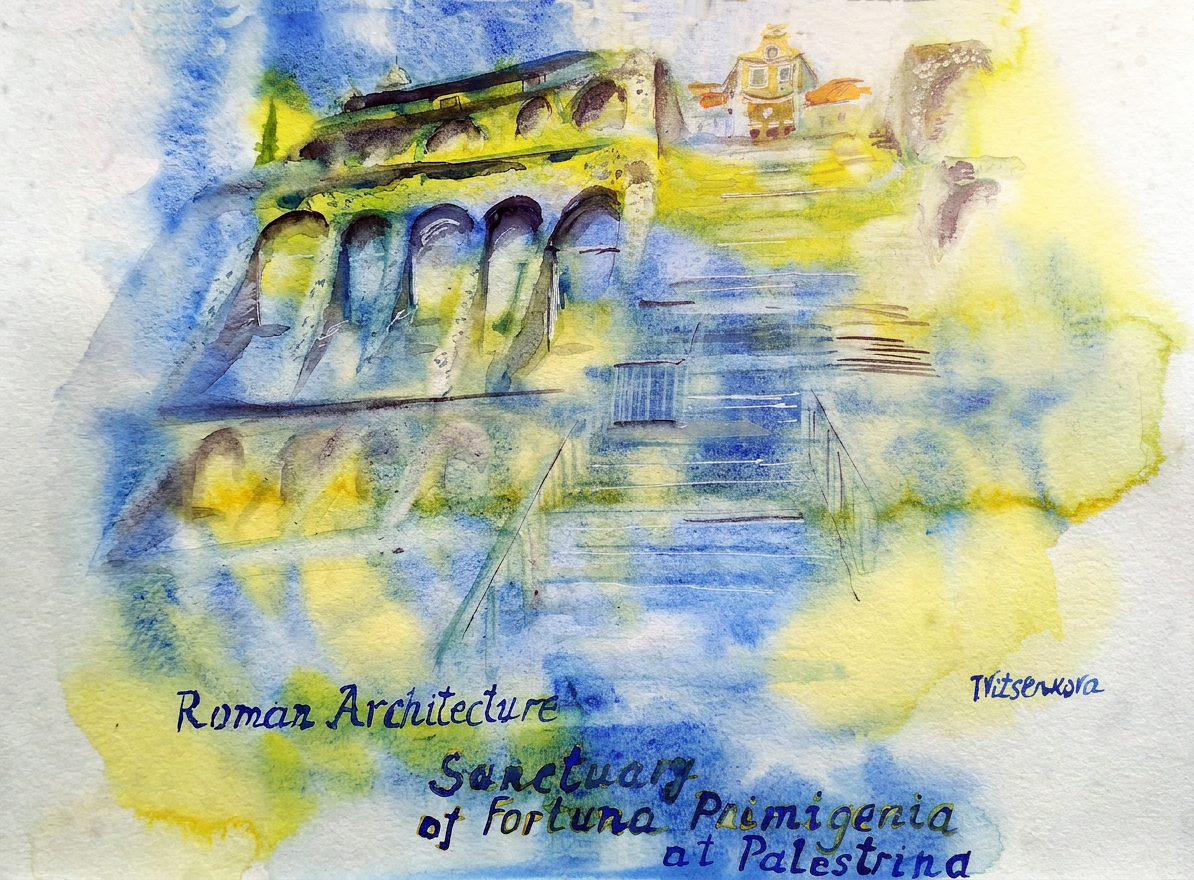
There is a wonderful place near Rome, UNESCO city of Palestrina. The Sanctuary of Fortuna Primigenia at Palestrina (ancient Praeneste) in Italy was built in the 2nd century BCE in honour of the Goddess Isis, the goddess of femininity and motherhood and Fortuna, the ancient Roman goddess of luck. It was built on a natural hill on cement.


My painting is about the interior space of the Sanctuary of Fortuna Primigenia. It was a Sanctuary with built-in shops and a detached theatre in the Middle Ages. For my painting I added subtle bluish and greenish hues, because, of course, the stones fell off and the cement had been exposed over the millennia. Luckily for us, the Temple with its delicate arches has survived until now, and modern architects and archaeologists continue to explore and discover the secrets of ancient Roman architects even after millennia.


The genius Roman architects noticed that the volcanic dust, which is found in the sea in Italy, turns into pumice when in multitude. They realized that it can be used to strengthen any building. This revolutionary discovery created the Roman cement from ash, lime, sand, pebbles of a certain size and volcanic ash and sea water. Added either be large stone blocks or it could be small pieces of stone presses into the concrete when concrete was still wet. When dried, these stones made the building look more attractive and protected the building from moisture.


Like modern constructors, the Romans erected wooden frames for the walls and ceilings and poured the concrete into them. Romans solved two problems this way, protected cement from moisture and hid the non-attractive part of cement at the same time. I would add that they were saving money for the construction and gaining valuable experience. Using the new revolutionary technology, they started to build not only Temples and villas for the rich, they started to develop and build more, and thanks to this experience and development, today we can still admire the architectural monuments of the past.

Another one-day trip from Rome is on my way in Italy:)

All roads lead to Rome – Alain de Lille

Bon voyage! Until the next travel:)

All paintings belong to the author. No image is to be copied without permission.

https://www.coursera.org/learn/roman-architecture/home/welcome

Painting – Palestrina, Roman Architecture

Year of construction 2nd century BC

Address: Via Colle Pastino 20, 00036, Palestrina Italy

Tools used for my painting Watercolour Cotman terra de siena and viridian Corman, Charvin bleu royal, Derwent, Albert Durer and Faber Castell watercolour pencils. Paper Van Gogh, National gallery   watercolour album, 22×30 cm (9 ×12 in.)

3-4.Art and Travel. Innovations in Concrete at Rome: The Tabularium and the Theatre of Marcellus. Watercolor journey with the course Roman Architecture by the Yale University.

Artist, Roman Architecture, Uncategorized, Urban sketching, Voyage

I continue the course Roman Architecture + the city of Rome with Yale’s course Roman Architecture https://www.coursera.org/learn/roman-architecture.

Innovations in Concrete at Rome: The Tabularium and the Theatre of Marcellus. 3-4

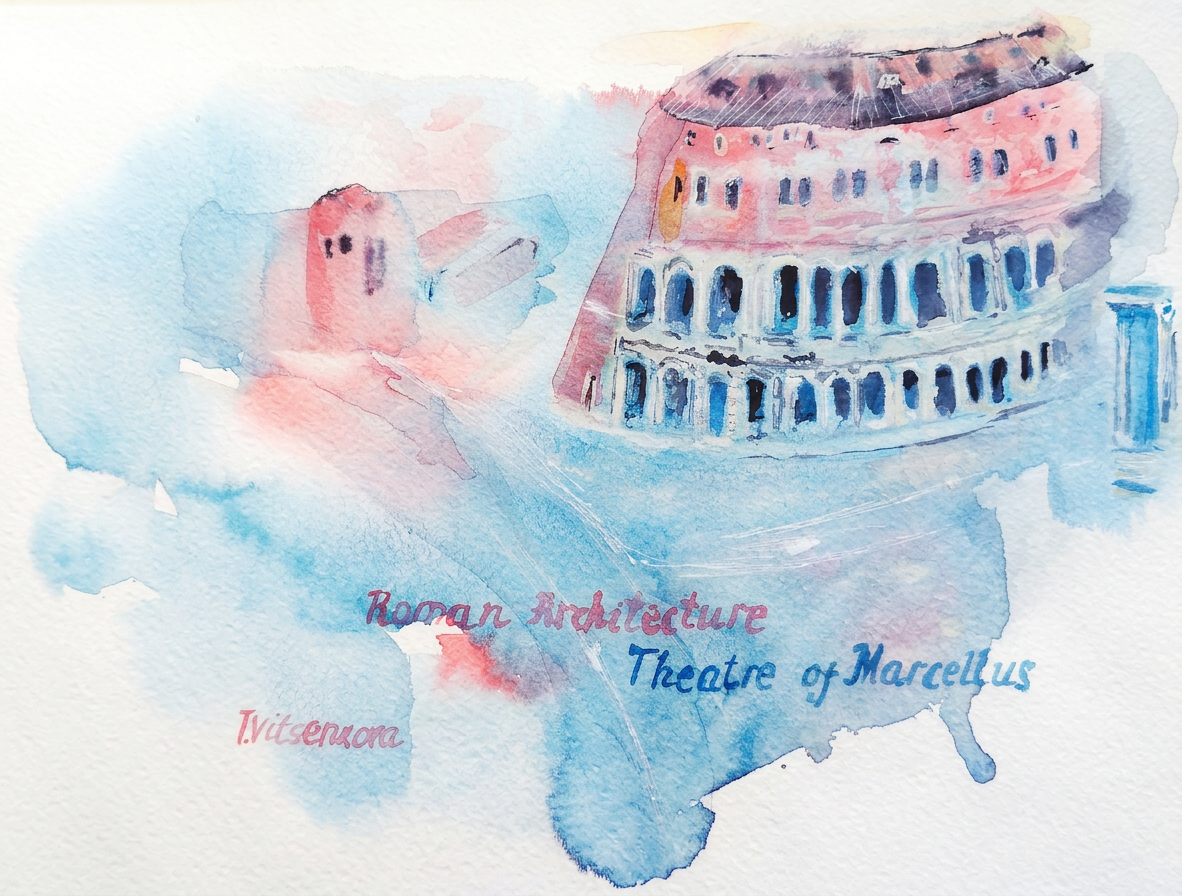
For my watercolor reference’s painting of the Theatre of Marcello with a nearby column of the Temple of Apollo , I used the Google Earth app to view the building from a bird’s eye view. Julius Caesar planned the open-air theatre but died before it was completed. Then Emperor Augustus took up the reins and dedicated the theatre to memory of his nephew and son in law Marcellus in 17 BC, when the theatre was used for dramas and arena fights. 

All roads lead to Rome – Alain de Lille

Bon voyage! Until the next travel:)

https://www.coursera.org/learn/roman-architecture/home/welcome

← Back

Thank you for your response. ✨

Name
Email
Your message

Δ document.getElementById( "ak_js_5" ).setAttribute( "value", ( new Date() ).getTime() );

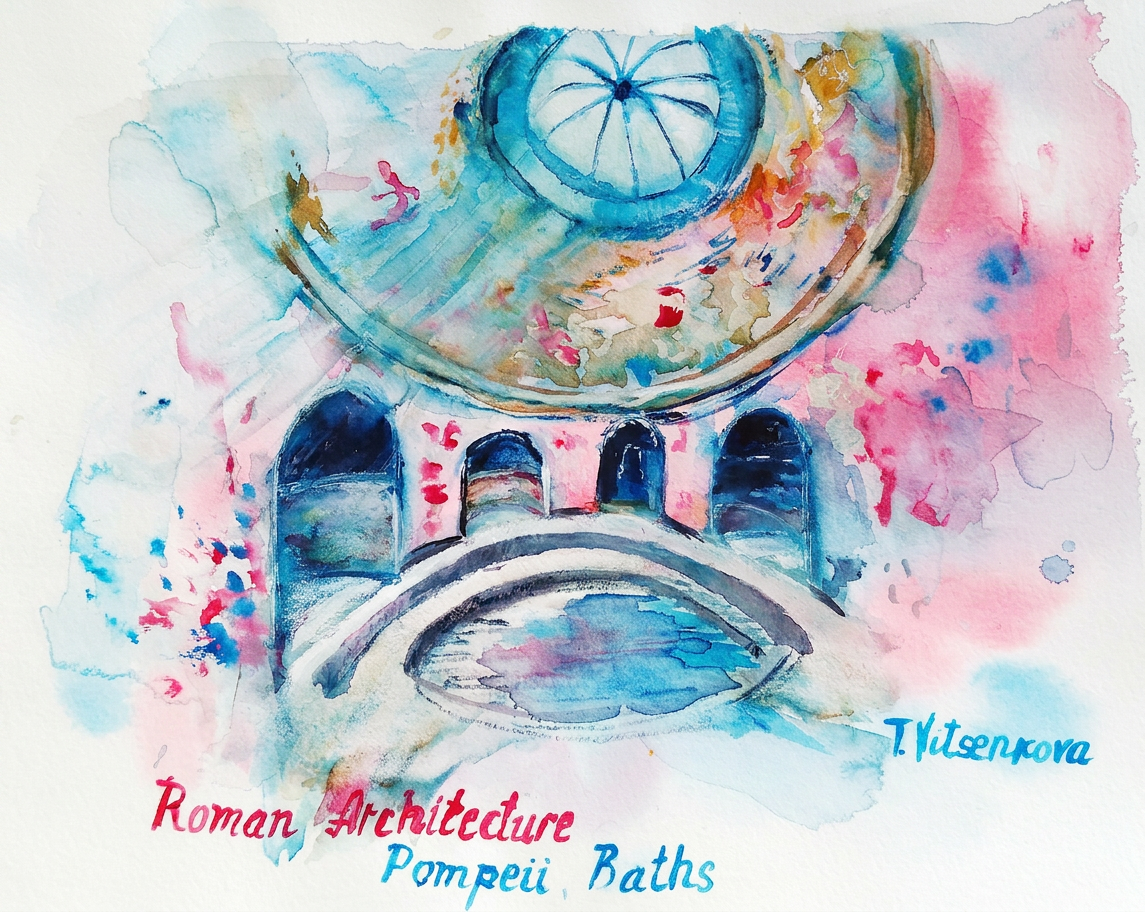
4-5. Art and Travel. Bath Complexes at Pompeii.

Artist, Roman Architecture, Uncategorized

Watercolor journey with the course Roman Architecture by Yale University.

C. 4-5

All roads lead to Rome – Alain de Lille

Bon voyage! Until the next travel:)

https://www.coursera.org/learn/roman-architecture/home/welcome

← Back

Thank you for your response. ✨

Name
Email
Your message

Δ document.getElementById( "ak_js_6" ).setAttribute( "value", ( new Date() ).getTime() );

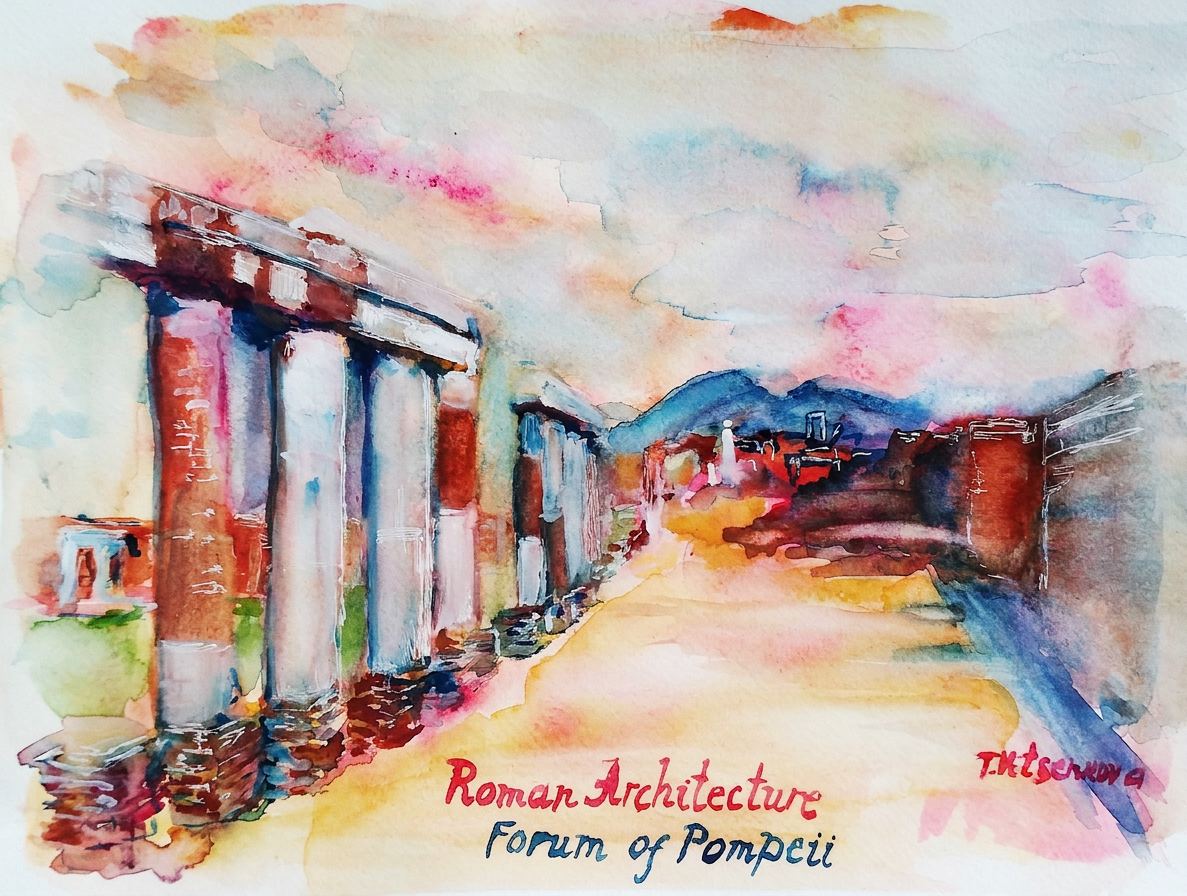
4-2.Art and Travel. The Early Settlement and the Forum at Pompeii .

Artist, Roman Architecture

Watercolor journey with the course Roman Architecture by the Yale University.

C. 4-2

All roads lead to Rome – Alain de Lille

Bon voyage! Until the next travel:)

https://www.coursera.org/learn/roman-architecture/home/welcome

← Back

Thank you for your response. ✨

Name
Email
Your message

Δ document.getElementById( "ak_js_7" ).setAttribute( "value", ( new Date() ).getTime() );

5-1.Art and Travel. Introduction and the Ideal Domus Italica.

Roman Architecture, Uncategorized

Watercolor journey with the course Roman Architecture by the Yale University.

I continue the painting series with the course Roman Architecture + the city of Rome with Yale’s course Roman Architecture https://www.coursera.org/learn/roman-architecture.

C. 5-1

https://pixels.com/featured/domus-italica-residential-house-in-pompeii-tamara-vitsenkova.html

All roads lead to Rome – Alain de Lille

https://www.coursera.org/learn/roman-architecture/home/welcome

← Back

Thank you for your response. ✨

Wildflowers. Pink Thistle and Scotland. Part 1.

Artist, ArtTravel, Uncategorized, Urban sketching

Still life and urban sketching (with extra thorns)

The spiky diva herself. Don’t touch.

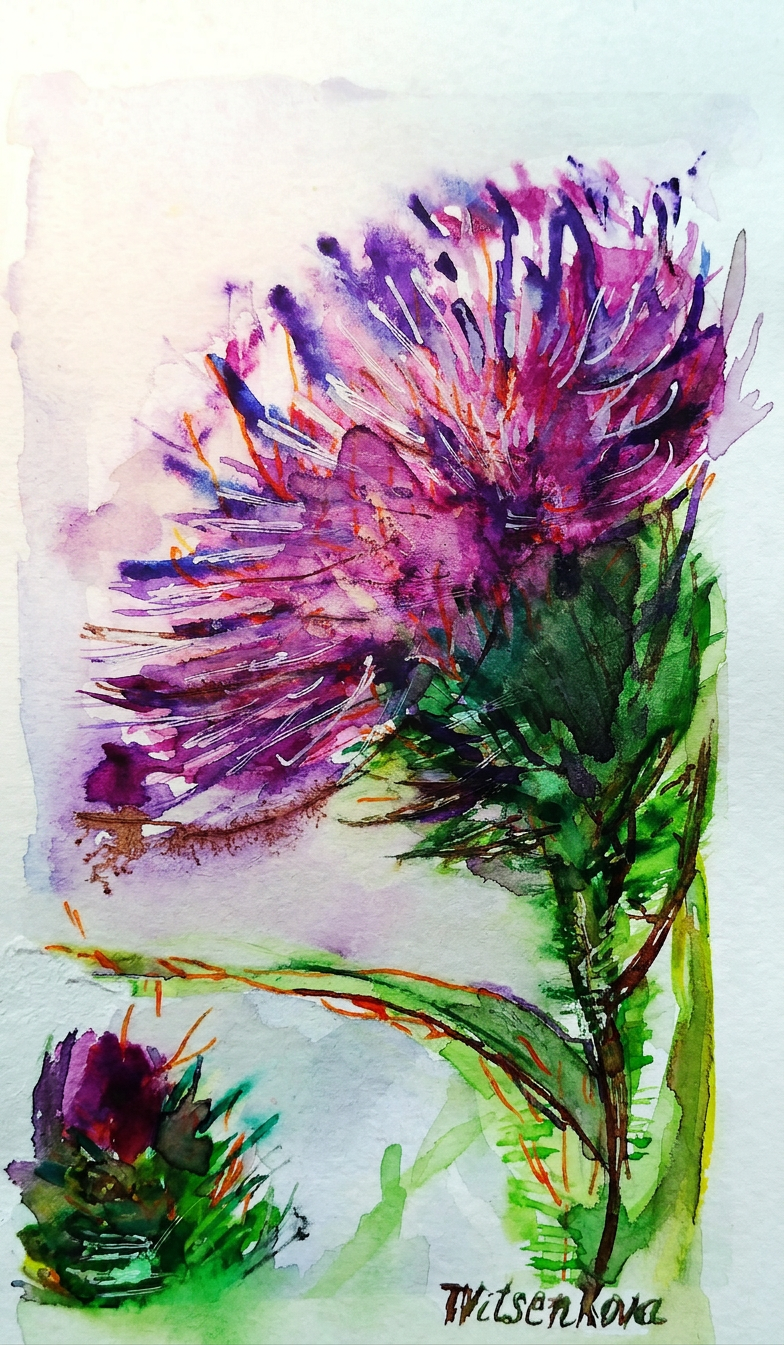
My sister asked me to paint a thistle flower that captures its personality: character, strength, inflexibility, firmness, and an almost aggressive refusal to die under any circumstances. Basically, the Rambo of the flower kingdom. Challenge accepted! I created an entire series of these botanical warriors that thrive everywhere and survive conditions that would make other flowers quit their jobs and move to Arizona.

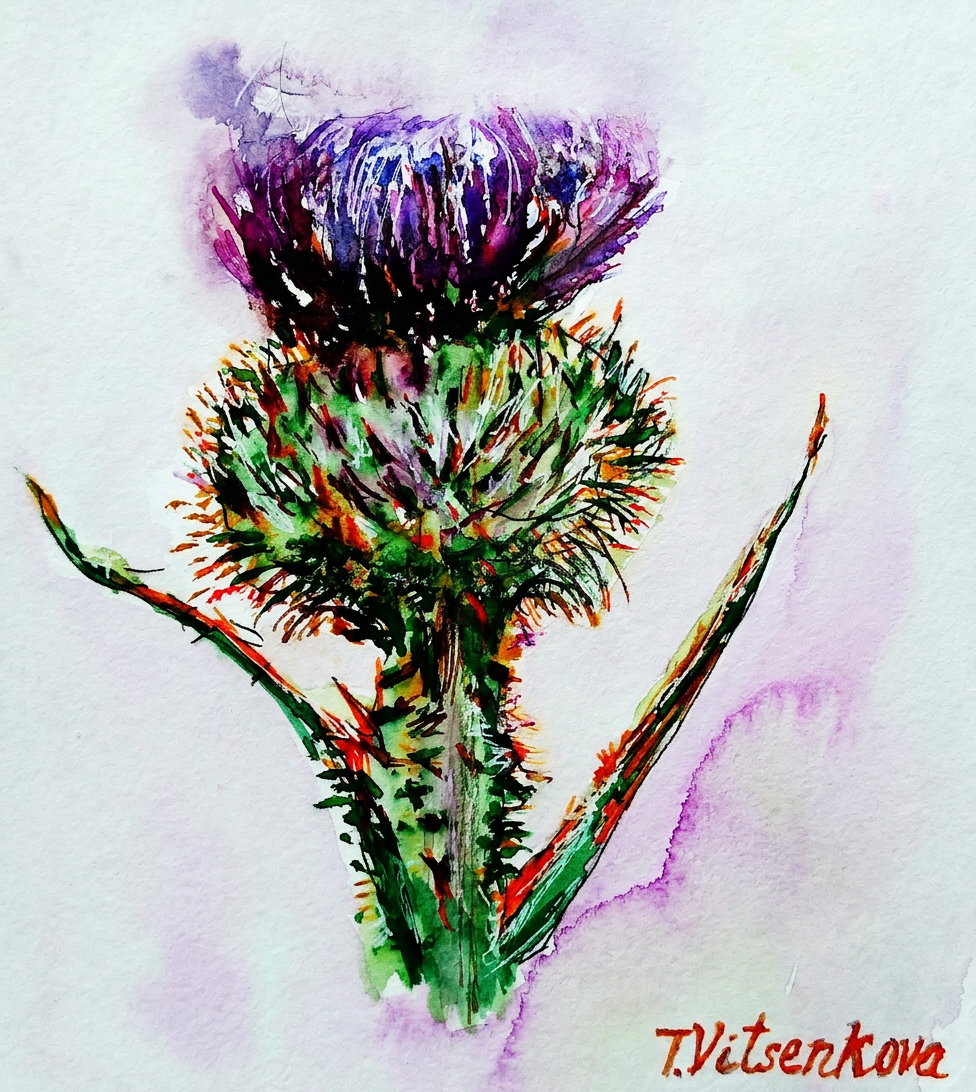
Behold: one of my first watercolor flower graphics with ink—a masterpiece created when I was still discovering my artistic voice. I wielded cooler purple and dark violet like a tiny ninja, with strategic additions of carrot orange and silver gray. (Translation: I threw colors at paper and it worked.)

Purple and orange? She woke up and chose violence.

The thistle is credited with possessing the magical ability to ward off evil spirits. So basically, it’s the flower equivalent of garlic and a cross combined. Vampires and demons should be very, very worried.

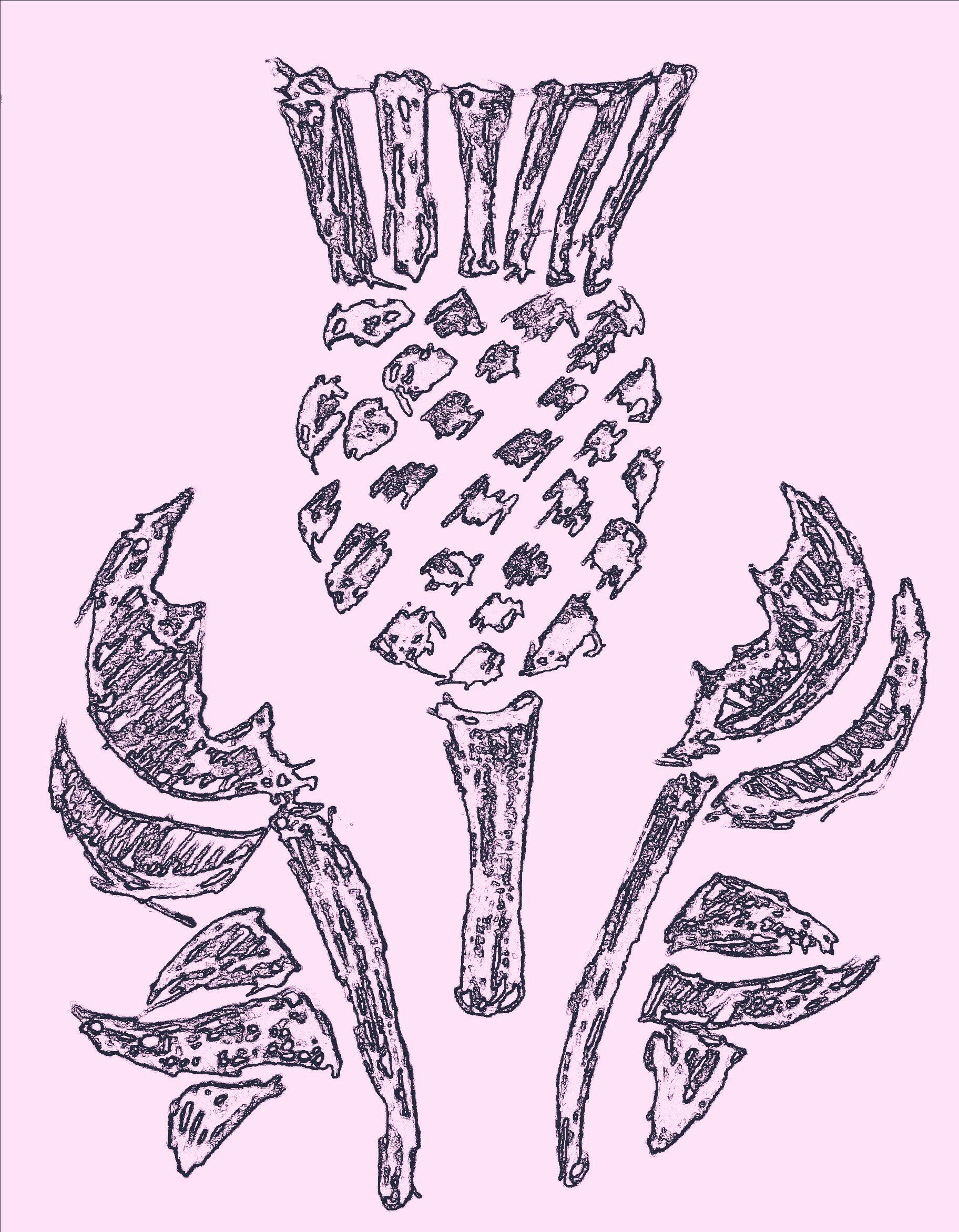
Now here’s where it gets spicy: The thistle has been Scotland’s symbol since the 13th century. Legend has it that some ambitious army decided to invade Scotland by launching a surprise night raid. Tactical genius, right? Wrong. In their infinite wisdom, the invaders removed their shoes to move stealthily through the darkness. Spoiler alert: their stealth plan came to an abrupt end when one unfortunate soldier stepped barefoot on a thistle. The resulting shriek? Loud enough to wake the sleeping Scottish soldiers, who then proceeded to win the day. And THAT, my friends, is how a tiny spiky flower saved an entire nation. You’re welcome, Scotland!

Scotland’s unsung hero. Barefoot invaders not included.

The thistle is the official emblem of the Knights of the Order of the Thistle—a group of people who basically said, “You know what this order needs? A flower that actively hurts people.” Their motto? The Latin phrase Nemo me impune lacessit, which means “No one will touch me with impunity.” (Translation: This flower has zero chill.)

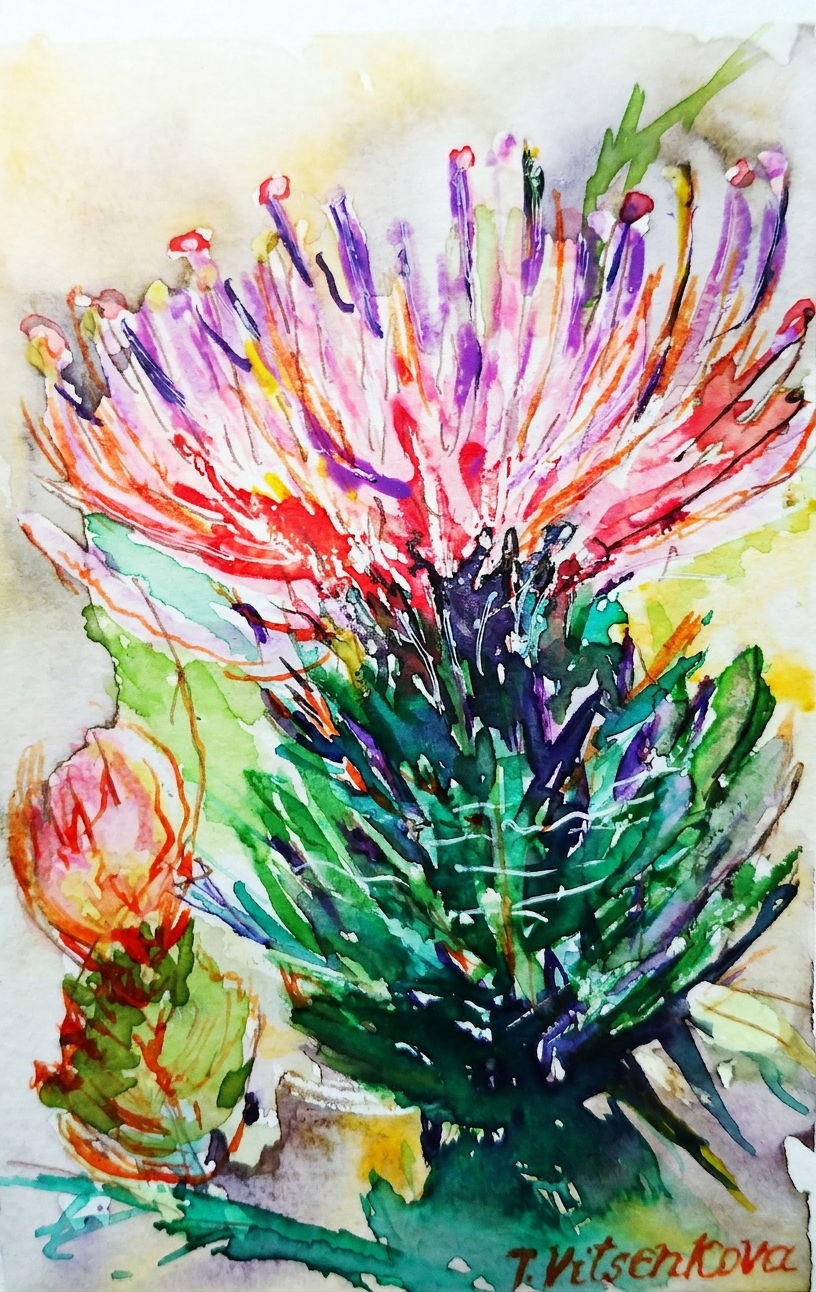
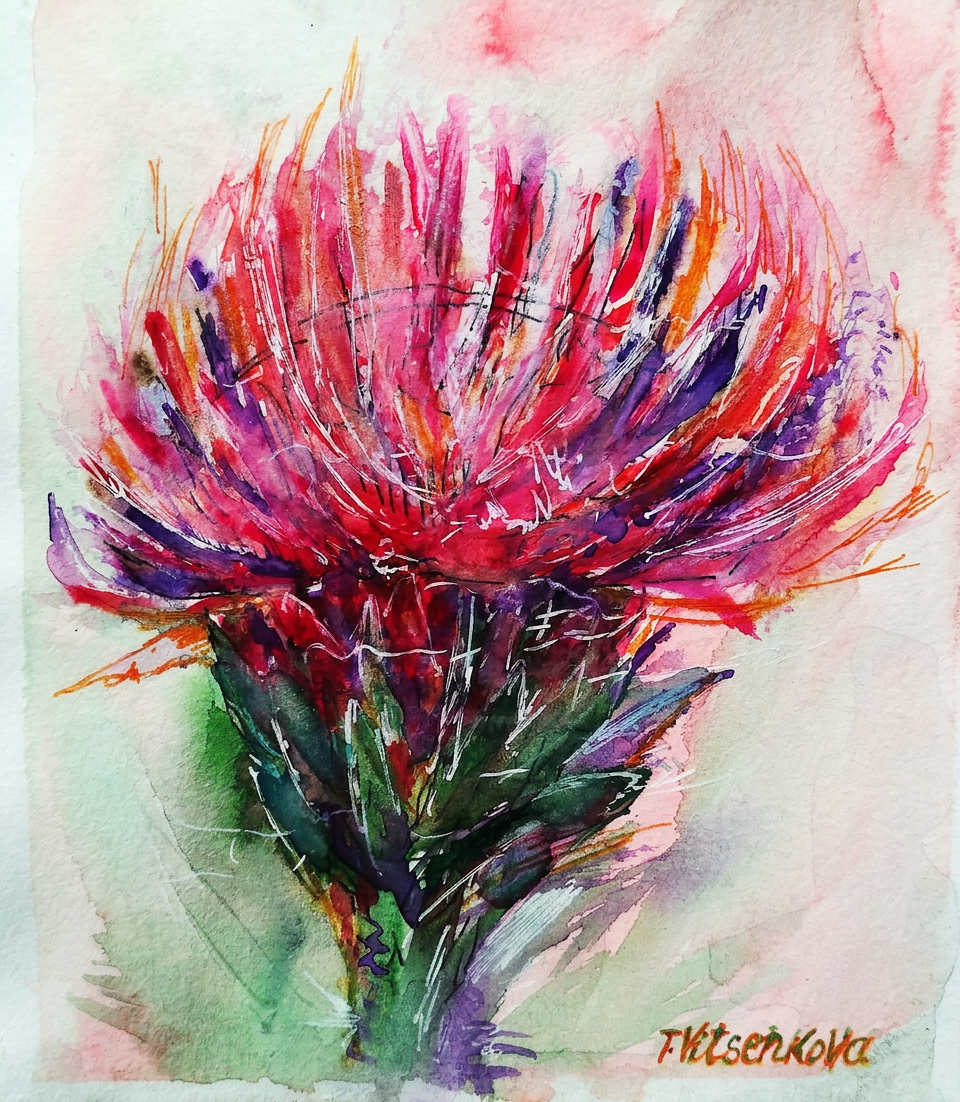
Thistle wildflower watercolor graphic alert! With ink, because subtlety is overrated. I mixed colors like I was a culinary artist: pink, milky blue opal, saffron latte, and neon colors for extra pizzazz. If your thistle painting doesn’t make people’s eyeballs tingle, are you even trying?
Pink, neon, and zero regrets.

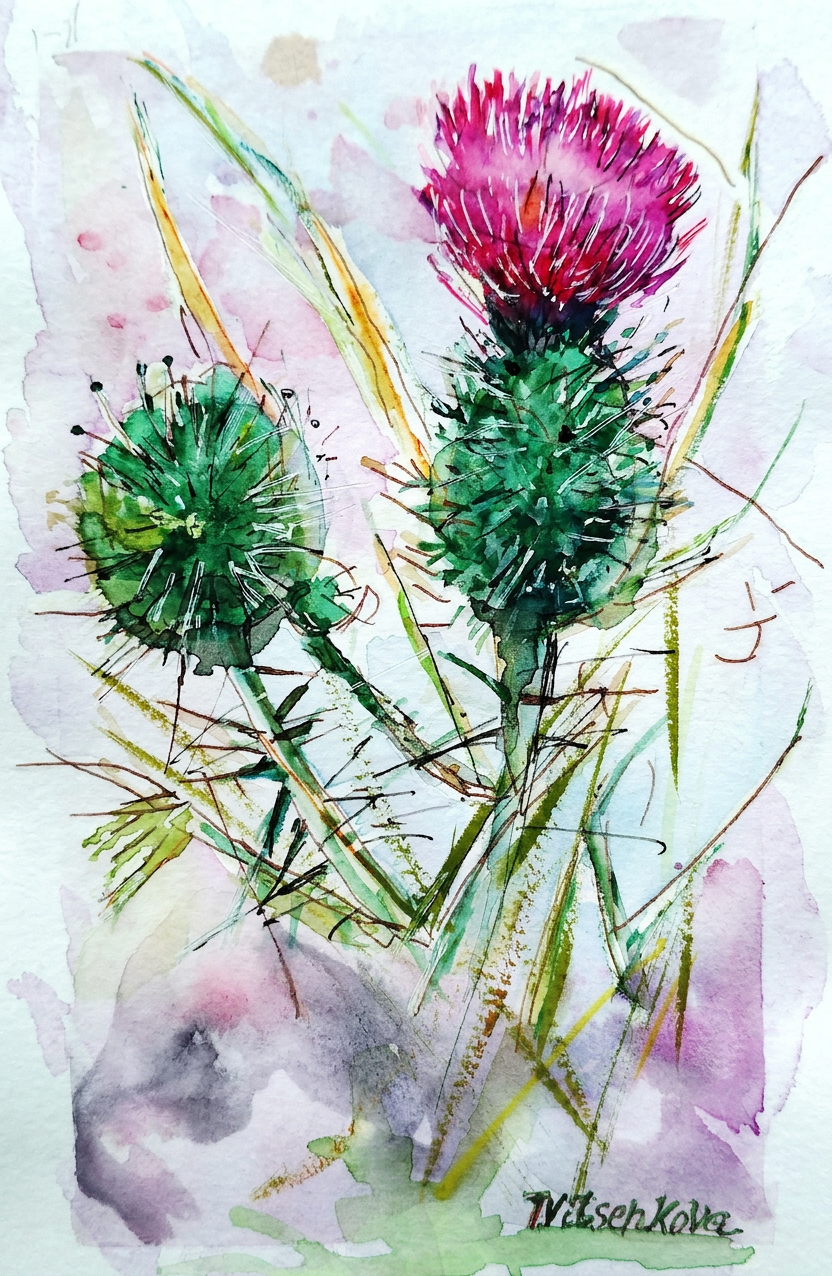
I’m absolutely obsessed with pink thistles and their refreshingly simple color palette. A splash of plum color, some pistachio background, and boom—you’ve got botanical happiness on paper. It’s like painting flower versions of minimalist interior design.

Minimalist thistle. Maximum attitude.

Thistle watercolor wildflower painting featuring petals the color of blueberries and purple grapes. Translation: I made fruit jealous by using their colors on a flower. The audacity!

Blueberry vibes. Not edible. Learned that the hard way.

Watercolor flowers graphic extravaganza! With ink, because apparently I can’t help myself. Colors used: strawberry petals (obviously), light khaki, and a shade of flax background that somehow made the whole thing work. Art is chaos. Beautiful, intentional chaos.

Strawberry fields forever — but make it thorny.

Plot twist: Some thistles come in caramel and turmeric colors. Because apparently thistle diversity includes the entire spice rack.

Caramel and turmeric. The spice rack called, it wants its colors back.

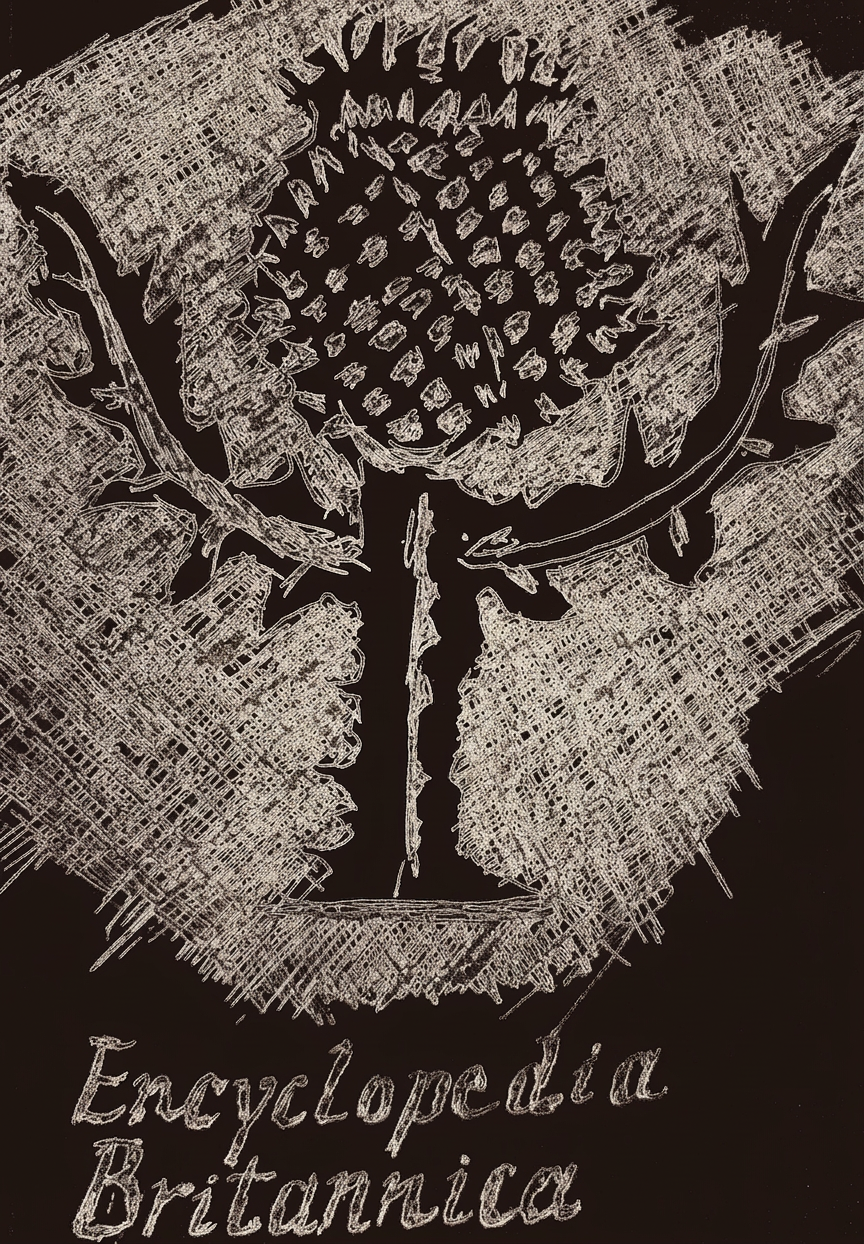
Here’s the thing about pink thistles: they’re the most popular thistle color, which is why I gathered all my pink watercolor paintings in my first post about this fabulous flower (complete with Scotland’s legendary defense narrative). And now, hold onto your berets: a thistle is not just the floral emblem of Scotland AND Lorraine—it’s ALSO the emblem of the Encyclopedia Britannica. That’s right, thistles are basically the overachievers of the plant world. They didn’t just stop at one honor. They went for three.

Triple emblem holder. Thistle supremacy confirmed.
All paintings belong to the author. No image is to be copied without permission. Yes, I’m serious. Don’t even think about it.
Bon voyage! Until the next artistic adventure! Now go forth and appreciate some thistles. They’ve earned it.

← Back

Thank you for your response. ✨

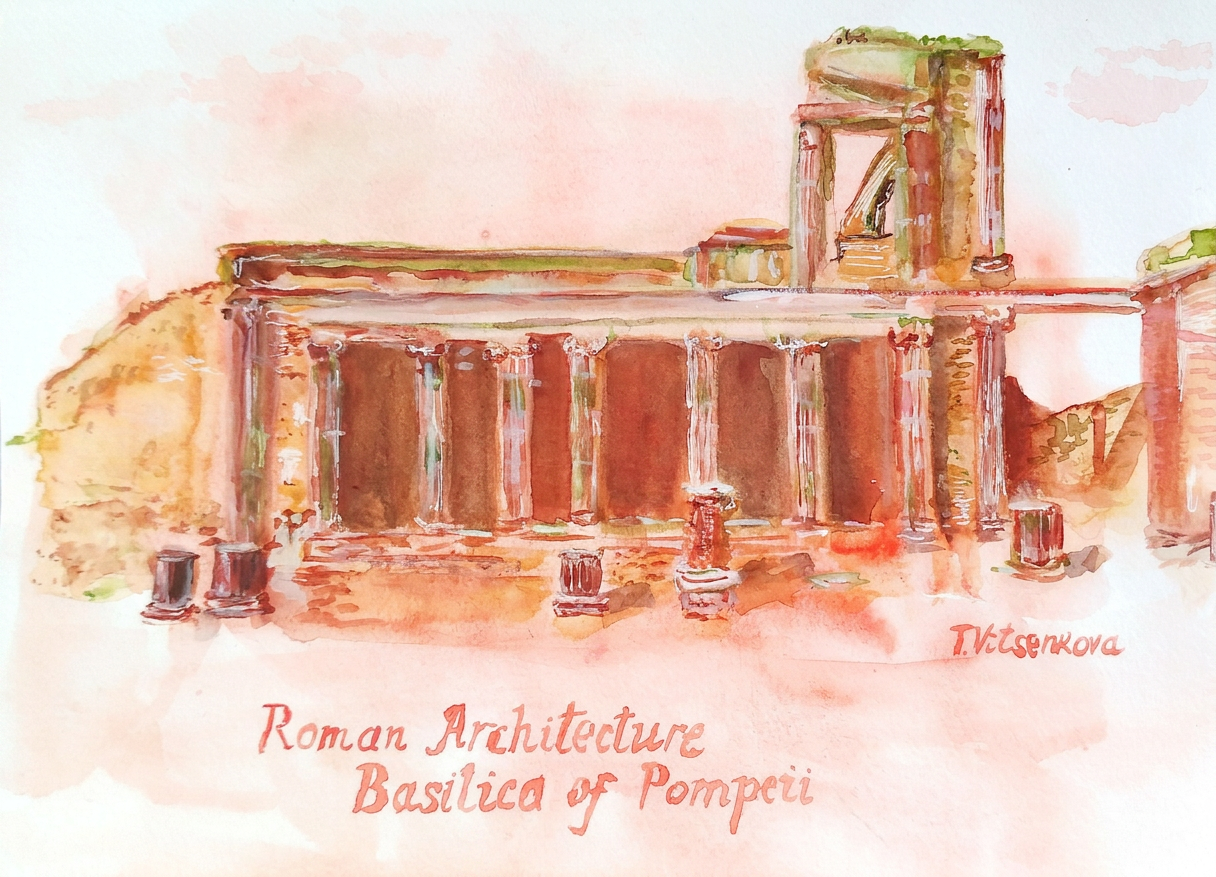
4-3.Art and Travel. The Capitolium and Basilica of Pompeii.

An Artist's Perspective on Roman Architecture, Roman Architecture, Uncategorized

Watercolor journey in the course Roman Architecture by the Yale University.

I continue the painting in the course Roman Architecture + the city of Rome with Yale’s course Roman Architecture https://www.coursera.org/learn/roman-architecture.

C. 4-3

All roads lead to Rome- Alain de Lille

Bon voyage! Until the next travel:)

https://www.coursera.org/learn/roman-architecture/home/welcome

← Back

Thank you for your response. ✨

Name
Email
Your message

Δ document.getElementById( "ak_js_10" ).setAttribute( "value", ( new Date() ).getTime() );

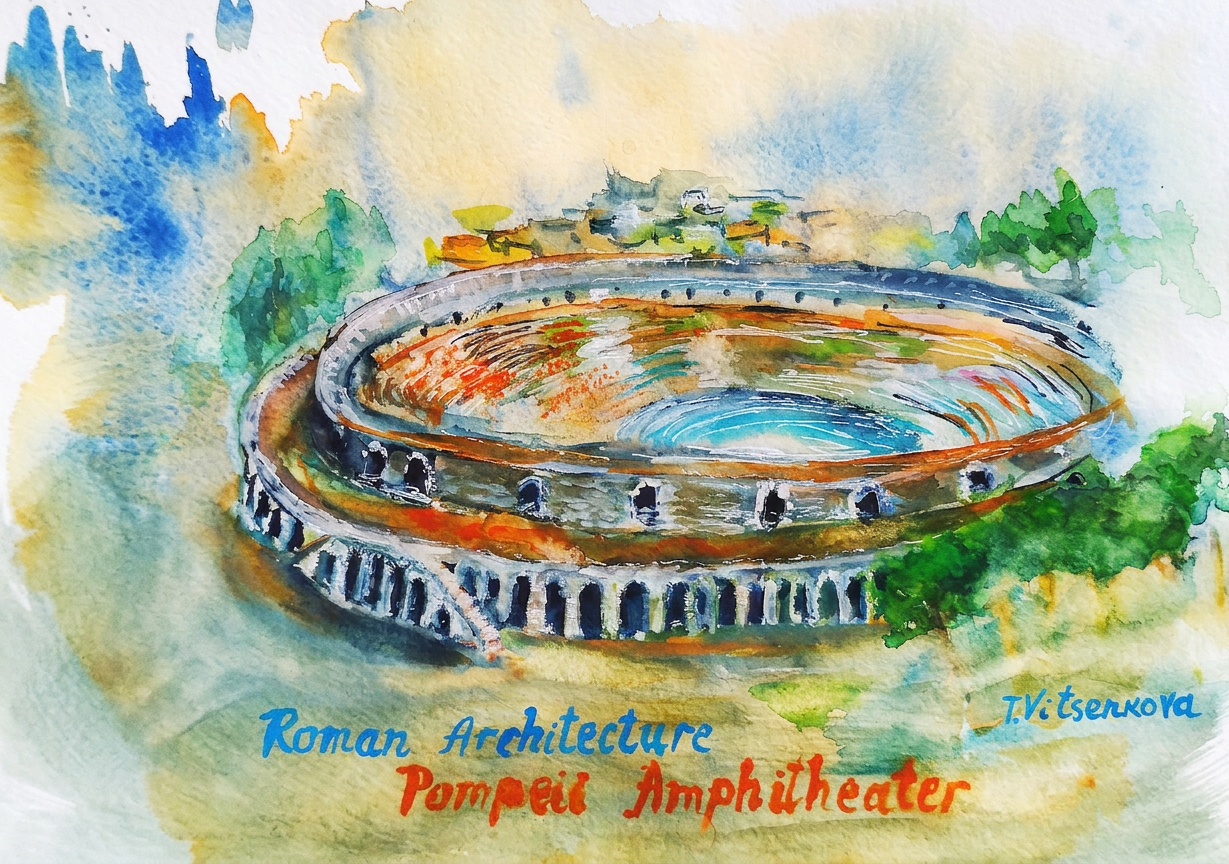
4-4.Art and Travel. Pompeii’s Entertainment District: The Amphitheater, Theater, and Music Hall.

Artist, Roman Architecture, Uncategorized

Watercolor journey in the course Roman Architecture by the Yale University.

All roads lead to Rome – Alain de Lille

https://www.coursera.org/learn/roman-architecture/home/welcome

← Back

Thank you for your response. ✨

Name
Email
Your message

Δ document.getElementById( "ak_js_11" ).setAttribute( "value", ( new Date() ).getTime() );

4-1.Art and Travel. Introduction to Pompeii and the City’s History.

Artist, Roman Architecture, Uncategorized, Urban sketching, Voyage

Watercolor journey with the course Roman Architecture by the Yale University.

All roads lead to Rome – Alain de Lille

Bon voyage! Until the next travel:)

https://www.coursera.org/learn/roman-architecture/home/welcome

← Back

Thank you for your response. ✨

Name
Email
Your message

Δ document.getElementById( "ak_js_12" ).setAttribute( "value", ( new Date() ).getTime() );

3-5.Art and Travel. Concrete Transforms a Mountain at Palestrina.

Artist, Roman Architecture, Uncategorized, Urban sketching, Voyage

Watercolor journey with the course Roman Architecture by the Yale University.

I continue the paintings with the course Roman Architecture + the city of Rome with Yale’s course Roman Architecture https://www.coursera.org/learn/roman-architecture.

All roads lead to Rome— Alain de Lille

https://www.coursera.org/learn/roman-architecture/home/welcome

← Back

Thank you for your response. ✨

Name
Email
Your message

Δ document.getElementById( "ak_js_13" ).setAttribute( "value", ( new Date() ).getTime() );

3-3.Art and Travel. Sanctuaries and the expressive potential of Roman concrete construction.

Artist, Roman Architecture, Uncategorized, Urban sketching, Voyage

Watercolor journey with the course Roman Architecture by the Yale University.

I continue the paintings after the course Roman Architecture + the city of Rome with Yale’s course Roman Architecture https://www.coursera.org/learn/roman-architecture.

Sanctuaries and the expressive potential of Roman concrete construction. 3-3

All roads lead to Rome – Alain de Lille

https://www.coursera.org/learn/roman-architecture/home/welcome

← Back

Thank you for your response. ✨

Name
Email
Your message

Δ document.getElementById( "ak_js_14" ).setAttribute( "value", ( new Date() ).getTime() );

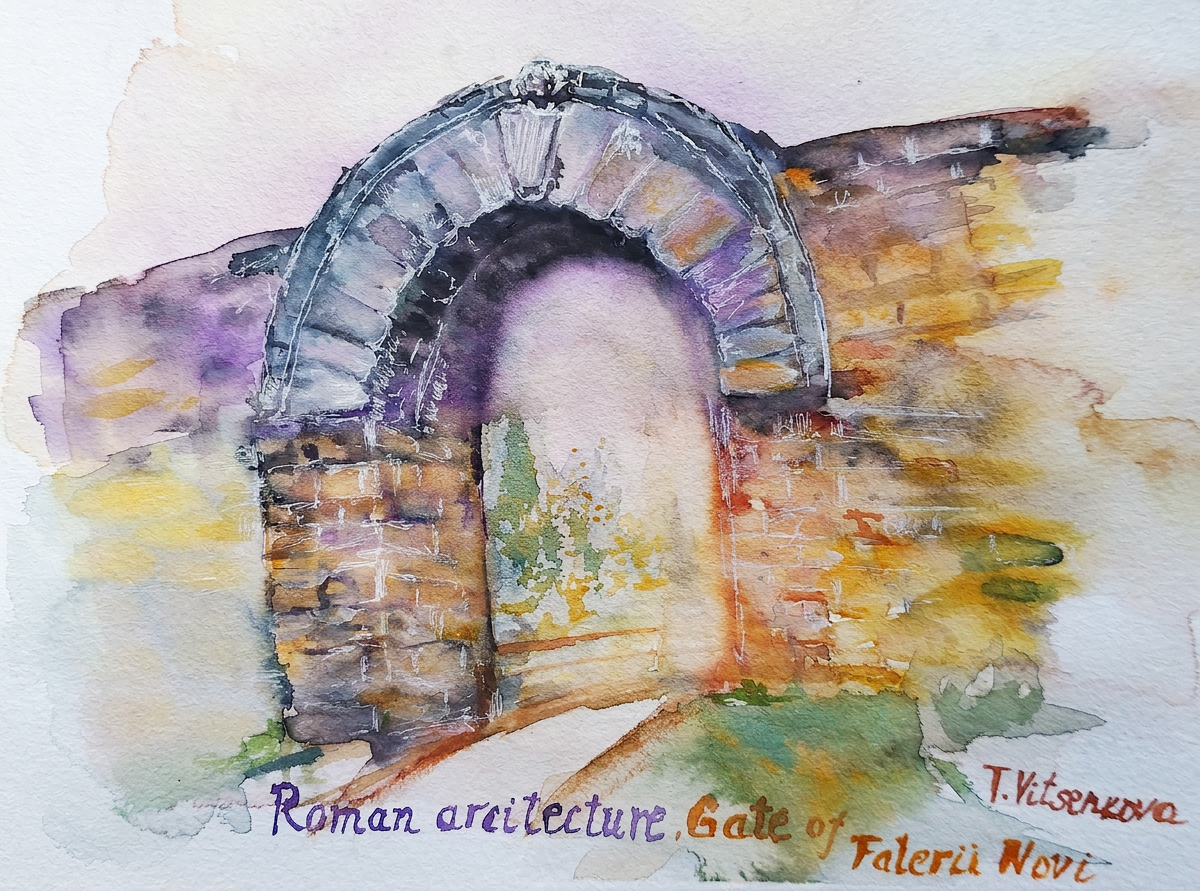
2-3.Art and Travel. Defensive Stone walls and regular town -planning, Roman Architecture.

Artist, Roman Architecture, Uncategorized, Urban sketching, Voyage

Watercolor journey with the course Roman Architecture by the Yale University.

All roads lead to Rome — Alain de Lille

← Back

Thank you for your response. ✨

Name
Email
Your message

Δ document.getElementById( "ak_js_15" ).setAttribute( "value", ( new Date() ).getTime() );

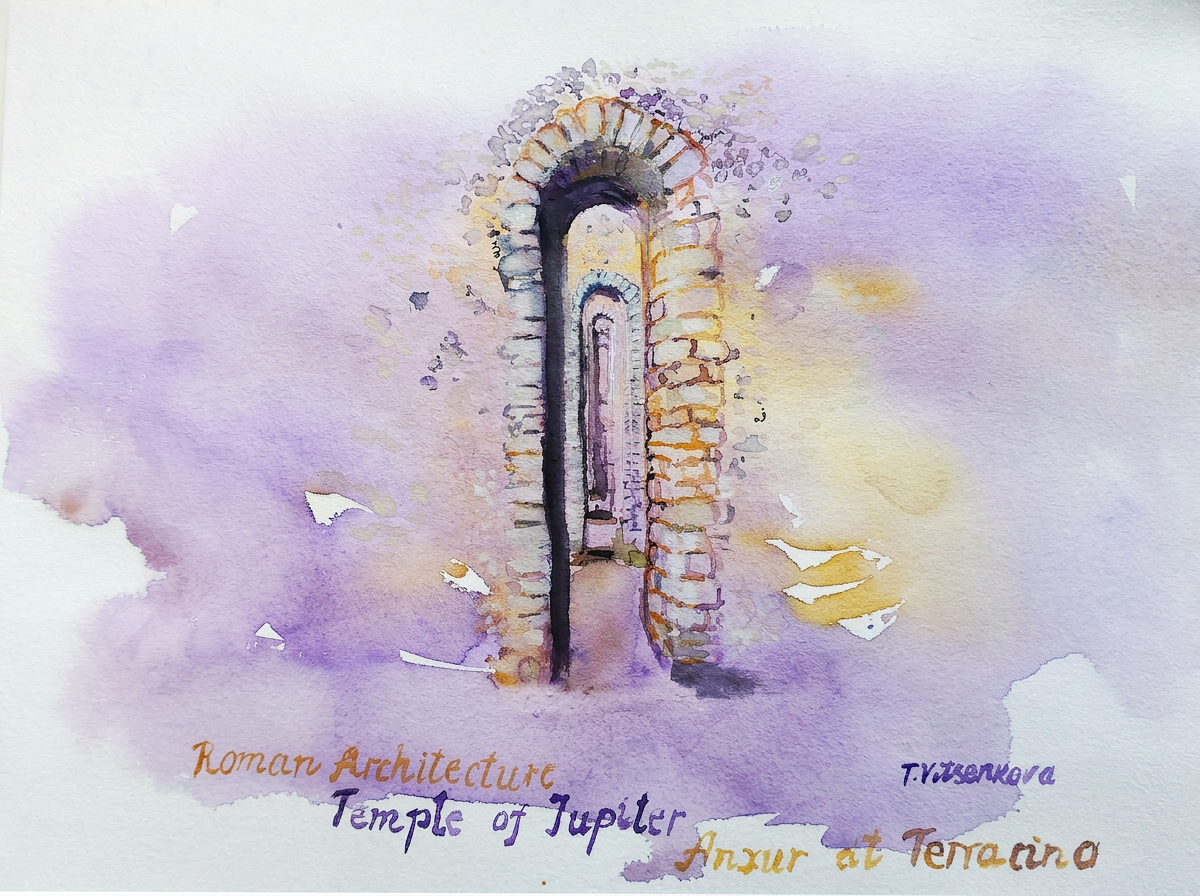
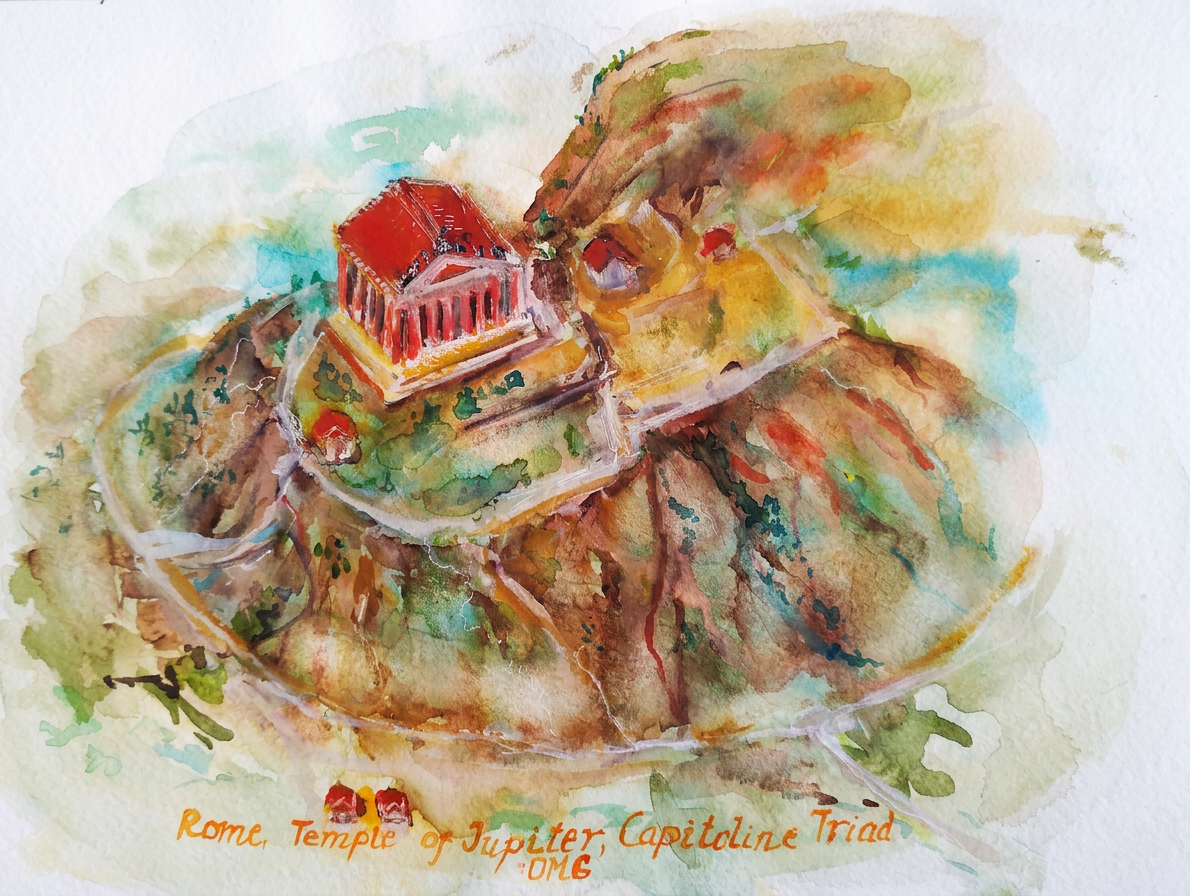
2-2.Art and Travel. Rome, Temple of Jupiter OMG, Capitolini Triad, Roman Architecture. Watercolor journey with the course Roman Architecture by the Yale University.

Artist, Roman Architecture, Uncategorized, Urban sketching, Voyage

All roads lead to Rome – Alain de Lille

Bon voyage! Until the next travel:)

← Back

Thank you for your response. ✨

Name
Email
Your message

Δ document.getElementById( "ak_js_16" ).setAttribute( "value", ( new Date() ).getTime() );

Link to the Roman Architecture Course:

https://www.coursera.org/learn/roman-architecture/home/welcome

3-2.Art and Travel. The first experiments in Roman concrete construction.

Artist, Roman Architecture, Uncategorized, Urban sketching, Voyage

Watercolor journey with the course Roman Architecture by the Yale University.

The first experiments in Roman concrete construction. 3-2

All roads lead to Rome – Alain de Lille

Bon voyage! Until the next travel:)

← Back

Thank you for your response. ✨

Name
Email
Your message

Δ document.getElementById( "ak_js_17" ).setAttribute( "value", ( new Date() ).getTime() );

2-5.Art and Travel. The advent of the Corinthian Order, Roman Architecture.

Artist, Roman Architecture, Uncategorized, Urban sketching, Voyage

Watercolor journey with the course Roman Architecture by the Yale University.

I continue my artistic series with the course Roman Architecture + the city of Rome with Yale’s course Roman Architecture https://www.coursera.org/learn/roman-architecture.

The advent of the Corinthian Order Roman Architecture. 2-5.

All roads lead to Rome – Alain de Lille

← Back

Thank you for your response. ✨

Name
Email
Your message

Δ document.getElementById( "ak_js_18" ).setAttribute( "value", ( new Date() ).getTime() );

2-4.Art and Travel. The Hellenization of late Republican temple, Roman Architecture.

Artist, Roman Architecture, Uncategorized, Urban sketching, Voyage

Watercolor journey with the course Roman Architecture by the Yale University

The Hellenization of late Republican temple, Roman Architecture. 2-4.

All roads lead to Rome- Alain de Lille

← Back

Thank you for your response. ✨

Name
Email
Your message

Δ document.getElementById( "ak_js_19" ).setAttribute( "value", ( new Date() ).getTime() );