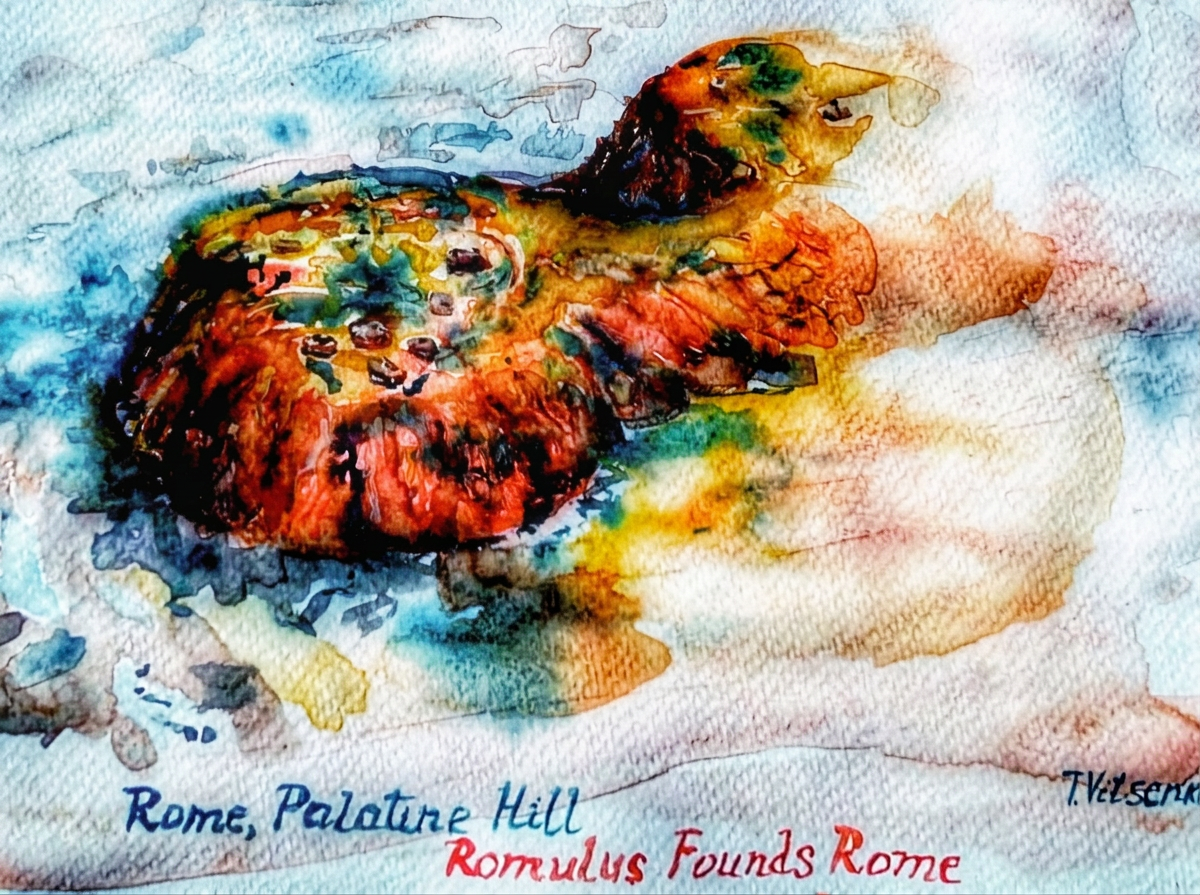
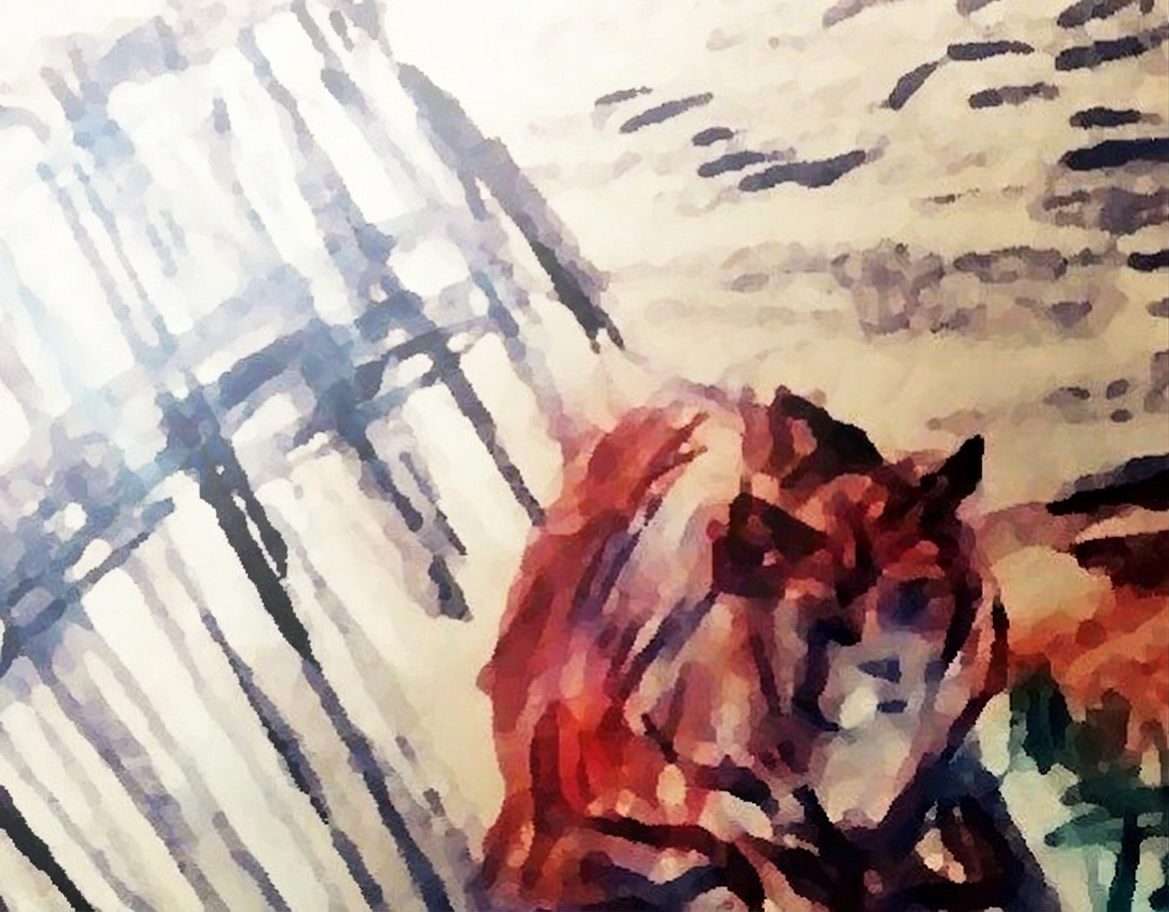
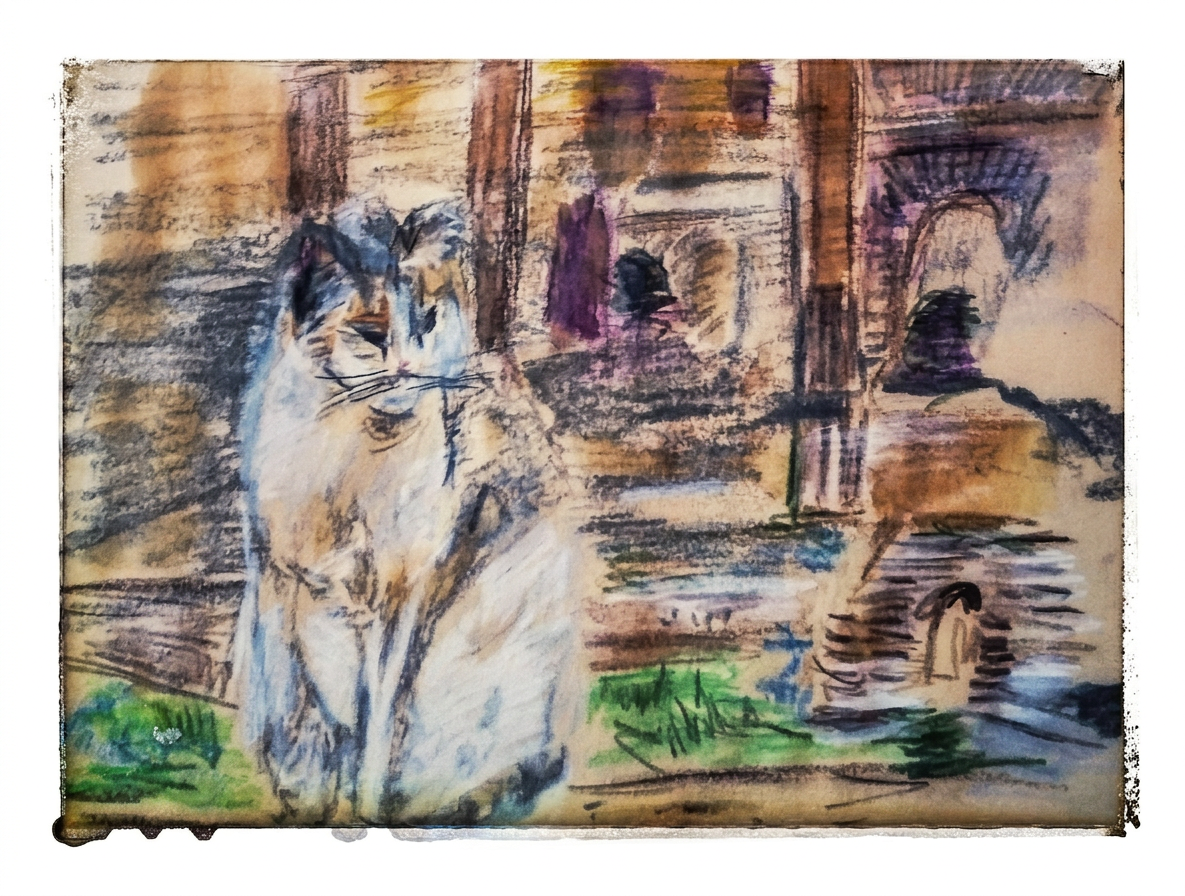
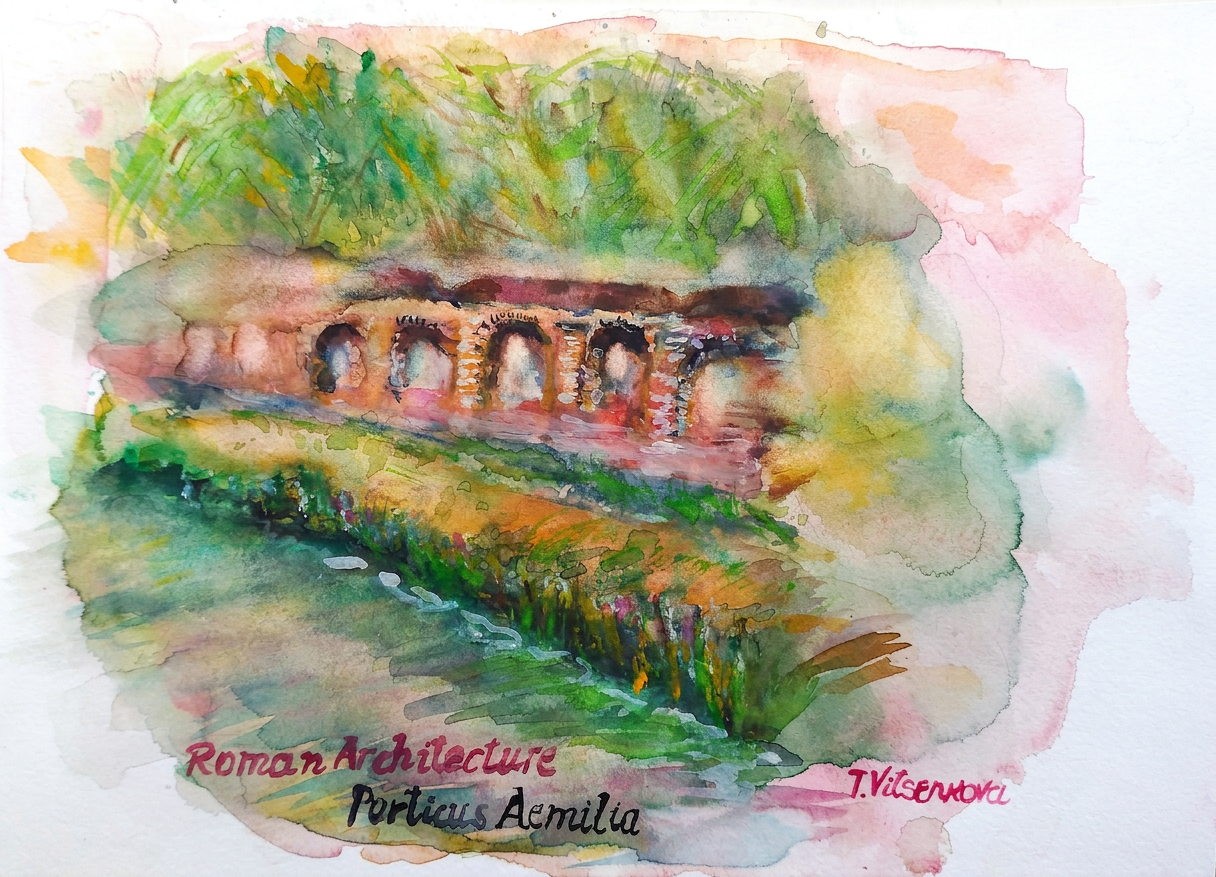
2-1. Art and Travel. – Rome, Palatine Hill, Romulus Founds Rome.

Artist, Roman Architecture, Uncategorized, Urban sketching, Voyage

Watercolor journey with the course Roman Architecture by the Yale University.

All roads lead to Rome – Alain de Lille

← Back

Thank you for your response. ✨

Name
Email
Your message

Δ document.getElementById( "ak_js_1" ).setAttribute( "value", ( new Date() ).getTime() );

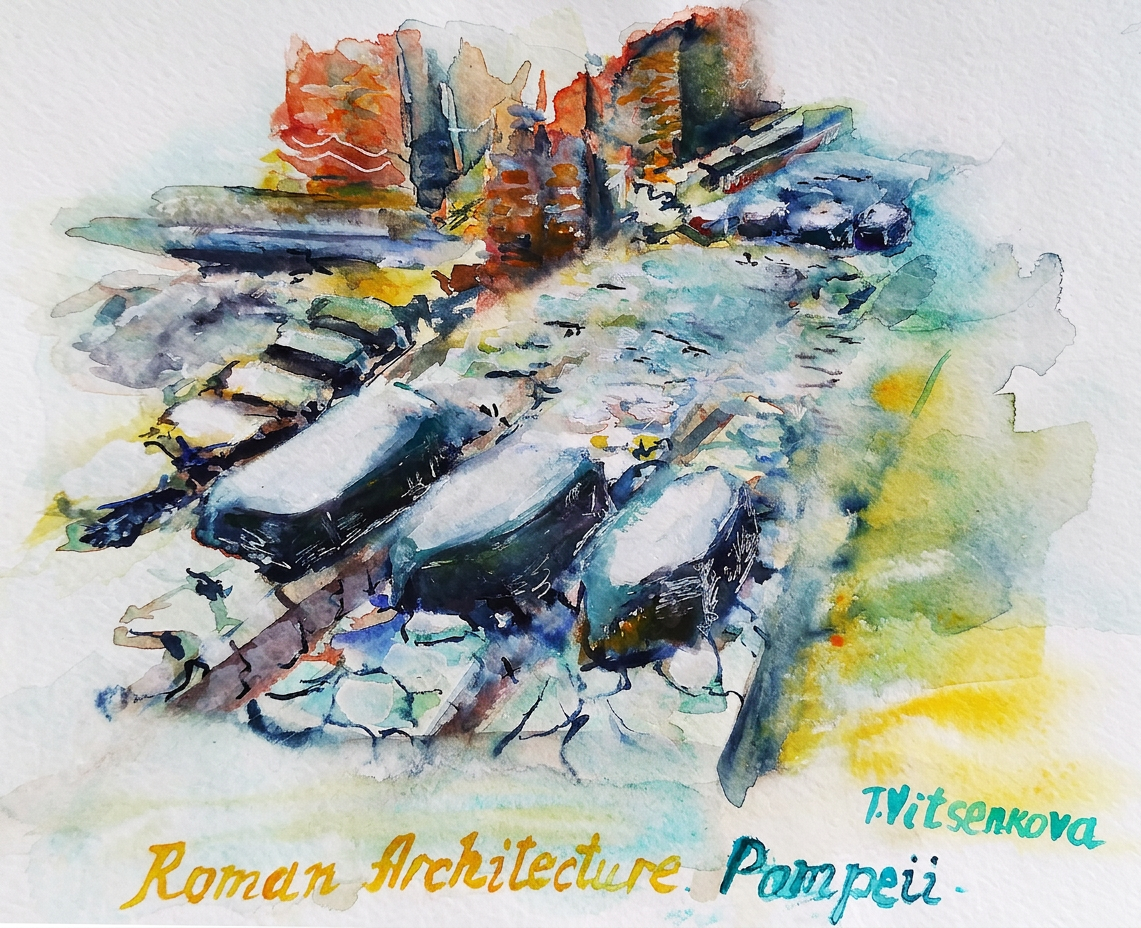
The Art of Pompeii: Depicting Daily Life Through Bakeries. Watercolor journey with the course Roman Architecture by the Yale University.

An Artist's Perspective on Roman Architecture, Artist, Roman Architecture, Uncategorized, Urban sketching, Voyage

Art and Travel.  Pompeii, bakeries and millstones. Introduction. Bathing, Entertainment, and Housing in the Roman City. 1-4.

The Daily Grind

The Inspiration – Juvenal
The Sensory Experience

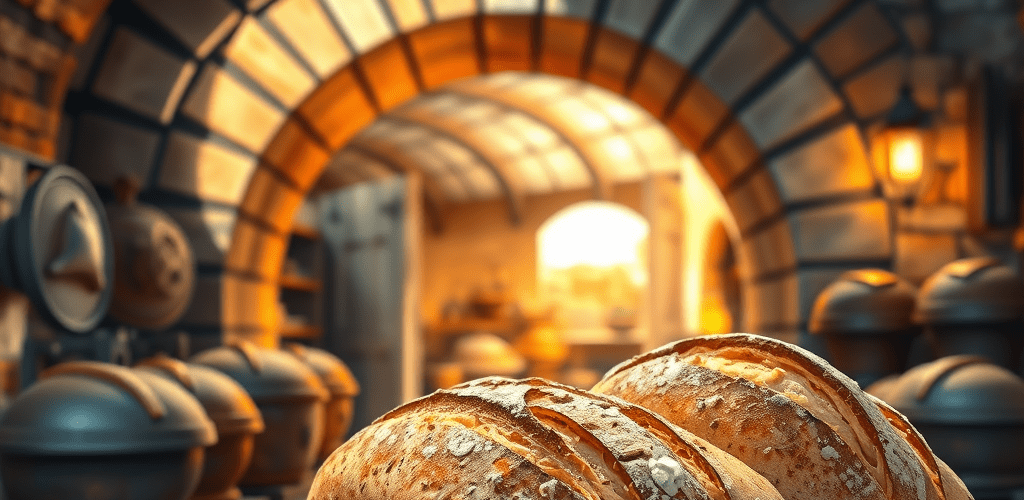
Can you smell the fresh bread?:)

The Scene Setter. Itinerary to Pompeii
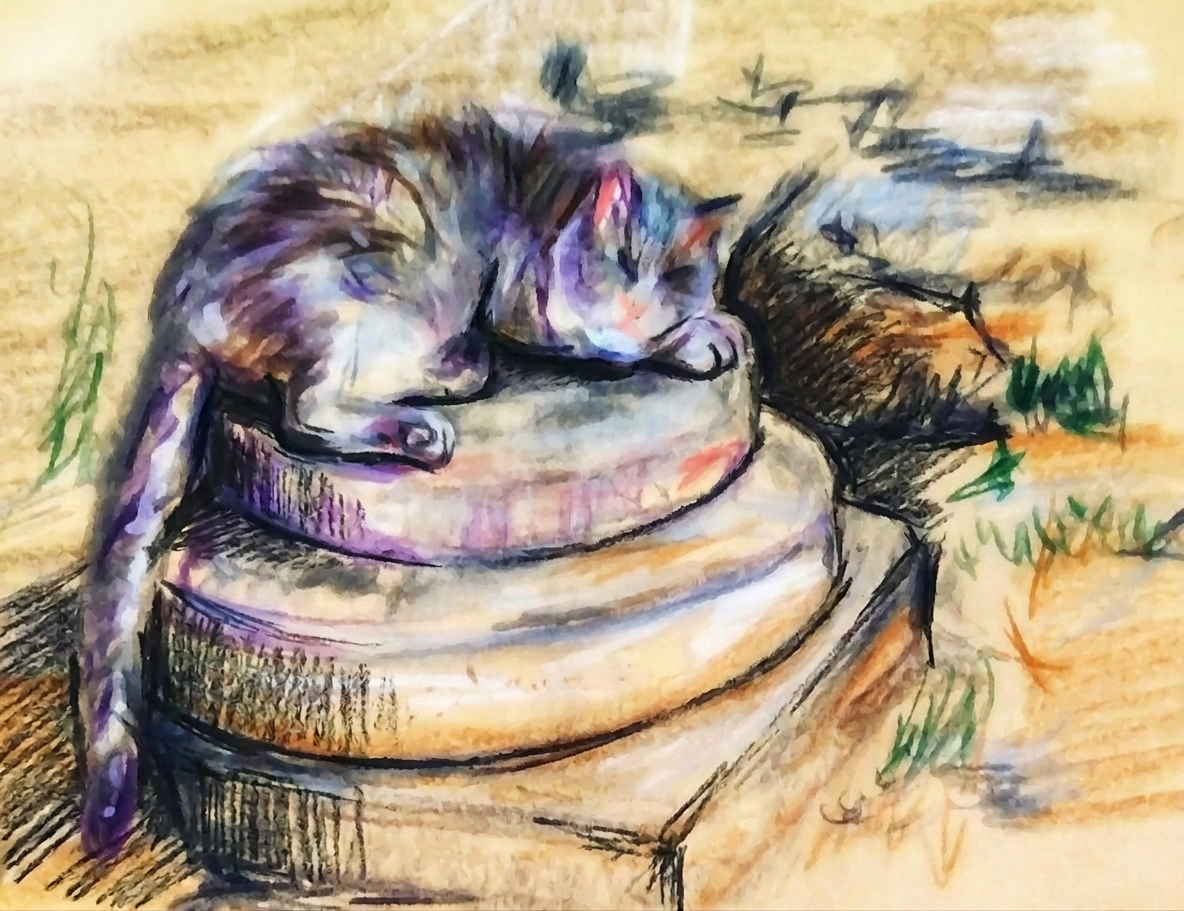
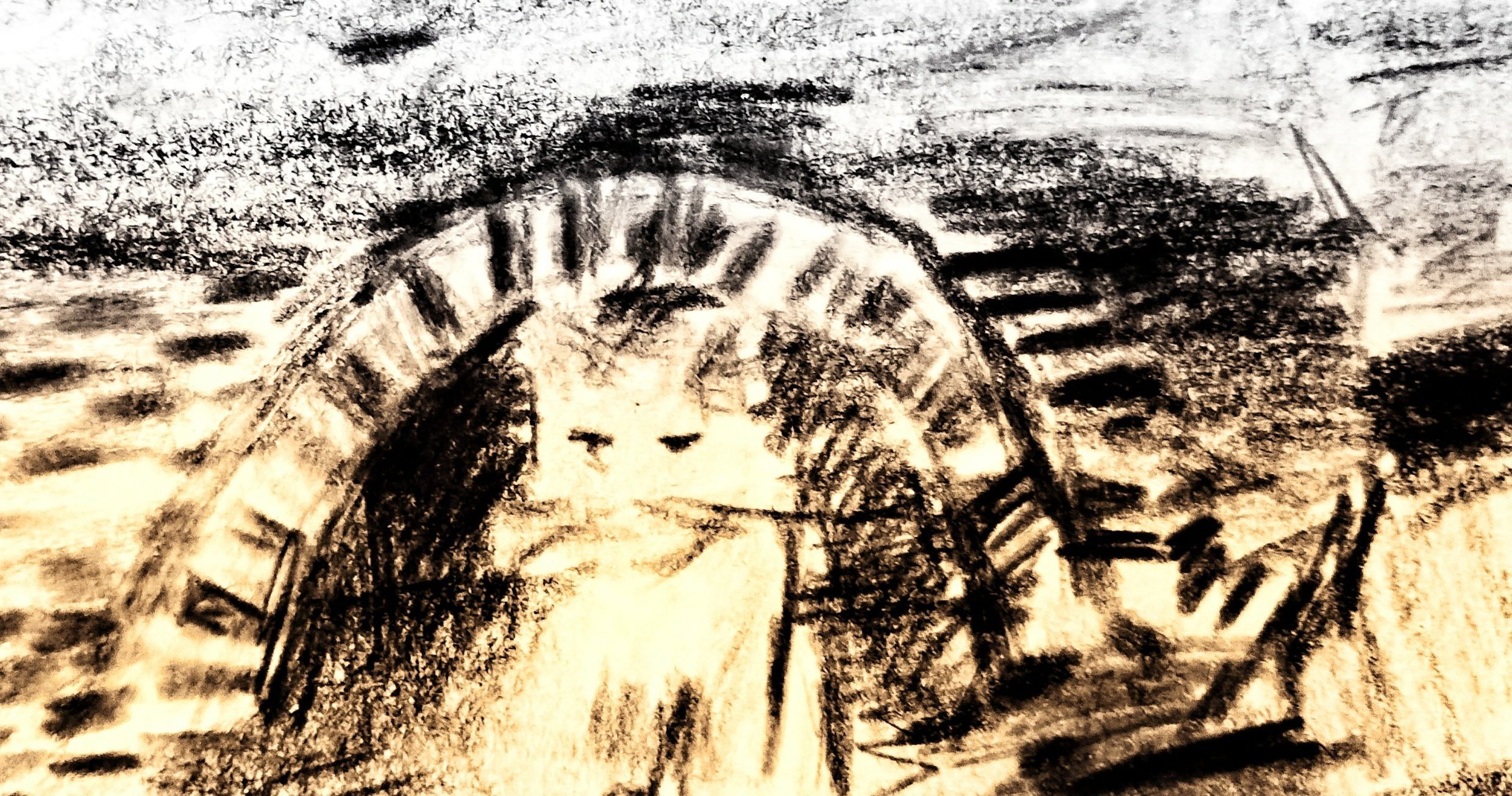
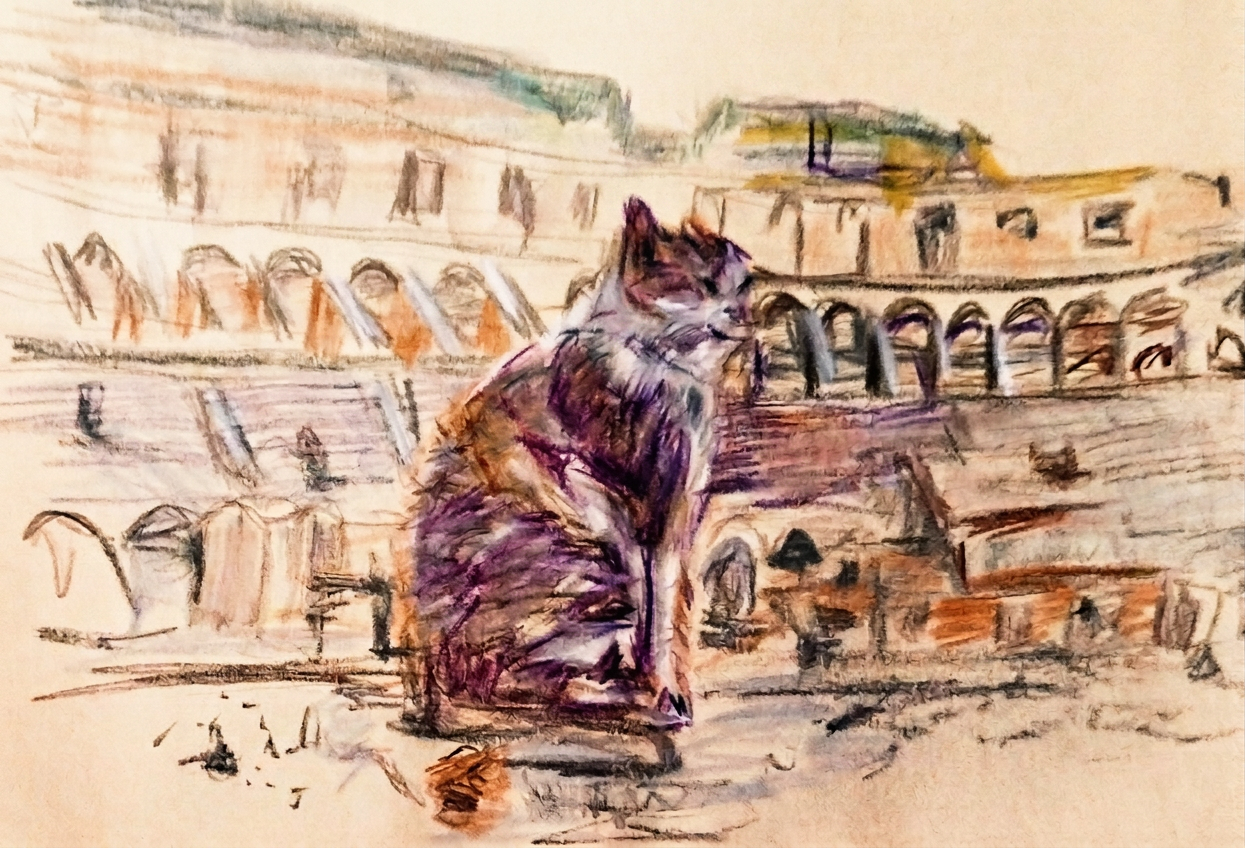
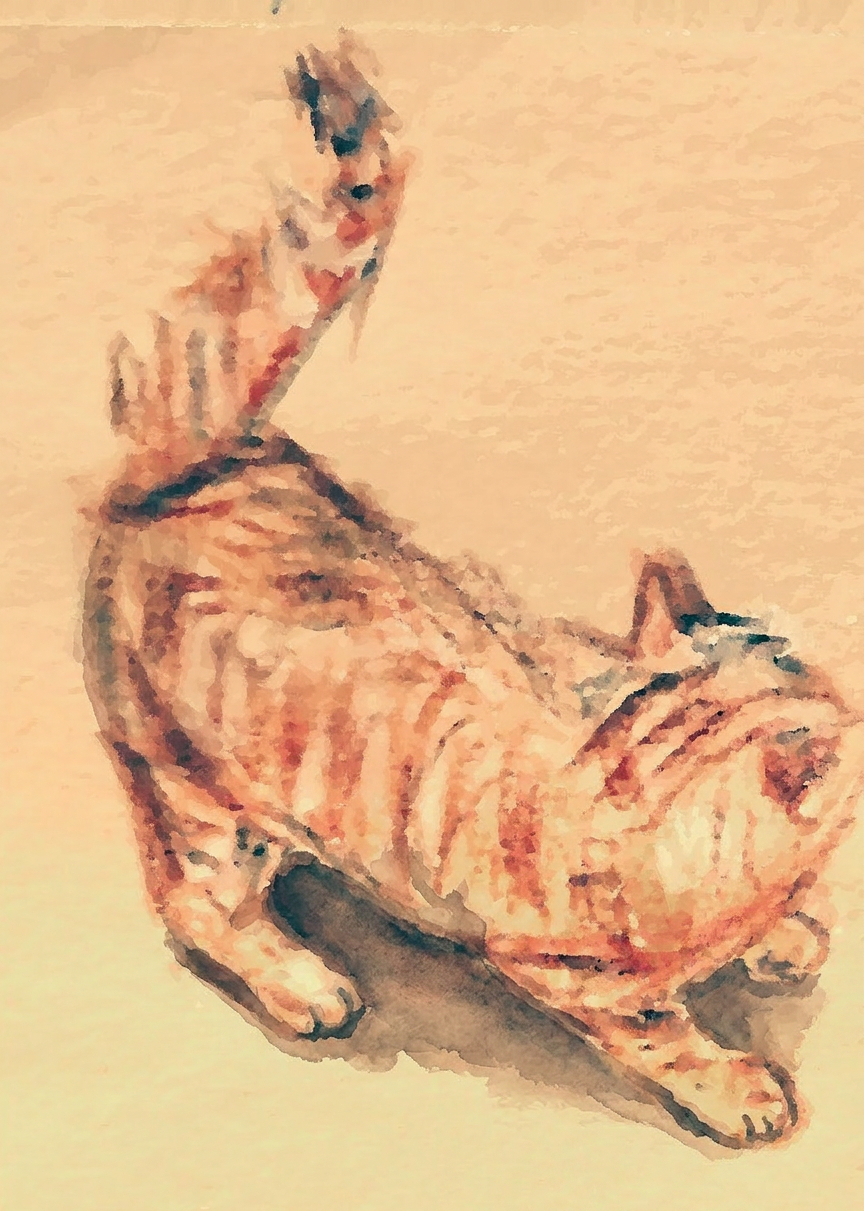
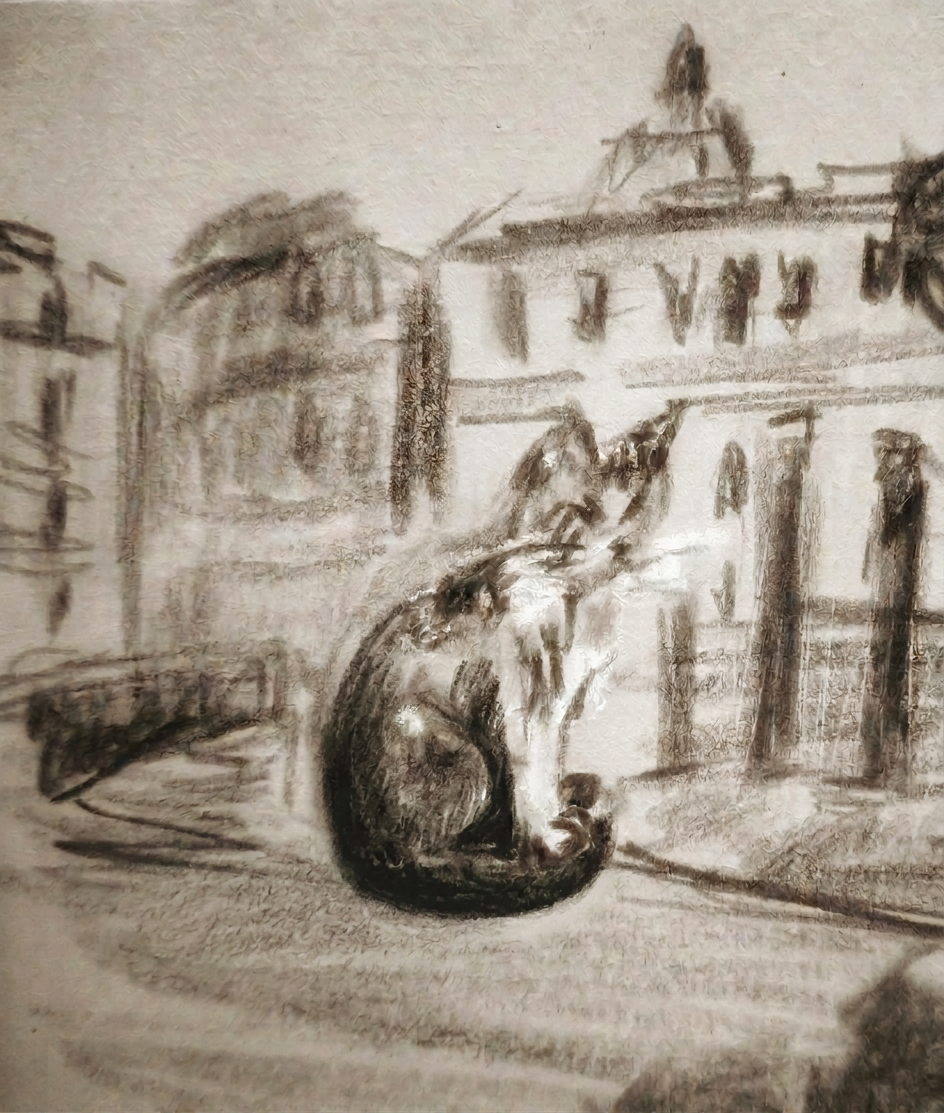
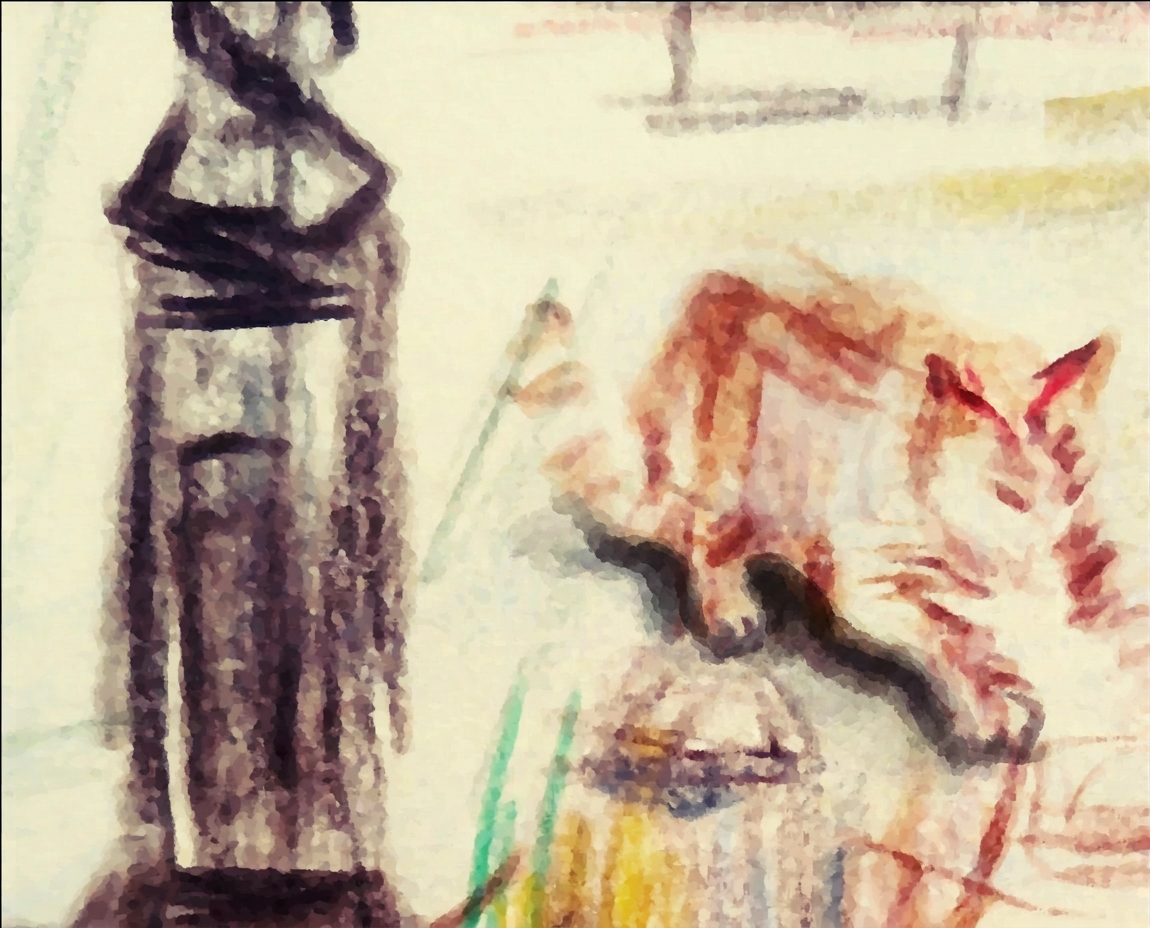
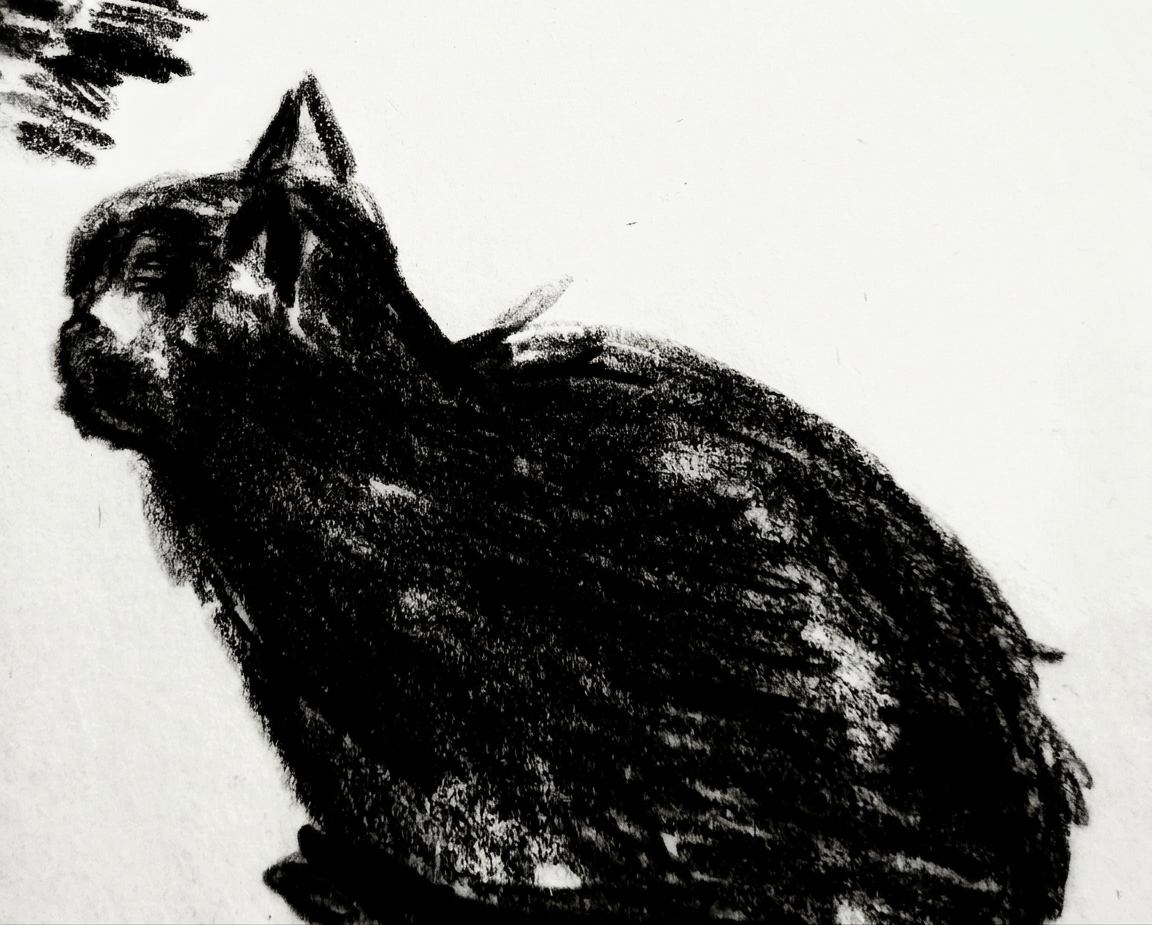
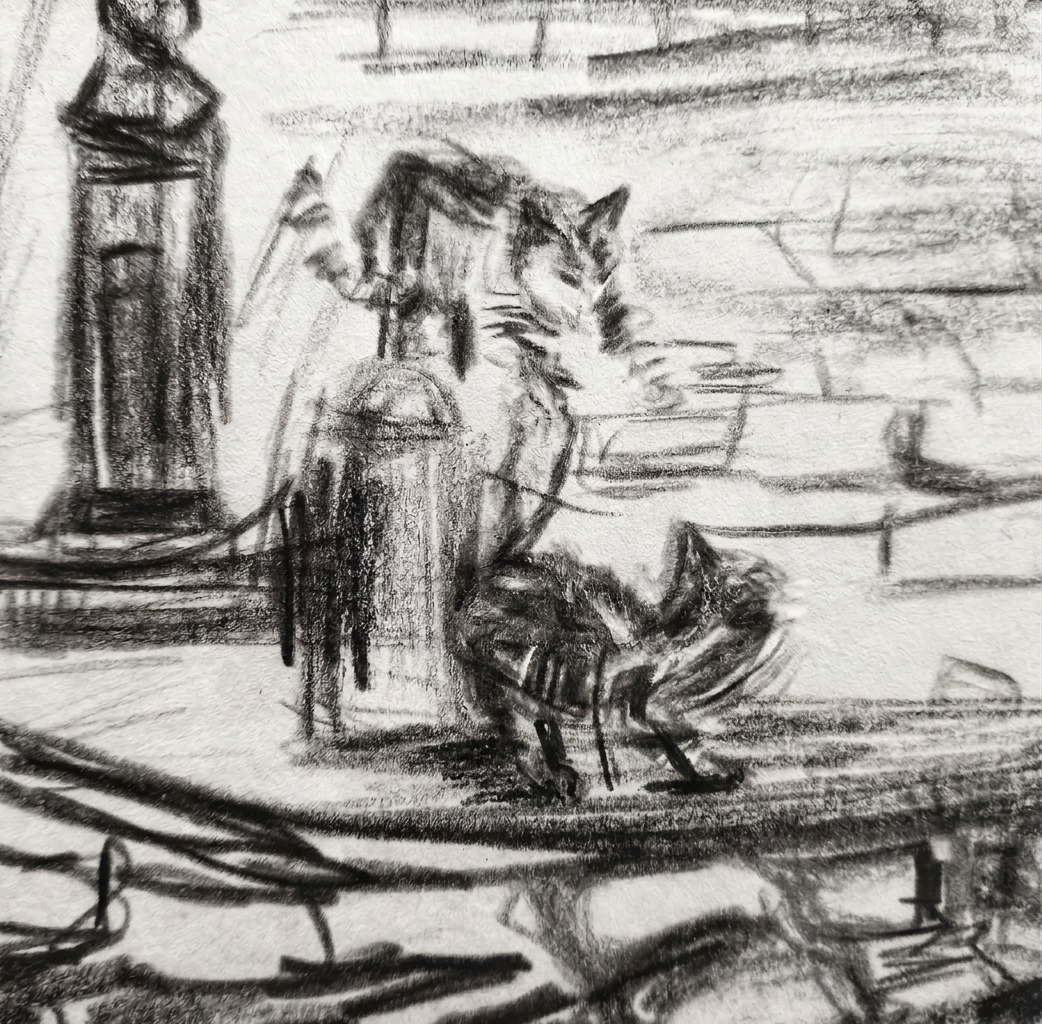
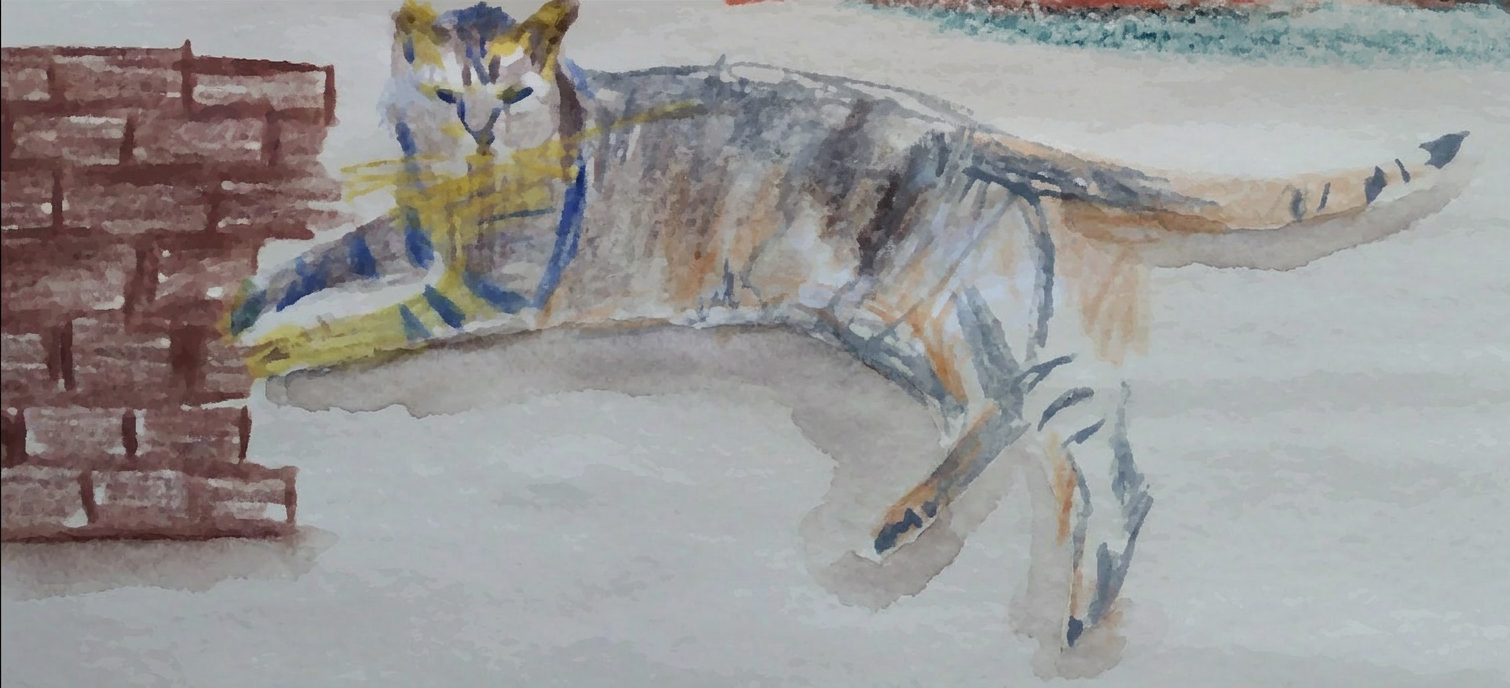
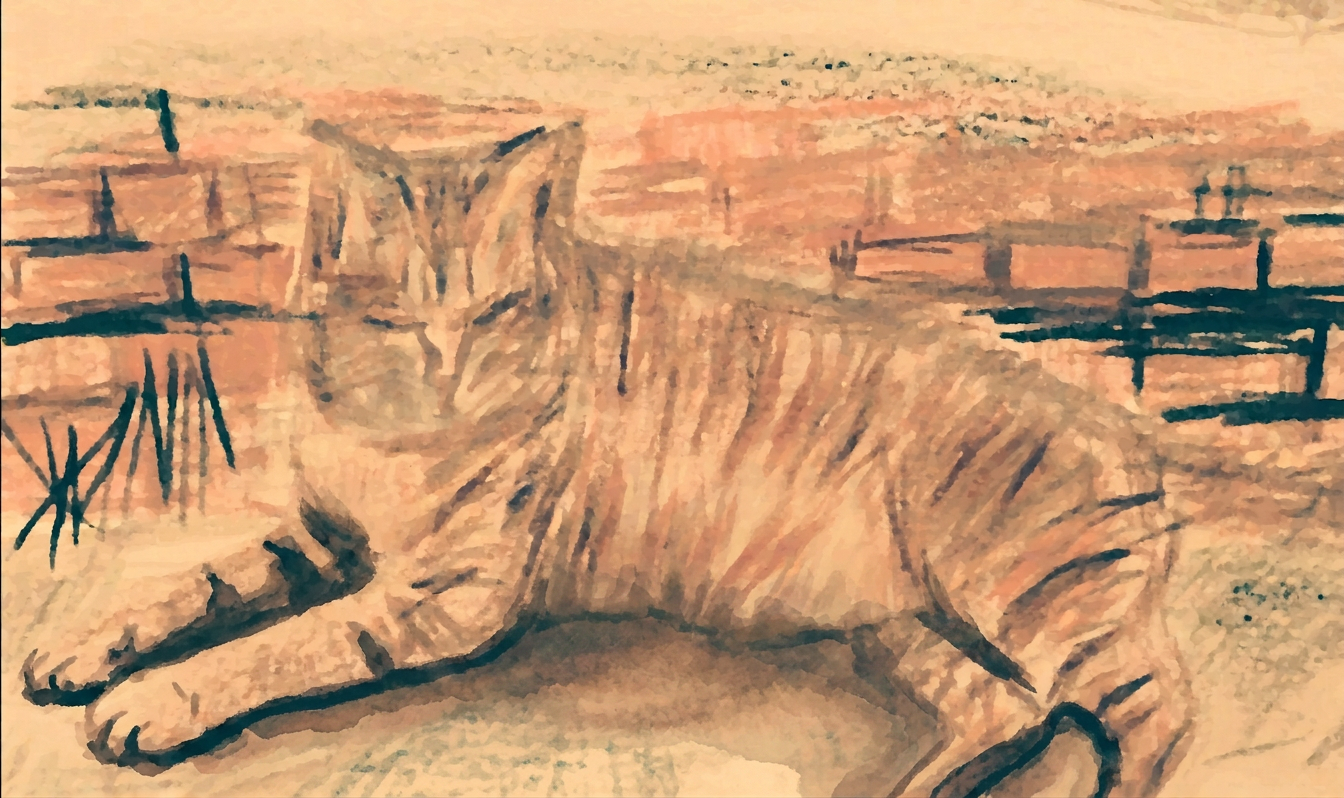
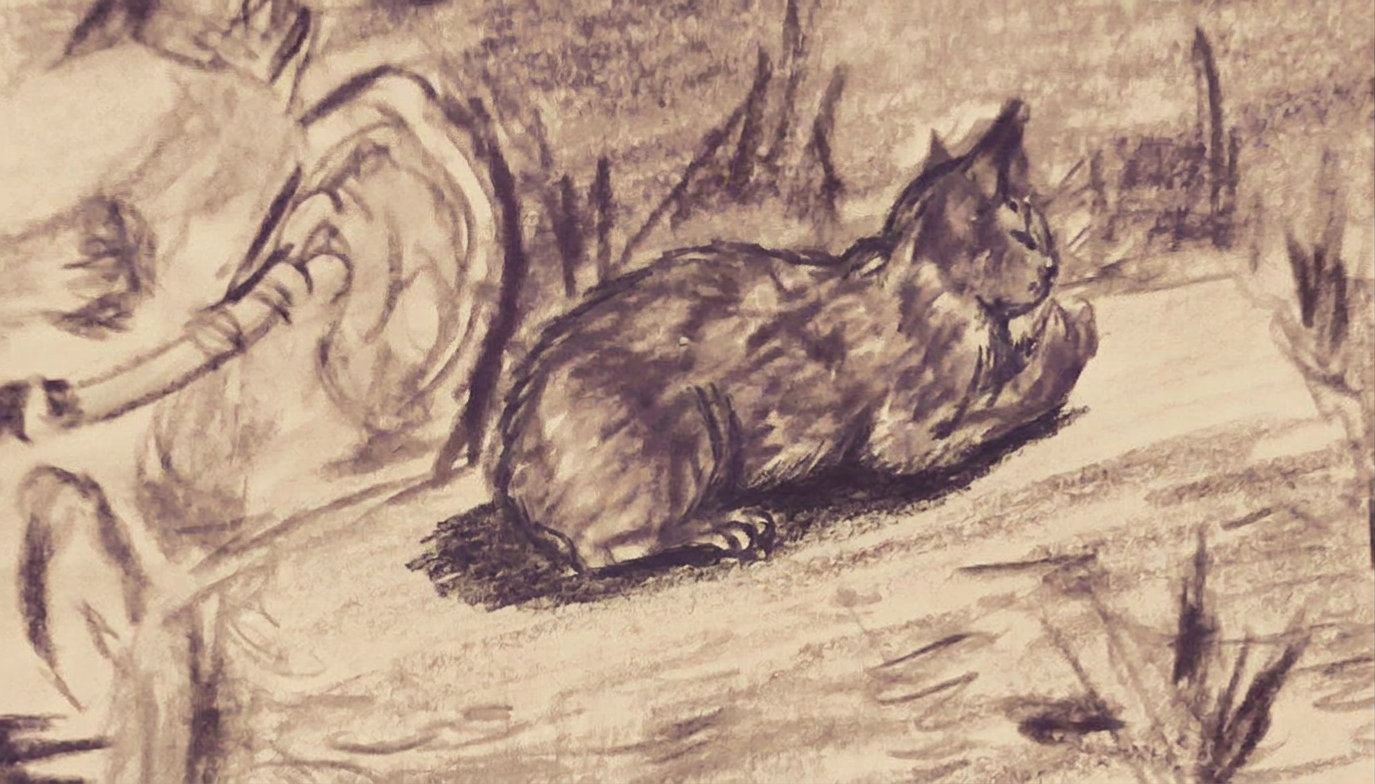
A peaceful scene depicting a resting cat atop stone millstones, reminiscent of ancient Pompeii.

← Back

Thank you for your response. ✨

4-6.Art and Travel. Daily Life and the Eruption of Vesuvius

Artist, Roman Architecture, Uncategorized, Urban sketching, Voyage

Watercolor journey with the course Roman Architecture by the Yale University.

All roads lead to Rome – Alain de Lille

https://www.coursera.org/learn/roman-architecture/home/welcome

← Back

Thank you for your response. ✨

Name
Email
Your message

Δ document.getElementById( "ak_js_3" ).setAttribute( "value", ( new Date() ).getTime() );

3-1.Art and Travel.   Roman concrete and the revolution in Roman Architecture. Watercolor journey with the course Roman Architecture by the Yale University.

Artist, Roman Architecture, Uncategorized, Urban sketching, Voyage

I continue the stay-at-home travel Art + Roman Architecture + the city of Rome with Yale’s course Roman Architecture https://www.coursera.org/learn/roman-architecture.

Roman concrete and the revolution in Roman Architecture. 3-1

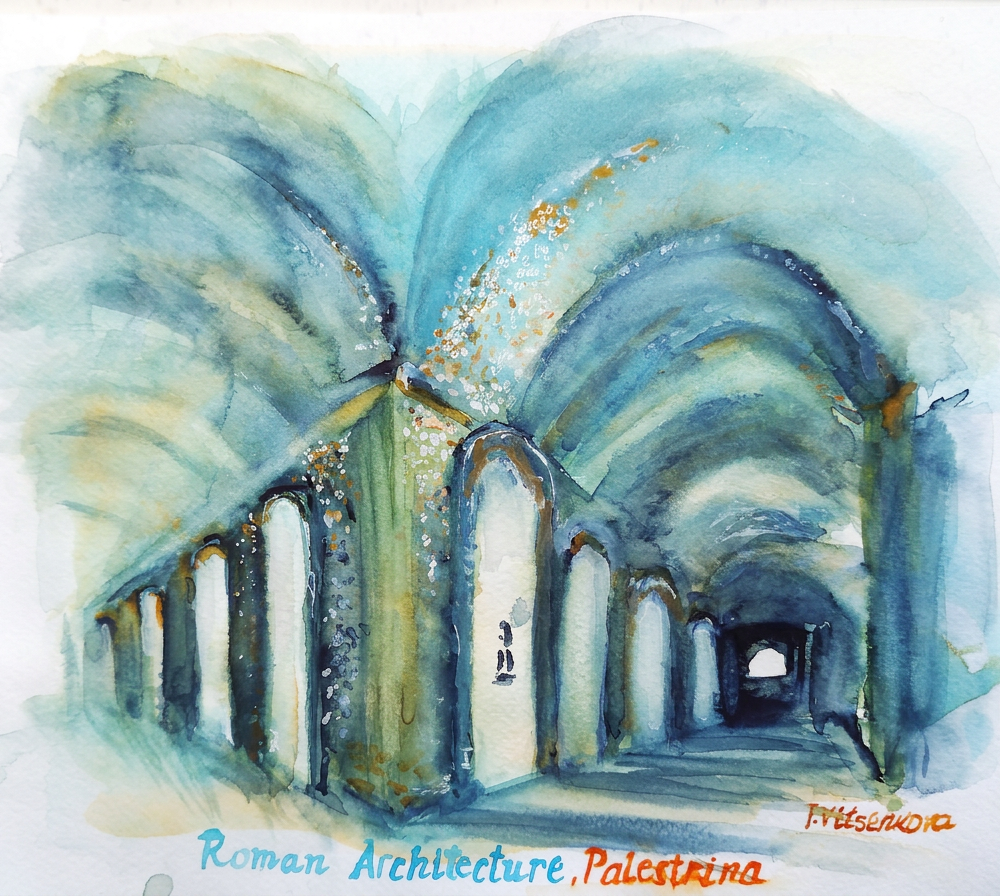
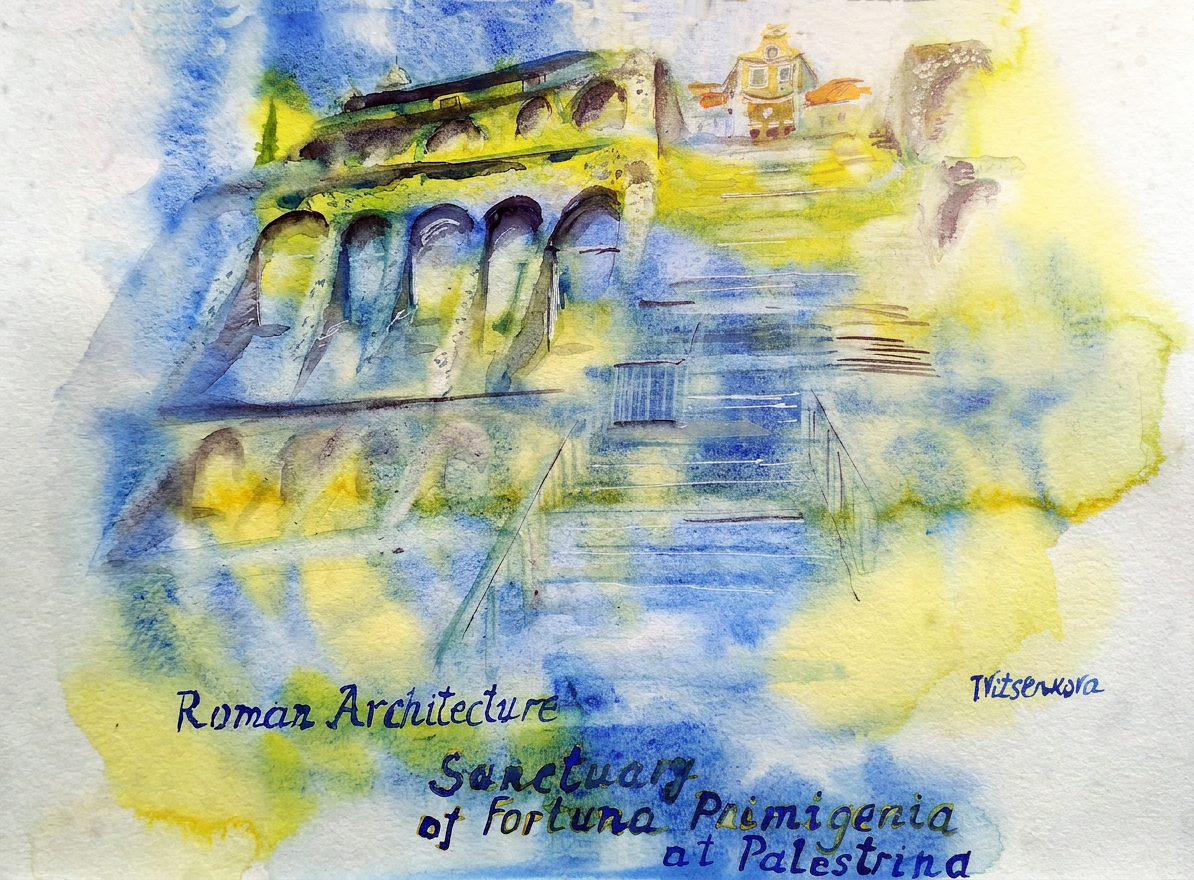
There is a wonderful place near Rome, UNESCO city of Palestrina. The Sanctuary of Fortuna Primigenia at Palestrina (ancient Praeneste) in Italy was built in the 2nd century BCE in honour of the Goddess Isis, the goddess of femininity and motherhood and Fortuna, the ancient Roman goddess of luck. It was built on a natural hill on cement.


My painting is about the interior space of the Sanctuary of Fortuna Primigenia. It was a Sanctuary with built-in shops and a detached theatre in the Middle Ages. For my painting I added subtle bluish and greenish hues, because, of course, the stones fell off and the cement had been exposed over the millennia. Luckily for us, the Temple with its delicate arches has survived until now, and modern architects and archaeologists continue to explore and discover the secrets of ancient Roman architects even after millennia.


The genius Roman architects noticed that the volcanic dust, which is found in the sea in Italy, turns into pumice when in multitude. They realized that it can be used to strengthen any building. This revolutionary discovery created the Roman cement from ash, lime, sand, pebbles of a certain size and volcanic ash and sea water. Added either be large stone blocks or it could be small pieces of stone presses into the concrete when concrete was still wet. When dried, these stones made the building look more attractive and protected the building from moisture.


Like modern constructors, the Romans erected wooden frames for the walls and ceilings and poured the concrete into them. Romans solved two problems this way, protected cement from moisture and hid the non-attractive part of cement at the same time. I would add that they were saving money for the construction and gaining valuable experience. Using the new revolutionary technology, they started to build not only Temples and villas for the rich, they started to develop and build more, and thanks to this experience and development, today we can still admire the architectural monuments of the past.

Another one-day trip from Rome is on my way in Italy:)

All roads lead to Rome – Alain de Lille

Bon voyage! Until the next travel:)

All paintings belong to the author. No image is to be copied without permission.

https://www.coursera.org/learn/roman-architecture/home/welcome

Painting – Palestrina, Roman Architecture

Year of construction 2nd century BC

Address: Via Colle Pastino 20, 00036, Palestrina Italy

Tools used for my painting Watercolour Cotman terra de siena and viridian Corman, Charvin bleu royal, Derwent, Albert Durer and Faber Castell watercolour pencils. Paper Van Gogh, National gallery   watercolour album, 22×30 cm (9 ×12 in.)

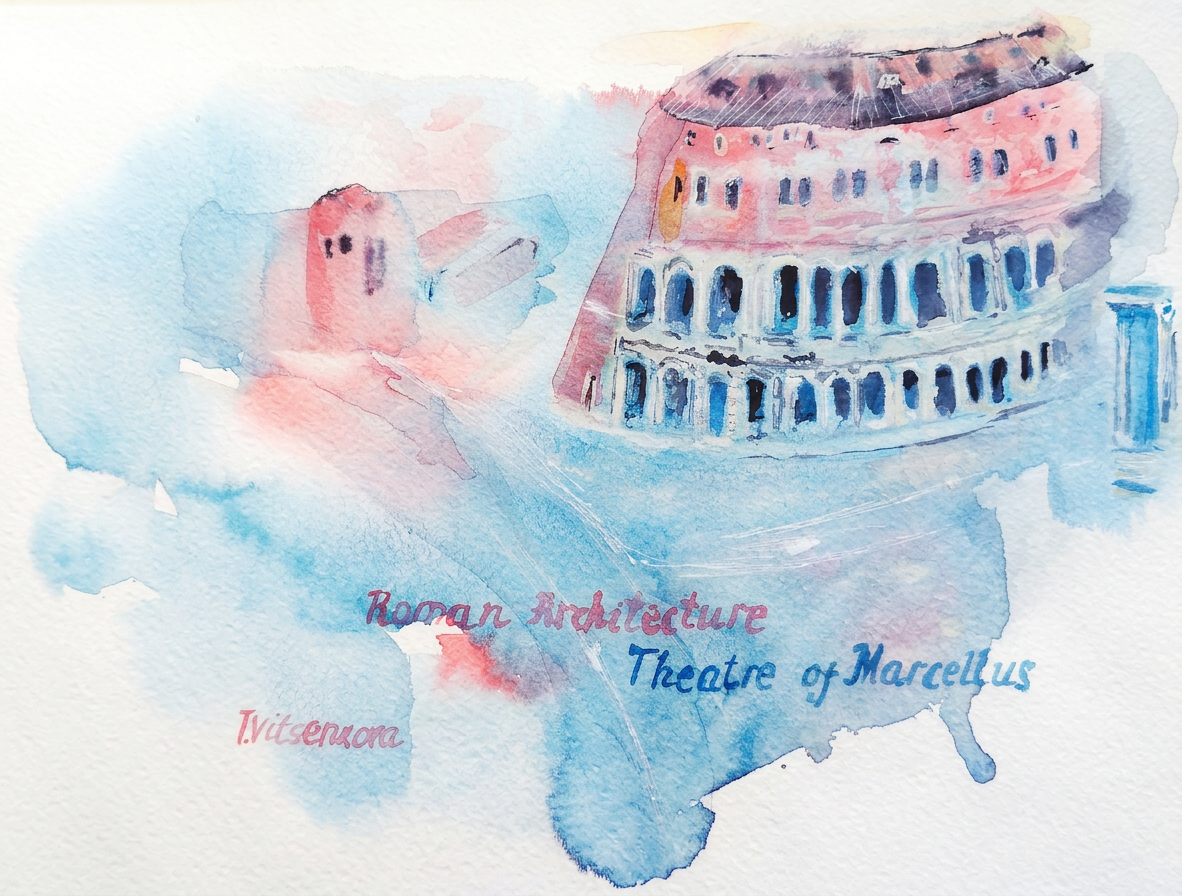
3-4.Art and Travel. Innovations in Concrete at Rome: The Tabularium and the Theatre of Marcellus. Watercolor journey with the course Roman Architecture by the Yale University.

Artist, Roman Architecture, Uncategorized, Urban sketching, Voyage

I continue the course Roman Architecture + the city of Rome with Yale’s course Roman Architecture https://www.coursera.org/learn/roman-architecture.

Innovations in Concrete at Rome: The Tabularium and the Theatre of Marcellus. 3-4

For my watercolor reference’s painting of the Theatre of Marcello with a nearby column of the Temple of Apollo , I used the Google Earth app to view the building from a bird’s eye view. Julius Caesar planned the open-air theatre but died before it was completed. Then Emperor Augustus took up the reins and dedicated the theatre to memory of his nephew and son in law Marcellus in 17 BC, when the theatre was used for dramas and arena fights. 

All roads lead to Rome – Alain de Lille

Bon voyage! Until the next travel:)

https://www.coursera.org/learn/roman-architecture/home/welcome

← Back

Thank you for your response. ✨

Name
Email
Your message

Δ document.getElementById( "ak_js_4" ).setAttribute( "value", ( new Date() ).getTime() );

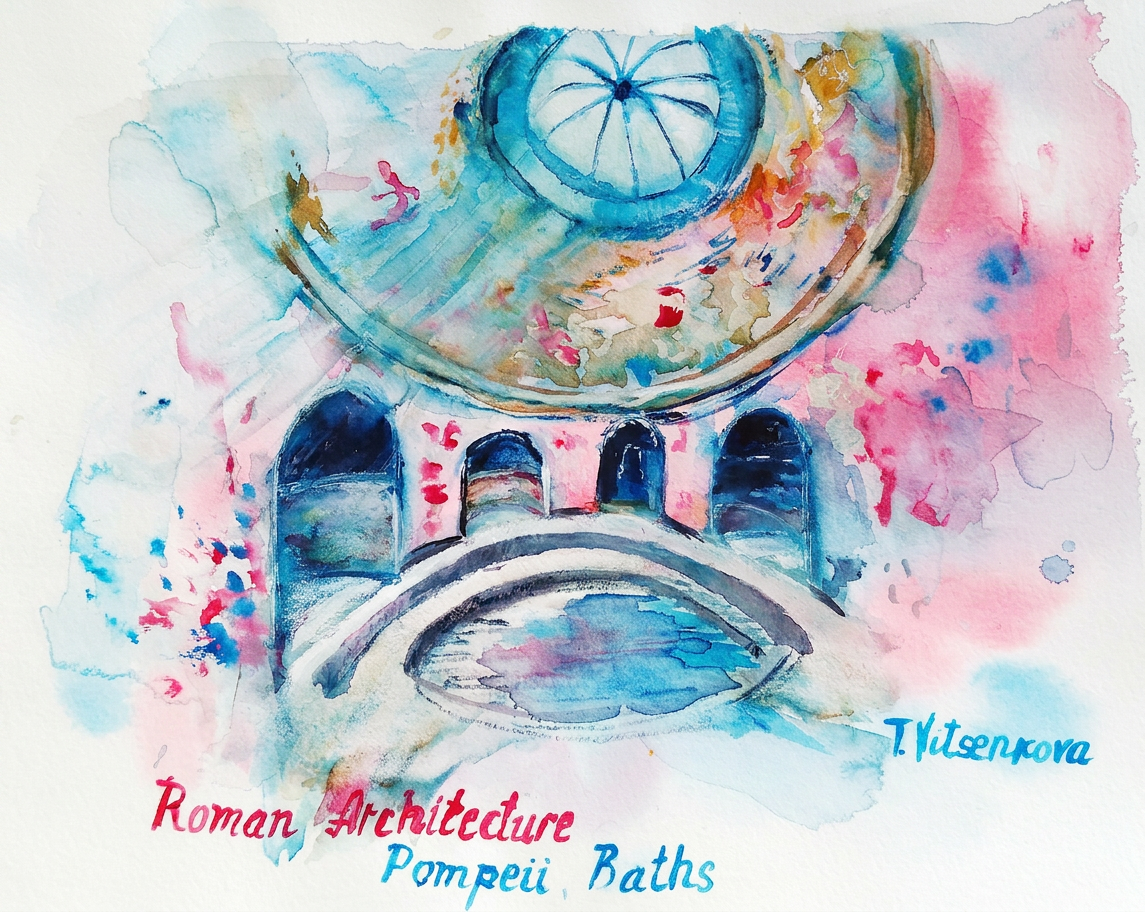
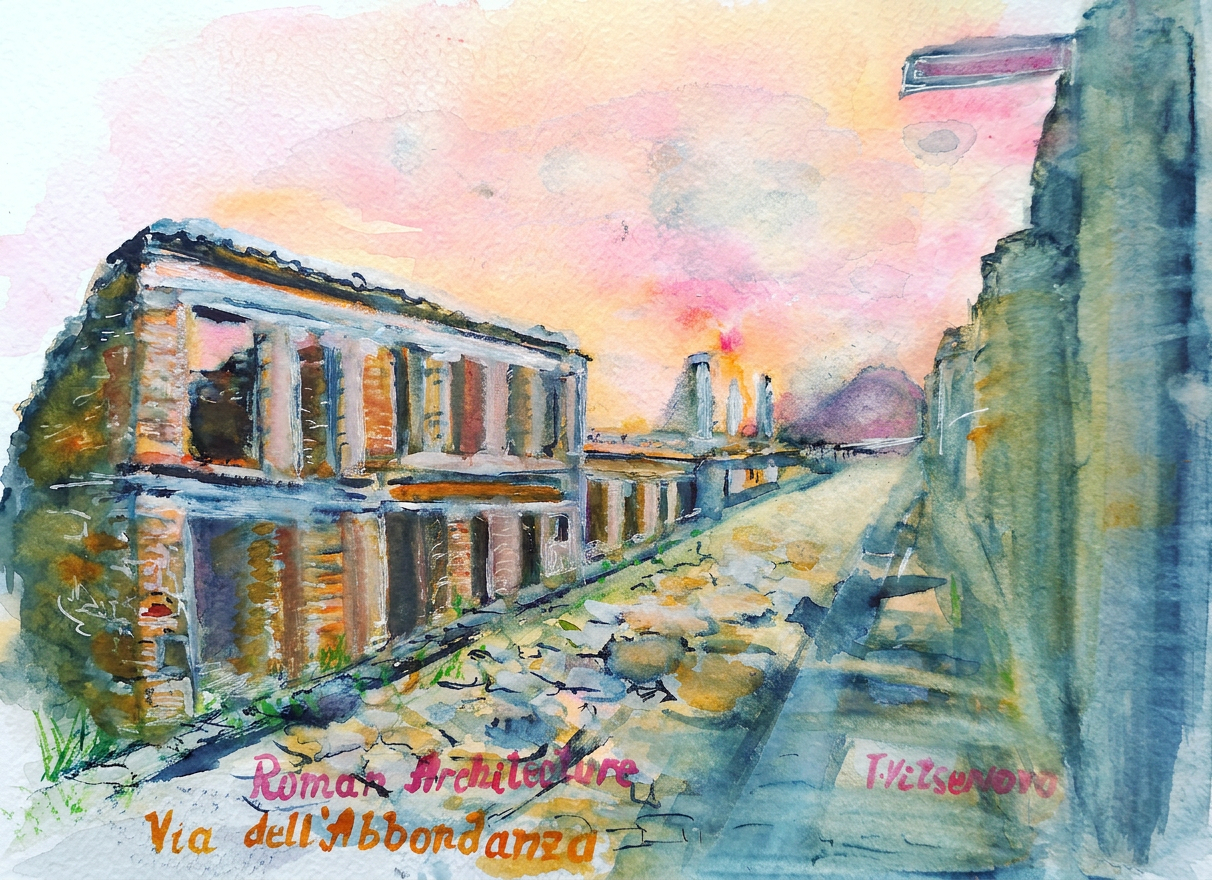
4-5. Art and Travel. Bath Complexes at Pompeii.

Artist, Roman Architecture, Uncategorized

Watercolor journey with the course Roman Architecture by Yale University.

C. 4-5

All roads lead to Rome – Alain de Lille

Bon voyage! Until the next travel:)

https://www.coursera.org/learn/roman-architecture/home/welcome

← Back

Thank you for your response. ✨

Name
Email
Your message

Δ document.getElementById( "ak_js_5" ).setAttribute( "value", ( new Date() ).getTime() );

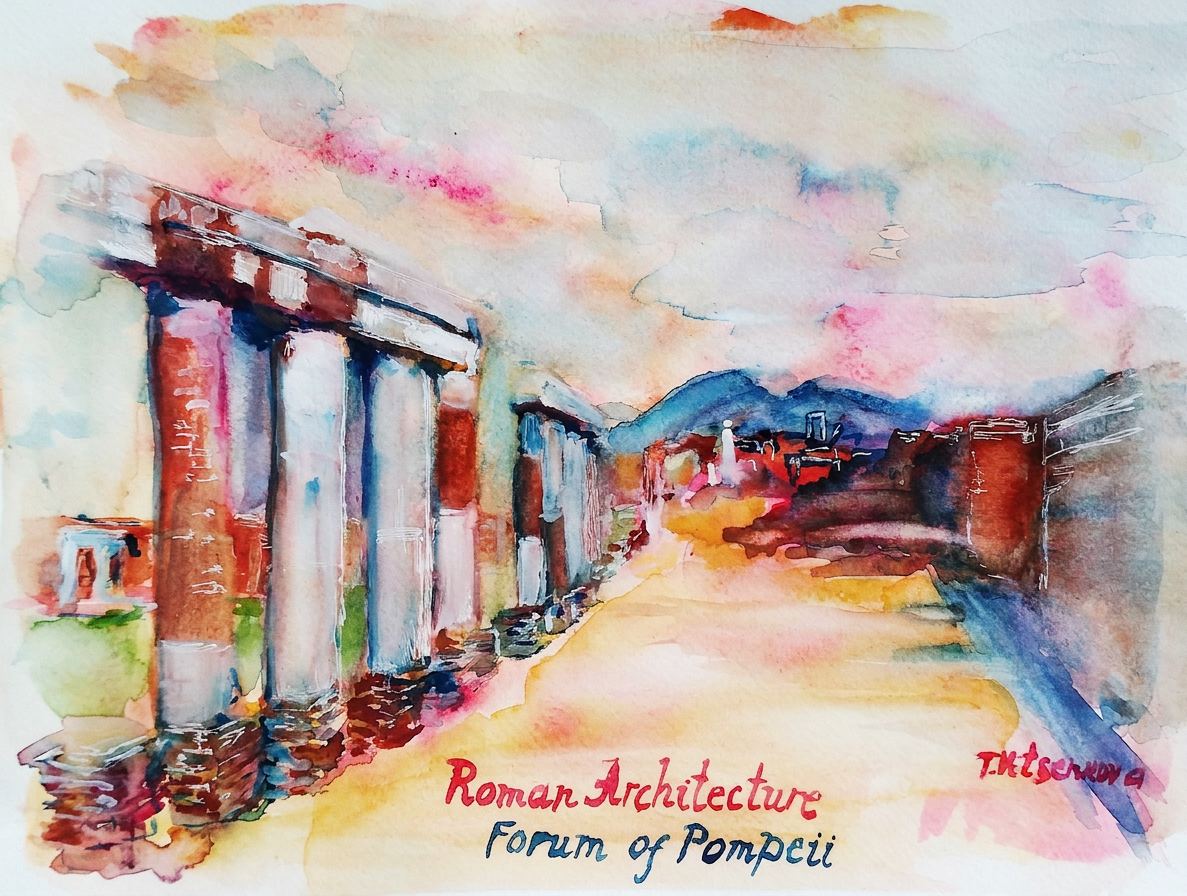
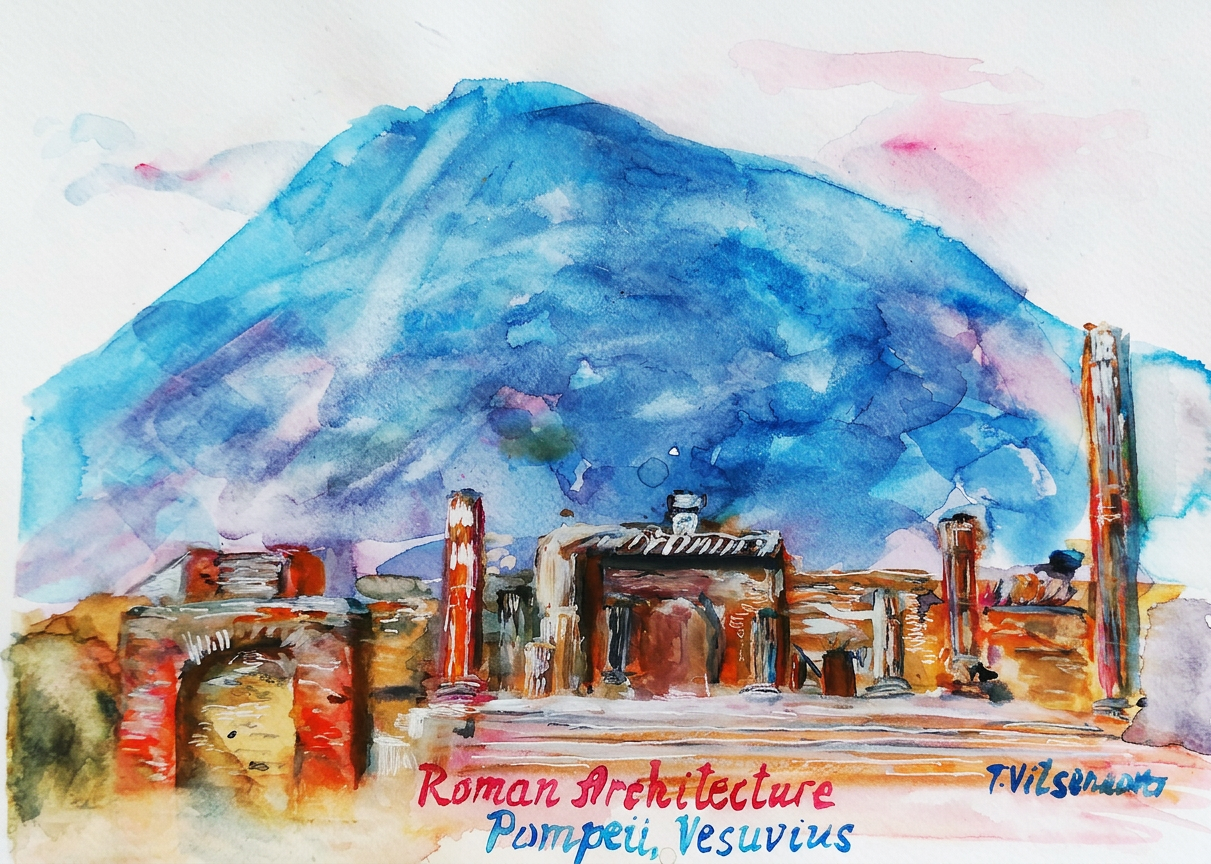
4-2.Art and Travel. The Early Settlement and the Forum at Pompeii .

Artist, Roman Architecture

Watercolor journey with the course Roman Architecture by the Yale University.

C. 4-2

All roads lead to Rome – Alain de Lille

Bon voyage! Until the next travel:)

https://www.coursera.org/learn/roman-architecture/home/welcome

← Back

Thank you for your response. ✨

Name
Email
Your message

Δ document.getElementById( "ak_js_6" ).setAttribute( "value", ( new Date() ).getTime() );

5-1.Art and Travel. Introduction and the Ideal Domus Italica.

Roman Architecture, Uncategorized

Watercolor journey with the course Roman Architecture by the Yale University.

I continue the painting series with the course Roman Architecture + the city of Rome with Yale’s course Roman Architecture https://www.coursera.org/learn/roman-architecture.

C. 5-1

https://pixels.com/featured/domus-italica-residential-house-in-pompeii-tamara-vitsenkova.html

All roads lead to Rome – Alain de Lille

https://www.coursera.org/learn/roman-architecture/home/welcome

← Back

Thank you for your response. ✨

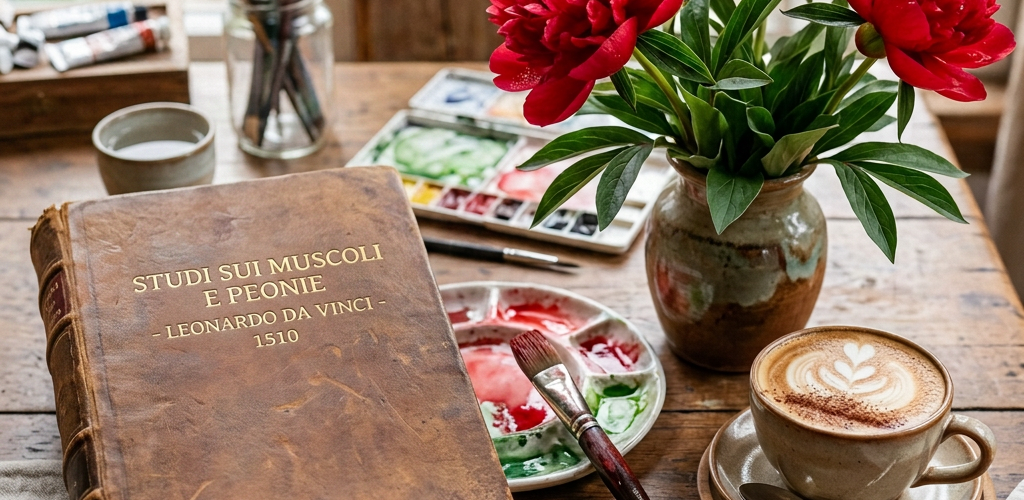
Open Italian anatomy book beside red flowers, paint palette, brushes, and cappuccino

Magic and beauty, red peonies, cappuccino and Leonardo’s Notebook. Part 3.

ArtTravel

Still life and urban sketching. Because apparently, I can’t sit still OR leave my house without a sketchpad.

So Leonardo da Vinci’s Notebook told me something rather inconvenient: artists need to constantly find new things to paint or draw. (Thanks a lot, Leonardo—no pressure!) Thus began my endless quest to think outside the box that I’m apparently always painting inside. This summer, I had a minor epiphany: watercolor graphic technique is NOT just fancy coloring books. Shocking, I know. It was a small discovery that spiraled into full-blown artistic obsession, and now here we are.

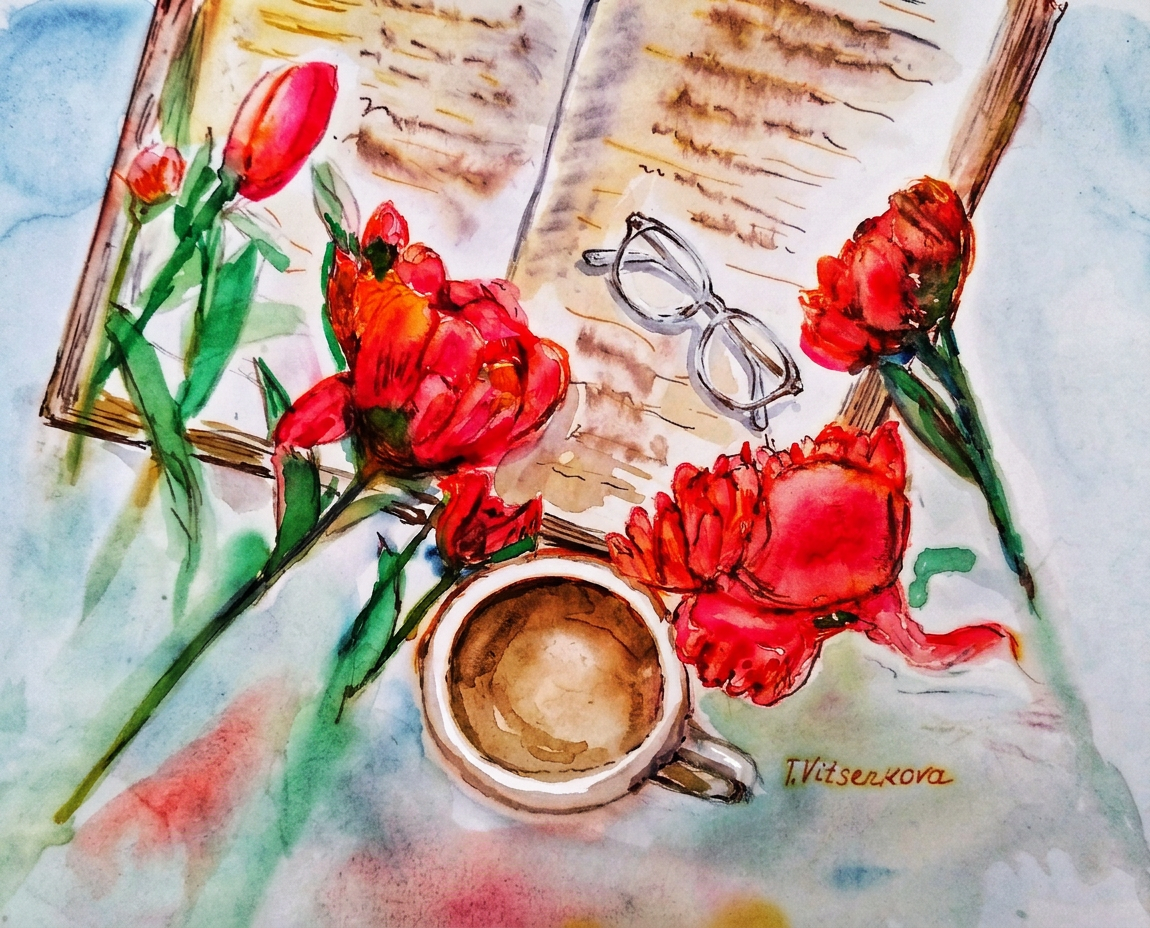
My still life muse? Bright reddish peonies, obviously. I arranged them artfully on my treasured Leonardo da Vinci book, added my glasses (for the intellectual look), threw in a cup of cappuccino (for the vibes), and created what I can only describe as a masterpiece of self-indulgence. Voilà! Another watercolor and ink painting in my beloved impressionist style was born.

Watercolor fantasy. Cappuccino and red peonies and a book

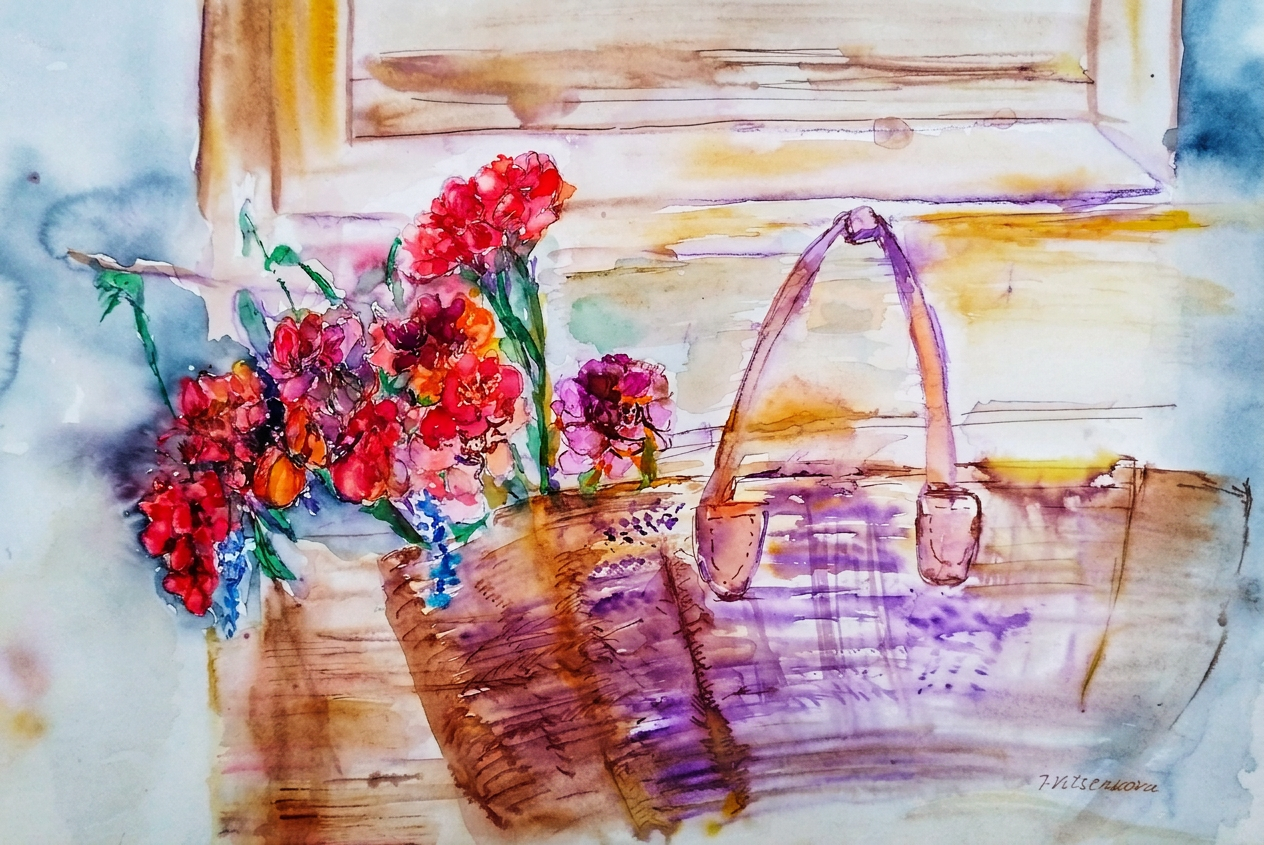
Just imagine it: a warm Mediterranean evening, you’re wandering charming cobblestone streets, and voila—red and pink peonies spill from a straw basket on some picturesque wood door or window. That’s watercolor and ink, my friend. That’s impressionism at its finest. That’s also my elaborate fantasy about our future travels to southern France, Italy, or possibly Greece (I’m not picky when it comes to vacation dreams). Who knows where wanderlust will take us? :)

Summer flower fantasy.

Shout-out to my daughter for the phenomenal gift: Leonardo’s Notebook. This book is basically the gift that keeps on giving—centuries-old wisdom from a guy who was basically good at everything. It’s like having a Renaissance master constantly looking over your shoulder with 500-year-old advice. Terrifying and inspiring in equal measure.

Bon voyage! Until the next adventure awaits! Stay healthy and hydrated (your skin will thank you when you’re sketching in the Mediterranean sun).

All paintings belong to the author. Seriously, don’t copy them. I mean it. My lawyer says I have to say that. Just go make your own masterpiece!

Tools used for my painting: Watercolors by Charvin and Van Gogh (because apparently only the best will do for this artist’s delusions). Pastels by GrayPas Expressionist (the feisty cousin of regular pastels). Derwent watercolor pencils and Faber Castell artist pens (because one type of pen is never enough). Paper: Strathmore Watercolor and Mixed Media albums in that perfect 15×20 cm (6×8 inch) size—not too big, not too small, just right for my control-freak tendencies.

← Back

Thank you for your response. ✨

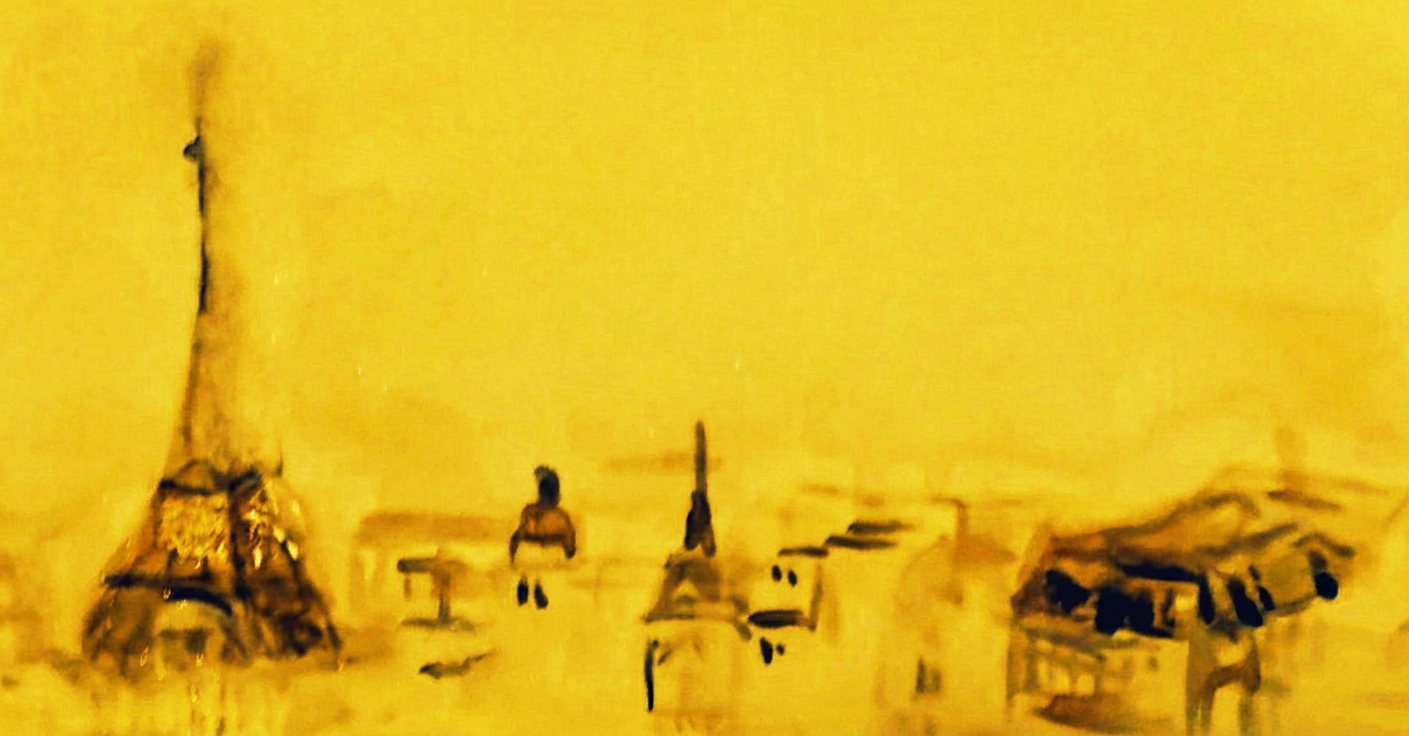
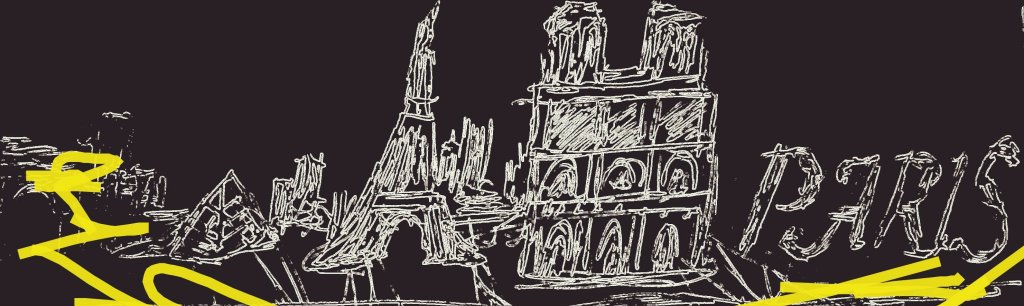
Wildflowers. Yellow Thistle and Paris. Part 3

Artist, ArtTravel, Uncategorized, Urban sketching

Still life and urban sketching — or as I like to call it, “procrastinating at tourist attractions with a sketchpad.”

Paris. The city of love, croissants, and inexplicably rude pigeons. Here’s the thing about Paris that nobody tells you: you don’t actually need to leave your hotel room to find beauty and inspiration. Just open the window and look around — you’ll find architecture that makes your apartment back home look like a cardboard box, monuments that have been standing longer than your entire family lineage, street names that sound like songs, memorial plaques commemorating people who actually did important things (unlike me, who’s mainly known for eating an entire wheel of Camembert while crying about climate change), restaurant signs in fonts that would make a graphic designer weep with envy, and murals that prove even walls have more artistic talent than most of us. Seriously, there’s something uniquely extraordinary to discover at every street corner. Paris doesn’t just hand you beauty — it ambushes you with it when you’re least expecting it, usually right after you’ve accidentally stepped in a puddle.

Paris: where even the streets are judging your outfit.

Do you ever think about cities as flowers? Or as colors? No? Just me? Cool, cool.

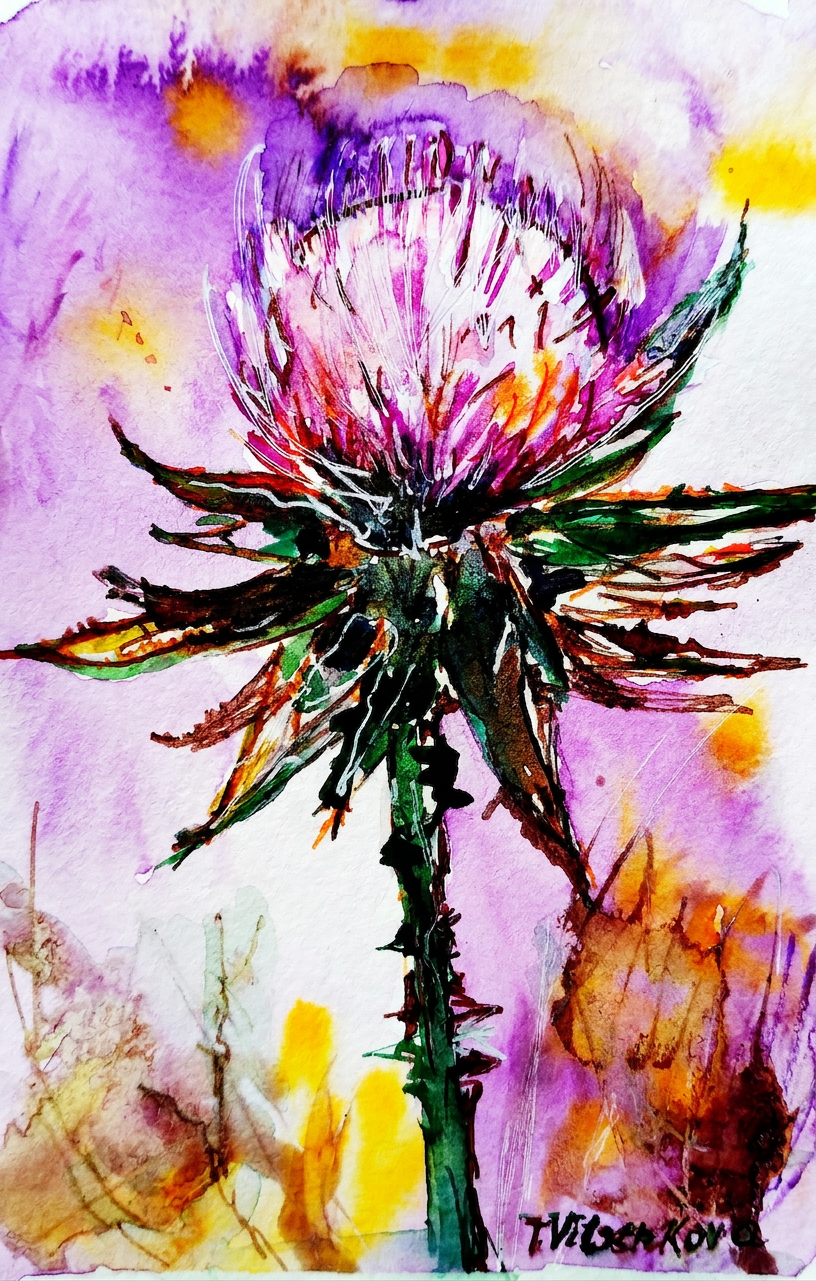
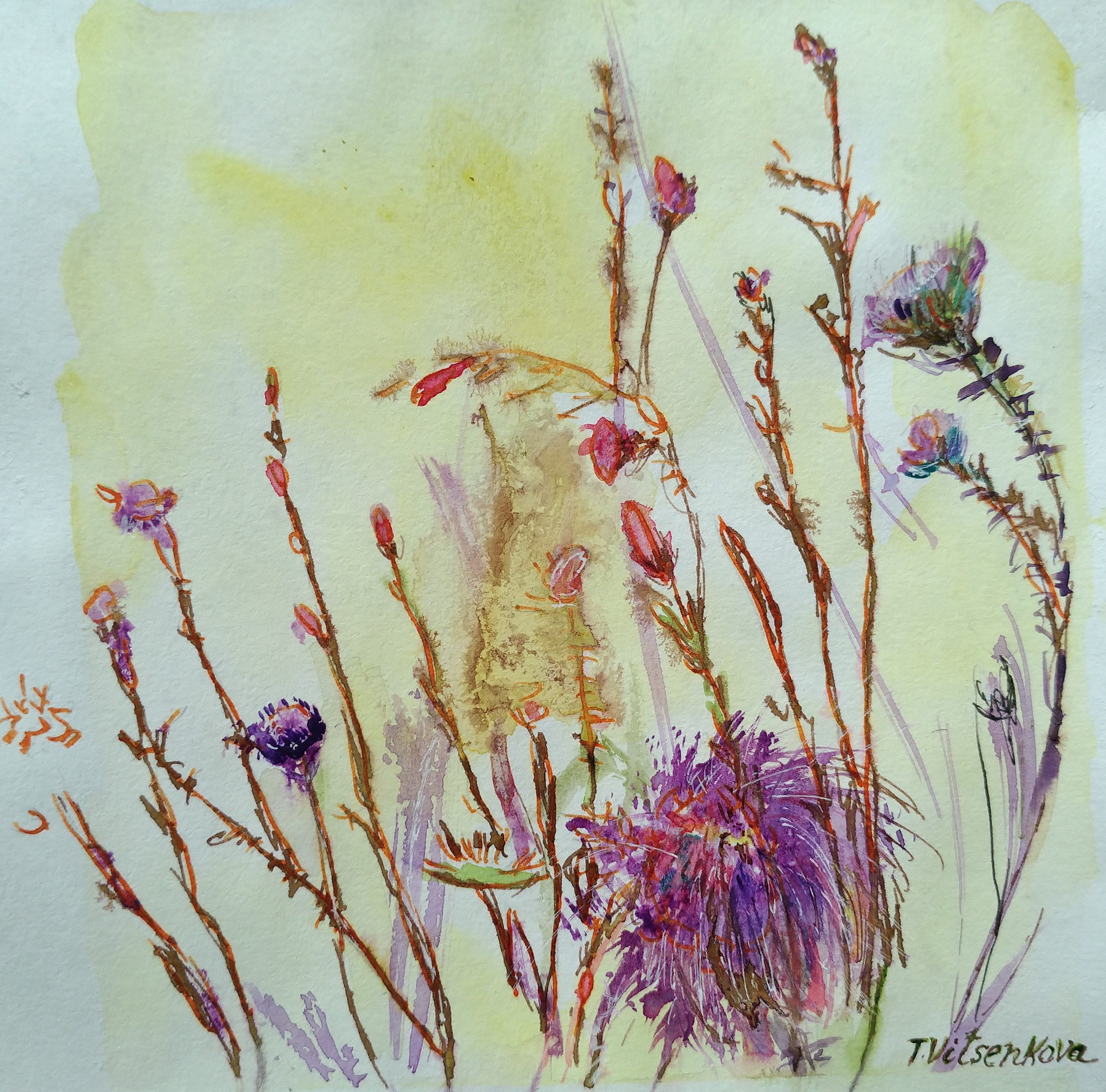
Thistle. A delightfully thorny wildflower featuring a magnificent display of eggplant and gold petals — nature’s way of saying, “I’m fancy and dangerous.” If the Luxembourg Gardens had a personality, this would be it. I’m convinced these flowers applied to art school and were accepted on their first try.

Thistle #1 — eggplant and gold. Fancy enough for the Luxembourg Gardens, too spiky for a hug.

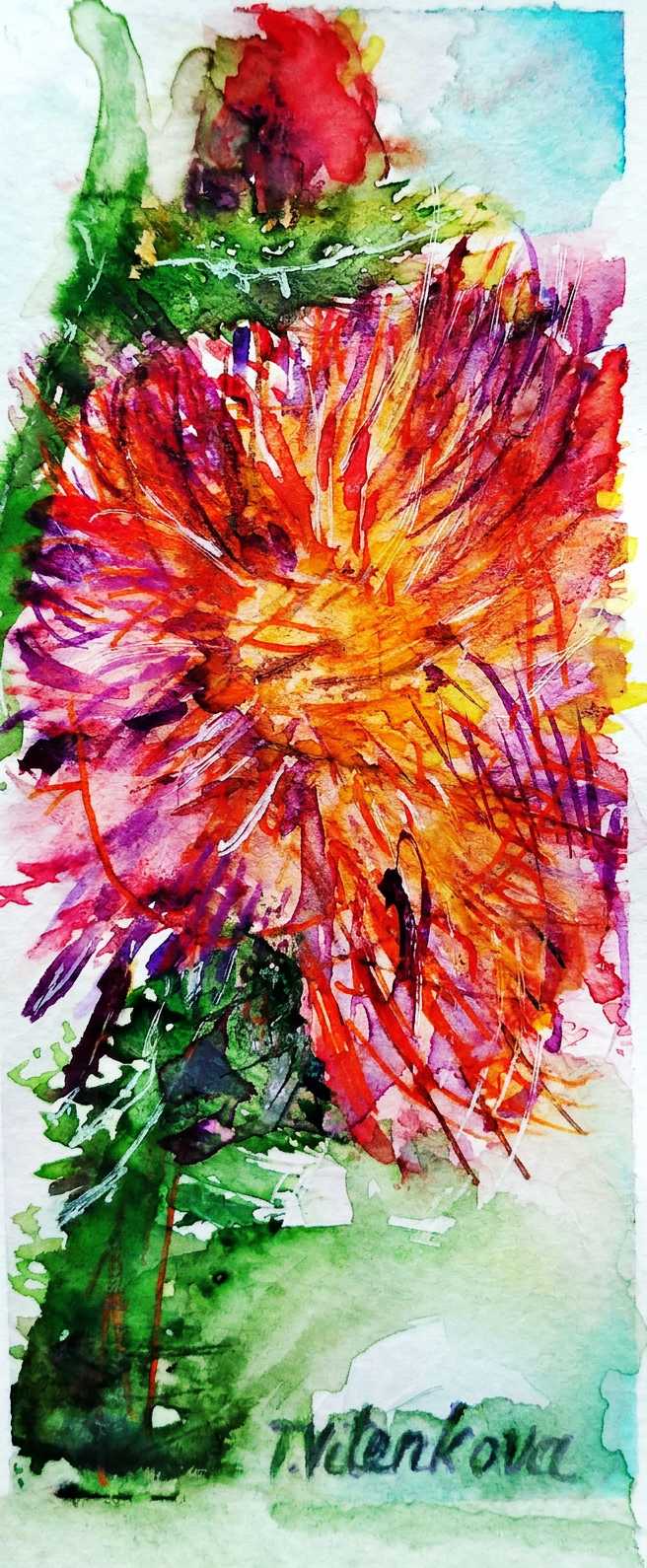
Thistle, take two. This particular specimen features sunny petals in the colors of pumpkin, orange, and beetroot — basically, if fall and autumn had a very colorful, very spiky baby. Yummy, right? (I mean, I wouldn’t recommend eating it. Paris is basically the thistle of cities — beautiful, elegant, and ready to stab you if you’re not paying attention (both literally, with its spiky architecture, and figuratively, with its devastating charm).

Thistle #2 — pumpkin and beetroot. Autumn had a baby and it’s delicious (don’t eat it).

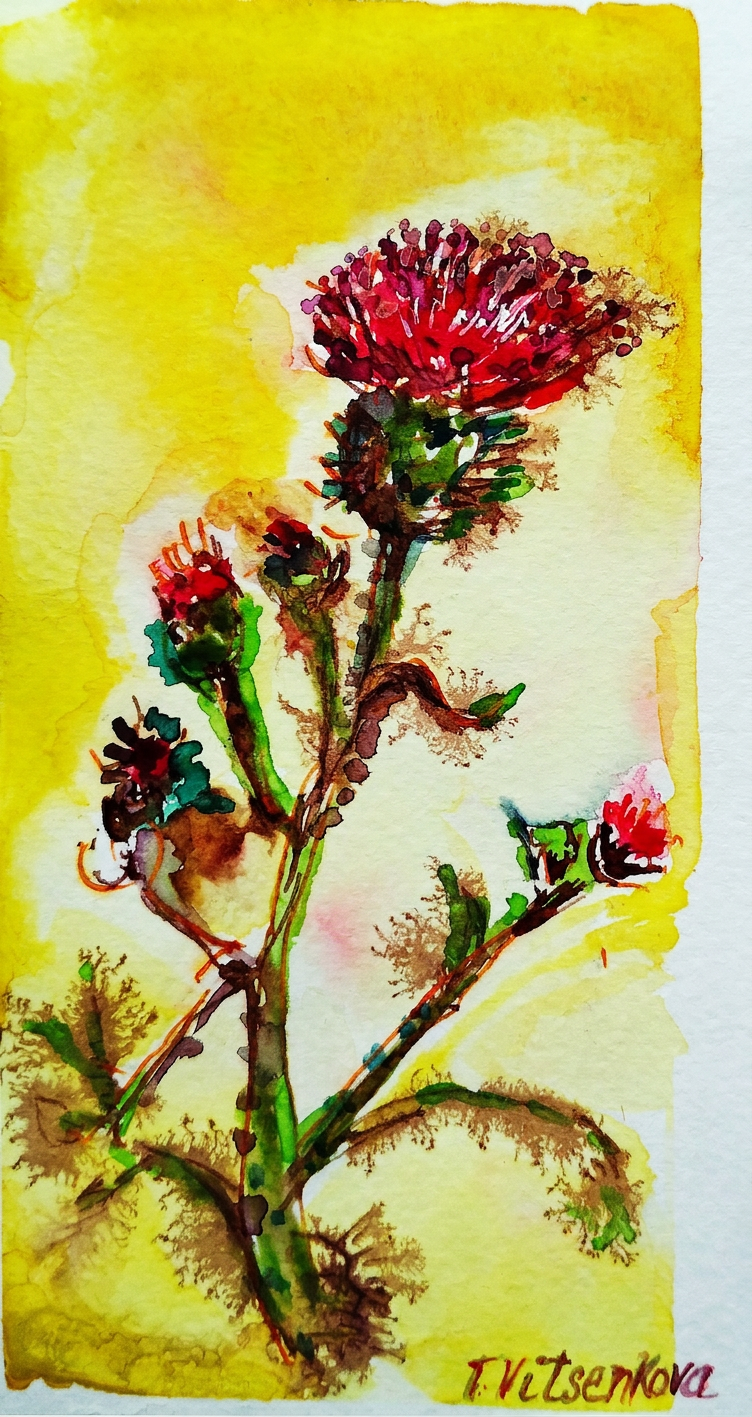
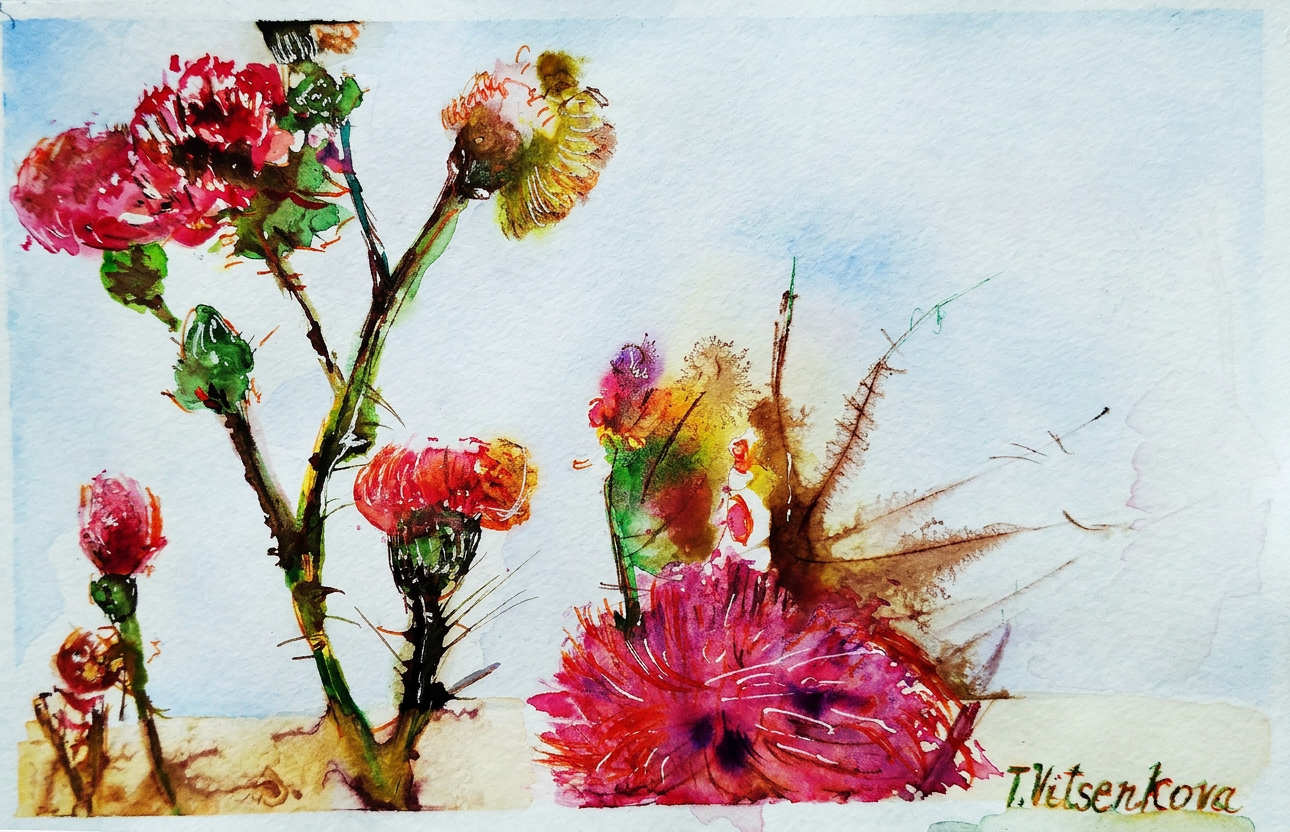
Thistle, round three (I promise this is getting somewhere). This wildflower rocks petals in canary yellow, spicy red, and burgundy — a color palette so sophisticated it makes the Pantone Institute nervous. It immediately evokes the Opera Garnier, one of the most aggressively elegant buildings in all of Paris.

Thistle #3 — canary yellow and burgundy. Opera Garnier called, it wants its colour palette back.

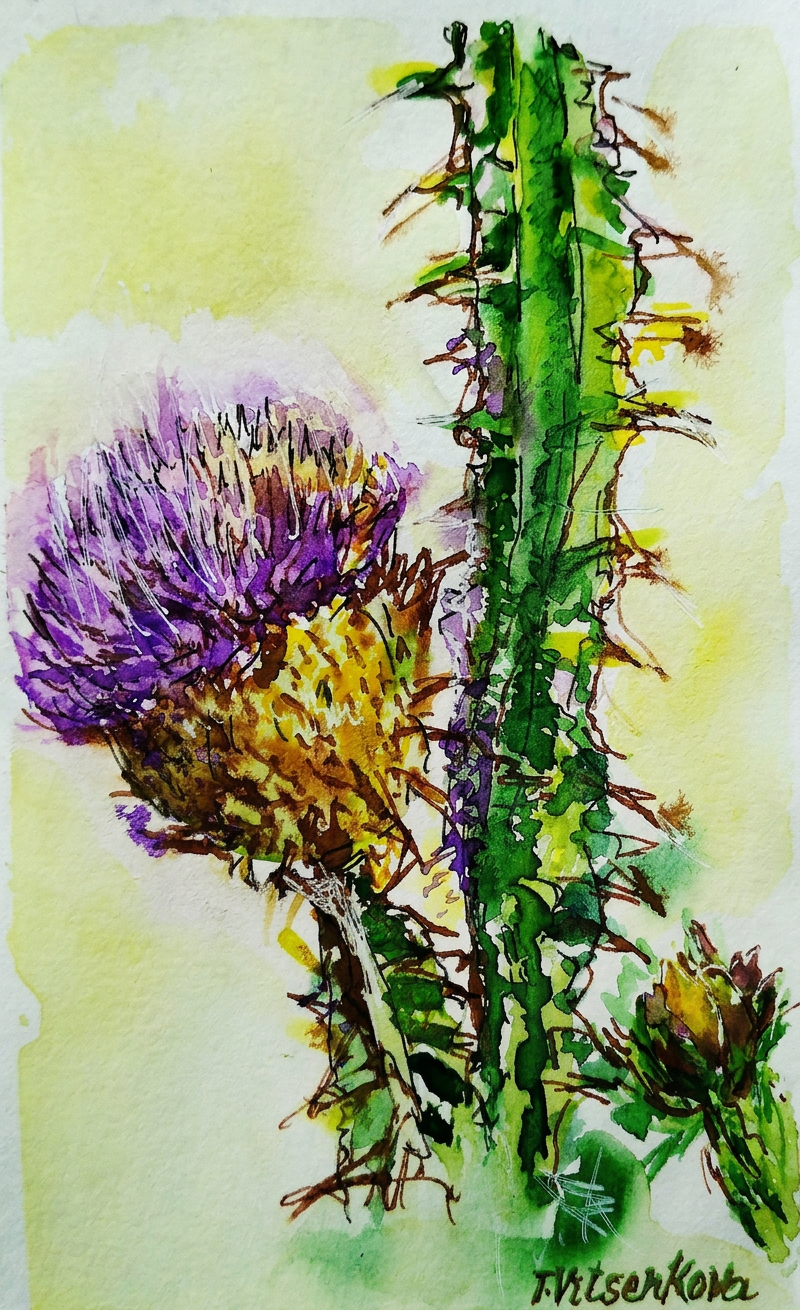
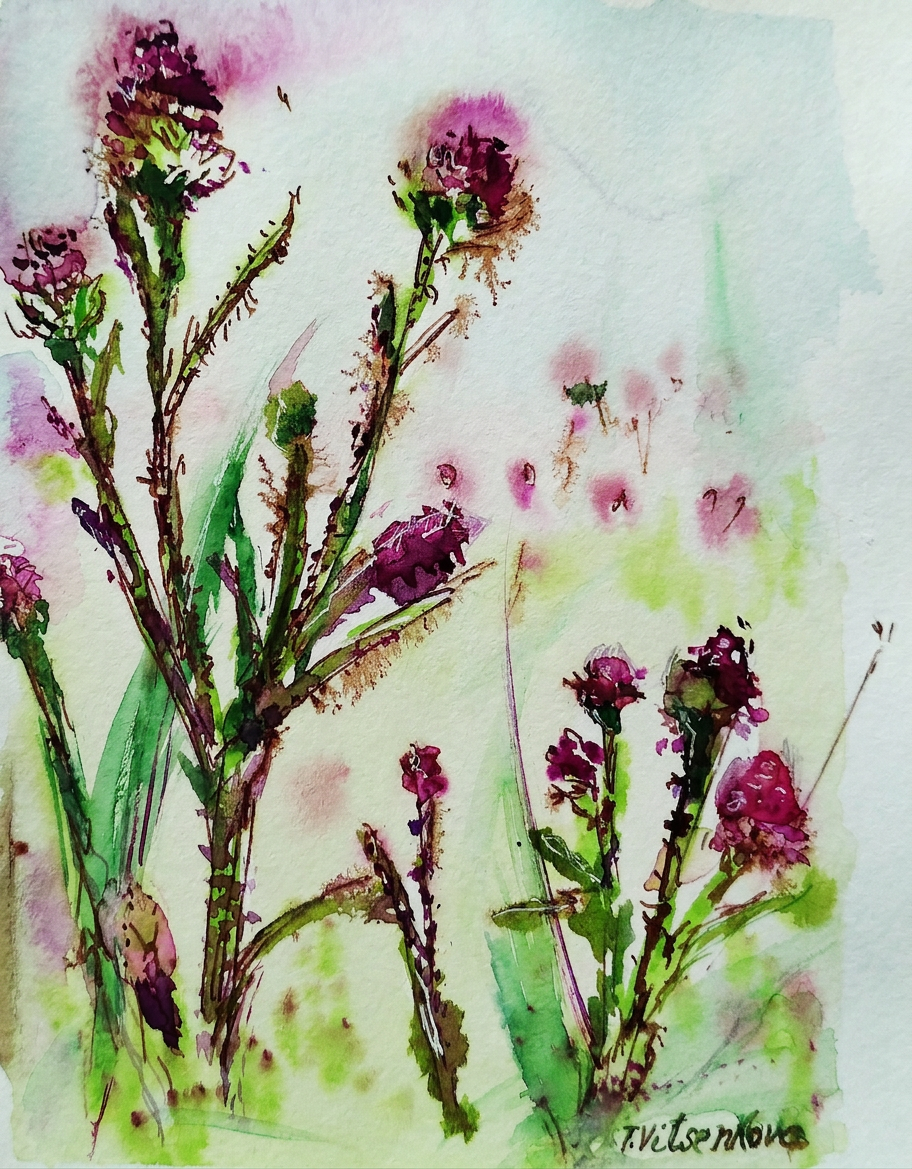
Thistle, the extended remix. This version features petals of amber and purple — a combination that somehow looks like what I imagine royalty smells like. And the flower buds? They range from massive to microscopic, rather like the museums scattered throughout Paris’s city center: Musée d’Orsay (the cool one everyone’s heard of), the Louvre (the one that gives you existential dread just trying to find the bathroom), Musée de l’Orangerie (deceptively small but absolutely packed with Monet’s fever dreams), Musée Marmottan Monet (for when you want MORE Monet, because apparently one museum wasn’t enough), Musée Jacquemart-André (where rich people kept their rich person collections), and Musée de Cluny (medieval vibes and the Unicorn Tapestries, which I definitely didn’t spend three hours staring at while taking blurry photos on my phone).

Thistle #4 — amber and purple. Smells like royalty, stings like a parking ticket.

Thistle number five: The Grand Finale. This specimen features a mustard-violet flower with thorns the color of, well, apple skin. Stylish as Parisian sweeping and majestic boulevards — which is to say, it looks like it went to finishing school in Switzerland and then casually conquered Europe while sipping espresso. The vibe is undeniably “I woke up like this but also spent four hours getting ready.”

Thistle #6 — apple thorns included. Looks elegant, will absolutely draw blood.
Thistle, the encore performance. Featuring peach-colored petals against a copper and amber background — basically what the Eiffel Tower looks like in the morning when you’ve woken up early because you couldn’t sleep (jet lag is romantic, apparently). This color combination is so warm and glowy that it makes you believe in magic, or at least in the possibility that Paris might actually be worth all the hype.

Thistle #7 — peach and copper. The Eiffel Tower at 6am. Romantic and deeply unreasonable.

Bon voyage! Until the next travel adventure :) Stay healthy, stay curious, and remember: life is too short to not travel, not sketch random flowers, and not pretend you understand French when someone speaks to you at a café (just nod and smile — it works 60% of the time, every time).

Bon voyage! Don’t forget your sketchpad. Or your beret. Actually, just the sketchpad.
Thistle #5 — mustard and violet. The boulevard of wildflowers.

All paintings belong to the author and are protected by the ancient artist code: look but don’t touch, admire but don’t copy, and definitely don’t use without permission or face the wrath of someone who takes their wildflowers very seriously.

← Back

Thank you for your response. ✨

Wildflowers. Thistle in sepia and the city of Rome. Part 5.

Artist, ArtTravel, Uncategorized, Urban sketching

Still life and urban sketching—because thistles are basically nature’s way of saying ‘don’t get too close.’

Rome is basically an open-air museum that refuses to close. Ever. The streets are littered with buildings from every architectural era imaginable, as if someone dumped 2,000 years of interior design catalogs all in one place. It’s chaos. Beautiful, Instagram-worthy chaos.

Rome: where every corner looks like a movie set. No filter needed.

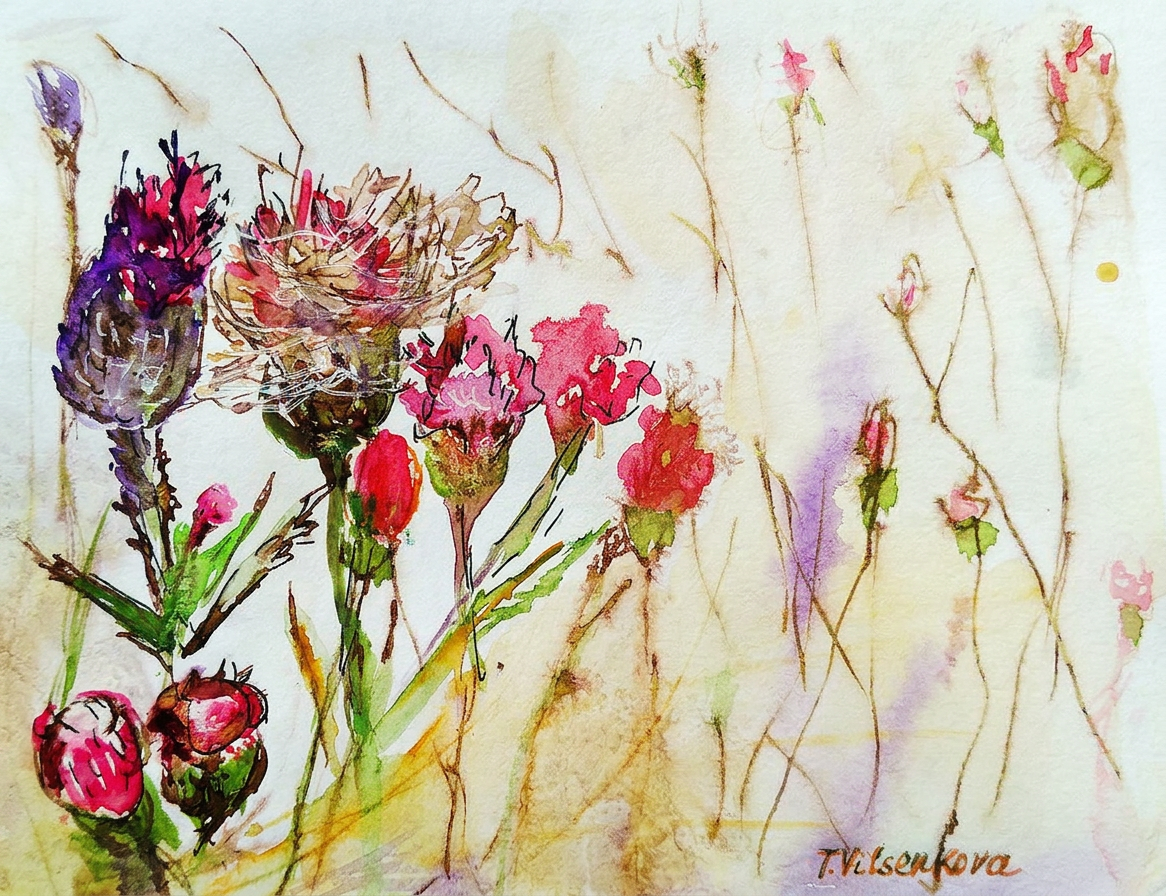
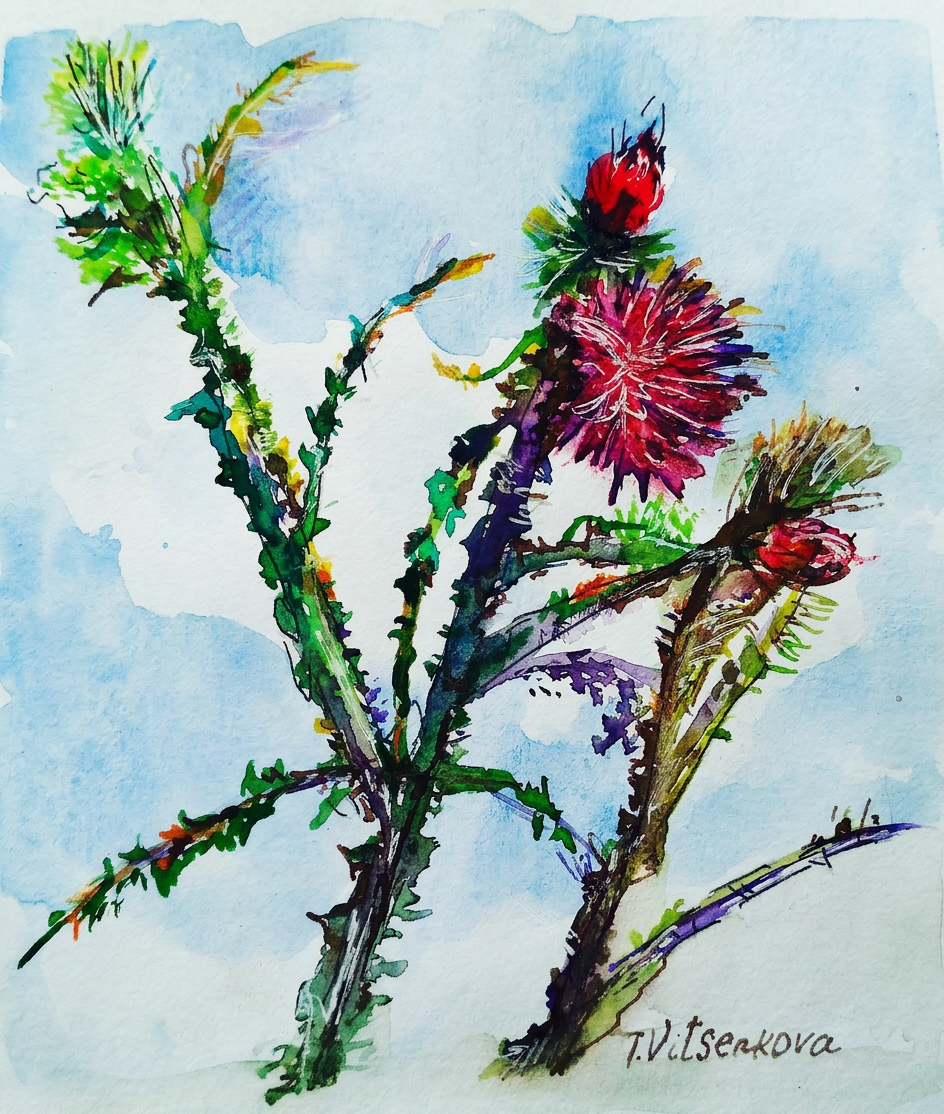
Thistle in watercolor with ink—featuring a delightful palette of pumpkin, turmeric, pineapple, and brick-colored stems because apparently I was hungry while painting. It supposedly represents Rome’s Pantheon: monumental, elegant, and totally not something you’d want to hug. The whole thing is basically an antique temple dedicated to gods who would probably be confused by modern WiFi.

Thistle #1: Painted while hungry. Named after an ancient temple. Sounds about right.

Here’s the truth about Rome: it doesn’t need color. Seriously. Just slap some sepia on it and a few ‘tender shades,’ and suddenly marble fountains and statues become artistically moody. It’s like Rome hired the world’s best Instagram filter and never turned it off.

Emperor Augustus once said: ‘I found Rome a city of bricks and left it a city of marble.’ Translation: ‘I showed up and flexed so hard that everything got an upgrade.’

Thistle number two: wildflower with avocado and cherry-colored petals because apparently I was on a mood board binge. The chaotic petals remind me of the Roman Forum’s ancient ruins—you know, ruins that used to be someone’s important government building but now just vibes there mysteriously. Every time you visit, you find something new. Mostly it’s tourists like you, but sometimes it’s actually history!

Thistle #2: Avocado meets cherry. The Roman Forum approves from its mysteriously crumbled remains.

Thistle number three, now in violaceous hues (fancy word alert!). It reminds me of Borromini’s architecture in Rome—all concave curves and convex swagger with sharp angles that would make a modern architect weep. Remember Gaudí’s Barcelona houses? Same energy. But here’s the thing: Borromini’s stuff is actually calm and airy despite looking like it wants to fight you. It’s strong, persistent, and stubborn—just like a thistle that refuses to die in a sidewalk crack. Basically, I’m convinced all great architects were just looking at plants and going ‘yeah, I’ll do that but in marble.’

Thistle #3: Violaceous vibes only. Borromini would definitely swipe right.

Thistle number four: cappuccino and watermelon colored petals (yes, that color combo is as weird as it sounds). Apparently it’s channeling Trevi Fountain vibes—you know, Rome’s most famous ‘throw money in the water and make wishes’ destination. It’s made from natural materials and definitely old, which means it’s had about 500 years to collect loose change and tourist dreams. Stand too close and you feel like you’re floating. Which is either the fountain’s magic or the overwhelming crowd of selfie sticks.

Thistle #4: Cappuccino + watermelon = chaos. Throw a coin in it anyway.

Thistle number five: fiery red, chocolate, and dark grapes (the color palette of a moody wine bar). It’s giving off major Castel Sant’Angelo energy—you know, that ancient Roman pedestrian bridge covered in Bernini’s Baroque sculptures. It’s stunning, it’s old, and like every tourist photo location in Rome, it’s probably swarming with people trying to get the perfect angle.

Thistle #5: Wine bar color palette. Bernini would’ve painted it too, but he was busy.

This is my final thistle post—the grand finale of my flower personality study. Here’s what I’ve learned: thistles are basically flowers with attitude problems. They represent strength, inflexibility, firmness, and they survive literally anywhere because they refuse to quit. Kind of like tourists in Rome during July. So I painted a whole series of these impossible little rebels to celebrate their survival skills and, oh yeah, they totally remind me of beautiful European architecture. Nature’s architecture is just better, fight me.

Rome: still standing after 2,000 years. Unlike my feet after day one.

All paintings belong to the author and are definitely not meant to be copied, traced, or vaguely ‘inspired by’—because yes, we’re watching you.

Bon voyage! Until the next travel adventure (and probably the next thistle obsession)! 🌍

← Back

Thank you for your response. ✨

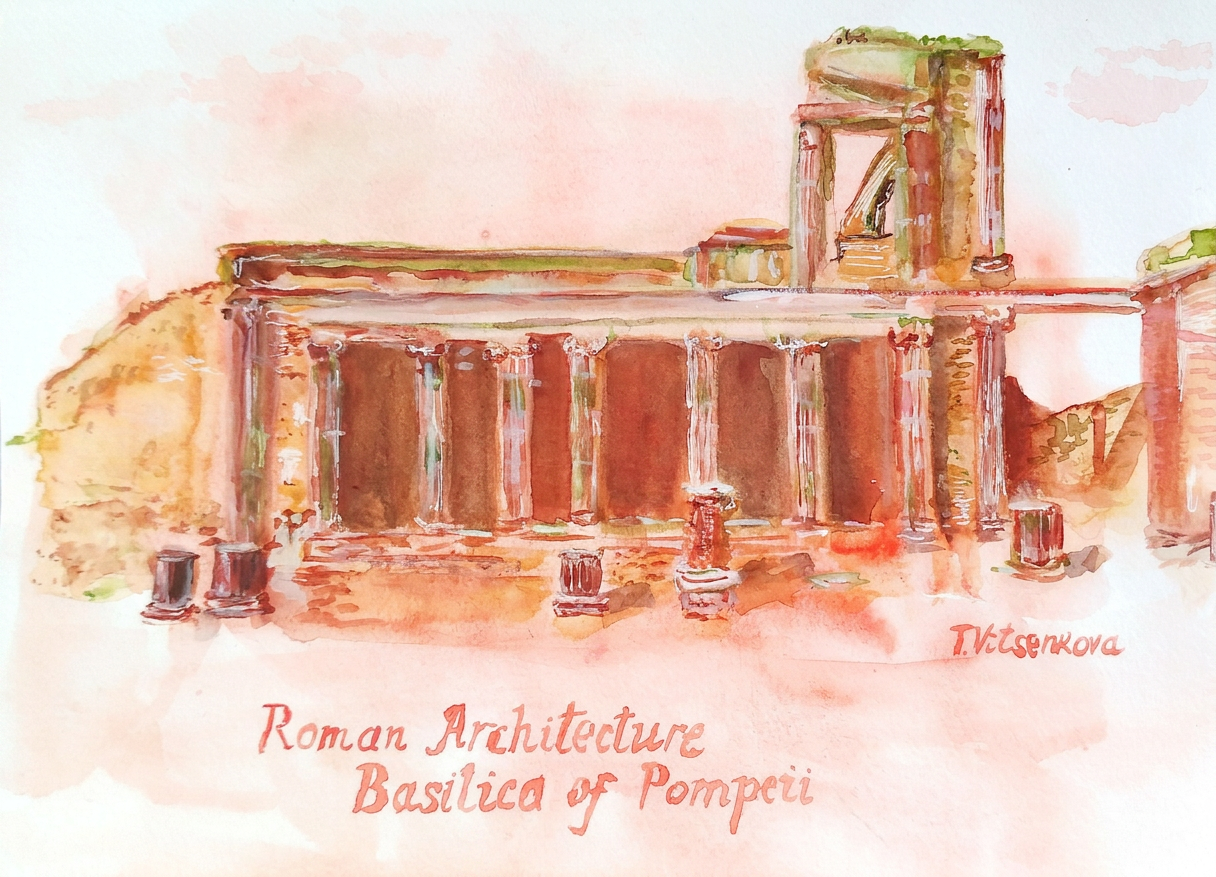
4-3.Art and Travel. The Capitolium and Basilica of Pompeii.

An Artist's Perspective on Roman Architecture, Roman Architecture, Uncategorized

Watercolor journey in the course Roman Architecture by the Yale University.

I continue the painting in the course Roman Architecture + the city of Rome with Yale’s course Roman Architecture https://www.coursera.org/learn/roman-architecture.

C. 4-3

All roads lead to Rome- Alain de Lille

Bon voyage! Until the next travel:)

https://www.coursera.org/learn/roman-architecture/home/welcome

← Back

Thank you for your response. ✨

Name
Email
Your message

Δ document.getElementById( "ak_js_11" ).setAttribute( "value", ( new Date() ).getTime() );

The visionary path to paintings. Creative Ways to Describe Artwork Colors

Art workshops
Swatches of yellow ochre watercolor paints from PWC and Windsor, showcasing their different appearances on watercolor paper.
Comparison of PWC and Winsor yellow ochre watercolor paints, showcasing their distinct shades.
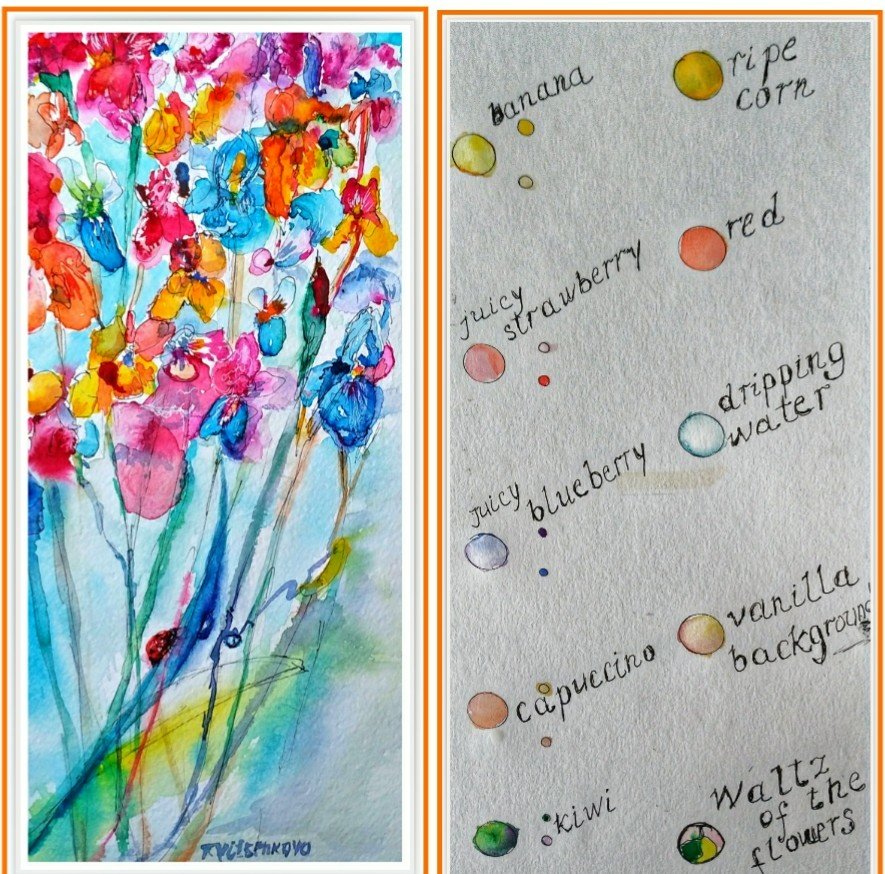
A vibrant watercolor painting featuring a bouquet of colorful flowers in shades of pink, yellow, blue, and orange on the left. On the right, a palette showing descriptions of colors with playful names inspired by fruits, including 'juicy strawberry', 'ripe corn', and 'vanilla background'.
Colorful watercolor artwork featuring flowers, inspired by nature and food descriptions.

← Back

Thank you for your response. ✨

Exploring Intuitive Art: Fox and Roosters. The magic of imagination. Watercolor Clausura technique.

Art workshops, Artist, ArtTravel, Uncategorized
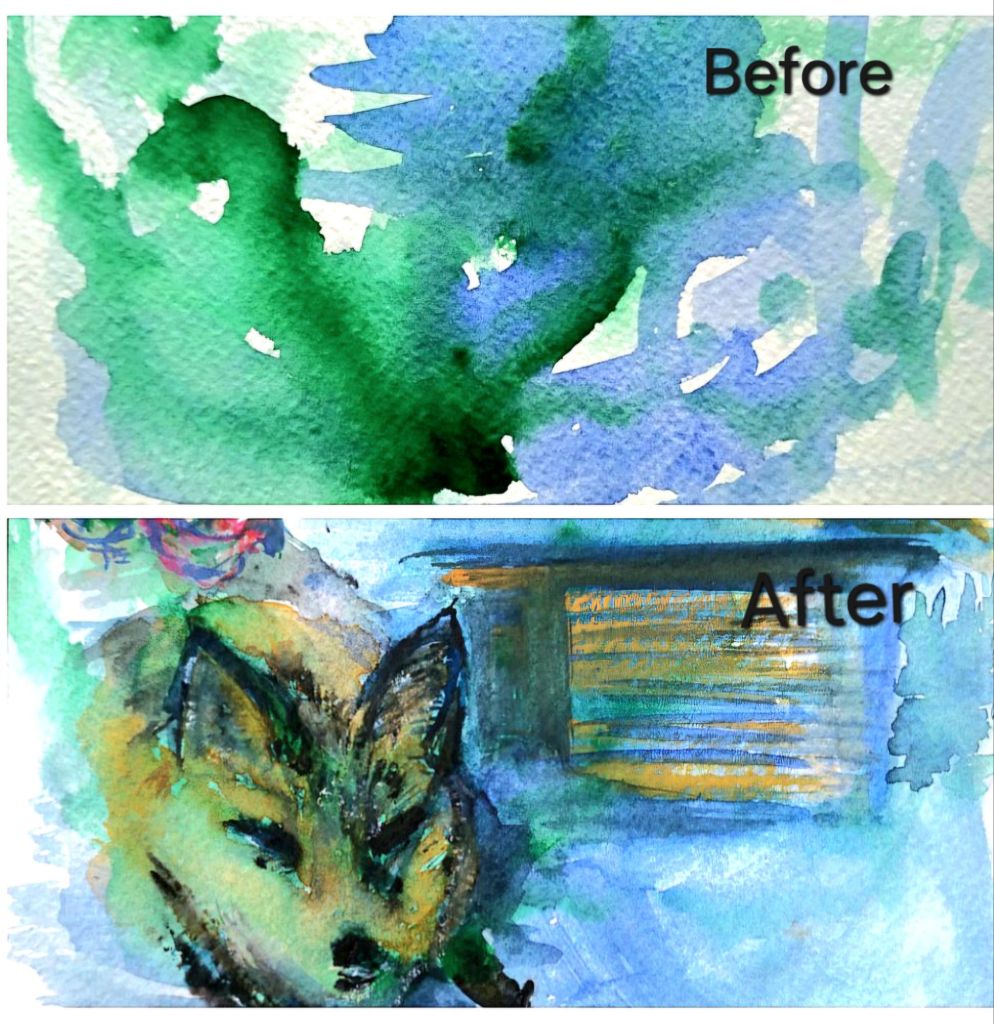
A watercolor painting transformation showcasing the evolution from abstract colors to a detailed fox illustration, with 'Before' and 'After' labels.
Before and after: a watercolor transformation showcasing the artistic journey from abstract to the detailed fox artwork.
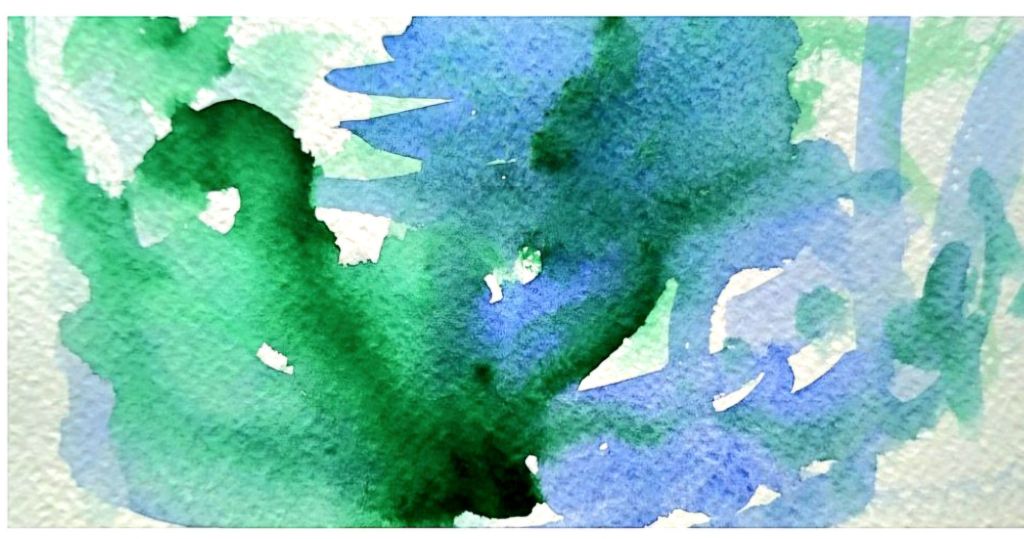
Abstract watercolor painting featuring shades of green and blue with fluid shapes and brushstrokes, showcasing an intuitive art style.
What is it? For me it looks like a little fox with its sly eyes and sharp ears!
It was inspired by La Fontaine’s “The Raven and the Fox” depicts a scene where the fox outwits the rooster:)
A sketch of a fox's face with minimalistic details, set against a faint background of roosters, trees, and a small house.
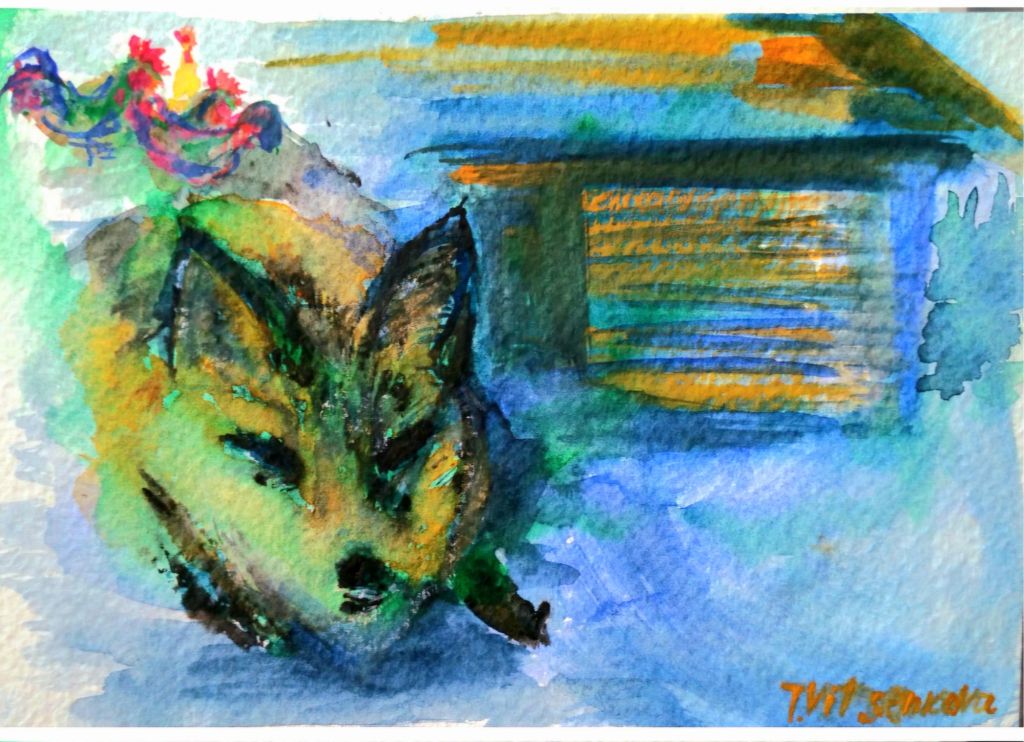
A watercolor painting featuring a fox's face with expressive features, surrounded by colorful outlines of roosters and a faint background of a wooden structure.
After, with imagination painting. Fox and Roosters. Don’t let a charming smile fool you:)
The cunning fox’s face emerged unexpectedly, a testament to the power of imagination:) Voila

← Back

Thank you for your response. ✨

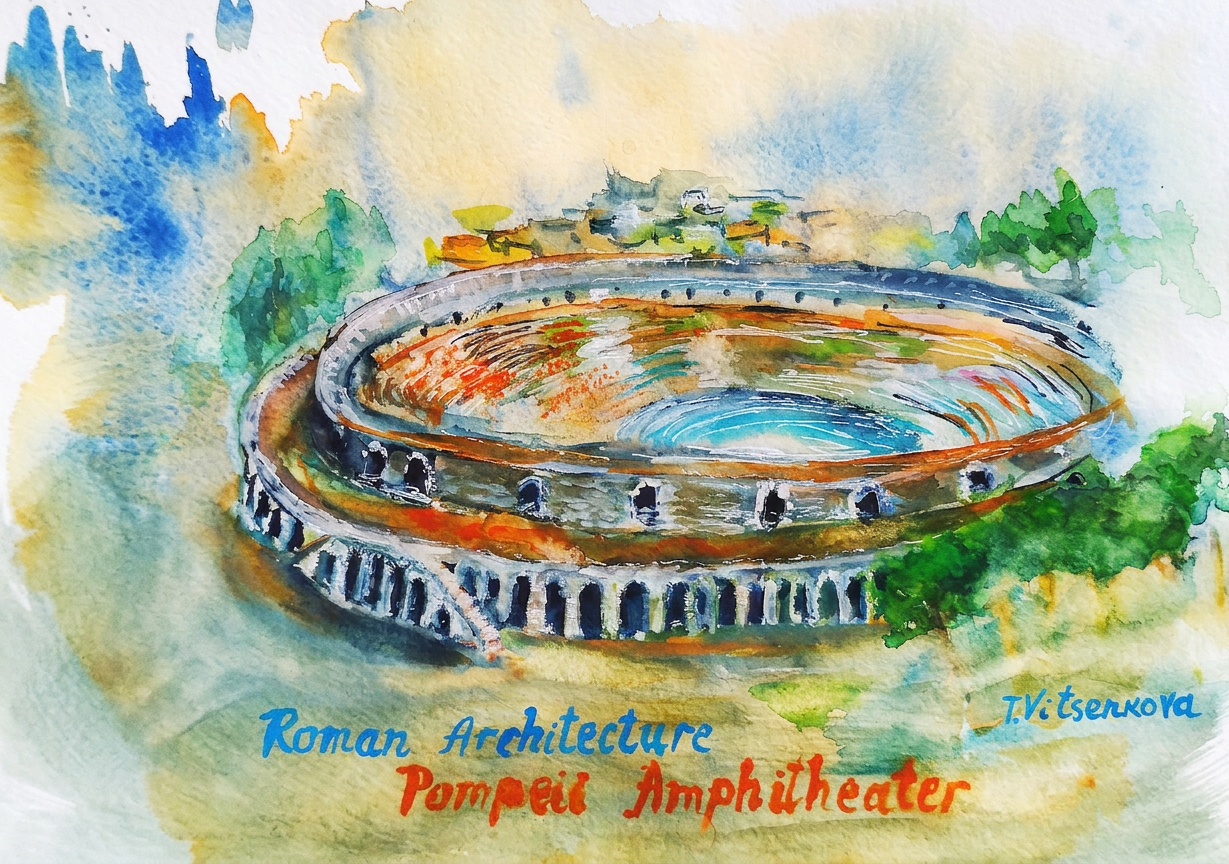
4-4.Art and Travel. Pompeii’s Entertainment District: The Amphitheater, Theater, and Music Hall.

Artist, Roman Architecture, Uncategorized

Watercolor journey in the course Roman Architecture by the Yale University.

All roads lead to Rome – Alain de Lille

https://www.coursera.org/learn/roman-architecture/home/welcome

← Back

Thank you for your response. ✨

Name
Email
Your message

Δ document.getElementById( "ak_js_14" ).setAttribute( "value", ( new Date() ).getTime() );

4-1.Art and Travel. Introduction to Pompeii and the City’s History.

Artist, Roman Architecture, Uncategorized, Urban sketching, Voyage

Watercolor journey with the course Roman Architecture by the Yale University.

All roads lead to Rome – Alain de Lille

Bon voyage! Until the next travel:)

https://www.coursera.org/learn/roman-architecture/home/welcome

← Back

Thank you for your response. ✨

Name
Email
Your message

Δ document.getElementById( "ak_js_15" ).setAttribute( "value", ( new Date() ).getTime() );

3-5.Art and Travel. Concrete Transforms a Mountain at Palestrina.

Artist, Roman Architecture, Uncategorized, Urban sketching, Voyage

Watercolor journey with the course Roman Architecture by the Yale University.

I continue the paintings with the course Roman Architecture + the city of Rome with Yale’s course Roman Architecture https://www.coursera.org/learn/roman-architecture.

All roads lead to Rome— Alain de Lille

https://www.coursera.org/learn/roman-architecture/home/welcome

← Back

Thank you for your response. ✨

Name
Email
Your message

Δ document.getElementById( "ak_js_16" ).setAttribute( "value", ( new Date() ).getTime() );

3-3.Art and Travel. Sanctuaries and the expressive potential of Roman concrete construction.

Artist, Roman Architecture, Uncategorized, Urban sketching, Voyage

Watercolor journey with the course Roman Architecture by the Yale University.

I continue the paintings after the course Roman Architecture + the city of Rome with Yale’s course Roman Architecture https://www.coursera.org/learn/roman-architecture.

Sanctuaries and the expressive potential of Roman concrete construction. 3-3

All roads lead to Rome – Alain de Lille

https://www.coursera.org/learn/roman-architecture/home/welcome

← Back

Thank you for your response. ✨

Name
Email
Your message

Δ document.getElementById( "ak_js_17" ).setAttribute( "value", ( new Date() ).getTime() );

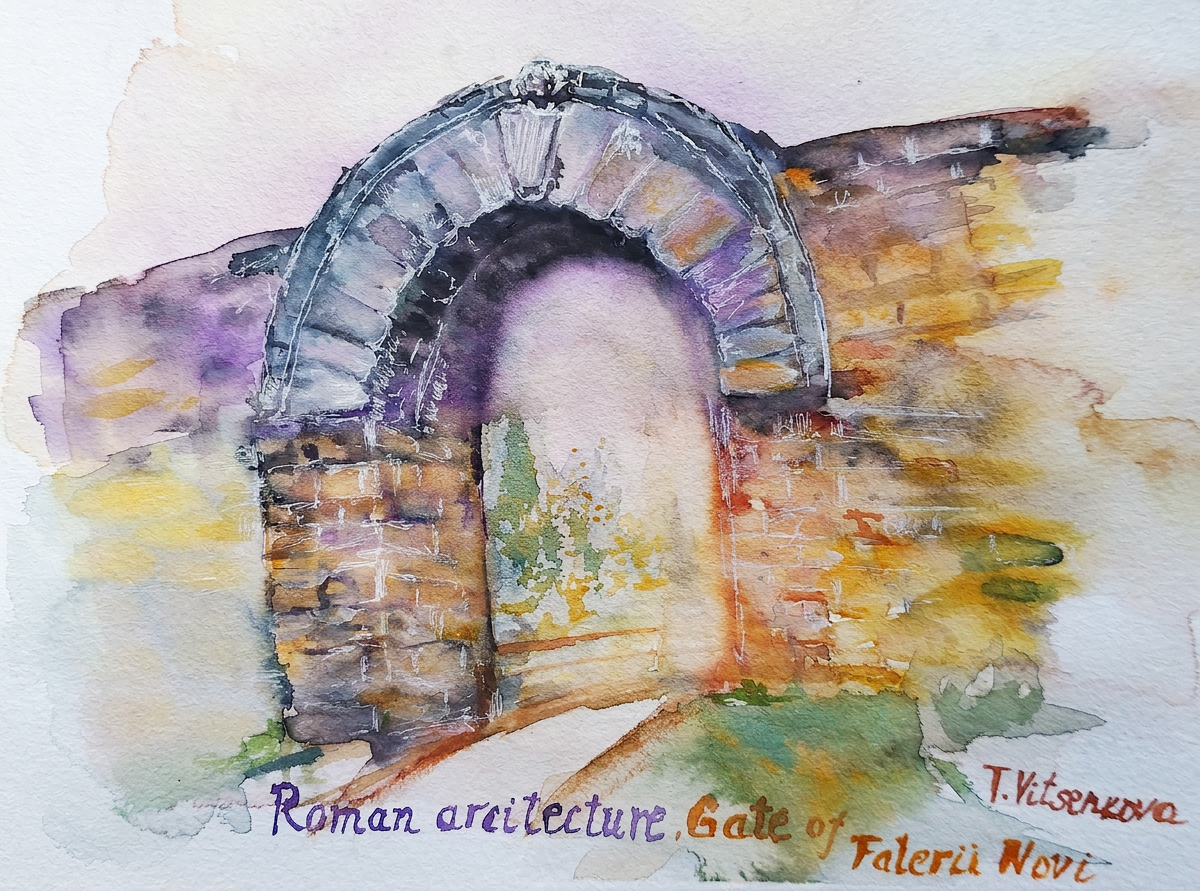
2-3.Art and Travel. Defensive Stone walls and regular town -planning, Roman Architecture.

Artist, Roman Architecture, Uncategorized, Urban sketching, Voyage

Watercolor journey with the course Roman Architecture by the Yale University.

All roads lead to Rome — Alain de Lille

← Back

Thank you for your response. ✨

Name
Email
Your message

Δ document.getElementById( "ak_js_18" ).setAttribute( "value", ( new Date() ).getTime() );

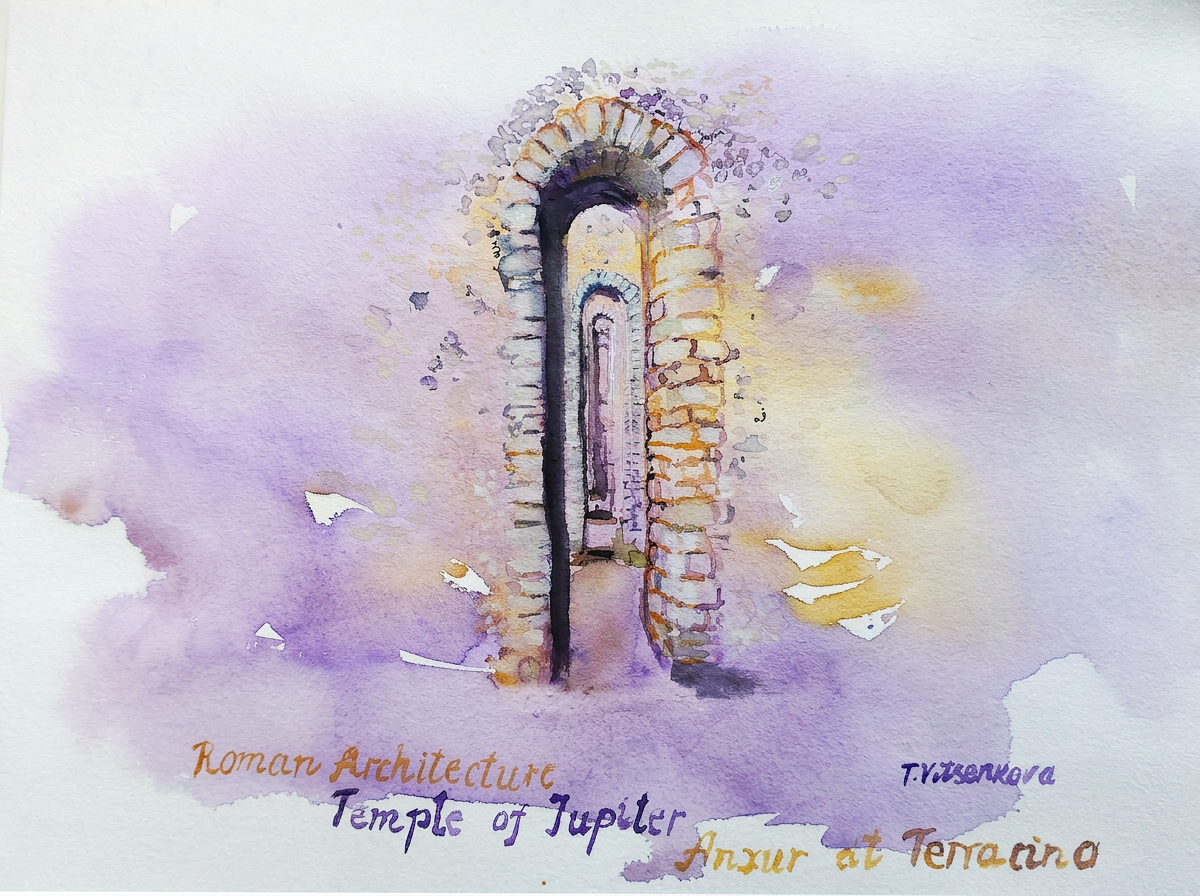
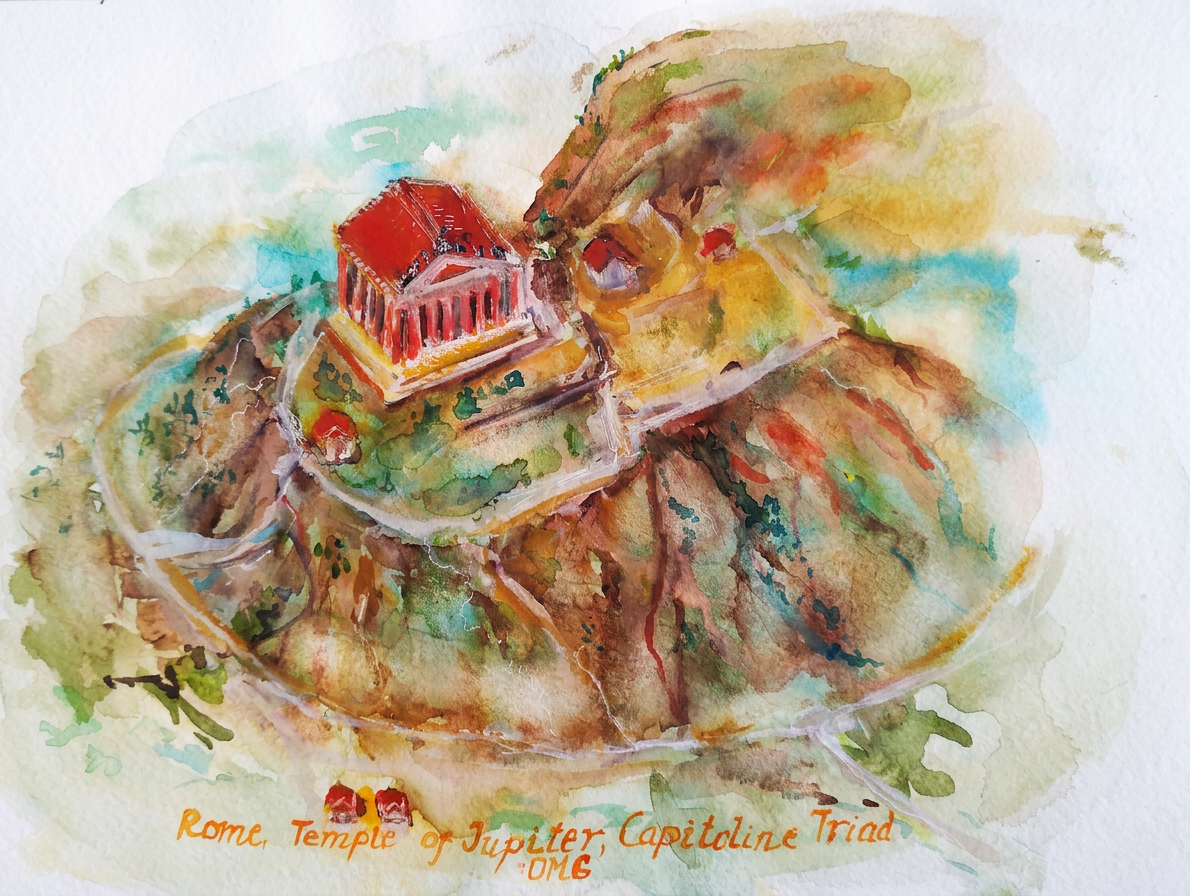
2-2.Art and Travel. Rome, Temple of Jupiter OMG, Capitolini Triad, Roman Architecture. Watercolor journey with the course Roman Architecture by the Yale University.

Artist, Roman Architecture, Uncategorized, Urban sketching, Voyage

All roads lead to Rome – Alain de Lille

Bon voyage! Until the next travel:)

← Back

Thank you for your response. ✨

Name
Email
Your message

Δ document.getElementById( "ak_js_19" ).setAttribute( "value", ( new Date() ).getTime() );

Link to the Roman Architecture Course:

https://www.coursera.org/learn/roman-architecture/home/welcome

3-2.Art and Travel. The first experiments in Roman concrete construction.

Artist, Roman Architecture, Uncategorized, Urban sketching, Voyage

Watercolor journey with the course Roman Architecture by the Yale University.

The first experiments in Roman concrete construction. 3-2

All roads lead to Rome – Alain de Lille

Bon voyage! Until the next travel:)

← Back

Thank you for your response. ✨

Name
Email
Your message

Δ document.getElementById( "ak_js_20" ).setAttribute( "value", ( new Date() ).getTime() );

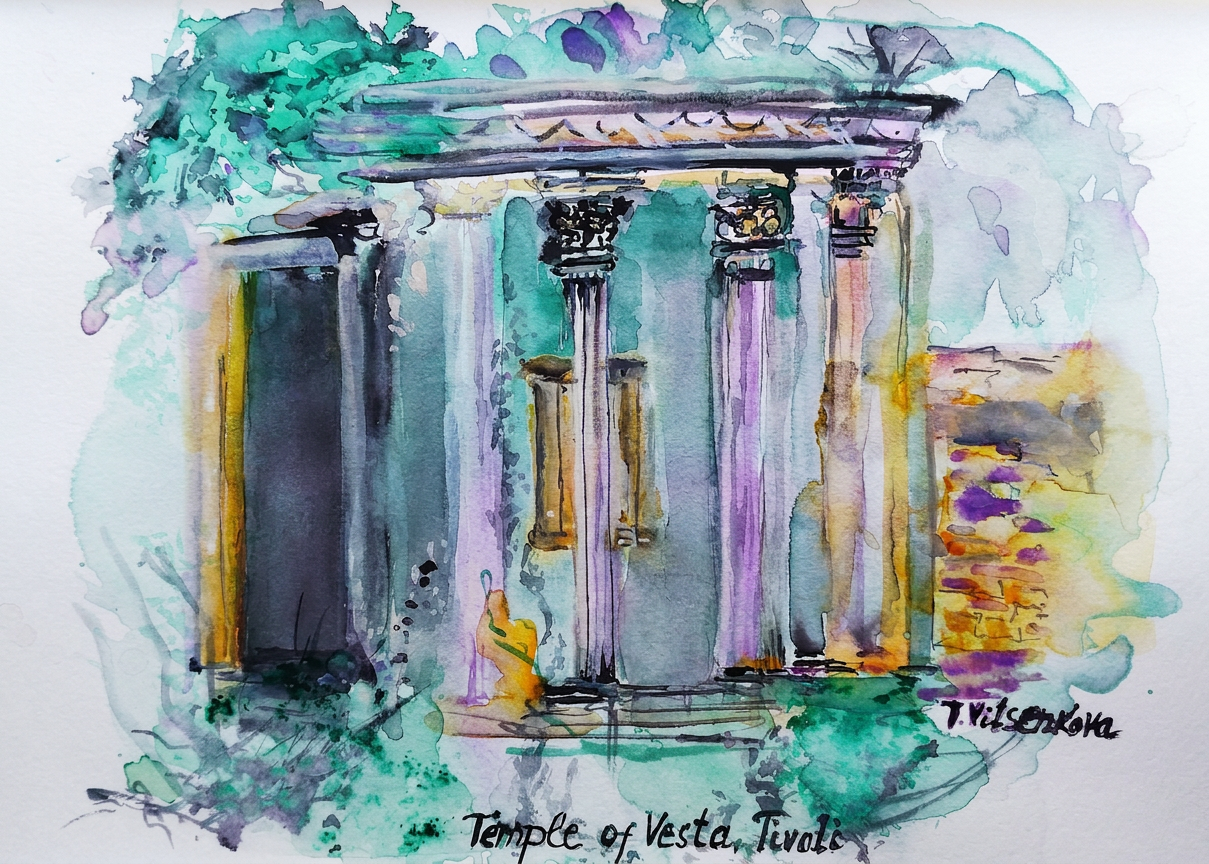
2-5.Art and Travel. The advent of the Corinthian Order, Roman Architecture.

Artist, Roman Architecture, Uncategorized, Urban sketching, Voyage

Watercolor journey with the course Roman Architecture by the Yale University.

I continue my artistic series with the course Roman Architecture + the city of Rome with Yale’s course Roman Architecture https://www.coursera.org/learn/roman-architecture.

The advent of the Corinthian Order Roman Architecture. 2-5.

All roads lead to Rome – Alain de Lille

← Back

Thank you for your response. ✨

Name
Email
Your message

Δ document.getElementById( "ak_js_21" ).setAttribute( "value", ( new Date() ).getTime() );

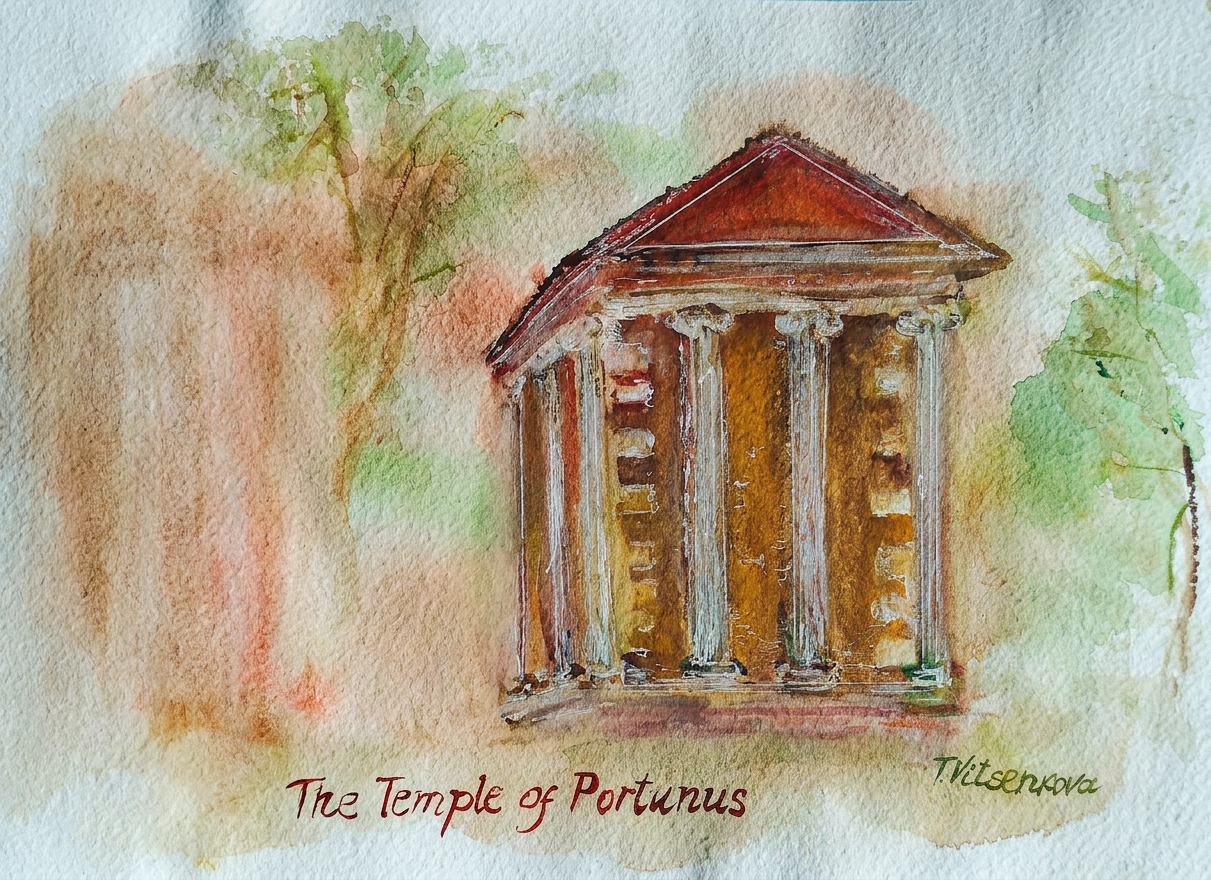
2-4.Art and Travel. The Hellenization of late Republican temple, Roman Architecture.

Artist, Roman Architecture, Uncategorized, Urban sketching, Voyage

Watercolor journey with the course Roman Architecture by the Yale University

The Hellenization of late Republican temple, Roman Architecture. 2-4.

All roads lead to Rome- Alain de Lille

← Back

Thank you for your response. ✨

Name
Email
Your message

Δ document.getElementById( "ak_js_22" ).setAttribute( "value", ( new Date() ).getTime() );