Still life and urban sketching? More like “still hiding behind art supplies and questionable architectural doodles.”
Are you a flower person? Do you prefer the show-offs—those high-maintenance roses that demand constant attention? Or are you team humble-but-underrated daisy? Pink and fragrant? Wilted and questionable? There’s a flower personality out there for everyone, and no judgment here.
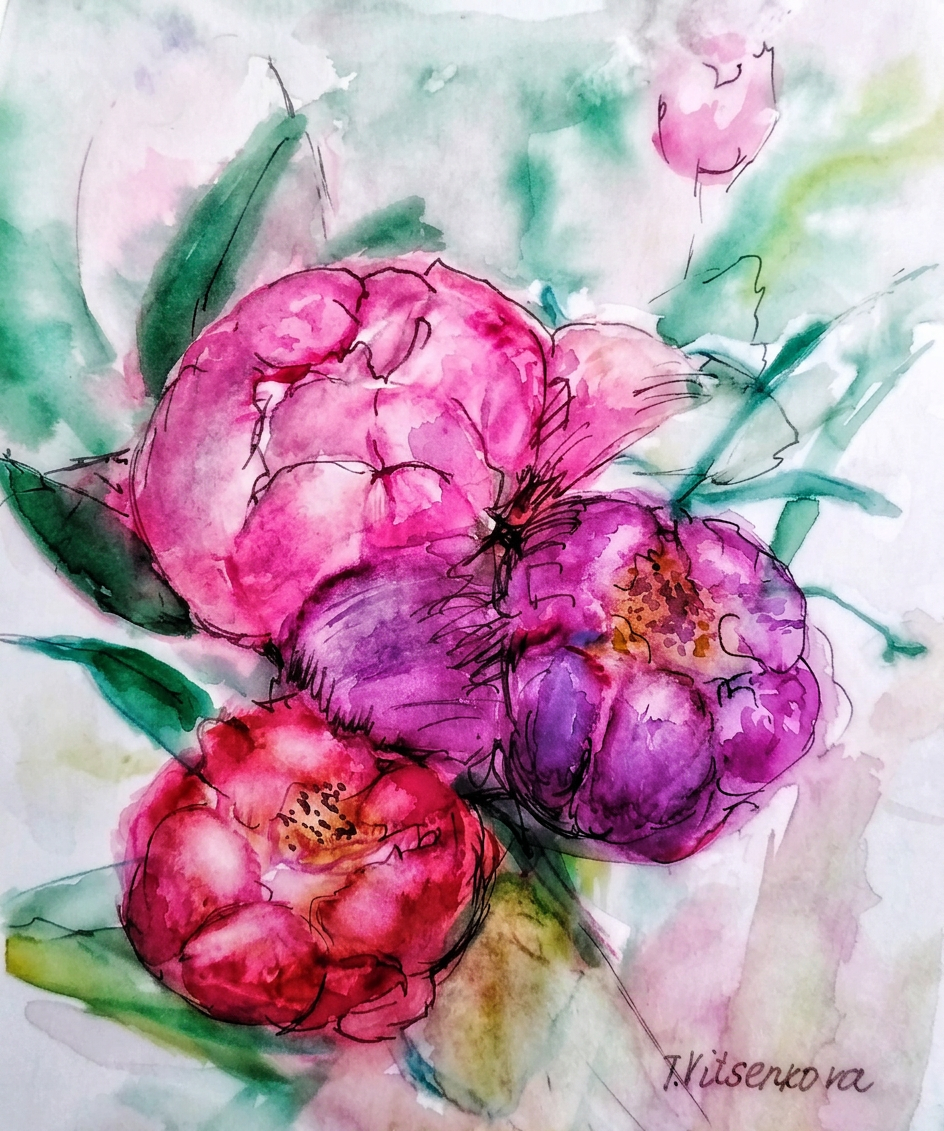
Three peonies walk into a painting. Nobody leaves.
So this summer, I enrolled in a Flowers painting course—a decision that absolutely upended everything I thought I knew about myself as an artist. Turns out, I’d been dodging still life like it was a personal insult for years. Plot twist: flowers are actually incredible. Who knew? (Apparently, everyone but me.) Through watercolor, ink, and an embarrassing amount of trial-and-error (hello, muddy brown petals), I discovered that my supposed “non-negotiable” artistic preferences were basically fiction. This course demolished my creative self-image in the best way possible, and I’m here to share all the glorious discoveries—and occasional disasters—in these flower-filled posts.
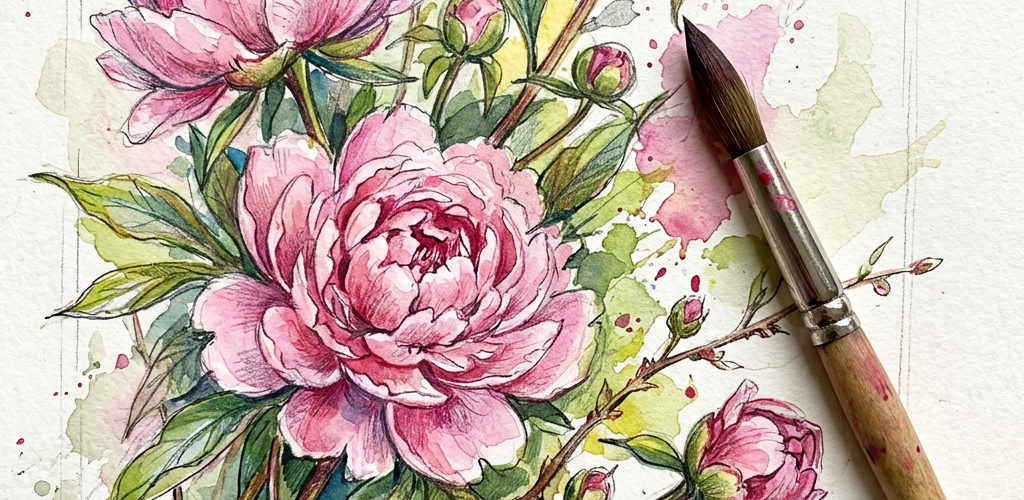
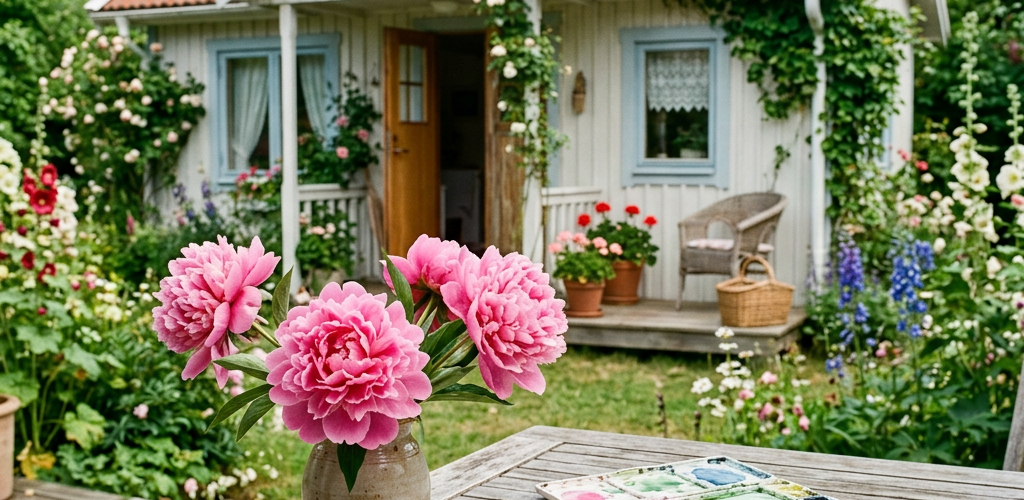
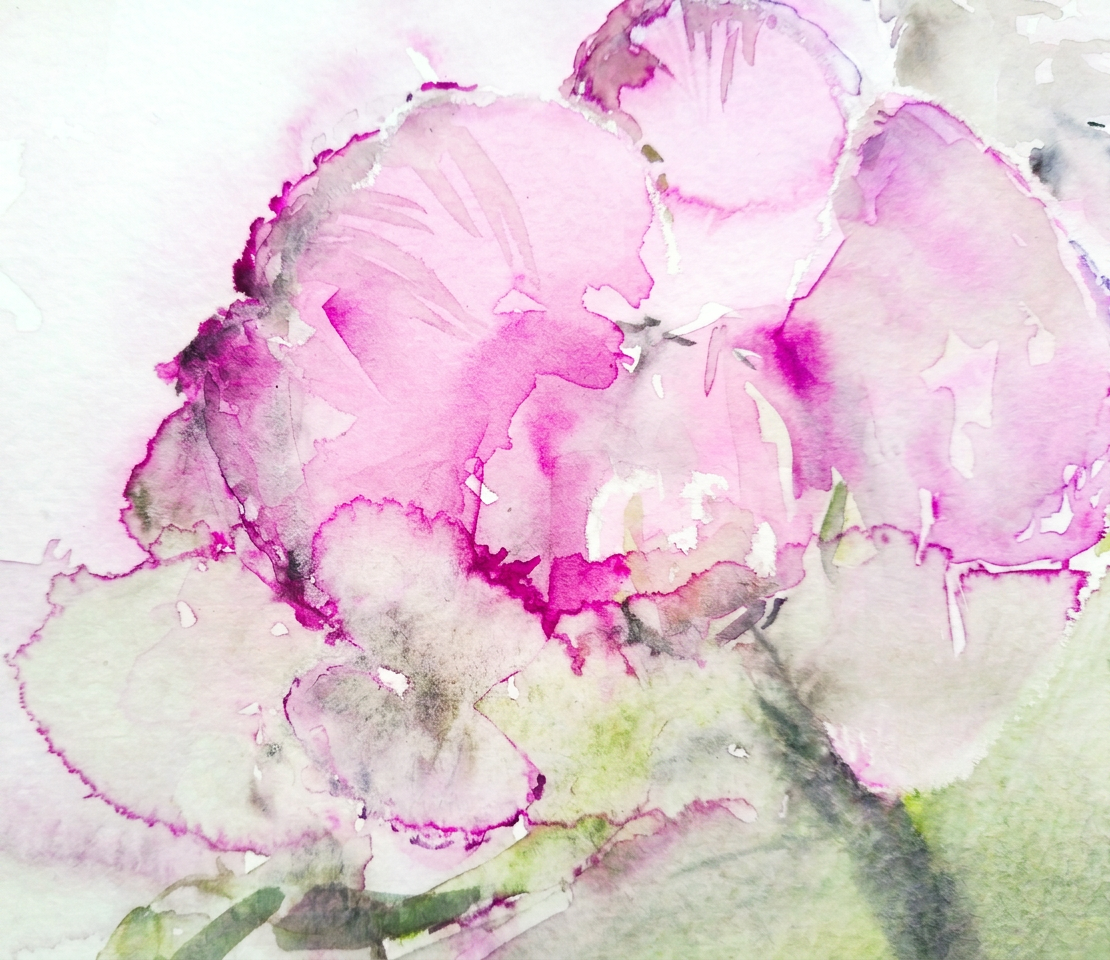
Three pink peonies in a garden, immortalized in watercolor and ink—because apparently, I decided to get fancy with my subject matter this year.
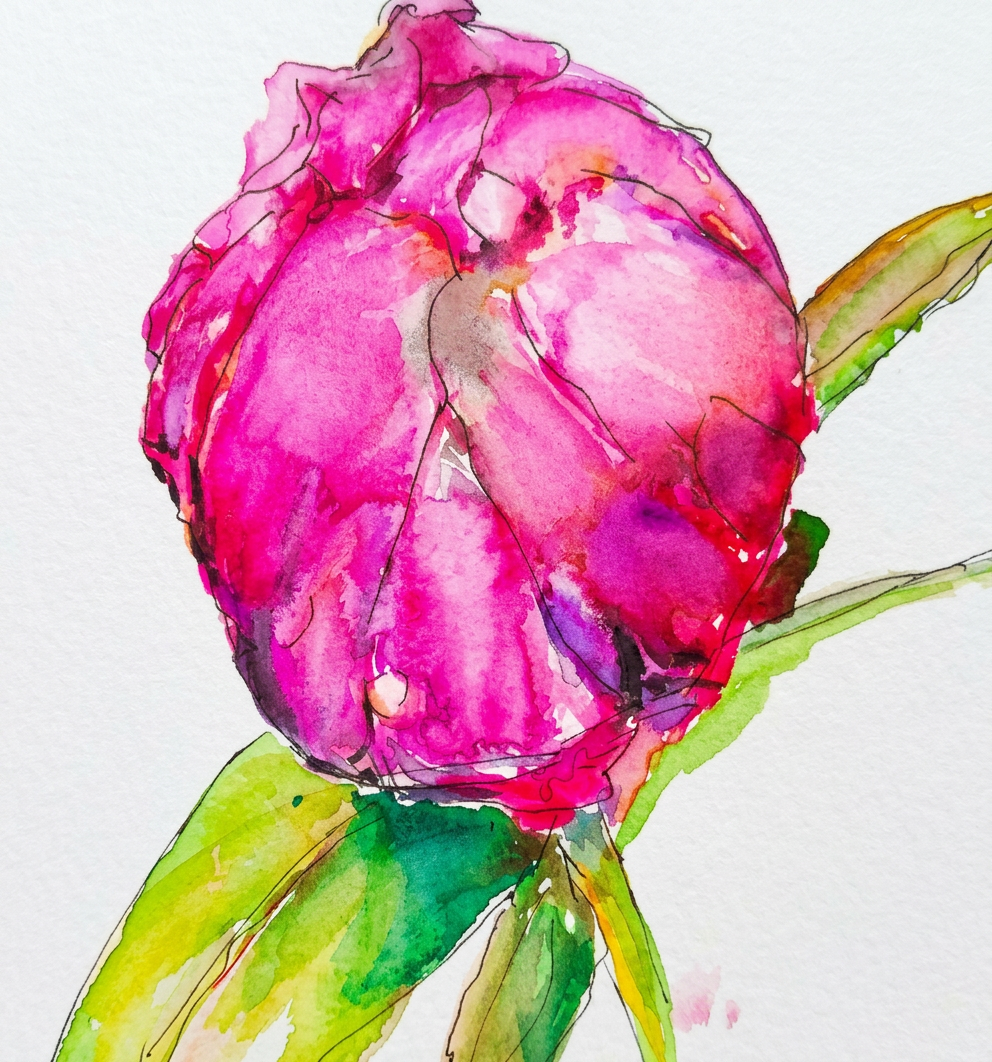
One peony, no filter, zero chill.
Bon voyage! Until the next creative adventure (and the next time I convince myself I can paint something completely outside my comfort zone). Stay healthy and keep those flowers watered—they’re needier than I am.
All paintings belong to me. Seriously, don’t steal them. I’ll know.
Tools used for this painting extravaganza: Watercolours by Charvin and Van Gogh (the fancy kids), GrayPas Expressionist pastels (for when I need drama), Derwent watercolor pencils (reliable sidekicks), and Faber Castell artist pens (the MVPs). Paper: Strathmore Watercolour and Mixed Media albums, 15×20 cm (6×8 in.)—perfectly sized for my wildly ambitious vision and limited attention span.
Floral Obsession: Still Life, Urban Sketching, and the Great Peony Conspiracy
Let me tell you about the time I became irrationally obsessed with peonies. Why peonies, you ask? Well, my mom had enough of these pompous pink showstoppers around my parents’ summer house to start a floral beauty pageant. I loved their tiny, adorable pink hats (yes, I’m calling them hats) and their scent—which basically smelled like summer decided to become a fragrance and live in a flower. Naturally, I had to paint them obsessively.
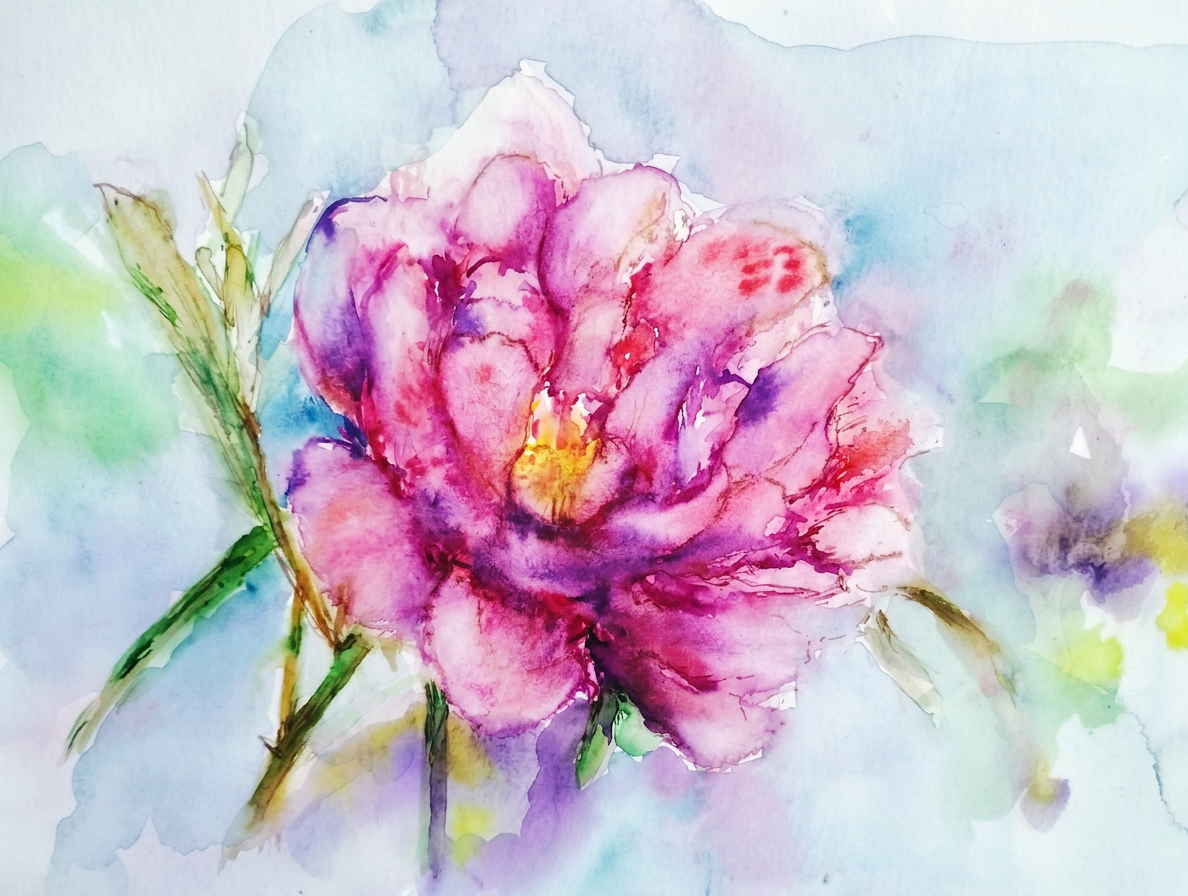
Picture this: A peony serving looks like a Queen at her coronation ball—because apparently these flowers didn’t get the memo that humility exists. Draped in regal reds, blushing pinks, and tender violets, each petal screams “I’m fancy, look at me!” So I painted one in impressionism style with watercolor, trying to capture that whole “I woke up like this” vibe. Spoiler alert: it took me way longer than I expected.
She’s pink, she’s proud, she’s basically royalty
Fast forward to now: I’m practically planning my next European adventure as a glorified flower reconnaissance mission. Armed with fresh art supplies and an unhealthy obsession with botanical subjects, I’m ready to sketch and paint my way through Europe—watercolor and ink in hand, zero chill about flowers. My travel companions are probably rolling their eyes. That’s their loss.
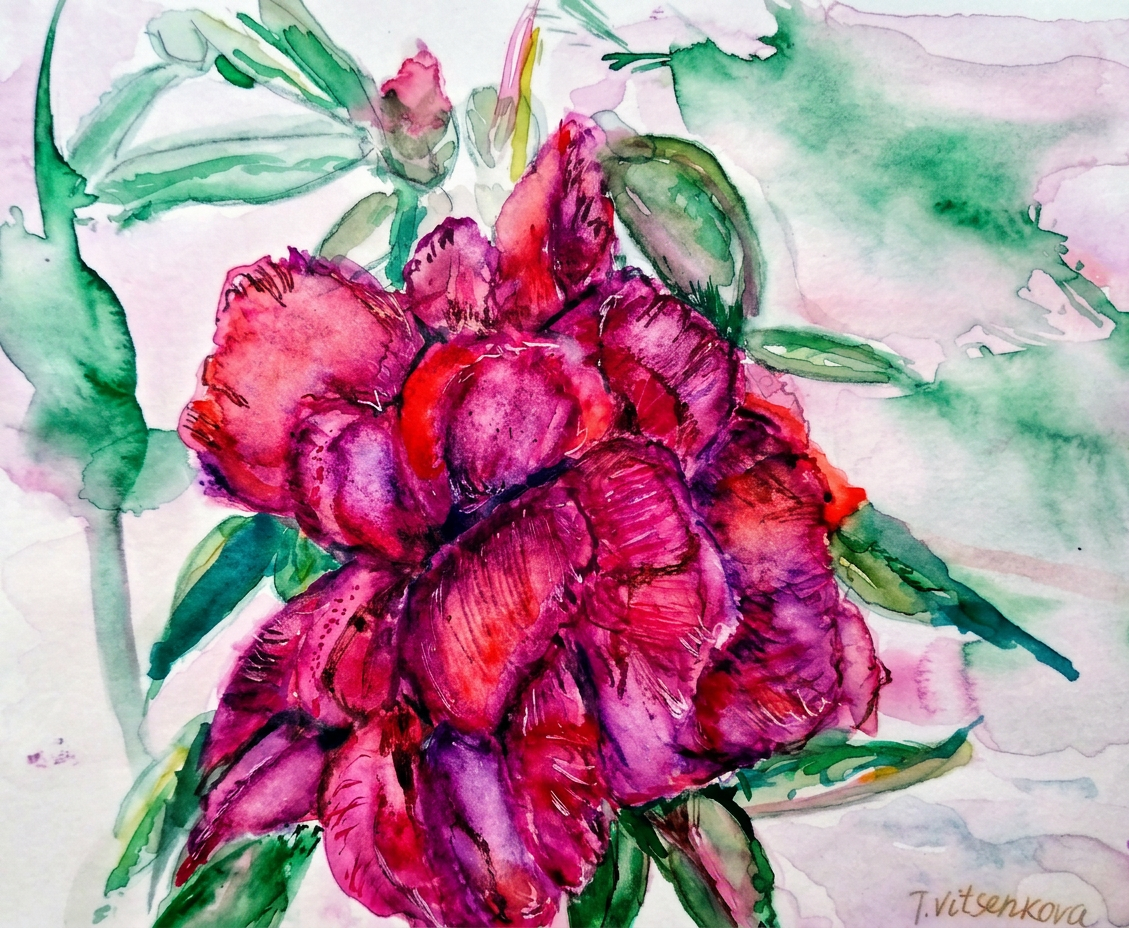
Behold: a tender pink peony in all its impressionistic glory, captured in watercolor. Yes, I made it slightly dramatic. It seemed appropriate given how peonies carry themselves.
Still pink. Still judging you. Still perfect.
Bon voyage to you! Until the next travel adventure (probably somewhere there are flowers to paint). Stay witty, and remember: life’s too short not to have strong opinions about flowers.
All paintings belong to the author and are protected by the sacred code of “don’t steal my flowers.” No image is to be copied without permission.
For the curious minds wondering about my artistic arsenal: I wielded watercolors from the fancy brands (Charvin and Van Gogh—yes, I went full art history nerd), pastels from GrayPas Expressionist, Derwent watercolor pencils (the real MVPs), and Faber Castell artist pens. My canvas of choice? Strathmore Watercolor and Mixed Media albums, 15×20 cm (6×8 in.)—AKA the perfect size for portable flower obsession.
Still life and urban sketching. Because apparently, I can’t sit still OR leave my house without a sketchpad.
So Leonardo da Vinci’s Notebook told me something rather inconvenient: artists need to constantly find new things to paint or draw. (Thanks a lot, Leonardo—no pressure!) Thus began my endless quest to think outside the box that I’m apparently always painting inside. This summer, I had a minor epiphany: watercolor graphic technique is NOT just fancy coloring books. Shocking, I know. It was a small discovery that spiraled into full-blown artistic obsession, and now here we are.
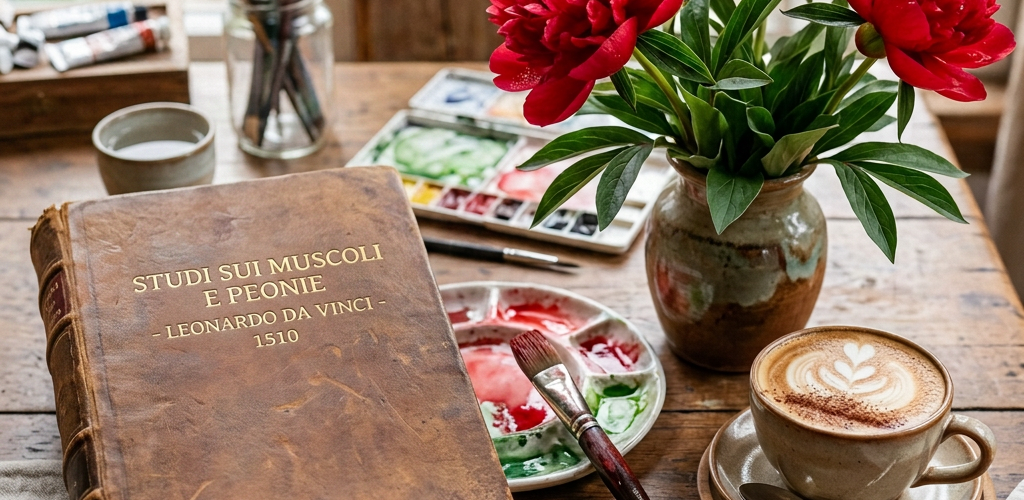
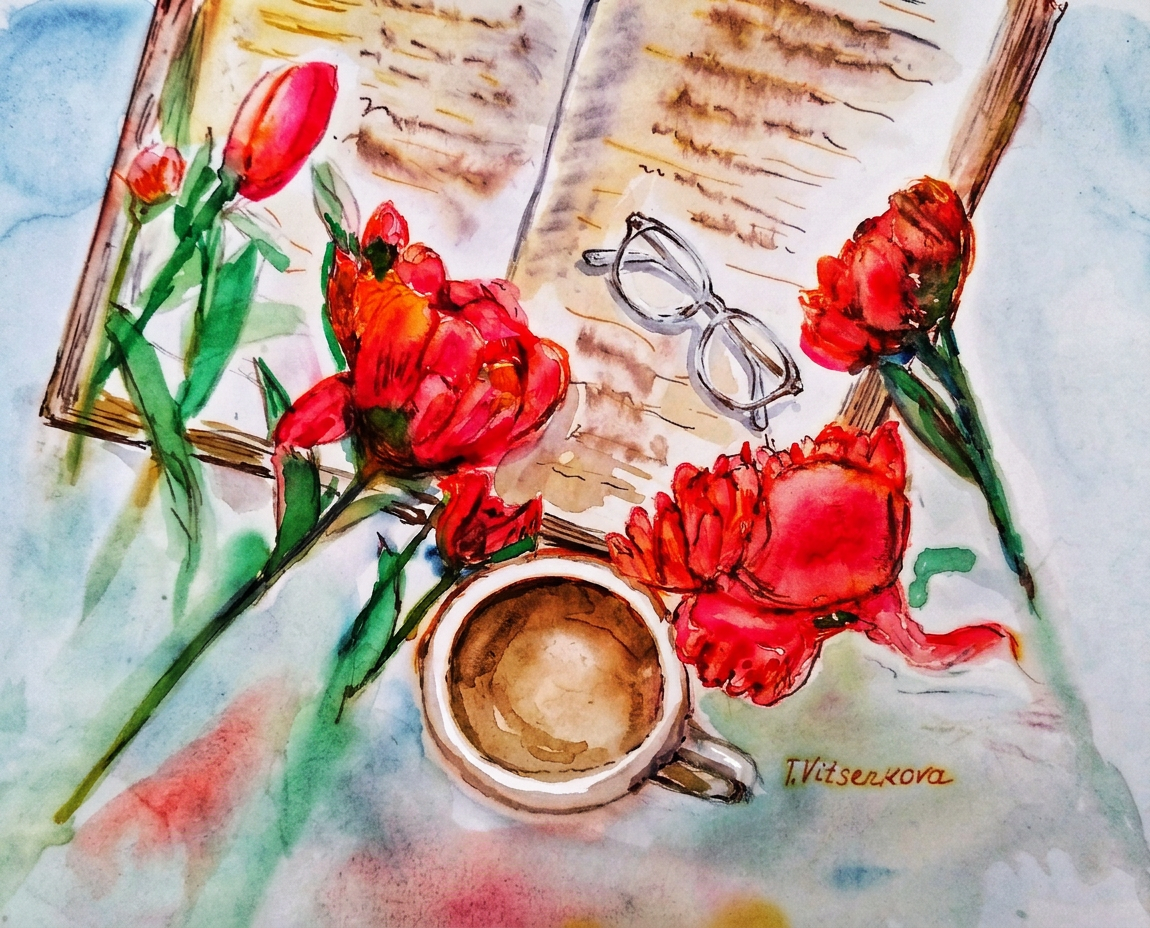
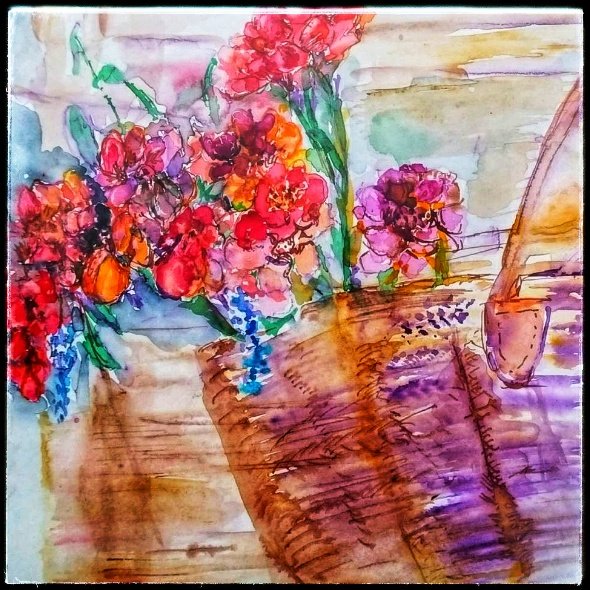
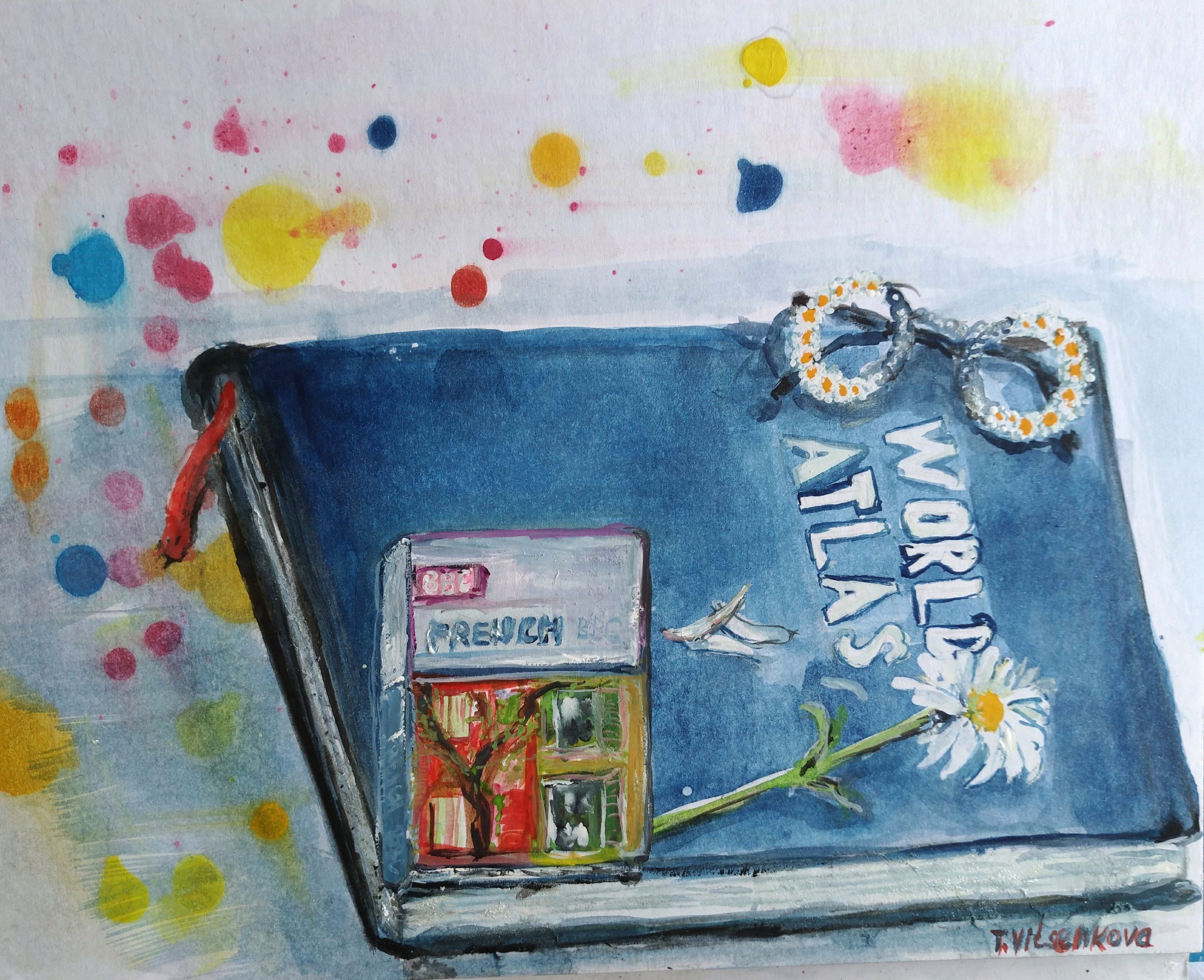
My still life muse? Bright reddish peonies, obviously. I arranged them artfully on my treasured Leonardo da Vinci book, added my glasses (for the intellectual look), threw in a cup of cappuccino (for the vibes), and created what I can only describe as a masterpiece of self-indulgence. Voilà! Another watercolor and ink painting in my beloved impressionist style was born.
Watercolor fantasy. Cappuccino and red peonies and a book
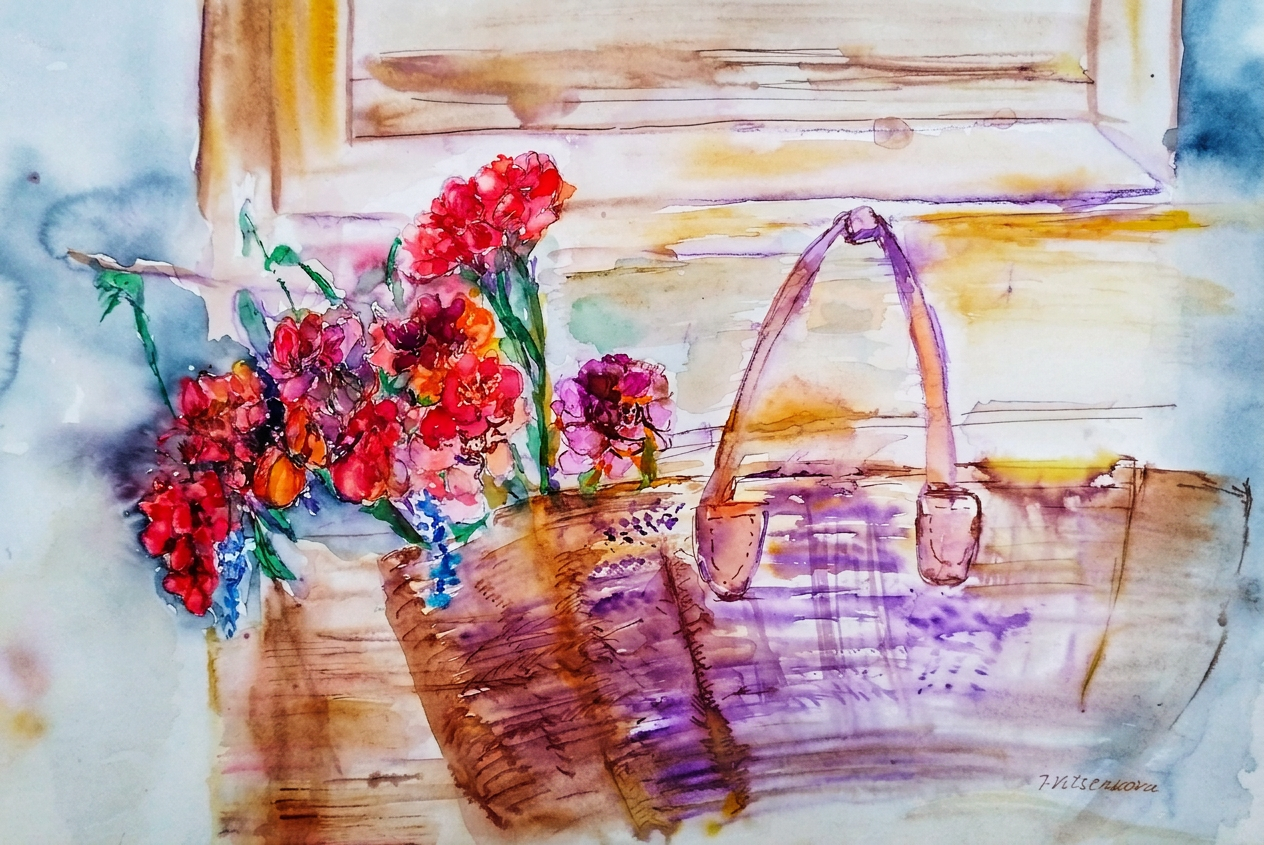
Just imagine it: a warm Mediterranean evening, you’re wandering charming cobblestone streets, and voila—red and pink peonies spill from a straw basket on some picturesque wood door or window. That’s watercolor and ink, my friend. That’s impressionism at its finest. That’s also my elaborate fantasy about our future travels to southern France, Italy, or possibly Greece (I’m not picky when it comes to vacation dreams). Who knows where wanderlust will take us? :)
Summer flower fantasy.
Shout-out to my daughter for the phenomenal gift: Leonardo’s Notebook. This book is basically the gift that keeps on giving—centuries-old wisdom from a guy who was basically good at everything. It’s like having a Renaissance master constantly looking over your shoulder with 500-year-old advice. Terrifying and inspiring in equal measure.
Bon voyage! Until the next adventure awaits! Stay healthy and hydrated (your skin will thank you when you’re sketching in the Mediterranean sun).
All paintings belong to the author. Seriously, don’t copy them. I mean it. My lawyer says I have to say that. Just go make your own masterpiece!
Tools used for my painting: Watercolors by Charvin and Van Gogh (because apparently only the best will do for this artist’s delusions). Pastels by GrayPas Expressionist (the feisty cousin of regular pastels). Derwent watercolor pencils and Faber Castell artist pens (because one type of pen is never enough). Paper: Strathmore Watercolor and Mixed Media albums in that perfect 15×20 cm (6×8 inch) size—not too big, not too small, just right for my control-freak tendencies.
Still life and urban sketching — basically me trying to make inanimate objects and city blocks look more interesting than they actually are.
Yes, I carried my sketchbook here. No, I don’t regret it.
Barcelona has an indescribably magical atmosphere of a unique and endlessly creative city — you know, the kind of place that makes you wonder how it got so cool without trying. From Antonio Gaudí’s legendary masterpieces (that defy normal architectural rules) to today’s innovative artists still riding that creative wave, Barcelona basically wrote the book on how to be fabulous.
Barcelona said ‘be inspired.’ I said ‘hold my paintbrush.’
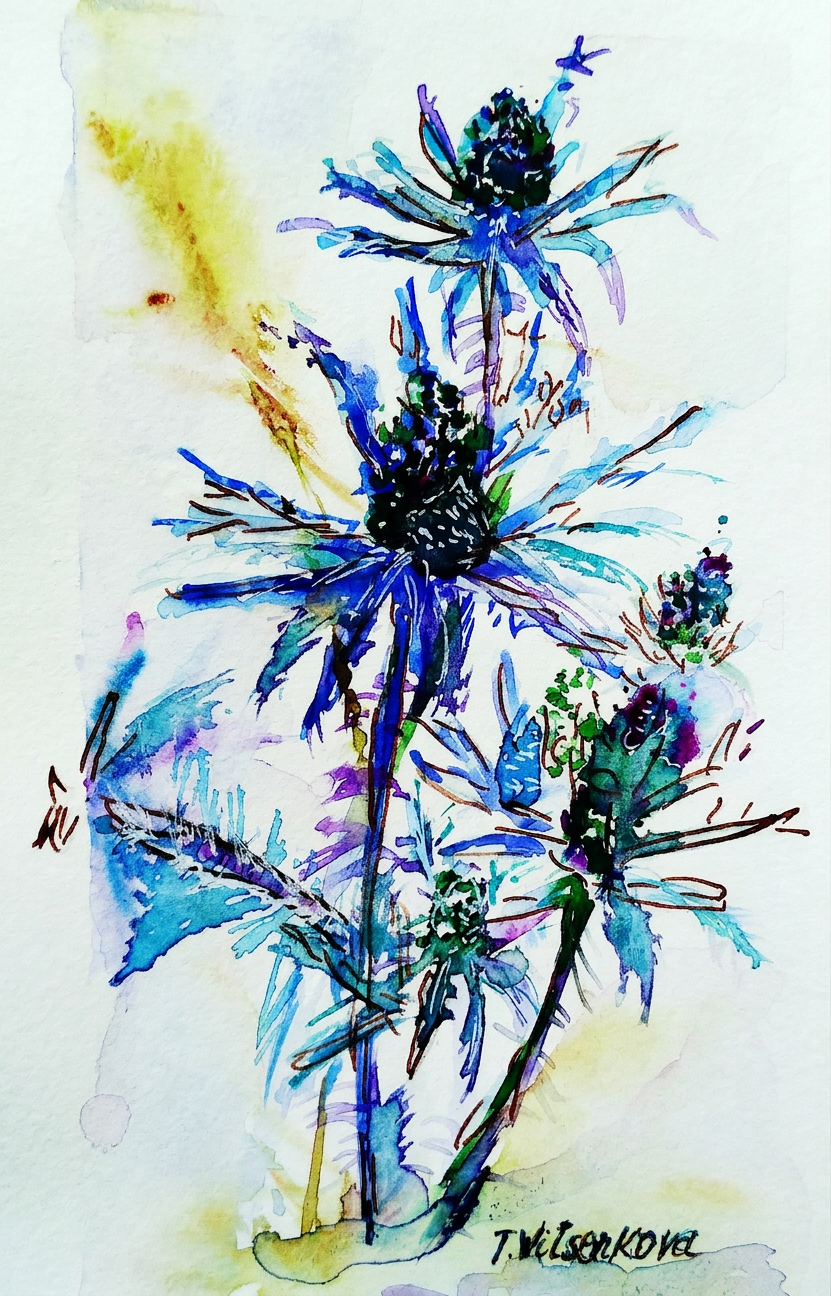
I’m continuing my flowers&cities series, and this time I’m obsessed with the blue thistle. Why Barcelona? Well, according to my imaginary painting logic, it matches perfectly! This post features some gloriously bright blue cultured thistles that will either inspire your next Mediterranean adventure or at least make you wonder why anyone bothers with ordinary purple flowers.
This thistle’s color palette? It’s got depth-of-sea blues, some moody olive tones, sprinkles of raspberry, and pineapple-y yellow hues — basically the Barcelona version of Casa Milà in flower form. You know, Gaudí’s stunning modern architectural masterpiece that looks like it melted in the sun and decided to stick around anyway.
Thistle: 1. My colour mixing skills: nervous.
Behold: another thistle! This one’s sporting petals of lilac and turquoise — colors that somehow perfectly capture Barcelona’s old historical centre, Ciutat Vella, with its Gothic Quarter that screams “Look how old and charming I am!” in the most photogenic way possible.
Gothic Quarter energy in flower form. Très dramatic.
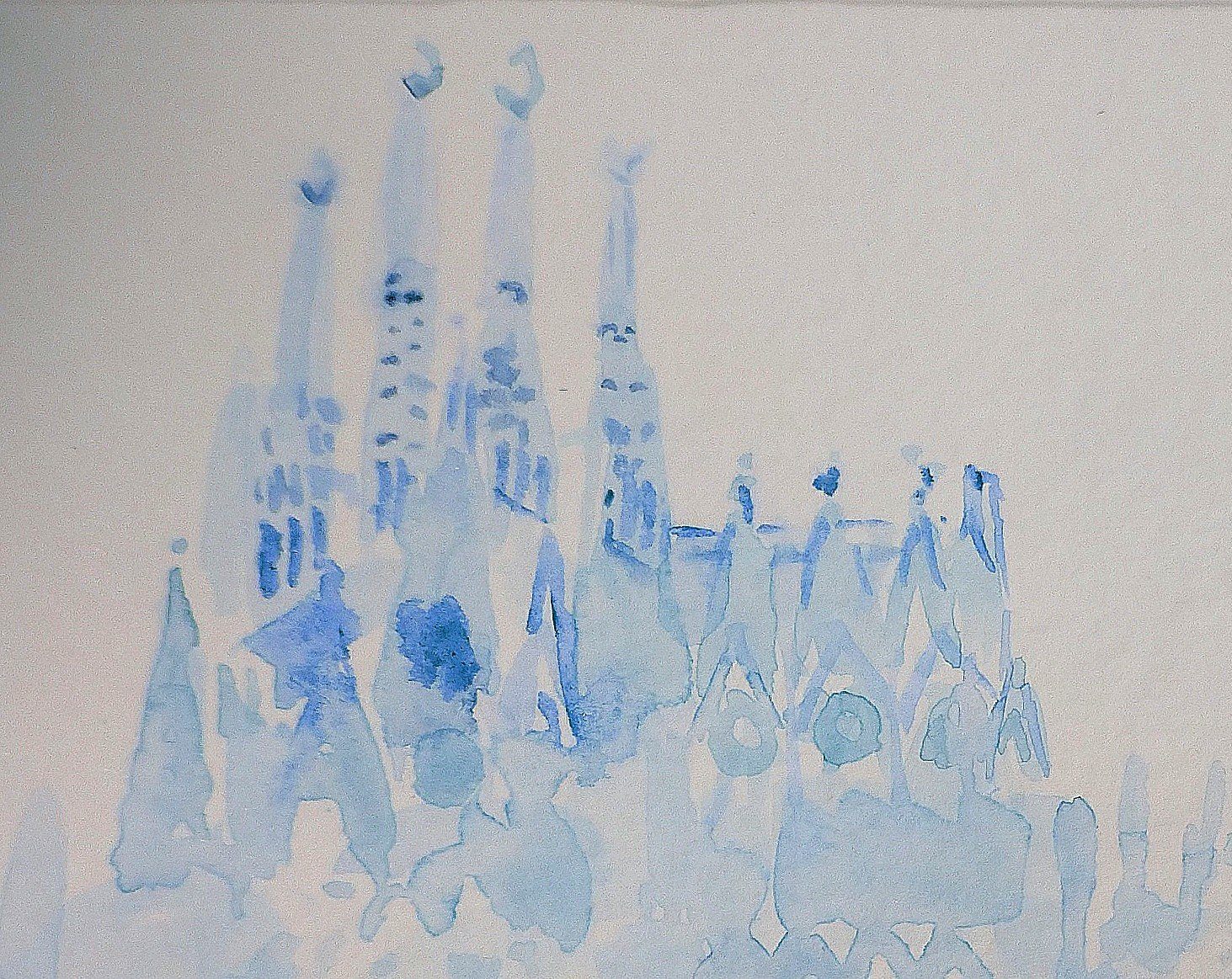
Meet another thistle, this time decked out in azur and silver petals. In my professional artistic opinion (which I made up), this one represents Barcelona’s most Instagram-famous resident: La Sagrada Familia. I’m pretty sure Gaudí would have approved of my choice, or at least not sued me for it. :)
Gaudí approved. Probably. He was busy.
And here comes thistle number four (I’ve lost count) with colors of raisins, figs, and blue sea tones — basically screaming “I’m La Rambla!” at you through its petals. You know, that famous pedestrian walkway known for its historical architecture and the mild chaos of street performers who may or may not be actual statues.
La Rambla thistle. Watch out for the mimes.
This thistle’s rocking a combination of rose-salmon and pale-brown petals — tender, bright, and way more coordinated than your average wildflower. Question: Do you prefer “Barcelona” by the legendary Freddie Mercury, or perhaps the lovely “Barcelona” by Giulia y Los Tellarini from the movie “Vicky Cristina Barcelona”? Because this flower apparently has a soundtrack.
This one came with a Freddie Mercury soundtrack in my head.
Let’s talk about Antonio Gaudí y Cornet for a second — the man who literally devoted his entire existence to Barcelona and transformed it into the architectural wonderland we know today. He’s basically referred to as “genius loci” (fancy for “the genius of the place”), which is a lot of pressure but also kind of accurate. He shaped not just the look but the very soul of the city. No big deal.
All paintings belong to the author. Seriously, don’t copy them without permission. I mean it. No image theft, please.
Bon voyage! Until the next travel adventure :) Now go forth and stay healthy, you magnificent human.
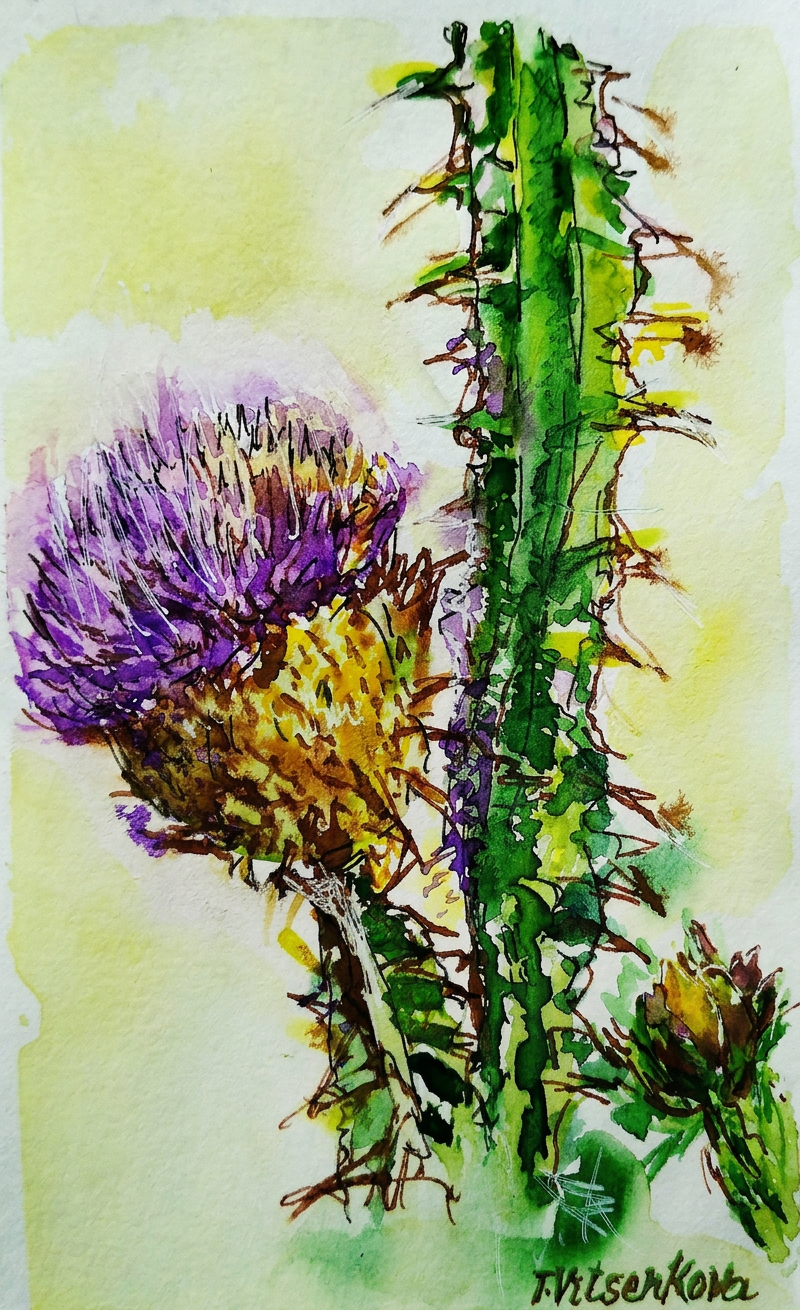
Still life and urban sketching (with extra thorns)
The spiky diva herself. Don’t touch.
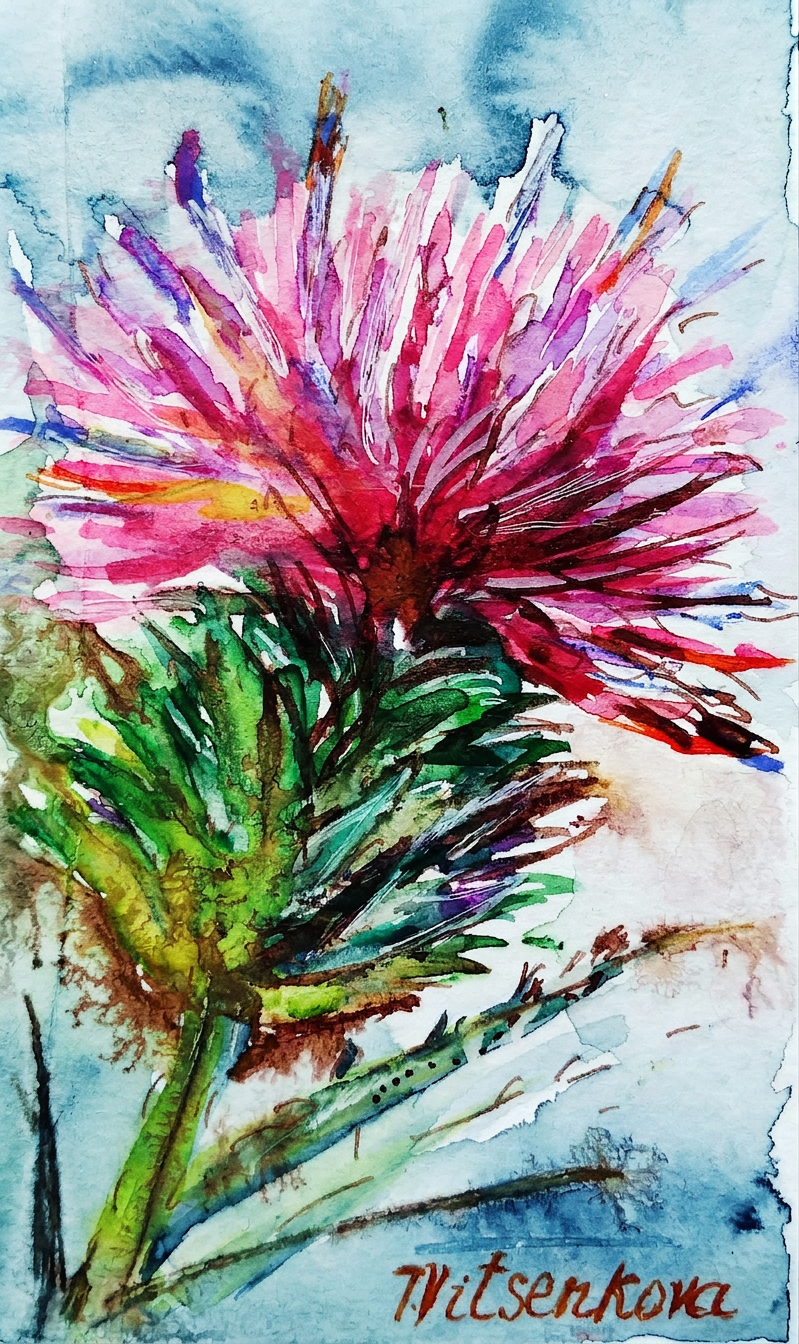
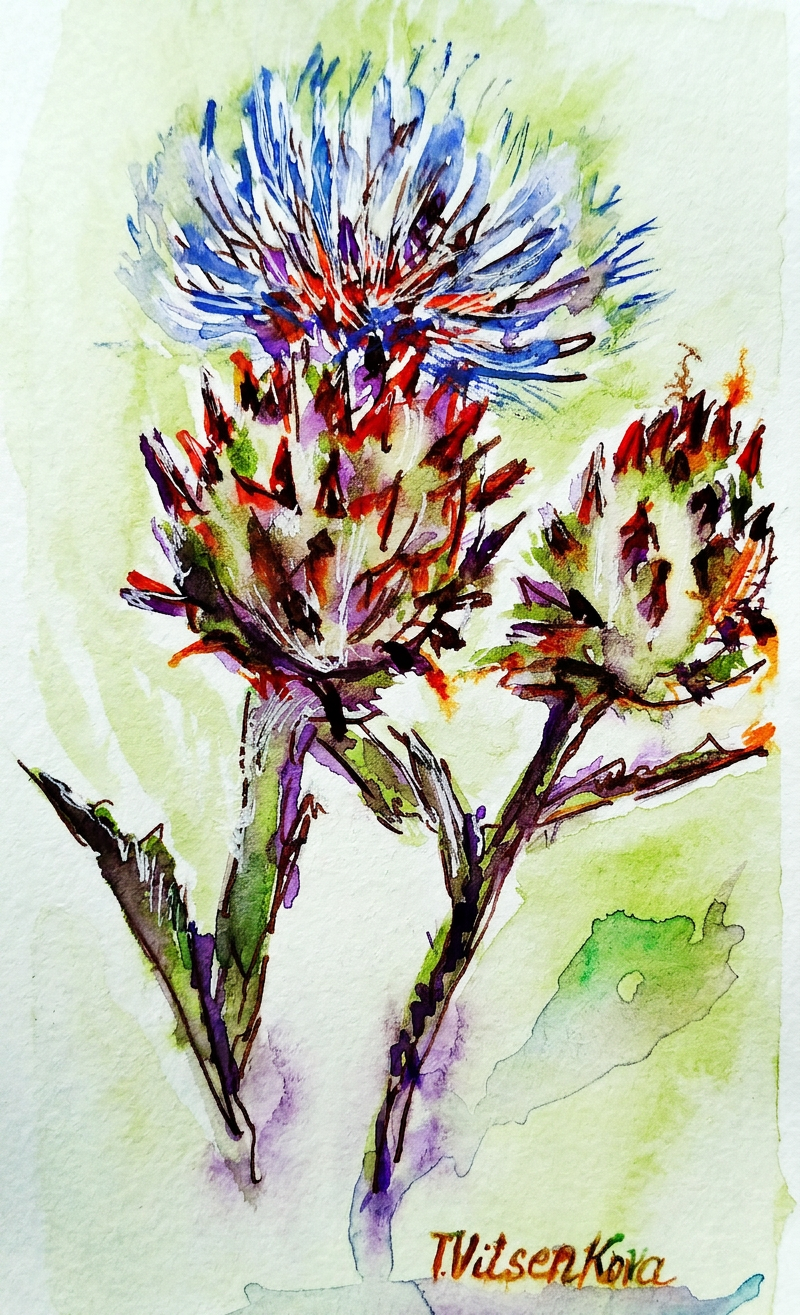
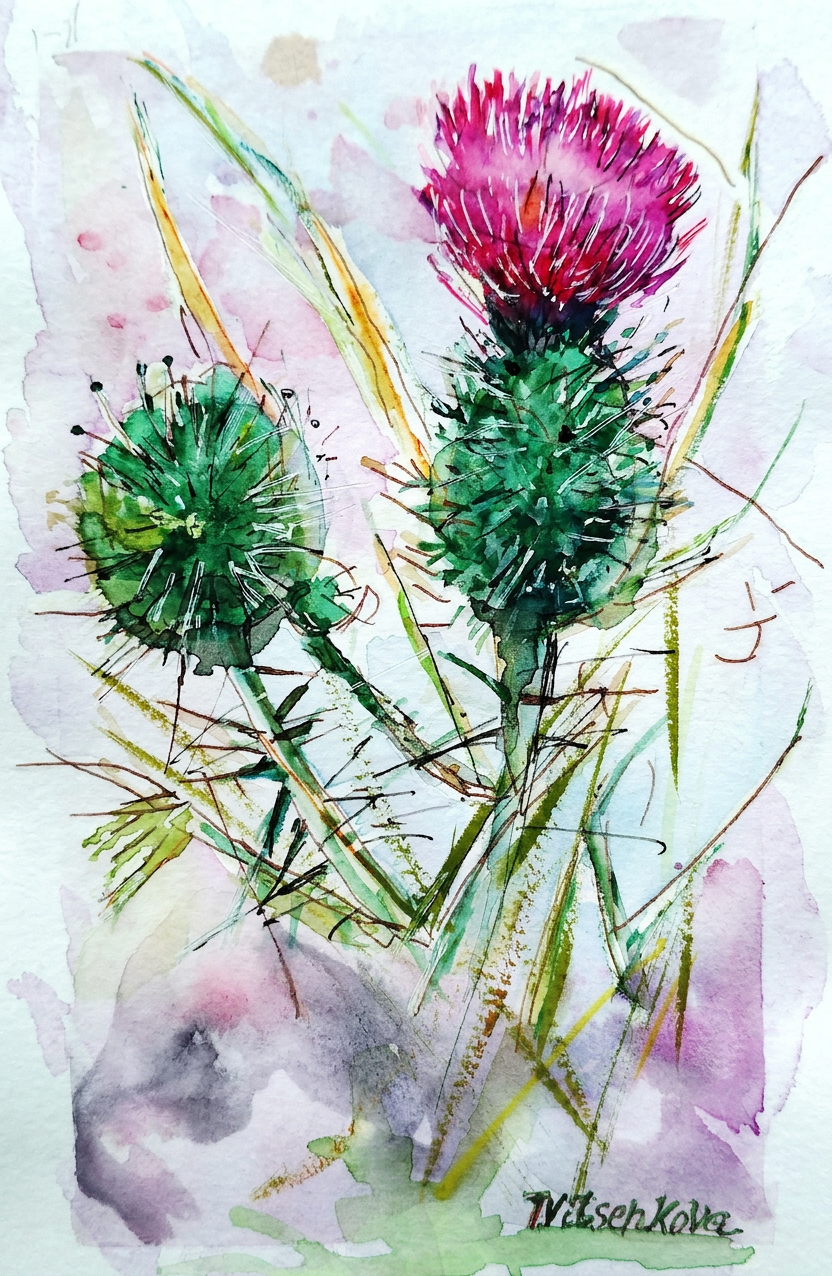
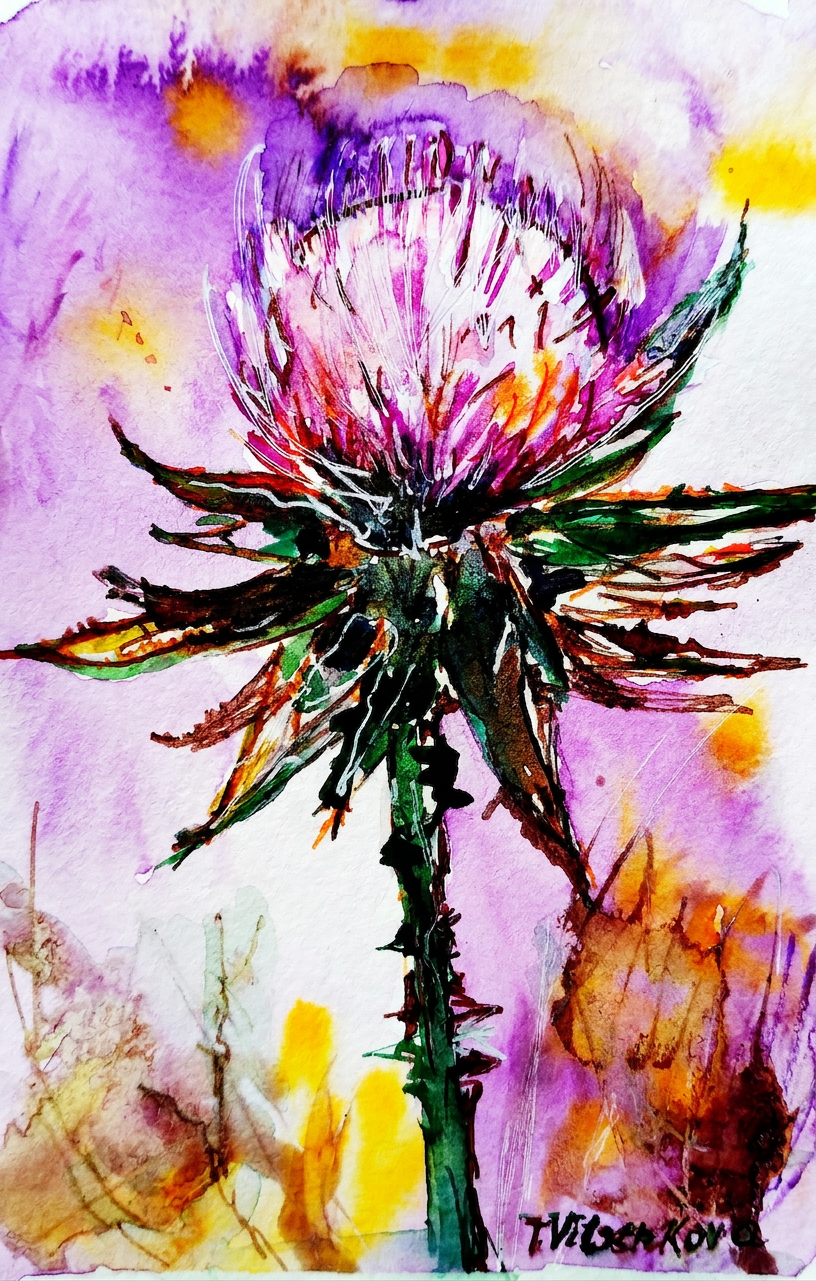
My sister asked me to paint a thistle flower that captures its personality: character, strength, inflexibility, firmness, and an almost aggressive refusal to die under any circumstances. Basically, the Rambo of the flower kingdom. Challenge accepted! I created an entire series of these botanical warriors that thrive everywhere and survive conditions that would make other flowers quit their jobs and move to Arizona.
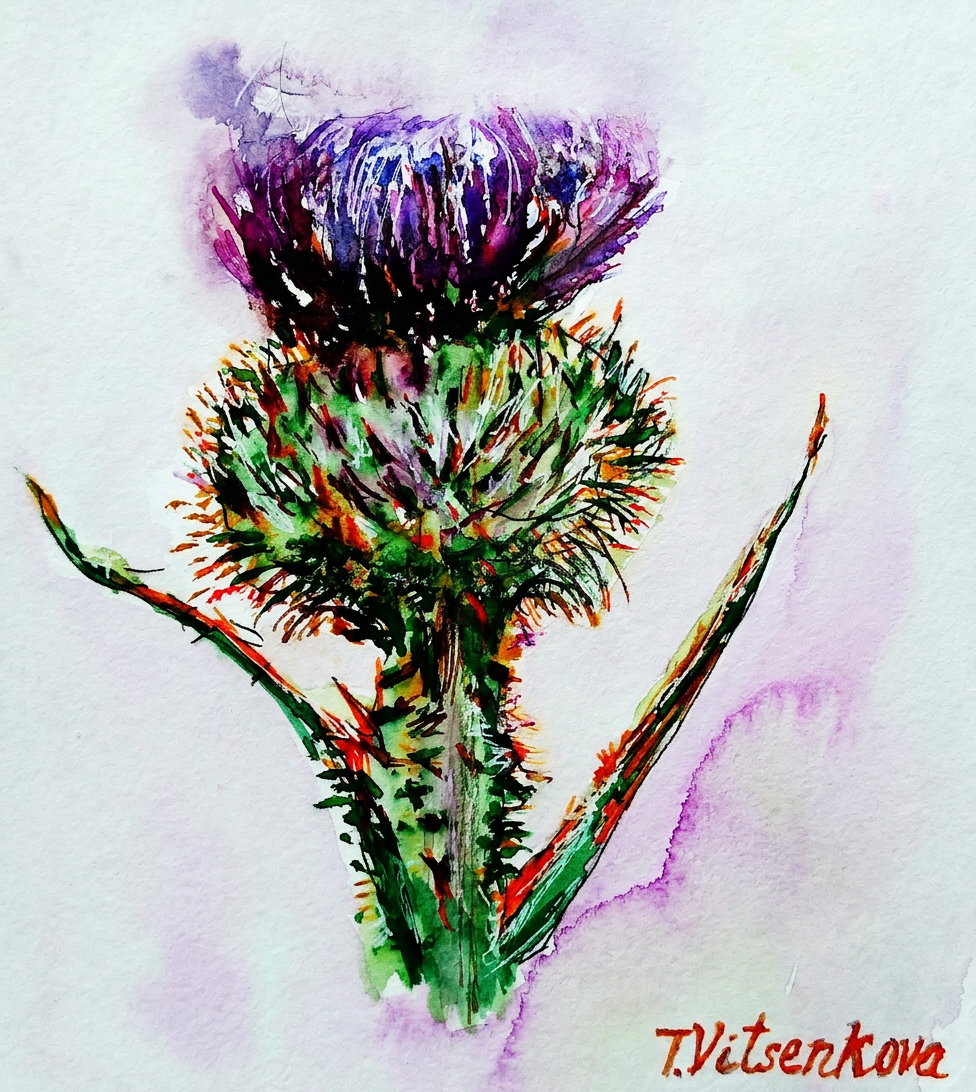
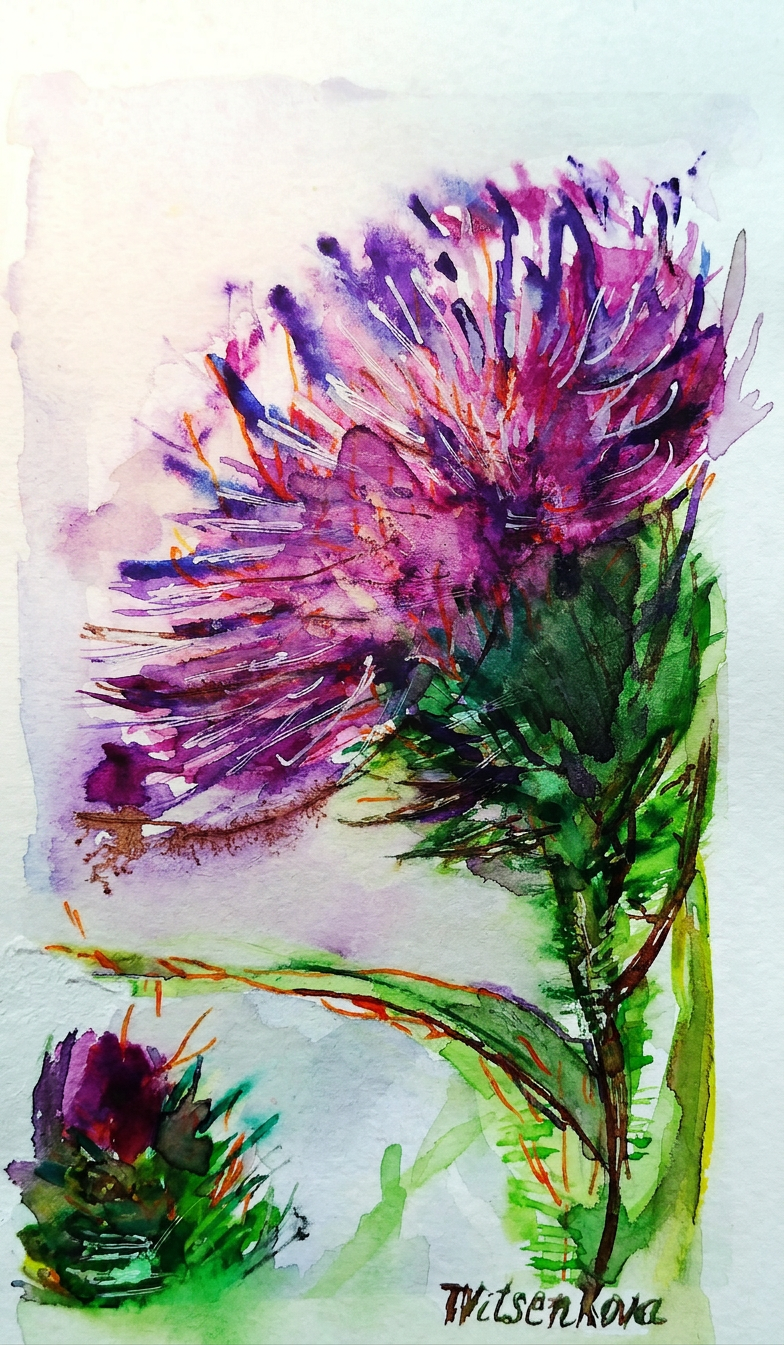
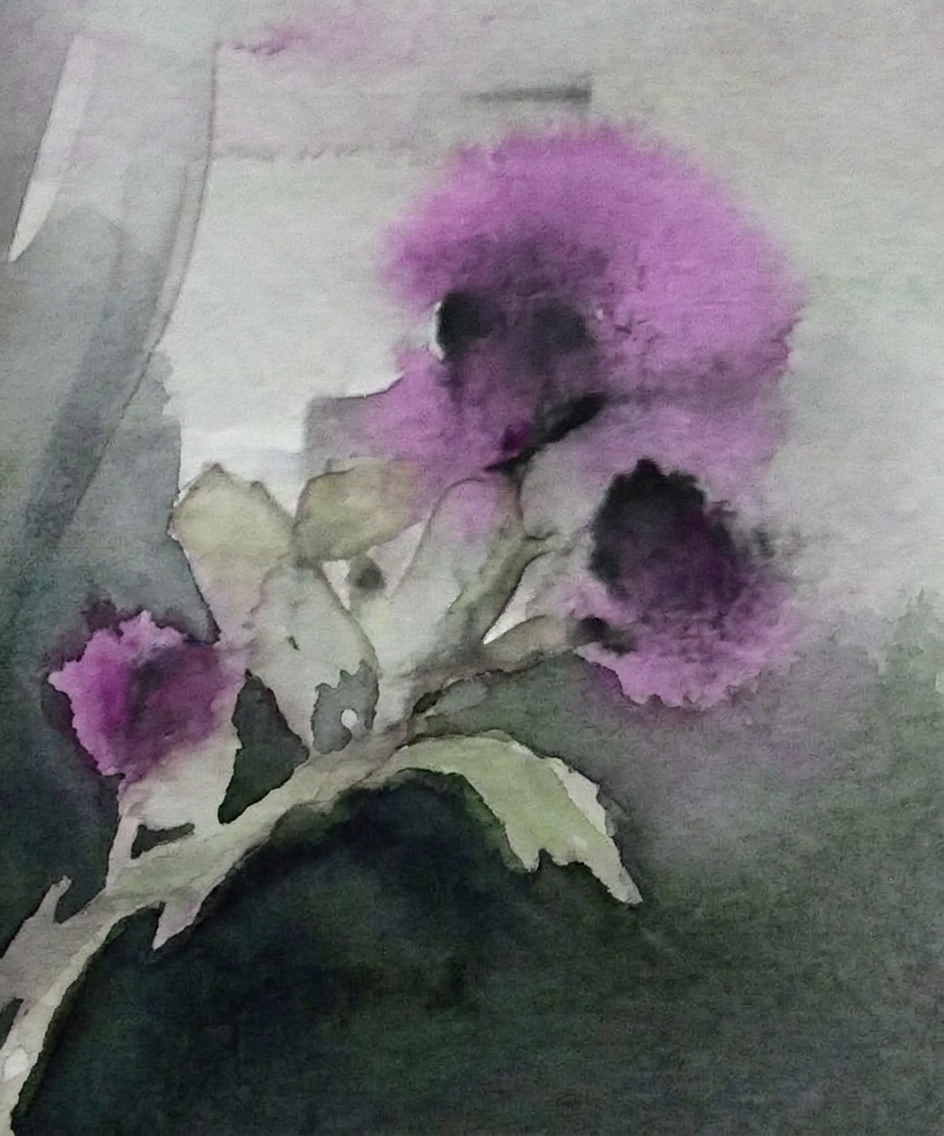
Behold: one of my first watercolor flower graphics with ink—a masterpiece created when I was still discovering my artistic voice. I wielded cooler purple and dark violet like a tiny ninja, with strategic additions of carrot orange and silver gray. (Translation: I threw colors at paper and it worked.)
Purple and orange? She woke up and chose violence.
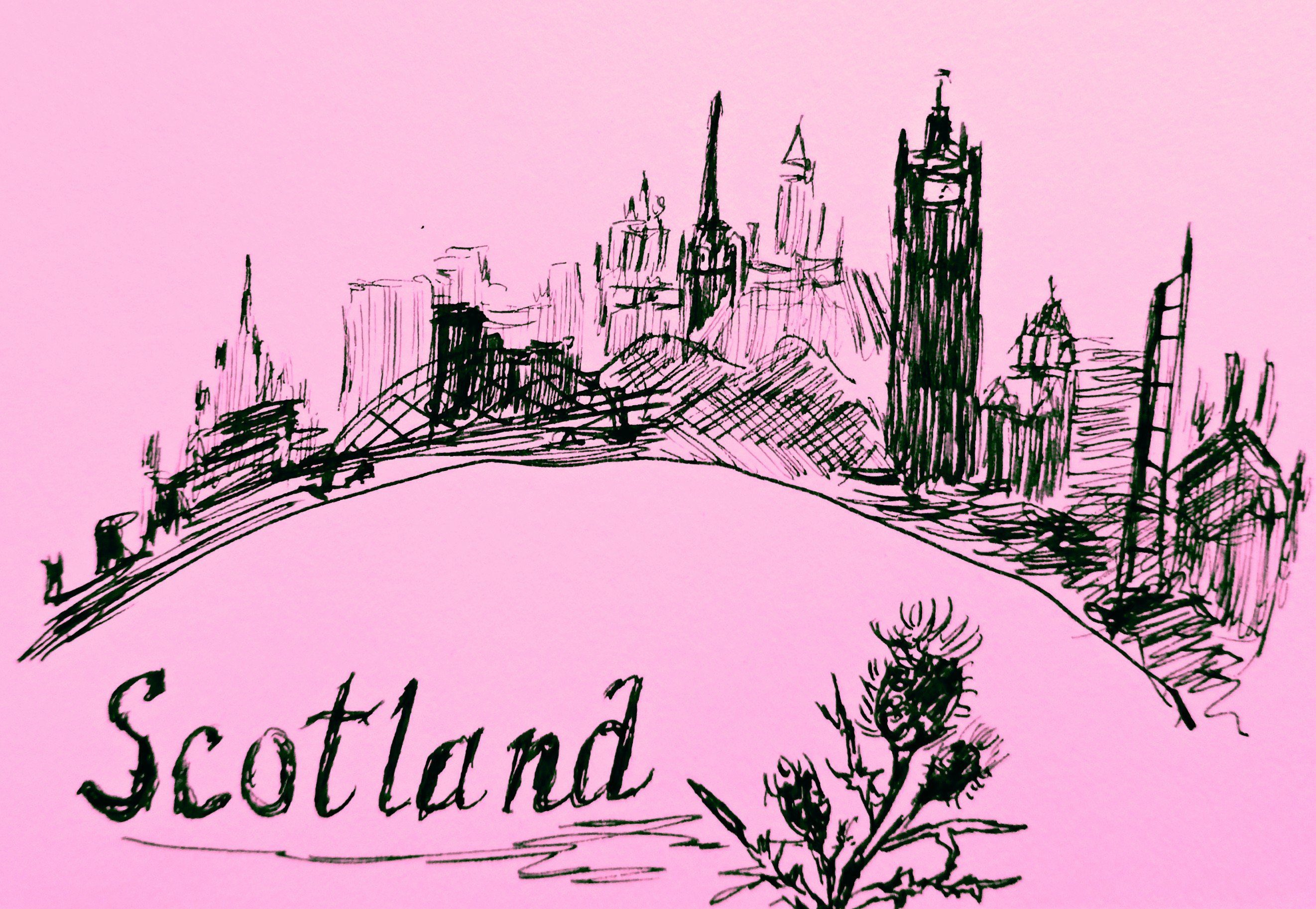
The thistle is credited with possessing the magical ability to ward off evil spirits. So basically, it’s the flower equivalent of garlic and a cross combined. Vampires and demons should be very, very worried.
Now here’s where it gets spicy: The thistle has been Scotland’s symbol since the 13th century. Legend has it that some ambitious army decided to invade Scotland by launching a surprise night raid. Tactical genius, right? Wrong. In their infinite wisdom, the invaders removed their shoes to move stealthily through the darkness. Spoiler alert: their stealth plan came to an abrupt end when one unfortunate soldier stepped barefoot on a thistle. The resulting shriek? Loud enough to wake the sleeping Scottish soldiers, who then proceeded to win the day. And THAT, my friends, is how a tiny spiky flower saved an entire nation. You’re welcome, Scotland!
Scotland’s unsung hero. Barefoot invaders not included.
The thistle is the official emblem of the Knights of the Order of the Thistle—a group of people who basically said, “You know what this order needs? A flower that actively hurts people.” Their motto? The Latin phrase Nemo me impune lacessit, which means “No one will touch me with impunity.” (Translation: This flower has zero chill.)
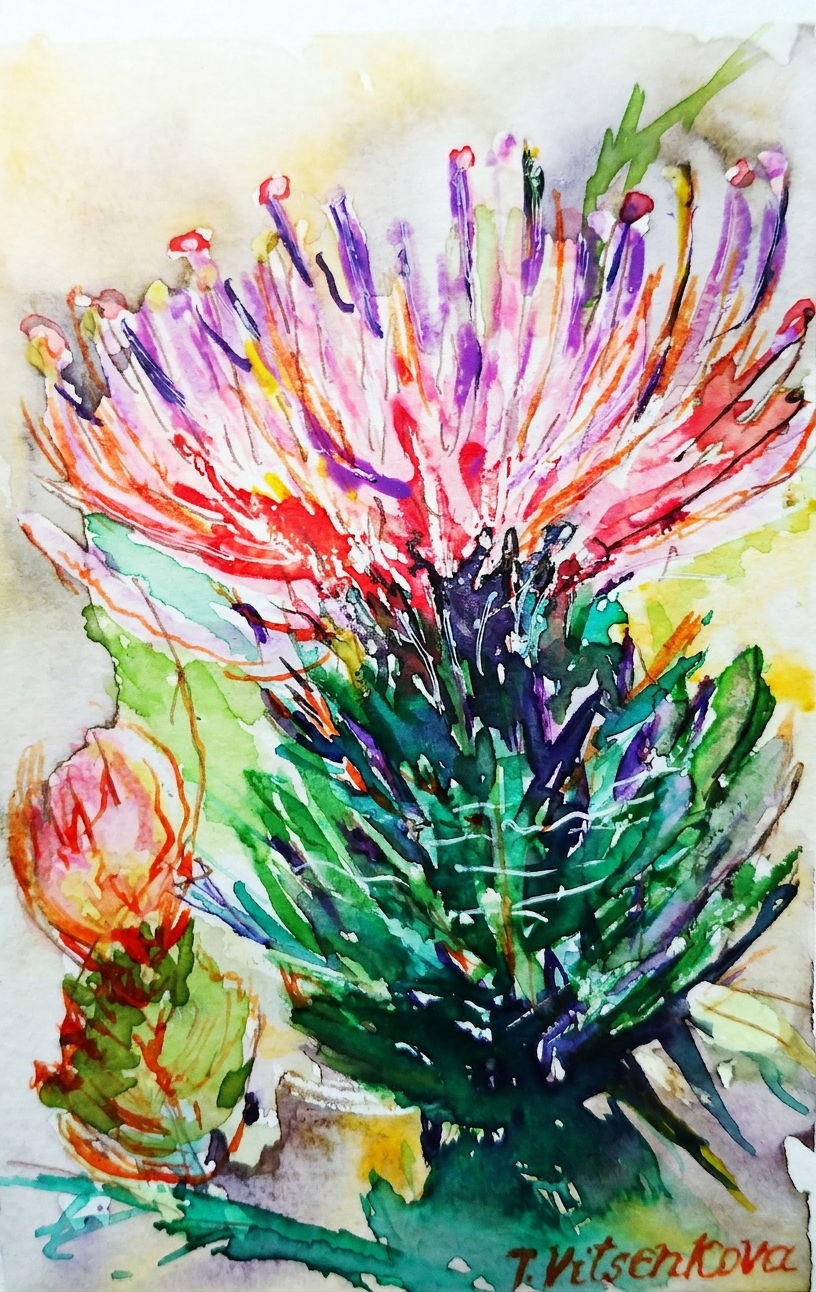
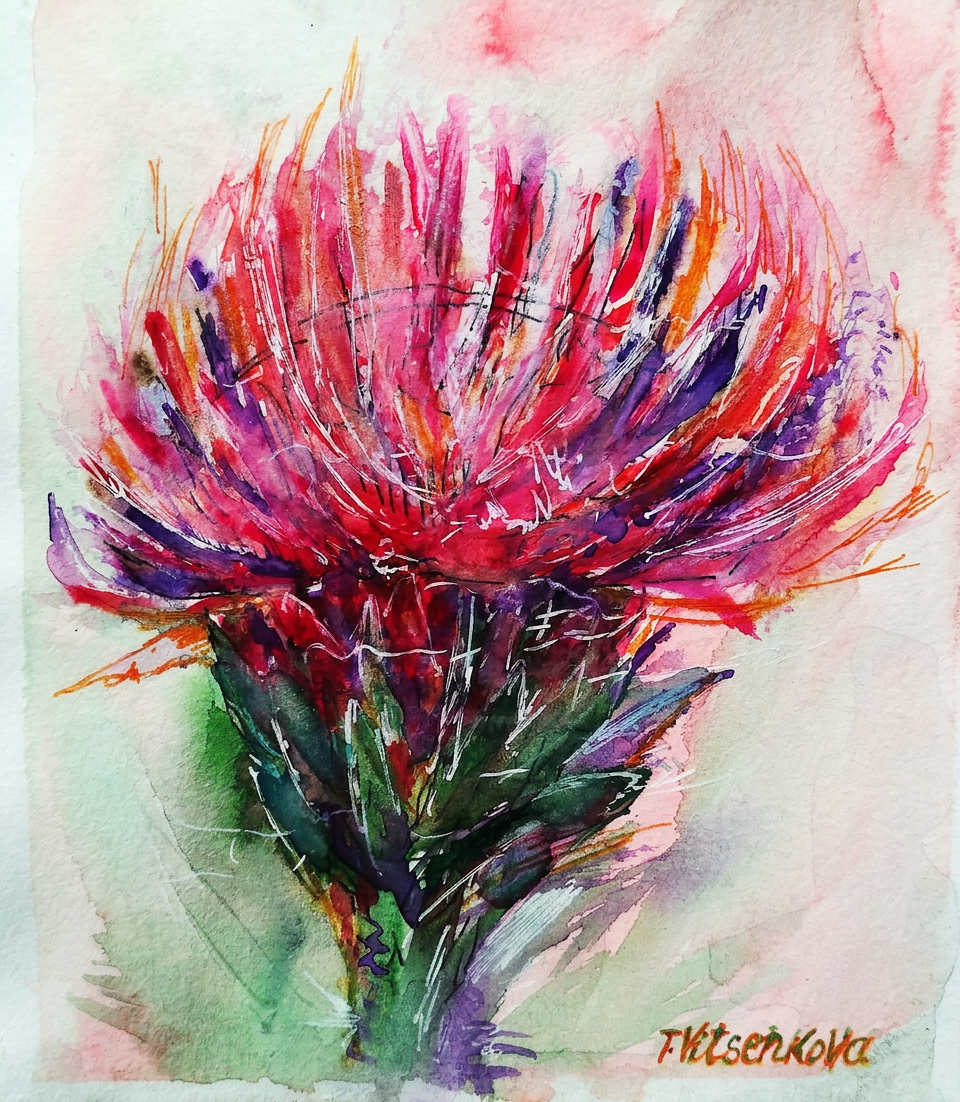
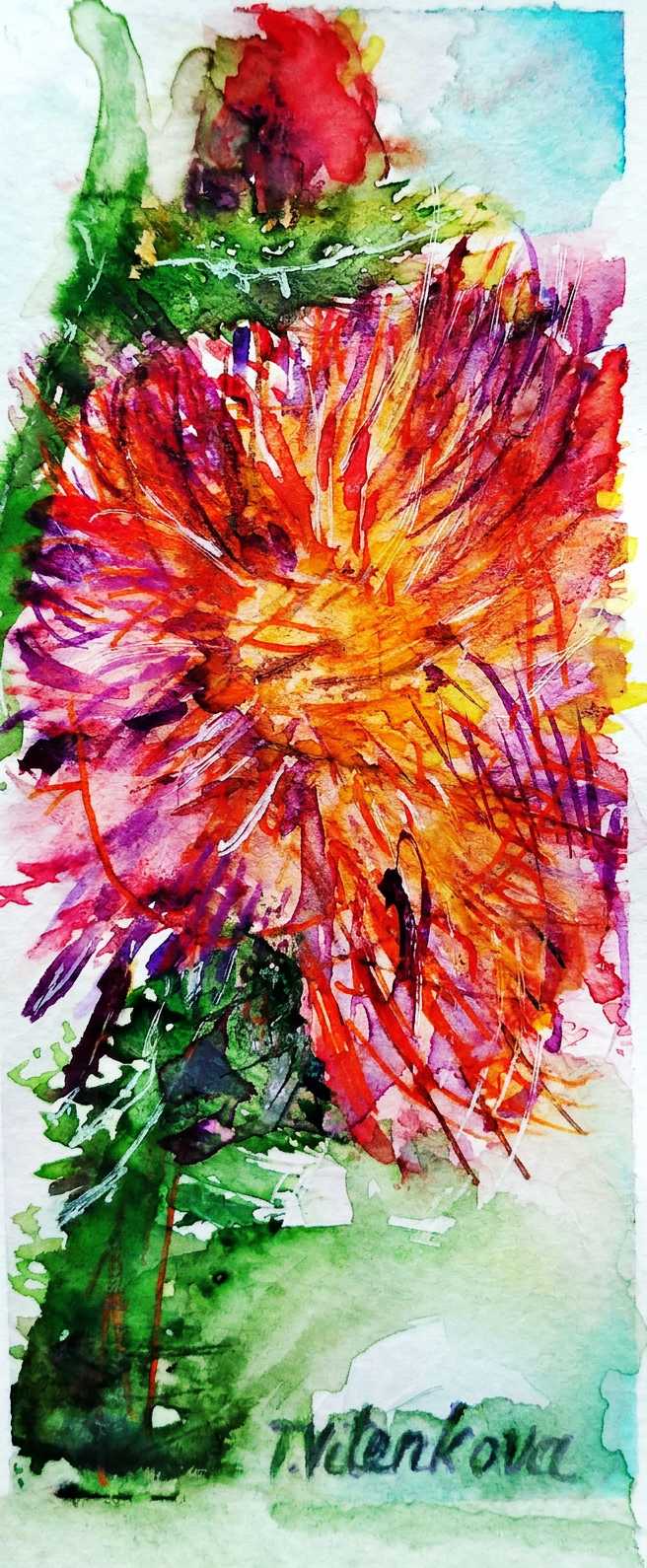
Thistle wildflower watercolor graphic alert! With ink, because subtlety is overrated. I mixed colors like I was a culinary artist: pink, milky blue opal, saffron latte, and neon colors for extra pizzazz. If your thistle painting doesn’t make people’s eyeballs tingle, are you even trying?
Pink, neon, and zero regrets.
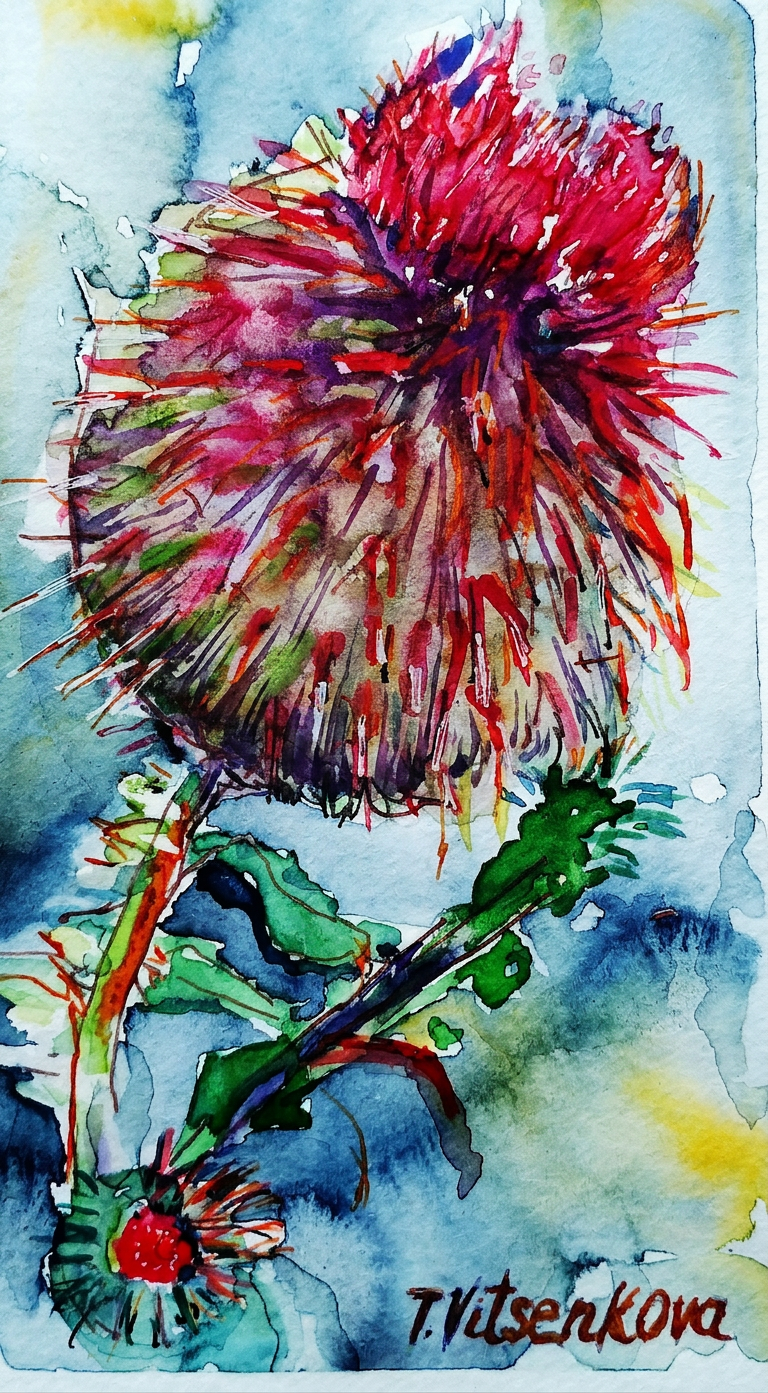
I’m absolutely obsessed with pink thistles and their refreshingly simple color palette. A splash of plum color, some pistachio background, and boom—you’ve got botanical happiness on paper. It’s like painting flower versions of minimalist interior design.
Minimalist thistle. Maximum attitude.
Thistle watercolor wildflower painting featuring petals the color of blueberries and purple grapes. Translation: I made fruit jealous by using their colors on a flower. The audacity!
Blueberry vibes. Not edible. Learned that the hard way.
Watercolor flowers graphic extravaganza! With ink, because apparently I can’t help myself. Colors used: strawberry petals (obviously), light khaki, and a shade of flax background that somehow made the whole thing work. Art is chaos. Beautiful, intentional chaos.
Strawberry fields forever — but make it thorny.
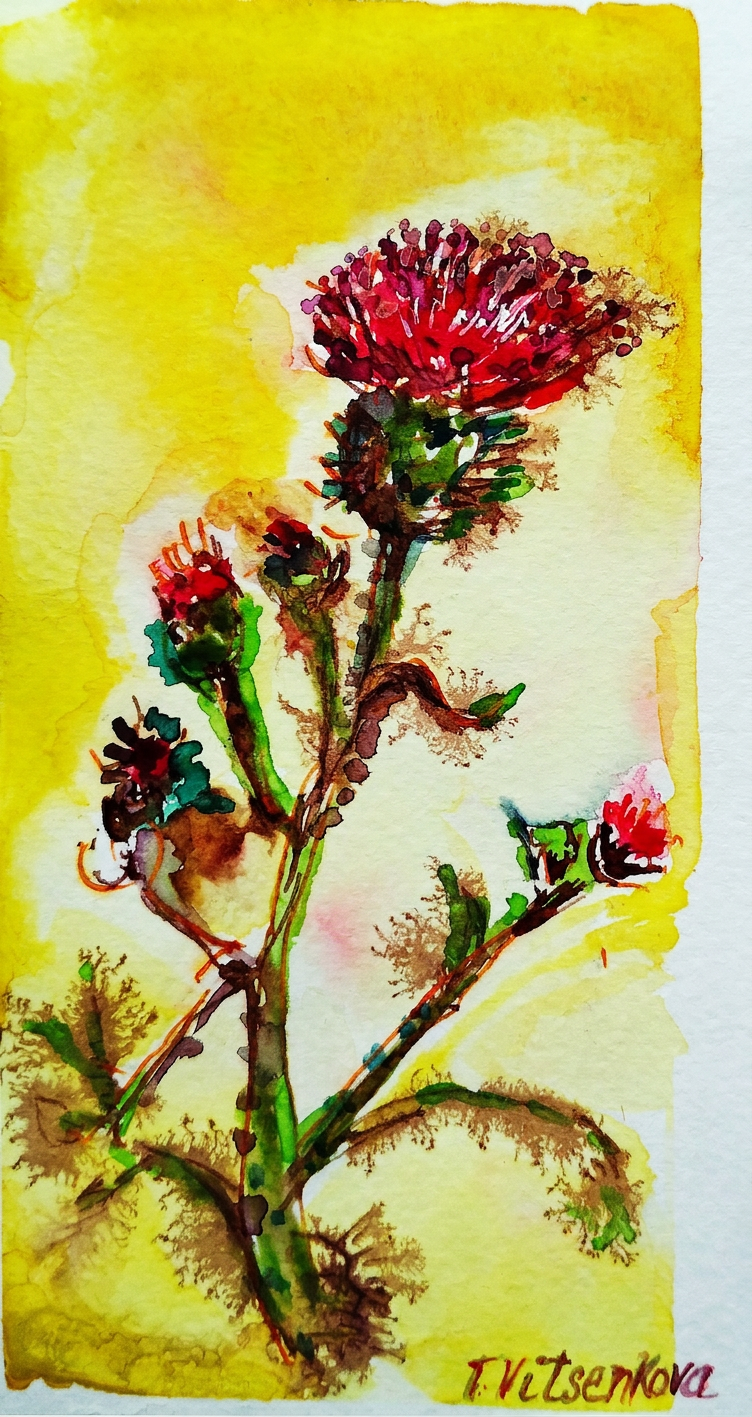
Plot twist: Some thistles come in caramel and turmeric colors. Because apparently thistle diversity includes the entire spice rack.
Caramel and turmeric. The spice rack called, it wants its colors back.
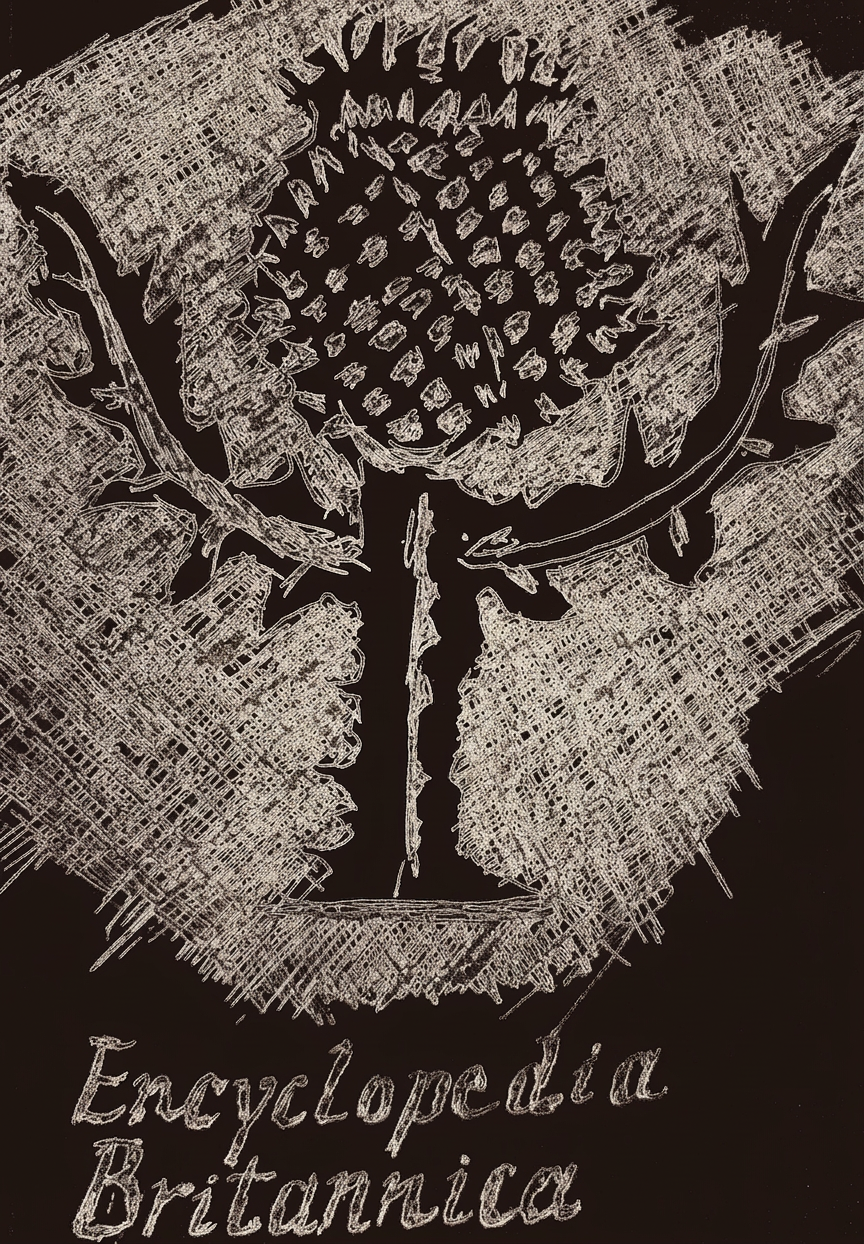
Here’s the thing about pink thistles: they’re the most popular thistle color, which is why I gathered all my pink watercolor paintings in my first post about this fabulous flower (complete with Scotland’s legendary defense narrative). And now, hold onto your berets: a thistle is not just the floral emblem of Scotland AND Lorraine—it’s ALSO the emblem of the Encyclopedia Britannica. That’s right, thistles are basically the overachievers of the plant world. They didn’t just stop at one honor. They went for three.
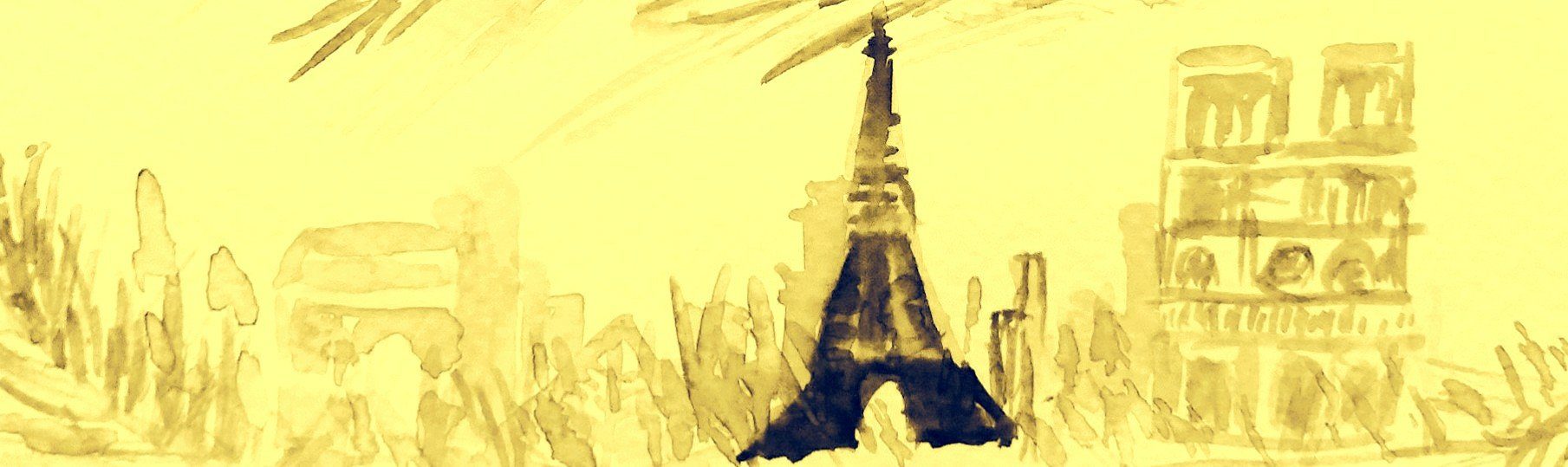
Still life and urban sketching — or as I like to call it, “procrastinating at tourist attractions with a sketchpad.”
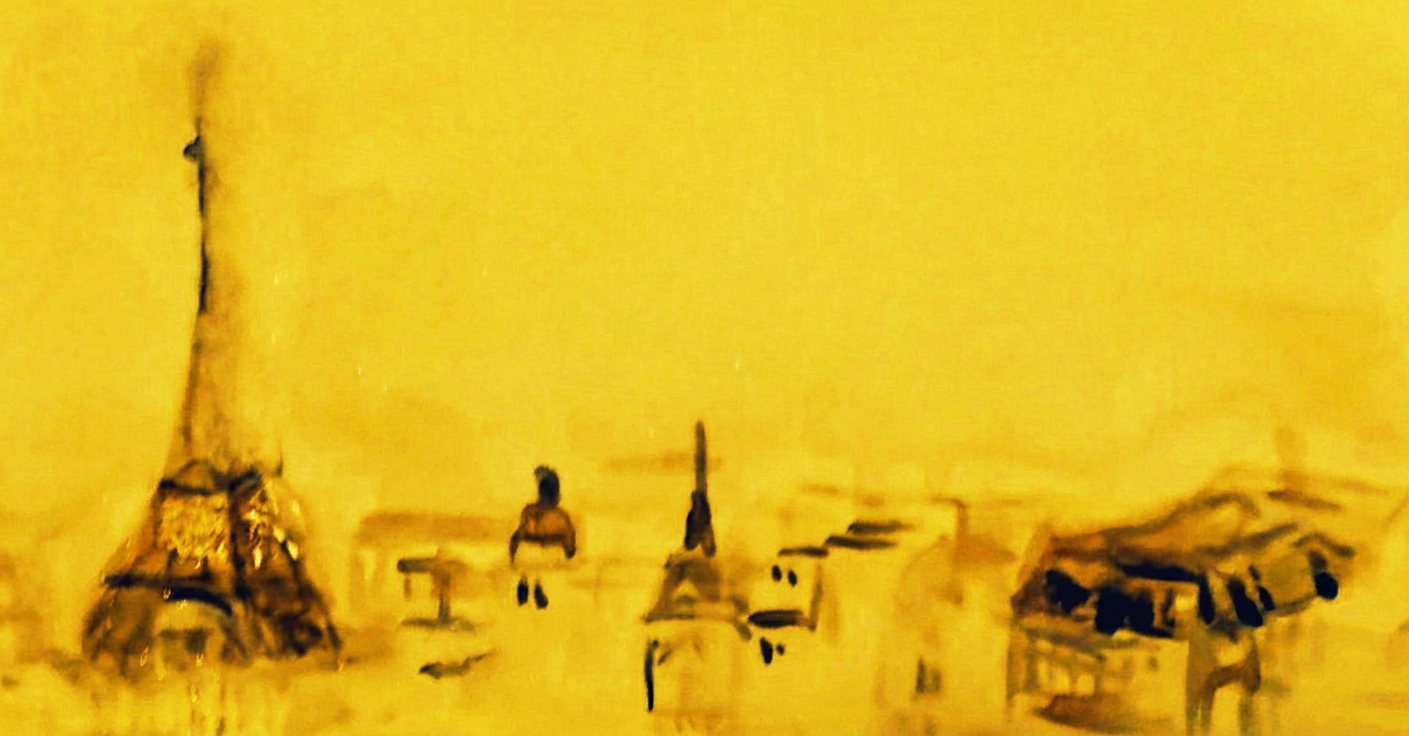
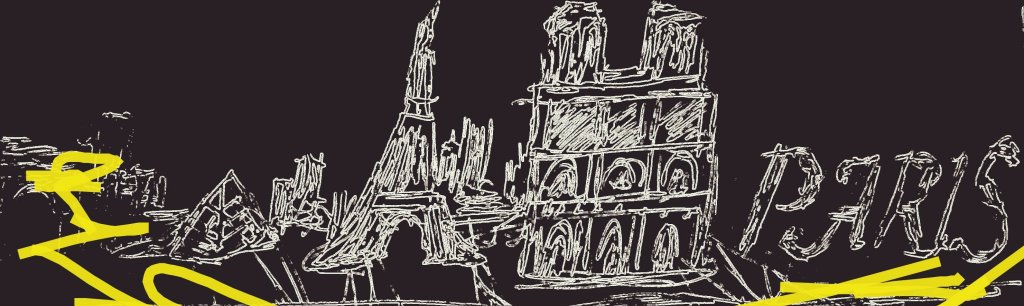
Paris. The city of love, croissants, and inexplicably rude pigeons. Here’s the thing about Paris that nobody tells you: you don’t actually need to leave your hotel room to find beauty and inspiration. Just open the window and look around — you’ll find architecture that makes your apartment back home look like a cardboard box, monuments that have been standing longer than your entire family lineage, street names that sound like songs, memorial plaques commemorating people who actually did important things (unlike me, who’s mainly known for eating an entire wheel of Camembert while crying about climate change), restaurant signs in fonts that would make a graphic designer weep with envy, and murals that prove even walls have more artistic talent than most of us. Seriously, there’s something uniquely extraordinary to discover at every street corner. Paris doesn’t just hand you beauty — it ambushes you with it when you’re least expecting it, usually right after you’ve accidentally stepped in a puddle.
Paris: where even the streets are judging your outfit.
Do you ever think about cities as flowers? Or as colors? No? Just me? Cool, cool.
Thistle. A delightfully thorny wildflower featuring a magnificent display of eggplant and gold petals — nature’s way of saying, “I’m fancy and dangerous.” If the Luxembourg Gardens had a personality, this would be it. I’m convinced these flowers applied to art school and were accepted on their first try.
Thistle #1 — eggplant and gold. Fancy enough for the Luxembourg Gardens, too spiky for a hug.
Thistle, take two. This particular specimen features sunny petals in the colors of pumpkin, orange, and beetroot — basically, if fall and autumn had a very colorful, very spiky baby. Yummy, right? (I mean, I wouldn’t recommend eating it. Paris is basically the thistle of cities — beautiful, elegant, and ready to stab you if you’re not paying attention (both literally, with its spiky architecture, and figuratively, with its devastating charm).
Thistle #2 — pumpkin and beetroot. Autumn had a baby and it’s delicious (don’t eat it).
Thistle, round three (I promise this is getting somewhere). This wildflower rocks petals in canary yellow, spicy red, and burgundy — a color palette so sophisticated it makes the Pantone Institute nervous. It immediately evokes the Opera Garnier, one of the most aggressively elegant buildings in all of Paris.
Thistle #3 — canary yellow and burgundy. Opera Garnier called, it wants its colour palette back.
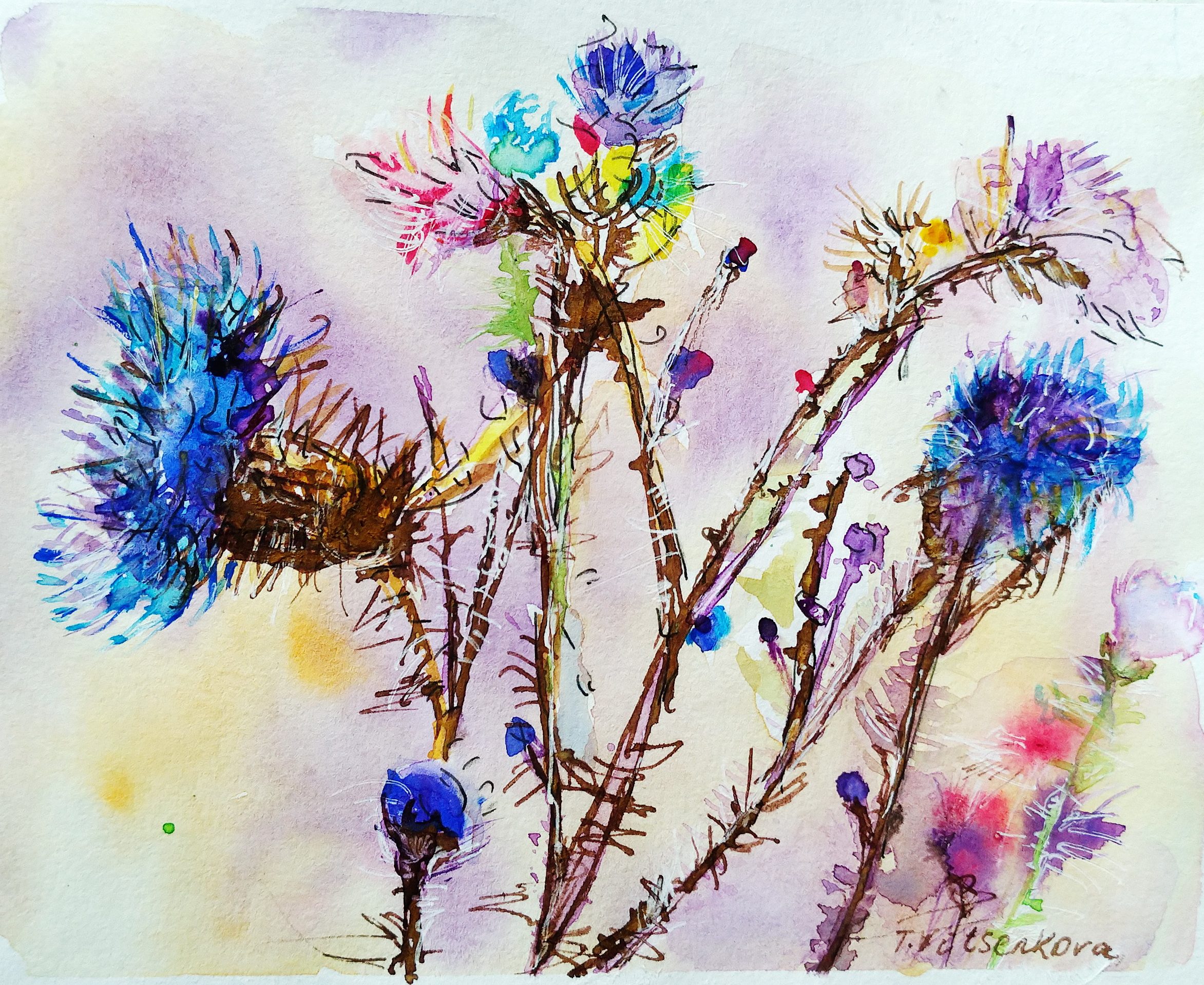
Thistle, the extended remix. This version features petals of amber and purple — a combination that somehow looks like what I imagine royalty smells like. And the flower buds? They range from massive to microscopic, rather like the museums scattered throughout Paris’s city center: Musée d’Orsay (the cool one everyone’s heard of), the Louvre (the one that gives you existential dread just trying to find the bathroom), Musée de l’Orangerie (deceptively small but absolutely packed with Monet’s fever dreams), Musée Marmottan Monet (for when you want MORE Monet, because apparently one museum wasn’t enough), Musée Jacquemart-André (where rich people kept their rich person collections), and Musée de Cluny (medieval vibes and the Unicorn Tapestries, which I definitely didn’t spend three hours staring at while taking blurry photos on my phone).
Thistle #4 — amber and purple. Smells like royalty, stings like a parking ticket.
Thistle number five: The Grand Finale. This specimen features a mustard-violet flower with thorns the color of, well, apple skin. Stylish as Parisian sweeping and majestic boulevards — which is to say, it looks like it went to finishing school in Switzerland and then casually conquered Europe while sipping espresso. The vibe is undeniably “I woke up like this but also spent four hours getting ready.”
Thistle #6 — apple thorns included. Looks elegant, will absolutely draw blood.
Thistle, the encore performance. Featuring peach-colored petals against a copper and amber background — basically what the Eiffel Tower looks like in the morning when you’ve woken up early because you couldn’t sleep (jet lag is romantic, apparently). This color combination is so warm and glowy that it makes you believe in magic, or at least in the possibility that Paris might actually be worth all the hype.
Thistle #7 — peach and copper. The Eiffel Tower at 6am. Romantic and deeply unreasonable.
Bon voyage! Until the next travel adventure :) Stay healthy, stay curious, and remember: life is too short to not travel, not sketch random flowers, and not pretend you understand French when someone speaks to you at a café (just nod and smile — it works 60% of the time, every time).
Bon voyage! Don’t forget your sketchpad. Or your beret. Actually, just the sketchpad.Thistle #5 — mustard and violet. The boulevard of wildflowers.
All paintings belong to the author and are protected by the ancient artist code: look but don’t touch, admire but don’t copy, and definitely don’t use without permission or face the wrath of someone who takes their wildflowers very seriously.
Do you like flowers and their smell? Then your next vacation should be in France, my favorite country. Flowers are part of life everywhere, in cities, you probably won’t find houses that are not decorated with rose bushes and clematis that make a hedge.
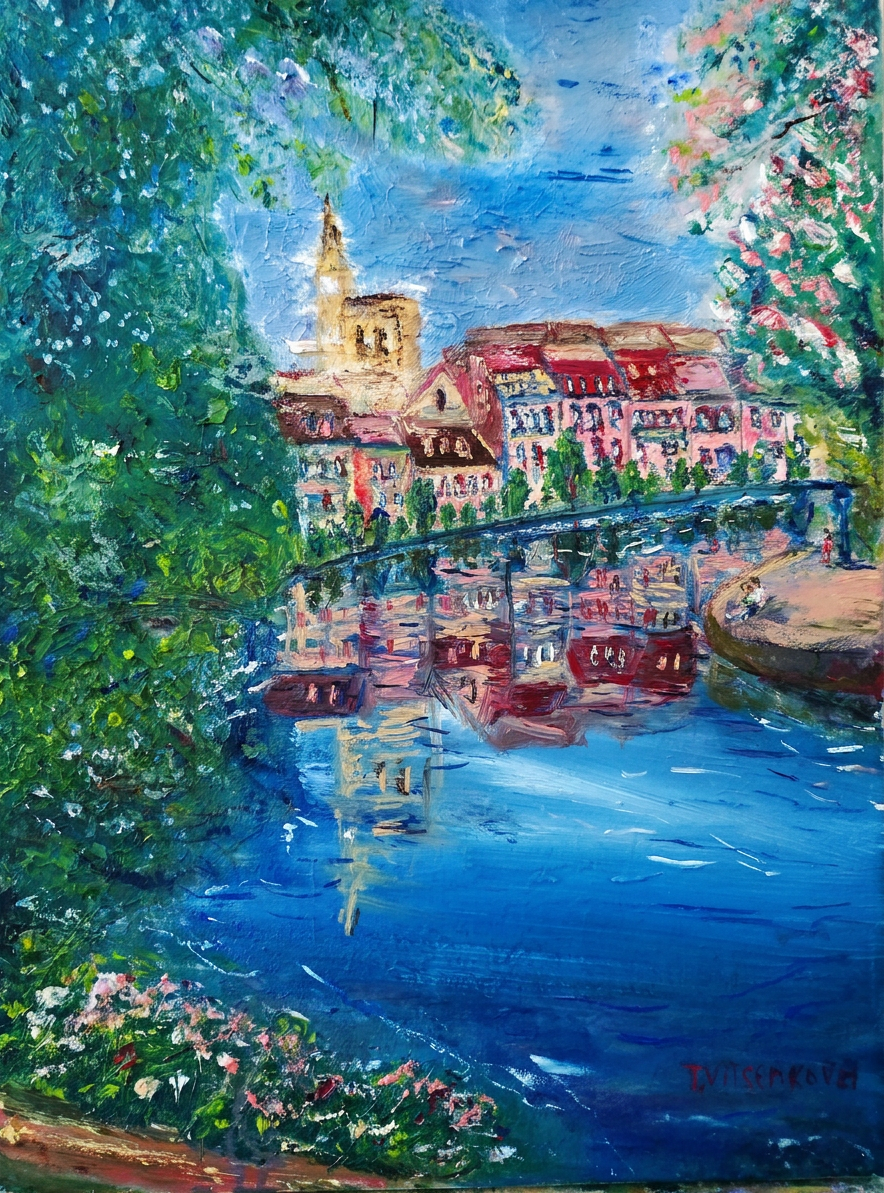
Strasbourg said ‘hold my wine’ and posed for a painting.
And between the cities, endless blooming fields stretch, which not only delight the eye, but also generate income, since flowers are used in the production of essential oils.
Impressionist painting of orchid, the delicate and exotic at the same time.
An orchid walks into a gallery. Everyone stares. It’s used to it.
An integral part of the French cultural heritage, these gardens are open to the public throughout the country. All year round, they are ready to share their secrets, especially during moments of exceptional events.
Watercolour painting of unopened bud an orchid
Flowers being modest. Rare, honestly.
If you like castles in France, you will find lots of gardens and parks. One of my favorite is Château de Vaux-le-Vicomte, a small private palace of the 17th century, located not far from Paris. Popular for its sophisticated architecture and large surrounding park.
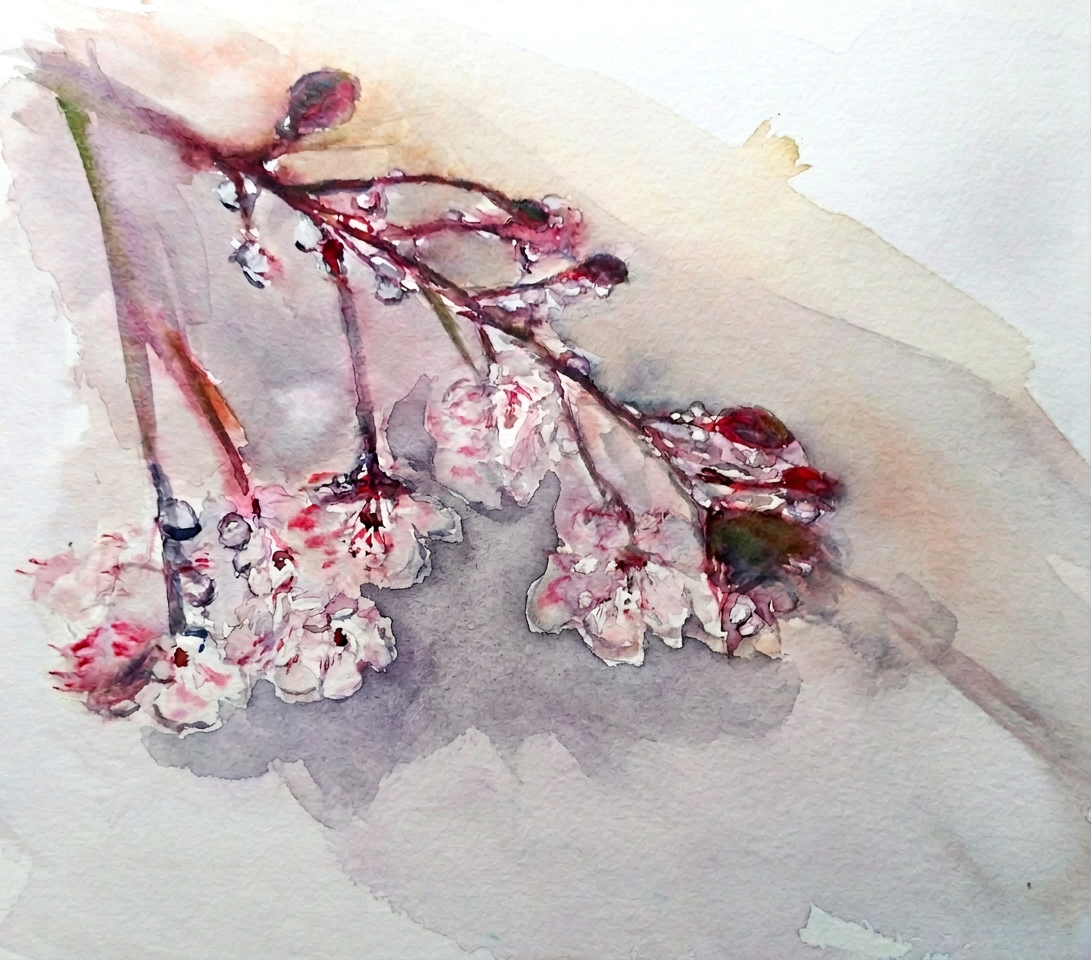
Cherry blossoms: beautiful for 10 days, smug about it forever.
The gardens and parks were in perfect harmony with the architectural complexes from which they were laid out. Spacious alleys were lined with flower beds.
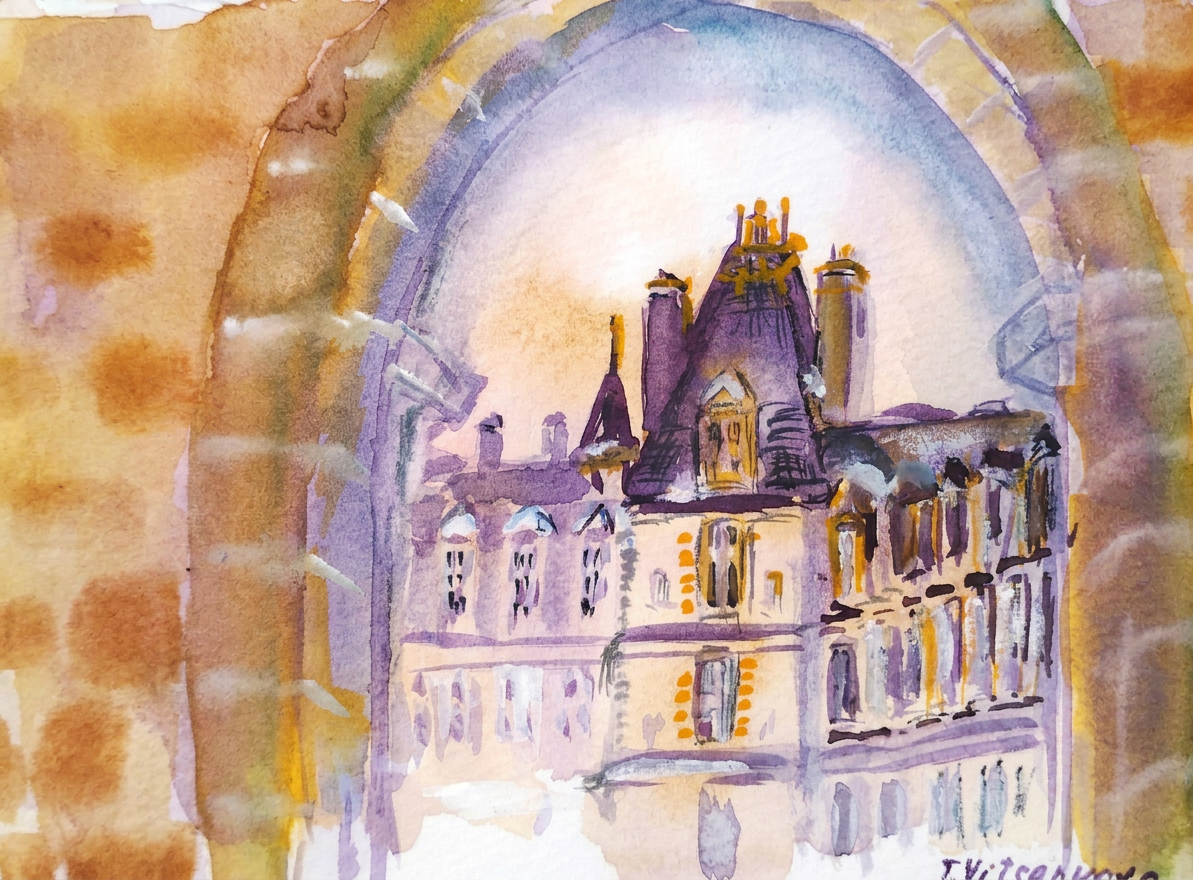
Castle: Château de Vaux-le-Vicomte
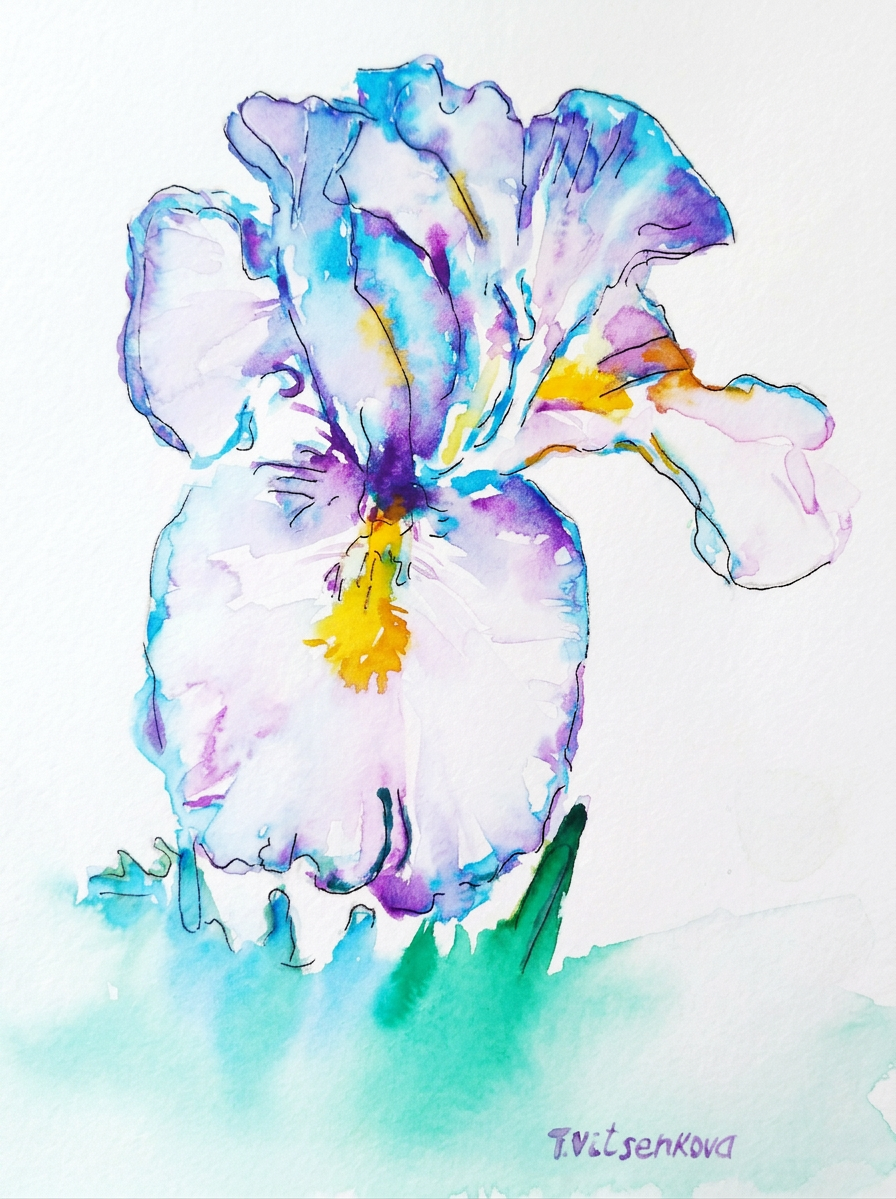
…and of course irises. Did you know that the depiction of a lily on heraldry in pre-revolutionary France is actually a stylised image of a yellow iris?
The iris — France’s national flower and certified drama queen.
For France, irises are not only beautiful flowers that are a symbol, they are also an industry. France is famous throughout the world for its perfumes and eau de parfum, and it is in them that iris essential oil is actively used to create aromatic compositions.
Bon voyage! Until the next travel.
All paintings belong to the author. No image is to be copied without permission.
Tools used for my painting. Watercolor brands Van Gogh and Cotman. Paper Canson Mix Media album 28×35 cm (11×14 in.) and Canson Watercolour album 25×35 cm (11 x 15 in.)
Le Cannet: Home of the Bonnard Museum and Artfully Avoiding Cannes’ Crowds!
And then on another direction, the second trip was separate. It was a one-day independent journey from Antibes to Cannes and Le Cannet.
Provence is famous for its art museums in every small town or village. Le Cannet is a small suburb of Cannes. In North America this suburb would be part of a big city, for example Greater Toronto or Greater Vancouver.
The Central Train Station in Cannes is located in the heart of the city. To get there, take the bus # Bus Palm Express n°1. Within 10 minutes, you will reach Le Cannet famous museum Bonnard. Location: 16 boulevard Sadi Carnot, 06110 Le Cannet
House-museum artist Bonnard. Bonnard lived in Le Cannet for 25 years and created his Provencal paintings, saturated with sunlight, light and air. We were waiting for an exhibition that just opened during our vacation in Antibes. The temporary exhibition of collection Nahmad (De L’Impressionisme À Bonnard et Picasso) showcased the Impressionist artists. It organically blended into the permanent collection of Bonnard museum.
Cannes’ famous Red Carpet
We made a delightful pit stop in the glamorous city of Cannes on our journey back to Antibes. The famous film festival is very common!
We were all set to strut our stuff on Cannes’ famous Red Carpet. We perfected our best “I just won an Oscar” walk. It was finished with invisible awards and imaginary paparazzi trailing our every move!
Hand prints of a celebrity set into the pavement, commemorating their visit to the Cannes Film Festival.
In my picture, the celebrities’ prints shoot up to the sky. They resemble a really ambitious road vying for a spot in a cloud competition!
A watercolor sketch capturing the scenic views of Cannes, featuring a charming train and vibrant beach landscape.
Transportation: Our Hilarious Misadventures and Tips for Traveling in Provence
Embarking on my inaugural journey through the enchanting region of Provence was a delightful escapade fraught with unexpected adventures. The warmth and hospitality of the local residents, as well as fellow travelers, provided comfort during moments of disorientation in this picturesque landscape. My encounters with the complexities of train travel, compounded by my limited proficiency in the French language, led to a series of amusing misadventures, including missed connections and unforeseen challenges.
Yet, amidst the chaos, I discovered clever local transportation tips that may serve to conserve both time and money for future travelers. Intriguingly, these transportation mishaps ultimately enriched my experience, transforming potential frustrations into cherished memories that added a unique charm to my journey. :)
The topography of the area is a mountainous terrain. If you do not want to rent a car in a foreign country, there are a few alternatives to driving.
The first choice is the train. They are convenient, quick, comfortable, inexpensive, and all trains have an efficient schedules with small gaps in between 2 trains. For example, from Nice to Grasse the train’s cost was 10 Euros (2019). But, this choice has a disadvantage that you rarely can get to see small towns by trains.
The second choice is the bus. The advantage of buses is their routes reach even the smallest mountain towns. This is the cheapest choice. The inconvenience is that sometimes you have to take a transfer between inter regional buses and local city’s buses. Most importantly, the bus trip will be longer than any train.
The third option is like a hybrid of the first two—or you can just go with a travel company. Do you want to hop between a bunch of quirky little mountain towns in just 1-2 days? Let the pros handle it. Those local or international tour operators are like your cool travel buddies. They are always ready for an adventure. (And they know where to find the best snacks). And hey, there’s something for you at the end of this post. You’ll find a link to Viator. It’s your ticket to hilarity wrapped in sightseeing!
I absolutely adore my one-day trips to the French Riviera—it’s like speed-dating with beautiful landscapes! I dash around, sketching everything from tiny crannies to towering giants. I try to look like a sophisticated artist, not just some tourist with a fancy penciland watercolor palette and brush:)
Join me on this thrilling adventure. Every moment holds the potential to uplift your spirit. It can bring joy to your life!
Tools used for my painting Watercolour used Charvin and Van Gogh brands, Derwent Watercolour pencils and Faber Castell artist pens. Paper Strathmore Watercolour and Mixed Media albums, 15×20 cm (6×8 in.)
Bon voyage! Until the next travel:)
You are welcome to visit my personal website pages. There, you can find out more about the artwork I am offering in oil and watercolor paintings. You can buy canvas prints, framed prints, and more artwork.
How to get from Antibes to Le Mougins. Take Train to Cannes, then bus to Mougins. Lines 25-27. Cannes – Ranguin <> Gare Routière des Messugues <> Collège Eganaude – Sophia Antipolis, par Mougins
How to get from Antibes to Le Cannet . Take train Antibes to Cannes, bus #1 and 4(?), 15 min =10 stops to Musee Bonnard, Bus Palm’Express n°1, arrêt « Mairie du Cannet
This was amazing little town with an unusual legend.
Just imaging, you are jauntily wandering through the medieval streets. Also trying not to trip over the cobblestones that probably date back to when dinosaurs roamed the Earth. Meanwhile, admiring the stone facades that looked like they had more stories than my grandma. Actually, this is my story that happens with everyone while traveling in a medieval town, right?:)
And then OMG, the flowers! They were so fragrant that I half expected them to start singing show tunes! It was truly an unexpected adventure in one of the prettiest settlements in France. The buildings are old, but the charm is timeless! :)
As promised, about the local legend. It says that the English Queen Victoria was riding on a donkey with her staff to the town. After this uneasy journey, she tired and ordered a road to be built to this tallest town. Thank you! the English Queen Victoria wanted everyone to see the beauties of this place. And it was completed, so now you can enjoy them too. The main square of the town is named after the Queen, with no doubt. Everybody loves this legend.
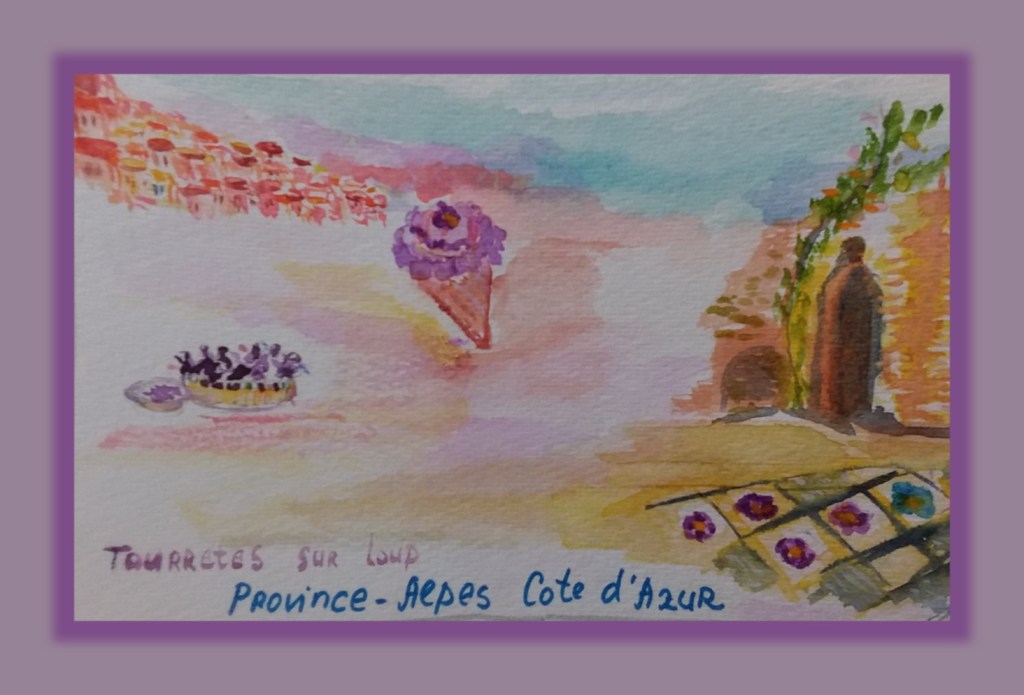
A charming watercolor sketch of Tourrettes-sur-Loup, showcasing the town’s vibrant ice cream and flower motifs characteristic of Provence.
Another Legend about Ice cream while you are exploring the town.
Ice cream transcends the realm of mere treats; it embodies the town’s most cherished secret. Yes, I found it while eating the violet rich ice cream.
As she dances around you, the air fills with the delightful aroma of freshly churned ice cream. It draws forth smiles and laughter from everyone nearby. A simple shout turns into a memorable experience that sugary dreams are made of! Even years later, I still remember this taste and scent.
As you walk around town, you will notice violets everywhere. They are painted on the asphalt and in the ice cream. Violet ice cream was a pleasant discovery for me. It’s worth coming to this mountainous town just for its sake!
The Wobbly Wonders of Cascades du Saut du Loup: Where Waterfalls Take a Dive!
The next stop was the stunning Mountain waterfalls known as Cascades du Saut du Loup. The name comes from the French language. It translates to the mouth of the wolf. I found it’s quite scary name.
This evokes an air of mystery and intrigue surrounding this natural wonder. As we approached the cascades, the sound of rushing water grew louder, filling the air with a sense of anticipation.
The scene was surrounded by lush greenery and rocky cliffs. It was breathtaking, with glistening water tumbling down the steep slopes. This created a mesmerizing spectacle. This hidden gem is more than just a beautiful sight. It holds an important place in local folklore. Tales of wolves and their enchanting habitat add to the allure of this captivating location. I think that every waterfalls has its own legends, do you agree with it?
I don’t know what mouth of a wolf it is. Now this is my secret. I personally saw a huge muzzle of an orangutan in the rocks. Everyone in our group was laughing from my imagination:)
Gourdon vs. Gordes:
As we continued our travel, the next stop was Gordon. It is the highest town of our trip. Its magnificent castle is perched 750 meters above sea level on rocks.
Watercolor sketch of Gourdon Castle in Provence, showcasing the lush landscapes of the region.
A little comment about the tour. Part of our goal for this trip was to see Provencal lavender fields. Our tour operator was also our driver and a cheerful guide.
Meanwhile, he piped up from the passenger seat, “Well, there’s a little hitch in our giddy-up!” Apparently, it would take another hour to reach the lavender fields from this town. Perfect! This was just enough time for him to regale her with his latest theory. He believed a goat named Jean-Claude should have been our co-pilot.
“Just think about it,” he said with a grin. “He’d be the best navigator. Frankly, I’d trust a goat over a GPS any day!” As they continued their winding journey, the fragrant scent of lavender teased their senses. It promised that the true adventure was only just beginning.
Gourdon and Gordes are two different cities. Ops, my bad, I did not see on this day any lavenders’ fields. So, please take my advice, enjoy your day , even you were expecting other views.
Both cities are nestled in the picturesque hills of Provence. Yet, they are distinct places rich in their own unique charm and character.
The tour company made a comical error. They mixed them up. This led to a day filled with unexpected adventures and humorous anecdotes. As the day unfolded, we constantly wondered how the mix-up could have happened. This curiosity gave us an amusing reason to return. We wanted to explore the beautiful regions more thoroughly.
It became our running joke throughout this long day. The joke lightened the mood and brought us closer together. This happened as we navigated the winding roads. We were diligently searching for the iconic lavender bushes. We were also looking for even small patches of planted lavender. Provence is so famous for this.
Every time we stumbled upon anything resembling those fragrant fields, we kept saying, “Well, here’s lavender!” We burst into laughter. What could have been an inconvenience turned into a delightful memory. It’s a memory that we’ll cherish for years to come.
The Lavender Showdown – Who Will Win the Name Game?
The locals told us that in earlier years the lavender fields really bloomed vibrantly around the town. This created a stunning visual spectacle. It attracted visitors from far and wide.
The intoxicating fragrance of the lavender filled the air, making it a beloved destination for tourists and locals alike. One unfortunate year, a particularly harsh cold winter struck. The lavender bushes not survive the frigid temperatures that followed. The once-thriving fields, which had been a source of pride and beauty for the community, fell silent and barren.
After that, despite the people’s longing for the return of the lavender, they were not planted again. This decision left a void in the landscape deeply felt by everyone. It’s truly a pity to witness such a loss of natural beauty and charm.
A watercolor sketch depicting the scenic beauty of Gourdon, France, showcasing its charming architecture and lavender foliage.
The mountain road is serpentine. It leads to mountain towns Gourdon and Tourrettes-sur-Loup. We passed through the medieval town. In the sky, we saw a cloud “goose”.
I will continue to post about one-day trips in Nice. Next up is Cannes and Le Cannet. I visited the famous museum of artist Bonnard. After all, who doesn’t want to admire the works of someone who painted like they were on a permanent vacation? More art, less sanity!
Tools used for my painting Watercolour used Charvin and Van Gogh brands, Derwent Watercolour pencils and Faber Castell artist pens. Paper Strathmore Watercolour and Mixed Media albums, 15×20 cm (6×8 in.)
A Sketching Journey Through Provence’s Artistic Towns. Urban sketching. Travel, Architecture and Art
Everything is in one bottle of flavor that brings together the image of a city or place.
Mougins: Where Art Galleries Outnumber Residents!
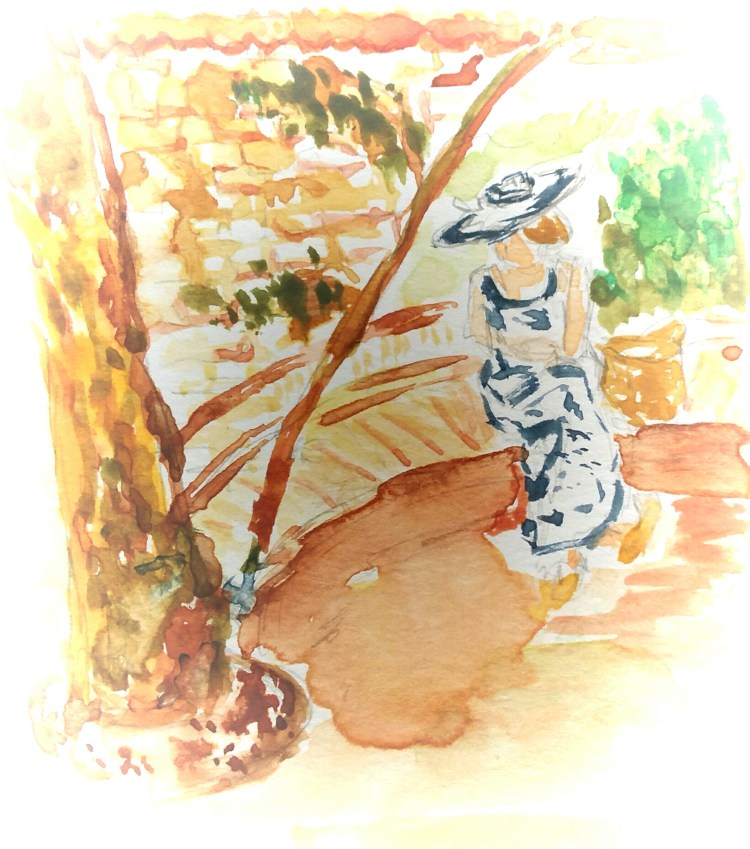
The next town we visited was Mougins, is a city of art galleries and artist’ workshops. On a small plaza, I saw a mysterious lady in a beautiful hat near the city’s legendary museum.
This is a serene sketch capturing a mysterious lady in a beautiful hat. It is set against the charming backdrop of Mougins. This town is known for its vibrant art scene.
The Art of Not Getting Bored at Mougins Museum!
The city has a famous Mougins Museum of Classical Art. It is a private museum. The entrance costs 14 Euros (2019). It’s worth it. Address: 32 Rue Commandeur, Mougins. The Mougins museum has the world’s largest private collection of antic helmets. I never would have thought that there was such a variety of helmets.
A watercolor sketch of ancient helmets displayed at the Mougins Museum of Classical Art.
In the museum, the lighting was dark so my sketches show the overall impressions of the gloom. I like to watch museums’ visitors; it shows the general impression of direction of exhibits in museum. We visited the museum on Monday when there were no visitors so the whole museum was ours. I was surprised to see such a rich collection outside the Louvre or British Museums.
One of my artistic goals is to paint the combination of houses, people, cafe, streets, landscapes, food, Provencal ice creams.
Watercolor sketch depicting the charm of Mougins, Côte d’Azur, showcasing a cafe scene and the essence of local artistry.
On the way to the city, our tour operator mentioned an interesting annual festival. It is called the ‘International Gastronomy Festival of Mougins’ or ‘Les Étoiles de Mougins’.
The festival used to be an event that brought lots of tourists and media attention to the town of Mougins.
Effective this year, the decision was made to hold the festival in other cities around the world. Mougins’ Michelin chefs will be sent to the festival to show the culinary art of the city’s chefs. So, understandably, the residents of the city are disappointed and would like to return the tourists to their city. To get here, you can take a train/bus from Antibes or Nice. At the end of this post, I will give instructions on how to get to this town.
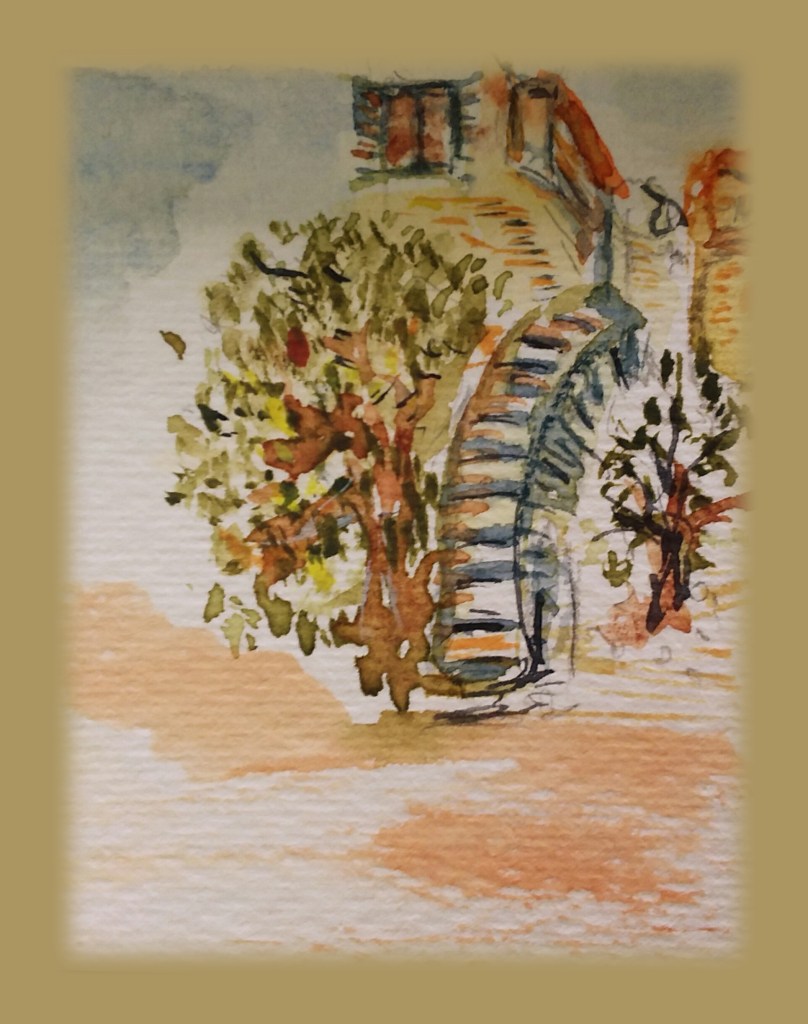
Watercolor sketch depicting the charming scenery of Moulin d’Opio, showcasing olive trees and lanterns, reminiscent of Van Gogh’s art.
Moulin d’Opio mill, with its olive grove
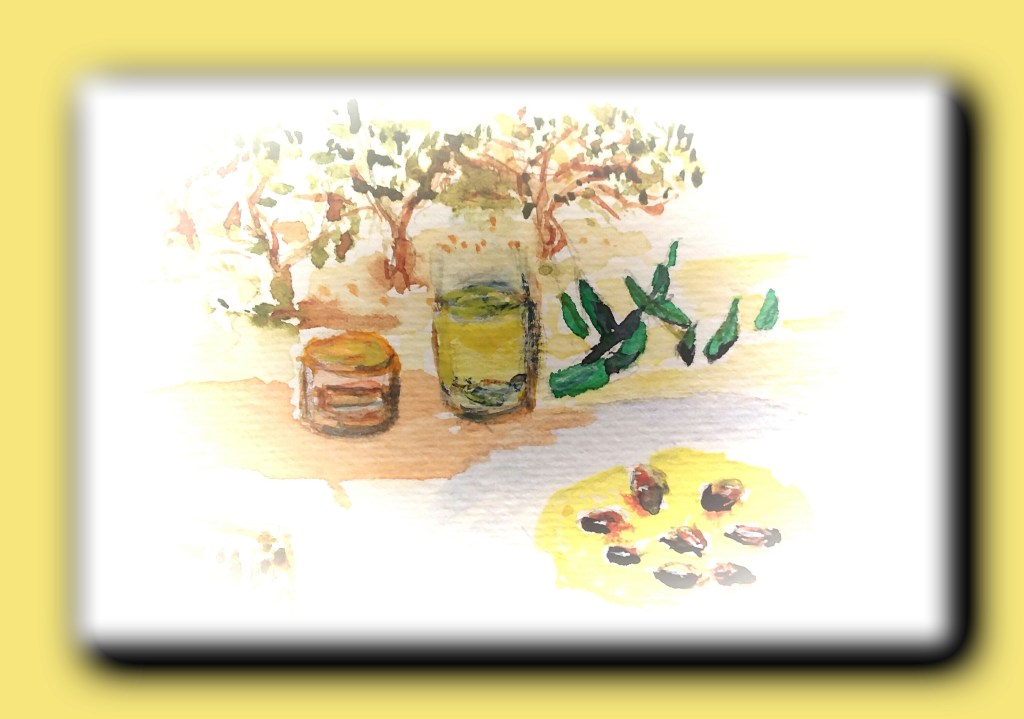
Our next visit was a small place at Moulin d’Opio mill, with its olive grove and a small store. When you visit this place, you will instantly remember Van Gogh’s painting. The owners are the fifth generation of this family. They were telling us how olive oil has been produced for many centuries. We tested different varieties of olives, French oil, tapenade on toast, and drinks.
Watercolor sketch depicting a charming scene from Moulin d’Opio, highlighting the olive trees and quaint architecture of the area.
I would never have thought that I would try olive oil on its own. It was an interesting experiment.
A watercolor illustration depicting olive oil, olives, and a traditional Provencal setting, reflecting the culinary heritage of the region.A watercolor sketch depicting olive oil tasting and the scenic landscape of Le Moulin d’Opio in Côte d’Azur.
Tools used for my painting Watercolour used Charvin and Van Gogh brands, Derwent Watercolour pencils and Faber Castell artist pens. Paper Strathmore Watercolour and Mixed Media albums, 15×20 cm (6×8 in.)
Bon voyage! Until the next travel:)
You are welcome to visit my personal website pages. There, you can find out more about the artwork I am offering in oil and watercolor paintings. You can buy canvas prints, framed prints, and more artwork.
How to get from Antibes to Le Mougins. Take Train to Cannes, then bus to Mougins. Lines 25-27. Cannes – Ranguin <> Gare Routière des Messugues <> Collège Eganaude – Sophia Antipolis, par Mougins
How to get from Antibes to Le Cannet . Take train Antibes to Cannes, bus #1 and 4(?), 15 min =10 stops to Musee Bonnard, Bus Palm’Express n°1, arrêt « Mairie du Cannet
How to bring more joy to your vacation in the south of France
In this post I would like to talk about some one-day trips from Antibes or Nice. For me, sitting in one place and swimming in the sea is fine for a couple of days. I enjoy sunny beaches and cuisine, but then I need more. Provencal cities are very close to each other. They are rich in history, art, and architecture. It would be a “crime” not to visit some of the local small towns in the neighborhood.
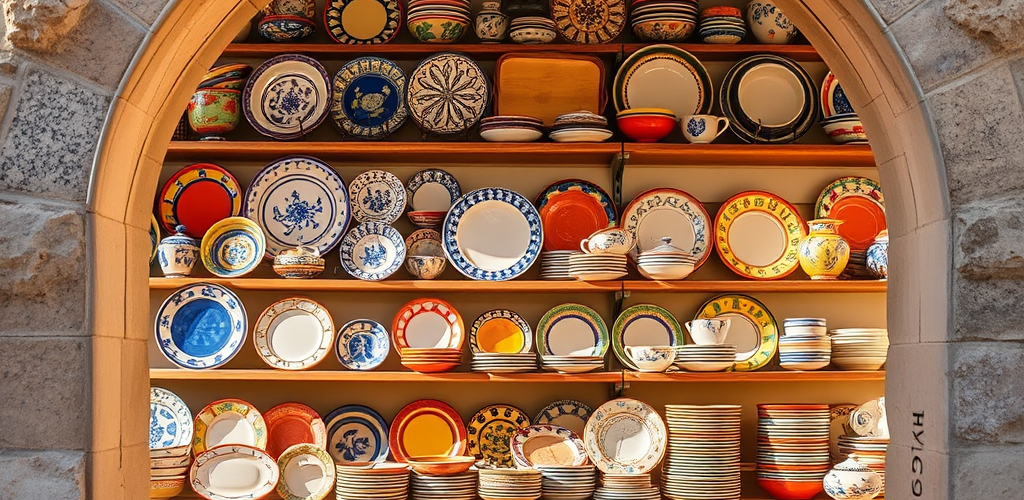
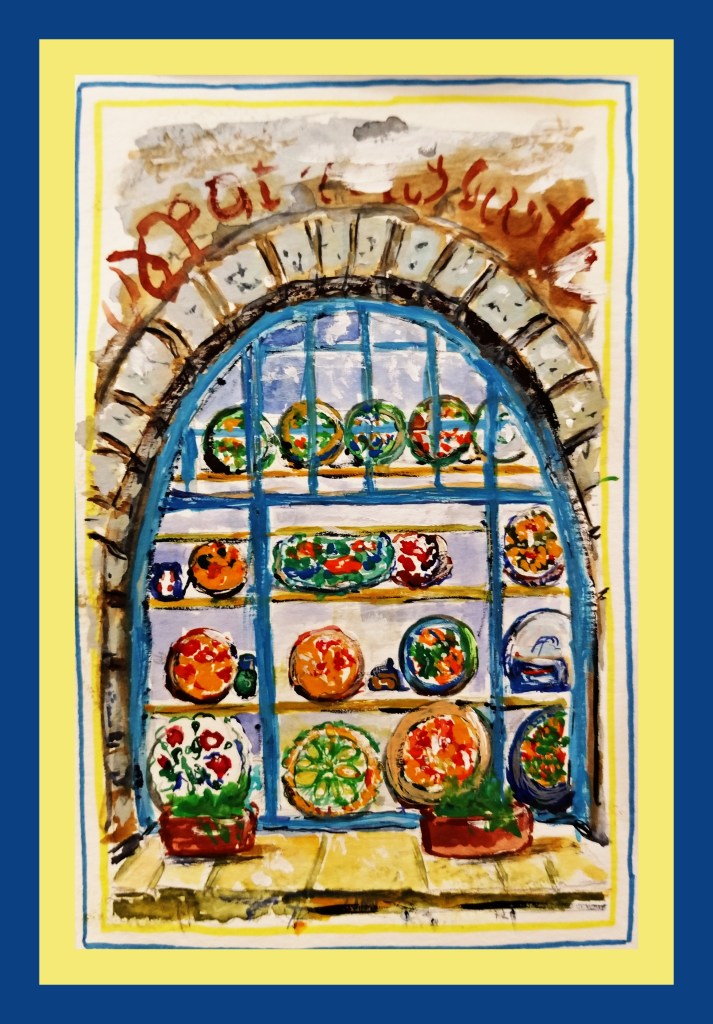
Vibrant Provencal ceramic tableware showcasing the rich colors of handmade plates from the South of France.
Exploring Art and Cuisine in Provence’s Charming Towns. Nice, France, one-day trips in Provence.
Provencal ceramic tableware with sun-drenched harmony of Provence in single handmade plates with vibrant colors found in the South of France and Italy
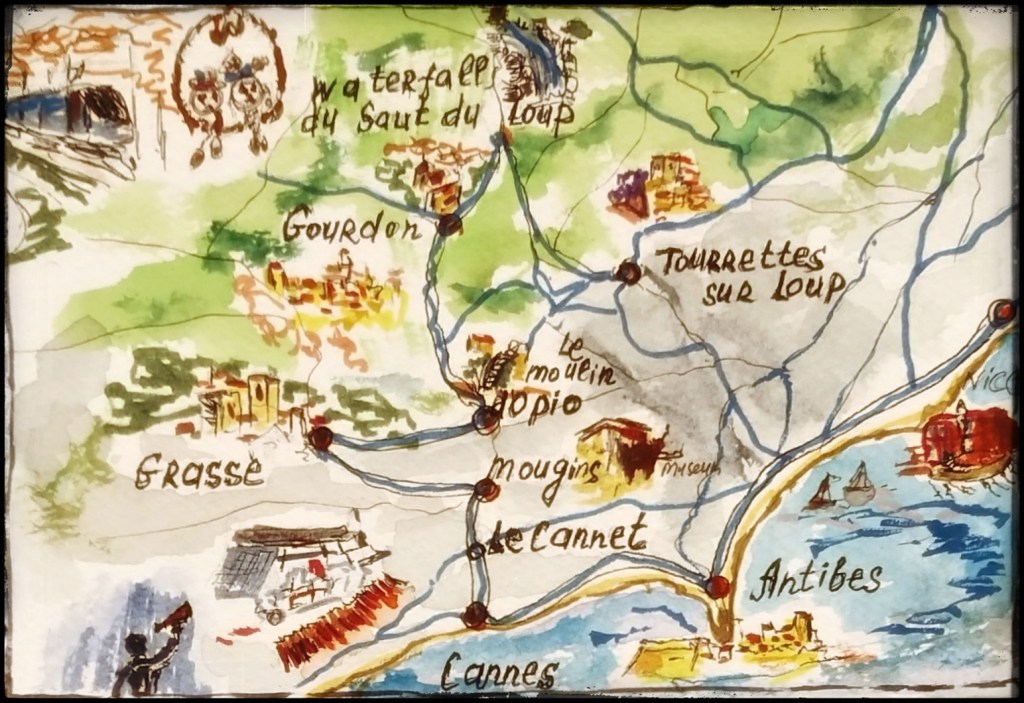
Illustration of the beautiful towns and landmarks around Provence, highlighting key locations like Grasse, Gourdon, and Tourrettes-sur-Loup.
Our Provencal Itinerary. This trip began in Nice and continued through Grasse, Mougins, and Moulins d’Opio. We also explored Waterfalle sur Loup, Tourrettes du Loup, and Gourdon.
We always travel by train or bus… but this time we decided to save our time and traveled with a tour operator.
The recently renovated Gare de Nice Ville, a welcoming gateway to the beautiful city of Nice.
Vibrant Provencal Experiences: From Grasse to Nice. Blue train brings people to Mediterranean Sea every day
Old Train station in Nice was recently renovated. It seems to be inviting visitors to join one of the most beautiful cities. Nice is conveniently located near the sea.
Our tour started from Nice. You can be picked up from your hotel by the tour operator. In our case we lived in Antibes. As a choice, a driver pick you up from your city, with an extra cost. We decided to take a train from Antibes to Nice. The journey took just 10 -15 minutes. It cost 4 Euros. It was another reason to visit Nice.
Illustration of a train station in Nice, capturing the blend of modern transportation and picturesque surroundings.
Grasse, the capital of perfumery
The 1st stop was in Grasse, the capital of perfumery. According to the legend of the 17th century, the city had many leather shops. The skin was soaked with flower essences to remove an unpleasant odour. Louis XIII and his beautiful wife, Anna of Austria, shared valuable secrets.
She was a Spanish-born queen. Thanks to them, some Spanish and Arab techniques for perfumed skins were revealed. So perfumes came to us from the city of Grasse. You want to visit Parfumerie Fragonard.
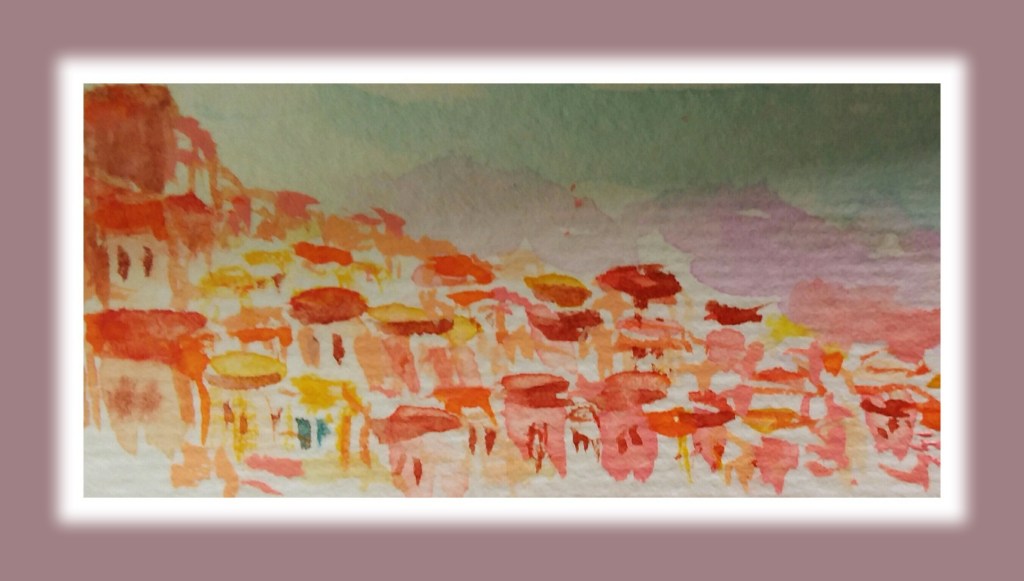
Watercolor painting depicting the vibrant atmosphere of a Provencal town, capturing colorful rooftops and the scenic beauty of the region.
The whole city is covered in flowers; a local perfume factory acquaints visitors with its spirits. During our last visit to Grasse several years ago, we walked several times through the local central square. We admired the views of the mountains from a huge cliff near the town hall.
It was blooming with floral aromas, the local fountain freshened the air with water. And only then I realized that the fountain was spraying perfumed water.
Perfume factory in Grasse
Sketch of our excursions perfume factory and olive store at Le Moulin D’Opio, Opio. Legendary Fragonard was the mayor of the city. The city has the Fragonard Museum is located at: 14 rue Jean Ossola, Hotel de Villeneuve, Grasse
This watercolor sketch depicts the perfume factory and olive store at Le Moulin d’Opio in Grasse, France. It showcases vibrant colors and local products.
Some interesting facts about Fragonard: he was the artist and pioneer of the Rococo style. There is a famous painting “The Swing” by Jean-Honoré Fragonard. Fragonard was a distant relative of my beloved impressionist artist Bertha Morisot. We visited museum D’Orsay in Paris this year, Morisot’s personal exhibition in the museum. Stay tuned for more information on it in my future posts.
More intriguing tales and delightful doodles are on their way—consider this your friendly heads-up before the next artistic adventure hits!
Tools used for my painting Watercolour used Charvin and Van Gogh brands, Derwent Watercolour pencils and Faber Castell artist pens. Paper Strathmore Watercolour and Mixed Media albums, 15×20 cm (6×8 in.)
Bon voyage! Until the next travel:)
You are welcome to visit my personal website pages. There, you can find out more about the artwork I am offering in oil and watercolor paintings. You can buy canvas prints, framed prints, and more artwork.
How to get from Antibes to Le Mougins. Take Train to Cannes, then bus to Mougins. Lines 25-27. Cannes – Ranguin <> Gare Routière des Messugues <> Collège Eganaude – Sophia Antipolis, par Mougins
How to get from Antibes to Le Cannet . Take train Antibes to Cannes, bus #1 and 4(?), 15 min =10 stops to Musee Bonnard, Bus Palm’Express n°1, arrêt « Mairie du Cannet
Urban sketching and Still life. Travel and Art. Urban Sketching: Exploring Parisian Life Through Art
Paris is simply an amazing place for artists and photographs. This is especially true in spring, summer, and early autumn. During these seasons, the splendor of countless flower beds and shrubs is wrapped in luxurious blossoms of amazing flowers.
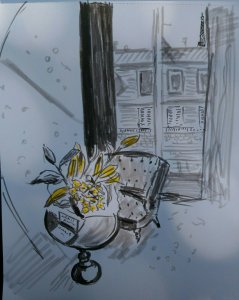
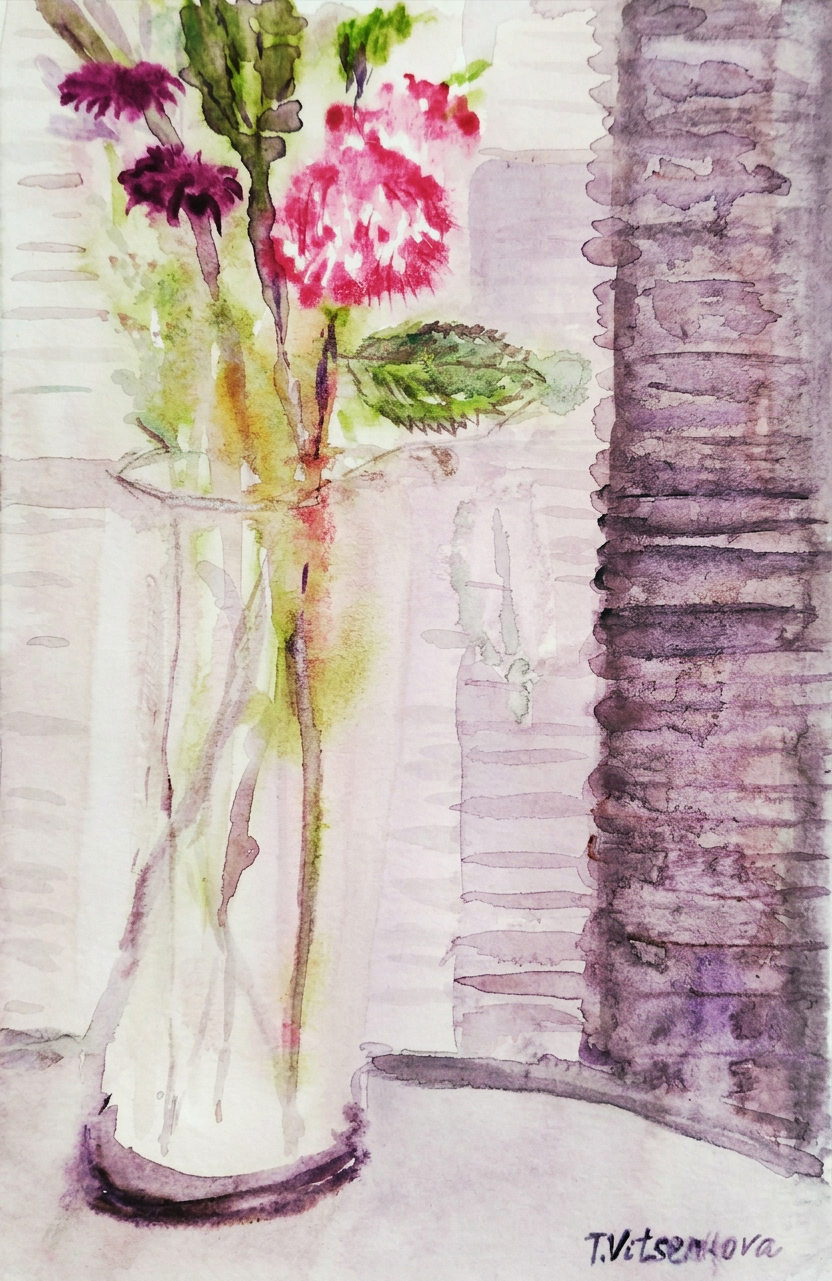
A cozy watercolor sketch of a vase with flowers and a scenic window view, capturing the essence of Parisian life.
The way Parisians buy them in many stores and Sunday markets, sell and grow at home is worth of imitation:)
I bought viola tricolor, one of my favorite flowers. I did the paintings in this post in our Parisian hotel’s room.
Watercolor painting of a charming flower shop in Paris, showcasing vibrant blooms and an inviting street scene.
Did you know that in Roman mythology, the ancient gods turned men into violas? These violas secretly spied on the bathing goddess of love – Venus:)
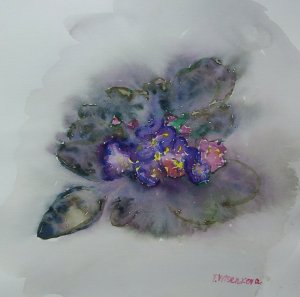
Watercolor painting of viola tricolor, capturing the delicate beauty of spring flowers.
Parisians often spend leisure time, sitting down on benches with a bottle of water, a baguette, a book or just a cigarette to take a little breath, relax after a working day or bask in the sun, going to market and flower stories and bringing these little beauties in their rooms to continue getting a feeling of being in touch with the wonderful:)
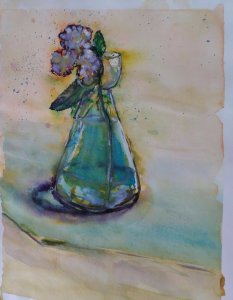
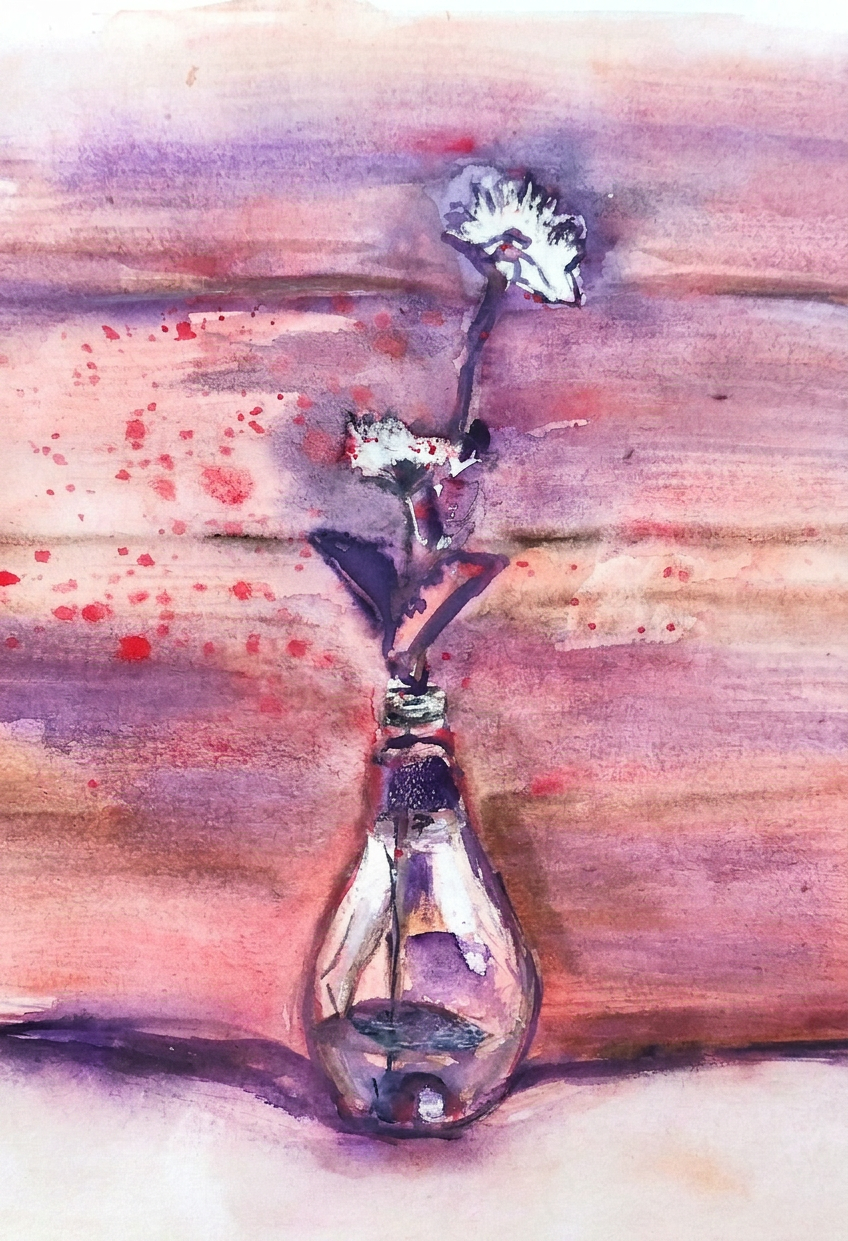
A watercolor painting of a glass vase holding viola tricolor flowers, showcasing vibrant colors and artistic flair.
Bon voyage! Until the next travel:) Stay healthy.
Tools used for my painting. Watercolour brands Van Gogh and Cotman. Paper Canson Mix Media album 28×35 cm (11×14 in.) and Canson Watercolour album 25×35 cm (11 x15 in.)
You can visit my personal website pages here. Find out more about the artwork I am offering in oil and watercolor paintings. You can also buy canvas prints, framed prints, and more artwork.
All paintings belong to the author. No image is to be copied without permission.
Urban sketching and Still life. Travel and Art. A Colorful Journey Through Paris: Art and Nature Blended
Flowers
Paris is always the city in flowers. This city breathes in the scents of billions of flowers. Every day it explodes with a firework of floral colors. Winter, or summer, the season does not matter for flowers in Paris. The Luxembourg Gardens is the most “French” of all city parks.
A vibrant watercolor painting of blooming flowers in a rustic setting, showcasing the beauty of nature intertwined with artistry.
Only here can you see the true purpose of the green towns in Paris. You can watch how Parisians spend their free time… If you would like to become one of them, you try their …Vivre la vie:)
City parks
Go to one of the city parks. You sit comfortably on a chair near the fountain. Breathe in the aroma of roses and enjoy the freshness of greenery. Hide from the city center, which is so distant yet immeasurably close from one side.
This watercolor depicts the picturesque Luxembourg Gardens in Paris. It showcases serene landscapes. Visitors enjoy the park’s beauty.
Bright flower borders with soft ribbons frame the green lawns, and flowerbeds amaze with volumes and colors. Petunias, daisies, rudbeckia, sage, cereals, dahlias, chrys…it is the long list of flowers. Their consistent and continuous flowering pleases grateful spectators throughout the entire spring, summer and autumn seasons.
Luxembourg gardens
Luxembourg gardens in Paris is my favorite one, flower beds are especially good at any season. It’s impossible to stop looking at them! I am enjoying to visit again and again:) you see my post about Luxembourg gardens.
A cozy watercolor painting featuring a vase of flowers on a wooden table, alongside a red polka-dotted chair.
Bon voyage! Until the next travel:) Stay healthy.
You can visit my personal website pages here. Find out more about the artwork I am offering in oil and watercolor paintings. Buy canvas prints, framed prints, and more artwork.
Tools used for my painting. Watercolour brands Van Gogh and Cotman. Paper Canson Mix Media album 28×35 cm (11×14 in.) and Canson Watercolour album 25×35 cm (11 x15 in.)
All paintings belong to the author. No image is to be copied without permission.
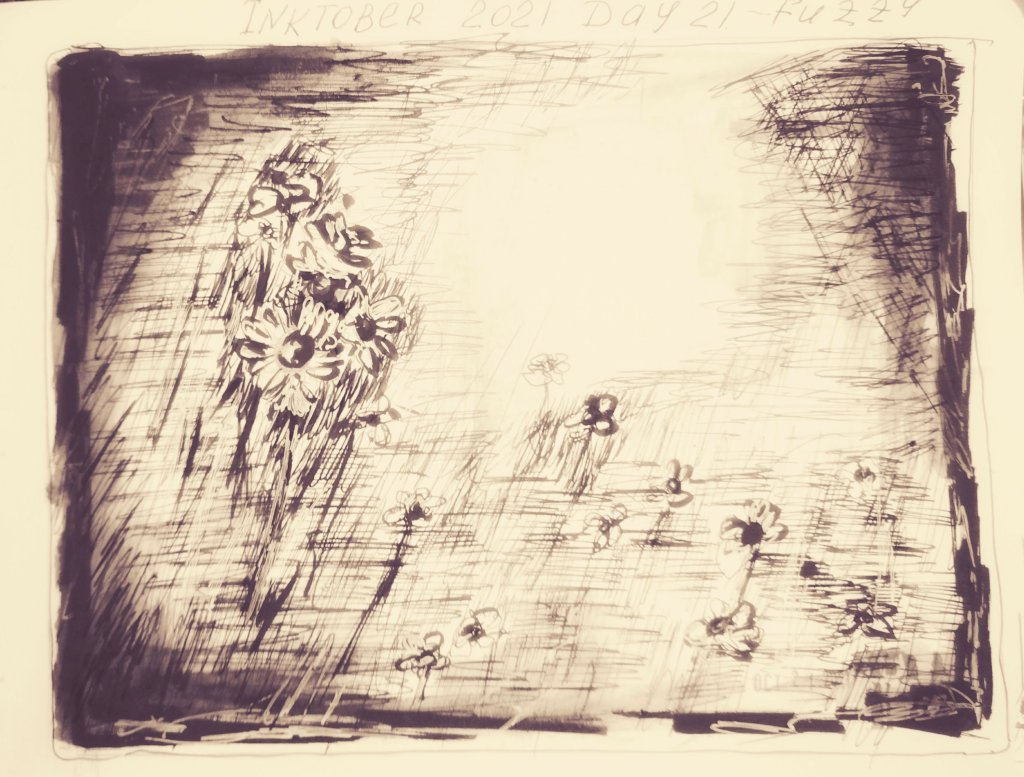
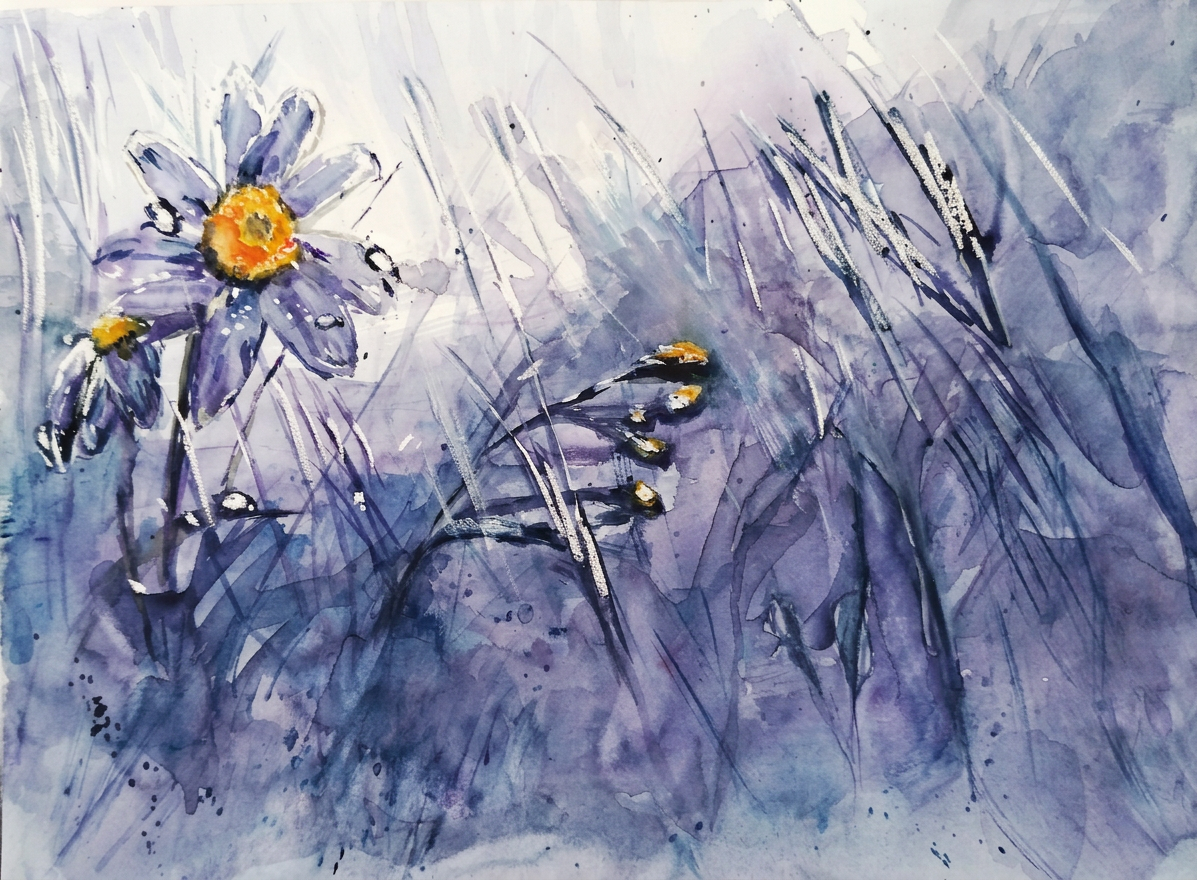
For the prompt Fuzzy I imagined a foggy morning, forest glade with some summer flowers, everything is a little bit sleepy and fuzzy… You might get lost in the fog and find yourself in a mysterious world, where different amazing creatures live:)
And I am ready for tomorrow’s Inktober prompt – Open.
Still life and urban sketching. Where I convince tiny flowers to sit still for their portraits while dodging pigeons in European streets.
Why do I love daisies? Because they’re basically flower emojis that actually exist. Adorable, cheerful, and completely indifferent to my sketching abilities.
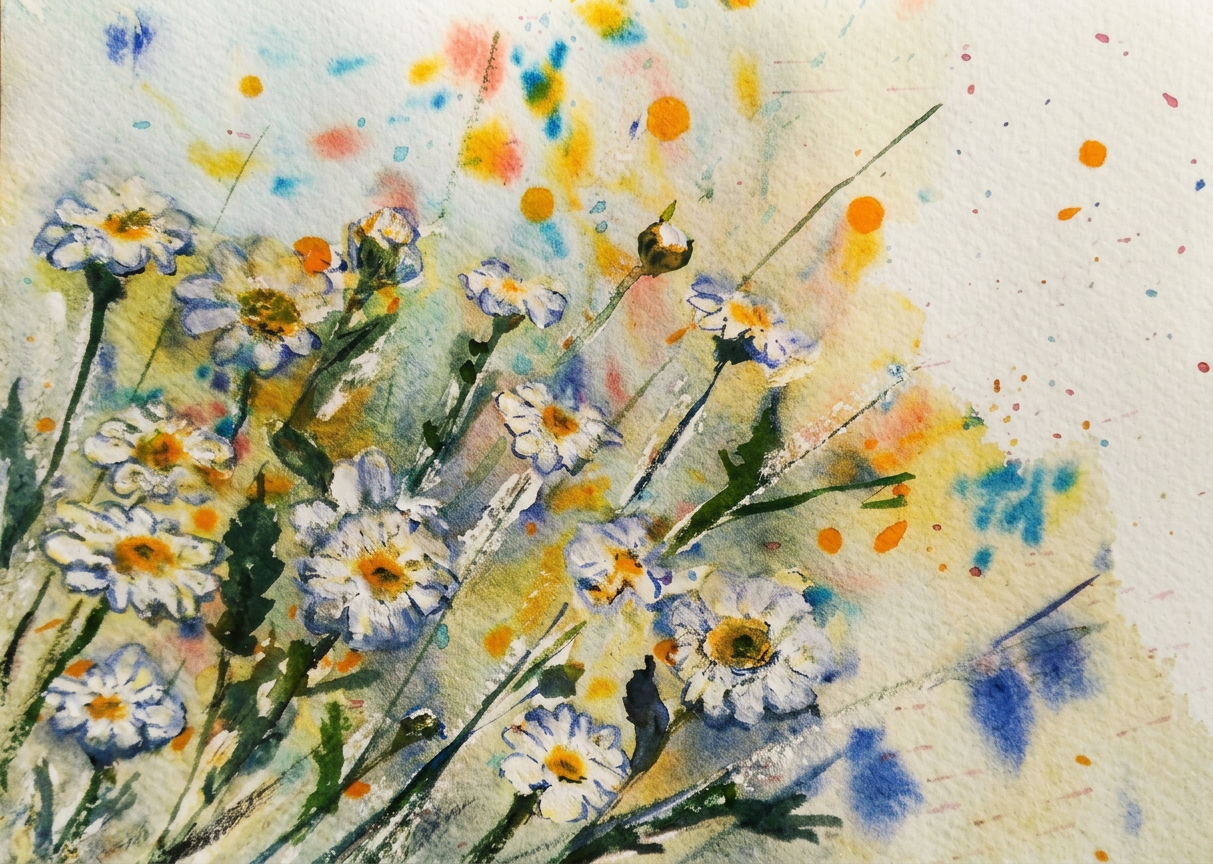
Daisies in the wild. They had no idea I was about to make them famous.
I genuinely hope to return to a truly cozy Norman village in the near future. You know, the kind where every cobblestone has probably been stepped on by centuries of people who knew how to properly enjoy apple cider and weren’t obsessed with their phone cameras. Picture this: leisurely evening strolls down the main street, gawking at the kind of farm architecture that makes you question every design choice you’ve ever made, ducking into tiny restaurants that smell like butter and dreams, and pairing crisp apple cider with slices of camembert so good you’ll question why you’ve wasted money on cheese your whole life.
White daisies: looking effortlessly elegant since forever. Unlike me before coffee.
Here’s a fun daisy fact that I definitely verified on Wikipedia (so you know it’s true): the word “daisy” is the French word “marguerite,” which sounds way more exotic and romantic. In Greek, it means “pearl” — which explains why they’re basically the Beyoncé of flowers. The English “daisy” comes from Old English “daeges eage,” meaning “day’s eye.” Our word “day” comes from “dawn,” so basically daisies are just flower alarm clocks. The term “day’s eye” refers to how the flower opens its petals in the morning and closes them at night, like a tiny botanical snooze button. Cute? Absolutely. Slightly controlling? Let’s not judge.
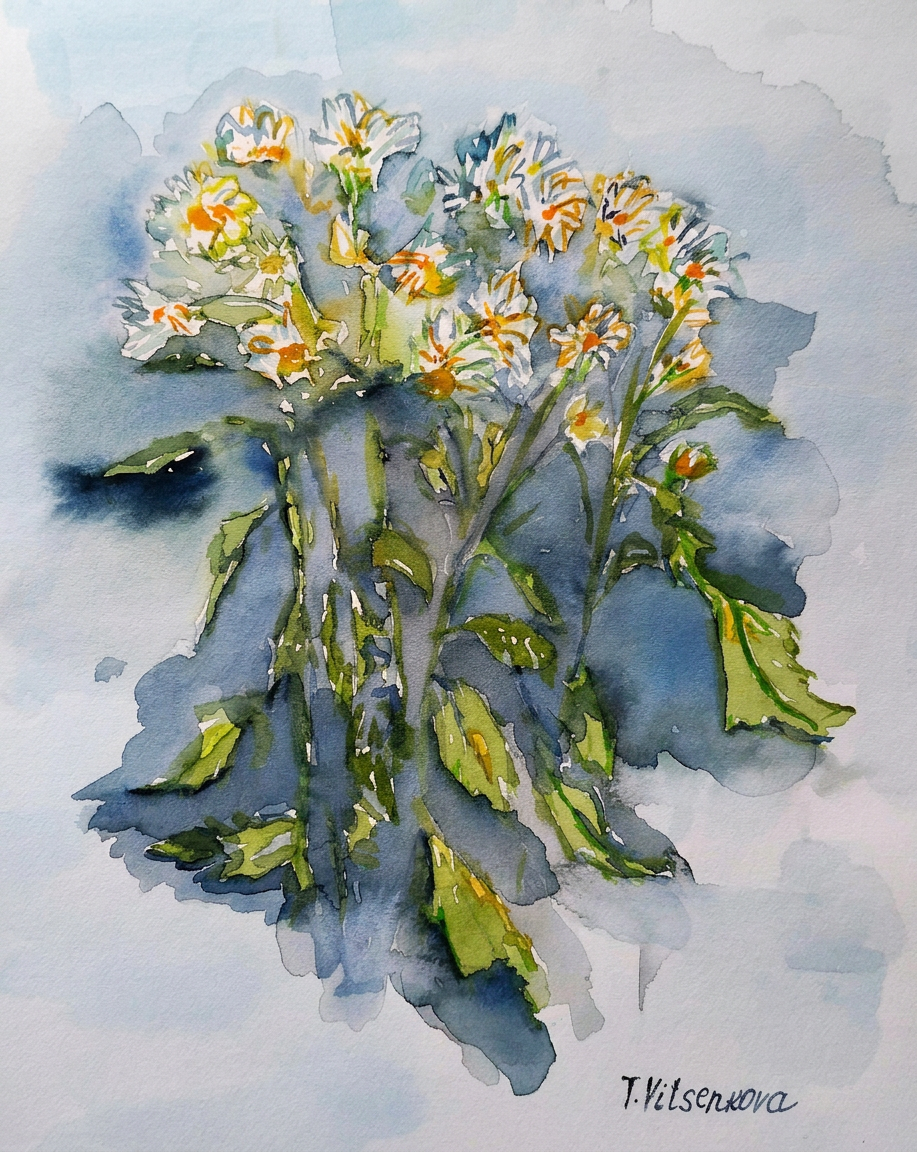
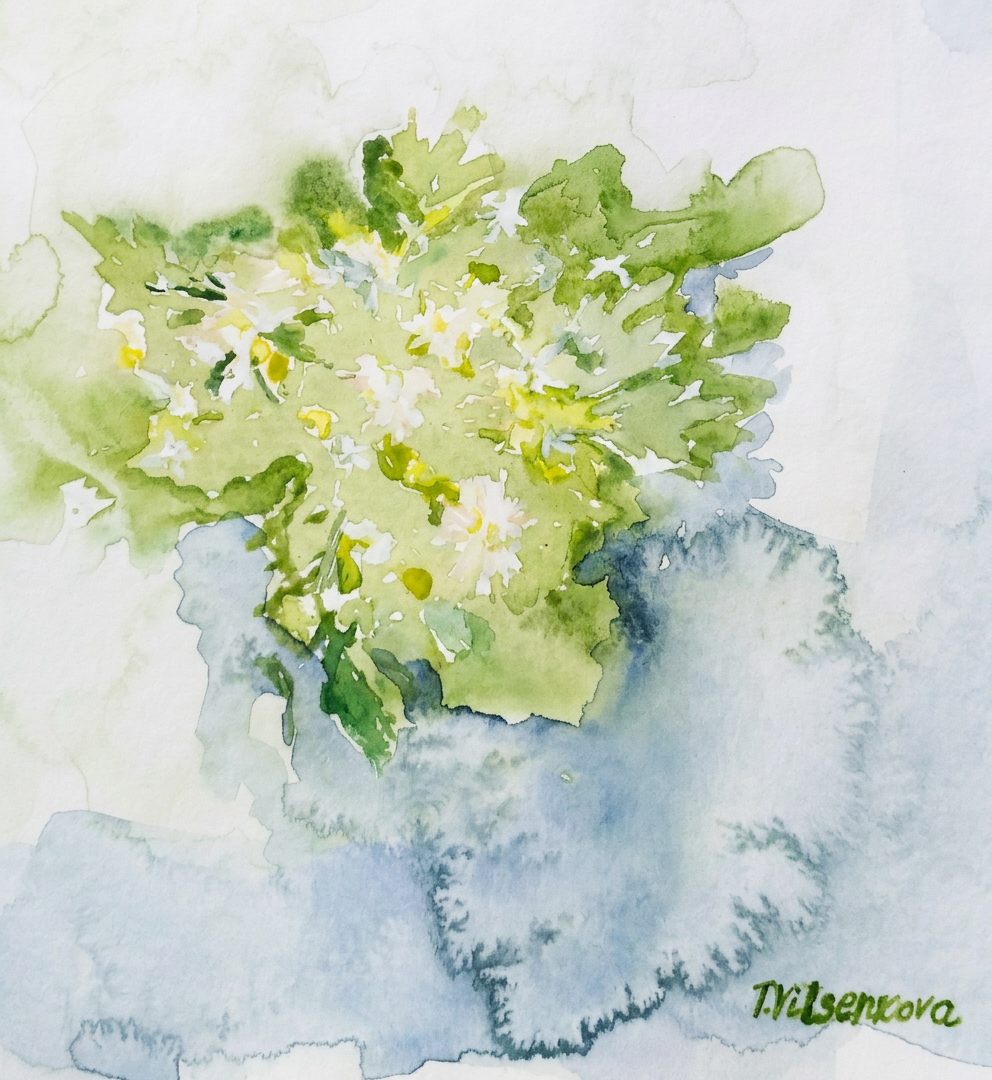
Early summer morning — the kind where everything is still wet with dew and the moist grass looks almost black in the shadow. This is the moment I attempted to paint marguérites (fancy name, same flower) in watercolor. Featuring the majestic shasta daisy: nature’s way of saying “I’m delightful AND low-maintenance.”
Watercolor daisies. Took 2 hours. They still look happier than I do on Mondays.
Plot twist: in the Middle Ages, daisies were called the “Romanov Flower.” Honestly, they should still go by that name. It makes them sound like royalty instead of something a five-year-old picked for you because you were standing still long enough.
In ancient Egypt, daisies were dedicated to Ra, the sun god. Clearly, ancient Egyptians had excellent taste and questionable work priorities. Meanwhile, the Greek name translates to “white flower,” which honestly is just giving up on poetry entirely.
Summer daisies at golden hour. Even flowers know how to pose better than most people.
Unpopular opinion: the whole “he loves me, he loves me not” petal-plucking game is deeply pessimistic and needs a rebrand. My version goes: “he loves me, he loves me dearly, he loves me tenderly, he loves me passionately, he loves me…” (you get the idea). This way, your mood is GUARANTEED to be good, and the daisy feels validated that she didn’t sacrifice her petals for nothing. The daisy is pleased. The daisy is wise. The daisy says: “Guess the right way, love and be loved.” So believe the daisy, because it will absolutely confirm that your person loves you! (Even if the original game said otherwise. Trust the flower, not the math.) 😊
Still life. The daisy was still. I was not.
Another watercolor masterpiece starring the glamorous Gerbera daisy, nature’s way of saying “regular daisies, but make it EXTRA.”
Want to nerd out about Giverny? (And honestly, who doesn’t?) Check out the Foundation Monet at fondation-monet.com/en/giverny/ — it’s basically a pilgrimage site for everyone who has ever been emotionally affected by water lilies and French gardens.
Can’t find it? No problem. Giverny’s address is 84 rue Claude Monet, 27620 Giverny. GPS coordinates probably not required, since it’s the place where literally everyone is taking the same photo.
Bon voyage! Until the next adventure. Stay happy, and hug a daisy for me.
All paintings belong to the author. No image is to be copied without permission. (The author has very strong feelings about this and also a decent lawyer.)
Daisies have already helped millions of lovesick romantics settle the eternal question: does this person actually like me, or are they just being nice? (Spoiler: the flower doesn’t know either, but at least it looks pretty while lying.)
Recited solemnly while engaged in the delicate art of aggressive petal plucking—because apparently, we decided flowers could predict love better than therapy ever could.
He loves me, He loves me not. He loves me, He loves me not. He loves me, He loves me not…
(Narrator voice: “The flower had no opinions on the matter.”)
Petals: the original dating app. No wifi required.
Watercolour painting of a flower plume of daisy petals—captured before they could escape the romantic nonsense being projected onto them.
Giverny. With the arrival of spring, the first flowers appear in Claude Monet’s garden—hyacinths, daffodils, pansies, and daisies all staging a botanical fashion show that makes the rest of us look bad by comparison.
Monet’s garden in spring — where even the flowers are better dressed than you.
Giverny is a small village in Normandy where the home and garden of the famous impressionist painter Claude Monet is located—basically the botanical equivalent of a celebrity mansion, except the residents are flowers and the paparazzi are just a bunch of very serious garden enthusiasts.
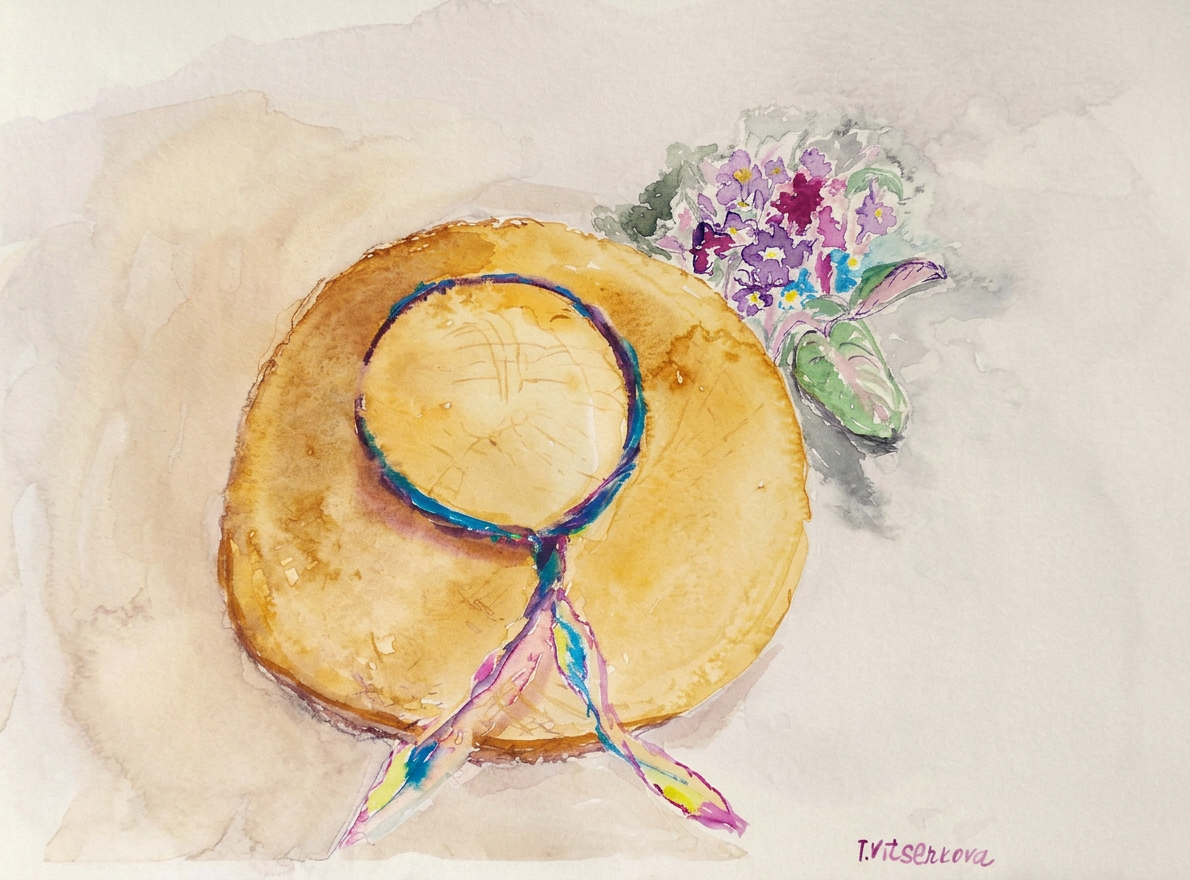
A summer hat painting. For when you want to look chic but a daisy already stole your spotlight.
Watercolour painting: a bird’s-eye view of daisies—painted from the perspective of someone who probably should have been working, but got distracted by flowers instead (relatable).
Bird’s-eye view of daisies. They had no idea they were being watched. Classic daisies.
#workfromhome goals: We are dreaming, planning future vacations around the world, and learning other languages. In my example, French—because nothing says “I’m productive” like avoiding actual work by becoming weirdly fluent in compliments and croissant-related vocabulary. :)
Fantasy. French countryside vibes. Currently unavailable to anyone with a job and responsibilities.
You might visit the Foundation Monet website to learn more about Giverny—or you could just stare at it longingly on the internet for free like most of us mortals do. http://fondation-monet.com/en/giverny/
Giverny address: 84 rue Claude Monet 27620 Giverny
(GPS is optional; just follow the trail of art students and disappointed daisy pluckers.)
Bon voyage! Until the next travel adventure—may your daisies be abundant and your romantic outcomes less dependent on flower petals. :)
All paintings belong to the author. No image is to be copied without permission—unlike the daisies, which are free to be plucked and interrogated by anyone with questions about their romantic future.
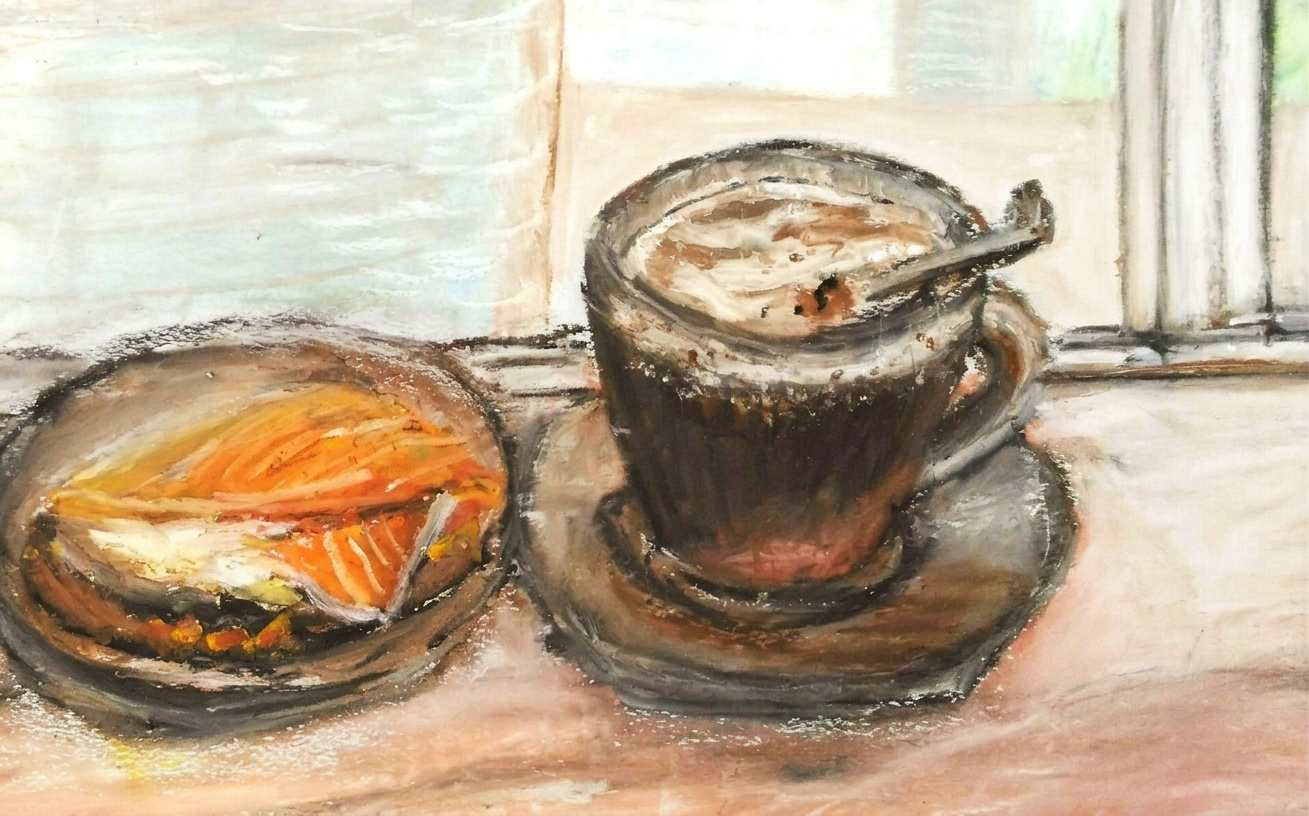
Even a regular #MondayMorning could be enjoyable and relaxing—especially when #WorkingFromHome means you can attend Zoom calls in your pajamas. This is the view from my downtown Toronto home office: a dark rye sandwich piled high with salmon (nature’s way of saying “I’m fancy”), a small cup of coffee (the fuel that makes Mondays bearable), and the burning question on every artist’s mind: “What else could an artist possibly need?” Well, possibly some watercolour paint. And maybe a shower. But mostly coffee.
Salmon on rye: because adulting requires at least one fancy breakfast decision.
Paintings with oil pastel: A small cup of coffee for a busy-morning breakfast—because nothing says “healthy nutrition” like caffeinated courage and hope in a ceramic vessel.
Coffee: officially a still life subject AND a survival strategy.
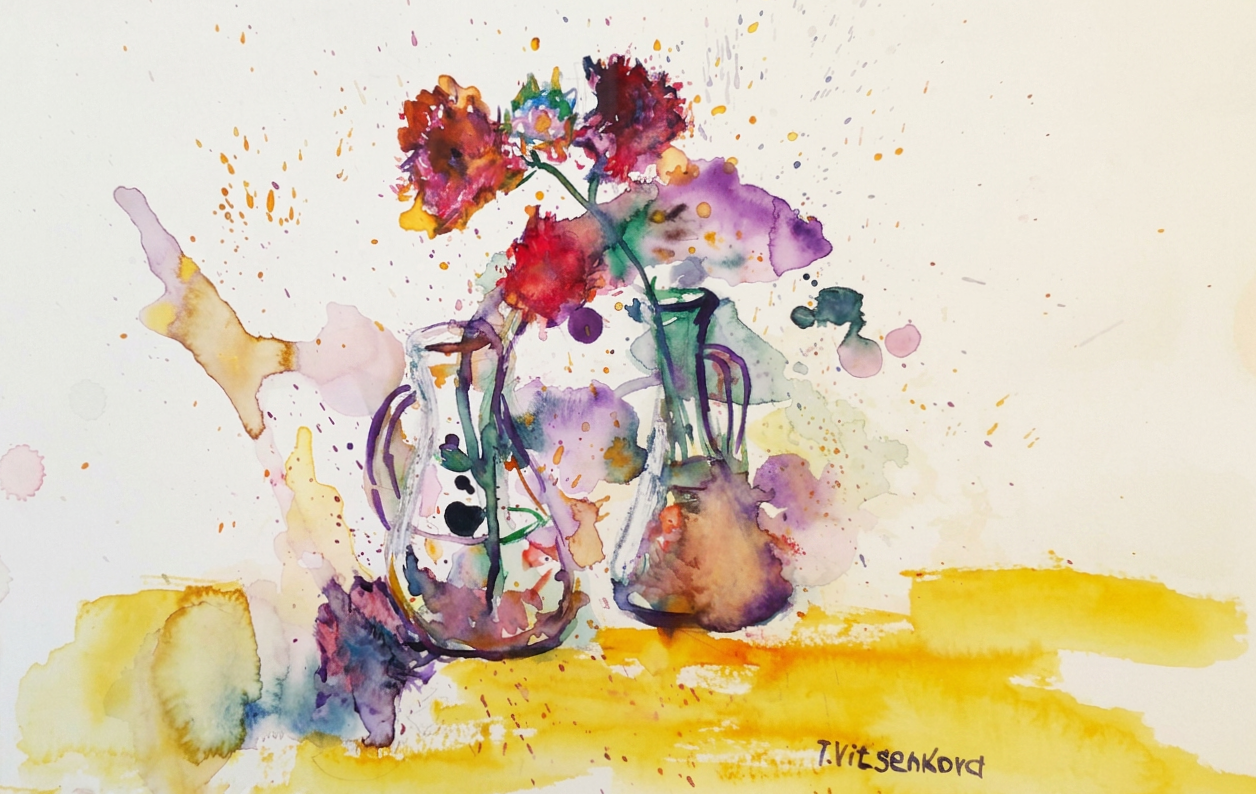
Wild flowers in a vase: fighting back against Toronto grey, one petal at a time.
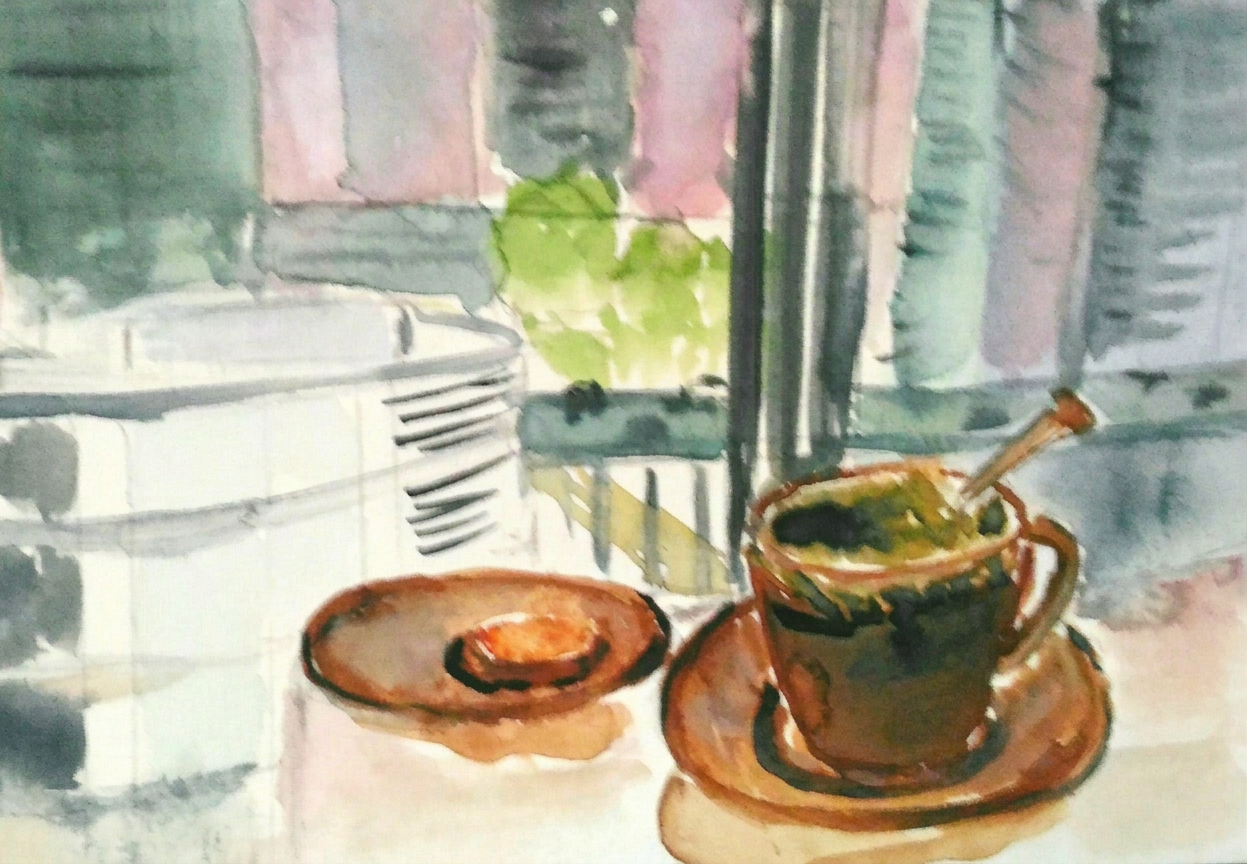
Paintings with oil pastel. Coffee aromas come in all different flavours: fruity, caramelized, sometimes nutty, and occasionally burnt (which tastes suspiciously like Monday morning mistakes). It always energizes me. I take a few precious moments every morning to savour my coffee while watching the vibrant young Toronto hustle and bustle outside my window—basically, I spy on everyone else’s productivity while I’m still in my pajamas. Living the dream!
A cup of coffee and flowers—what could be better in the morning? Absolutely nothing, unless you count oxygen and consciousness. I add some bright and delicate colours to the grey downtown city landscape of #Toronto to prove that life doesn’t have to be monotone—a wild summer flower bouquet in a vase, basically nature’s rebellion against urban beige.
Bon voyage! Until the next adventure :) Stay healthy, stay caffeinated, and for heaven’s sake, use sunscreen—your future self will thank you.
All paintings belong to the author. No image is to be copied without permission. (Yes, even if you think you can sneak it past the internet. You can’t. We all know about screenshots.)
Summer vacation is basically nature’s way of saying “Go forth and create art!” So naturally, the only sensible thing to do is pack paint supplies and pretend you’re not sweating through your shirt. What do you actually need to paint masterpieces in the great outdoors? Just some simple art tools and the delusion that you won’t spill watercolors all over your lap.
Love the summer feeling with this hat
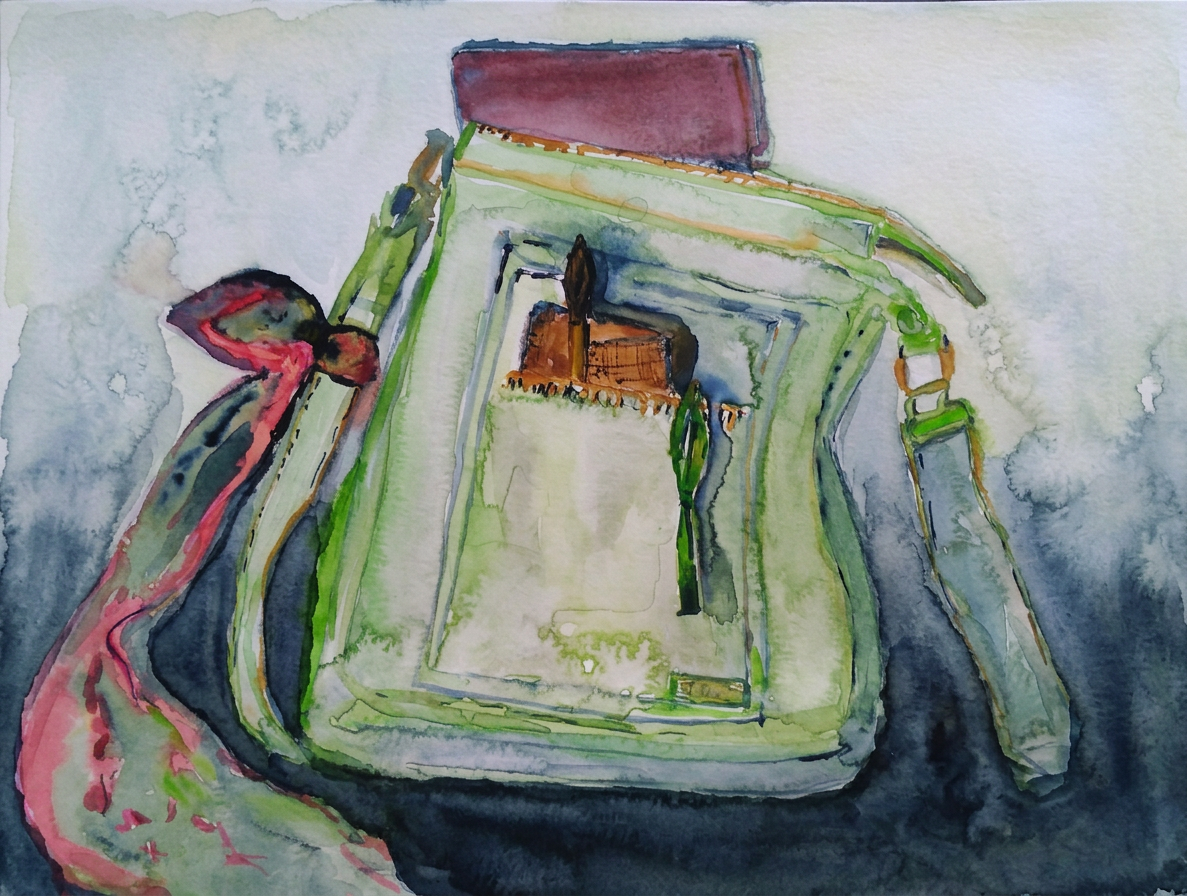
Behold! My beloved art bag—the tiny vessel that somehow holds a travel brush, a modest watercolor paint box, a sketchbook for doodling my failures, AND a silk scarf. That scarf serves dual purposes: it makes me look artistically sophisticated and doubles as a mask when I need to hide from other hikers questioning my life choices.
The whole studio. It fits in a bag. Take that, real artists.
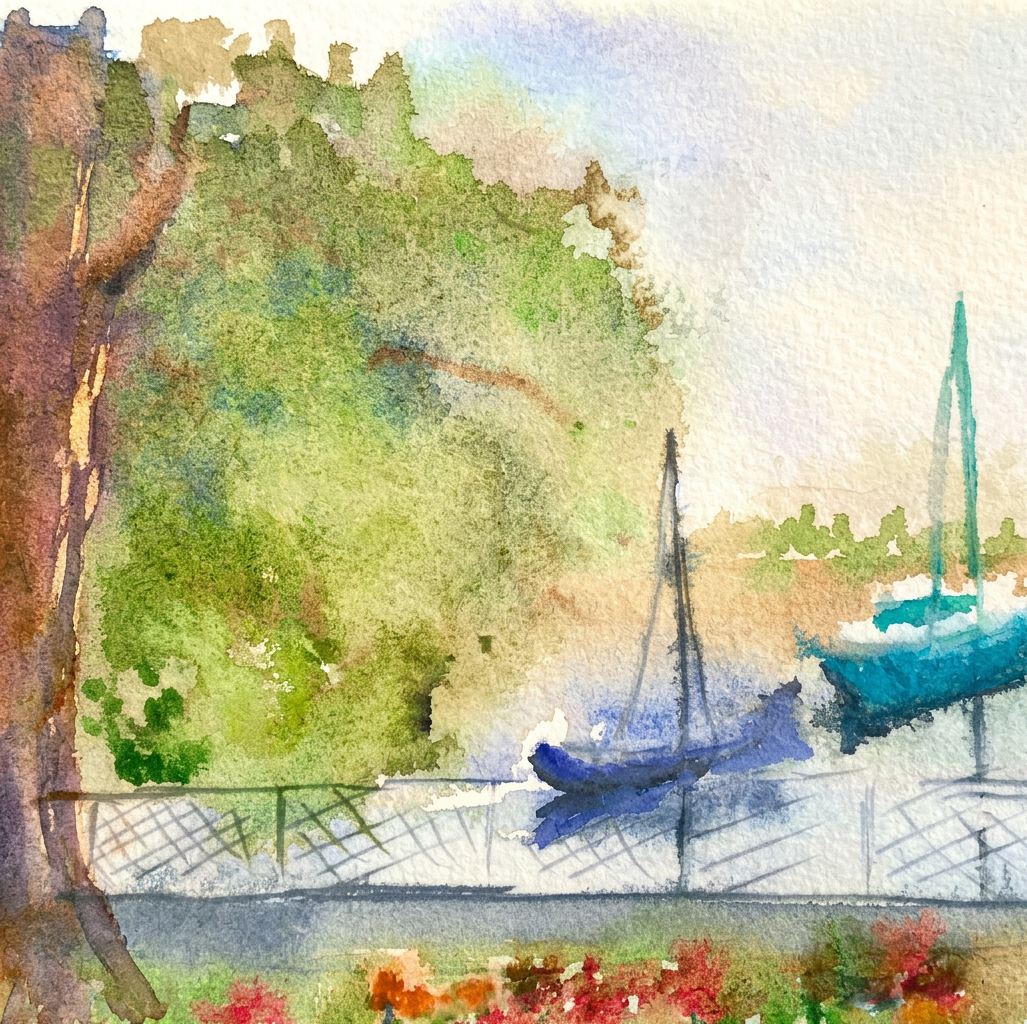
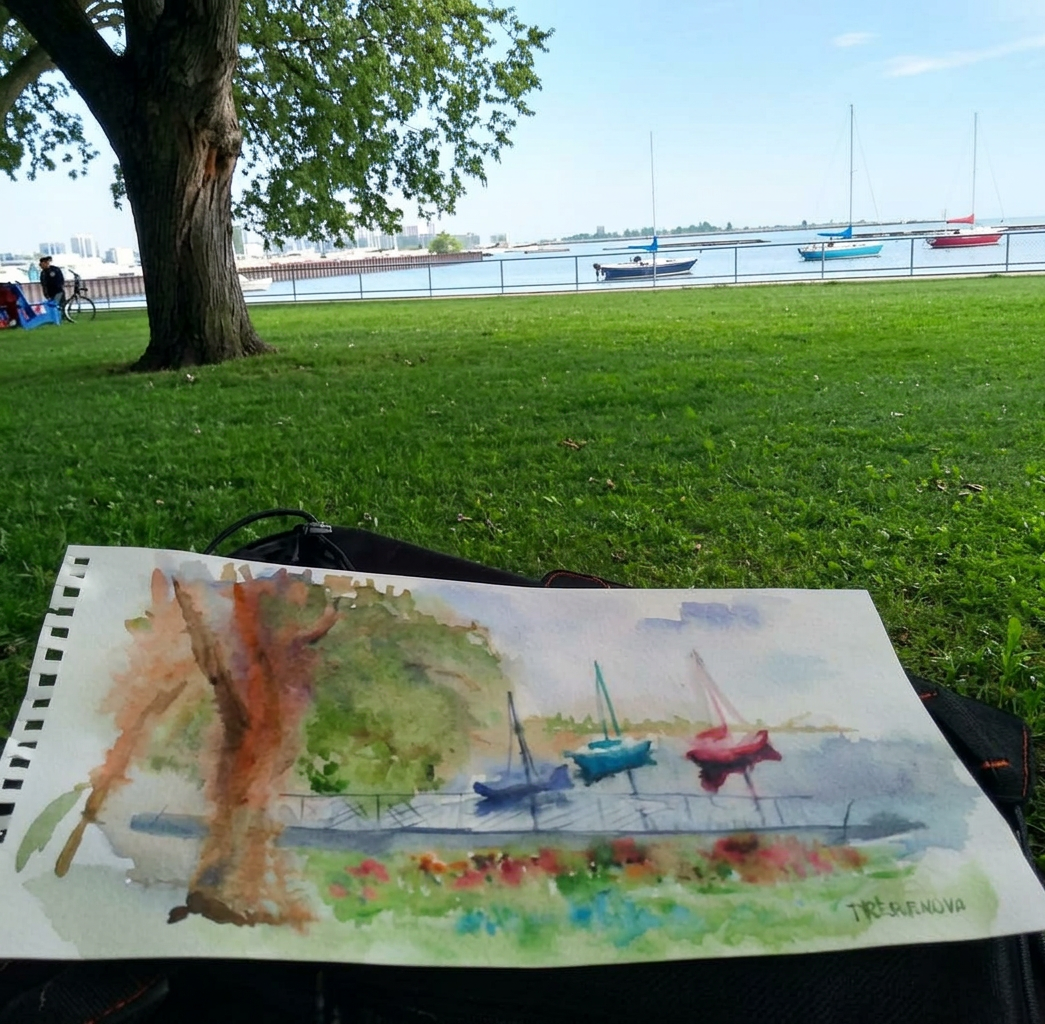
So there I was at #Toronto #downtown, perched on the shore of #Ontario lake, racing against an impending #downpour because apparently I make terrible weather-based decisions. The park was eerily quiet—that perfectly calm, slightly ominous feeling right before a storm hits, with only a few boats gently creaking and swaying on the waves, as if they, too, were nervously waiting for nature’s tantrum to begin.
Boats patiently waiting for the storm. Relatable.
I could literally smell the ozone (which sounds more dramatic than it actually is), so I wisely abandoned ship and sprinted away just before the rain started its assault. But plot twist: I totally captured the pre-storm atmosphere in my painting—see those actual raindrops? I didn’t accidentally get water on the paper; those are intentional artistic choices. I absolutely love summer storms, even when they’re chasing me away like an angry mob.
Those dots are raindrops. On purpose. Obviously.
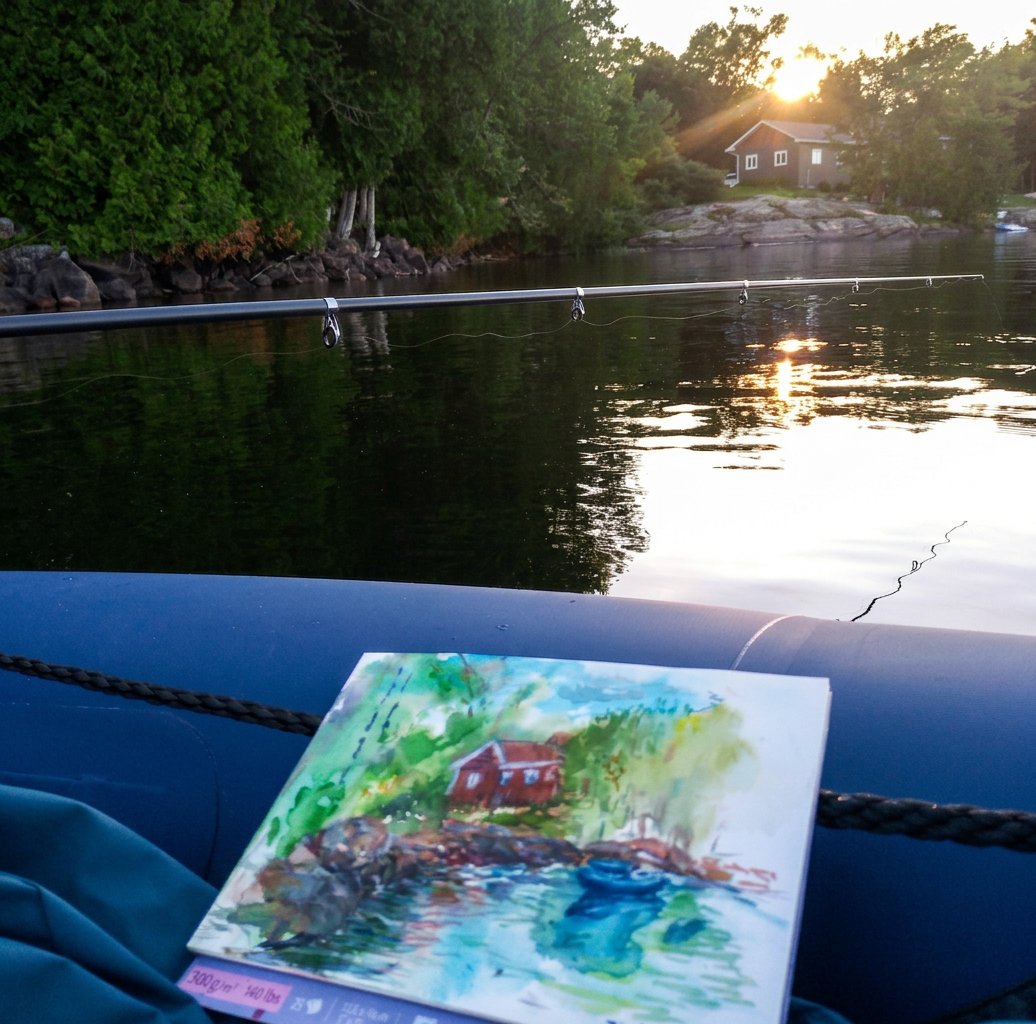
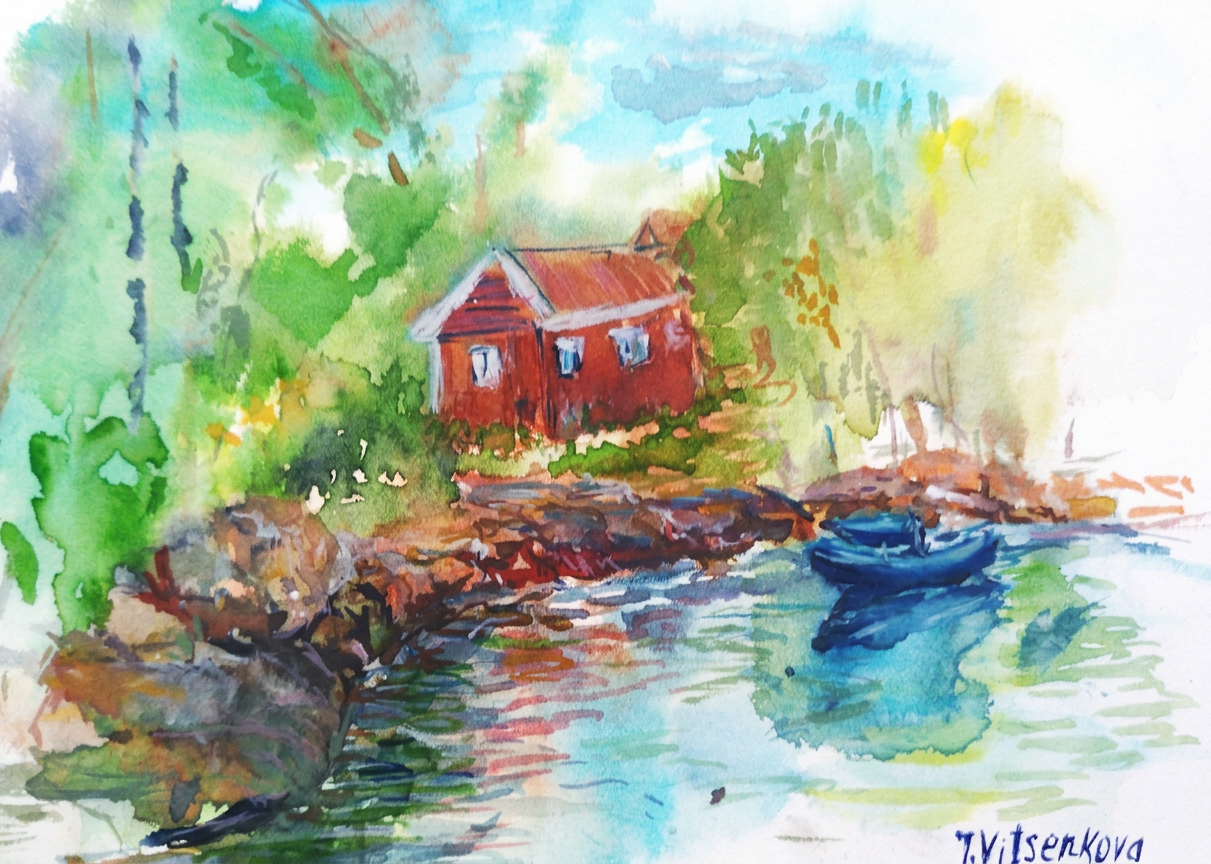
#Ontario #Kawarta #lakes—This watercolor was painted directly on a boat during a warm summer evening while my husband was fishing approximately one foot away from me in the same tiny boat. The artistic process is truly romantic, except for when you realize you’re both taking up maximum space and someone’s going to accidentally knock over the paint water.
Painted this while my husband caught fish. We both tried our best.
My mission: capture the soft, dreamy evening hues of a charming little cottage on the shore, surrounded by lush green leaves and moody monochrome stones. The lake and those two birches on the high shore? They took me straight back to #Belarus, my motherland—minus the actual traveling part, which is the real dream during #lockdown.
A cottage so cosy it made me homesick for a place I’ve never lived.
Bon voyage, you absolute legends! Until our next adventure. Now go forth and create some art before something terrible happens on the weather front!
All paintings belong to the author and are protected by the international law of “I made this and you can’t copy it.” No image is to be copied without permission. Seriously, don’t do it.
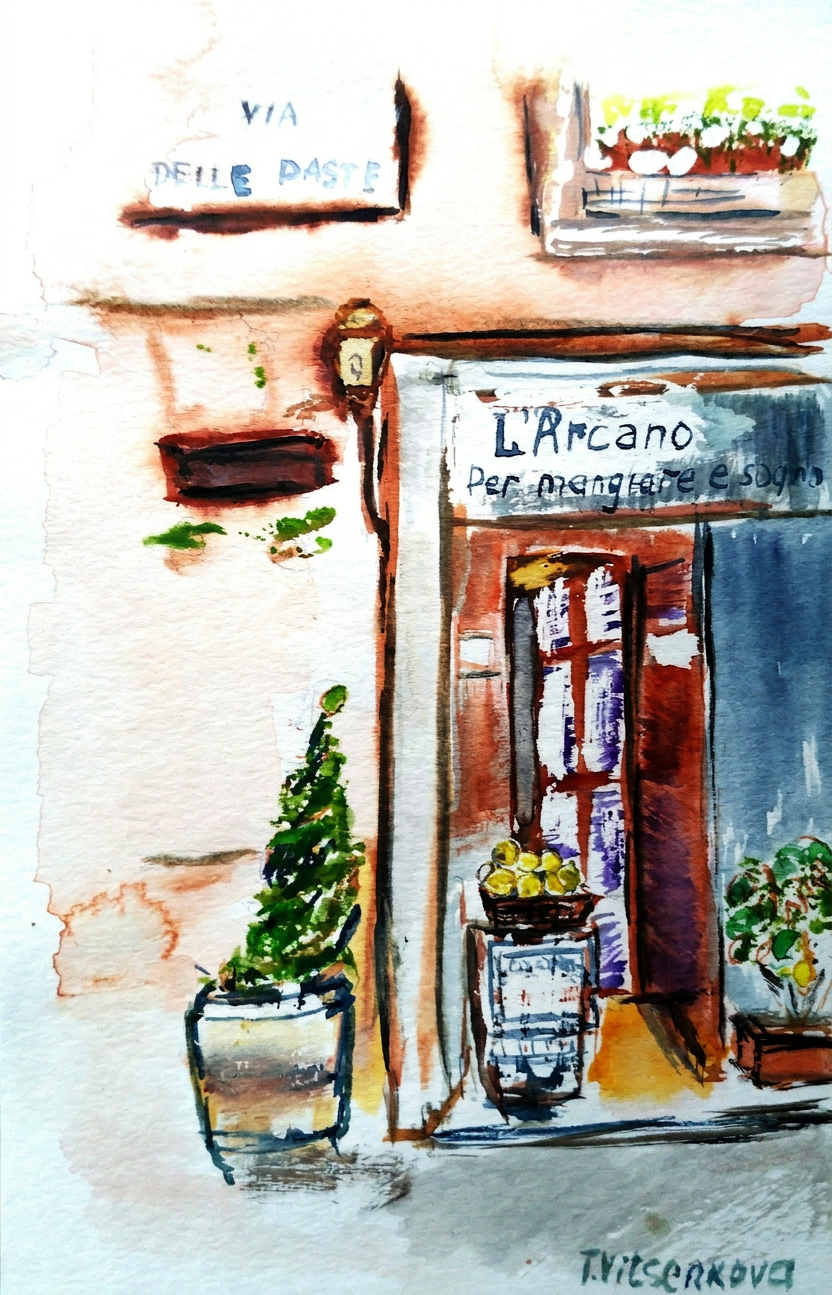
#lemon #art #travel #Italy (aka my holy trinity of happiness)
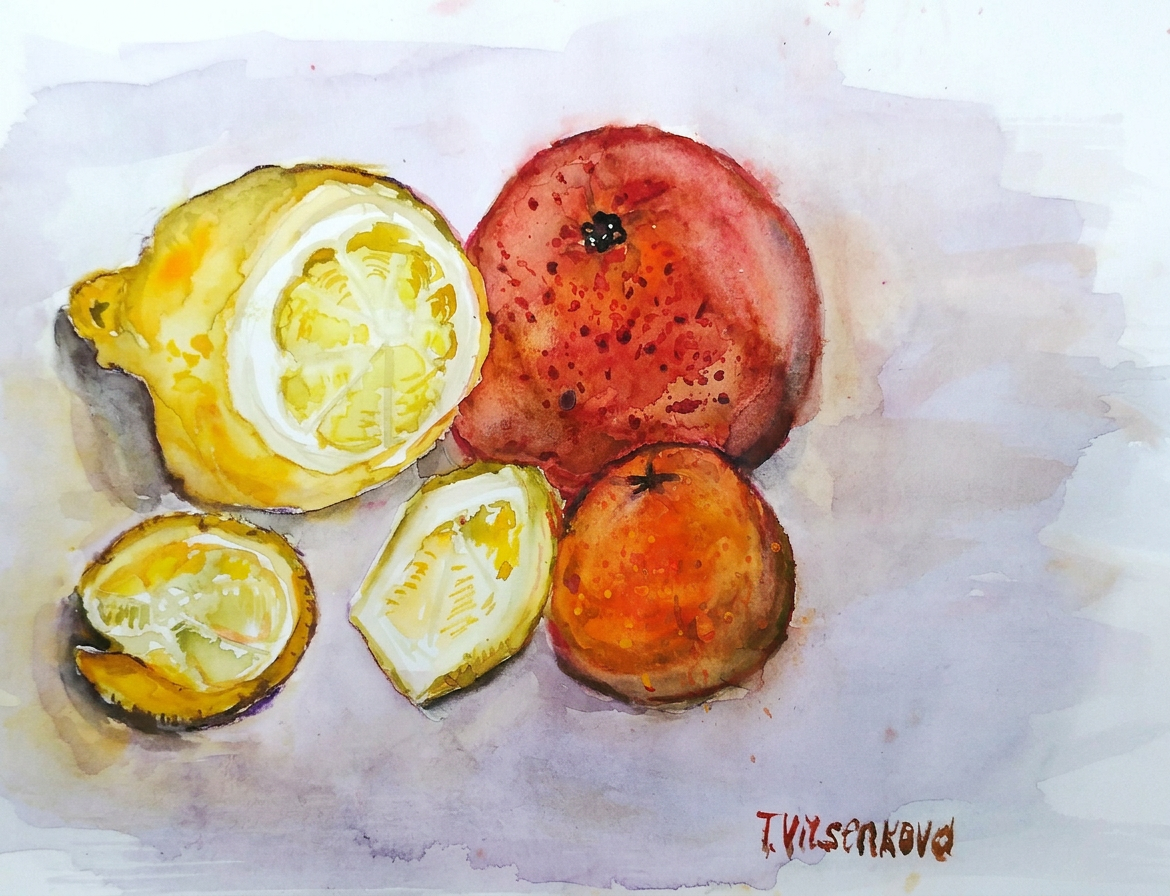
Yellow, sour, fragrant… and absolutely the diva of the citrus world. In tea with sugar? *Chef’s kiss.* It’s pleasant. Also full of vitamins (or so I tell myself between paintings). And its name is LEMON! Perhaps each of us, both adults and children, knows this bright, yellow citrus fruit—unless you’ve been living under a Mediterranean rock your whole life.
Still life. Still delicious. Still not edible.
It was in Italy (the land of carbs, art, and lemons galore) where my family dragged me around the Italian “boot” from top to toe several years ago. Because nothing says “family vacation” like touring every inch of a country! The painting happened in the south of Italy, in one of those charming little towns where time moves slower and espresso is cheaper than water. Naturally.
Rome wasn’t built in a day, but this lemon was painted in one. (Lies. It took three.)
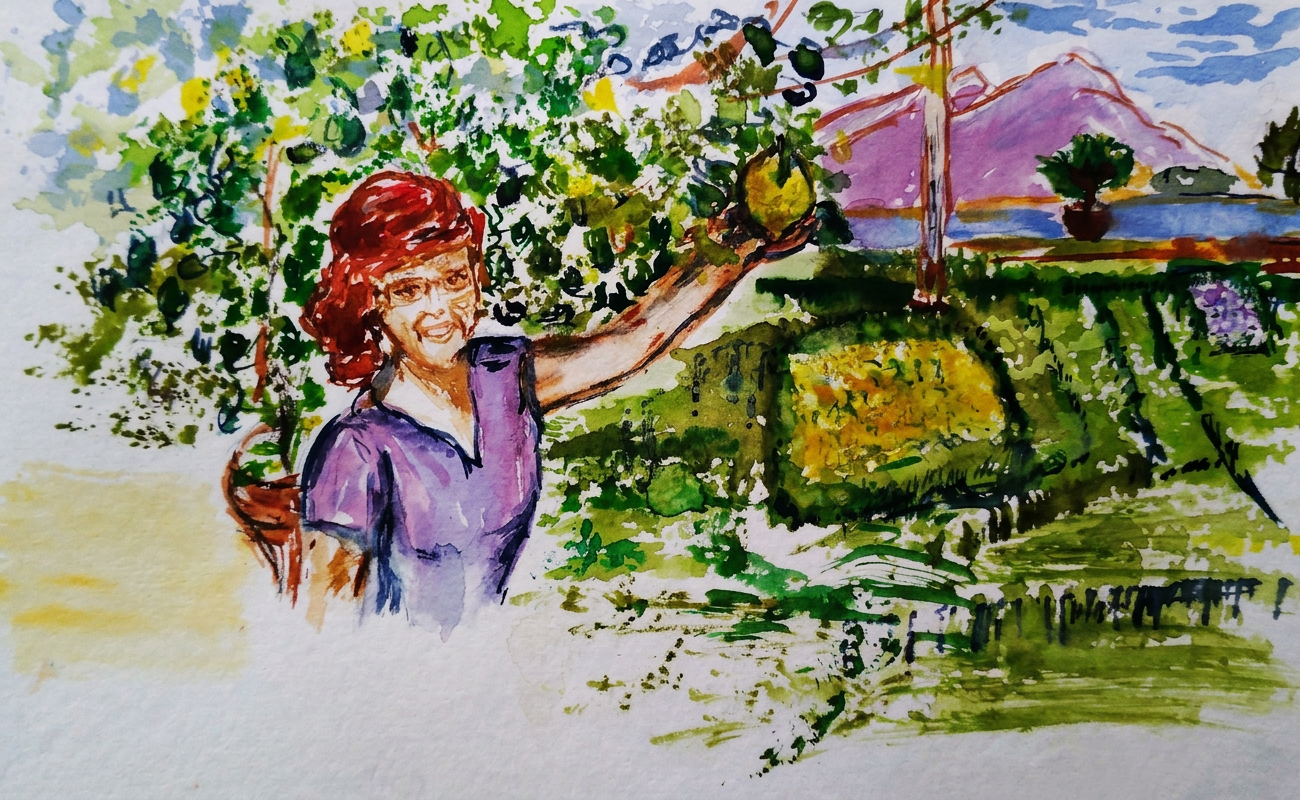
Our next stop was the north of Italy, literally the “top of the boot” (geography humor—I’m here all week). Lemon trees were EVERYWHERE on the Borromean islands, like someone’s obsessed Pinterest board came to life. The backdrop? Mountains. Swiss mountains. Beautiful, indifferent, Swiss mountains that made the lemons look even more golden and smug.
Lemon trees: nature’s way of saying ‘you’re in Italy now, calm down.’
The lemons were HUGE. Like, absurdly huge. And their aroma? Everywhere. It was less “fresh citrus scent” and more “olfactory assault in the best way possible.” I still remember the weight of those yellow orbs in my hand—fruit so heavy it could double as a gym weight. Nature’s dumbbell.
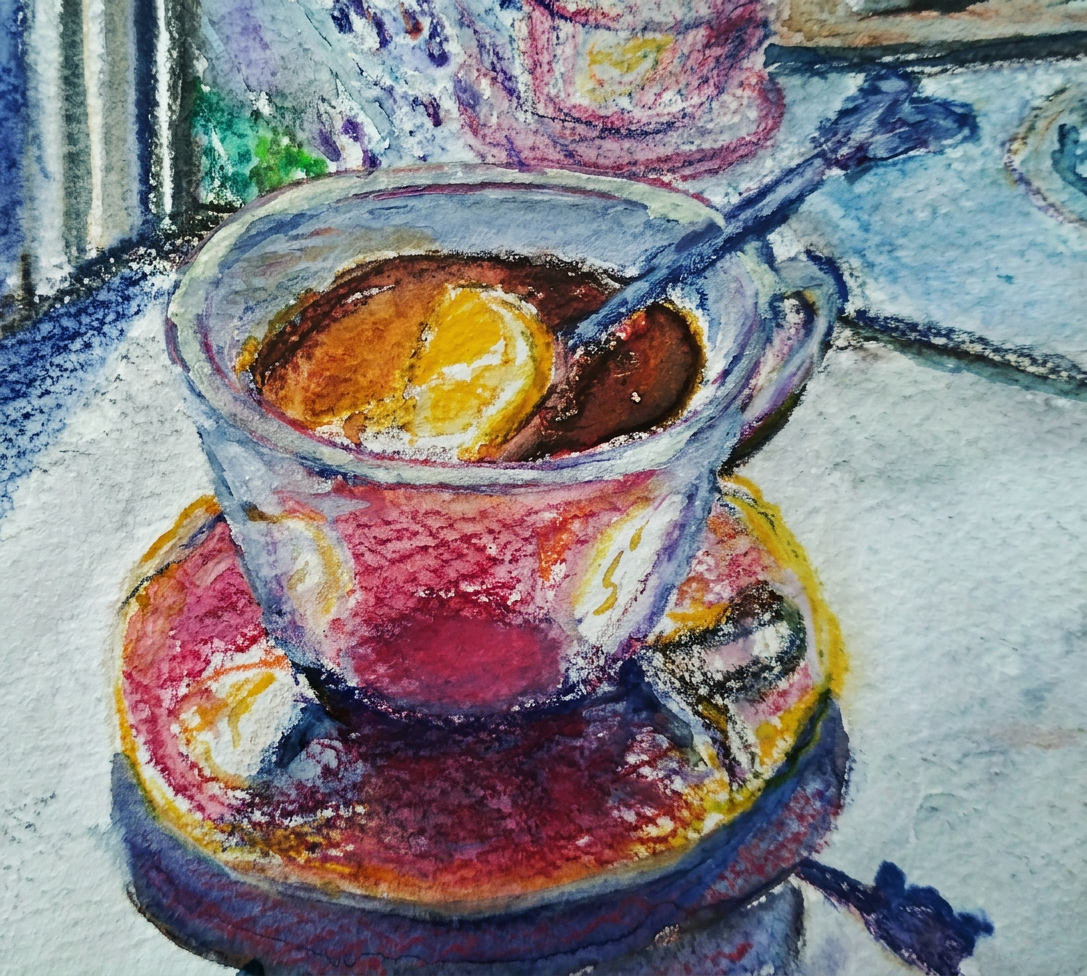
Shall we have tea with lemon now? Or should we just sit and contemplate the sheer absurdity of how a little yellow fruit has consumed my entire artistic existence?
Tea. Lemon. Existential peace. You know the vibe.
According to legend (and I’m not making this up, mythology nerds), the aromatic fruits the color of the sun were gifted to Hera’s wedding when she married Zeus. Because if Zeus’s new wife wanted to stay young and beautiful forever, obviously you give her lemons. Logic. The ancient Greeks apparently believed: “Its aroma amuses the mind, the peel and grains are good for the heart, the flesh is excellent food, and the juice quenches thirst.” Basically, lemons are fruit’s overachiever. They’re doing cardio, aesthetics therapy, AND hydration all at once.
All paintings belong to the author. Seriously, don’t copy them. I’m watching. (Jk, but also—don’t.)
Tools used for my paintings: Watercolour brands Van Gogh and Cotman (because why choose when you can be indecisive?). Derwent watercolour pencils for when I need surgical precision on my lemon chaos. Paper from Canson Mix Media albums (28×35 cm / 11×14 in.) and Canson Watercolour albums (25×35 cm / 11×15 in.)—basically, I invested in better paper than I invest in my actual life stability.
Bon voyage! Until the next travel adventure (hopefully with fewer lemons and more personal growth, but let’s be realistic). Stay healthy, stay hydrated, and may your tea always have the perfect squeeze of lemon.